
Category: Opinion

  • Tinubu’s 100 Days: Navigating the challenges, high expectations

    President Bola Ahmed Tinubu achieved his lifelong aspiration of becoming Nigeria’s president when he was declared the president-elect of the February 25, 2023, presidential election.

    On May 29, 2023, during his inauguration as the President and Commander-in-Chief of the Armed Forces, he wasted no time in expressing his commitment to hit the ground running.

    In his address, he humbly requested not to be pitied, emphasizing that he had actively pursued the presidency. President Tinubu’s first 100 days in office were marked on September 5, 2023.

    However, an in-depth assessment of his administration within this relatively short timeframe may not fully reflect the promises he made to the Nigerian people.

    It is essential to consider the challenges inherited from the previous administration under Muhammadu Buhari, which endured eight years of economic difficulties. President Tinubu had pledged to alleviate the burdens faced by the poor, and this commitment generated enthusiasm and high expectations among the populace.

    One notable policy shift was the sudden removal of the controversial oil subsidy without accompanying palliative measures mentioned during his inauguration speech.

    Following this move, Nigerian oil marketers and fuel racketeers swiftly increased the pump price of Premium Motor Spirit (PMS) from N186/ltr to N575/ltr and later to N617/ltr.

    Their rationale was that the price adjustment was a response to global oil prices and associated costs. Additionally, changes in the exchange rate led to a depreciation of the Naira against other currencies. Subsequently, Nigerians experienced increased living costs, including rising food prices, transportation expenses; rent hikes by landlords, and higher school fees, among other challenges.

    Before he assumed office Nigerians had eagerly awaited the 2023 general elections as an opportunity for change.

    Youth and political sentiment were strongly geared toward effecting a transformation in various aspects of the country’s political landscape.

    Some politicians capitalized on the public’s anger and youth mobilization, switching parties they viewed as more conducive to their political ambitions.

    It is widely acknowledged that the previous administration, led by former President Buhari, faced significant criticism for its handling of the economy.

    While promising change, the administration was perceived to have delivered misery and despair, corruption, which the government pledged to combat, appeared to flourish.

    While it is essential to address economic challenges and leadership issues in Nigeria, this article primarily focuses on the treatment of individuals who have served the nation diligently and those, who upon identifying institutional weaknesses or leadership shortcomings, have sought to enrich themselves.

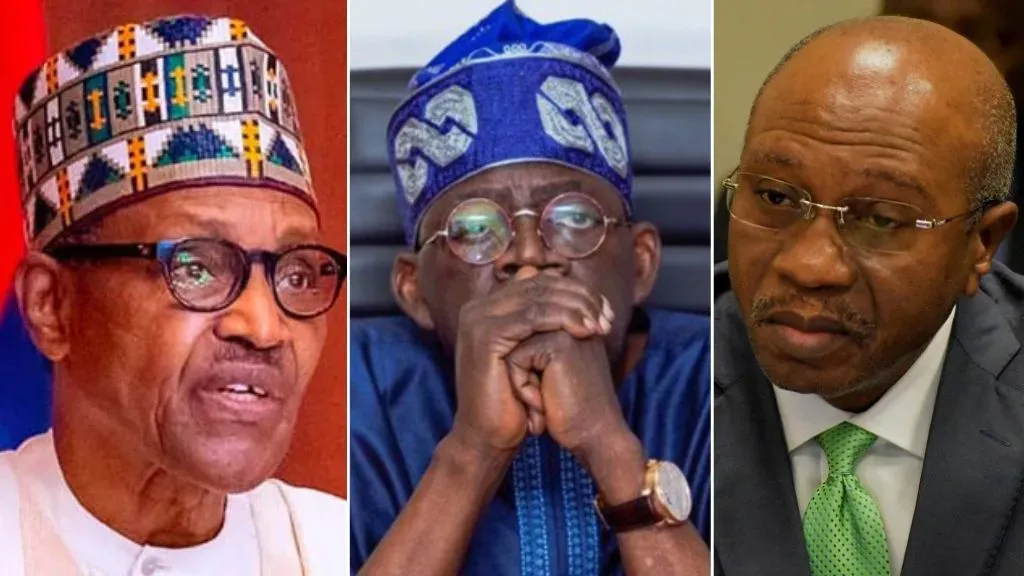
    Recent developments in the political arena bring into question the treatment of individuals like Mr. Godwin Emefiele, the suspended CBN Governor, and Abdulrasheed Bawa, the suspended Chairman of the Economic and Financial Crimes Commission (EFCC).

    Both face various charges, possibly related to their actions while in office during the previous administration.

    It is important to recognize the valuable contributions of these individuals during their tenure. For instance, Godwin Emefiele, as the CBN Governor, played a pivotal role in propping up the economy during times of fiscal uncertainty.

    His interventions and policies were instrumental in averting economic crises, particularly during the COVID-19 pandemic.

    Similarly, Abdulrasheed Bawa demonstrated zeal and effectiveness in his role as the anti-corruption czar.

    However, they may have inadvertently crossed ethical boundaries while executing their duties as directed by the Commander-in-Chief (C-in-C) in alignment with political agenda.

    For example, Godwin Emefiele’s foray into politics and a controversial Naira redesign policy attracted political criticism, while Abdulrasheed Bawa’s aggressive pursuit of corruption cases earned him powerful enemies.

    While this discussion does not intend to justify their actions or inactions in office, it however raises questions about the treatment they currently face. Is this treatment an incentive or disincentive for individuals to serve their nation?

    President Tinubu’s administration has already made bold policy moves, although they have resulted in unexpected hardships for Nigerians.

    With the appointment of his cabinet after nearly 80 days in office, Nigerians anticipate selfless dedication from him and his team.

    Concerns have arisen regarding the inclusion of certain politicians, including former governors with underwhelming performance records, in the cabinet.

    Nigerians hope to avoid a repeat of past experiences, where ministers seemed ill-prepared, leaving the Central Bank of Nigeria to take on responsibilities beyond its mandate to prevent economic collapse.

    Given the current economic challenges, Nigerians expect President Tinubu to uphold his commitment to hold non-performing ministers accountable.

    This approach should ensure that the Central Bank of Nigeria can fulfil its constitutional responsibilities as outlined in BOFIA 2007 without unnecessary political interference. Preserving the CBN’s independence is essential for effective monetary policy and economic stability.

    In conclusion, while it is crucial to address economic woes and leadership issues, it is equally important to safeguard institutions like the Central Bank of Nigeria from unwarranted political interference.

    Nigeria’s economy depends on CBN’s stability and effective functioning, and it is essential to protect this national heritage.

    *Chisom Adindu writes from Umuahia, Abia State

  • Thoughts & lessons from the Presidential Tribunal verdict

    Yesterday was another decisive, epochal day when Nigeria transited another critical juncture in its fourth democratic voyage. Not a few feared that the worst may happen. But the day broke normally. 

    The streets were scanty as organized labour called off work. Some thought that one was staged. It was hushed tones amongst the banks. Even as they all opened for business, they shut off their doors to customers, rather abruptly by midday.

    I guessed they too reasoned something may just give. Politics (election), religion and ethnicity are three issues that can be quite emotive in Nigeria, especially nowadays and it was fatally dreaded that the outcome of the PEPC was going to evoke a lot of passions and violent sentiments. 

    After months of waiting and of uncertainty, the PEPC has rendered its judgement.  Without mincing words, today has turned out to be an awful day for Obi and his Labor Party and for Atiku and the PDP.  Not only was Obi’s lawsuit dismissed with hefty cost, his challenge to the presidency was severely repudiated and reprimanded by the five justices for its frivolity, lack of merit and abuse of the judicial process.  

    While President Tinubu has a cause to celebrate his second victory, he and his team have a lot of work to do to restore the citizens’ confidence and faith in the democratic experiment and the electoral process.

    The abysmal voters turn-out during the last election were due, in large measure, to the precipitous decline in the Nigerian standard of living and the lack of the dividends of democracy. These are also pointers to a democracy that has not met the expectations of the citizenry. 

    The implication is that President Tinubu must not pop out the champagne bottle yet, but he and his team must go to work round the clock, for the next four years to restore the faith of Nigerians in the democratic process.  The stakes couldn’t be higher with the upsurge in military coups in the West African sub-region. 

    Now that the court has affirmed that President Tinubu was elected fair and square, he must get busy with delivering for the electorate. Without a doubt, his oil subsidy removal and the forex policies have imposed additional hardship on the citizens, the president and his team are sending the clear message that they are committed to delivering the goods for Nigerians. 

    Now let’s address the PEPC’s verdict and the lessons it sends to the Nigerian political class.  One of the hallmarks of democracy is for the loser to accept the choice of the electorate, no matter how unpalatable it might be.  

    While it is the inalienable right of losers in any election to seek redress through the courts, we must put an end to the proclivity of Nigerian politicians not to accept electoral defeat but instead to seek to substitute the mandate of the electorate with the courts.  

    In an adversarial court system under which we operate, it is the responsibility and burden of the litigants challenging the declared electoral results, to prove by the preponderance of evidence that the electoral process was so flawed that it denied them victory. 

    Going by the pronouncement of the Judges at the PEPC, the Labor Party and the PDP failed substantially in meeting that high bar.  The court therefore had no choice than to throw out their law suits. Any other insinuation only does damage to our judicial and electoral systems.

    The Nigerian election tribunal should begin to impose hefty cost on litigants to reduce the abuse and waste of the court’s precious time and resources on frivolous electoral law suits.  The PEPC has started that process with the fine imposed on the Labor Party and the PDP.  The cost needs to be raised higher as a deterrent to politicians wasting the court’s time through the demand for frivolous intervention. Nigerian politicians must understand that there are no perfect elections anywhere in the world.  

    Finally, we do a disservice to our judicial system when we denigrate it because its verdict does not compute with our partisan position. In the next few days and weeks, we can expect supporters of the losing candidates to threaten the justices who severely reprimanded them for their frivolous and meritless law suit that turned out to be a fishing expedition in search of evidence.  

    With the hefty cost imposed on the Obi’s case, and the harsh repudiation of his case by the Presidential election petition court, it is obvious that all the legs have completely fallen off of the wobbly three-legged stool on which his suit stood. 

    It would be an abuse of court process to waste the Supreme Court’s time and resources on a doomed appeal.  Of course, it is prerogative a vexed candidate to waste their time and resources.  It is also the prerogative of the supreme court to impose additional cost on them if they choose to pursue a fatally flawed and doomed law suit.

    Regarding the particular case of Mr. Peter Obi, who exemplifies the quest of Nd’Igbo to produce a candidate, a president from the South Eastern part of the country, my advice to my Igbo brethren is to throw away the shovel and stop digging. They need to start the long and arduous process of building a redemptive bridge back to the mainstream of Nigerian politics.  

    All is not lost but they must get to work immediately by quickly abandoning the Obi’s presidential ship to cast their nets further into the sea.  I also respectfully admonish them to quit doing more damage by their vitriol and offensive rhetoric now that the court has rendered its judgement.

    Such decision would be a great first step in that process of reconciliation and healing.  They must take a page out of Tinubu’s political playbook.  After decades of Yoruba playing tribal and oppositional politics under Great Awo’s AG and UPN political parties, Tinubu changed course. 

    He got a lot of flak and faced massive opprobrium from his kin who regarded him as a traitor for not supporting the misguided and myopic Oodua Nation movement. 

    Our Igbo brethren need their over version of Tinubu who has a track record of being detribalized and who has the political capital to bridge the gulf and build a bridge across the Nigerian ethnicized politics. 

    Tinubu entered into what many pundits described as the union of the incompatible with his political romance with former President Muhammadu Buhari.  Our Igbo brethren must learn that tribal politics anchored on exploiting Nigeria religious divide is a loser any and every day.  I pray that they heed my brotherly advice. 

    Our Igbo brethren have a right to aspire to the highest office in the land and it would be a great loss and very destabilizing to the polity if they are totally alienated politically. But they must trace and crawl their way back from the political abyss into which an ethnic based politics has placed them.

  • Tinubunomics: An Elaboration of Economist Niran Olayinka’s Analysis

    Tinubunomics: An Elaboration of Economist Niran Olayinka’s Analysis
    President Bola Tinubu

    I will first and foremost like to commend our dear brother Mr. Niran Olayinka for penning on page 18 of today’s ThisDay Newspaper, this simply but beautifully written analytical article on President Tinubu’s recently deployed or unveiled economic reform policies.

    The beauty of the article is its easily accessible language that was devoid of the typical technical arrogance and complexity one usually encounters with seasoned economists of his caliber. His analysis, while being technically sound, adopts a language that is accessible to the “common man”.

    Contextualized in a church sermon and the well-known story of David and Goliath, the article sets the tone that everyone was welcomed aboard. The analogy of David being mocked by his own brothers is also apt.

    The most virulent critics of President Tinubu’s policies on social media sadly have been his own kindreds, the Yoruba. Of course, being the cosmopolitan people that we are, we Yorubas do not believe in circling the wagon or being shy to criticize our own, but as is customary with us, some of the Yoruba critics of Tinubu have gone beyond objective analysis and have laced their criticisms with venom, envy and bad belle.

    Mr. Niran Olayinka’s analysis on the issue of subsidy removal as has been universally acknowledged is long overdue and a no-brainer. Anytime the government places it’s finger and in the case of the oil subsidy scam, the government placed its two feet on the supply-demand-price equilibrium.

    What results is the mafia-style rent collection behavior and insane corruption that have plundered our commonwealth for decades. With the subsidy removed, we have seen the interplay and moderating power of the market on human behavior, on Nigerian driving habits and our consumption pattern.

    We have seen drastic drop in our national average petrol (PMS) consumption due to behavioral change but more so, credited to the removal of the incentive to profiteer from oil smuggle across our borders.

    Our country can no longer serve as the Santa Claus doling out petrol freebies to our neighbors in West Africa. The perennial long queues for PMS have abated and the economy-crushing traffic jams on our urban landscape have reduced. I was shocked that it took me just over two hours to travel from Ibadan to the airport on a recent visit.

    However, in order for the nation to derive the full- and long-term benefits of the oil subsidy removal policy, government must make as its highest priority, the resuscitation and expansion of our crude oil refining capacity, driven largely by the private sector.

    We hope the newly created ministry of Marine and Blue Economy signifies a commitment to tapping into all the benefits (up and downstream) of the marine economy including our off-shore oil potentials.

    On student loan, while it is a welcomed policy to reduce the obscene over-dependence of our tertiary institutions on federal allocation for their sustenance, we will not get to the promised land without major structural reform in our entire education system and specifically our higher education sector.

    The wasteful misalignment between the products of our higher institutions; be it its graduates or its research output or lack thereof, and the critical areas of needs in our economy must be corrected immediately.

    Our universities are not churning out the right quantity and right quality of university graduates needed to drive a dynamic 21st century digital economy.

    Simply put our tertiary institutions are producing square pegs for an economy’s round holes. Many of our professors are still recycling lectures from the dinosaurian age and are therefore impacting the obsolete knowledge to our youngsters thereby causing immeasurable damage to our economy.

    Furthermore, while Mr. Olayinka drew examples from the US and the UK student loan schemes, we must not gloss over what an intractable and monumental national financial crisis the student loan scheme has become for those countries, especially the US.

    We need to investigate the crisis in the US student loan scheme for lessons to be learned to guide the deployment and implementation of our nascent program.

    Millions of Americans have student loan debt, amassing to more than $1.6 trillion by the end of last year, according to the Federal Reserve Bank of New York.

    The burden of these loans has disproportionately fallen on the shoulders of students from the lower strata of the economy. It’s no use burdening a young Nigerian with a loan of 2 million Naira on a degree that guarantees only a spot in the unemployment market.

    On forex policy, that is not my forte. However, we have to find the safe middle ground between the corruption-ridden insanity of the round tripping behavior that the CBN forex policy encouraged in which the rich were making billions of Naira from simply converting forex received from the CBN to black market trading, and a free-floating forex market. No sane economy nor a responsible government can afford to leave total control of its currency to the vagaries of an imperfect market where speculative and predatory behavior are rampart.

    While Mr. Niran Olayinka highlighted the increase in revenue inflow into the different tiers of government as a result of the devaluation of the Naira, it would not translate into better living condition for the populace until we have full local government autonomy.

    We must rescue our local government administrator from the thieving and predatory fingers of the monarchical governors at the state level who have usurped the citizens’ right to elect the people who have the most direct impact on their welfare, the local government administration.

    But would rather prefer to impose their hand selected cronies to manage local government allocations as their fiefdoms. 

    Once we have assured the autonomy of the local given government, we the people must then take the next critical storm to hold them accountable for the judicious use of our commonwealth. We also must elect the best of us to serve at the local government level.

    That is a challenge the Ijesha Development Council (IDC) and other communities across the country must make its top priority in a non-partisan capacity.

    Tax Evasion

    Unfortunately, our country is notorious for this incidence of tax evasion. The Nigerian rich class has gotten away with murder for decades when it comes to not paying taxes. It’s about time they started paying their fair share.

    The insane small business enterprise killing unfair taxation that is fraught with official corruption and bribery must stop as Mr. Olayinka has rightly acknowledged.

    Anyone who has run a small business can relay stories of Federal Inland Revenue officials imposing insane tax assessment on them for which they have paid bribe to avert their business being illegally shut down.

    The predatory behavior must stop and its perpetrators dealt with the full force of the law. The worst crime in the Nigerian tax regimes are the multinationals like MTN that not only exploits the common man with inflated charges but add insult to our national injury by paying little to no corporate tax.

    The Tinubu government must put an end to that insanity. My final point however, is that every policy, the Tinubu presidency may embark on would not yield the expected result until and unless the humongous elephant in the Nigerian economy glasshouse has been tamed and slaughtered. No modern-day economy, not even during the industrial age can survive and thrive with the disgraceful level of electricity generation and distribution that has crippled and handicapped the Nigerian economy since its inception.

    The ministry of power has become the graveyard of many illustrious Nigerian politicians, including the best of them like legendary Chief Bola Ige and Mr. Raji Fashola, among others.

    I wish the new Minister, Mr. Adelabu who has just been assigned the thankless portfolio of Power best of luck, but I am very skeptical.

    Frankly, instead of President Tinubu housing the petroleum portfolio under the presidency like his predecessor Buhari did with spectacular failure, one would have wished Tinubu had sent a strong message that our power supply is a national disgrace and an existential threat to its economy by assigning himself the power ministry portfolio in order to deploy every, or all of the federal might to slay the monster that has crippled our economy and reduced it to its Lilliputian status. It’s not yet too late to do that with a cabinet reshuffle. 

    The power ministry is too critical to our country’s survival not to try an outside-the-box, by all and every means possible approach.

    *About the Author: A current affairs analyst, Prof. Wale Alonge is a university Don and Head, Africa-Diaspora Partnership for Empowerment and Development (ADPED) based in Miami, Florida.

  • Much ado about BRIC as threat to America’s global economic dominance

    Much ado about BRIC as threat to America’s global economic dominance

    No question, powers rise and fall. It is the immutable law of nature and of geopolitics. The US has dominated the globe both in the economic, military and geopolitical spheres for over half a century and beyond, frankly since the end of the Second World War.

    Hence, this is often described as the US century.  So, it is natural for any nation that has been on top for such a long time to expect emerging powers to challenge it. 

    So, the ongoing realignment of the globe’s economic and geopolitical power structure is to be expected. However, any boxer who has faced a dominant, undefeated super heavyweight champion of the world knows it is much easier to talk about dethroning him than actually doing it. 

    So, when you see and hear all the hyperventilation about the decline of the US and how its dethronement is imminent, take it with more than a pinch of salt.  The US is not sitting on its rear end waiting for someone to walk up and take the championship belt from it.

    Whoever wants the crown would have to do better that the iconic Zaire Kinshasa rumble in the jungle bout to get it.

    So, when you see a half-baked, amateurish, voice-over, outlandish, really hogwash of a video reporting China suspending all trade with the U.S., you need to put your thinking cap on. 

    It is so outlandish and an obvious no-brainer hogwash, that it is so shocking that anyone will share that video.  Anyway, no surprises here.

    Almost anything, including the master of all absurdities, gets shared on Nigerian social media, including a platform like the “Great Minds” populated by the cream de la cream of Nigerian intellectuals and movers and shakers of society. 

    We have already entered the phase of the diminution and override of the human neural cells by AI.  We are so bombarded with information overkill to the point that we are slowly losing our ability to conduct nuance and critical analysis of information.

    Otherwise, why would anyone share a video that announced with fanfare and so authoritatively that China has officially cut off all trade with the US!!!?

    For China to do that will be akin to a man cutting off his trachea to stop the passage of inspired and expired air into and out his lungs. Does that even pass the laugh test?  Yet people are mindlessly sharing that video on Nigeria social media predicting a global economic earthquake. 

    China is an export dependent economy while the U.S. is a consumption-based economy (the consumer confidence index is a great indicator of US’s economic health). China economy will crumble like a house of cards without demand from the West, especially the U.S. for its manufactured goods.

    Yes, the exploding Chinese middle class and super rich is changing its economy to a more mature consumption and service driven economy, but it still depends on exports for its sustenance. 

    So, this ridiculous post about China suspending trade with US and how BRIC is a threat to a dollarized global economy in the near term, reveals an abject misreading and lack of knowledge of how the global economy operates. 

    While China and Russia might want to use BRIC as a counterbalance and in fact, anti-U.S. body in their geopolitical struggle with the U.S., India and Brazil have a different objective.

    Brazil is in the orbit of the North and South America economic zone.  India is trying to decouple its military from its reliance on Russia for her military equipment. 

    Who would blame them after what the world has now seen about the incompetence weakness of Russia’s military industrial capacity and its military? 

    Russia’s overblown and oversold military is depending on Iran made drones and missile from North Korea in its disastrous war against Ukraine. India is a rising global power.

    It just landed its spacecraft on the moon, the first country to do so on the more challenging moon’s southern hemisphere. Juxtapose that against Russia’s space mission to the moon which just failed spectacularly. 

    Global policy analysis requires nuanced and critical analysis than simply sharing alarmist, half baked propaganda of an economic earthquake. 

    The US, because of the dynamism of its economy, and its leadership as the innovation heartbeats of the globe’s economy, will continue to remain a major, albeit diminished force in the globe economy as new power centres emerge. 

    India is the country to watch. It also has territorial dispute with China. The Indian diaspora is also deeply entrenched and connected to the U.S. with high profile Indians in both the political and more so in the economic domain.

    Anyone who is hoping India will align with China or Russia in opposition to the West should look at who is the current occupant of No 10 Downing Street, the residence of the UK Prime Minister. 

    In case we have forgotten, Rishi Sunak is a full-blooded British-Indian.

    About the Author: A current affairs analyst, Prof. Wale Alonge is a university Don and Head, Africa-Diaspora Partnership for Empowerment and Development (ADPED) based in Miami, Florida.

  • Taraba State and oppositions to Gov Kefas’ planned N206bn loan

    I’m compelled to put up this rejoinder in a bid to the ongoing effort by the Executive Governor of Taraba State Dr. Agbu Kefas to access some loan to the tune of N206, 776,000,000, from the commercial banks.

    One concerned citizen of the State, Mallam Abdulluhi Umar has petitioned the Acting Governor of Central Bank of Nigeria Mr. Folashdun Shounbi not to grant the loan to the Taraba state government.

    At the same time, he also urged the Acting CBN Governor to immediately instruct the affected commercial banks to suspend any consideration of granting the requested loan facilities.

    The petitioner noted that he was worried and concerned because the loan facilities being sought by the state Government were characterized by the brazen violations of subsisting laws of Nigeria guiding the process of the loan application by the various tiers of Government. Mallam Umar cautioned the relevant agencies to investigate the loan process.

    Umar the petitioner writing through his Counsel, Parlance law office in Garki Abuja, in an 8 pages letter dated 9th August 2023, stated that he was bringing the information to the attention of the Acting CBN Governor for immediate investigation and to daunt all banks involved in the process. Copied in the petition were President Bola Ahmed Tinubu, the Senate President, the Speaker of House of Representative, the Federal Ministry of Finance, other agencies copied are the Ministry of Justice, the Nigeria Financial Intelligence Unit, EFCC Chairman and the NFIU, among others.

    The petitioner further alleged that the recent loan facilities requested by the state Government from the commercial banks was hasty, ill-conceived, a wasteful venture, that the loan is politically motivated to consolidate power of an embattled Governor, facing challenges to his petition in court, and an attempt by the Governor to put the State in a state of perpetual servitude of paying debts beyond its means and penury under the guise of embarking on purported developmental activities.

    Ironically, this is uncalled for, a laughable, pathetic and antagonist from the petitioner, that is an enemy of the state. He should know that this is a new administration that just came on board and needed to fulfill all the campaign promises to the state to enable the new Government progress and achieve its tremendous project within and outside the state. 

    It’s not business as usual, from the former regime. This Government is committed with a lot of projects to execute in many areas, before his 100 days in office and they include tourism, transportation, health, Agriculture and Education among others to be mentioned.  The loan facilities are needed to achieve some of the projects stipulated above to meet its goals and objectives. 

    The Governor, Dr. Agbu Kefas had on 2nd July 2023, written to the Taraba State House Assembly seeking approval to enable the state Government access loan facilities worth the sum of N206 billion only from four commercial banks he explained.

    The letter was read by the speaker of the house, Honorable John Kirito Bonzena, on the floor of the parliament and subsequently, it was promptly approved by the state house of assembly. The petitioner claimed the move is hasty and ill-advised.

    The four commercial banks involved in the loan application and their respective loan amounts are as follows; Zenith Bank Plc (83,300,000,000. only) UBA Plc (50,000,000,000. only) Fidelity Bank Plc (50,000,000,000. Only) Keystone Bank Plc (23, 000, 000, 000.  Only). 

    In addition, the Governor stated that the security for the loan facility from Zenith Bank Plc shall be deducted from the FAAC allocation to Taraba State. While that for the facility from UBA Plc shall be deducted from JAAC belonging to the Taraba State.

    Furthermore, he stressed that the security loan facility from Fidelity Bank Plc shall be deducted from VAT accruable to Taraba State and finally, the security for the facility from Keystone Bank shall be deducted from Taraba State Internally Generated Revenue (IGR)

    The Governor explained further, that the total rate of the facilities shall be 23% in total, comprising 18% interest and 5% administrative charges deductible upfront, and the tenor of the listed facilities is four (4) years only.

    Meanwhile the petitioner in his words questioned that the loan facilities and its unfavorable conditions were yet to be fully disclosed to the state house assembly by the ministry of Finance, Budget and planning.

    The petitioner stresses that the Governor has hotly contested the ongoing litigation at the Taraba Governorship election Tribunal that is yet to deliver its Judgment.

    Also, he said that the loan amount can be easily diverted to other projects unconnected with what the loan was meant for since the position of the current Government is shaky and may be set aside by the court, His concern was how would the Government repay the huge loans granted to the State?

    The petitioner is an attention seeker that want to be recognize in a public domain, I could see his frustration, haven’t lost woefully to the People Democratic Party (PDP) with a wild margin, the petitioner is looking for all means to antagonize the present government not to achieved his campaign promise to the good people of the state is a bad omen.

    Mallam Umar, the Governorship election petition in court is dead on arrival that has no merit, the curtain has been drawn a long time ago, the litigation is a baseless one, nothing good will come out of the petition.

    I would like to make clear that having litigations going on in a court of law has nothing to do with Governmental activities, Government is a continuing process, with or without the loan Taraba would progress beyond expectations.

    The Governor Kefas administration is determined to see Taraba state moving to the right direction in terms of development. He was working tirelessly inviting foreign investors to come and invest in Taraba, the God given state that has a lot of natural resources to compete with the rest of the world to showcase Taraba state around the globe.

    Dr. Agbu Kefas the Executive Governor of the State in his wisdom carefully selected credible hands into his government, among the credible hands is the Commissioner of Finance, Budget and Planning Dr. Mrs. Sarah Enoch Adi, A well trained and qualified personnel in Finance and Accounting.

    She is expected to bring on board her wealth of experience both home and abroad in making sure the ministry has a new face and equally improved in its working condition.

    Also, it is expected of her to guide the ministry from leakage and bring new innovation that would liberate the ministry to compete with other advanced states around the world. 

    In her quest, Dr. Sarah has kicked the ground rolling by providing an adequate working environment in the ministry thereby assisting the Governor in various governmental engagements with the foreign investors and also helping out in guiding the state government to assess the loan facilities, among other tasks ahead of her ministry.

    In conclusion, Taraba state has a lot of potential that will salvage the state to its promised land. There is no amount of debt owned by the state that cannot be repaid if properly managed. I would like to assure the petitioner that it’s not the right time to criticize the Government in any way because this is a government that has prospects.

    The petitioner should stop projecting the state to bad light.  Let all sundry pray for the prosperity of the state and the success of the Executive Governor Dr. Kefas administration to succeed and move the state forward to the next level.                         

    *About the Author: Audu Solomon Maiyaki writes from Jalingo, Taraba State.

  • Northern Nigeria Development: Riding on Inuwa Yahaya’s wings

    “Good governance is the art of putting wise thought into prudent action in a way that advances the well-being of those governed”.

    – Diane Kalen-Sukra

    Explore the transformative journey of development in Northern Nigeria under the visionary leadership of Inuwa Yahaya. Discover how his policies and initiatives are shaping education, agriculture, infrastructure, and more."

Keywords:

Northern Nigeria development
Inuwa Yahaya
Leadership vision
Education reform
Agricultural revolution
Infrastructure development
Economic growth
Healthcare solutions
Good governance
Nigerian politics
Progress and transformation

    The above submission aptly captures the colour and character of the current leadership of States in the Northern geopolitical zone of Africa’s most populous country, Nigeria.

    Northern Nigeria is about to begin a journey unprecedented. But predictably a journey of joy and jubilant expectations. Not because of certainty of facts, since no man is certain of the future except the maker of man, the Almighty God.

    But certainty of expectations because of the man that is leading this journey. He is a man who has not only demonstrated that he breeds brilliant ideas, but has also exhibited consistently his capacity for successful public policy implementation. That man is no other person than Muhammadu Inuwa Yahaya, the Governor of Gombe State and incumbent Chairman of The Northern Governors’ Forum.

    Inuwa’s antecedents in policy formulation and clinical implementation of same into action which has been very beneficial to his state citizenry is about to impact progressively on the leadership of the Northern Nigerian States.

    Someone once said that we must eradicate ignorance and illiteracy from our nations and continent to the nearest minimum for us to have a good development. Inuwa Yahaya’s successful education sector reforms in Gombe State is a compass for a rapid transformation of the education system and structure in Northern Nigeria judging by the successes he posted in Gombe State.

    In his first term as a Governor, more than 300000 (three hundred thousand) out of school children returned joyfully to school with a model learning environment compared to the best schools in the developed not only that, from a comatose education sector and exam success ratio of below 27% , Inuwa’s radical overhaul, including declaration of a state of emergency in the sector, brought back the glory of education in the state. By the end of his third year in office, exam success ratio has increased to 78%.

    This model will be fascinating to other Northern states if the Governors are ready for same. While not relegating the importance of Quranic education to the background, Inuwa has integrated the two together in a way that both the children and parents are happy with the policy.

    Although, there are still many Almajiri children on the streets of Northern Nigeria, Inuwa Yahaya is one of the strongest voices on the plan to integrate these children who roam the streets into foster homes where they can be given a fresh orientation for a better lifestyle. The Northern Nigeria is sure to have a huge reduction of the Almajiri population during the era of Inuwa Yahaya.

    In agriculture, the mainstay of Northern Nigeria, the farmer- herder clashes is another area the region stands to benefit a lot with the incumbent Chairman. Agriculture has been a top agenda on the mind of President Bola Ahmed Tinubu and same with Governor Inuwa Yahaya. I recall during Bola Ahmed Tinubu’s Presidential Campaign trip to Gombe how he eulogized Inuwa Yahaya’s Agricultural Revolution in Gombe State with a promise to imbibe and replicate same on a national level.

    A tech-driven agricultural hub is evolving already in the Jewel in the Savannah as Gombe is fondly called.

    Gombe State also prides itself in having the largest grazing reserves in Nigeria with vast hectares of land for herders and other pastoralists.The grazing reserve template can be duplicated in other Northern Nigerian States and serve as a panacea to the archaic nomadic style of cattle grazing. If Inuwa’s template is adopted, transregional migration of herdsmen which often causes infringements and resultant clashes with farmers will be drastically reduced.

    Let’s look at infrastructure and economic development template in Gombe State and how that will rub off on sister states in the North. Gombe under Governor Inuwa Yahaya came up with the first development plan since the creation of the State. It is a 10 Year Development Agenda tagged DEVAGOM. It has a blueprint for sectoral development of the state with timelines and means of funding, clearly defined.

    With a development blueprint such as this, and shared experiences, a wide spectrum of cross-sectional development is imminent in Northern Nigeria.

    Look at the 1000 hectares Muhammadu Buhari Industrial Park in Dadinkowa, Gombe State. This is a theme park for rapid industrialization of the state. It is a business enterprise hub that will fire up development of all sectors taking advantage of the huge economy of scale that comes with such development model.

    Imagine all the states in the geopolitical zone firing up their development turbines at full speed. Employment galore for citizens will be the concomitant end. A vibrant industrial economy that will catalyse sporadic expansion of the individual state’s economic growth is in sight.

    The dynamic road network expansion witnessed during Inuwa Yahaya’s first four years in office is highly instructive for other Governors in the subregion.

    Gombe enjoyed a road network program tagged Network 11-100.Via this agenda, Inuwa is constructing 100km roads in all the eleven local government areas that make up Gombe State. What does this portend for economic growth?

    First, the rural communities are linked up with good roads thereby making ease of movement a pleasant experience for both traders and travellers especially rural farmers who will like to sell produce to the urban dwellers. The smooth roads also mean a reduction in travel time and increased production turnover.

    The transportation sector in the subregion is also open to emulation of the Gombe template. Gombe Line, state owned transport company has been vigorously rejigged by Inuwa with regular additional fleet. Inuwa Yahaya  has also attracted a few more airlines to the State and also brought in the Federal Might to bear on the state. The State Airport has been put under the Federal Airport Authority to take advantage of more funding.

    Now, if infrastructure is available and there are no serious investors, it will be a negation of efforts and denied success. Gombe State a most favourable investment environment at the moment.

    Apart from its safe environment and less security threats, Gombe State has won back-to-back, the prized Best State in The Ease of Doing Business in Nigeria back in 2021 and 2022.This favourable investment climate has attracted investors from China, USA, United Kingdom and the Middle East into Gombe State. This hand of good business can be extended to all Inuwa co-governors in Northern Nigeria.

    Owing to the hard work and versatility of Governor Inuwa Yahaya, Gombe State has started preparation for the exploitation of oil in the Kolmani Oil Field, making the State one of the oil rich states in Nigeria. With oil being explored in the North East Nigeria, the gate of oil-wealth prosperity is already in sight for all adjoining States.

    Health Policies initiated and deployed in Gombe State by Inuwa is such that in each ward there’s a functional primary health care centre. What’s more? GO Health, a comprehensive health insurance program initiated by Inuwa in Gombe has brought many people into healthcare solutions hub from both the formal and informal sectors of the state, including retirees because of its affordability. With a token of registration and contribution, each contributor has access to the basics and also specialist healthcare services. This template can add value to sister States in the North.

    On the national politics of Nigeria, the current Chairman of the Northern Governors’ Forum has been a high flyer. He is well respected as a prudent and trustworthy administrator.

    Muhammadu Inuwa Yahaya is one of the few Governors who has an almost unfettered access to Nigeria’s Presidential Villa, getting swift audience with Mr. President and almost instantaneous response to all his prayers to the Presidency.

    He is capable. He is serious minded. He is visionary. He is frugal. He is humane and above all, he is passionate about good governance.

    With the garb of political savy, economic acumen and a dynamic touch to administration, under the leadership of Muhammadu Inuwa Yahaya, the altitude of governance and attendant benefits in Northern Nigeria is on an autopilot to excellent reports.

    About the Author: Bola Saliu is a public affairs analyst and commentator.

  • Niger Crisis: Dispelling emotionalism and disinformation on war declaration authority

    One of our nation’s misfortunes is that the “wise” men who drafted the current constitution that serves as the framework for the governance of Nigeria, thought that a blind and wholesale plagiarism of the American presidential constitution was the best for our country. 

    We are still dealing with the fallouts of the imposition of the American constitution on our country with its apparent incongruity with our cultural, historical, economic, and institutional peculiarities. 

    Be that as it may, and as neo-colonial as it is, and as a result of the blind and insane plagiarism of the American constitution, we cannot debate specific aspects of the Nigerian constitution including the long debate about which branch of the government has the ultimate power to declare war, without going back to its source, the American constitution. 

    For centuries in the US, that debate about who has the ultimate power to declare war remains unresolved. 

    Many past US presidents have simply capitalized on the ambiguity in the relevant section of the US Constitution related to war declaration and have simply ignored congressional authority and oversight to declare war. 

    So, given this historical context, it is unsure whether the recently reported Nigerian Senate resolution to reject President Tinubu’s letter about his intent to deploy the Nigerian military in the ECOWAS-mandated war resolution to use the military against the Juntas in Niger would stop him from conducting his constitutionally mandated presidential responsibilities to maintain the security and territorial integrity of the country. 

    The question we all should debate is whether or should any president allow Congress to have veto power over his or her constitutional power to defend the sovereignty and territorial integrity of the country.

    In other words, should a president, based on security reports decide that going to war was necessary to defend the territorial integrity of the country from a foreign power or a crisis in a neighbouring country, should he or she capitulate to the resolution of the senate which may be opposed to it?

    That is a debate that is centuries old in the US and that may be relevant to the ongoing Niger crisis and President Tinubu’s power or lack thereof to take the country to war against Niger.  

    Below is the relevant section of the 1999 Nigerian Constitution related to the power to declare war, it states in subsection 4:

    “Notwithstanding the foregoing provisions of this, section:-the President shall not declare a state of war between the Federation and another country except with the sanction of a resolution of both Houses of the National Assembly, sitting in a joint session; and except with the prior approval of the Senate, no member of the armed forces of the Federation shall be deployed on combat duty outside Nigeria.”

    However, in the same constitution, its drafters perhaps recognising the danger of tying the hand of the president in case of urgent threat to the sovereignty and its territorial integrity, made the following seemingly contradictory provision by stating: “notwithstanding the provisions of subsection (4) of this section, the President, in consultation with the National Defence Council, may deploy members of the armed forces of the Federation on a limited combat duty outside Nigeria if he is satisfied that the national security is under imminent threat or danger, Provided that the President shall, within seven days of actual combat engagement, seek the consent of the Senate and the Senate shall thereafter give or refuse the said consent within 14 days.”

    There are no higher responsibilities of the president of any nation than to protect and defend its constitution and its sovereignty and territorial integrity against any threat. 

    Almost universally across the globe, the presidential oath of office talks about protecting and defending the nation’s constitution and its sovereignty and territorial integrity. 

    There are no more consequential decisions the president of any nation can take than to send its sons and daughters to die in a war. 

    It is exactly the reason one of the most heavily litigated sections of the American constitution  on which many would argue sadly and ill-advisedly, the Nigerian constitution was constructed, is the section, dealing with war declaration

    The Niger military coup and the involvement of Nigeria as a leader and participant in the ECOWAS’s resolution to intervene militarily to restore the democratically elected president to power, represents a unique opportunity for Nigerians to debate this all important question.  

    Does the military coup in Niger qualify, as one of those situations under the section that empowers the president to engage in limited military combat if he and his defence council see a need for it?

    Can, in fact, the president sleekly deploy the military in a “limited” military combat whatever that means since the constitution does not explicitly define what “limited” means. Hopefully, the Supreme Court might begin to clarify the contradiction in the matter of war declaration and what constitutes war.  

    Sadly, because the Nigerian social media landscape, especially the ubiquitous WhatsApp forum has had its oxygen completely sucked up by emotionalism and Russian disinformation warfare, fake news and propaganda, we Nigerians have been denied the opportunity to have this urgently needed debate in a logical and rational manner.  

    Since the Nigerian constitution was largely fashioned after the US presidential constitution, some might find the article referenced below stimulating. It explores how various US presidents in history have tried to sidestep the landmines inherent in the US Constitution on the subject matter of war declaration. https://www.history.com/news/us-presidents-war-powers-congress

    *The Writer, Dr. Adewale Alonge, is the President, Africa-Diaspora Partnership for Empowerment & Development (ADPED) & Egbe Omo Oduduwa of South Florida, Miami.

  • Niger Crisis: Guarding our minds against information warfare and perception manipulation

    When we see a sleekly produced video with subliminal political overtone like the “Yoruba” woman on a viral video showing President Tinubu sleeping in the background, making an emotional plea about the plight of Yorubas in Niger, please keep your wits about you and be vigilant and know that you are being subjected to perception manipulation by AI and deep fake.

    The woman who claims she is more Nigerien than a Nigerian and that she is a foreigner in Nigeria should be told to stay her butt in her native country Niger, and let the president who Nigerians have elected to take the hard decisions on our behalf to do his job.

    History and the electorate will hold him accountable for the outcome of his decisions. That is why he has been hired, to take all the information in his possession and the experts serving on his national security council into account, to make the hard choice. He has the intelligence report most of us do not have access to.

    Yes, we can exercise our civic responsibility to let him know where we stand, but international crisis management is not conducted by taking polls but by data.

    Don’t let us be manipulated by crass emotionalism and social media hyperventilating when it comes to the ongoing Niger crisis.

    We must remember that complex international issues such as a military junta in Niger, and a clientele state run by Putin’s Wagner mercenaries, with which we have no real geographical nor cultural border, represents a present, imminent and existential danger to our country.

    None of us is getting the security and intelligence report that is on the desk of the president in Aso Rock, so we are not in the position to know the dynamic at play in the Niger crisis.

    Yes, Mr. Tinubu as the president of Nigeria and the Chairman of ECOWAS is the face of the Niger crisis, but we must remember this is a crisis of dire international and geopolitical implications and there are many actors involved, including the ECOWAS, the African Union, the UN, the Western powers and of course Russia.

    So the notion that piling pressure on President Tinubu like many are erroneously assuming, will cause him to deviate from what intelligence report is guiding him to do, shows naïveté about the complicated dynamics of international crisis management like the contagion of military coups that is spreading and rampaging the Sahel region, and that is inching towards our homeland.

    They are not issues that can be resolved by the maddening appeal to emotionalism on Nigerian social media.

    No one wants war. However, sleeping with one’s two eyes closed when you have a raging lion at one’s doorstep is neither a smart thing to do.

    The Nigerian social media and especially WhatsApp, is consumed by fear mongering about impending war and dooms day prediction about how the ragtag Niger military will make a mince meat of the Nigerian military.

    That is nothing but an empty posturing and fear-mongering. We must realise that behind the scenes, frenetic diplomatic, economic, and political pressures are now being applied to the juntas to make them see reason.

    Russian propagandists have seized on this crisis to portray the Nigerien coup plotters as anti-imperialists who are seeking to liberate Niger and the entire African continent from under the yoke of France imperialism, neo-colonialism, economic servitude and exploitation. What a pile of hogwash.

    Would a true anti-imperial regime go to bow before and kiss Putin’s ass like the young lad leader from Burkina Faso did, when like a school boy before his dad condescendingly gave his rousing support for the Ukraine war and then begged the Russian leader, that he is willing to open Burkina Faso economy to the Russian with no strings attached?

    He then made the ridiculous request to Putin to come and build a nuclear plant in impoverished Burkina Faso.

    We all could see the flag of Russia flying all over Niger, Mali, and Burkina Faso. Are those the kind of actions that a Thomas Sankara whose image all the three military leaders are invoking would take?

    On the contrary, by their naive posturing, it can be said that they are frankly desecrating the values that their fabled hero stood for.

    If anything, they are merely selling to us their selfish lust for power as the long awaited African revolution to free the continent from servitude to France and other Western powers.

    Record has it that the coup leader in Niger, General Tchiani has been a member of the Nigerien political class that has enjoyed the spoils of power and that have been serving the imperialists’ interest of their France overlords for decades as the head the presidential guards.

    He, in fact, crushed another coup against President Bazoum just days to his inauguration in 2021. Reports have it that the reason he struck with a coup was because he was about to be booted out of his position of power and influence.

    All of a sudden, he is now the liberator and Thomas Sankara of Africa. What a desecration of that sacred name and of the legacy of Shankara, one of the greatest leaders to walk the surface of Africa.

    We must remember that we are fighting on social media against information, disinformation, and propaganda warfare, and against a force that is a thousand times smarter, more nimble, and more adaptable than us.

    Artificial intelligence and deep fake. AI can gobble through trillion bytes or data and use it to manipulate our thought process and perception.

    That is what is happening with the Niger coup with the massive amount of auditory and visual information manipulation and disinformation that is coming at us like the great flood of Noah.

    We must guard our brains and minds against this powerful enemy that is seeking to mess with our minds and perception of reality like the woman in the sleekly produced video whose intent is to tug at our heart strings.

    Don’t let us be fooled by this well orchestrated information warfare, of which Russia is a grandmaster.

    Written by Adewale Alonge,
    President of Africa-Diaspora Partnership for Empowerment & Development (ADPED) & Egbe Omo Oduduwa of South Florida, Miami.

  • Tinubu, subsidy, NLC and Nigeria’s economic turbulence

    On May 29, 2023, during his inaugural speech, President Ahmed Bola Tinubu made a momentous decision to scrap Nigeria’s fuel subsidies, citing pressing budgetary concerns.

    However, this move triggered a staggering surge in fuel prices, widespread panic-buying of fuel, and a sharp increase in the cost of various essential commodities.

    The ramifications of the fuel subsidy removal have struck fear in the hearts of millions of Nigerians, particularly low-income earners who worry about their ability to afford transportation, education, food, and healthcare and other social amenities.

    In response to the government’s decision, the Nigerian Labour Congress (NLC), entrusted with the responsibility to protect and defend workers’ rights and well-being, vehemently opposed the move. Joe Ajaero, the NLC President, criticized Tinubu’s decision, asserting that it lacked careful consideration and predicted it would cause the country’s economy to regress by more than 50 percent within the coming weeks.

    In light of their objections, the Congress issued a seven-day ultimatum to the Federal Government, demanding the reversal of all “anti-poor” policies, including the petrol price hike. The NLC accused the government of showing disdain and contempt for the Nigerian people and declared a war of attrition on workers and the masses.

    Citing the strength of Section 40 of the 1999 Constitution as amended, the NLC announced on June 7 their intention to launch a nationwide protest on August 2, 2023, against the fuel subsidy removal.

    In response, the Federal Government took legal action, seeking to stop the union from proceeding with the proposed strike. The government argued that such industrial action could severely impact society and the nation’s overall well-being.

    In a ruling on an ex parte application, Justice O.Y Anuwe ordered the unions not to embark on any industrial action or strike pending the hearing and determination of the motion on notice, dated June 5, 2023. The court highlighted the potential disruptions to economic activities and essential sectors.

    Unfazed by the court’s injunctions, lengthy negotiation meetings, and warnings from the Federal Ministry of Justice regarding contempt of court, the NLC stood firm on their threat and flooded the streets with protesters on August 2.

    The demonstrations aimed to voice opposition against the recent fuel price hike, tuition fees increase in public schools, and the withholding of salaries for university lecturers and workers.

    Meanwhile, the government, through the Solicitor General of the Ministry of Justice, accused the NLC leaders of treating the order of the National Industrial Court (NIC) with contempt.

    Justice Beatrice Jedy-Agba asserted twice that the organized labour’s industrial action was illegal, as there was a subsisting interim order restraining the NLC from engaging in any industrial action.

    The government prayed the court to hold NLC President Joe Ajaero, Deputy Presidents Audu Aruba, Prince Adeyanju Adewale, and Kabiru Sani, General Secretary Emmanuel Ugboaja, TUC President Engr Festus Usifo, and Scribe/Chief Executive Nuhu Toro in contempt of court and commit them to prison.

    In response, the NLC condemned the industrial court and the Justice Ministry as “anti-democracy” agents, and they demanded the withdrawal of the lawsuit or face mass strike.

    Following discussions at the NLC’s NEC meeting in Abuja, the union issued a stern ultimatum, warning that failure to comply with their demand could result in a nationwide strike on August 14, 2023.

    This ongoing saga showcases the deep-seated tensions and concerns about the impact of the fuel subsidy removal on the lives of Nigerian citizens and the overall health of the nation’s economy.

    As both sides engage in a legal battle and the NLC continues its protests, the future remains uncertain, and the fate of Nigeria’s fuel subsidy hangs in the balance, even as ordinary Nigerians continue to bear the brunt.

  • Tinubu, CBN, and Nigeria’s economy

    The resurgence of the Gestapo era last witnessed during General Sani Abacha’s jackboot regime is gradually staging a comeback in our democratic dispensation.

    Nigeria witnessed the abrasive invasion of the National Assembly by the Nigerian secret police, the Department of State Security Service (DSS), under former President Muhammadu Buhari.

    The President though was not in the saddle at the time, was away on medical treatment abroad. His Vice President, who acted as the President, Professor Yemi Osinbajo held sway.

    The Vice President didn’t blink an eyelid sacking the Director General of the agency, Lawal Daura, for the assault, and desecration of the symbol of democracy. The vice president considered the incident a misnomer that should not be allowed to fester.

    The northern political elite never forgave Osinbajo for that singular action.

    Their oligarchical chauvinism made sure Osinbajo never acted in presidential capacity till the regime timed out. Power was no longer transmitted to him even when the president was on official or medical trips.

    July 25, 2023, reenacted the ugly DNA of the DSS.

    The agency had arraigned Godwin Emefiele, the suspended governor of the Central Bank of Nigeria, in a high court in Lagos, accused of illegal possession of firearms and ammunition by the Federal Government.

    Recall that the DSS in November/December 2022 had declared Godwin Emefiele wanted for terrorism sponsorship.

    The hide and seek game came to a temporary halt after the DSS withdrew their operatives from the security details of the governor, making him vulnerable, but the former Chief of Defence Staff, General Lucky Irabor, provided him a succour, replacing his security details with military personnel. We all know it was just a temporary reprieve as those who wanted their pound of flesh of Emefiele were waiting.

    About a week ago, a court of competent jurisdiction ruled and ordered the DSS to either arraign Emefiele or release him from their detention. Emefiele until his arraignment has been incarcerated for 36 days. The agency, a few hours after the court order, announced that Godwin Emefiele has been charged to court.

    However, on the day of arraignment, the DSS threw decency to the winds, engaging a sister agency in supremacy. It was not only deplorable, but condemnable. The judge had ruled and committed Godwin Emefiele to bail of N20m and one surety with landed property within the jurisdiction of the court.

    The judge also ordered that Emefiele be kept in the custody of the Correctional Service pending when the accused will perfect his bail. The DSS opposed that, claiming to have been directed by ‘orders from the above’ to take Emefiele back into custody.

    Correctional Service personnel were disallowed from carrying out the court order, as the squadron leader of the Correctional operatives was forcefully rough-handled.

    It took the directive of the Comptroller General of the Service who ordered his operatives to stand down and leave the court premises to bring a semblance of sanity after securing Emefiele. 

    The charges against Emefiele are purely civil which does not warrant the show of force and shame exhibited by the DSS. Many non-state actors have been seen brazenly brandishing sophisticated weapons, but none has been seen treated as Emefiele.

    This is not defending Godwin Emefiele for whatever allegation brought against him, but the treatment meted out to a public officer of his stature, who has meritoriously served his country is unbefitting.

    Is Godwin Emefiele’s sins more than a pistol and 123 rounds of ammunition found in his house? Are these exhibits enough to make him a terrorist or a sponsor of terrorism? Godwin Emefiele may have erred while doing his tenure at the CBN, but the treatment being meted out to him does not justify the weight of the allegation.

    It is also obvious that some politicians have sworn not to forgive Emefiele and are bent on destroying him. From the bestial behavior of the DSS operatives, it was obvious that Emefiele had been marked for destruction for daring to redesign the Naira at the onset of the 2022/23 political campaigns.

    President Bola Tinubu while campaigning had cried foul, accusing the suspended CBN governor of targeting him for failure with the redesign. He never hid his disdain for Emefiele’s actions.

    Peradventure Godwin Emefiele had not dabbled into politics, would President Tinubu have felt that way? But the President on every occasion labeled the CBN as a mess under the suspended governor. He alleged Emefiele had perpetrated arbitrage and rent-seeking. It was therefore obvious; he would not work with Emefiele.

    Godwin Emefiele too may have probably resigned, knowing that the political class, particularly President Tinubu, viewed his Naira redesign policy as a vendetta against his frustrated political ambition, thus it is now their time to take their pound of flesh.

    He should have resigned immediately when President Tinubu won the election. Whether his resignation would have been honoured or not is another debate altogether.

    The political class should have exercised restraint considering the economic implication of what Emefiele symbolises, the CBN. How would the international investing community see us – disobedient to court rules?

    A CBN governor humiliated because of petty political miscalculation or skirmish? Yet, we are a nation hungrily looking for investors.

    The economy is on its knees, the Naira is battered, and insecurity is devouring us. Emefiele’s intransigence is inconsequential to the barrage of challenges facing the nation.

    President Tinubu who is acclaimed to possess a large political heart of forgiveness should thread softly about Godwin Emefiele. He promised renewed hope, and to rule Nigeria with the rule of law. The Incident at the Lagos High court was barbaric, anti-rule of law, and despotic.

    President Tinubu’s golden silence while the drama lasted is suspect, belying his promise. His silence affirms the saying going around now: ‘Baba so pe’, meaning Baba said so.

    The economy is troubled, citizens are agonised by his economic reforms. Assuaging and giving Nigerians comfort should be his paramount desire, not missteps of an individual.

    The show of shame by the DSS operatives, witnessed globally, cast a big question mark on what President Tinubu promised and what he is doing. Are we back to the era of vendetta – Col. Sambo Dasuki, a former National Security Adviser? Squaring political squabbles?

    Nigerians went through hell on earth during the 8 years of President Buhari who whipped us with horse whip, Tinubu should not whip us with scorpion. He should distance himself from political detractors and hyenas who do not mean well for him.

    Emefiele as a human being did his best but may have faltered on the job to the detriment of our socio-economic wellbeing. Throwing the baby away with the bathwater would be antithetical to the so-called political large heartedness of President Tinubu.

    There is also the case of the suspended Economic and Financial Crimes Commission chairman, Abdulrasheed Bawa. He also has been in the confines of the DSS without prosecution for over a month.

    President Tinubu’s loud silence is discomforting. Or is Godwin Emefiele receiving the same treatment as Col. Sambo Dasuki? If Godwin Emefiele is to pay for his sins, the federal government should make it decent and comforting for him, not this cruelty. It casts a bad image of us as a nation.

    I ask, will the government punish those hooded DSS operatives for desecrating the temple of justice and brutalizing a sister agency? Or is this the demonstration of synergy between security agencies promised by the President?

    If this trend is not urgently arrested, I bet, it is a good pill for anarchy. A stitch in time, they say, saves nine.

    *Chisom Adindu writes from Lagos