
Category: Opinion

  • The Sudden Exit of Wigwe: The Deeper lesson for Us All

    The Sudden Exit of Wigwe: The Deeper lesson for Us All

    Vanity upon vanity all is vanity is a refrain often thrown around when tragedy strikes and someone in their prime is cruelly and suddenly yanked out by the cold and unforgiving hand of death.

    The phrase which in its original text reads “vanities of vanities, all is vanity. According to Dr Oliver Teare who wrote an insightful article about the phrase, in its original Hebrew translation is the most appropriate translation should read Vapor of vapor- all is vapor and can be found in (.https://interestingliterature.com/2021/07/bible-vanity-of-vanities-all-is-vanity-meaning-analysis/). It connotes the futility of our transient existence. Here today, gone tomorrow. It speaks to the futility of our insatiable quest for material things instead of seeking after wisdom.
    It does not mean that our existence in life is meaningless.

    What is meaningless, futile, banal and transient is our inordinate quest for the “good” things of life which in our material world often means the comfort of extravagant materialism, of women, fame, and power.

    King Solomon who is thought to be the author of Ecclesiastices and reputed to be the wealthiest human to ever walk the surface of earth, was tying to convey to his readers the futility, the emptiness and the dissatisfaction of all his stupendous material possession, his mansion of gold, his countless wives and concubines. Death has the last say on them all. Hence vanity of vanities- all Is vanity.

    According to Dr. Teare, Ecclesiastes is one of the more accessible books of the Bible: its message has remained the same as when it was written more than two millennia ago. The Existentialists of the twentieth century were merely rediscovering what those who’d gone before had already realised: that life doesn’t appear to come with any in-built meaning.

    According to Dr: Teare, we have to create some kind of meaning and purpose for ourselves. After all, the earth has been here long before us, and will endure long after we have gone.

    So life doesn’t have to be purposelesss. Our life indeed can and should have a purpose and meaning. It all depends on what we prioritize its purpose to be. It is hard to argue that the life of Nelson Mandela, or Ghandi or Dr. Martin Luther King was futile amd without purpose.

    For centuries in the future historians will probably still be studying and writing about their sojourn and larger than life impact on this planet. Historians will not be recording how much wealth they accumulated but about their impact on the world.

    Our life begins with a dot at birth and ends with a dot at our exit. What counts is what we fill the dash between the two dots with.

    Being born at all is beating the biggest odd or winning the the most improbably jackpot ever. The probability of being born at all is so slim it is the greatest miracle giving all that have to line up perfectly for us to even be born, starting with the chance probability of our parents meeting and the odd of our DNA being the one that survived the race of life at conception.

    The only certainty in life is death everything else is a chance, hence we hold the universe a duty to make this greatest gift , the gift of life, our very existence, count, knowing full well that death can come knocking at any time unannounced.

    We have a duty to sow goodness into this messed up cruel world because thaf is all that will count when our sojourn on this planet comes to an inevitable, and inescapable end.

    We all hold on by faith that there must be a higher purpose and existence beyond this banal existence of ours. It is all based on faith, which is the assurance of things hoped for, the conviction of things not seen. The only thing we know for sure experientially is this life of ours.

    So Wigiwe’s existence and sojourn on this side of the divide, despite his sudden untimely ending was not in vain. He left an impact in this world which people will debate for years to come.

    What matter is not how we die but how we live.

  • The carnage in Gaza: A Blight on Our Collective Humanity: It. Must End Now

    The carnage in Gaza: A Blight on Our Collective Humanity: It. Must End Now

    It is ungodly and unchristianly to support the brutality and genocide being perpetrated against Palestinians in Gaza. Legal minds might argue whether or not the wanton killing of tens of thousands of innocent children, women and the aged in Gaza meets the legal threshold of being described as genocide, but people of good conscience know what genocide looks like when innocent people are being killed on an orgy of collective punishment and retribution.

    Yes, I am a Christian, but I would rather be an agnostic than worship any God or religion that supports the crudity and inhumanity taking place in Gaza and the West Bank. That was the reason I walked out of my old church in Miami with my family in 2004 during the Israelis-Hezbollah war in Lebanon when women and children were being slaughtered by Israelis bombing. At the height of the war, my pastor stood on the pulpit to justify the killing of Muslims and Palestinian refugees in Lebanon as part of the fulfillment of biblical end-time prophesies. I totally lost it.

    I stood up in the middle rot the sermon and was about to yell obscenities at him. My wife’s pleading and covering my mouth was what saved the day. That moment, I knew I couldn’t serve the God that my pastor pretended that p be serving. I stood up in rage with my petrified wife I tow, went to the children wings where my children were worshipping, took them up and drove off of the parking lot never to return. That church was our family church for nine years. It was the church where my children were baptized. My children have never forgotten that experience and have now become activists and advocates on behalf of Palestinians. Sadly, that is experience has shaped their attitude toward church and religion in general even though we immediately found another church where they were raised in the Christian faith. Sadly, some misguided Nigerian pastors and so-called Christians who have not read their Bible where it spoke about Christ drinking water from the Samaritan woman in the well, blindly support the Israelis on the basis of some misguided biblical injunction.

    I have a firsthand experience seeing face to face the worst form of apartheid in Palestine when I spent the summer of 2020 as a visiting professor at the Palestine Polytechnic University in Hebron. I saw Israelis soldiers with guns watching over every move of the Palestinians, taking their land and demolishing their homes and farmland. I witnessed the economic strangulation of Palestinians by the Israeli authority in a two-tier economy where the Palestinians are living like refugees in their homeland, deny the right of free movement and access to the holy Al-Aqsa Mosque in East Jerusalem. I was with a professor friend of mine who had taken me and my wife to the holy Ibrahimi Mosque in Old City Hebron. My good friend during that visit wanted to show my wife and I the house where he took his fresh breath and where he spent his youthful formative years and where his family ran a shop in the Old Hebron market. Of course, we were all excited to see where this great friend of ours and gentle soul grew up. To my and my wife utter shock, as we attempted to cross the security post erected by gun-trotting teenage Israeli soldiers, my wife and I were asked to show our passports. As naturalized African immigrants with US passports, the Israelis soldiers respectfully ushered us in. He bluntly refused our Palestinian Professor friend access to cross the line of divide in his own town and place of birth. It was the first time in my entire life when being black gave us special privilege. Of course, I wasn’t fooled for a second that the teenager soldier would have sent my black butt back without the U.S. passport. We all have read about the second-class status of black Ethiopian Jews in Israel. Of course, have been a victim of racism and racial discrimination ourselves, my wife and I insisted we weren’t going to cross the security line without our Palestinian brother and friend. We also insisted on crossing that line and visiting the site. The soldiers ultimately gave in to our demand giving us just 5-10 minutes. We could sense being watched by the soldiers at the gate and Israelis soldiers at the ubiquitous watchtowers that sits atop of the site, and which dots the landscape of occupied West Bank.

    I would never forget the tears I shed with young brilliant Palestinian students in a school in Nablus where I had gone with a U.S. Embassy staff to teach these teenagers about entrepreneurship. Some of these teen Palestinians were dual U.S.-Palestinian citizens. They spoke of being trapped in a hopeless enclave with no access to basic Google map, unable to partake in the global digital economy, unable to order and have anything delivered via the online marketplace. They spoke about the constant harassment and imprisonment by the occupying Israeli military.

    I remember being accompanied by two armored SUV and a contingent of almost 8 heavily armed contract private security company who stood guard even at the door of the school bathroom when I went to ease myself. Mind you, this was an empty high school campus on vacation. There were just about 20 students who were bused in to receive me and the US Embassy staff from Jerusalem plus about three officials of the school. We were ushered into the town by a police rider with siren. I felt totally scandalized by this unnecessary militarization of an innocuous visit to young Palestinians and the sense of siege it created on these young souls and their community. Imagine leaving on a daily basis under such a siege. Well, that is the daily existence of Palestinians in the West Bank.

    That siege does not spare anyone in the West Bank. During my Fulbright stint at the PPU, I was privileged to participate in their commencement ceremony. The special guest of honor for the occasion was the Prime Minister. The entire program was delayed for hours. It was later that we were informed that the PM motorcade was held up by Israeli security checkpoint just outside of Ramallah, the seat of power for the Palestinian Authority.

    Let me be crystal clear that I condemned in the strongest term, the barbarity slighter of innocent Israeli on October 7th by Hamas. I have spoken many Palestinian friends, who in spite the daily dehumanization, also condemn in the strongest language imaginable the October 7th and who dissociate themselves from its vengeful killing as not representing them. So, this notion that anyone who condemns the post October 7th carnage being perpetrated by the IDF is being anti-Semitic and supportive of the Hamas is only attempting to impose a silence. I have agonized for several months about penning this post. The charge of anti-Semitism has been strategically deployed to silence opponents of the carnage being committed by the Israeli military. There are in fact many Jews who have come out publicly condemn the IDF. For months I had wanted to reach out to my Palestinian colleagues, but I have held back knowing that their phones are probably under constant surveillance.

    I wept like a baby for weeks after watching on TV the agony of Israeli parents mourning the slaughter of their children at the music festival plus the score held as hostages. Yes, all people of good conscience must condemn the cycle of violence, revenge and retribution in the breath-taking beautiful, Holy Land. Yes, the inhumane, repressive apartheid system erected by the Israelis is a recipe for violent backlash. You cannot deny a people access to a place of peace and refuge without expecting a backlash. The reality is that violence begets violence, revenge and retribution beget revenge and retribution. The whole world must shout with one voice “Enough already”. What’s happening in Gaza and the entire Occupied Palestine is a blight on humanity. Our collective silence and the acquiescence and tacit support by some people based on misguided religious ground is beyond ab outrage. The code of silence and acquiescence must end.

    We just saw scores of hungry Gazans mowed down this morning while trying to get donated food to feed their children. Yes, making peace between two peoples who have been raised for generations to virulently hate and despise one another is a hard nut to crack. Yet, peace and a viable homeland and country for the Palestinians side by side with their Israelis neighbors is the only viable way out. The alternative is the cycle of the human carnage and desolation we are all horrifiedly and powerlessly watching in Gaza. The whole world must speak with one irresistible voice. Ceasefire Now, today, not tomorrow!!!!

  • The Empty Sanctimony of the Nigerian Diasporans

    The Empty Sanctimony of the Nigerian Diasporans

    Anyone who has spent time on Nigerians in diaspora dominated social platform would be sick and tire of the their negativism, sanctimony and boasting about the system they currently live in and their constant whining and complaining about their God forsaken homeland.

    They share videos of automated garri factory in Bolivia and elsewhere, berating Nigeria and Nigerians in the homeland for not doing the same thing.

    Instead of coming together as a body, raise the fund, go to Bolivia which is not too far away from us, form a partnership with them and transfer the same technology to our country and make money in the process, they would rather list the reasons why it can’t be done in Nigeria. Rather they venerate other African countries like Zambia which are woefully behind us in development, forgetting that negativists and pessimists build nothing of value.

    When we keep saying what’s wrong with Nigeria, ain’t we citizens or at least once citizens of that country? Some of us have no solution to Nigeria’s problem other than hauling insults at the president and anyone who expresses a contrary position. Was that how this “great” country which we now call home was built? If truth be told some of those “great” nations are not so great. They have their ugliness underbelly.
    Some of them are just great packing and re-branding of themselves to the world, why we Nigerians specialize in degrading and denigrating our own homeland. Negative branding has real life consequences. Who would want to invest in a country whose citizens are constantly bringing it down by projecting negativity? No one.

    Didn’t African-Americans march, fight, and paid with their lives to pass landmark legislations like the civil rights act, the voters right act and other such legislations that have brought the societal change which we African immigrants are now enjoying and have benefitted from. Yet, the struggle continues. Racial disparity and racism still exist. That is the nature of human systems. Changes are usually gradual and won not by whining but by fighting to being them about.

    Every great nation we idolize today has gone through worse than what we are experiencing now. This is our make or break moment and we will not make it with our “bring him, mob at the cockpit door, negativism, constant whinning and complaining with no actionable solution proffered” attitude.

    Great nations are built by the sweat, tears and blood of patriots not by lazy armchair critics, stone-throwers and whiners.

    Let everyone do something to improve their local neighborhood and block by block, town by town and local government by local government, state by state, we will transform our nation.

    If we think we can do better than those in power, let’s organize a coalition of concerned diasporans and get into the political arena to change the system. It’s a lot easier to be a lazy and sanctimonious armchair critic separated by thousands of miles of vast ocean. It changes nothing otherwise with the mountains of whining from Nigerians in diaspora, our country should be a great nation today.

    We in the diaspora who have been exposed to systems that work have a special obligation to contribute our quota to transforming our motherland.

    Sadly, many of the same leaders at the helms of affairs today including our President, were once diasporans like us making a lie of our holier than thou sanctimony. Many of us will do worse if given political appointments. We will steal and enrich ourselves like almost everyone else does. That has been the track record of the Nigerian diasporans. It is criticize from afar off and join them in looting given the opportunity.

  • A Nation Poised for Greatness

    A Nation Poised for Greatness

    The widely circulated video bemoaning the massive devaluation of the Nigerian Naira and our interpretation of what it portends for the future of our country, is a clear illustration of how our preconceived and implicit biases can dramatically influence our perception of the same reality.

    Yes, the author of the video, which sounded like an AI generated audio, was absolutely on target in his diagnosis of the pathology of incompetent, inept and corrupt leadership that has led to the decimation of our currency valuation.

    In fact, there is no daylight between you and me in our analysis of the current Hobbesian state of existence that our people are being forced to live through. No sane person can deny the reality of the current parlous existence of our people. It is all too glaring for everyone to see. Where there is a huge gulf between
    us is our future orientation. You, on one hand, see no hope of a bright future for Nigeria. I, on the other hand, see a nation that emerges out of this current mess into a future full of a promise of economic renaissance and rebirth.

    Even in the midst of the darkest cloud hovering Nigeria, I see shadows and glimmers of bright spots. I see incredible creative energy in the culture economy (Nigerian music and Nollywood) _killing_ it globally. I see a booming tech-economy and an emerging and thriving fintech. I see an economy that is rapidly becoming a cashless economy. From the local bukateria to the hawkers on the street, you can now almost transact business without cash. I also see an explosion of a construction economy. In my neighborhood here in Ibadan and across all the major cities in the country, there is an incredible redevelopment boom, old buildings being demolished, and in their place glistering massive edifice. It is also a reality that the Igbos are buying up the whole place from Lagos; to Ibadan, to Akure, and to my hometown Ilesha. Whether that is good or bad depends on one’s perspective. That is not the subject of this post. You can see some of the most amazing architectural masterpieces going up all over the place and a property valuation going through the roof. By the way, not all the construction are by politicians or corrupt civil servants. You will be surprised that the mechanic who fixes your car or the carpenter who calls your dad is a landlord. Rather than paying exorbitant rents, a lot of people, some misguided people, might look down on as low class, have actually managed to put up their shelter. It might not be Hollywood style edifice, but our resilient no-quitting people are beating the odds of home ownership.

    Of course, on the flip side, one cannot overlook the mind-numbing and sociologically dangerous gulf emerging between the haves and the have-nots. There is unnecessary suffering and inhumane poverty ravaging the land due to the insane greed of a kleptocratic ruling class and civil servants. That is the danger that lies ahead for our country. The Nigerian rich class may be unwittingly piling up the dynamite that might be used to blow up their wealth. We must address the wealth inequality and the emerging segregation of Nigeria into a de factor caste system based on wealth.

    So back to my point, while many of us, especially those of us in the diaspora, are focussed on the problems, I see dynamic people both Nigerian and especially non-Nigerians, who are capitalizing on the tremendous opportunities presented by a growing and consuming population of over 220 million people.

    I see a Nigerian population, though bended by the whiplash of an economic tsunami, yet a people not broken. A resilient people who are eternal optimists, fun-loving, and future prospect-oriented. When you tell a Nigerian he is marooned in an impenetrable jungle, he takes out a matchete and starts cutting a path. That is the Nigerian spirit that will get us out of the current economic quagmire if we don’t give to the debilitating noise of despondency and hopelessness. That is what gives me hope and not some blind sense of patriotism or unhinged optimism. It is our can-do spirit, which has made the Nigerian immigrant population in the U.S. and all over the world, one of the most dynamic and successful immigrant groups in the entire world.

    Yet, and sadly, when it comes to our country, the same diaspora Nigerians who have become pace-setters all over the world seem to be paralyzed by a pathology of pessimism and negativity. That is what’s so puzzling about the Nigerian diaspora.

    Let me reiterate that I am as convinced that, as it is predictable that the sun will emerge in its amber glory from the east tomorrow morning, bursting through the dark night, Nigeria too will emerge out of this darkest of nights into a glorious morn. This is not wishful thinking but evidence based prognostication. The reason, I have been sounding the alarm bell is to alert my people in the Diaspora not to be caught up in the web of pessimism and negativity and in the process lose out of the innovator’s dividend. Yes, the Nigeria economy is high risk, but it is also a high reward. The Nigerian stock market, for instance, emerged as one of the best performers globally last year. That is news you will not see posted on social media. All you will see are the stories of kidnapping, banditry, and mayhem all over the country. Those too are the reality of many Nigeria, but that is not the whole truth. That is the nature of the unregulated wild Wild West world of the new social media.

    Let me restate it now that it would be a catastrophic missed opportunity for those of us in the diaspora not to engage with the Nigerian economy now. Delay will be massively costly for those waiting until Nigeria becomes a mythical Eldorado. I am not talking theory. I am on the ground and seeing what our people back home are doing. Yes, there is tremendous suffering and poverty in the land, but that is not the entire story. Bad news sells on social media.

    Don’t miss the boat. Yes, the U.S. will always be home for many of us. Many of us including yours truly have spent more of our existence in the US, than in our Nigeria homeland, but it would be a catastrophic oversight not to have at the minimum an escape retirement lifejacket tucked away somewhere in Nigeria.

    Back to the video and how the prism each of us is using to watch it affects our perception. Yes, the video painted a jarring tale of a currency in a freefall, but it ended on a positive note. The author ended by saying that the power to change Nigeria’s future lies with all of us. That is the mindset of an optimist. So, while you watched that same video and saw no hope for our dearly beloved country, I watched the same video and saw a bright future on the horizon.

    It is prudent here to state that without an optimistic mindset, a forward looking, innovative, patriotic and visionary leadership, and an unwavering effort to mobilize the citizenry to the task of nation-building, the bright future we all hope for is unlikely to emerge. So, the first dragon we must all slay is the dragon of pessimism and negativity. Pessimists never build anything great. Only optimists do.

    Our country, Nigeria, is poised for greatness. No one but our pessimism and negativity can stop us.

  • Surmounting the Tunji-Ojo Hurdle

    Surmounting the Tunji-Ojo Hurdle

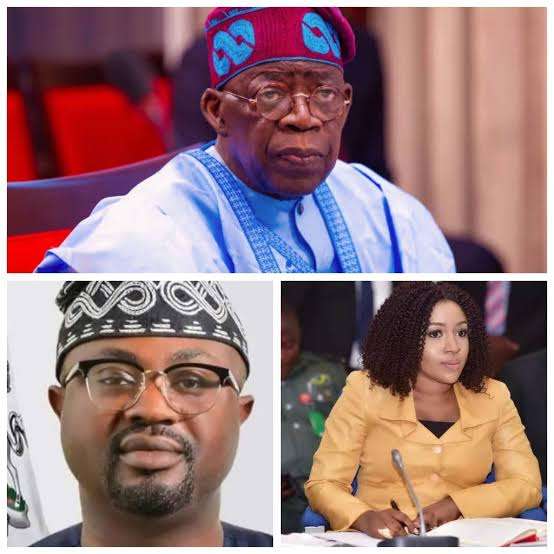
    As President Tinubu promises not to spare anyone found culpable by the probe of the fraud at the Ministry of Humanitarian Affairs and Poverty alleviation, shall we now call this frenzy a hurricane? Because that’s what it is beginning to look like. For many, the jury may still be out on the streets. But it will seem like President Tinubu don vex. That’s why one can, for the want of a better moniker describe the current disruption in the executive branch as the reveling of a Hurricane Tinubu on the Three Arms Zone which, to all intents and purpose, it is safe to say, Nigerians are savouring the storm.

    But many fear that President Tinubu may not have the liver to go the full hog in the battle to clear the swamp. As we say, Nigeria is so lucky. It does not suffer natural disasters, except that the effect of bad behaviour of our public officials’ wrecks havocs greater than the worst tsunami.

    What should have been a land flowing with milk and honey, Nigeria has been despoiled by the successive reign of kleptocratic and ruinous rulers who simply steal public funds just for the fun of it. The theft of public funds by politicians, civil servants and their associates exerts the greatest pressure on the public purse in Nigeria. It has been estimated that from independence in 1960 till date, over US$582bin had been stolen from the public treasury in Nigeria by those into whose care it was entrusted.

    Stealing by public officials in Nigeria has become so bad that it is the major feature that describes successive regimes since the dawn of the Furth Republic in 1999, such that every succeeding administration, from the President Olusegun Obasanjo government, through late President Yar’adua, till date, had been more corrupt than its predecessor, not only in terms of their ranking in the Global Corruption Perception Index but the actual heist.

    The greatest shocker was the eight years of unmitigated disaster that was the Buhari reign of banditry, theft, cluelessness, and ignominy. So, when the lid blew open on what has now been termed as BETTAGATE at the cesspool called the Ministry of Humanitarian Affairs and Poverty Alleviation, not a few Nigerians heaved a sigh of relief, hoping the Renewed Hope Agenda of President Tinubu had found an opportunity to get Nigerians to ‘vibe to its rhythm’, unbeknownst that the Tunji-Ojo hurdle would prove to be a litmus test too complex to decipher. Certainly, it proves how broad it is that ethnic bias is a Faultline in the fight against corruption.

    But President Tinubu must know better than to drop the ball at this point, just to save the career of a wily dealer whose ugly backside was revealed too early before attaining a crescendo when he would make the kill. Mr. President must know that he is the boss at whose desk the buck stops. It is his presidency for crying out loud! If he allows this buildup to stall, it may be sunset at dawn for his presidency. Bettagate presents a great opportunity for him to recalibrate and relaunch his regime’s chequered agenda.

    Before the big seizure at Hajiya Halima’s drawers that provided the tip-off leading to this cache, Nigerians gazed in vain into the midnight sky, on a daily basis, hoping they could locate a sign that gives confidence to hope in President Tinubu’s Renewed Hope agenda. The same Minister Betta Edu was one of the early signs that a gadfly of a lady constituted a major distraction to the realization of this agenda. Like her predecessor, Hajiya Sadiya Umar Faruk, she baffled Nigerians on a daily basis with unbelievable tales about how she was empowering Nigerians with magical cash transfers, even as many discerning individuals struggled to trace her footprints on the nation’s poverty landscape. As they say, it is many days for the thief, and one day for the owner of the house. Even the least endowed could tell that the economic empowerment strategy being deployed by the Humanitarian Affairs Ministry was nowhere near tackling the poverty challenge.

    Many expect that President Tinubu would be swift in clearing this Augean stable currently littered with the Bettagate scandal. But it would seem that the President has buckled, unable to surmount the Tunji-Ojo huddle. Many had foretold this difficult juncture with exactitude, basing their confidence on the suspicion that Tunji-Ojo represents the interests of some deadly masquerades at the seat of power. Recall that this was the same Tunji-Ojo of the infamous “Honorable Minister, off your mic” as he prevailed on then Minister of the Niger Delta, Senator Godswill Akpabio from spilling the beans about how he and other members of the National Assembly benefitted from contracts awarded by the commission.

    It is déjà vu all over, as it would seem like we are back at the President Muhammadu Buhari era when, as Senator Shehu Sani poetically put it, members of the kitchen cabinet caught stealing were deodorised with fragrance while others, who were not members of the cabal, were sprayed with insecticides if caught. This is why one can not, therefore, help but to be reminded of the pledge by then candidate Tinubu when he promised that his would be an administration that would continue from where Buhari stopped.

    In what seems like a resort to the usual distraction and subterfuge, the president has announced the suspension of the NSIP programme. Many think this is just to divert attention from the call for suspension of Minister Tunji-Ojo, pending the conclusion of ongoing investigation by anti-graft agencies to determine the extent of his involvement. To date, the white paper issued based on the probe of the NNDC contract scam is yet to see the light of day. Meanwhile, the same man pleading with the honorable minister to off his mic is now a minister of the Federal Republic. Is there any wonder, therefore, that he is enmeshed in another contract scam?

    This may be why many think that today’s Nigeria is a crime scene. It is actually a theatre of the absurd where it is one day one trouble. It is a vicious cycle where the rulers repeat the same outdated processes while expecting a different outcome. It can almost be predicted with certainty that this too shall pass as the report of the investigation shall be swept under the proverbial carpet that has become a burial place for probe reports and the white papers that are hardly implemented.

    President Tinubu needs to act differently if he truly desires to renew the hope of Nigerians in the ability of their government to be of help to them.
    This, too, does not cost an arm and a leg. All that is required is to be honest, truthful, and sincere in your dealings with the people. Simply put, act based on the rule of law.
    Ours is a constitutional democracy, where the constitution is the cookbook that is required to be methodically followed.

  • THE NEW TETFund: WHITHER MR INNOVATOR?

    When, fifteen months ago, the freshly retired federal Permanent Secretary, Architect Sunny Togo Echono, was appointed Executive Secretary(ES) of the Tertiary Education Trust Fund(TETFund) to take over from Professor Elias Bogoro, there was so much euphoric expectations towards moving the establishment to another level which would be more functional and more responsive to the ever evolving needs of Nigeria’s Educational sectors(specifically the public Universities, Polytechnics, and Colleges of Education). Unequalled dynamism was expected of the new ES for the nation to become a better player on the globalised educational stage of cutting edge competitiveness. These expectations were not misplaced as they drew from a well of precedents which had accrued to the highly rated former President of the Nigerian Institute of Architects, as well as during his equally acclaimed years traversing the Civil Service of the Federation during which time he had been variously described as highly reliable, diligent, thorough, dependable, professional, and innovative.
    The question that readily comes to mind now, however, is how much of these qualities have been brought to bear in the new Executive Secretary’s more than one year at TETFund and how much positive impact has it had on the Organisation?

    In the new spirit of accountability seemingly enveloping the whole Nation, at the onset of a new Administration, it is pertinent to interrogate the salient plans which Arc Sonny Echono spelt out in his inaugural speech, and judge him by his words, how much he has been able to match action with words or not.

    On resumption as the new Executive Secretary, Arc Sonny Echono did not mince words in setting up his agenda for TETFund. Items he spelt out included, but not limited to, Internal Reorganisation towards greater efficiency; swipe on Erring Contractors and staff of tertiary institutions in Overseas Training Funds; suspected Procurement Racketeering involving TETFund staff; Curriculum Review; Skills Acquisition and Entrepreneurship; ICT Advancement; Deepening Research Development and Innovation in Tertiary Institutions; Partnerships; and Books Publications.

    Analysis of the actions taken by the new ES even in the first one hundred days showed clearly the direction he was heading. He started by the outright cancellation and, or, suspension of programmes and consultancies considered to be of no special importance to TETFund. He followed this with disengagement of almost half of the members of the National Research Fund Screening and Monitoring Committee, considering their unclear roles, which were at best duplications of others, and therefore wasteful. The ES then rightsized the Technical Advisory Group for greater efficiency.

    Within one year in office as Executive Secretary, Arc Sonny Echono had approved numerous physical infrastructure projects which were undertaken in tertiary educational institutions all over the country. These included seven Universities Senate Buildings; seven University Library Buildings; forty two University Faculty Buildings; fourteen Polytechnic Faculty Buildings; as well as numerous Lecture Theatres; Lecture Halls/Classrooms; Administrative/Academic Staff Offices; Entrepreneurship Buildings and Equipments; ICT Buildings and Equipments; Male and Female Hostel Buildings; Vehicles; Perimeter Fencing, and many physical infrastructural projects scattered all over Nigerian Universities, Polytechnics and Colleges of Education.

    Financial administration has undergone some significant changes since Echono took over. There has been impressive achievement in Non-Statutory Revenue, while overseeing Government Agencies such as National Assembly Committees and Auditor General ‘s Office have been furnished with adequate information regarding queries and observations about financial activities of TETFund. There has been reasonable reduction in turnaround time for processing transactions in respect of Staff, Service Providers and Beneficiary Institutions.

  • CBN’s Monetary Policy Committee Meeting And The Frenzy

    The atmosphere in Nigeria’s financial sector is in a state of frenzy. Stakeholders are befuddled on why the apex bank’s monetary policy committee has not met. This is because the CBN had twice postponed the meeting under the leadership of its new Governor.

    The first postponement scheduled to hold shortly after the appointment of Mr. Cardoso and his four deputy governors, was obviously put on hold to enable them settle down.

    The reason could also be that the new management team needs time to study and digest President Tinubu’s 8-point agenda and current trends in the financial system to align them with his vision. Mr. Cardoso at the NASS screening had promised to ensure the independence of CBN.

    He also pledged to ensure that the CBN under his watch will play its role as a catalyst for growth, and adviser to the government. He said “his-CBN” will shy away from interloping responsibilities.

    It is also a common knowledge that President Tinubu had ordered a clean house of the Bank believed to have veered of its mandate under the immediate past governor.

    It is also a public knowledge and concern that the Naira has been under attack by speculators and rent seekers, a chronic headache for the Bank’s new helmsmen. Forex illiquidity has also become malignant. Thus, convening the MPC meetings amidst these challenges may not be an immediate priority rather they have been unobtrusively addressing and stabilizing the financial sector. The gains of these efforts are visible, though the parallel market is still chaotic.

    The postponement of what was supposed to be its last meeting for the year further heightens the palpable fear and uncertainties of the consequences of the MPC not meeting. Stakeholders’ fear cannot be dismissed as Nigerians battle economic hardship, rising food inflation and unbridled Naira depreciation.

    However, the CBN Act 2007 section 12 saddles the Committee to ensure price stability and support economic policy of the federal government. The Committee consists of the Governor as the chairman, the four deputy governors, two members of Board of Directors, two members appointed by the Governor, and two members appointed by the President to formulate monetary and credit policy.

    It is the highest policy making organ of the Bank responsible for reviewing economic and financial conditions in the economy. It also determines the appropriateness of policy applications in short to medium term, and regularly reviews Bank’s monetary policy framework, and adopt changes when necessary.

    The Act mandates the Committee to communicate monetary and financial policy decisions effectively to the public and must ensure the credibility of the model of transmission mechanism of monetary policy. It is to meet bi-monthly, except otherwise (as it is the case presently) or on emergency.

    Until the appointment of the present CBN Governor, the Committee had met four times under the last dispensation. It is also a public knowledge that boards of federal parastatals and agencies were dissolved by the President with many yet to be reconstituted.

    The CBN board is one of those dissolved and yet to be reconstituted, neither is it a public knowledge that the President has nominated his two candidates. Hence, the Bank presently does not have the required number to form a quorum, nor the Governor and his deputies have the constitutional mandate to overtly make certain monetary policy decisions without the approval of the Board.

    The concern by the public is normal particularly the way economic saboteurs have been attacking the Naira and manipulating the parallel forex exchange market. The concern is also noted considering the latest inflationary figure, 27.33%, released by the National Bureau of Statistics (NBS).

    But to allay the fears of the public, the Bank’s spokesman, Dr. Isa Abdulmumin had on the eve of the scheduled September MPC meeting issued a press statement to announce its postponement. He regretted any inconvenience the change in date may have caused the Bank’s publics.

    The hullabaloo over non-holding of the meetings may have been misplaced but expected. And with Nigeria’s current economic reality, it behooves the economic managers to be strategic in meeting economic saboteurs at their wits ends.

    Notable economists and financial technocrats have entertained worries over continuous postponement of the organ’s meeting. They believed it may further heighten economic uncertainties. Mr. Boluwafemi Agboladun, a chartered accountant, expressed fears that the silence from the Bank amidst economic turbulence is unsettling as no concrete reason was given for not holding the meetings.

    He was however quick to add that the strategy adopted so far by the new management of the Bank is yielding positive dividend. There is stability in the forex market, and Naira exchange rate is no longer volatile. The strategic management adopted by the CBN so far, he noted, is commendable, making currency peddler unsure of what next is coming out from the Bank.

    Agboladun also felt that the new CBN Governor may have decided to start the new year with his own monetary policy calendar after he would have gotten a clear heads-on of the fiscal direction to align it with his monetary policy philosophy. He stressed that, it is better for the CBN and the government to have a clear distinction in roles, unlike the muddled and overlapped responsibilities witnessed in the last administration.

    Feranmi Deepak, a public commentator, was not surprised that the meeting, though statutory, has suffered two postponements. He was only worried that the outcome of the meetings would have avail the public of the monetary policy direction of Mr. Cardoso, as it would have road mapped investment decisions by local and foreign investors.

    The CBN, he observed, may also be taking its time coming out with its agenda. This, he noted, may be due to the ongoing economic diplomacy drive of the President who has been unrelenting in his travels, marketing Nigeria. Therefore, the CBN, he said, “may be collating all he has been saying to the investing community to develop its monetary policy roadmap as government banker and advisor”.

    He was optimistic that the MPC meeting would assume its normal mode next year, when probably the President in his wisdom would have reconstituted the bank’s board to allow for normalcy in its calendar and restore stability in the financial sector.

    *Ademola Oyetunji writes from Ibadan

  • Misapplication Of Discretion In Judicial Proceedings In Nigeria

    By Douglas Ogbankwa Esq.

    Justices, Judges, Magistrates and Presidents of Area and District Customary Courts in Nigeria are very powerful.

    What they say and write is the Law, which you must obey. The latitude and discretion however given to My Lords, Their Worships and Their Honours are however too wide and sometimes unfettered. This could give room for abuse and perversion of Justice. It was Lord Atkins that said ‘Power corrupts and absolute power corrupts absolutely!’.

    The following are some practices and procedures in the Justice Delivery System in Nigeria, which require guidelines to ensure a uniformity of the Application of the Law and Discretion in the Nigeria Legal System. Same is currently now being abused and misapplied by some.

    1.Ex Parte Orders or Interim Injunctions: Ex Parte Orders or Interim Injunctions are orders that are made for the time being, usually to provide succour for a person in an urgent situation, in a way that if you do not do so, the res-subject matter will be destroyed.

    This Procedure is being abused by some Nigerian Judges, Magistrates and Court Presidents, who some times determine the main issues in a matter at the Ex Parte Stage. There are no guidelines for the issuance or refusal of Ex Parte Orders. Judicial Officers usually hide under the hazy and nondescript concept of the word “Discretion”, to do what ever they wish, even if some times such is not allowed by Law.

    My Noble Lord, The Chief Justice of Nigeria (CJN), must as a matter of urgency provide a Practice Direction to establish the compass of how to and how not to grant Ex Parte Injunctions. This should be like the one that was given that stopped conflicting Judgments of Courts. This is very important to delimit the ambit of the Law on this subject and make the granting and refusal of Interim Injunctions ascertainable.

    It will also stop the current practice of some parties going about looking for Interim Injunctions. There should be pointers to the grant or refusal of same, pointing to the names of the parties, whether they are juristic persons, the jurisdiction of the Court to hear and determine the main matter before the determination of an Interim Injunction, whether there is real urgency, which must be established and not by mere deposition in an affidavit of urgency.

    For example, the Judge will ask the question, “What will go wrong in the event that the order party is put on Notice?”

    Will the heavens fall? The current practice of any thing goes in the grant or refusal of Interim Injunction is  one of the reasons for the perceived  disdain with which the Legal Profession is viewed in Nigeria today.

    The Narrative among the public is not palatable. While I concede that Judges do not give their Verdicts based on Public Perceptions, the Judiciary should however realise that the general public are the customers of our Judicial System and like a good Customer Care Service , it is important we get the feedbacks from the public, to know how we can improve our services .We must not operate among people that live on earth and act as if we live in planet Mars. There must be a symetry of purpose between the Law and the Society.

    2.The need for sentencing guidelines:

    The Concept of Sentencing is a creation of Statute and Case Law. If the Body of Laws says you can give an option of fine, why should a Judicial or Presiding Officer Order otherwise? The needless imprisonment of Citizens is one of the reasons our Prisons are congested.

    There should be a uniform Sentencing Guideline issued to all Judicial and Presiding Officers, which My Lords, Their Worships and Their Honours should subscribe to and apply to the Letter. A Matter with the same facts and circumstances should not be determined in a different manner. This will obviate the abuse of Sentencing Powers of Judicial and Presiding Officers to preclude them to be too excessive or too mild in exercising their sentencing powers.

    3.Granting of bail

    The Granting of Bail by Judicial and Presiding Officers even require more streamlining as it the most abused of the discretionary powers of Judicial and Presiding Officers. Bail is no longer entirely at the discretion of Court.

    The Administration of Criminal Justice Law Act and Laws of different States have indicated Matters in which a Judicial and Presiding Officer must grant bail. So ,it is no longer a privilege to the Defendant for such Matters indicated in the Administrative of Criminal Justice Act (ACJA) and  the Administration of Criminal Justice Law (ACJLs), but a right, for which they could even seek redress ,if denied Bail.

    To this end, to ensure that the Law is followed in symmetry l, Guidelines should be issued stating all the Offences and conditions therein for Bail, which should follow the Statute creating the Offence and should not be too excessive or too mild. This is to avoid allegations of bias, malice and ensure Judicial Powers are exercised, with out affection or ill will.

    4.Election petitions

    Election Petition Cases though sui generis, appear mysterious and esoteric in the way and Manner that two Election Petition Cases for example, in the same State, in two Constituencies, will be determined differently by the same Panel, with the facts and applicable authorities being the identical, evaluated differently to reach a different conclusion.

    This is completely unacceptable!

    Election Petition Cases are even more grave, because they deal with the destiny of the Local Governments, States and Country.

    To this end, I recommend that only retired Justices and Judges of the applicable Courts are used for Election Petition Matters and Appeals.

    This will also ensure that cases in the Courts do not suffer owing to the absence of Justices and Judges that conduct Election Tribunal Cases and Election Appeal cases respectively.

    There should also be penalties for Members of a Tribunals and Appeal Panels who fail, neglect and/ or refuse to follow Judicial Precedents set by higher Courts of Records and their own Court, when the facts and circumstances of the Matters decided are on all fours, with the referenced Judicial Precedents .The scenario above should also be applicable to the Court of Appeal and Supreme Court that reverses themselves intermittently with out any new facts or Law arising .In those days, the Supreme Court hardly reversed itself ,the proliferation of reversal of decisions of the Supreme Court is quite worrisome and leaves much to be desired .

    Justices of the Supreme Court and the Court of Appeal should no longer be Members of the National Judicial Council hereafter called the NJC. We can get a retired Chief Justice of Nigeria hereafter called the CJN or retired President of the Court of Appeal, hereafter called the PCA to be the Chairman and Vice Chairman respectively of the NJC and retired Justices of good standing as Members, by way of Constitutional Amendment.

    If you Complained against the CJN, a Justice of the Supreme Court hereafter called JSC or a PCA who investigates it at the NJC and how do we guarantee the transparency of the Process, knowing that the Judicial Officers indicated above are Members of National Judicial Council (NJC ). Even when they say they will recuse themselves there appear to be a conflict of interest in the Structure of the  National Judicial Council (NJC), which requires an urgent review.

    5. Tendering of Documents: Documents to be tendered in Court have minimum Standard of meeting the admissibility test as indicated by Statute and Case Law. These Legal Standards should be followed to the Letter. Admission of Documents in a Trial is not discretionary ,it is mandatory ,when it has met the relevance and admissibility test .There should be a uniform system in place by way of Guidelines to ensure uniform standard in the admission or rejection of a document at trial , that has met the relevance and admissibility test or otherwise.

    The Applicability of these Principles above will ensure a certainty of process and more fairness in the Administration of Justice in Nigeria. Our Judicial System as it is currently, could be manipulated as it is open to abuse. We should use the matter of the recently conducted United States Elections as a Case Study .All the Cases filed by Donald Trump and his team never saw the light of day ,due to established precedents spanning centuries . Perhaps, if same scenario played out in Nigeria, the out come would be different.

    Justice Chukwudifu Oputa aptly captures the dilemma Nigerians face as it concerns the Supreme Court, when he, a former Justice of the Supreme Court stated thus:

    *We are not final because we are infallible, we are infallible because we are final*.

    *About the Author: Douglas Ogbankwa Esq. Is a Lawyer, Writer and Policy Analyst. He is the Convener of the Vanguard for the Independence of the Judiciary (V4IJ). *douglasogbankwa@gmail.com

  • Tweaking The CBN Act, NASS Must Tread With Caution

    Tweaking The CBN Act,                                                                                                                                                                                                                                               NASS Must Tread With Caution

    The ongoing effort by the National Assembly to tinker with the Central Bank of Nigeria’s Act, 2007, has been generating heated debate within the polity. The concern has been the rationality of the exercise.

    This effort is spearheaded by two distinguished Senators, Senators Steve Karimi and Darlington Nwokocha. The bills are – ‘A Bill to Amend the Central Bank of Nigeria Act 2007, and Matters Connected Therein’, and An Act to Amend the Central Bank (establishment) Act 2007 to Make the Central Bank More Transparent and Accountable in its Operations and to Ensure Enhancement of its functions and for Connected Matters’.

    The crux of the two amendments already consolidated by the Senate is the ban on the CBN governor and his deputies from partisan politics, reconstitution of the CBN Board; subjection of CBN staff remuneration to the Salaries and Wages Commission; and ceding the position of the Board Chairman to a person outside the CBN. Also proposed prohibition of use of foreign currency in local transactions. Until this proposal, the Governor doubles as the Board Chairman.

    The preoccupation of the sponsors of the bills is to enhance transparency and efficiency of the Central Bank of Nigeria, and to strip its governor of certain powers. The Senate Committee on Banking and Finance is saddled with the responsibility of reviewing and working on these bills for the Senate to take a position. Whatever is the expectation of the sponsors, it is important that the National Assembly does not in a spasm of emotion erode the independence of the Bank. CBN Act 2007 had settled this.

    It was a common knowledge that the immediate past CBN governors hiatus and unprofessional conduct by engaging in partisan politics may have warranted this quest.His action was an infraction,and antithetical to his oath of office. It was also against the norms of central banking ethics. Anger against a rare singular infraction should not be used as an excuse to cripple a vital organ of government as the CBN. It amounts to throwing the baby away with the bath water.

    An International Monetary Fund (IMF) working paper titled: The Role of Board Oversight in Central Bank Governance: The Legal Design Issues describe the Central Banks as a public law institution established to fulfill essentially sovereign functions delegated to them by the State. It admitted that certain central bank laws explicitly prohibit certain operations. Continuing, the paper said, for a central bank to be effective, it must enjoy a high level of autonomy vis-à-vis both political institutions and private economic interest. This autonomy it enumerated as: institutional, functional, personal, and financial. Institutionally it said the central bank should not be influenced by the State or private third parties in its decision-making in the context of the performance of its functions, e.g., through ministerial instructions. Functional points to its capability to implement its functions without direct governmental interference, and Personal ensures that key decision makers of the central bank (Governor and members of the Executive Board, Monetary Policy Committee and Oversight Boards) are autonomous from political and private economic interest. The Financial entails the capability of the bank to pursue its mandate by way of the financial means required to do so (the emphasis is mine).

    Banning the CBN governor and his deputies from partisan politics is a good proposal, and well approved. But to appoint/impose an outsider as the chairman of the board other that its governor is incongruous with global central banking practice. Typical of our clime, as being proposed will not augur well for a critical institution as the CBN. The infraction of its former governor – highly condemned, is not an excuse to deal a fatal blow on the Bank. It amounts to killing a fly with a sledgehammer.

    Subjecting its staff salaries to an external body violates the financial independence of the Bank. Infractions committed by its former governor have nothing to do with staff welfare. There are other organs of government earning far higher than the CBN staff, yet the legislators turned the blind eye.

    Why are all eyes on the CBN? Are the Nigeria National Petroleum Plc staff salaries a subject of scrutiny by the National Salaries and Wages Commission, the Debt Management Office (DMO), the Nigeria Deposit Insurance Corporation (NDIC), and many others? It is public knowledge that the staff of some of these agencies earn fantastically higher, (excluding other perks) than CBN staff.

    The Central Bank of Nigeria like its peers is the heart of the monetary system of the country. Nigeria’s economy is influenced heavily by the actions it takes, thus, any spasm of irrational decisions to alter or whittle what international investors and global partners would see as an erosion of the Bank’s independence, will further hurt the already fragile economy. It Was the Central Bank of Nigeria during the COVID-19 pandemic that ensured the stability of the economy while other organs of government were at a loss on what to do. The CBN should not be politicized. What happened under Godwin Emefiele was a rash decision that should be treated in isolation.

    Amending the Act is not investor friendly, and it should be jettisoned. It will also encumber the effectiveness of monetary policy, and once the institution is seen as an appendage of the political class, there will be loss of faith, and confidence, in the economy. Ultimately, the economy will suffer for it.

    Mr. Uche Tochukwu, a financial expert, said tweaking the CBN Act Now because of what happened under Godwin Emefiele will hurt the economy and the integrity of the CBN. He welcomed the decision of the lawmakers to ban the Governor and his deputies from partisan politics but frowned at appointing an outsider as the Bank’s Board Chairman. He said it is an aberration. Tochukwu called the attempt to subject the CBN staff salary to Salaries and Wages Commission as meddlesomeness. What about their own opaquely fatty allowances the public has decried? Doing that, they advised, will kill the morale of the staff. Are we even sure the staff are earning fantastically, he asked?

    The legislators should get serious with other national pressing issues in the economy rather than tampering with the CBN Act.Dr. Babatunde Adisa, an economist said. He said, globally, the independence of central banks is high advocacy, why are our own legislators thinking of reversing the CBN gear of progress. He said those advocating for the weakening of theCBN governor’s power or administration of the institution are not in tune with reality.

    Thus, the National Assembly should be guided as posterity will not forgive them if they are resolute on this unprofitable voyage.

    *Chisom Adindu writes from Umuahia, Abia State.

  • Naira Redenomination Is Speculators’ Antics

    Naira Redenomination Is Speculators’ Antics

    Naira Redenomination Is Speculators’ Antics

    The issue of Naira redenomination started gaining traction on social media around September 2023. It was believed that the trending misinformation was the handiwork of some drunks in a Chinese bar”, idled, and needed to ruffle the economy’s feathers. The Central of Nigeria has denied the trending malicious story.

    Unperturbed though, the perpetrators retreated awhile, and recently, the malicious misinformation started gaining traction on social media. One may wonder what their motive is. No soothsayer is needed to know that economic saboteurs are at work again, but to gain what?

    The attack on the Naira is one of the many products of corruption bedeviling the nation. Others include untamed obnoxious taste for foreign items, and utter disdain for locally produced items (often of better quality than their foreign counterparts), mono-economy, – dependence on oil, forgetting that the foundation and strength of the economy was agriculture.

    Monumental legacies adorned the nooks and crannies of the country that are attestation to what agriculture did before the petrol-dollar craze. Agriculture was later neglected. The scramble for fast buck from oil till date incapacitated the economy. No effort was made to diversify the economy. At a time in the history of this economy, a regime once told the world that Nigeria’s problem was not money but how to spend it.

    Profligacy became the order of the day. Corruption crept in, and scrambles for power to get a bite of the oil ‘cake caused successive military coups. This was in connivance with corrupt civilians. Every successive administration embarked on primitive acquisition of wealth stolen from our commonwealth. Mediocrity reigned, leadership selection became “paddy-paddy, and merit took a flight. Some past leaders sought power for power’s sake, clueless of what to do with it. The economy was on autopilot, burdened, and still suffering from those uncoordinated and rudderless inactions. The economy has been in chains while the masses bear the brunt.

    The descent to this ignoble state started before1986 and became a reality with the introduction of Structural Adjustment Programme (SAP). It was the onset of gradual destruction of all economic fibers of Nigeria. A leader at the time frustratingly retorted that ‘the Nigerian economy defied all economic theories.’

    Little did he know that vultures and vampires had taken over the economy, and ever since the economy has been under attack. Still the only legacy we hold onto, the Naira, is under serious threat now.

    They took over and destroyed all the refineries, made them non-functional despite trillions of Naira spent to fix them. They destroyed the Power Holding Company of Nigeria (PHCN),and bought them over under the disguise of privatization, leaving us with what we have today – darkness.

    The Nigerian Airways, and Nigeria National Shipping Line are all moribund, yet investors who professed competence and business acumen bought them. They hijacked the Nigeria National Petroleum Company (NNPC) making all refineries derelict.

    Fuel importation and subsidy was introduced through which the economy was sucked. No past regime had the political will to end the obnoxious regime.

    But since this regime took the bold decision to remove fuel subsidy and harmonize the exchange rate, the economic vampires and the vultures have swooped on the economy, baring their fangs ferociously on the Naira.

    While other oil producing nations are reaping bountifully from oil, building infrastructure, and bettering the welfare of their citizens, Nigeria, the 6th oil producing nation in the world is wallowing in poverty, corruption, darkness, yet its leaders are unperturbed.

    Those calling for the redenomination of the Naira are the faceless ‘owners’of Nigeria, attacking the economy with the main aim of wrecking it to enable them to take it over. They have gained, and still gaining bountifully from every crisis of the past.They are determined to destroy the Naira.

    Their grouse may have been the current administration’s gut to take away the fuel subsidy. They have the war chest – hoarded foreign and local currencies, through the BDCs they own. They are rich and entrenched individuals, using their ill-gotten wealth to attack the Naira.

    Their call for the redenomination is to cause disaffection between the government and Nigerians, thereby bending the hands of the government backward.

    When in 2006 the Republic of Zimbabwe redenominated its currency at the rate of 1,000 old Zimbabwean note to one Zimbabwean dollar, it was because of hyperinflation.

    The newly independent nation probably got carried away with the euphoria of independence and forgot to do the real business of governance.

    Things spiraled out of control, the currency began to lose value because of the taste for foreign goods, no effort to develop local capacity, and the currency suffered. The Republic of Ghana that plied same route thought it had no better option than to redenominate in 2007.

    If it must be recalled, Ghana’s hyperinflation between 1977-1983 hovered between 116% and 123%. The reason the government gave for taking the action was to reassert the monetary sovereignty of Cedi.

    The government was conscious of the fact that if Ghanaians should lose confidence in the currency and begin to embrace other foreign currencies as store of value, there will be problems.

    Another reason it gave was years of economic decline that took a toll on the Cedi. In fact, it was to arrest the spiraling hyperinflation that threatened the country, and to also make it easy for accounting and statistical purposes.

    According to the authorities, they believed it would be easier to maintain by setting 10,000 Cedis to be 1 Ghana Cedi.

    Has the Nigerian economic situation reached what can be compared to the Zimbabwe or Ghana situation? The answer is No. The problem with Nigeria is corruption and greed, self-centeredness, obnoxious foreign taste, and disdain for what she produces. Nigerians do not eat what they produce, nor produce what they eat.

    What the purveyors of this malicious misinformation set to achieve is to arm-twist the government and the CBN to do their bid and redenominate to suit their criminal desires.They are presently clueless about what the government is doing going forward to address the economic challenges, and the exchange rate as it unfolds its economic reforms template.

    The CBN said in its latest press release on the issue that, the masterminds of this fake news had in September circulated same through a misleading WhatsApp message, and rather than retracing their steps have become recalcitrant “in their mischief, (and) modified text eked from an old policy move by a previous CBN Governor in 2007 to make it appear recent”.

    It read, “For the avoidance of doubt, there is currently no plan by the Bank to restructure and redenominate the Naira. While the Bank may be considering reforms, such are subject to laid-down procedures in line with the provisions of the CBN Act 2007”.

    Nigeria, hugely endowed with human and natural resources, and rated as the largest economy in Africa was recently warned by the International Monetary Fund (IMF) that if the urgent necessary reforms are not introduced to address its economic challenges, South Africa by 2024 may become the largest economy in the continent.

    Patriotic citizens of some thriving economies in the continent are supportive of their governments’ efforts for a better living standard, but here at home, the reverse is the case.

    Thus, if Naira is destroyed, what legacy would we have as a nation?

    Ademola Oyetunji writes from Ibadan.