Tag: President Bola Tinubu

  • Tinubu’s contemptuous of Nigerians


    “Tinubu was a two-term governor of Lagos state from 1999-2007. At that time, he was ruthless and manipulative. The only person that mattered to him then, and now, was himself. His manipulative nature and self -centredness can be attested to by a faction of Afenifere, the umbrella Yoruba sociocultural-cum political organisation.”

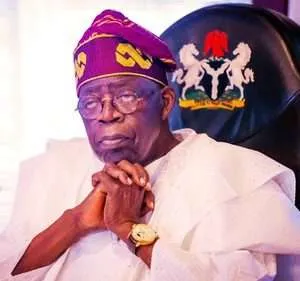
    IN their heart of hearts even the most ardent supporters of Nigeria’s president know that Alhaji Bola Ahmed Tinubu is contemptuous of Nigerians. But in fairness to him, his contempt for the people did not just manifest after he was controversially and surreptitiously awarded the presidential election by the corrupt and inept ‘Independent’ National Electoral Commission (INEC) in the dead of the night on March 1, 2023.


    Tinubu was a two-term governor of Lagos state from 1999-2007. At that time, he was ruthless and manipulative. The only person that mattered to him then, and now, was himself. His manipulative nature and self -centredness can be attested to by a faction of Afenifere, the umbrella Yoruba sociocultural-cum political organisation. For his ruthlessness, those who have had to cross his path in his decades – long pursuit of his political and economic ambitions (which by the way cannot be separated), including survivors of the families of his rivals, have a tonne of tales to tell. They are not palatable stories. If Afenifere is today fractionalised it is down to the ruthlessness and selfishness of one man.


    A Legacy of Heist

    In the preceding paragraph we said that Tinubu ruled Lagos state for eight years. No. We were wrong. Until he was created as Nigeria’s president last year, Tinubu remained the de facto governor of Lagos. He still is. He is like the animal called ikiri among Ndigbo. Once this animal has its hands on a prey or its mouth in a cookie jar, it will never let go. Tinubu does not let go. Former Vice President, Alhaji Atiku Abubakar, alluded to this avaricious nature of Tinubu in his press statement last week. Atiku named two companies which have long been associated with the president – Alpha Beta and Primero – which he alleged constituted direct financial pipelines from the coffers of Lagos state government to an individual’s bank account.


    Atiku had alleged in a press release that “Nigeria is rapidly transforming into a government of Tinubu, by Tinubu, and for Tinubu”, and that the “future of Nigerians has been effectively mortgaged to President Bola Tinubu, his family, and associates “, so much so that even when Tinubu leaves office, it will be nearly impossible to break the shackles. He alleged that: “Just as Alpha Beta, Primero, and others act as Tinubu’s proxies in Lagos, managing critical sectors and generating revenues for him, and his family, he has begun to replicate this at the federal level”.


    The former vice president spoke in the wake of the shenanigans between the state oil corporation, NNPCL, its retail arm and a private firm, OVH. Wale Tinubu’s Oando is alleged to own 49% of OVH. Wale Tinubu is reportedly a cousin to Bola Tinubu who, in addition to being Nigeria’s president, is also the country’s petroleum resources minister. NNPCL has refuted the linkage.


    Whether the mounting allegations of governance malpractices against Tinubu are true or not, it has to be noted that the tell-tale signs of the proclivity of the man have been in the public domain for at least 25 years. The fear of a section of the population that the president will be tempted or disposed to making Nigeria a bigger specimen of Lagos was not diminished by the boasting of Mrs. Oluremi Tinubu, the president’s wife in 2023, to the effect that her family had been so blessed materially and financially that they would have no need to live off the paltry resources of Nigeria. Within 14 months her boasting which she reportedly made on the altar of God, a merciful Father and a consuming fire, has turned out not to be true. Oluremi Tinubu is said to be a pastor of the Redeemed Christian Church of God.


    Lies About Subsidy

    Tinubu’s contempt for Nigerians started the very day he took his oath of office and oath of allegiance. Before that day actually. Right on the podium at the Eagle Square in Abuja on May 29, 2023, the president decreed the immediate scrapping of petrol subsidy. By the time he made this weighty declaration, his regime as personified by a Cabinet was not in place. There was no evidence that he consulted anybody including stakeholders in that sector of the economy. His rationalisation was that the petrol subsidy would bankrupt the country, and that his rivals to the presidency had promised to do the same during the campaigns. Both were lies because the regime is currently paying more for petrol subsidy, and the presidential candidates may have promised to remove petrol subsidy but there was no unanimity on how to do it. Tinubu took that action not because he did not know the implications and dire consequences of the move. He knew but he proceeded to do it anyway because he holds Nigerians in disdain. He probably enjoys seeing faces contorted in pain. What a pervert! This same man had in January 2012, eleven years prior, warned President Goodluck Jonathan, in an open letter, of the inevitable deleterious effects of subsidy removal. He was then the leader of the opposition party. The very things he predicted would happen in 2012 if Jonathan scrapped petrol subsidy happened in 2023 when he went against his own counsel- prices spiked, the economy nose-dived, inflation rose, poverty heightened and despondency spread.


     The Devaluation Woes and Petrol Scarcity

    His statement of ‘subsidy is gone’ was made in May of 2023. The very next month, in June, he devalued the Naira, and left the value of the national currency to the so-called free market forces. Again, his rationalisation was that the federal government could no longer afford to defend the Naira. Did this sound similar to his excuse for petrol subsidy removal? Tinubu yet displayed a disdain for Nigerians, lack of empathy, unconcern for the privations citizens were grappling with on account of petrol subsidy removal, and little knowledge of basic economics. Nigeria virtually exports nothing of value except crude oil over which it has no control of the price in the international market. Tinubu prides himself as an accountant with global clout but failed to realise that the massive devaluation of the national currency would only be more beneficial if the country was a net exporter of goods and services. Naira devaluation succeeded only in creating employment abroad, driving remnants of manufacturers away, forcing domestic producers to close shop, and exacerbating the import of inflation. The tragedy is that Nigeria is trapped.


    And to imagine that in spite of the dizzyingly devaluation of the Naira, the central bank is still defending the currency. The Tinubu regime has continued with the Muhammadu Buhari style of using the foreign reserves and hot money (foreign portfolio investments) to prop up the value of the Naira. Nigerians now scoff whenever the government boasts about the accression to the reserves because they know that at any point in time a significant portion of the reserves is encumbered.


    In barely one year the exchange rate of the Naira to the dollar has plummeted from about N700/$1 to over N1,600/$1. And we have not seen the end of it. The situation is worse in the petrol subsidy sector. Before Tinubu, about N3 trillion Naira was claimed as subsidy in one year. In 2024 which will be the one full year under Tinubu after discounting May – December 2023, the central bank is projecting that about N5 trillion would be expended on the same subsidy that was scrapped last year.


    But the projected expenditures on the so-called subsidy on petrol is the least of the problems facing Nigerians. The greater concern is that while the erstwhile subsidy regime was riddled with brazen corruption, the extant government has further made its administration opaque. For a start, there was no provision for subsidy in the 2024 national budget. However, subsidies have been incurred since January, indeed since the second half of 2023. Presently, petrol is scarce in many parts of the country. This was supposed to be one of the ills that the regime said that the removal of subsidy will cure. But in the fifteen months since petrol subsidy was supposedly yanked off, the country has suffered at least four bouts of scarcity.


    One litre of petrol currently sells for anything between N700 and N1,200 in parts of the country. In some locations, one litre of petrol costs as much as N2000. But the official price ranges from between N620-N750 per litre. However, as at the last count the landing cost of the product was put at about N1,150. So going by the official selling price and the reported landing price, there’s a price difference of about 50%. In other words, the proclamation last year that subsidy was gone was a lie. The NNPCL which is a cesspit of corruption has said it is absorbing the difference and that it was not paying any marketer any kobo for subsidy. What this means is that NNPCL is the sole importer of petrol; it determines the quantity it imports; it is responsible for determining the number of litres we consume in the country; and, it calculates the amount of subsidy per litre. On this issue NNPCL is a monopoly. But who will query an agency which reports to President Tinubu who doubles as the petroleum resources minister. Some other Nigerian presidents appointed oil ministers but not Buhari, and so far, not Tinubu. If this arrangement under the successive regimes of the All Progressives Congress (APC) does not mirror corruption, then it will be hard to find what does.

    *Next week we’ll continue this interrogation with a different headline highlighting political malpractices and governance malfeasance.


    Ugo Onuoha
    Former Managing Director/Editor-in-Chief
    Champion Newspapers Ltd


  • Youths Protest Sokoto Emir’s killing

    Youths Protest Sokoto Emir’s killing

    As President Tinubu and the political elite reduce governance to the pursuit of personal fancies, life in Nigeria has become nasty, brutish and short.
    In Sokoto for instance, a large group of youths from Sabon Birni Gobir Local Government Area has protested against the abduction and brutal killing of Alhaji Isa Muhammad Bawa, the Sarkin Gobir of Gatawa District.
    The demonstration erupted following Bawa’s death, which occurred on Wednesday after he was kidnapped and violently killed by his captors.
    Footage obtained shows the protesters marching toward the residence of Sokoto’s deputy governor, Alhaji Idris Muhammad Gobir, setting tires and other objects ablaze along their route.
     Their protest reflects their demand for justice and greater action to address escalating violence in the region.
    The protest comes amid reports that Alhaji Bawa was buried without his body present due to the circumstances of his death.
    A video surfaced showing Bawa pleading for help before his death, which was confirmed after the terrorists’ demand for a ransom of N60 million and five motorcycles for his body.
    The kidnappers initially sought N1 billion for the release of Bawa and his son, who were abducted in July.
     The distressing video of Bawa, captured in captivity, shows his desperate pleas for assistance.
    In response, President Bola Tinubu has condemned the attack, calling it a grave and unforgivable act.
    He has extended condolences to Bawa’s family, the Gobir Emirate, and the Sokoto State government.
  • Council of State didn’t pass vote of confidence in Tinubu

    Council of State didn’t pass vote of confidence in Tinubu

    A fresh revelation has emerged, contradicting earlier claims by Kwara State Governor AbdulRahman AbdulRazaq that the National Council of State (NCS) passed a vote of confidence in President Bola Tinubu at its inaugural meeting last week.
    It has been uncovered that no such confidence vote was taken.
    Recall that according to Governor AbdulRazaq, who also serves as Chairman of the Nigeria Governors’ Forum (NGF), the Council and the NGF jointly passed a vote of confidence in President Tinubu.
    “The high note of the (Council) meeting was a unanimous passage of a vote of confidence on President Bola Ahmed Tinubu GCFR, Commander in Chief of the Nigerian armed forces,” the Kwara governor said.
    However, a high-ranking official present at the meeting has come forward to dispute this claim, describing it as “a dummy sold to reporters.”
    The official said the Council of State is a serious advisory body, comprising esteemed members, including former Presidents, Heads of State, and top judiciary and legislative officials. The meeting, the source said therefore cannot be likened to a town hall gathering, where such votes are commonly taken.
    “The meeting is a very serious one that has a list of to-do things which we call agenda or agendum. There was nowhere a motion for a debate on whether or not to pass vote of confidence was on the agenda of the meeting. In any case, I know that such votes are passed in a Parliamentary system of government, and Nigeria runs a presidential system,” the Authority Newspaper quoted the official as saying.
    According to him, “after the end of the Council meeting, Attorney-General of the Federation, Mr. Lateef Fagbemi, suggested that, in the light of the #endbadgovernance protests, it would be good for the Council to show solidarity with President Tinubu,” offered the official.
    “No sooner had the AGF made the proposal than Senate President Godswill Akpabio rose to, in his words, second the motion for Council to pass a vote of confidence on President Bola Ahmed TinubuTinubu,” adding, “to be fair, no former Presidents/Heads of State, nor governors present at the meeting commented on the motion by Fagbemi and Akpabio,” he narrated, adding, “I’m sure the former leaders at the meeting must have been thoroughly embarrassed by Governor AbdulRazaq’s claim.
    Former Presidents Goodluck Jonathan and Muhammadu Buhari were physically in attendance at the meeting.
  • Dangote, others: Crude sales begin Oct 1

    The Federal Government has disclosed that sales of crude oil to Dangote Refinery and other local refineries will commence October 1, 2024.


    The Minister of Finance and Coordinating Minister of the Economy, Wale Edun, made the announcement during a meeting with the Implementation Committee on Monday in Abuja.


    According to a post on the official X (formerly Twitter) page of the finance ministry, the meeting was to review progress on key initiatives.


    At the meeting, key roles were outlined for stakeholders, including the Nigerian Midstream and Downstream Petroleum Regulatory Authority, Central Bank of Nigeria, Nigerian Upstream Petroleum Regulatory Commission and the African Export-Import Bank to ensure smooth implementation.


    The post read, “The Minister of Finance and Coordinating Minister of the Economy, Mr. Wale Edun, today led the Implementation Committee meeting on the transition to crude oil sales in naira.


    “The meeting reviewed progress on key initiatives, including the upcoming commencement of naira payments for crude oil sales to the Dangote Refinery starting October 1, 2024.”


    Also, the Executive Chairman of the Federal Inland Revenue Service, Dr Zacch Adedeji, and the Chairman of the Technical Sub-Committee reported that “The first PMS delivery from Dangote is expected next month under existing agreements.”


    It also stated that updates were provided on the Port Harcourt and Dangote Refineries were also provided, with significant production increases expected from November 2024.


    The minister emphasised the need for transparency and directed the Technical Sub-Committee to finalize details and prepare a report for the President, confirming that his directives are on track for implementation from September.


  • Alleged Bribery Saga: Ganduje for Ambassadorial soft-landing

    “However, Ganduje is lobbying hard to retain his seat, going from pillar to post and complaining bitterly to Chief Bisi Akande about the president’s decision to ‘retire’ him from politics…”
    Baring last minute changes, President Bola Tinubu has reportedly tipped the national chairman of the All Progressives Congress, APC, Abdullahi Ganduje, for ambassadorial appointment in any African country.
    Tinubu had first delegated the Senate President, Godswill Akpabio, to break the news to Ganduje to save him from the ongoing corruption trial he is facing in Kano.
    Recall that Ganduje, whose 2018 bribe videos caused him public ridicule, is facing corruption charges alongside his wife, son and other accomplices to the tune of over N50 billion.
    According to Daily Nigerian, inside sources who confirmed the ambassadorial appointment said Ganduje complained and tacitly rejected the president’s offer, explaining that the charges against him were tissues of lies and would win his cases in court.
    “Is this the way the president will reward my loyalty? Besides, I am too old to go for ambassadorial posting. All the charges are tissues of lies, and I will win my case in court,” Ganduje was quoted as replying to Mr. Akpabio.
    President Tinubu was said to have personally informed Ganduje of the diplomatic posting plan and offered him three choices in Africa, Asia and Europe.
    However, Tinubu’s preference was to post him as Nigerian ambassador to Chad, having served in Ndjamena as the executive secretary of the Lake Chad Basin Commission between 2009 and 2011.
    “You know the president is looking for a way to pacify him. This is the reason why he allowed him to choose among the three countries, but the president’s preference is Chad.
    “But the problem is that no serious Asian or European country would overlook Ganduje’s dollar video and corruption charges to accept him as ambassador.
    “However, Ganduje is lobbying hard to retain his seat, going from pillar to post and complaining bitterly to Chief Bisi Akande about the president’s decision to ‘retire’ him from politics. But if the worse comes to worst, Ganduje will choose Morocco over Chad,” a source close to Ganduje said.
    The aforementioned publication said Tinubu also sent a letter to Ganduje notifying him of the approval to conduct the National Executive Committee, NEC meeting and mid-term non-elective national convention.
    The letter, dated August 9 and signed by the president’s chief of staff, Femi Gbajabiamila, informed Ganduje of Tinubu’s availability for the NEC meeting to be held between September 8 and 19, 2024.
    The letter through Gbajabiamila reads, “I am directed by the President to inform you that he has granted approval for the scheduling and convening of a meeting of the National Executive Committee (NEC) of the Party. The President has confirmed his availability for the NEC meeting between the dates of 8th September 2024 and 19th September, 2024.
    “Furthermore, the President has directed that the agenda for the NEC meeting include, among other things, the consideration of a date for the non-elective National Convention to be held before the end of the year 2024.
    “Kindly liaise with the undersigned regarding any developments or necessary clarifications related to the scheduling of the meeting. Please ensure that any changes or updates are communicated promptly to facilitate smooth coordination.”
    Reacting to the development, Ganduje’s spokesman, Edwin Olofu, said he was unaware of the ambassadorial posting but confirmed Tinubu’s approval to hold the party’s NEC meeting and non-elective convention.
    He said, “I’m not aware of this, and my boss hasn’t briefed me.
    “But I’m aware that the party wrote to the Mr President requesting a date to hold the NEC meeting, and correspondence has been received from the Presidency that 12 September 2024 is approved for the NEC meeting, while the non-elective convention has equally been approved towards the end of the year.”
  • Nigeria’s Ailing Economy Killing Showbiz

    Nigeria’s Ailing Economy Killing Showbiz

    Nigeria’s entertainment industry, often celebrated for its creativity and economic potential, faces severe challenges due to the country’s ailing economy.
    In 2021, the film industry was reported to have contributed 2.3% ($660 million (239 billion naira)) to GDP.
    Indeed, the arts, entertainment, recreation, film, sound recording, and music production sectors contributed N288.31 billion to the GDP in the first quarter of 2014; by the same period in 2024, that amount had increased to N728.80 billion.
    With vital statistics on the economy pointing southward, there is palpable concern that this promising sector may be negatively impacted if nothing happens.
    For instance, as of June 2024, all indicators of the inflationary rate increased even though more slowly, according to the National Bureau of Statistics (@NBS), headline inflation for the period rose from 22.8 percent in June 2023 to 34.0 percent in May 2024, or 34.2 percent.
                              Data: NBS; Chart: NESG Research
    The official exchange rate was N1471/US$ in June 2023, compared to N769/US$ in June 2023. Rising import food inflation, at 36.4% y/y, is also contributing to the inflationary pressures. Food inflation is still the main driver of headline inflation; it increased to 40.9 percent year over year in May 2024 from 40.7 percent in May 2024 and much higher than 25.3 percent in June 2023 (see Fig 1). The core inflation rate also increased, from 20.1 percent in June 2023 to 27.4 percent in May 2024.

    Read: Nigeria’s inflation rate rose to a 28-year               high in June 2024 (NESG)

    The anticlimax was ascended recently as nationwide protests broke out with the youth clamouring for an #EndtoBadGovernance and #EndHunger.
    From Nollywood to Afrobeats, the impact of economic struggles is evident across all sectors of showbiz.
    Decline in Film Production
    Nollywood, the second-largest film industry in the world in terms of volume, has seen a noticeable decline in production.
    According to the National Bureau of Statistics (NBS), the number of films produced in Nigeria dropped by 17% in 2023 compared to the previous year.
    This reduction is linked to the rising costs of production, driven by factors such as the depreciation of the Naira and increased prices for equipment and services.
    Decreased Consumer Spending
    Inflation in Nigeria has soared, reaching 22.79% in June 2024, the highest in nearly two decades. This spike in inflation has eroded purchasing power, leaving many Nigerians with less disposable income for entertainment.
    The result is a significant drop in cinema attendance and music sales.
    In 2023, the Nigerian cinema industry recorded a 25% decrease in box office revenue, according to data from the Cinema Exhibitors Association of Nigeria (CEAN).
    Similarly, the sale of physical music albums has plummeted, with many consumers opting for cheaper digital streaming services.
    Challenges for Emerging Talent
    The economic downturn is particularly tough on emerging talent. The cost of producing a music video, for instance, has risen by approximately 30% in the last two years due to inflation and currency devaluation.
    For many up-and-coming artistes, these costs are prohibitive. According to a survey conducted by the Musicians Union of Nigeria, nearly 60% of emerging artists reported delaying or canceling projects in 2023 due to financial constraints.
    Shift in Content and Format
    To mitigate the effects of the economic downturn, many producers are turning to more cost-effective content formats. Online streaming platforms like YouTube and Netflix have seen a surge in locally produced web series and short films.
    This shift is reflected in the statistics: YouTube Nigeria reported a 35% increase in local content uploads in 2023. However, the revenue from these platforms is often lower than traditional cinema or TV, limiting the financial rewards for creators.
    International Collaborations and New Revenue Streams
    Despite the economic challenges, the Nigerian entertainment industry is showing resilience by exploring new avenues for growth.
    International collaborations have become more common, with Nigerian artists partnering with global brands and musicians.
    For instance, Nigerian music exports grew by 19% in 2023, with Afrobeats artists like Burna Boy and Wizkid leading the charge in the international market.
    Additionally, digital platforms have become vital revenue streams, with streaming revenue from platforms like Spotify and Apple Music increasing by 22% in 2023, according to a report by the Nigerian Copyright Commission.
    Nigeria’s struggling economy has significantly impacted its showbiz sector, leading to reduced productions, lower consumer spending, and challenges for emerging talent.
    However, the industry’s adaptability and innovation, particularly in embracing digital platforms and international collaborations, offer a silver lining.
    With strategic support and investment, the Nigerian entertainment industry can continue to thrive, even in the face of economic adversity.

  • Invasion: NLC holds emergency NEC meeting today

    Invasion: NLC holds emergency NEC meeting today

    Even as agents of the Federal Government deny the act, leaders of the Nigeria Labour (NLC) are holding an emergency National Executive Council (NEC) meeting today to deliberate and take a stand on the needless invasion of the Labour House on Wednesday night in Abuja by security forces.
    This came as Labour Writers Association of Nigeria, LAWAN, joined the growing list of concerned organisations and individuals condemning the invasion.
    Recall that heavily armed Policemen and others in mufti late Wednesday night invaded the NLC Headquarters, Abuja, commonly known as Labour House.
    The stern looking policemen stormed the Labour House some few minutes to 9 pm and ransacked both the Second and 10th floors.
    According to information, “They broke into second floor and ransacked offices including a bookshop and carted away several materials including books claiming that the materials were used to incite and organise the recent protest.”
    The NEC meeting is scheduled for 4 pm “to enable Labour leaders determine appropriate response to the invasion and related matters.”
    It gathered that the meeting would be virtual.
  • Flood Cuts Off Kano-Maiduguri Expressway

    Flood Cuts Off Kano-Maiduguri Expressway

    Massive flooding, following a heavy downpour has cut off a significant part of the Kano-Maiduguri Expressway at Malori-Guskuri, a community in Katagum local government area of Bauchi State.
    The development has rendered the road impassable, forcing motorists to use alternative routes to their destinations, Leadership reports.
    Speaking at the scene on Thursday, Bauchi State governor, Bala Mohammed, emphasised the importance of the road, which serves as a critical link between the North-West and North-East parts of Nigeria.
    He appealed to the Federal Government to urgently intervene and repair the damaged part of the highway to ease transportation of goods and services for the overall benefits of the citizens.
    To him, urgent intervention by federal government was necessary to prevent carnage and associated hardship on the highway.
    Governor Mohammad added that his administration would work out apt modalities to maintain some of the Federal Roads in the state as the rainy season continues.
  • #EndBadGovernance: Why We Waved Russian Flags

    #EndBadGovernance: Why We Waved Russian Flags

    Protesters in Kano who waved Russian flags during the  #EndBadGovernance protests say they took the action to challenge the Nigerian government.
    When a journalist immersed himself among the demonstrators in Kano City’s Kurna neighborhood to request one of the flags, he was directed to a man recognized as an Islamic Movement in Nigeria (IMN) member.
    For security reasons, the journalist—who wished to remain anonymous—observed that the Shi’ite group started waving Russian flags, which other protestors later picked up on.

    But another demonstrator, identifying himself as Haruna, claimed to be unaffiliated with IMN when speaking with PREMIUM TIMES.

    He said someone brought the flags to the protest to challenge the Nigerian government.
    “I don’t know him, but what is the Nigerian government doing to us? The government must listen to our concerns; they must bring back the fuel subsidy. The only flag that I cannot raise is that of Israel,” Mr Haruna said.
    Kano is predominantly Muslim, with a large Sunni population, where anti-Israeli sentiments are common.
    IMN member Isah Bawa, from Fagge local council, confirmed the participation of Shi’ite members in the protests and the use of Russian flags but stated there was no directive from their leaders to do so.
    “Shite members took part in the protest like other Nigerians who are hungry but there is no formal instruction from our leaders for members to wave the Russian flag,” Mr Bawa said.
    A tea vendor, Abdullahi Maishayi, was detained by the State Security Service (SSS) on Sunday for displaying a Russian flag at his tea shop in Fagge. He was later released after denying knowledge of who placed the flag there.
    “It’s a tea joint, we host all categories of people. I don’t know whether the person who hoisted the flag at the joint is a Shiite because I was not around when the flag was hoisted,” said Maishayi, who is not a member of IMN.
    The display of Russian flags during the #EndBadGovernance protests in Kano was first noticed on Sunday and Monday in certain areas of the city.
    On Monday, hundreds of protesters on IBB Way in Kano took advantage of a relaxed curfew to continue their demonstrations while waving Russian flags.
    Several protest groups adopted the Russian flags, asserting they had no political agenda behind their actions.
    The Russian embassy in Nigeria stated that the Russian government was not involved with its national flags being used in the #EndBadGovernance protests.
    In a statement on Monday, the embassy clarified that neither the Russian government nor its officials were associated with the flag-waving.
    The Nigerian government condemned the use of Russian flags and calls for a military takeover by some protesters, labeling such actions as treason.
  • Foreign Interference in Protests Will Be Resisted – FG Warns

    Foreign Interference in Protests Will Be Resisted – FG Warns

    Escalating its strong arm handling of the hunger related crisis that swept across the country since August 1, the federal government has warned foreign entities that it will not tolerate any interference in the ongoing End Bad Governance protests rocking the nation.
    The warning was issued by Minister of Foreign Affairs, Yusuf Maitama Tuggar while briefing the Diplomatic Corps in Abuja on Wednesday.
    Tuggar said that President Bola Ahmed Tinubu, a champion of democracy, believes in the fundamental rights of Nigerians, including freedom of assembly and expression. However, he stressed that the government will not condone thuggish behaviour or foreign interference in domestic affairs.
    “Nigeria is no exception. The government will take appropriate action against any foreign entity residing in Nigeria that is found to have directly or indirectly supported the protesters by whatever means or seeks to interfere in the internal affairs of the country,” Tuggar said.
    The minister reiterated that Nigeria values its relationships with other countries and organizations but will take appropriate action against any foreign entity found supporting the protesters or interfering in internal affairs.
    “Indeed, more than at any time before, we solicit your understanding and collaboration in the ongoing efforts of the Federal Government in addressing the economic challenges confronting the country to achieve a better life for every Nigerian at home and abroad,” Tuggar stated.
    The government’s warning comes amidst reports of foreign flags being raised in support of the protesters, with Russian flags spotted in Kano and Abuja.
    The protests, which began on August 1, 2024 and are scheduled to end on August 10th, have seen a mix of peaceful demonstrations and violent clashes.