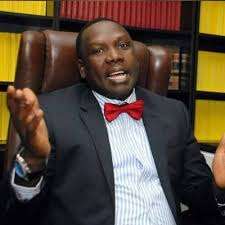
Lawyer and public affairs analyst Daniel Bwala has revealed that President Bola Tinubu plans to reshuffle his cabinet in the coming weeks.
Bwala made this announcement in response to remarks by Senate Chief Whip Mohammed Ali Ndume, who had criticized the federal government for its failure to address security issues and other challenges.
During an interview with BBC Hausa, Ndume expressed frustration over the lack of access to President Tinubu for both ministers and members of the National Assembly, hindering discussions on important constituency matters.
He noted, “The major problem with this government is that its doors are closed, to the extent that even some ministers cannot see the President.”
Following Ndume’s comments, he further told journalists that some forces at Aso Rock have isolated the president from reality.
Bwala, in a piece titled “Ali Ndume, the rant of an expert in grandstanding,” argued that Ndume lacks the qualifications to critique Tinubu, questioning Ndume’s achievements for his constituents over his 21-year tenure in the National Assembly.
Bwala accused Ndume of benefiting from a flawed system without delivering substantial results for his district.
He criticized Ndume’s continuous disparagement of President Tinubu and reminded him that the current administration is dealing with issues inherited from former President Muhammadu Buhari’s leadership.
Bwala emphasized that the financial mismanagement of Buhari’s appointees is a significant factor in Nigeria’s current challenges.
Bwala noted that an evaluation of the current ministers had been conducted and President Tinubu would soon announce a new cabinet.
He pointed out that many of the current cabinet members were recommended by influential figures like Ndume, governors, and party leaders, stressing that Tinubu has always been open to reshuffling his team.
President Bola Ahmed Tinubu delivered his first address at the 78th Session of the United Nations General Assembly, emphasizing the importance of tackling Africa’s unique challenges and fostering global cooperation.
The speech, which was delivered in the early hours of Wednesday (7:55pm New York time), touched upon several critical issues affecting the African continent.
Tinubu began by congratulating the newly elected President of the General Assembly, acknowledging the efforts of his predecessor and applauding the Secretary-General of the United Nations, Antonio Guterres, for his work in seeking solutions to humanity’s common challenges.
In his address, Tinubu stressed the need for Africa to overcome the limitations imposed by foreign exploitation and realize its vast potential. He called for a firm commitment to partnership, urging global institutions, other nations, and the private sector to prioritize African development. He emphasized that this commitment should not only benefit Africa but also align with the interests of those involved.
Highlighting the economic challenges faced by Nigeria and Africa, he underlined the importance of job creation, industrial expansion, and equitable wealth distribution.
President Tinubu cited reforms initiated during his presidency, such as the removal of fuel subsidies and overhauling the exchange rate system, as steps toward fostering economic growth and investor confidence. He invited partnerships with nations and entities willing to engage with Africa on mutually beneficial terms.
Democratic governance was another crucial aspect of President Tinubu’s address.
He affirmed democratic governance as the best way to uphold the sovereign will and well-being of the people, opposing military coups and any civilian political arrangements perpetuating injustice.
Regarding the situation in Niger, President Tinubu mentioned ongoing negotiations with military leaders to reestablish democratic governance and address political and economic challenges in the nation.
President Tinubu also talked about the battle against violent extremism in the region, emphasizing the need to disband extremist groups and improve economic conditions to prevent people from seeking better opportunities elsewhere.
Concerning resource-rich areas, he called for measures to protect them from pilfering and conflict. He drew attention to the exploitation of resources in the Democratic Republic of the Congo and other regions, urging the international community to discourage firms and nationals from such activities.
Finally, Tinubu discussed the impact of climate change on Africa, emphasizing the need for continental efforts to combat it. He highlighted initiatives in Nigeria, such as the Green Wall project and mass distribution of gas-burning stoves, as examples of actions that align with economic development and environmental sustainability. He called for more investment from established economies to support Africa’s preferred climate change initiatives.
To conclude, Tinubu reiterated the importance of ending poverty, respecting the will of the people, and protecting the planet. He called for global solidarity and cooperation, emphasizing that Africa seeks genuine friendship and partnership on its transformative journey.
See the full speech below:
STATEMENT DELIVERED BY HIS EXCELLENCY, BOLA AHMED TINUBU, GCFR PRESIDENT, FEDERAL REPUBLIC OF NIGERIA AT THE GENERAL DEBATE OF THE 78TH SESSION OF UNITED NATIONS GENERAL ASSEMBLY, 18TH SEPTEMBER 2023
Mr. President,
Heads of State and Government, Secretary-General,
Distinguished Delegates, Ladies and Gentlemen,
Mr. President,
On behalf of the people of Nigeria, I congratulate you on your well-deserved election as President of this Session of the United Nations General Assembly.
We commend your predecessor, His Excellency, Mr. Csaba Korosi for his able stewardship of the Assembly.
We also commend His Excellency, Antonio Guterres, Secretary General of the United Nations, for his work seeking to forge solutions to humanity’s common challenges.
This is my first address before the General Assembly. Permit me to say a few words on behalf of Nigeria, on behalf of Africa, regarding this year’s theme.
On behalf of the people of Nigeria, I congratulate you on your well-deserved election as President of this Session of the United Nations General Assembly.
We commend your predecessor, His Excellency, Mr. Csaba Korosi for his able stewardship of the Assembly.
We also commend His Excellency, Antonio Guterres, Secretary General of the United Nations, for his work seeking to forge solutions to humanity’s common challenges.
This is my first address before the General Assembly. Permit me to say a few words on behalf of Nigeria, on behalf of Africa, regarding this year’s theme.
Many proclamations have been made, yet our troubles remain close at hand. Failures in good governance have hindered Africa. But broken promises, unfair treatment and outright exploitation from abroad have also exacted a heavy toll on our ability to progress.
Given this long history, if this year’s theme is to mean anything at all, it must mean something special and particular to Africa.
In the aftermath of the Second World War, nations gathered in an attempt to rebuild their war- torn societies. A new global system was born and this great body, the United Nations, was established as a symbol and protector of the aspirations and finest ideals of humankind.
Nations saw that it was in their own interests to help others exit the rubble and wasteland of war. Reliable and significant assistance allowed countries emaciated by war to grow into strong and productive societies.
The period was a highwater mark for trust in global institutions and the belief that humanity had learned the necessary lessons to move forward in global solidarity and harmony.
Today and for several decades, Africa has been asking for the same level of political commitment and devotion of resource that described the Marshall Plan.
We realize that underlying conditions and causes of the economic challenges facing today’s Africa are significantly different from those of post war Europe.
We are not asking for identical programs and actions. What we seek is an equally firm commitment to partnership. We seek enhanced international cooperation with African nations to achieve the 2030 agenda and Sustainable Development Goals.
There are five important points I want to highlight.
First, if this year’s theme is to have any impact at all, global institutions, other nations and their private sector actors must see African development as a priority, not just for Africa but in their interests as well.
Due to both longstanding internal and external factors, Nigeria’s and Africa’s economic structures have been skewed to impede development, industrial expansion, job creation, and the equitable distribution of wealth.
If Nigeria is to fulfil its duty to its people and the rest of Africa, we must create jobs and the belief in a better future for our people.
We must also lead by example.
To foster economic growth and investor confidence in Nigeria, I removed the costly and corrupt fuel subsidy while also discarding a noxious exchange rate system in my first days in office. Other growth and job oriented reforms are in the wings.
I am mindful of the transient hardship that reform can cause. However, it is necessary to go through this phase in order to establish a foundation for durable growth and investment to build the economy our people deserve.
We welcome partnerships with those who do not mind seeing Nigeria and Africa assume larger roles in the global community.
The question is not whether Nigeria is open for business. The question is how much of the world is truly open to doing business with Nigeria and Africa in an equal, mutually beneficial manner.
Direct investment in critical industries, opening their ports to a wider range and larger quantity of African exports and meaningful debt relief are important aspects of the cooperation we seek.
Second, we must affirm democratic governance as the best guarantor of the sovereign will and well-being of the people. Military coups are wrong, as is any tilted civilian political arrangement that perpetuates injustice.
The wave crossing parts of Africa does not demonstrate favour towards coups. It is a demand for solutions to perennial problems.
Regarding Niger, we are negotiating with the military leaders. As Chairman of ECOWAS, I seek to help re-establish democratic governance in a manner that addresses the political and economic challenges confronting that nation, including the violent extremists who seek to foment instability in our region. I extend a hand of friendship to all who genuinely support this mission.
This brings me to my third crucial point. Our entire region is locked in protracted battle against violent extremists. In the turmoil, a dark channel of inhumane commerce has formed. Along the route, everything is for sale. Men, women and children are seen as chattel.
Yet, thousands risk the Sahara’s hot sand and the Mediterranean’s cold depths in search of a better life. At the same time, mercenaries and extremists with their lethal weapons and vile ideologies invade our region from the north.
This harmful traffic undermines the peace and stability of an entire region. African nations will improve our economies so that our people do not risk their lives to sweep the floors and streets of other nations. We also shall devote ourselves to disbanding extremist groups on our turf.
Yet, to fully corral this threat, the international community must strengthen its commitment to arrest the flow of arms and violent people into West Africa.
The fourth important aspect of global trust and solidarity is to secure the continent’s mineral rich areas from pilfering and conflict. Many such areas have become catacombs of misery and exploitation. The Democratic Republic of the Congo has suffered this for decades, despite the strong UN presence there. The world economy owes the DRC much but gives her very little.
The mayhem visited on resource rich areas does not respect national boundaries. Sudan, Mali, Burkina Faso, CAR, the list grows.
The problems also knocks Nigeria’s door.
Foreign entities abetted by local criminals who aspire to be petty warlords have drafted thousands of people into servitude to illegally mine gold and other resources. Billions of dollars meant to improve the nation now fuel violent enterprises. If left unchecked, they will threaten peace and place national security at grave risk.
Given the extent of this injustice and the high stakes involved, many Africans are asking whether this phenomenon is by accident or by design.
Member nations must reply by working with us to deter their firms and nationals from this 21st century pillage of the continent’s riches.
Fifth, climate change severely impacts Nigeria and Africa. Northern Nigeria is hounded by desert encroachment on once arable land. Our south is pounded by the rising tide of coastal flooding and erosion. In the middle, the rainy season brings floods that kill and displace multitudes.
As I lament deaths at home, I also lament the grave loss of life in Morocco and Libya. The Nigerian people are with you.
African nations will fight climate change but must do so on our own terms. To achieve the needed popular consensus, this campaign must accord with overall economic efforts.
In Nigeria, we shall build political consensus by highlighting remedial actions which also promote economic good. Projects such as a Green Wall to stop desert encroachment, halting the destruction of our forests by mass production and distribution of gas burning stoves, and providing employment in local water management and irrigation projects are examples of efforts that equally advance both economic and climate change objectives.
Continental efforts regarding climate change will register important victories if established economies were more forthcoming with public and private sector investment for Africa’s preferred initiatives.
Again, this would go far in demonstrating that global solidarity is real and working.
CONCLUSION
As I close, let me emphasize that Nigeria’s objectives accord with the guiding principles of this world body: peace, security, human rights and development.
In fundamental ways, nature has been kind to Africa, giving abundant land, resources and creative and industrious people. Yet, man has too often been unkind to his fellow man and this sad tendency has brought sustained hardship to Africa’s doorstep.
To keep faith with the tenets of this world body and the theme of this year’s Assembly, the poverty of nations must end. The pillage of one nation’s resources by the overreach of firms and people of stronger nations must end. The will of the people must be respected. This beauty, generous and forgiving planet must be protected.
As for Africa, we seek to be neither appendage nor patron. We do not wish to replace old shackles with new ones.
Instead, we hope to walk the rich African soil and live under the magnificent African sky free of the wrongs of the past and clear of their associated encumbrances. We desire a prosperous, vibrant democratic living space for our people.
To the rest of the world, I say walk with us as true friends and partners. Africa is not a problem to be avoided nor is it to be pitied. Africa is nothing less than the key to the world’s future.
President Bola Tinubu has approved the appointment of Hon. Zacch Adedeji as the new Acting Executive Chairman of the Federal Inland Revenue Service (FIRS).
Chief Ajuri Ngelale, Special Adviser to the President, (Media & Publicity), disclosed in a statement on Thursday.
Tinubu also directed the erstwhile FIRS Chairman, Mr. Muhammad Nami, to proceed on three months pre-retirement leave, as provisioned by Public Service Rule (PSR) 120243, with immediate effect, leading to his eventual retirement from service on December 8, 2023.
Hon. Zacch Adedeji is hereby appointed in acting capacity for a 90-day period before his subsequent confirmation as the substantive Executive Chairman of the Federal Inland Revenue Service for a term of four years in the first instance.
He most recently served the nation as the Special Adviser to the President on Revenue, following meritorious service terms as the Oyo State Commissioner of Finance and as the Executive Secretary / CEO of the National Sugar Development Council (NSDC).
Adedeji is a First Class graduate in accounting from the Obafemi Awolowo University (OAU), Ile-Ife, Osun State.
He also holds an MSc degree in accounting from the same OAU.
The new FIRS chairman also holds a PhD public sector finance, OAU.
He is a fellow, ICAN, CITN, alumnus, Harvard Kennedy School of Government, ex-manager, Procter & Gamble Company (P&G) and ex-commissioner for finance, Oyo State.
He is also former Executive Secretary of the National Sugar Development Council (NSDC).
By these directives of the President, the new appointment takes immediate effect.
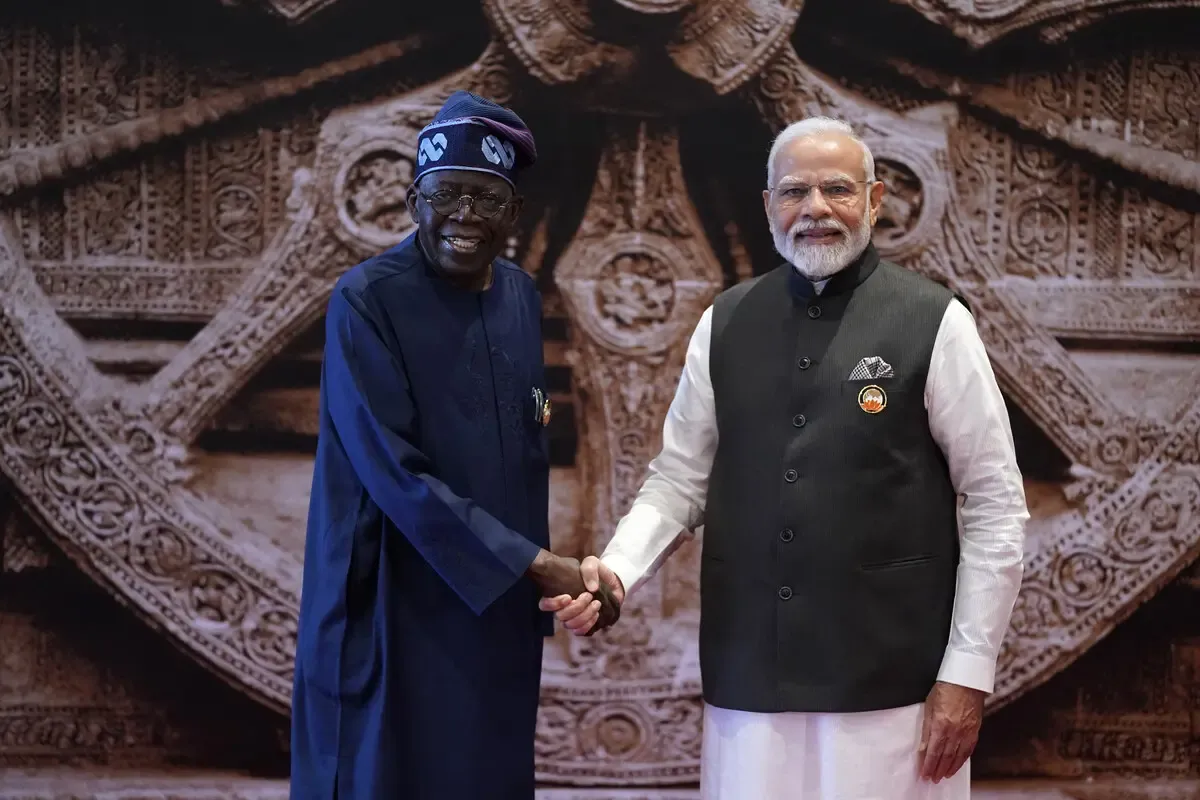
Nigeria’s President Bola Tinubu (left) with the Indian Prime Minister, Narendra Modi at the ongoing G-20 Summit in India
The Indian community in Nigeria has expressed its appreciation to Prime Minister Narendra Modi for extending an invitation to President Bola Tinubu to participate in the ongoing G-20 Summit in New Delhi, India.
Mr. Sanjay Srivastava, President of the Afro Asian Community Development (AACD), conveyed this sentiment in a statement. He also commended the efforts of Mr. Pravin Kumar, General Secretary of AACD, for attending the crucial meeting.
Srivastava, who also holds the position of President of the People of Indian Origin Chamber of Commerce and Industry in Nigeria, praised Modi for including the African Union as a permanent member of the G-20.
He considered this a significant step in the right direction, as it would empower Africans to offer lasting solutions to global economic challenges.
In his view, this move would promote inclusivity and establish a fair and impartial global order, a concept highlighted by President Tinubu.
Srivastava stated, “Considering that South Africa is currently the only African member of the group of the world’s 20 most industrialized nations, Nigeria’s inclusion will be highly beneficial. For us, Indians living in Nigeria, this is a welcome development as it will allow Nigerians and all other G-20 nations to share a promising future. This will enable Nigerians to play a vital role in contributing to shaping a more equitable world.”
The invitation to President Tinubu for the G-20 Summit is seen as a positive step towards fostering international cooperation and inclusive global governance.
The Association of Licensed Telecoms Operators of Nigeria (ALTON), has called on President Bola Ahmed Tinubu to go a step further and abolish the 5 per cent Excise Duty on telecommunications services.
The ALTON Chairman, who made the call on a ChannelsTV programme monitored by the NIGERIAN ANCHOR, said telecommunications companies offer services and that subscribers will bear the brunt if the suspension is not lifted.
On Thursday, President Tinubu signed four Executive Orders, one of which is suspending the 5 percent tax on telecoms companies.
According to Adebayo, the 5 per cent tax on telecoms companies was unnecessary in the first place as they only offer services.
Adebayo said: “If they bring it back, we will pass the burden to subscribers.”
While saying that the sector needs protection from the three tiers of government, the ALTON Chairman said multiplicity of taxes had tremendously increased the cost of service delivery to subscribers.
“The weight of the tax itself would have been on the subscribers. As a sector, we face over 39 taxes and levies across the country. And sadly, a number of them are not captured in any document and some of them are repeated at both the federal and the state levels.
“And when we talk of high cost of service delivery and the burden being passed to the end users, all of them are due to multiple taxation on the services that we provide. For greater good, government should consider the total abolition of the 5 per cent Excise Duty on telecoms services,” he explained.
The Economic Commission for West African States (ECOWAS) says it is in support of President Bola Tinubu’s efforts aimed at repositioning Nigeria as the true giant of Africa.
President of Guinea- Buissau and Chairman Authority ECOWAS Head of State and Government, Umaro Sissoco Embalo, said this during a private visit to Tinubu on Saturday in Lagos.
He said that the economic steps so far taken would not only be for the good of Nigeria but the entire West African sub-region.
Addressing newsmen after the visit, Special Adviser, Special Duties, Communications and Strategy to the President, Mr. Dele Alake said the visit was strictly private.
“It was a meeting between two African brother-presidents and it was very cordial. Of course, the visiting president appreciated the steps taken by President Bola Tinubu within the last month.
“He said he is ready to cooperate with Nigeria and President Bola Tinubu at all times just as the rest of the world have commended him over his recent policies.
“They also spoke of the ECOWAS head of government meeting which is imminently coming up and also spoke on other areas of cooperation,” he said.
The meeting was attended by Chief of Staff to the President, Femi Gbajabiamila, Governor Babajide Sanwo-Olu of Lagos, Dele Alake, among others.
The Guinea-Bissau leader has left after the over three hours private meeting.