Author: admin

  • Sen Dickson Rejects Gov Diri’s Defection to APC, Stays Loyal to PDP

    Sen Dickson Rejects Gov Diri’s Defection to APC, Stays Loyal to PDP


    Sen Seriake Dickson (Bayelsa West) has distanced himself from the defection of Gov Douye Diri and 23 members of the Bayelsa Assembly to the All Progressives Congress (APC).

    Speaking after the Senate plenary on Wednesday, Dickson reaffirmed his commitment to the opposition Peoples Democratic Party (PDP), stressing that he has no plans to join the ruling party.

    The senator expressed disappointment that neither the governor nor the state lawmakers consulted him before their decision to leave the PDP.

    Dickson suggested that the internal issues within the PDP could have been addressed through proper party leadership rather than a mass defection.

    “What is the role of party leadership if it cannot resolve crises?” Dickson remarked, emphasizing that leadership should be focused on resolving conflicts, not abandoning the party.

    Referring to the situation in Bayelsa, Dickson, who served as the state’s governor before Diri, said the governor and lawmakers were part of his political team, but he did not consider himself a political godfather.

    “I never played the role of a godfather. I handed over power and moved on to my duties as a senator,” he said. “I will remain in the PDP, a lone northern star,” he emphasised.

    Governor Diri, along with the entire Bayelsa State House of Assembly, officially joined the APC in a ceremony in Yenagoa on Wednesday, marking a major shift in the state’s political alignment.

    This defection has raised eyebrows, as Bayelsa has been a stronghold of the PDP for years.

    While Diri’s move to the APC reflects a broader trend of political realignments in the region, Dickson made it clear that he will not follow suit.

    He emphasised that the PDP’s challenges could be resolved within the party, not by switching allegiances.

    Meanwhile, in a separate development, Senator Dickson addressed the controversy surrounding the nomination of Professor Joash Ojo Amunpitan as Chairman of the Independent National Electoral Commission (INEC).

    He clarified that despite some confusion over the nominee’s identity due to a mix-up with similarly named academics Amupitan’s nomination represents a significant milestone.

    As a Senior Advocate of Nigeria (SAN), Amunpitan is the first lawyer of such status to be nominated for this prestigious position, according to Dickson.

    The senator also pointed out that being in the opposition does not mean opposing every decision from the government.

    Sen Dickson emphasised the importance of considering each issue on its merits. He expressed confidence that the Senate’s Electoral Committee would thoroughly vet Amunpitan’s nomination.

    With Governor Diri’s defection to the APC, the political landscape in Bayelsa is undergoing a major shift.

    However, Dickson’s steadfast loyalty to the PDP highlights ongoing divisions within the state’s political establishment.

    Whether this rift will have lasting consequences for the PDP in Bayelsa remains uncertain.

  • Senate Pushes for Establishment of National Sickle Cell Research, Treatment Centre

    Senate Pushes for Establishment of National Sickle Cell Research, Treatment Centre

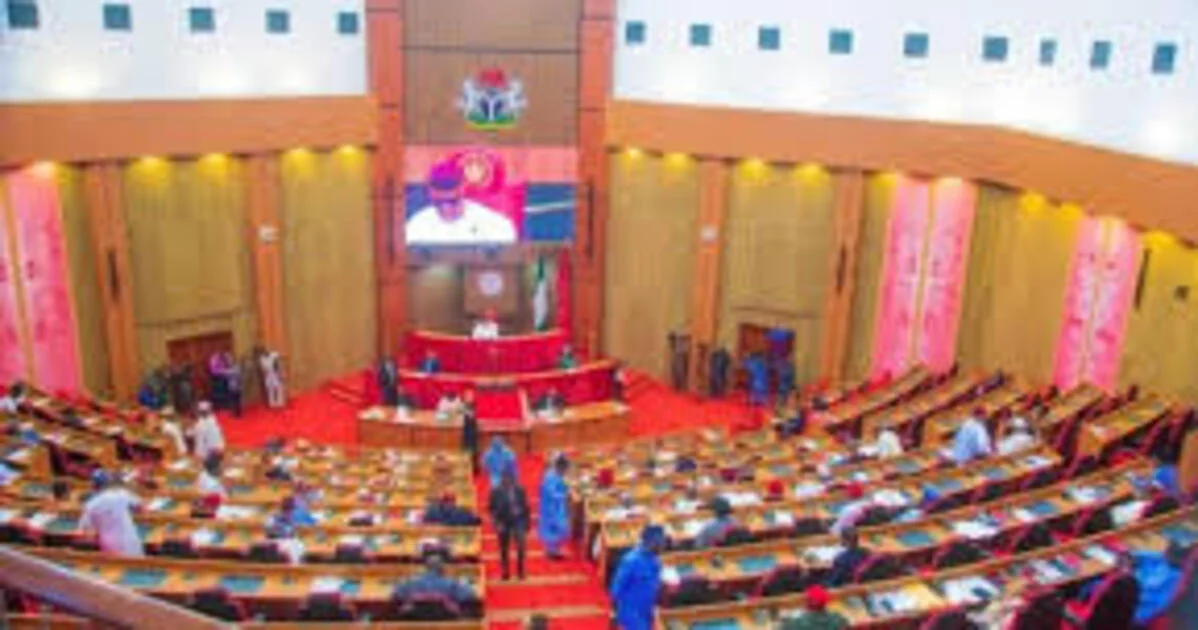
    The Nigerian Senate has advanced a landmark Bill aimed at creating Sickle Cell Disorder (SCD) Research and Therapy Centres across the country, following its successful second reading on Wednesday.

    The Bill was sponsored by Senator Katung Marshall (Kaduna South), and it proposes the establishment of specialized centres dedicated to the research, diagnosis, and treatment of sickle cell disease in each of Nigeria’s six geopolitical zones and the Federal Capital Territory (FCT), Abuja.

    The Bill also contains detailed provisions for the administration and operation of these centres.

    Senator Marshall, in his presentation, highlighted the severity of SCD in Nigeria, noting that the country remains the epicentre of the disease in sub-Saharan Africa.

    “Nigeria accounts for roughly half of the 300,000 babies born worldwide with sickle cell disorder each year,” he explained.

    “With over 650 children dying daily from SCD-related complications, many of whom do not survive past the age of five, the need for this legislation has never been more urgent.”

    The proposed Bill has garnered widespread support from lawmakers, who emphasized the critical need for a structured response to the high mortality and complications associated with the disease.

    Senators pointed to the inadequacies in the current healthcare infrastructure for managing sickle cell disorder, including the lack of specialized treatment facilities and the ineffective implementation of existing diagnostic tools.

    Senators Natasha Akpoti-Uduaghan (Kogi Central), Victor Umeh (Anambra Central), and Isa Jibril (Kogi West) expressed strong backing for the Bill, underscoring the potential of the research and therapy centres to alleviate the suffering of millions of Nigerians living with sickle cell disorder.

    “The establishment of these centres will be a game-changer,” said Senator Akpoti-Uduaghan. “It will provide the much-needed care and treatment that millions of Nigerians are currently deprived of.”

    The Bill was referred to the Senate Committee on Health for further deliberation and is expected to be reviewed within the next four weeks.

    The proposed legislation outlines 27 clauses covering various aspects of the centres’ operation, including the establishment of a Board of Management, staffing structures

  • IMF urges stronger tax, smarter spending, hails Nigeria’s fiscal reforms

    IMF urges stronger tax, smarter spending, hails Nigeria’s fiscal reforms

    The International Monetary Fund (IMF) has commended Nigeria’s fiscal reforms, and urged the country adopt smarter spending and stronger tax systems.

    The Division Chief, Fiscal Affairs Department IMF, Davide Furceri, made the statement during a news conference on fiscal monitor, in Washington on Wednesday on the sidelines of the Annual Meetings of the IMF/WorldBank Group.

    Furceri said that Nigeria’s ongoing fiscal and structural reforms were neutral and well aligned with monetary policies designed to curb inflation and stabilise the economy.

    He said that the fund’s latest assessment of fiscal policy across developing economies, especially the Nigeria’s policy direction, was consistent with efforts to strike a balance between revenue mobilisation and efficient expenditure management.

    “Currently, what we are projecting for Nigeria is a neutral fiscal stance, which we believe is consistent with monetary policies aimed at reducing inflation,” he said.

    He advised Nigeria to focus on revenue and expenditure sides of public finance.

    “Nigeria has made significant progress in recent years. Several laws have been passed to streamline the tax code, reduce tax expenditures and ease the compliance burden for businesses and coerce.

    “These are steps in the right direction,” he said.

    Furceri called for greater efficiency in public spending to ensure better outcomes for citizens.

    He said that optimising on how resources are allocated and spent could deliver substantial economic and social gains.

    “In addition, it is important to increase social spending, particularly to support vulnerable households and ensure inclusive growth,” he said.

    He urged Nigeria to continues to implement key fiscal and monetary reforms under its medium-term economic framework, fiscal discipline, improved revenue generation and enhanced transparency in public finance management.

    He said that IMF’s endorsement reflected growing confidence in Nigeria’s reform trajectory, even as the government pushes for policies aimed at boosting growth, reducing inequality and sustaining macroeconomic stability.

    The News Agency of Nigeria (NAN) reports the fiscal monitor explores how governments can improve economic growth prospects by enhancing the efficiency and composition of public spending.

  • W’Cup Qualifier: S/Eagles walk the tight rope, hope for S/Africa slip

    W’Cup Qualifier: S/Eagles walk the tight rope, hope for S/Africa slip

    Coach Eric Chelle says the Super Eagles will give their all against Benin Republic in today’s final Group C clash of the 2026 FIFA World Cup qualifiers.

    Nigeria, currently third in the group, must win in Uyo and hope South Africa drop points against Rwanda in Nelspruit to secure qualification.

    Benin Republic top the group with 17 points and need only a draw at the Godswill Akpabio Stadium to qualify ,for their first-ever FIFA World Cup.

    South Africa, second with 15 points, will advance with a win over Rwanda, unless Nigeria defeat Benin by two or more goals.

    Chelle expressed confidence in his team’s mindset ahead of the match.

    “We know the odds, but our focus is on winning,” Chelle told newsmen during a pre-match conference on Monday.

    “We owe it to ourselves, to the fans, and to the badge.

    “We can’t control what happens in Nelspruit, but we can control how we play here in Uyo,” he said. “We’re ready to fight for the result.”

    Cheetahs of Benin Republic

    Nigeria have featured in six World Cup tournaments since debuting in 1994. They aim to avoid back-to-back absences after missing the Qatar 2022 edition.

    Despite sitting third, the Super Eagles have lost only once in the group. Benin and South Africa have lost two matches each.

    Benin, coached by former Nigeria boss Gernot Rohr, are unbeaten in their last four qualifiers and have impressed throughout the campaign.

    “Benin are well organised and confident. They’ve earned their position,” Chelle said.

    “But we have experience and quality. We’re not stepping aside.”

    Nigeria’s squad includes key players with tournament experience.

    Captain William Ekong and midfielder Alex Iwobi played at the 2018 World Cup in Russia.

    Ekong, the 2024 AFCON Player of the Tournament, will earn his 83rd cap. Iwobi is set for his 89th appearance.

    Top scorer Victor Osimhen, along with Calvin Bassey, Frank Onyeka and Samuel Chukwueze, are among those targeting a first World Cup appearance.

    Benin have qualified for the Africa Cup of Nations only four times, reaching the quarter-finals in 2019.

    Nigeria have won the continental title three times.

    Injury and suspension have affected both squads.

    Nigeria will be without Ademola Lookman, Ola Aina and Bright Osayi-Samuel.

    Benin miss Yohan Roche and Sessi d’Almeida.

    “Injuries are part of football,” Chelle added.

    “But we have depth, and I believe in the players available. Everyone is ready to step up.”

    Benin’s population of 11.5 million will back Rohr’s team, while over 220 million Nigerians, including thousands in the stands, will rally behind the Super Eagles.

    A two-goal win for Nigeria, and failure by South Africa to beat Rwanda, will send the Super Eagles to the 2026 FIFA World Cup in the U.S., Canada and Mexico.

  • No work no pay, except in the NNPC refineries

    No work no pay, except in the NNPC refineries

    By

    UGO ONUOHA

    PUBLIC intellectual and a commentator on national issues, Dr. Nnaemeka Obiaraeri, recently reportedly said that members of Petroleum and Natural Gas Senior Staff Association of Nigeria [PENGASSEN] and Nigeria Union of Petroleum and Natural Gas WORKERS [NUPENG], two key unions of oil workers in Nigeria consume about N120 billion in salaries, allowances, and wages every year. The two unions in various incarnations have been the dominant players in Nigeria’s oil industry for about 60 years, and especially since the commissioning of our first refinery in 1965 in Alesa, Eleme, near Port Harcourt, in Rivers state. This refinery, a joint venture between Shell and British Petroleum, was then known as Nigerian Petroleum Refining Corporation [NPRC]. It was initially built to process crude oil into products like gasoline and diesel. It had the capacity to process 38,000 barrels of crude oil per day. About 24 years later, in 1989, another refinery was founded by the federal government close to the first plant, the so-called second Port Harcourt refinery. Two more refineries were subsequently established by the government, one in Warri in today’s Delta state, and the other in Kaduna, Kaduna state. In theory, the four refineries have a combined capacity of 450,000 barrels.

    Dangote Refinery and Petro-chemical Company

    These four government – owned refineries were all that were of note that operated here until the ‘commissioning’ of the Dangote Refinery and Petrol-Chemical Company in 2023, long before it was completed. In reality, the refinery came on stream in January last year with the production of diesel and aviation fuel. The production of petrol followed eight months later, one year ago last month. At its commissioning, and up till now, the Dangote refinery is the largest single-train refinery in the world. But with its current capacity of 650,000 barrels per day, it is ranked as the seventh largest refinery globally. India’s Jamnagar Refinery sits atop the pile worldwide with an output capacity of 1.24 million barrels per day. We will return to the travails of the Dangote refinery shortly.

    Non-Functioning Refineries

    In 2007, in the twilight of the administration of President Olusegun Obasanjo [1999-2007], Blue Star, a consortium led by the business man, Aliko Dangote, had bidded and and won majority shares in two of the four government-owned refineries in Port Harcourt and Warri. There was disquiet in the land with allegations of underhanded dealings and specious, self-serving arguments about national energy security. So when the successor administration of President Umaru Musa Yar’Adua took office that same year, it revoked the sale and refunded the Dangote consortium about $700million. It has to be said that before the consortium moved in, the refineries were at best epileptic in their operations, and at worst moribund. In fact, to all intents and purposes they were dead. They had become bottomless pits and a cesspool for the corrupt and unscrupulous government officials and their outside collaborators.

    The unions, PENGASSEN and NUPENG, and their fatcat leaders orchestrated the protests and strikes against the partial sale of the two refineries. The unions were not alone. There was a cabal in the background of those who import petroleum products into the country on behalf of the Nigerian National Petroleum Corporation [NNPC]. The deal was that they bring in the products and then make a claim on the government including payments for subsidies. It was a racket that bordered on daylight robbery. Many of the authorised persons and companies brought in zero petroleum products, and yet claimed humongous subsidy payments. There were cases of forged shipping documents and discharge of millions of phantom metric tons of petroleum products in ghost tank farms in Lagos, and elsewhere. And the ghost importers got payments. The racketeering was widespread, corrosive, and deadly. It stretched from individuals to corporations, to government agencies, to the ports, to the national legislature, and the presidency. It was a bazaar. The greater tragedy was that unsuspecting Nigerians were used as fodders to oppose the partial government divestment from the moribund refineries.

    For as long as it lasted, and it has not really ended, the four government refineries presented a story of the near hopelessness of this country. Some persons were employed in each of the refineries in Port Harcourt, Warri and Kaduna and retired in the same after 35 years or on attaining 60 years of age without doing any meaningful work, without really earning their pay. And in-between their employment and retirement, they attended trainings at home and abroad; were promoted as and when due; got pay raise; received hefty allowance; collaborated and connived with the petroleum products import cabal to fleece the country; and, then went home with hefty gratuities and pensions. To crown it all many of such people were not, ab initio, qualified for the jobs for which they were employed. They were beneficiaries of nepotism in recruitment into high-paying government agencies and parastatals such as the refineries, NNPCL, central bank, NIMASA, among others. If, according to Dr. Obiaraeri, about N120billion is expended annually on salaries, wages, and allowances of members of PENGASSEN and NUPENG, then it will be safe to assume that about N250bn was being used as overhead for the personnel of the moribund refineries. And if the refineries have not worked effectively and efficiently for about 30 years, and they indeed have not, it means that this country has been pouring N250bn on average down the drain every year for 30 years. Or N7,500,000,000,000 [N7.5trillion]. In which sane country does this happen, and be allowed to linger for about one generation?   

    Between $15-20bn may have been expended on repairing and recovering the moribund refineries in the last 30 years, to no avail. Of course, much of the money may have been stolen. It was not unusual to read bizarre stories about the stewardship of some leaders of the NNPC, owners and operators of the refineries. About $9million was once found in a steel cabinet in a nondescript house in Kaduna of one of NNPC’s former group managing directors. He claimed it was a gift, and if my recollections are correct, the courts sided with him. He went away scot free. The immediate past group chief executive officer of the corporation, as they are now called, was recently quizzed by the Economic and Financial Crimes Commission [EFCC] ostensibly over allegations of fraud in the repairs of the refineries. He denied any wrong-doing and has been moving about freely. Not much is being heard about the probe. Sooner than later, the investigations will grow cold. As we say here in local parlance: the probe will ‘enter voicemail’. In one-third of the years we have allegedly spent about $20bn in repairing refineries that have literally produced zero petroleum products, Aliko Dangote, had built a refinery that dwarfed the combined capacity of the four government refineries. The cost of the ultra-modern Dangote refinery is about $20bn. The irony should not be lost on us.

    Another cruel irony was the report in the news media a few weeks back which said that the staff of the moribund refineries were threatening to embark on a strike action because of delayed payment of their salaries and allowances. For real? From people who have enjoyed no work for full hefty pay for about 30 years. The strike threat was coming from people whose predecessors were employed and retired from the refineries without doing any genuine work even for one day. From staff who are still likely to retire from the moribund refineries this year and in subsequent years without doing any worthwhile work because the refineries are not producing, and are not likely to produce in the near future. The new CEO of the NNPCL, Bayo Ojulari, said on assumption of office that the refineries would be sold. But he has since changed his mind. ‘Repairing’ the refineries is a veritable channel for slush funds. And the 2027 elections are around the corner. The decision to keep pouring money into the bottomless pits is in spite of the assertion by a man who should know, Dangote, that the refineries may never work again, at least, not optimally.

    Warri Refinery

    The death of our refineries is not a stand-alone story. It came with other implicit costs. The resources used to train professionals including engineers were at a loss to the Nigerian state. Some have gone to their graves with skills that never benefitted the country. Others have moved on to other refineries or related corporations or to private and personal endeavours. This will be looking at the big picture. There are other smaller but devastating and crushing losses. When you aggregate these so-called smaller losses in Nigeria’s economy which is about 70% informal, they would amount to so much. We will retell a story told by a national newspaper in the course of investigating the moribund refineries last month. “This place [Kaduna refinery] used to be alive. You would see flames from the furnace, hear the noise of work going on. Now, nothing. They kept saying ‘maintenance’ but we have heard the same story for years with no end in sight”, said Paulina, a bar attendant in Kapam, a community bordering the refinery. Aisha Mohammed was another resident. She reportedly said, “Even if the refinery starts operation at 60%, that will be good. Last time, they promised similar targets, we saw flames, then silence. We are tired of promises”. The closure of one refinery translates to the closures of tens or even hundreds of small scale businesses and services providers operating in the vicinity. Jobs and livelihoods suffer. Families become poorer. Out of school children increase. Young girls drift into prostitution. Idle youngsters become drug users. Crime spikes. Security agencies are stretched. Sadly, our rulers do not, or they willfully refuse to see the big picture. And we suffer.

    ASUU is Different

    On the reverse side, we are about to experience yet another strike by the academic staff union of public universities in Nigeria (ASUU). The extant regime and its predecessors have neglected to implement agreements reached with the lecturers since 2009 or thereabouts. In fact, this administration recently denied the existence of the 2009 agreement. And then quickly recanted. But unlike the refinery workers, the government will soon announce the policy of ‘no work no pay’. And then proceed to implement it. The regime did so not too long ago. The quick resort to no work no pay’ as it concerns university teachers speaks to the store our rulers set on education. That’s why our country is where it is – a bad place.

    UGO ONUOHA, Veteran Journalist, was the Managing Director/Editor-in-Chief, Champion Newspapers Limited

  • Ex-President Clinton urges Israel, Hamas to seize “lasting peace’

    Ex-President Clinton urges Israel, Hamas to seize “lasting peace’

    Former US President Bill Clinton has said he is “grateful” for the ongoing ceasefire in the Israeli war on Gaza.

    Mr. Clinton was the host of the signing of the historic Oslo Accords, which was the closest the warring parties came close to attaining a ceasefire.

    The Elder Statesman was magnanimous in attributing the current breakthrough to the efforts of Mr. Donald Trump, the current US President and Qatar, the lead mediating country.

    Jubilant Palestinians

    Clinton said “Mr. Trump and his administration, Qatar, and other regional actors deserve great credit for keeping everyone engaged until the agreement was reached.”

    Mr. Clinton issued a statement on X where he said, “Now Israel and Hamas – with the support of the United States, the region, and the world – must try to turn this fragile moment into lasting peace that provides for the dignity and security of both Palestinians and Israelis,”

    Mr. Clinton urged that the warring parties- Israel and Hamas- with support of the United States, the Middle East region and the world should “try to turn this fragile moment into a lasting peace for the dignity and security of both Palestinians and Israelis.”’

  • W’Cup Qualifier: Faulty aircraft delays Super Eagles’ arrival in Uyo

    W’Cup Qualifier: Faulty aircraft delays Super Eagles’ arrival in Uyo

    A cracked windscreen on a chartered aircraft has delayed the Super Eagles’ arrival in Uyo ahead of Tuesday’s FIFA World Cup qualifier against Benin Republic.

    The Nigeria Football Federation (NFF) disclosed this in a statement through Ademola Olajire, NFF’s Director of Communications on Saturday made available to Nigerian Anchor in Abuja.

    The ValueJet aircraft was transporting the team from Polokwane, South Africa, to Uyo, Akwa Ibom.

    The same aircraft had flown part of the delegation to Polokwane on Thursday night, arriving on Friday morning.

    The incident occurred after a refueling stop in Luanda, Angola.

    According to the NFF, the aircraft developed a cracked windscreen mid-air after take-off from Luanda.

    The pilot returned the plane safely to the airport in Luanda.

    The aircraft had also used Luanda for refueling during previous trips to and from Bloemfontein for the Matchday 8 tie against South Africa.

    The NFF said officials are working to resolve the situation.

    Authorities involved include the Minister of Aviation, the Minister of Foreign Affairs and the Chief of Staff to the President.

    Efforts are ongoing to secure flight clearance for another aircraft to convey the team from Luanda to Uyo. 

  • PENGASSAN strike cuts oil output to 1.58mbpd in Sept – NUPRC

    PENGASSAN strike cuts oil output to 1.58mbpd in Sept – NUPRC

    The Nigerian Upstream Petroleum Regulatory Commission (NUPRC) says Nigeria’s crude oil and condensates production fell to an average of 1.581 million barrels per day (bpd) in September 2025.

    The commission disclosed this in a statement on Saturday, citing official statistics released by its Head of Media and Strategic Communication, Eniola Akinkuotu.

    NUPRC attributed the drop to a three-day industrial action by the Petroleum and Natural Gas Senior Staff Association of Nigeria (PENGASSAN), which led to the shutdown of several production and export facilities.

    It added that scheduled turnaround maintenance at two strategic facilities also contributed to the decline in output.

    According to the data, the 1.581 million bpd figure for September comprised 1.39 million bpd of crude oil and 191,373 bpd of condensates.

    “In September, the industry recorded total crude oil and condensate production of 47.43 million barrels, reflecting a 1.61 per cent year-on-year increase in average daily production.

    “This shows a slight improvement from the 1.55 million bpd recorded in September 2024, indicating gradual progress.

    ‘However, on a month-on-month basis, September’s output marked a 3.09% drop compared to 1.63 million bpd recorded in August 2025,” the commission noted.

    It said in spite of the setback, Nigeria achieved 93 per cent of its OPEC crude oil production quota of 1.5 million bpd in September.

    It further said during the review month, peak combined production (crude and condensate) reached 1.81 million bpd, while the lowest was 1.35 million bpd.

    The NUPRC said an analysis of production by the top eight streams in September showed Forcados Blend accounted for 15.86 per cent of total output, followed by Bonny Light at 13.31 per cent, and Qua Iboe at 9.88 per cent.

    It said Escravos Light contributed 8.96 per cent, Bonga Crude delivered 6.83 per cent, Agbami Condensate made up 4.94 per cent, Erha Crude accounted for 4.55 per cent, while Amenam Blend contributed 4.2 per cent of total production.

  • Nigerian Governors’ Forum Partners UNDP to Boost Subnational Development

    Nigerian Governors’ Forum Partners UNDP to Boost Subnational Development

    In a major step towards driving sustainable investment and enhancing state-level economic resilience, the Nigerian Governors’ Forum (NGF) has deepened its collaboration with the United Nations Development Programme (UNDP).

    It states further that the move shall advance subnational investment and financing reforms across the country.

    This was made known in a press release signed by Yunusa Tanko Abdullahi, Director, Media & Strategic Communications, Nigeria Governors’ Forum (NGF).

    He said this was the outcome of a working visit by a high-level UNDP delegation led by Ms. Elsie G. Attafuah, Resident Representative in Nigeria, and Dr. Raymond Gilpin, Chief Economist for Africa and Head of the UNDP Economists’ Network.

    Mallam Abdullahi stated that the engagement focused on exploring innovative financing models to help Nigeria’s 36 States mobilize investments, strengthen fiscal systems, and bridge infrastructure gaps.

    Welcoming the delegation, Mr. Abdulateef Shittu, Director-General of the NGF, described the partnership as “a timely step in deepening Nigeria’s subnational development agenda.”

    “We value UNDP’s partnership in helping States become more competitive and investment ready,” Shittu said. “Our goal is to create a pathway where subnational governments can independently attract, manage, and sustain investments that directly impact lives and livelihoods.”

    Mr. Shittu highlighted the NGF’s recent launch of Investopedia, a digital investment intelligence platform showcasing over 269 investment-ready projects across Nigeria’s 36 States. He described the initiative as “a practical demonstration that Nigerian States are ready, willing, and able to lead the country’s transformation when provided with the right tools and partnerships.”

    He further noted that the next phase of collaboration with UNDP will focus on three strategic priorities which includes: strengthening States’ fiscal and institutional capacity to attract long-term financing, establishing frameworks for blended and innovative finance and building a pipeline of bankable projects aligned with national and global sustainability goals.

    “We see this partnership as catalytic,” he added. “With UNDP’s technical support and the Forum’s coordination structure, we can make subnational governments key drivers of Nigeria’s development narrative.”

    In his remarks, Dr. Raymond Gilpin commended the NGF’s leadership for creating platforms that enable States to engage global investors and development partners.

    “Nigeria’s States are essential building blocks of national development,” Gilpin said. “Our role at UNDP is to support the Forum in strengthening the systems that make investments viable from fiscal governance and data analytics to human capital and institutional efficiency.”

    He emphasized that the collaboration aims to develop sustainable financing mechanisms that blend public and private capital while ensuring transparency and inclusivity in project implementation.

    “We are ready to walk with the Forum in connecting the strategy, the financing, and the governance dots to make growth work for the people,” he affirmed.

    Also speaking, Ms. Elsie G. Attafuah, UNDP Resident Representative in Nigeria, described the engagement as a continuation of UNDP’s long-standing partnership with the NGF to promote inclusive and sustainable development across the country.

    “Our collaboration with the NGF represents a strategic partnership aimed at ensuring that no State is left behind in Nigeria’s development story,” she said.

    Ms. Attafuah reaffirmed UNDP’s commitment to supporting States in five key sectors: agriculture, energy transition, healthcare, education, and the digital economy noting that these areas have the greatest potential for visible impact on citizens’ lives.

    “This engagement is about helping States convert their opportunities into tangible investments that create jobs, expand access, and build resilience,” she added.

    Both the NGF and UNDP agreed to formalize their collaboration through a Memorandum of Understanding (MoU) that will outline technical assistance and pilot interventions in select States.

    The partnership will also establish a Subnational Development Finance Lab, a Public-Private Partnership (PPP) Competency Framework, and a State Investment Readiness Index to benchmark competitiveness across Nigeria’s States.

    “Together, we can convert Nigeria’s immense opportunities into transformative investments that uplift lives and strengthen local economies,” Mr. Shittu concluded.

  • Smart Agriculture: NNPC foundation trains 15,000 farmers

    Smart Agriculture: NNPC foundation trains 15,000 farmers

    Describes programme as a national journey toward resilience, food security and economic empowerment

    No fewer than 15,000 farmers have benefitted from the Smart Agriculture Initiative of the NNPC Foundation.

    The beneficiaries received intensive training under the NNPC Ltd/Gte Vulnerable Farmers Training designed to encourage agricultural productivity in Nigeria.

    Mrs Emanuella Arukwe, Managing Director, NNPC Foundation, said this during the closing of the training exercise on Saturday at Kaktungo in Kaltungo Local Government Area of Gombe State.

    She described the programme as a national journey toward resilience, food security and economic empowerment.

    Climate-Smart Agriculture

    Represented by Bala T. David, Executive Director, Programme Development, NNPC Foundation, Arukwe said the initiative exposed over 2,000 beneficiaries to climate-smart agriculture under the Gombe Cluster comprising Gombe, Adamawa and Taraba.

    Arukwe said the exercise targeted about 4,000 farmers in the North-East, and 15,000 across the country.

    “What began as a bold intervention to strengthen rural livelihoods has evolved into a nationwide movement that embodies hope, resilience and sustainability,” she said.

    According to Arukwe, the programme is designed not just for short-term relief but for long-term transformation, equipping farmers with practical knowledge in climate-smart agriculture, market access, post-harvest handling and agribusiness competitiveness.

    “We are proud of the lives transformed and the future we are cultivating. The real heroes are our farmers, their enthusiasm and discipline reaffirm our faith in Nigeria’s agricultural future,”  Arukwe said.

    While highlighting the inclusive nature of the training to ensufing over 35 per cent participation by women and youth, Arukwe said it also focused on improving farmer access to market, packaging and climate adaptation strategies.

    Arukwe said the programme has been yielding visible results through increased cooperative formations, improved farming practices, and better market access in participating communities.

    “Let us see today not as the end of a programme but the beginning of a new agricultural awakening across Nigeria,” she said.

    “In terms of health, safety and security, we are proud to report zero Lost-Time Injuries (LTI) across all phases and zero security incidents during implementation.

    “This was made possible through close collaboration with key stakeholders including traditional leaders, local authorities and security agencies. Ensuring safety and peace remained our highest priority at each training centre,” she said.

    Transformation in Gombe State

    Dr Barnabas Malle, Commissioner for Agriculture, Animal Husbandry and Cooperatives, lauded the gesture, adding Gombe state witnessed major transformation under the leadership of Gov. Inuwa Yahaya.

    According to Malle, the ministry is collaborating development partners to train over 5,000 women and youths in modern agricultural practices for sustainable development in the sector.

    The Paramount Ruler of Kaltungo, Alhaji Saleh Mohammed, appreciated the foundation and encouraged beneficiaries to take farming seriously.

    The royal father was represented by Habila Garba, District Head of Ture,

    He commended the Federal Government for maintaining peace across the region and praised the Gombe State Government for its efforts in addressing farmer-herder conflicts and creating an enabling environment for agricultural growth.

    Some of the beneficiaries, Habila Bitrus and Serah Yakubu, commended the gesture.

    They said the beneficiaries had acquired valuable skills to practice climate-smart agriculture in response to impact of global warming.