Author: admin

  • NNPCL Responds to Senate Querries on Unaccounted N210Trn

    NNPCL Responds to Senate Querries on Unaccounted N210Trn

    Senate Committee Promises to Critically Examine Responses

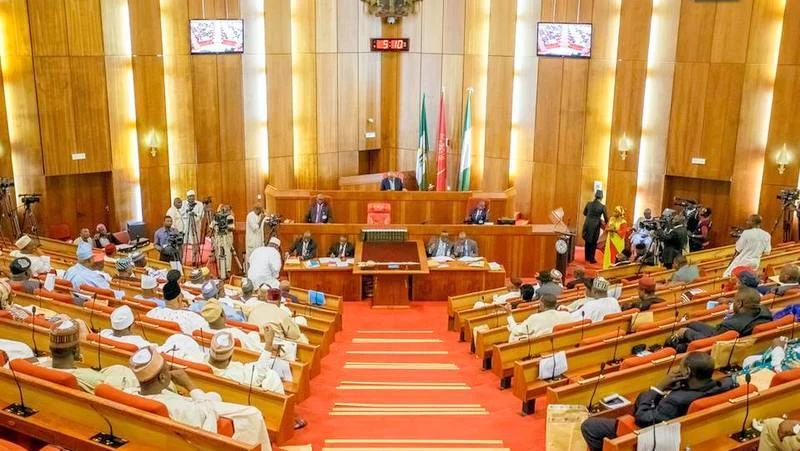
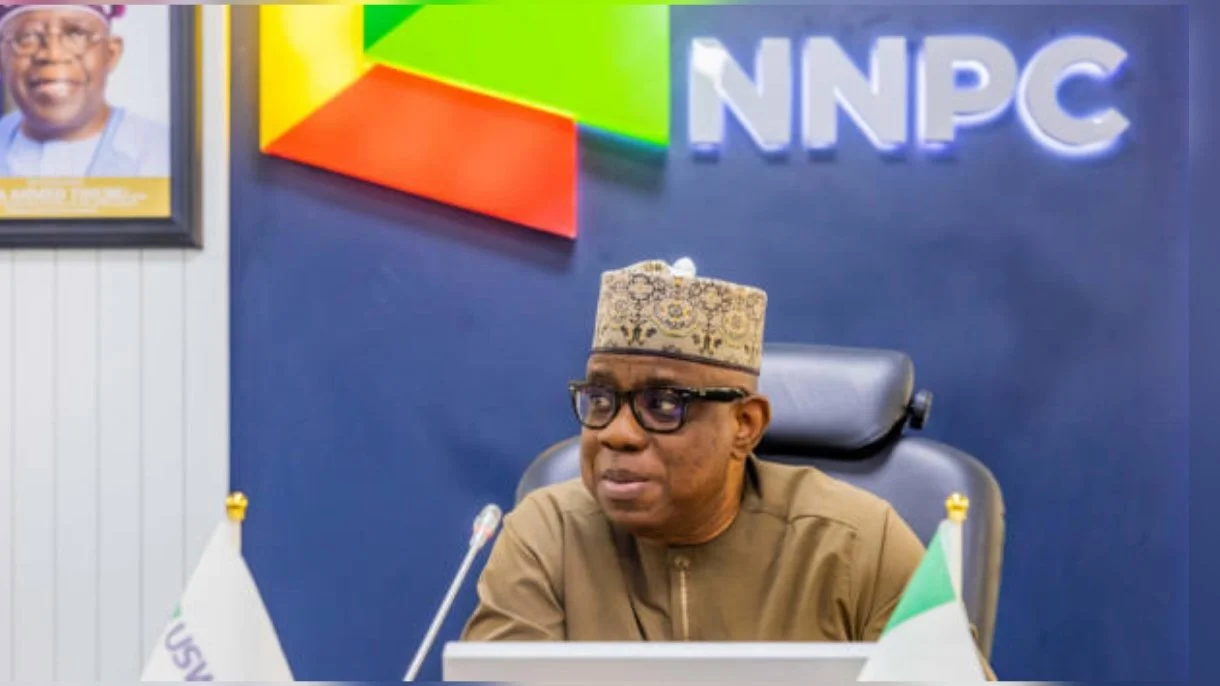
    The Senate Committee on Public Accounts has confirmed that the Nigerian National Petroleum Company Limited (NNPCL) has responded to all 19 audit queries raised against it over the alleged unaccounted ₦210 trillion.

    The queries were contained in the Auditor-General’s reports covering 2017 to 2023.

    Chairman of the Committee, Senator Aliyu Wadada (Nasarawa West), disclosed this on Tuesday while addressing journalists shortly after plenary at the National Assembly in Abuja.

    He explained that while the NNPCL management had earlier requested additional time to compile and submit comprehensive responses, the committee has now received all the required documents and explanations from the company.

    “While we were on recess, the management of NNPCL wrote to the committee requesting an extension of time to enable them compile data and respond comprehensively to the questions we raised and we granted that request,” Wadada said.

    “They have since responded, and we now have answers to all 19 questions we sent to them.

    Please Read: National Oil Assets: Are the Buccaneers Coming?

    However, the report is yet to be presented before the committee. That is why, as chairman, I have refrained from making any public statement on the matter until it is properly laid before members.

    But let me assure you, as I promised earlier on behalf of the committee, we will do justice to the matter,” he added.

    The Senate Committee had, on July 29, given the NNPCL’s Group Chief Executive Officer, Engr. Bayo Ojulari, a three-week deadline to respond to the 19 audit queries relating to the alleged unaccounted funds in the company’s books.

    Senator Wadada further revealed that beyond the audit queries, the committee will also scrutinize other emerging issues involving NNPCL operations, including the cost structure and revenue sharing formula in production sharing contracts (PSCs) between Nigeria, the national oil company, and international oil companies (IOCs).

    “The first of such issues is production sharing contracts, specifically, the production cost to Nigeria, which must be clearly defined.

    The public deserves to know what portion goes to NNPC, what goes to the IOCs, and what accrues to the government under these arrangements,” he said.

    He also expressed concern over reports that NNPC Retail, one of the corporation’s subsidiaries, has declared a loss, describing the situation as “difficult to understand.”

    “This development is of concern to us and to the public. We find it difficult to understand why NNPC Retail should record a loss, but we will seek clarification when the corporation appears before us,” the senator noted.

    Sen. Wadada assured Nigerians that the Senate Committee on Public Accounts will conduct a thorough and transparent review of the NNPCL’s submissions and make its findings public in due course.

    “As far as the audited financial statements are concerned which cover the period between 2017 and 2023 NNPC has submitted its responses to the 19 questions we asked. Nigerians and the media will be informed of the contents in due course.

    Out of those answers, the ones that make sense and those that do not will be evident to the public,” he stated.

    The Senate’s probe into NNPCL’s accounts is part of a broader effort to enhance fiscal accountability, transparency, and oversight of public corporations handling Nigeria’s strategic economic assets.

  • Curtain falls on Prof Yakubu’s controversial reign at INEC

    Curtain falls on Prof Yakubu’s controversial reign at INEC

    • Professor Mahmood Yakubu has officially stepped aside as Chairman of the Independent National Electoral Commission (INEC).
    • Mrs May Agbamuche-Mbu, INEC National Commissioner, has taken over the reins as Acting Chairman of the electoral body.

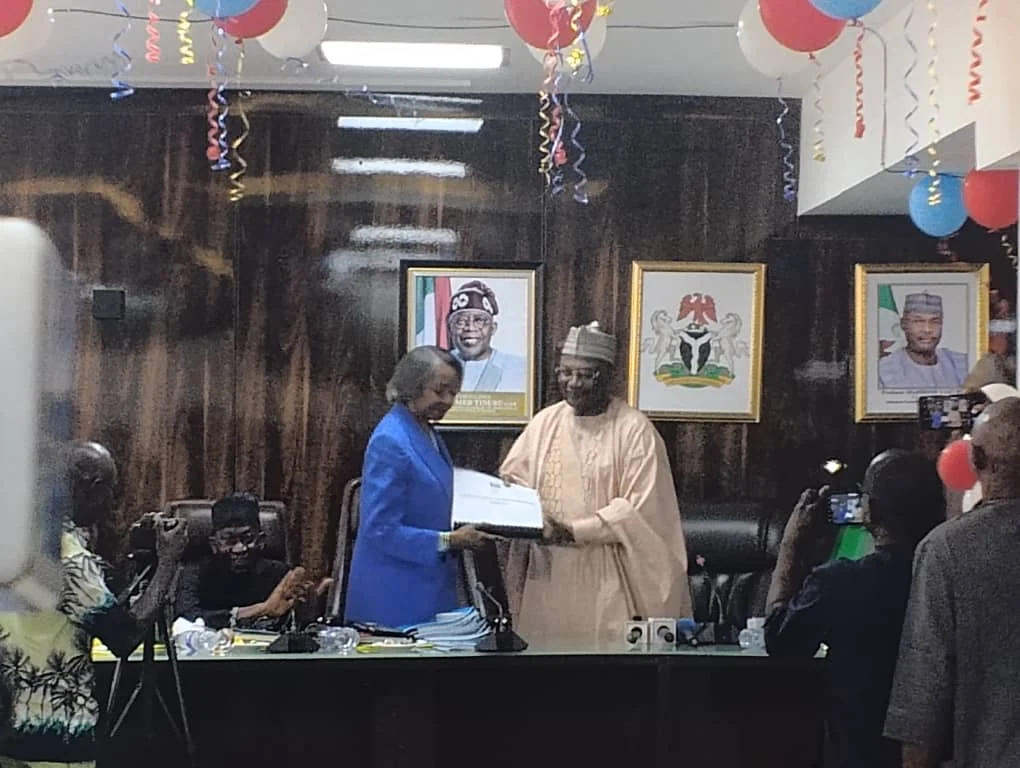
    The formal handover ceremony took place on Tuesday at the INEC headquarters in Abuja during a meeting with Resident Electoral Commissioners (RECs).

    The transition follows Professor Yakubu’s decision to proceed on terminal leave after completing his two-term tenure as head of the Commission.

    Mrs. Agbamuche-Mbu, one of INEC’s longest-serving National Commissioners, currently chairs the Legal Services, Clearance, and Complaints Committee (LSCCC).

    A lawyer with over three decades of experience, she holds a Master of Laws (LL.M) degree in Commercial and Corporate Law from Queen Mary and Westfield College, University of London.

    In a brief ceremony, Professor Yakubu formally handed over documents to Mrs. Agbamuche-Mbu, signifying the official transfer of leadership.

    INEC, in a statement, said the handover was part of its tradition of ensuring administrative continuity and institutional stability.

    Professor Yakubu, who was first appointed by former President Muhammadu Buhari in November 2015 and reappointed for a second term in 2020, is the longest-serving INEC Chairman since Nigeria’s return to democratic rule.

    His tenure witnessed landmark electoral innovations, including the introduction of the Bimodal Voter Accreditation System (BVAS) and the INEC Result Viewing (IReV) portal — two reforms widely credited with improving transparency and credibility in Nigeria’s electoral process.

    Critics observe however, that while the huge investment in technology aided the voting process, the outcome of elections remained quite controversial due to the failure of the electoral body to deploy for the outcome.

    The smooth transition comes as the Commission continues with ongoing voter registration exercises in the Federal Capital Territory (FCT) and prepares for off-cycle governorship elections in key states.

    Meanwhile, credible reports suggest that President Bola Ahmed Tinubu is set to nominate Professor Joash Amupitan (SAN) as the substantive INEC Chairman.

    The nomination, according to sources, may be ratified at a scheduled Council of State meeting on Thursday.

    Until then, Mrs. Agbamuche-Mbu will oversee the affairs of the Commission in an acting capacity, ensuring that ongoing electoral operations remain uninterrupted.

    Her appointment is seen as a continuation of INEC’s commitment to professionalism, gender inclusion, and effective succession planning.

    Further details about the handover and the anticipated presidential nomination are expected in the coming days.

  • Nigeria/Morocco Strengthen Ties to Deepen AI-based Weather Collaboration

    Nigeria/Morocco Strengthen Ties to Deepen AI-based Weather Collaboration

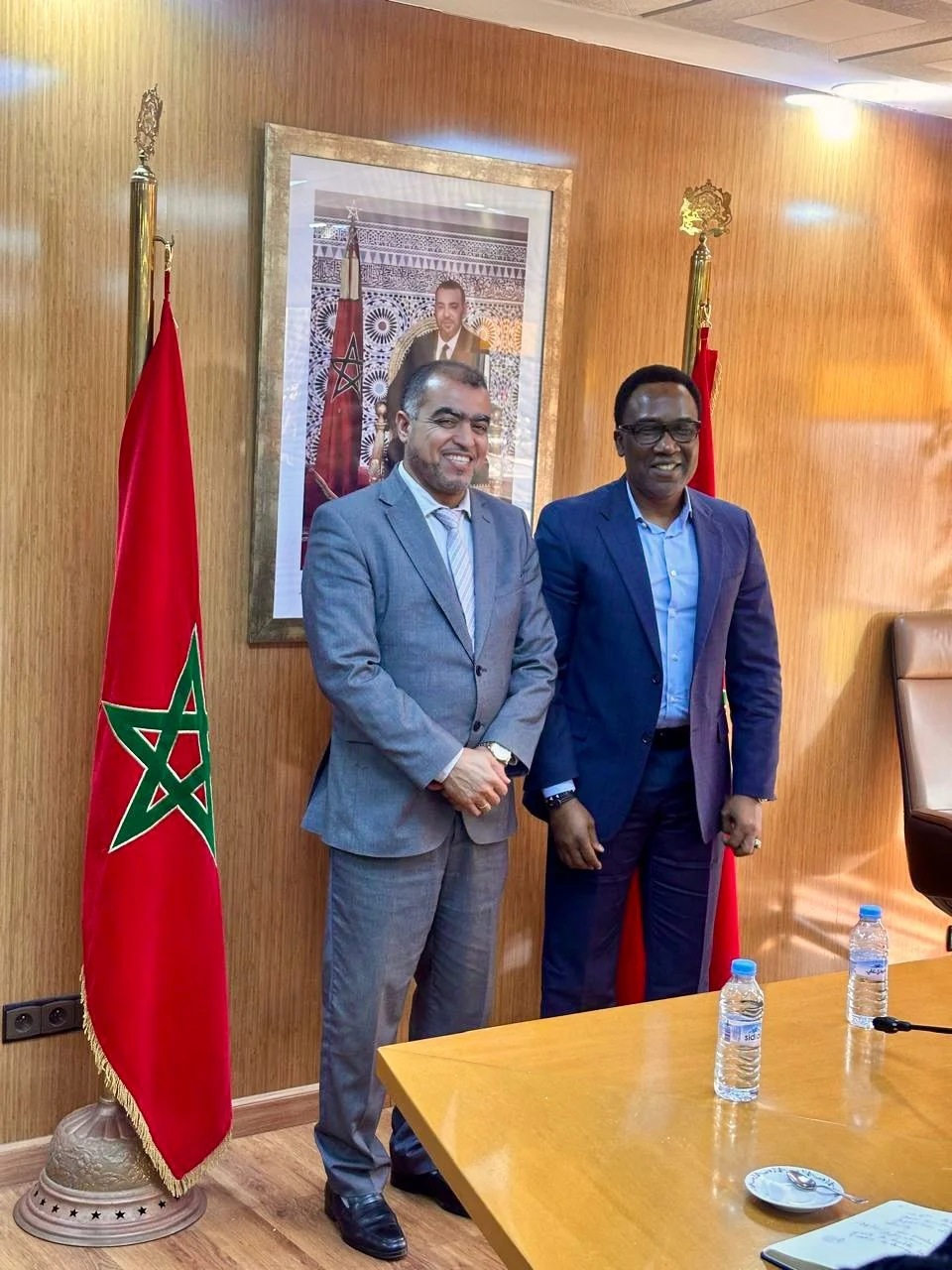
    The Director-General of the Nigerian Meteorological Agency (NiMet), Prof. Charles Anosike, has paid a working visit to his Moroccan, Mohammed Dhikissi.

    It was revealed that the visit is part of efforts to deepen bilateral collaboration on AI-driven weather forecasting and early warning systems.

    The visit took place on the sidelines of the ongoing United Nations Systematic Observation Financing Facility (SOFF) workshop for Peer Advisors and Implementing Entities in Casablanca.

    The SOFF workshop is one of the programmes designed to strengthen technical cooperation between Nigeria and Morocco in advancing climate services, data management, and predictive meteorology.

    During the meeting, Prof. Anosike and his Moroccan counterpart discussed areas of mutual interest, including joint research on AI-enabled weather models, capacity building for meteorologists, and the exchange of best practices for enhancing regional weather observation networks.

    He emphasized that leveraging AI technologies in meteorology would significantly improve the accuracy of forecasts and the timeliness of climate-related warnings, thereby enhancing resilience in sectors such as agriculture, transportation, and disaster management across Africa.

    The NiMet DG also highlighted the importance of regional partnerships in addressing the growing impacts of climate change, stressing that “Africa’s future in climate resilience depends on collaboration, innovation, and the intelligent use of technology.”

    Prof. Anosike and Mr. Dhikissi

    Morocco’s Directorate of General Meteorology, renowned for its advancements in modern forecasting systems and climate services, expressed readiness to work closely with NiMet to develop a framework for continuous technical exchange and joint innovation in weather prediction and climate adaptation.

    The visit is expected to pave the way for a stronger partnership between both institutions under the broader framework of the World Meteorological Organization (WMO), supporting the African continent’s push towards smarter, AI-enabled weather and climate solutions.

  • Miyetti Allah hails Tinubu on commitment to livestock development

    Miyetti Allah hails Tinubu on commitment to livestock development

    Pampered and enabled by the defunct Buhari regime, Miyetti Allah Kautal Hore, are on another fancy ride, applauding President Bola Tinubu for his administration’s commitment to livestock development.

    The socio-cultural association representing the interest of Fulani pastoralists in Nigeria, bared their mind in a communiqué jointly signed by the association’s National President and Secretary, Alhaji Abdullahi Bodejo and Saleh Alhassan.

    The statement issued Tuesday, in Keffi, Nasarawa State after an expanded national executive meeting by the national leadership of the association to x-ray the challenges confronting Fulani pastoralists in Nigeria.

    The meeting, which took place in Karu Local Government Area on Sunday, had state chairmen of the association and other critical stakeholders in attendance.

    Members of Miyetti Allah Kauthal hore

    According to the communiqué, the association expressed appreciation to Tinubu for his commitment to livestock development and enhancement of security and general welfare of the pastoralist community in the country.

    It, however, called for adequate funding of the Ministry for Livestock Development to ensure full implementation of the National Livestock Development Plan.

    The association also appreciated the decision of the ministry to commence designation, gazetting and development of all the 415 grazing reserves across the states of the federation.

    Miyetti Allah Leader, Baba Usman-Ngelzarma

    This, it said, would serve as a strategic step to addressing the challenges confronting Fulani herders in Nigeria.

    “This will include building of earth dams and solar boreholes, building of veterinary clinics and development of diary (milk) collection centres, among others,” the communiqué stated.

    It condemned the continuous profiling of Fulani pastoralists by a section of the media and called for unbiased and justice-based reportage of the farmers and herders’ conflicts.

    The association, however, applauded the National Security Adviser, Mallam Nuhu Ribadu and the Senate Committee on National Security and Intelligence for adopting both kinetic and non-kinetic strategies in addressing rural banditry, particularly in the North-West zone. 

  • Ebony state govt commences clearance of N10bn gratuity backlog owed LG retirees

    Ebony state govt commences clearance of N10bn gratuity backlog owed LG retirees

    Ebonyi state government commences clearing the backlog of gratuity estimated at N10 billion it owes over 4,000 retired Local Government employees.

    Flagging off the exercise in Abakiliki on Monday, the state Commissioner for Local Government and Chieftaincy Matters, Mr Uchenna Igwe, said the move would ameliorate the suffering of the retirees.

    Igwe described the gesture as a defining moment of justice and compassion, as contained in Gov. Francis Nwifuru’s people’s charter of needs mantra.

    “These entitlements were not paid since the state’s creation and the commencement of its payment has restored hope and dignity for selfless service.

    “The governor is a promise keeper who only thinks of ways to enhance the people’s wellbeing,” he said.

    The commissioner urged the beneficiaries to use the funds judiciously especially in supporting their families and communities.

    The commissioner for Information and State Orientation, Mr Ikeuwa Omebeh, recalled that the governor inaugurated a six-member verification committee for the exercise on Aug.1, 2025.

    The committee chaired by the wife of the state’s former deputy governor, Mrs Catherine Ogbu, was tasked with authenticating claims and determining eligibility for retirees.

    “This covers the period of 1996 to 2025 as the exercise has been successfully completed and payments will be carried out on LGA basis.

    “All verified retirees will be paid through their bank accounts as the gesture will beyond welfare, inject liquidity into rural economies and stimulate small businesses,” he said.

    The Executive Secretary of the State Local Government Pension Board, Mr. Emeka Nwonu,.assured that all verified persons would receive their entitlements.

    “The Board collaborated with all relevant bodies concerned with the process, in realising set goals,” he said.

    The Chairperson of the verification exercise, Mrs. Catherine Ogbu, lauded the governor for his vision of prioritising the welfare of retirees.

    “This is a dream delayed, but presently a reality, and promise fulfilled” she said.

    The Chairman of the Nigeria Union of Pensioners, Ebonyi Council, Mr Donatus Okemini, urged Ebonyi people to pray and support the Nwifuru-led administration as it had the people’s interest at heart.

    Mrs Martha Elom, one of the retirees, thanked the governor for the gesture noting that it had ‘added a new lease of life” to her. 

  • Rivers secretariat inferno: No casualty says head of service 

    Rivers secretariat inferno: No casualty says head of service 

    The Rivers Head of Service, Dr Inyingi Brown, has confirmed that there were no casualties during a fire incident at the state secretariat complex.

    Brown disclosed this to newsmen at the scene of the fire incident on Monday in Port Harcourt.

    She said that the state fire service and other relevant agencies responded promptly to contain the inferno.

    Brown commended the timely response of the state fire service, Renaissance, federal fire service, and the military, who all sent their fire trucks to the scene.

    “We thank God Almighty, and also commend Gov. Siminalayi Fubara, for being proactive in rehabilitating the fire service before this time.

    ‘’If not for his investment in the fire service, this situation would have been worse,” she stressed.

    She disclosed that no life was lost, explaining that the state medical service was on ground to curtail any emergency.

    Brown explained that preliminary reports suggested that the fire might have been as a result of electrical faults and urged the civil servants to always switch off all electrical appliances at the close of work.

    “We urge all civil servants to take responsibility for safety; put off our sockets and our lights.

    Not just putting off the sockets, but unplug them to ensure there is no residual charge because these buildings are heritage buildings and we don’t want anything to happen to them,” she said.

    Brown further assured that Fubara was working on measures to refurbish the secretariat buildings, which would be made known soon.

  • Echoes of ‘Iya Shukudi’ in Trade Fair demolitions

    Echoes of ‘Iya Shukudi’ in Trade Fair demolitions

    By

    UGO ONUOHA

     MANY issues have been playing out in Lagos state between the government and residents, especially with those of Igbo extraction. There appears to be no love lost. It has been a cat and mouse relationship since after the February 2023 presidential election in which Labour Party candidate, Peter Obi [an Igbo], defeated a ‘son of the soil’ Bola Ahmed Tinubu, candidate of the ruling All Progressives Congress [APC] political party. The defeat of the Jagaban, who was a governor of the state between 1999 and 2007, was deemed an insult, an assault, and a sacrilege. It came as a shock of ‘tsunamic’ proportion because Tinubu, now president of Nigeria, was regarded as the builder and owner of Lagos, a claim that is blatantly untrue. He was regarded as a wily politician and a political strategist like no other. For once he was outed as a giant with clay feet.

    Since after his governorship, nobody became anything in the state at least, politically without his express approval, anointing, and support. And this includes each and everyone of his successors since 2007. You cannot even aspire to become a local government councillor unless you belong to the camp of ‘Baba sope’. Any beneficiary of Tinubu’s approval who allowed themselves to be suspected of disloyalty or harboured anything short of absolute fealty to the ruler was frozen out, and sent to the Siberia of Lagos. If in doubt, ask the one term governor of the state, Akinwumi Ambode. That the indigenes and residents of Lagos thought he did a good job in his first term was of no consequence. His performance did not guarantee him a second term. He was ousted at the party primary level. It now appears that his rehabilitation is on the horizon after six years and counting of being in the cold. Tinubu is the only governor of the ‘Class of 1999’ in Nigeria who allegedly successfully privatised a state, stork and barrel, for about two decades and counting. So the result of the 2023 presidential election was an aberration and a shock. The political bookmakers did not reckon with that outcome in their widest imagination. It was claimed that the margin of his loss in the informal and unannounced vote tally was staggering. And a huge price must be extracted from any persons or group suspected to have a hand in that humiliating defeat.

    Some of the demolished properties belonging to Igbo Business people at the FG-owned Lagos Trade Fair Complex

    The Igbo of Lagos were not just merely suspected of voting to defeat the owner of Lagos. Without evidence they were quickly branded as the original sinners, and as harbouring designs to seize the governorship of the state from the indigenes, the economic heartbeat of the Yoruba nation. So, the reprisal was swift and scorching. No Igbo in the state would be allowed to vote in the March 2023 governorship poll unless the enforcers headed by a rich [wealth extracted through extortion and violence], illiterate motor park lout were fully convinced that the Igbo voter would cast their ballot in favour of the ruling party [APC] candidate, Babajide Sanwo-Olu. Videos from some enforcers including that from the popular or notorious motor park henchman in Lagos made the rounds. They warned Igbo voters not to come near the precincts of the voting stations unless they committed to voting for the ruling party candidate, and to show evidence that they did so. It was immaterial that it was unlawful to show who you voted for. Many were restrained from casting their ballots in that election including some Yoruba persons and non-Igbo residents of the state. Their crime: they were judged to resemble Igbo. Those who resisted the enforcers and insisted on voting were viciously attacked, bloodied and left for dead. M.C Oluomo who was the head of the enforcers of no voting for the Igbo of Lagos enjoyed, still enjoys, police escorts. And official protection. His godfather now lives in the Rock.

    RELATED STORIES:

    The police said Oluomo’s threat to the Igbo was a joke and completely harmless. He followed up the get out of jail template with a choreographed video which showed that his jocular banters with ‘Iya Shukudi’ [Yoruba for Igbo’s Chukwudi’s mother], his alleged long time friend and neighbour, was misconstrued as a threat to the Igbo voters in Lagos. But nobody was fooled. Oluomo has since relocated to Abuja to head the national body of road transport workers union, about the same time that Tinubu assumed the presidency, also in Abuja. Oluomo’s relocation and promotion could be a reward for a job well done. Another person who was alleged to play a role in the fall of Tinubu in Lagos in 2023 was his party man and the governor of the state, Sanwo-Olu. It took time to ‘unmask’ his role though there was no supporting evidence placed in the public domain. In ‘Baba sope’s’ camp mere suspicion is enough evidence. The governor was hounded and publicly humiliated. He was ridiculed and castrated. Obviously, with backing from a higher authority, the speaker of the Lagos state house of assembly was empowered to demean and disgrace the governor. He was reportedly at the brink of impeachment. His alleged manoeuvre to remove the speaker was bursted. Indeed, the governor was forced to swallow his own vomit. Respite came when he managed to find sympathizers who agreed to accompany him to Abuja to pay obeisance to their god. Even the allegations of his using a female socialite, whose birthday party he was said to have sneaked out of state to attend in one exotic island in a far-flung part of the world, to launder money has gone cold.

    The deity that they worship does not stop demanding for blood sacrifices. That probably explains the governor’s overzealousness in doing-in the Igbo to satisfy his master. And one certain way to get at the Igbo is to destroy their businesses and threaten their livelihoods. In this regard the Lagos state government under Sanwo-Olu appears to be in overdrive. And demolitions of properties owned by the Igbo, and the closures of markets where they are dominant players on flimsy excuses, have become routine avenues for retributions. It will be wrong and uncharitable to claim that the state government ignores its rules and laws in every and all enforcements. No. The point is that the state government now seems disposed, determined, and eager in using a sledgehammer for even minor physical development or sanitary infractions that could otherwise be resolved through dialogues and negotiations. This appears to be the situation with the recent Trade Fair demolitions of fully built up market plazas and complexes by the enforcement team of the physical development agency.

    Any one who watched the Lagos state commissioner for physical planning on national television struggling and stuttering to justify and rationalise the demolitions in the Trade Fair complex would readily realise that the state’s action was not unimpeachable. It was difficult for any neutral person, [which I may not be given the sound and feel of my name], to believe that the enforcement was driven exclusively by legalities or illegalities. But I am persuaded that the demolitions were propelled by sentiments far beyond the Lagos state government, and a section of the Yoruba deep resentment of the Igbo. Envy and pervasive fear of the Igbo also play a part. But the main reason could be Sanwo-Olu working hard to return fully to the good graces of his god in Abuja by crippling the economy of the Igbo ahead of the 2027 presidential election. Was it a coincidence that the demolitions happened at the same time that the successor of MC Oluomo, one Sego, declared with what sounEchoes of ‘Iya Shukudi’ in Trade Fair demolitionsded like oracular finality that Lagos state and APC are one and the same. And that anybody who nursed the idea of not voting for Tinubu, and for APC up and down the ballot in 2027, should know that they are dead men walking. Sego was reported to have been invited by the secret police [self-styled directorate of state services for questioning. But he ended up with a slap on the wrist.  So it’s actually all about hate, fear, envy, and 2027. The Igbo are like the phoenix. And haters will have to contend with that.

    UGO ONUOHA, Veteran Journalist, was the Managing Director/Editor-in-Chief, Champion Newspapers Limited

  • The ShopRite empty shelves video: a critical economic analysis

    The ShopRite empty shelves video: a critical economic analysis


    By

    Wale Alonge

    Executive Summary
    This paper critically examines the viral video of empty shelves in a ShopRite outlet in Abuja, which has been used to portray the Tinubu administration as a failure. While the imagery is powerful, it is also misleading. The reality is more complex: Nigeria is undergoing painful but necessary structural reforms. The removal of subsidies and the floating of the naira are painful adjustments that have reduced purchasing power in the short term, but they are essential for long-term economic stability. The ShopRite example highlights not only the immediate consumer pain but also the structural shifts in Nigeria’s
    retail market. Foreign chains that relied on subsidized imports are struggling, while local retailers with lean supply chains are thriving. The empty shelves therefore reflect business model weaknesses, not a national collapse. Early signs of recovery are visible: prices are stabilizing in local markets, indigenous retailers are expanding, and investors are returning. Manufacturing hubs are growing in some states, though regional disparities remain. Osun State, for example, has not yet embraced industrial transformation, unlike Ogun. The key lesson is that Nigeria is restructuring, not collapsing. Consumer welfare improvements will lag behind macroeconomic gains, but those who focus only on pessimistic narratives risk missing the opportunities of tomorrow. Nigeria remains a high-risk, high-return economy—where timing is everything.

    Introduction

    A recent video showing empty shelves at a ShopRite outlet in Abuja has gone viral, fueling political narratives about the failure of the Tinubu administration. While the imagery is striking, a critical analysis reveals that such interpretations are simplistic and misleading. To understand the reality, we must situate the event within Nigeria’s current economic reforms, market dynamics, and the ongoing structural transition of the consumer sector.

    Macroeconomic Context: From Coma to Recovery

    The Nigerian economy inherited by the Tinubu administration was, by every measure, in a state of near collapse. To use a medical analogy, it resembled a patient in intensive care, requiring painful but necessary interventions to prevent imminent death. The removal of fuel subsidies and the floating of the naira—two of the administration’s most significant reforms—are comparable to chemotherapy: painful, disruptive, and producing visible side effects, but ultimately essential to restoring long-term health. Unsurprisingly, Nigerians—particularly the middle class—have experienced a sharp decline in purchasing
    power. Just as a patient undergoing chemotherapy loses weight and hair, households are enduring a period of painful adjustment as the economy recalibrates.

    Retail Market Dynamics: ShopRite vs. Local Competitors

    ShopRite’s struggles, dramatized in the viral video, are not merely the result of national economic decline. Rather, they highlight the competitive pressures in Nigeria’s retail sector. Large foreign-owned chains like ShopRite, which previously relied on subsidized foreign exchange to stock imported goods, now find themselves disadvantaged. By contrast, indigenous retailers such as FoodCo, with leaner operations and localized supply chains, are thriving. Their agility and narrow focus enable them to adapt quickly to shifting economic conditions. In consumer markets, as in nature, the aging lion often loses its pride to younger and more nimble challengers.

    Empty ShopRite Shelves, Ikeja Mall, Lagos

    Media Narratives and Political Spin

    It is important to interrogate the motives behind viral media content. The ShopRite store shown in the video bears the hallmarks of a “going out of business” outlet: empty shelves, no staff, and no customers. It is less evidence of national collapse than of a particular company’s strategic failure. To present this as a proxy for Nigeria’s overall economic
    trajectory is intellectually dishonest and politically motivated.

    Early Signs of Recovery

    Despite the pain of adjustment, evidence suggests that Nigeria is slowly turning a corner. Prices in local markets such as Bodija are beginning to ease. Indigenous retailers are expanding, with FoodCo opening new outlets and reporting brisk business. Along the Lagos–Ibadan expressway, new manufacturing warehouses are springing up, signaling renewed investor interest. The return of global investors—previously deterred by currency volatility and profit repatriation challenges—underscores that reforms are beginning to restore confidence in Nigeria’s business environment.

    Regional Economic Disparity

    One worrying dimension, however, is the uneven pace of regional economic transformation. While Ogun State is positioning itself as a manufacturing hub, other Yoruba states, notably Osun, remain overly dependent on the public sector. Without deliberate policies to foster industrial growth, such states risk falling behind in Nigeria’s new economic order. Beyond the concern our our economy, the country faces a more existential threat to its future. Our youths all across the country, but especially in the Yoruba urban centers are getting hooked on “paraga,” addictive alcohol delivered in fancy colourful sachets and other hallucinogens. We are losing our youths and our future to drugs and no one seems to be concerned about or doing something about it

    Lessons from the Past and Future Outlook

    It is worth recalling that the Jonathan administration benefited from a mini oil boom, yet much of that windfall was squandered on subsidies and currency manipulation. By contrast, today’s reforms aim to address structural weaknesses, even if they impose short-term costs on households. As economic theory and experience both show, improvements in consumer welfare often lag behind macroeconomic indicators. Investors who wait for the “feel-good” factor to materialize may miss the window of opportunity. It is like buying an IPO after it has peaked and the early investors have harvested the early bird payoff. In five years Nigerians, especially those in the diaspora who has their stations permanently tuned to the doomsayer will find out too late that the cost of entry into the Nigerian economy has become too prohibitive.
    Nigeria remains a high-risk, high-return environment, where timing is everything.

    Conclusion
    The viral ShopRite video is less an indictment of Nigeria’s economy than a case study in corporate mismanagement amid structural reforms. While suffering is undeniable and challenges remain, the trajectory is one of painful but necessary adjustment. For investors and policymakers alike, the lesson is clear: Nigeria is not collapsing—its economy is restructuring.
    Those who focus only on the bearers of bad news risk missing the opportunities of tomorrow.

    Adewale Alonge, PhD, Founder & President, Africa Diaspora Partnership for Empowerment and Development. www.adped.org, writes in from Dadeland, Miami, Florida, USA.

  • Etsu Nupe @ 73:  Celebrating 22 years of service, touching lives

    Etsu Nupe @ 73:  Celebrating 22 years of service, touching lives

    By

    Mohammed Baba Busu

    In Nigeria, the role of the traditional institution in preserving the culture, maintaining peace and fostering national cohesion cannot be underplayed.

    In Niger, the Etsu Nupe, Alhaji Yahaya Abubakar, a foremost traditional ruler, who recently turned 73, has creditably acquitted himself in his 22 years on the throne.

    A key stakeholder in Etsu Nupe’s palace said Abubakar’s 22-year reign had been that of impactful service and transforming the destinies of not only people of his domain, but Nigerians at large.

    “We recently celebrated the 73rd birthday and 22 years on the throne of the Etsu Nupe and Chairman, Niger State Council of Traditional Rulers.

    “The 73rd birthday and 22nd coronation anniversary of the revered Etsu Nupe was not just another ceremonial festivity, it was a powerful testament to a reign anchored on humility, service to humanity and unshaken commitment to socio-cultural and spiritual advancement of Kin Nupe.

    “This year’s celebration was not only unique, but was organised in a grand style. This time, the focus was the down trodden and the forsaken in the society.

    “The unusual five-day event, which stretched from Sept. 12 to Sept. 16, 2025, was full of activities; two out of the five days were dedicated to visiting the down trodden and the sick in the society.’’

    On Sept. 15, the traditional ruler visited the Correctional Centre, Bida, Remand Home and Federal Medical Centre (FMC), Bida, while on Sept. 16, he visited Umaru Sanda General Hospital and Blind Centre.

    He also visited a private hospital he personally facilitated its building.

    For the whole of the five days, the ancient city of Bida and adjoining communities witnessed activities that spoke volumes about the character of the 13th Etsu Nupe, a compassionate father, reformer and bridge-builder.

    Day one began with solemn prayers led by the Chief Imam of Nupe kingdom, Sheikh Adamu Liman Yakatun.

    The prayers, attended by traditional title holders and clerics underscored the essence of longevity, health and divine guidance for the highly respected humble Royal Father.

    Testimonies on how his reign lifted Nupe kingdom to enviable heights resonated strongly, setting the tone for the celebration.

    The second day was devoted to homage-paying, as citizens and well-wishers trooped to the palace, reaffirming the deep bond between the first class traditional ruler and his people.

    This was followed by a historic traditional pilgrimage on day three to Rabba, in Mokwa Local Government Area of the state, which hosts the tomb of Mallam Muhammad Manko, founder of Bida, was honoured with special prayers.

    “The Etsu Nupe, in his wisdom used the occasion to stress the preservation of historic sites as drivers of cultural pride, tourism and socioeconomic growth.

    “Perhaps the most touching episode came on the fourth day when the 13th Etsu Nupe visited Bida Correctional Centre, in a rare display of compassion, he facilitated the release of seven inmates, by paying their fines and debts in full.

    “All these visits were made to identify with the down trodden and the sick in order to comfort them and give them a sense of belonging.

    “Many lives were touched positively when the royal father also visited the Correctional Centre as the inmates were full of smiles when they sighted him.

    “The gifts they received also added to their joy which ignited a sense of belonging, hope and relevance in them. This gesture, according to many, will linger for many years in the minds of the inmates and also strengthen their belief and hope in the country.

    “Also, the hospital visits were another aspect of the occasion that kept tears rolling in the eyes of many, because, those who were without hope were reminded that someone cares for them; the gifts also created an atmosphere of joy amongst the patients,’’ a palace stakeholder said.

    Observers say the celebration of the 73rd birthday and 22 years on the throne of Etsu Nupe should be a case study for scholars, students and an example for many royal fathers and other elites in the country.

    In his congratulatory message, Gov. Mohammed Bago of Niger commended the fatherly role of the traditional ruler not only to the people of Nupe extraction but to the entire state.

    The governor described Abubakar as a selfless, peaceful, kind, and passionate leader who always stood by his people.

    Bago said that the Etsu Nupe had been a beam of hope, unity, and peace, especially to his people.

    The governor applauded the royal father, emphasising that the reign of the Etsu Nupe had been marked by wisdom, exemplary leadership, and steadfast dedication to cultural preservation and the socio-economic advancement of Nupe Kingdom, Niger, and Nigeria in general.

    “Etsu Nupe has continued to strengthen the existing relationship between the state government and traditional institutions as well as support the policies of his administration, which has helped to foster harmony and development across the state,’’ he said.

    The governor organised a special prayer session for  Abubakar, held at the Wadata Palace in Bida.

    Bago described the Etsu Nupe as an exceptional and kindhearted leader.

    He also acknowledged his good counsel, which, according to him, has been helpful in his decision-making.

    The governor commended the stewardship of the humble traditional ruler, noting that his 73 years of existence and 22 years on the throne have been fruitful and successful.

    Also, Mohammed Mohammed Ndarani, Hukunchi Nupe, felicitated Abubakar on the special occasion.

    According to Ndarani, the Etsu Nupe’s reign has been a blessing to the Nupe Kingdom, Niger State, and Nigeria at large, as it is marked by peace, unity, progress and the preservation of our rich cultural heritage.

    He prayed Almighty Allah (SWT) to grant Abubakar many more years of good health, wisdom, and strength to continue leading your people with dignity and fear of God.

    “May your reign continue to bring peace, harmony, and development to Kin Nupe and beyond”, Ndarani prayed.

    In his remarks at the prayer session, Abubakar appreciated Allah for his mercies and grace in guiding him through his reign as the 13th Etsu Nupe.

    He equally thanked the governor for organising the special prayer session for him, saying it demonstrated his care and concern.

    The Etsu Nupe also appreciated all those who have continued to identify with him and accord him respect, and prayed Allah to continue to guide the governor as he continued to steer the leadership of the state.

    He also assured him of the unalloyed support of the state’s traditional institution to ensure successful implementation of the policies and programmes of his administration.

    On his part, the Chief Imam of Bida, Liman  Yakatun, who led other Islamic clerics in Bida Emirate in praying for the Etsu Nupe, also prayed for the success of the fight against all forms of insecurity and other challenges confronting the nation.

    Abubakar succeeded the late Etsu Nupe, Alhaji Umaru Sanda Ndayako, on Sept. 11, 2003.

    He was born on Sept. 12, 1952, in Bida, and hails from one of the ruling houses of Bida Emirate (Usman Zaki).

    He attended Government College, Sokoto, and later, Commercial College Kano (1967–1971).

    He enrolled into the Nigerian Defence Academy, Kaduna (1973–1975) for training and enlistment into the Nigerian Army.

    As a military officer, his last posting was the Defence Headquarters, Abuja, where he served as Director, Foreign Operations, before retiring as a Brigadier- General in September 2003.

    Before his appointment as the Etsu Nupe, he was the Kusodu Nupe.

    In all, stakeholders say what traditional ruler needs from all residents of Niger is continued support and prayers.

    They say the traditional ruler wants his subjects to promote peace and remain loyal to constituted authorities in the quest for the prosperity and stability of the state and the country at large.

    Mohammed Baba Busu writes for the News Agency of Nigeria (NAN)

  • FIFA U20 World Cup: Flying Eagles edge Saudi Arabia 3-2

    FIFA U20 World Cup: Flying Eagles edge Saudi Arabia 3-2

    Nigeria has defeated Saudi Arabia 3-2 in a Group F match at the ongoing FIFA U20 World Cup in Talca, Chile.

    The win earned the Flying Eagles three points and boosted their chances of reaching the Round of 16.

    The Flying Eagles came into the game desperate for a win following a 1-0 loss to Norway in their group opener.

    Saudi Arabia on the on the other hand, were looking to bounce back after their loss to Colombia 1-0 to start the competition.

    Nasiru Salihu opened scoring for Nigeria in the 10th minute.

    Saudi Arabia drew level in the 21st minute through Amar Alyuhaybi.

    Amos Ochoche restored Nigeria’s lead seven minutes before the break. The first half ended 2-1 in favour of the Flying Eagles.

    Talal Haji equalised for Saudi Arabia six minutes into the second half.

    Nigeria sealed the win in stoppage time. Captain Daniel Bameyi converted a penalty to make it 3-2.

    The result means Nigeria will qualify for the Round of 16 with at least a draw against Colombia on Monday.