Author: admin

  • Another NAHCON Chairman Down as Old Fault Lines Resurface

    Another NAHCON Chairman Down as Old Fault Lines Resurface


    The reported resignation of Abdullahi Saleh Usman as Chairman of the National Hajj Commission of Nigeria (NAHCON) has once again exposed a troubling reality: nearly two decades after its creation, Nigeria’s Hajj regulatory body remains trapped in a cycle of leadership crises, boardroom warfare, and political interference.

    Documents, stakeholder accounts, and past official actions suggest that Usman’s exit is not an aberration—but the latest casualty of a system that has repeatedly failed to reform itself.

    January 2026 Warning That Broke the Camel’s Back

    The immediate trigger for Usman’s departure was a January letter sent by the NAHCON Board to Bola Ahmed Tinubu, in which board members passed a vote of no confidence in the chairman.

    According to sources familiar with the letter, the board accused Usman of:

    • Centralising decision-making
    • Undermining statutory board functions
    • Delaying key procurement and logistics processes
    • Presiding over a breakdown of trust between management and commissioners

    Most damningly, the board warned that the commission was “ill-prepared” for the 2026 Hajj cycle and risked “systemic failure” if leadership issues were not urgently addressed.

    Within days, reports of Usman’s resignation surfaced.

    A Familiar Pattern: Chairmen Who Rarely Finish Strong

    Since NAHCON was established in 2006, few of its chairmen have exited office without controversy.

    2016–2019: Abdullahi Mukhtar Muhammad

    The tenure of Abdullahi Mukhtar Muhammad remains one of the most turbulent in the commission’s history.

    In 2019, the Federal Government suspended him amid allegations of financial mismanagement and administrative breaches. Although Mukhtar denied wrongdoing and no criminal conviction followed, his suspension came after prolonged conflict with board members and internal audit queries that prompted presidential intervention.

    The episode paralysed preparations for that year’s Hajj and deepened mistrust between NAHCON and state pilgrim welfare boards.

    Earlier Years: Bello Sadiq and Boardroom Infighting

    Under Bello Sadiq, NAHCON also struggled with allegations of opaque contract awards and disputes over airline selection for pilgrim airlifts.

    Multiple states openly accused the commission of poor coordination and late communication, while internal disagreements between political appointees and career officials spilled into the public domain.

    Though no formal indictment followed, his tenure reinforced a growing perception of NAHCON as an institution perpetually at war with itself.

    Structural Flaws No Chairman Has Escaped

    Interviews with former officials and Hajj industry stakeholders point to structural weaknesses that transcend individual personalities:

    • Blurred authority lines between the chairman, board, and secretariat
    • Politicised appointments that prioritise patronage over expertise
    • Weak internal controls, particularly around procurement and vendor selection
    • Last-minute decision-making in an environment that requires years of advance planning

    Each new chairman inherits these flaws—and often attempts to consolidate power to manage them—triggering resistance from boards, staff, or political sponsors.

    Why the Stakes Are Now Higher Than Ever

    Unlike a decade ago, Saudi Arabia now enforces stricter timelines, digital pilgrim profiling, and early contractual commitments. Any internal paralysis at NAHCON has immediate international consequences.

    Stakeholders warn that repeated leadership implosions could eventually:

    • Jeopardise Nigeria’s Hajj quota
    • Increase costs for pilgrims
    • Damage Nigeria’s credibility with Saudi authorities

    A senior state pilgrims’ board official, who spoke on condition of anonymity, described the situation bluntly:

    “We change chairmen, but we never change the system that destroys them.”

    Usman’s Exit: End of a Tenure, Not the Crisis

    While the Presidency has yet to formally confirm Usman’s resignation or announce a successor, analysts argue that replacing him without comprehensive reform risks repeating history.

    Calls are now growing for:

    • Clear statutory separation of powers within NAHCON
    • Stronger external oversight and audits
    • Transparent procurement frameworks
    • Appointments based on sector competence, not politics

    Until those issues are addressed, critics warn that NAHCON’s revolving door will keep spinning—no matter who occupies the chairman’s seat.

  • 2027 and fear of free, fair and credible election

    2027 and fear of free, fair and credible election

    By

    UGO ONUOHA

    One, two, three…, 17, 18, 19…, 28, 29, 30. Counting may no longer be of any use. The figure changes at the drop of a hat. It has remained a moving and elusive target since 2024, and especially so since last year. They were in a queue. And on cue. They said the regime had done good for the country. But when you look around, you only see a mountain of bad and ugly things. Poverty bestrides the country – relentless poverty. Nevertheless, the Presidency was overwhelmed by the rush by many governors elected on the platforms of opposition political parties to align with the regime at the centre. To synchronise the obviously hostile acquisitions of the mandates of opposition political parties, the Presidency which present occupants are Alhaji Bola Ahmed Tinubu and Alhaji Mohammed Kashim Shettima, and their collaborators were compelled to draw up a schedule, a roster and a calendar for the admission of the mandate thieves into the fold of the ruling and ruining All Progressives Congress [APC] political party.

    The governors who were jostling among themselves as to who would be the first to jump ship were of the former ruling, and we dare say ruining party, the People’s Democratic Party [PDP]. This party held Nigerians in a chokehold for 16 years from 1999-2015. They boastfully told Nigerians that they would rule the country for an unbroken 60 years, ostensibly in the mold of PRI [Institutional Revolutionary Party, 1929-2000] that ruled Mexico for 71 years. Innocent Ogbulafor who was once the national secretary of the party said this much. And publicly. He’s long dead, and this democratic dispensation is barely 27 years old.

    The PDP as a behemoth, ruling party, and a self-styled largest political party in Africa lasted for barely 16 years in office before it was swept out. The party is dead in spite of the delusions of the remnants of its fractured leadership at the centre and in the states and the local governments and the wards. Its national headquarters, the Wadata Plaza has been shuttered for weeks by the obviously partisan Nigerian Police and wrapped with barbed wire. Minister of the federal capital territory [FCT], Nysom Wike, who’s the face of a faction of that party which is working for President Tinubu and the APC has assured that the PDP secretariat would be unchained this week [yesterday really]. Wike is believable because he’s the Law and works hands-in-gloves with judges. He builds our judges’ houses and buys them cars. In fact, the chief justice of Nigeria [CJN] was at the sod turning ceremony for an estate that Wike is building for judges working in the FCT. Wike as Rivers state governor routinely fêted the immediate past chief justice in Port Harcourt. It was during one of those occasions that the erstwhile CJN endorsed the rebellion of five PDP governors led by the same Wike against their party. That pathetic man was still the CJN at that time.

    That Wike is the law is not a conjecture. Somehow, disputes involving him routinely managed to be assigned to particular judges in Abuja. It could be a coincidence. But it should be concerning that some words spoken by Wike in public during political stomping manage to be replicated, sometimes word-for-word, in the judgments of a particularly notorious Abuja judge. What could not be coincidence are the words that proceed from Wike’s mouth. For instance, in the course of a very public spat with the national chairman and national secretary of the APC over who was the leader of the APC in Rivers state, the minister reminded them that they did not know how the court judgment that ensured the continuing seizure of the federal financial allocations to Osun state local government councils was procured. Osun state is governed by the opposition PDP. State governor, Ademola Adeleke, has since left the crises-riven PDP for the Accord Party, preparatory to his contesting for a second term in an election slated for later this year. Unlike other PDP governors, he did not join the APC which is led by his Yoruba kinsman, Tinubu. It should be curious that while the PDP governors from virtually every geopolitical zone of the country had been joining the APC, the two in the president’s south west zone, Seyi Makinde of Oyo state and Adeleke, have refused to do the same. By the way, Makinde was part of the insurrectionist PDP governors who worked for Tinubu to be declared president in 2023. So his new stance is really after the fact.

    The fact that for now Tinubu’s governor – kinsmen have not joined the APC bandwagon has not affected the deluge. It should be instructive that the gale of defections of state assembly lawmakers, local government chairmen and their councillors, and federal legislators had been in spite of a ruling by the Supreme Court in 2015 or thereabouts in a suit involving former governor, Rotimi Amaechi, in which the court ruled that votes cast in elections were for the political party that sponsored the candidates. The court said only the names of political parties were on the ballot, not the candidates. Elsewhere, Supreme Court judgments serve as precedents. But that appears to strictly not apply in our jurisdiction. Otherwise, what would be the explanation for a governor who ascended office on the strength of ballots cast for the PDP, dumping the party and moving to another party, and still remained a governor. And there are no consequences. Part of the strangeness of our judicial system is that the Supreme Court can make a ruling, and then forbid lower courts and lawyers from citing the judgment as a precedent. Ballots cast for political parties could be one such case.

    Now back to the counting of governors and others who have defected to the APC ahead of the general elections next year. As at the last count which may not be accurate since defections have become a daily fare, the ruling APC had 82 of the 109 senators; 242 out of the 360 members of the House of Representatives; 30 of the 36 state governors; it has the judiciary firmly in its grips; APC has the Independent National Electoral Commission [INEC]; the Armed Forces [after all the leader of the ruling party is also the Commander-in-Chief]; the Police, the civil defence militia; national union of road transport workers; and sundry area and city boys. One Abdulkadir Musa dutifully conducted the count which was shared on social media. But he’s likely to have under-counted.

    If the APC has this armada behind it, as it surely does, the expectation would have been that the party will rest assured that the results of the elections in 2027 are already firmly in the bag. No, that surely is not the case. The party is jittery. It’s scared stiff. Why? It is because the APC cannot vouch that the vast majority of Nigerians are with them. The party faces the reality that the next general election will be a referendum by the people on the performance [more like its non-performance] since 2023. Actually since 2015 under the regime of Nigeria’s affliction, the late Muhammadu Buhari. The APC has forfeited the right to again campaign on the basis of promises of delivery. It will have to seek a mandate renewal on the strength of promises that had been delivered. The tragedy is that the right hand side of its governance ledger is hopelessly light and scanty on deliveries, but heavy on sloganeering and propaganda and gaslighting. The hallmark of good and focused governance is how many citizens had been lifted out of poverty during the tenure of any administration. On this count, Tinubu and the APC have performed terribly poorly. Indeed, many of our compatriots have been dropping below the poverty line everyday since 2023. As at the last count about 70% of Nigerians are dirt poor. Late last year, a ranking federal government official said that about the same percentage of our people did not know where their next meal would come from. In any case, Nigeria has held the dubious record of being the global capital for poverty for seven years since 2019.

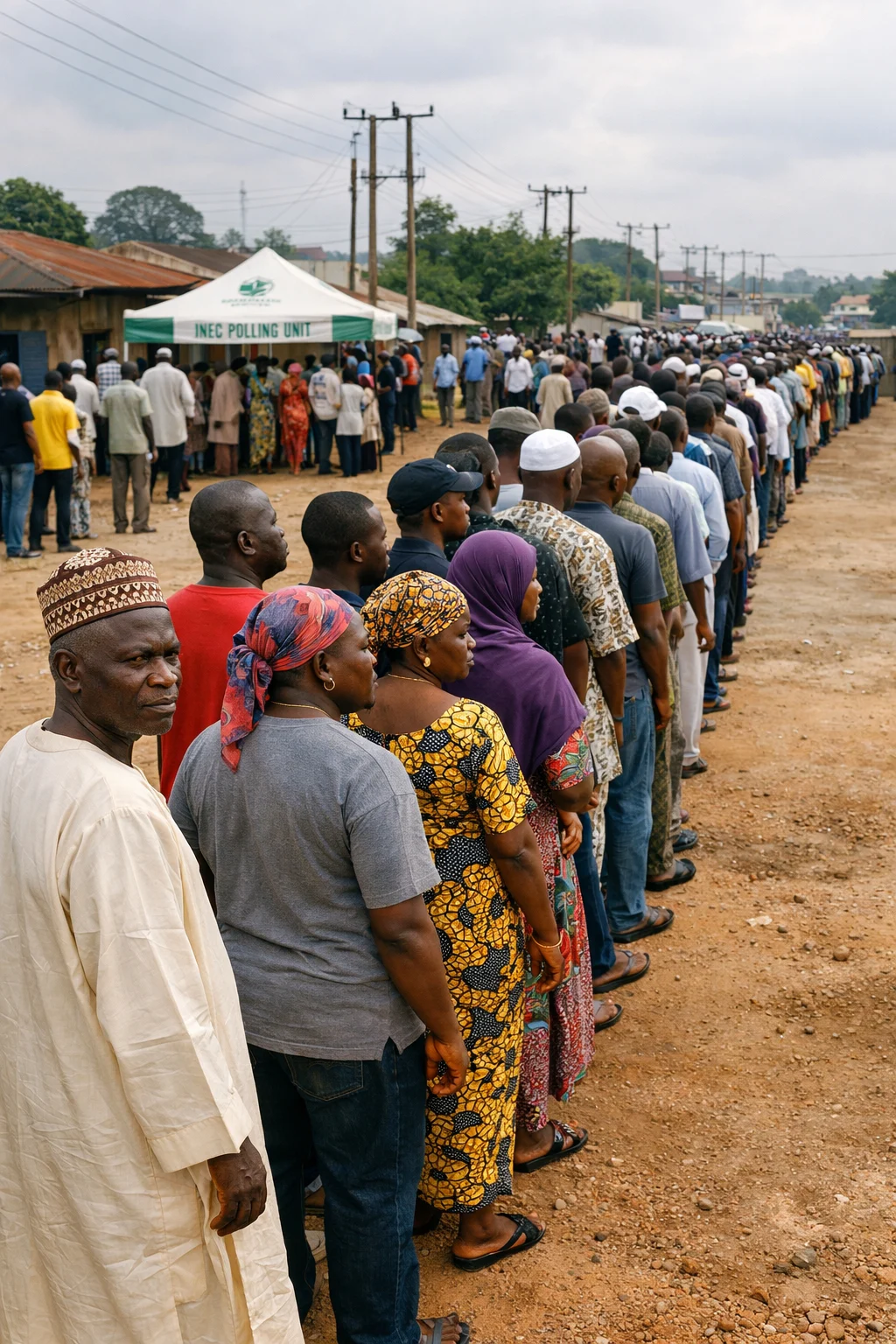
    So, it should not come as a shock if the national assembly [NASS] which is overwhelmingly dominated by the APC and the fair weather defectors are stoutly against anything that could ensure that the 2027 elections are free, fair and credible. It would not bode well for them. To be sure, the remnants of opposition lawmakers are part of the game to sabotage the widespread demand by Nigerians for mandatory and real time transmission of election results as part of the amendments of the Electoral Act. The few opposition lawmakers who have spoken up on the raging controversy have skillfully avoided the word ‘mandatory’ in their references to the affected provision. But that’s the key word in addition to ‘transmission’. The bone of contention in the proposed provision from the Electoral Act [Amendment] Bill is: “The presiding officer shall electronically transmit the results from each polling unit to the INEC Result Viewing Portal [IReV] in real time, and such transmission shall be done after the prescribed Form EC8A has been signed and stamped by the presiding officer and, where available, countersigned by candidates or polling unit agents”. Allowing this amendment should not be difficult except with fraudulent politicians. The excuse of weak internet infrastructure is just that – excuse. The other rationalisation, energy deficit, for being hesitant with this amendment is even more damning. It is self indictment that our rulers have failed and neglected to provide stable public power supply to citizens in 2026, almost 200 years after Lagos, a British colony, started enjoying electricity.

    Well, expecting politicians to be altruistic in their conducts would be expecting too much. Politicians are by nature selfish. They are incapable of building anything that would endure. Their style is ‘chere were’ or expediency. So Nigerians would have to own their country. The test of the resolve of our people does not come any better than the current battle to bring a measure of sanity to the country’s electoral process. Anything that will discourage or eliminate “grab, snatch and run” or “technical glitch” in our electoral process will be another step forward. Nigerians have to seize the moment.

    Meanwhile, many knowledgeable persons have rubbished the poor rationalisations by the leadership of NASS who are working in cahoots with the APC on why mandatory real time transmission of election results in 2027 will not fly. One such person is Dr. Alex Ter Adum of the Narrative Force. He wrote on the social media under the headline ‘Senate’s Tech Illiteracy As Electoral Policy’: “I have listened carefully to the arguments advanced by the Senate President Godswill Akpabio and the Senate spokesperson and other proponents of retaining the discretionary provisions of the 2022 Electoral Act on electronic transmission of results… The claim of inadequate internet connectivity in rural areas is hogwash… To begin with, voter registration in Nigeria was conducted manually. However, voter accreditation on election day is carried out electronically using the BVAS. The same BVAS is also designed to capture Form EC8A at the conclusion of voting and collation, and to transmit the polling unit results to the INEC electronic viewing portal called IReV electronically in real time.

    “If a network exists to enable electronic accreditation with the BVAS, then that same network necessarily exists to enable electronic transmission of results using the same device. This is a basic technological fact, not a matter of conjecture or complexity. It is a standard system functionality, and certainly not rocket science. Moreover, the argument that voting is manual and therefore cannot support real-time transmission is…baseless. What is required to be transmitted is not the act of voting, but the final results tally at the polling unit after voting has concluded, votes have been counted, and the figures duly entered on Form EC8A, which is the primary result sheet. Once the presiding officer announces the results, the completed EC8A is snapped and transmitted immediately. This process is entirely independent of whether voting itself was manuel or electronic.

    “Furthermore, where a temporary network blind spot occurs during transmission, the BVAS automatically stores the data and uploads it once the device enters a network coverage area. This is standard operating protocol for computing devices. So the claim that results transmission will fail due to poor network coverage therefore collapses under even the lightest scrutiny. In addition, internet connectivity across INEC’s approximately 176,000 polling units is today close to 98 percent. The narrative of widespread network absence is thus a choreographed smokescreen, not a genuine concern. To drive the point home. Point-of-Sale [POS] machines, which are equally dependent on internet connectivity, function in virtually every village and hamlet across Nigeria. [So], if POS machines can operate almost everywhere in the country, there is no logical basis for claiming that the BVAS cannot do the same when they rely on the same internet operating protocol… The Senate should therefore desist from its attempt to cripple electronic transmission of election results using the BVAS on the basis of exaggerated, contrived, and largely non-resident network concerns”. 2027 might just be the last stand in the battle for the soul of this country.

  • Nigeria, US Renew Security Partnership as Violence and Displacement Soar

    Nigeria, US Renew Security Partnership as Violence and Displacement Soar

    — But Results Remain Elusive

    Nigeria’s Defence Headquarters (DHQ) says a recent visit by the Commander of the United States Africa Command (AFRICOM), Dagvin Anderson, has reaffirmed security cooperation between Abuja and Washington. But with violence continuing to claim lives, displace communities, and deepen humanitarian strain, analysts and rights groups say both governments owe the public clearer evidence of what the partnership has actually achieved.

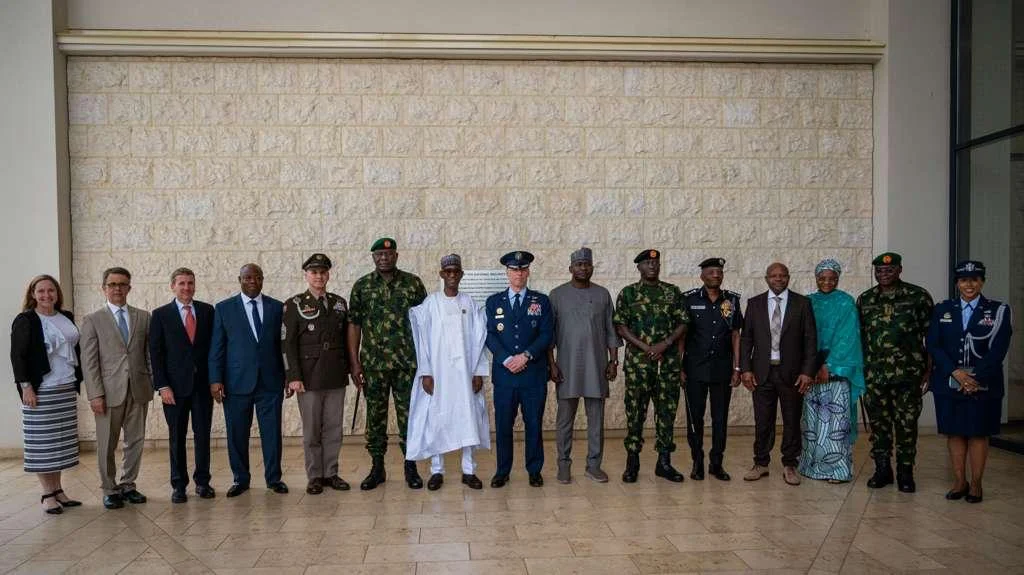
    In a statement attributed to the DHQ’s Director of Defence Information, Samaila Uba, officials said the visit was meant to “deepen collaboration” against terrorist groups threatening Nigeria and the wider region. Gen. Anderson met with Bola Tinubu, the National Security Adviser, Nuhu Ribadu, the Minister of Defence, Christopher Musa, and the Chief of Defence Staff, Olufemi Oluyede, and visited a joint US–Nigeria intelligence fusion cell.

    But concrete outcomes remain vague. Officials did not detail new commitments, metrics for success, or timelines for measuring progress — a pattern critics say has characterised past security dialogues.

    Violence Continues Despite Longstanding Cooperation

    Despite years of military training, intelligence sharing, and international support (including US-approved arms deals), Nigeria’s insecurity shows little sign of abating:

    • Deadly attacks have surged. In early February 2026, at least 162–200 people were killed in coordinated extremist assaults on the villages of Woro and Nuku in Kwara State — among the deadliest attacks in recent months.
    • Statewide and national figures point to a broader crisis. Amnesty International reported that between May 2023 and May 2025, armed attacks across multiple states killed at least 10,217 people and forced the displacement of hundreds of towns and villages.
    • Longer-term conflict toll. Insurgent violence in northern Nigeria — particularly linked to Boko Haram and splinter groups — has been associated with the deaths of tens of thousands of civilians and the displacement of over 2 million people since the conflict began.

    These figures reflect not just battlefield deaths but the chronic security failures that have driven families from their homes, disrupted local economies, and crippled access to basic services.

    Intelligence and Cooperation — Impact or Optics?

    The DHQ highlighted the role of a joint US–Nigeria intelligence fusion cell in enhancing surveillance and operational response. Yet, there are persistent reports of militants reaching remote communities, executing mass killings, and kidnapping civilians with impunity, suggesting that improved information flow has not always translated into timely or effective protection for vulnerable populations.

    Moreover, public statements from both governments rarely clarify how shared intelligence leads to changes in on-the-ground outcomes — such as preventing massacres like the one in Kwara or reducing daily attacks in the northeast and northwest.

    Opaque Budgets and Unclear Outcomes

    Budget details on US assistance — including equipment transfers, training, and advisory support — are often disclosed in generic terms without comprehensive reporting on results relative to expenditure. For example, in 2025, the United States approved a potential $346 million weapons sale to Nigeria aimed at strengthening military capacity, but there is limited publicly available data on how such resources have measurably reduced violence or improved civilian safety.

    Without transparent benchmarks or regular independent assessments, experts warn that security cooperation risks becoming a diplomatic talking point rather than a force for measurable change.

    Looking Ahead: What Nigerians Want to See

    Analysts and civil society groups increasingly call for:

    • Clear public metrics tracking trends in violence, arrests, and successful interventions attributable to joint efforts.
    • Independent evaluation of intelligence-sharing mechanisms and their operational impact.
    • Human security indicators, such as reductions in displacement and civilian casualties, rather than purely military success markers.

    For many Nigerians living amid recurring attacks and displacement, the question is no longer whether Nigeria has partners, but whether those partnerships can be held accountable to the people they are supposed to protect.

  • Industry Ministry’s $500m Export Claim Faces Scrutiny

    Industry Ministry’s $500m Export Claim Faces Scrutiny

    Nigeria’s Minister of Industry, Trade and Investment, Jumoke Oduwole, says the ministry generated more than $500 million in export revenue in 2025 through industrial development and diversification initiatives. However, details presented to lawmakers raise questions about attribution, scale, and the ministry’s capacity to sustain impact under persistent capital constraints.

    Oduwole made the disclosure on Monday while defending the ministry’s 2026 budget proposal before the Senate Committee on Trade and Investment.

    The minister also claimed that the ministry’s programmes created over 20,000 direct jobs in 2025. No supporting data was provided on the sectors involved, the duration or quality of the jobs, or the methodology used to separate ministry-driven outcomes from broader private sector activity.

    From a trade perspective, Oduwole pointed to a reported 500 per cent increase in traded volumes on the Nigeria Commodity Exchange. While the growth suggests rising activity in structured commodity markets, the ministry did not disclose absolute volume figures, making it difficult to assess whether the increase reflects meaningful market depth or a rebound from a low base.

    She said the ministry advanced plans for a national trade and distribution company to improve commodity aggregation and market access. However, key commercial details, including capital structure, governance, funding sources, and expected timelines, were not outlined, leaving uncertainty around execution and private sector participation.

    On policy delivery, the minister confirmed that the Federal Executive Council approved the National Industrial Policy in November 2025 and that Nigeria launched its first National Intellectual Property Policy. While these approvals expand Nigeria’s policy framework, they add to a growing list of strategies whose effectiveness will depend on implementation capacity rather than regulatory intent.

    Funding constraints dominated the budget defence. Oduwole said the ministry’s 2025 appropriation totalled ₦11.8 billion, largely consumed by personnel and overhead costs. Apart from a ₦3.8 billion capital allocation, she said no capital funds had been released, effectively limiting the ministry’s ability to execute industrial infrastructure, cluster development, or export-support programmes.

    Despite these limitations, the minister disclosed that the ministry exceeded its revenue target by approximately ₦100 million, with full remittance to the Consolidated Revenue Fund. In macro terms, however, the figure remains marginal when set against Nigeria’s industrial financing gap and the scale of the country’s non-oil export ambitions.

    Looking to 2026, Oduwole said the ministry’s priorities align with the Renewed Hope Agenda of Bola Tinubu, the National Development Plan, and existing trade, investment and industrial policy frameworks. She said the emphasis would shift from policy formulation to implementation across priority value chains, industrial clusters, and special economic zones, with a renewed focus on local production and non-oil exports.

    The minister described domestic investors as the primary signal of confidence in the economy, while foreign investors would continue to be targeted through trade missions and investment roadshows. She also announced plans for a National AfCFTA Tour and expanded sub-national engagement to embed trade and industrial outcomes at state level.

    She said these initiatives would be supported by digital investor portals and trade intelligence tools, measures long promised by successive administrations but yet to materially change investor experience.

    Oduwole disclosed that the ministry’s proposed 2026 capital allocation stands at ₦2.72 billion, a level she acknowledged would be insufficient given the ministry’s mandate and execution targets. She urged lawmakers to approve an increase, warning that without improved funding, delivery risks would persist.

    For investors and market operators, the central issue remains whether the ministry can translate policy approvals and headline revenue figures into measurable gains in industrial output, export competitiveness, and market infrastructure , or whether ambition will continue to outpace execution capacity.

  • Peter Obi, Activists Protest at National Assembly Over Electoral Act Reform Bill

    Peter Obi, Activists Protest at National Assembly Over Electoral Act Reform Bill

    Presidential aspirant Peter Obi on Tuesday joined pro-democracy activists in a protest at the National Assembly, calling for a review of the Electoral Act Reform Bill currently under consideration by lawmakers.

    The protesters, made up of civil society groups and political supporters, gathered at the National Assembly complex in Abuja, expressing concerns that some provisions of the proposed legislation could weaken electoral transparency and accountability.

    Speaking during the protest, Obi urged lawmakers to ensure that any amendments to the Electoral Act strengthen the credibility of elections and protect the independence of the electoral process. He said the bill, in its current form, requires broader consultation with stakeholders.

    The demonstrators also called for greater public input, warning that poorly crafted reforms could erode confidence in future elections.

    Security operatives were deployed around the National Assembly, but the protest remained peaceful, with no reported incidents.

    As of the time of reporting, the National Assembly had not issued an official response to the demands raised by the protesters. Deliberations on the Electoral Act Reform Bill are ongoing.

  • Nigeria’s Commodity Exchange Gap: A Costly Weak Link in Africa’s Largest Economy

    Nigeria’s Commodity Exchange Gap: A Costly Weak Link in Africa’s Largest Economy

    How structured trading platforms can unlock billions in agricultural value and transform industrial competitiveness

    By Chris Echikwu

    Nigeria’s industrial sector consumes more than ten million metric tons of agricultural commodities each year, yet the absence of a fully functional and liquid commodity exchange continues to impose enormous costs on manufacturers, farmers, and the broader economy. Industry experts warn that fragmented trading systems, weak price discovery, and inconsistent quality standards are undermining productivity across key value chains in Africa’s largest economy.

    From breweries struggling to secure stable maize supplies to food processors being subjected to inefficient and substandard input supplies, Nigeria’s agro-industrial ecosystem operates largely through opaque and inefficient informal markets. These inefficiencies, analysts say, translate into billions of naira in avoidable losses annually.

    A Market Defined by Inefficiency

    Available data paints a stark picture. Nigerian industries process roughly 1.3 million metric tons of palm oil annually for food, cosmetics, and household products, yet price markups between farm gate and factory often reach as high as 70 percent. Breweries consume an estimated 400,000 metric tons of sorghum every year, but face price volatility exceeding 40 percent within a single crop cycle.

    Meanwhile, the country’s textile industry uses just 70,000 metric tons of cotton annually—far below its installed capacity—due largely to unreliable supply chains and inconsistent quality. The decline has contributed to the collapse of an industry that once employed millions.

    At the heart of these challenges is poor price discovery. Most commodity transactions occur through bilateral negotiations involving multiple intermediaries, creating information asymmetries that inflate costs for manufacturers while depressing incomes for farmers. In some cases, processors pay above-market prices even as producers in nearby regions receive less than fair value, with intermediaries capturing disproportionate margins.

    Quality and Financing Constraints

    Quality inconsistency further compounds the problem. Manufacturers routinely receive maize with varying moisture levels, palm oil with fluctuating fatty acid content, and cocoa beans lacking standardized fermentation. These variations increase processing costs, reduce output quality, and frequently lead to commercial disputes, disputes made harder to resolve in the absence of enforceable grading standards or arbitration mechanisms.

    Financing gaps also persist. Commercial banks remain reluctant to lend against physical commodities due to concerns over price volatility and quality verification. As a result, farmers struggle to access production credit, while small and medium-scale manufacturers face working capital constraints. The outcome is a low-investment equilibrium that suppresses productivity across entire value chains.

    How a Functional Commodity Exchange Could Help

    Analysts argue that a properly structured commodity exchange would address many of these systemic failures. Transparent, centralized trading platforms with publicly visible prices would reduce information asymmetries and shift negotiations toward market-based pricing. Farmers would gain clearer price signals, improving production planning and reducing exploitation.

    Futures trading, in particular, could be transformative. By locking in prices months ahead, food processors and manufacturers could hedge against seasonal price spikes, stabilize budgets, and reduce speculative inventory costs. International evidence suggests that active futures markets can reduce commodity price volatility by 20 to 30 percent.

    Standardized quality grading enforced through independent certification would further enhance efficiency. Exchange-traded contracts define precise quality parameters, while certified warehouses provide third-party verification. This system allows buyers to purchase commodities without inspecting every lot and rewards producers who invest in quality with measurable price premiums.

    Unlocking Credit Through Warehouse Receipts

    The warehouse receipt system (WRS) is another critical component. Farmers who store produce in certified warehouses receive receipts representing verified quantity and quality. These receipts can be used as collateral, enabling banks to lend with greater confidence. The system helps farmers avoid distress sales during harvest gluts while ensuring year-round supply for industrial users.

    Broader Economic Impact

    The macroeconomic implications are significant. Improved price discovery and quality assurance could attract investment into mechanization, better inputs, and improved agronomic practices. Even modest productivity gains in agriculture, employing about 35 percent of Nigeria’s labour force, could add billions to GDP and generate jobs across logistics, processing, and trade.

    Industrial competitiveness would also improve. Studies from comparable economies suggest that functional commodity exchanges can lower industrial input costs by 15 to 25 percent. For Nigeria, this could reduce dependence on imports of palm oil, food products, and textiles, saving hundreds of millions of naira annually, while enabling premium exports of cocoa, sesame, ginger, and niche products such as hibiscus (“zobo”).

    Institutional Challenges Remain

    Despite its potential, Nigeria’s commodity exchange ecosystem faces institutional hurdles. While several exchanges exist, trading volumes remain low due to limited warehouse infrastructure, weak regulatory enforcement, and insufficient market participation.

    International experience offers clear lessons. Ethiopia’s commodity exchange, launched in 2008, now trades more than 700,000 metric tons annually, transforming price transparency and farmer incomes. India’s commodity exchange network handles over 100 million metric tons each year, supporting the world’s second-largest agricultural economy.

    For Nigeria, experts argue, the issue is not proof of concept but political and institutional commitment. With industrial demand exceeding ten million metric tons annually and inefficiencies draining billions from the economy, the case for prioritizing commodity market infrastructure has become increasingly urgent.

    Chris Echikwu is a former General Manager for Corporate Communications and Strategy at the Nigeria Commodity Exchange, Abuja.

    Mr Chris Echikwu is a former General Manager, Corporate Communications and Strategy, Nigeria Commodity Exchange, Abuja.

  • Tinubu’s Silent Domination: A Threat to Nigeria’s Democracy

    Tinubu’s Silent Domination: A Threat to Nigeria’s Democracy

    By

    Editor

    President Tinubu does not need to threaten a “do-or-die” election. By capturing institutions, absorbing opposition structures, and weakening electoral safeguards, he is shaping the outcome long before voting begins. When referees are loyal and rules are rewritten, elections become ritual, not choice.

    The events of last Wednesday at the Nigerian Senate left a bitter and lingering taste in the mouths of many Nigerians. For a public already exhausted by broken promises and eroded trust, the handling of the 2026 Electoral Act Amendment Bill felt less like a disappointment and more like a confirmation of long-held fears. For weeks, citizens waited with restrained hope, believing, perhaps naively, that the Senate might finally take a step toward restoring confidence in governance and the electoral process. Instead, what unfolded appeared to be the final straw, a moment that exposed, in stark terms, where power truly lies and whose interests are being served.

    When Olusegun Obasanjo infamously described the 2003 election as a “do-or-die affair,” he revealed his mindset with startling clarity. It was the language of conquest, not consent; of domination, not democracy. The backlash was immediate, but the damage was irreversible. That election has since become a grim reference point, a reminder of what happens when incumbents abandon restraint and treat democratic competition as a personal survival exercise. Yet for all his brazenness, Obasanjo made one critical error: he spoke too plainly. He announced his intentions. He warned the public. And in politics, forewarning invites resistance.

    President Bola Tinubu has learned that lesson well. He has not threatened Nigerians with “do or die.” He has adopted a far more effective strategy: silent domination. There is no bluster, no dramatic declarations, no rhetorical excess. Instead, there is method, cold, patient, and systematic. Tinubu is not engaging in speculation or theatrics; he is locking down the very mechanisms that decide electoral outcomes. This is not opposition paranoia or conspiracy theory. It is observable, sequential, and intentional. Tinubu is not preparing to contest the 2027 election; he is preparing to control it.

    The foundation of this control is institutional obedience. Elections in Nigeria are no longer stolen primarily by ballot-box snatching; they are shaped long before voting begins, inside institutions that determine how votes are counted, challenged, secured, and enforced. Tinubu has therefore ensured that the most critical offices—the judiciary, electoral management bodies, the police, intelligence services, and military command, are headed by individuals whose loyalty is dependable and whose independence is, at best, compromised. This has nothing to do with merit or federal character. It has everything to do with predictability. When disputes arise, when injunctions are sought, when security decisions must tilt one way or another, the president does not want doubt. He wants alignment. In such a system, instructions need not be given. The expectations are already understood.

    Yet institutions alone do not guarantee victory; geography still matters. That is why the ruling party has pursued a ruthless campaign of political absorption across the country. Governors are defecting not out of conviction, but out of calculation. Nigerian politics is unforgiving to dissent and generous to surrender. Federal power is wielded as a weapon, through control of funds, security pressure, and administrative chokeholds. Faced with these realities, many governors have chosen capitulation over confrontation. The result is a weakened opposition and a ruling party that now controls the very state machinery responsible for administering elections. In Nigeria, whoever controls the states controls logistics, security coordination, and the practical implementation of electoral rules. This is not competitive democracy; it is political enclosure.

    Then came the most decisive move: rewriting the rules themselves. Nigerians had placed what little faith remained in technology as a shield against fraud. Electronic transmission of results was imperfect, but it disrupted decades of rigging culture by limiting human discretion at collation centres, the traditional graveyard of the popular will. That disruption made it dangerous. And so it had to be neutralized. The Senate’s decision to weaken electronic transmission and preserve manual handling of results was not the product of confusion or incompetence. It was deliberate. Lawmakers understood precisely what they were doing. They chose the system that allows figures to “change,” results to “adjust,” and outcomes to “emerge.” They acted openly, confidently, and without fear, because they know the system shields them from accountability.

    Calling the Senate a rubber stamp is no longer rhetorical excess; it is an accurate description. In that moment, the chamber made clear that it represents power, not voters. It did not fail Nigerians by accident, it betrayed them by choice. By dismantling electronic safeguards, it restored the most dangerous phase of Nigeria’s electoral process: the opaque journey between polling units and final collation, where votes lose meaning and manipulation thrives.

    Government defenders will insist, as always, that everything done was legal. They are correct, and that is precisely the danger. Authoritarianism in the modern age does not announce itself with tanks and decrees. It advances quietly, through laws, appointments, and procedural camouflage. It smiles, quotes the constitution, and pretends neutrality while suffocating competition. Tinubu’s approach may be legal, but it is fundamentally illegitimate. It drains democracy of substance while preserving its outward form.

    The real danger is not that Tinubu may win re-election. Incumbents often do. The danger is that Nigeria is sliding toward a system where elections exist without real choice, opposition exists without real power, and voters exist without real consequence. When outcomes are engineered in advance, participation becomes ritual. Citizens vote, but nothing changes. Tinubu does not need to rig ballots if he controls the referees. He does not need to intimidate voters if he controls collation. He does not need to threaten rivals if he absorbs or neutralizes them. This is domination without spectacle, power without noise, and manipulation without fingerprints, cleaner than Obasanjo’s blunt-force tactics, and far more corrosive.

    History is unforgiving to such arrangements. Before they collapse, they extract a heavy toll: public cynicism, voter apathy, institutional decay, and the slow suffocation of accountability. Nigeria has seen this story before, and it never ends well. The warning signs are glaring. The tragedy is not that they are subtle, but that those in power are pretending they do not exist.

  • Housemanship Gap Locks Out 2,000 Doctors Every Year — MDCN

    Housemanship Gap Locks Out 2,000 Doctors Every Year — MDCN

    The Medical and Dental Council of Nigeria (MDCN) has disclosed that about 2,000 Nigerian-trained medical doctors are left without housemanship placement every year, citing limited capacity under the current centralized system.

    The revelation was made by MDCN Registrar Fatimah Kyari while defending the Council’s 2026 budget proposal before the Senate Committee on Health in Abuja.

    Housemanship Capacity Below Medical Graduate Output

    According to the Council, Nigerian medical schools produce approximately 6,000 doctors annually, but the Centralized Housemanship System can only absorb about 4,000 graduates each year.

    This shortfall leaves nearly one-third of new doctors unable to complete their mandatory housemanship, delaying full registration and entry into the workforce.

    “A total of about 6,000 medical doctors are produced annually from various medical schools, while the centralized housemanship system in operation can only take 4,000,” Kyari said.

    Call to Include State and Private Hospitals

    To close the gap, the MDCN urged the Federal Government to expand the Centralized Housemanship System to include state-owned and privately owned hospitals.

    Kyari said such an expansion would allow all 6,000 medical graduates to be absorbed annually, eliminating backlogs and training delays.

    Brain Drain Concerns Grow

    The Registrar warned that persistent housemanship delays were fueling Nigeria’s medical brain drain, as affected graduates increasingly seek training and employment opportunities abroad.

    She stressed that timely placement of medical graduates was critical to retaining healthcare professionals and strengthening the health system.

    MDCN Raises Funding Shortfalls

    Kyari also highlighted funding challenges facing the Council, revealing that no capital funds were released in the 2025 fiscal year, despite an approved ₦1.2 billion capital budget.

    She added that:

    • Only ₦37.5 million was released from the ₦100 million approved for overhead costs, and
    • ₦13.859 billion was released from the ₦16.8 billion allocated for personnel expenses.

    Senate Promises Budgetary Support

    Responding, the Chairman of the Senate Committee on Health, Banigo Ipalibo, assured the MDCN of legislative backing, pledging that the committee would work toward improved funding for the Council in the 2026 budget.

    He noted that addressing housemanship bottlenecks and funding gaps was essential to improving healthcare delivery in Nigeria.

  • Senate Approves Electoral Act Bill, Denies Scrapping E-Transmission

    Senate Approves Electoral Act Bill, Denies Scrapping E-Transmission

    The Nigerian Senate has approved the Electoral Act (Amendment) Bill, 2026, dismissing reports that lawmakers voted to scrap the electronic transmission of election results.

    The bill was passed on Wednesday after more than four hours of heated debate, particularly over the proposed amendment to Clause 60(3), which sparked widespread speculation on social media that the Senate had rejected real-time electronic transmission of results from polling units to the Independent National Electoral Commission’s Result Viewing Portal (IREV).

    Reacting to the controversy, Senate President Godswill Akpabio described the reports as inaccurate and misleading, insisting that the Senate did not vote against electronic transmission.

    “The Senate has not rejected electronic transmission of results,” Akpabio said shortly after the bill’s passage. “What we did was to retain the provision already in the Act, which permits electronic transmission and was applied in the 2022 elections. This Senate cannot afford to go backwards.”

    Debate on the contentious clause began around 2:00 p.m. and concluded at approximately 6:26 p.m., following concerns that a proposed amendment mandating presiding officers to transmit signed and stamped result sheets electronically to IREV in real time could introduce legal complications.

    Instead, lawmakers opted to retain the existing wording of the Electoral Act, which allows election results to be transmitted “in a manner as prescribed by the Commission.”

    Akpabio stressed that the decision does not eliminate electronic transmission from Nigeria’s electoral framework, adding that the provision remains valid and will continue to guide future elections.

    Similarly, Senate spokesperson Yemi Adaramodu said the Senate did not discard the committee’s recommendation on electronic transmission but avoided provisions that could create legal technicalities during election disputes.

    Adaramodu also disclosed that the amendment removed the power to declare a runner-up as winner in cases where a candidate earlier declared elected by the Independent National Electoral Commission (INEC) is later found to be unqualified to contest.

    Electronic transmission of election results has remained one of the most contentious elements of Nigeria’s electoral reform discussions since the 2023 general elections, with civil society groups and opposition parties advocating clearer legal safeguards to enhance transparency and public trust.

    Following the bill’s passage, the Senate announced the composition of a conference committee to harmonise its version with that of the House of Representatives. The committee will be chaired by Adeniyi Adegbonmire, with Tahir Monguno, Simon Lalong, Adamu Aliero, Orji Uzor Kalu, Abba Moro, Asuquo Ekpeyong, Aminu Abbas, and Tokunbo Abiru serving as members.

    Meanwhile, the Senate adjourned plenary until February 24, 2026, to allow lawmakers focus on the defence of the 2026 budget by ministries, departments and agencies (MDAs).

  • I Can Fix Benue APC Crisis — Omale Omale, Declares Chairmanship Bid

    I Can Fix Benue APC Crisis — Omale Omale, Declares Chairmanship Bid

    Former Benue State Commissioner for Power, Renewable Energy and Transport, Chief Omale Omale, has declared that he has the capacity to end the lingering internal crisis rocking the All Progressives Congress (APC) in Benue State.

    Omale, who is contesting for the state chairmanship position of the party, made the declaration on Wednesday while speaking with journalists in Makurdi, insisting that only party members with deep knowledge of APC’s history should be entrusted with its leadership.

    “I understand the various tendencies within the party, and I have the capacity to manage them,” he said, citing his experience in party management and government administration.

    The APC founding member accused the current Unity Caretaker Committee of failing to deliver on its mandate of uniting the party, noting that no inclusive meeting involving all factions has been convened since the committee assumed office.

    “The divide is still there. There is a missing link, and it flows from the capacity and personality of those managing the party,” Omale stated.

    He also criticised what he described as the rise of “overnight political players” who lack understanding of the party’s history, while long-standing members who laboured to build the APC are being sidelined.

    Omale assured party members that his leadership would prioritise inclusiveness, internal democracy, and strict adherence to the party’s manifesto, stressing that loyalty must be to the party and not to individuals or factions.

    “For democracy to work, everyone must have a say, and the majority must have their way without creating further division,” he said.