
Category: Business

  • CBN to Assume Control of Crude Sales, as President Tinubu Unveils Sweeping Reforms in Oil Sector

    CBN to Assume Control of Crude Sales, as President Tinubu Unveils Sweeping Reforms in Oil Sector

    President Bola Tinubu has directed the Central Bank of Nigeria (CBN) to assume responsibility for crude oil sales, a move aimed at addressing longstanding concerns about opaque practices and declining oil revenue under the management of Nigerian National Petroleum Company Limited (NNPCL).

    The action is to enhance transparency and efficiency in Nigeria’s oil industry, marking a significant departure from the previous exclusive control by the Nigerian National Petroleum Company Limited (NNPCL).

    Under the previous structure, the NNPC held sole authority over crude oil sales, submitting accounts solely to the federal government. Critics argued that this arrangement lacked transparency, allowing the NNPC to potentially underreport earnings.

    This directive mandates the NNPC to submit all receipts for crude oil sales to the CBN for thorough vetting and documentation. The objective is to eliminate any potential gaps in reporting and to ensure accurate records of oil revenue.

    It can be recalled that last week, the CBN Governor, Mr. Olayemi Cardoso called for collaborative effort with the Ministry of Finance and the NNPCL, highlighting its impact on foreign exchange flows and the accretion of reserves.

    Speaking at the launch of the Nigerian Economic Summit Group (NESG) “2024 Macroeconomic Outlook Report,” Cardoso outlined strategic reforms designed to foster transparency and stability in the foreign exchange market.

    “The expected stability in the foreign exchange market for 2024 can be attributed to the reduction in petroleum product imports and the recent implementation of a market-determine exchange rate policy by the CBN.”

    “This reform is designed to streamline and unify multiple exchange rates, fostering transparency and reducing opportunities for arbitrage.”

    He further highlighted the comprehensive strategy to improve liquidity in the foreign exchange markets, addressing fundamental issues that have hindered effective operations over the years. The ongoing independent forensic review aims to clear the backlog of valid FX transactions, demonstrating the commitment to upholding the integrity of financial markets.

  • Opay To Block Accounts Without Complete KYC

    Opay To Block Accounts Without Complete KYC

    Nigerian financial technology company, OPay has announced a major security update in its operations.

    Starting from March 1, 2024, the company will remove fraudulent accounts from its system and block customers whose accounts are not compliant with Know Your Customer (KYC) requirements.

    This announcement was made during a news conference held on Wednesday.

    KYC, a standard banking process, involves verifying the identity and address of customers to prevent the misuse of banking services.

    This move by OPay is aimed at reinforcing the security of the platform and safeguarding customer deposits against fraudulent activities.

    The decision comes in the wake of a report that highlighted vulnerabilities in OPay’s registration and verification process for new accounts.

    In response to these concerns, Olayemi Precilia, the director of cards business at OPay, assured that security measures on the platform have been significantly upgraded.

    She revealed that new customers will now be required to provide their National Identity Number (NIN) as part of the account opening process.

    As the deadline approaches, OPay customers are advised to update their account details to meet the KYC requirements to avoid any inconvenience.

    She said, “When you log into your app and you have a tier one account and you don’t have your NIN, it will ask for your NIN. You cannot move forward without inputting that NIN. So, that is one of the things we’ve already done.

    “The second thing is, for new customers, you’re going to start off with the NIN. That’s what we’re implementing. So, we’re pulling information from your NIN into your wallet. That is going live next month.

    “And we have a timeline — March 1st — wherein anyone who is not compliant will be locked out.”

    Opay’s director of partnerships, Ikponmwosa Kolawole Odiase, said fraudulent accounts will be yanked off” the firm’s system.

    Going forward, according to Odiase, customers will be required to link their accounts with NIN and bank verification numbers (BVNs).

    Speaking on the issue of poor facial verification on the application, he said the firm intends to deploy a system where there will be a backend verification of customers’ facials with BVNs and NINs.

    He said, “It’s a collaboration between all relevant stakeholders — the regulators, the KYC agencies. All this is a way to curb fraud.

    “The fraudsters are not sleeping and we also are waking up to the challenge. It’s an industry challenge, unfortunately.

    “So many fictitious accounts will definitely go.”

  • CBN Rescinds Ban on Cryptocurrency Transactions

    The Central Bank of Nigeria (CBN) has retracted its prohibition on cryptocurrency transactions in Nigeria.

    This policy reversal was conveyed in a circular no. FPR/DIR/PUB/CIR/002/003, dated December 22, 2023, and signed by Haruna Mustafa, Director, Financial Policy and Regulation Department.

    Earlier, in February 2021, the apex bank had imposed a ban on cryptocurrency transactions in Nigeria, citing concerns over potential money laundering and terrorism financing risks, as well as the absence of regulatory measures and consumer protections.

    However, citing evolving global trends and regulatory developments, the CBN acknowledged the necessity of regulating Virtual Assets Service Providers (VASPs). This recognition aligns with the Financial Action Task Force’s (FATF) updated Recommendation 15 in 2018, which urged the regulation of VASPs to prevent misuse of virtual assets for illegal activities. The Money Laundering (Prevention and Prohibition) Act, 2022 also included VASPs within the definition of financial institutions.

    The new guideline issued by the CBN is aimed at providing clarity to financial institutions under its purview regarding their relationships with VASPs operating in Nigeria. Notably, this guideline supersedes previous directives, particularly circulars FPR/DIR/GEN/CIR/06/010 dated January 12, 2017, and BSD/DIR/PUB/LAB/014/001 dated February 5, 2021.

    Despite the lifting of the ban, the CBN reiterated that banks and financial institutions are still prohibited from directly engaging in trading, holding, or transacting in virtual currencies on their own accounts.

    Under the revised directive, banks and financial institutions are mandated to promptly comply. The CBN also reminded these entities of its previous circular, BSD/DIR/PUB/LAB/014/001 dated February 5, 2021, which urged them to identify and close the accounts associated with cryptocurrency transactions.

  • Cairo Meeting: We Seals $43.7bn Trade, Investment Deals —Afreximbank

    Afreximbank says about 43.7 billion dollars worth of trade and investment deals were sealed at the just concluded Intra-African Trade Fair (IATF2023) held in Egypt.

    Kanayo Awani, Intra-African Trade Bank, Afreximbank Executive Vice-President, said this at the Post-Event Virtual News Conference held in Cairo, Egypt on Tuesday.

    Awani said the 43.7 billion dollars worth of trade and investment deals sealed was against the projected figure of 43 billion dollars which was set, describing the event as a success.

    She said the third edition of the IATF2023 attracted no fewer than 1,939 exhibitors, with 45 African countries represented.

    Awani said from the 45 African countries represented, 42 had pavilions, saying this was a remarkable achievement.

    She said that 16 non-African countries were represented at IATF2023, bringing the total number of countries to 61.

    “We did promise to come back and give you conclusive key indicators after doing the necessary audits.

    “In terms of participants of attendance both in-person/virtual, we ended up with 28,282.

    In terms of the number of exhibitors, I think we had announced 1,615 at the close of the trade fair but following our audit, it was 1,939. we had actually targeted 1,600.”

    She said that by their own estimation and standard set, the IATF2023 was a huge success because they exceeded many of their parameters.

    Awani said the trade fair was a platform used to connect buyers and sellers, saying we were aware that the contracts that were being negotiated had to be financed in one form or the other.

    “As Afreximbank, we ensured that financial institutions and non-banking financial institutions were part of the trade fair to provide the necessary financing and expand access to finance on the continent.”

    Awani said that the IATF2023 was a huge platform to access finance.

    “The IATF is not just a platform to grow intra-African trade but a platform for banks to grow access to finance.”

    The Afreximbank, working with the African Union and other strategic partners, inaugurated the Intra-African Trade Fair in 2018 as a key initiative to support the African Continental Free Trade Area (AfCFTA).

  • NALDA To Crash Maize, Rice Prices Across Nigeria

    *Commences Harvest From Farm Estates

    The National Land Development Agency (NALDA) is set to crash the price of maize and rice as it commences crop harvest from its farm estates across Nigeria.

    The Agency has farm estates across Nigeria has achieved tremendous success in both farms built and run solely by the agency and in collaboration with private and public institutions across the six geopolitical zones.

    Harvesting, bagging and storing of rice and maize are currently ongoing in Niger, Nasarawa, Benue, and Oyo states.

    The agency targets 150 metric tons of maize while the faro 44 and 59 rice cultivated at Nasarawa state is expected to yield over 300 metric tons of paddies.

    Harvesting and bagging have also ongoing in the NALDA-cultivated 150-hectare rice farm in Gboko, Benue State.

    According to the agency, it is anticipated that the harvests will boost Nigeria’s grain supply (rice and maize), which will have a big effect on the value chains.

    Evidence from states during the media tour of harvest activities at farm sites showed that the harvests will help to reduce the gap in domestic production and supply of rice and maize.

    Speaking with journalists, NALDA Executive Secretary, Prince Paul Ikonne, said the harvest will be released into the markets immediately as it would greatly assist in cushioning the effects of high food prices.

    In Bauchi State, maize harvest is ongoing at the well-equipped NALDA farm estate located at Galambi.

    Although the overall land area is 500 hectares, 50 hectares were cultivated due to a 15-day rain delay and a late start to activities.

    The farm is equipped with four tractors, two maize threshers, planters, boom sprayers, maize harvesters, and a finished grain warehouse.

    The Bauchi State Coordinator for NALDA is Jalaludeen Muhammad Mu’Azu. said that the NALDA farm will boost significant production in the area because no farms in the state possessed such machinery.

    Head, Department of Engineering, at NALDA, Engineer Owolabi Matthew Olusegun, speaking with journalists about the level of mechanisation on the farm expresses joy at the level of impact the harvest will have on the Nigeria economy.

    “This is what we have been preaching, and it is proof that Nigeria is capable of doing so, as you have witnessed firsthand at NALDA Farm. With this, you can see how much labour we have removed, how much drudgery has been eliminated, and how the entire process has been streamlined.

    “We are therefore appealing to the federal government to invest more in NALDA. We are ready to replicate this farm all over the country. With this we can increase the acreage to ensure that we get food self-sufficiency. We can do it and we are doing it,” he said.

    According to Mu’Azu, the crop’s success has already piqued the interest of farmers in the surrounding farming communities.

    He explained that the entire farm operation was entirely mechanized, from harrowing to planting to spraying fertilizer with a 400-litre capacity boom sprayer and machinery for weeding and harvesting.

    According to him, “we have just started our harvest and you know this is the first time we are farming here. From the stories that we heard from people, there is a particular place they showed us that since they came here 40 years ago, they have never seen maize production that can be compared to our own.”

  • Naira Plunges Across Forex Segments Amid Liquidity

    Naira Plunges Across Forex Segments Amid Liquidity

    The naira closed last week on a losing streak, plunging in all segments of the foreign exchange (forex) market.

    “In the local currency market, the performance of the naira was underwhelming”, said analysts at Afrinvest.

    At the parallel market, the base currency (Dollar) appreciated 1.8 per cent week-on-week (w/w) against the price currency (naira) to N1,150.00/$. While at the NAFEM window, the base currency (dollar) rose 0.4 per vent w/w against the naira) to N794.89/$. Meanwhile, activity level in the NAFEM window improved by 11.1 per cent w/w to $817.7 billion from $736.3 billion in the prior week.

    At the FMDQ Securities Exchange (SE) FX Futures Contract Market, the total value of open contracts of the Naira remained at $4.2 billion.

    “We do not foresee any changes given that CBN has cleared all Non-Deliverable Forwards (NDFs) open contracts, shortly after rendering contracts for tenors between one and twelve months inactive in response to reforms in the NAFEM window. This week, we expect rates across different segments of the market to depreciate following demand-supply imbalance”, said Afrinvest.

    At the end of trading last week, system liquidity surged higher by 667.2 per cent to close at N527.1 billion. Nonetheless, the price of liquidity in the banking system, the OPR and OVN rates rose 2.9ppts and 2.4ppts w/w respectively to 23.8 per cent and 24.6 per cent.

    At the primary market segment for T-bills, the CBN offered bills worth N211.7 billion across the 91 (N9.7 billion), 182 (N1.8 billion), and 364-day (N199.9 billion) tenors.

    Demand was healthy across all ends of the curve as the average bid-to-cover ratio printed at 5.8x due to robust system liquidity. Stop rates across the 91-day and 182- day instrument improved, rising 100bps apiece to 7.0 per cent (91-day) and 11.0 per cent (182-day). Meanwhile, the stop rate remained unchanged at 16.8 per cent in the 364-day instrument.

    Meanwhile, the secondary market segment saw a bullish outing as the average yield across all tenors compressed 213 basis points (bps) w/w to 11.2 per cent. The bullish outing was driven by buy interest on the mid (182-day) and long-dated (365-day) instruments as yield saw a decline of 242bps and 221bps w/w respectively. In the coming week, we anticipate healthy liquidity conditions due to FAAC inflow and Bond coupon payment. Consequently, we expect buy sentiment to be sustained at the T-bills secondary market.

    Meanwhile, Brent crude oil price futures inched higher by 1.4 per cent to close at $81.75/bbl., as traders remained on the sideline ahead of next week’s Organisation of Petroleum Exporting Countries (OPEC+) meeting.

    The anticipated meeting would focus on output cut agreements for 2024, following the recent downturn in oil price due to strong supply from non-OPEC producers. Meanwhile, on the domestic front, Nigeria’s foreign reserves fell 28bps ($91.7m) w/w to $33.2bn (22/11/2023).

  • CBN Mulls New Recapitalisation For Banks

    The Central Bank of Nigeria (CBN) says it is planning to implement a new round of banking recapitalisation for the Deposit Money Banks (DMBs).

    Mr Olayemi Cardoso, the CBN Governor, announced this at the 58th Annual Bankers’ Dinner organised by the Chartered Institute of Bankers of Nigeria (CIBN) on Friday night in Lagos.

    The planned recapitalisation means that DMBs will be required to raise additional capital to meet the demands of Nigeria’s economy.

    Cardoso noted that President Bola Ahmed Tinubu in his Policy Advisory Council report on the national economy, had set an ambitious goal of achieving a Gross Domestic Product (GDP) of one trillion dollars by 2030, with clearly defined priority areas and strategies.

    According to him, it is important that banks have a role to play in the anticipated one trillion dollars economy by 2030.

    Cardoso said going by the huge developmental role the apex bank would want the banks to play in the next seven years, it had become imperative to demand their recapitalisation.

    To achieve the target, Cardoso said that Nigeria needed to experience a more rapid and inclusive economic expansion.

    “The administration has already commenced this journey through fiscal reforms, including the removal of petrol subsidies and the unification of the foreign exchange market rate.

    “Considering the policy imperatives and the projected economic growth, it is crucial for us to evaluate the adequacy of our banking industry to serve the envisioned larger economy.

    “It is not just about the stability of the financial system in the present moment, as we have already established that the current assessment shows stability.

    “However, we need to ask ourselves: Will Nigerian banks have sufficient capital relative to the financial system’s needs in servicing a $1.0 trillion economy in the near future? In my opinion, the answer is “No!” unless we take action.

    “Therefore, we must make difficult decisions regarding capital adequacy. As a first step, we will be directing banks to increase their capital,’’ he said.

    The CBN governor also announced the approval of another round of Open Market Operations (OMOs) to mop up excess liquidity from the banking system.

    OMOs are the main monetary policy instrument, through which the central bank buys or sells securities with financial institutions in the open markets, thereby influencing the amount of money in circulation and/or interest rates.

    Cardoso said, “An OMO auction was recently held with a stop rate of 17.5 per cent for the one-year tenor, attracting oversubscription of N350 billion.

    “Another round of OMO has been approved to further reduce excess liquidity.

    “Offering N108.1 billion worth of Treasury Bills with three tenors to the investing public, which can help reduce liquidity in the banking system and support government fundraising.’’

    Cardoso said the apex bank would use its monetary policy tools to keep inflation low and stable.

    He said, “the Central Bank of Nigeria is committed to achieving monetary and price stability. This is not just a technical objective, but it has real-life implications for the well-being of our citizens.

    “Through targeted policies, transparent market operations, and coordination between monetary and fiscal authorities, we can ensure a more stable exchange rate, control inflation, and create an enabling environment for businesses and individuals to thrive.’’

    He noted that the apex bank had taken steps to improve the effectiveness of its monetary policy tools and to strengthen the transmission mechanism so that its policy decisions have a greater impact on the economy

    Cardoso added that the ability of the monetary policy committee to influence the economy through its decisions had been weakened because the channels through which monetary policy was transmitted had become disrupted.

    The CBN governor said the apex bank was planning to make changes to the country’s foreign exchange regulations by developing new guidelines and legislation.

    He stated that banks and foreign exchange operators would be consulted before making any final decisions.

  • Chevron Reiterates Commitment To Partnership For Sustainable Development

    Chevron Nigeria Limited (CNL) has said that it is committed to partnership with various stakeholders including the communities neighbouring its areas of operations in the Niger Delta, for sustainable development.

    CNL is the operator of the joint venture between the Nigerian National Petroleum Company Limited (NNPC Ltd) and CNL.

    The company affirmed that it is engaging with relevant stakeholders including the protesters at its Terminal and Escravos Gas—To-Liquid (“EGTL”) jetties, community leaders, traditional rulers, the Board of Trustees (“BOTs”) of the Warri Onshore Host Community Development Trust (“HCDT”), the Nigerian Upstream Petroleum Regulatory Commission (“NUPRC”), the Delta State Government, and other critical stakeholders to ensure the peaceful vacation of the protesters who have blocked access to the Terminal and EGTL jetties since November 21, 2023.  

    The protesters are demanding for the renaming of the Warri Kingdom Onshore Host Community Development Trust (HCDT) and involvement in the nomination of additional persons for inclusion on the Board of Trustees (BOT) of the HCDT. In addition, they are requesting for mobilization of their community workers for the EGTL Turn Around Maintenance (TAM) activities.

    CNL’s General Manager, Policy, Government and Public Affairs, Esimaje Brikinn reaffirms CNL’s strict compliance with applicable laws and regulations.

    “As a law-abiding corporate citizen, CNL is committed and continues to make progress in the operationalization of the respective HCDTs in compliance with the Petroleum Industry Act, 2021. We continue to collaborate with the relevant stakeholders, including community leaders and traditional rulers towards the operationalization of the HCDTs. Also, CNL is committed to ensuring the participation of community workers in the EGTL TAM in line with the manpower mobilization plan”, he said.

    Esimaje stated that contrary to untrue media reports about some protesters that are allegedly missing, verifiable reports on ground indicate that none of the protesters are missing. 

    He reiterated CNL’s priority on the safety of the people, the environment, and assets in all its operations and noted that CNL will continue to engage the relevant stakeholders to resolve the issues amicably.

    “CNL advocates respect for the rule of law and use of constructive dialogue in the resolution of all issues,” he concluded.

  • Chevron Confirms Protests In Escravos, Terminal, Jetties

    *Affirms Collaboration With Host Communities

    Chevron Nigeria Limited (CNL) has confirmed ongoing protests at its terminal and Escravos Gas-To-Liquids jetties in Warri, Delta State.

    According to a statement by General Manager, Policy, Government and Public Affairs of Chevron, Esimaje Brikinn, the protesters are demanding for the renaming of the Warri Kingdom Onshore Host Community Development Trust (HCDT) and involvement in the nomination of additional persons for inclusion on the Board of Trustees (BOT) of the HCDT.

    In addition, they are requesting for mobilization of their community workers for the EGTL Turn Around Maintenance (TAM) activities.

    CNL confirms that at about 7am on November 21, 2023, boats conveying some protesters started patrolling along CNL’s Terminal and Escravos Gas-To-Liquids (EGTL) jetties and subsequently blocked access to Escravos Terminal (including EGTL jetty) in CNL’s Western area of operations.

    The company is operator of the joint venture between the Nigerian National Petroleum Company Limited (NNPCL).

    The CNL spokesman insisted that the company operates in strict compliance with applicable laws and regulations.

    He said, “CNL is committed to the operationalization of the HCDT in compliance with the Petroleum Industry Act, 2021 (PIA). CNL continues to collaborate with the relevant stakeholders, including Ugborodo community leaders and traditional rulers towards the operationalization of the HCDT. Also, CNL is committed to ensuring the participation of community workers for the EGTL TAM in line with the manpower mobilization plan.”

    He stated that CNL continues to engage with relevant stakeholders including the protesters, community leaders, traditional rulers, the BOT of the HCDT, Nigerian Upstream Petroleum Regulatory Commission (NUPRC), the Delta State Government, and other critical stakeholders to ensure the peaceful vacation of the protesters from CNL’s Terminal and EGTL jetties.

    “CNL places the highest priority on and remains committed to the safety of people, the environment and its assets,” Esimaje noted.

  • NSIA-ZCG Sign Pact On Infrastructure Investments In Africa

    NSIA-ZCG Sign Pact On Infrastructure Investments In Africa

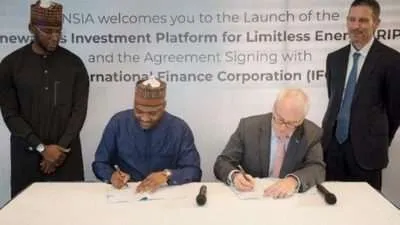
    The Nigeria Sovereign Investment Authority (NSIA) and Z Capital Group (ZCG), on Wednesday announced a joint venture partnership to establish a fund focused on infrastructure investments in Africa.

    This strategic collaboration offers the opportunity to leverage the unique economic and financial opportunities that are currently burgeoning within the African continent.

    NSIA is an investment institution of the Federal Republic of Nigeria, established by the Nigeria Sovereign Wealth Act (Establishment Act 2011), to manage and invest in a diversified portfolio of medium and long-term funds. While ZCG is a leading, privately held merchant bank comprising private markets asset management, business consulting services, technology development and solutions. 

    The ZCG-NSIA partnership signifies a significant step toward sustainable and impactful infrastructure investments in Africa, reflecting a shared commitment to economic development, innovation, and climate resilience in the region. This collaboration marks a pivotal moment showcasing NSIA as a partner of choice in leveraging opportunities that align with the African continent’s momentum and upward trajectory in the global economic arena. 

    Investment Commitment: Under this MoU, ZCG and NSIA will pursue equity, debt, and other blended financial instruments for investments across diverse sectors, including, but not limited to, healthcare, renewable energy, mobility & logistics, energy transition, climate-adaptive infrastructure, digital & social infrastructure, climate-smart agriculture, and green industrialization. 

    The joint venture is expected to capitalize on the complementary expertise of NSIA and ZCG, combining technical expertise, project management skills, and a deep understanding of the local context to deliver successful infrastructure solutions.

    In addition, the partnership will prioritize environmentally sustainable and socially responsible practices, aligning with global standards and best practices to ensure long-term benefits. ZCG and NSIA will seek projects that deliver scalable socio-economic impact in Africa, while also generating attractive investment returns and diversification opportunities.

    Founder, President, and Chief Executive Officer of ZCG, James Zenni “We are pleased to expand our long-standing relationship with the NSIA through this unique partnership that will support our shared investment and socio-economic goals,” said “Given Africa’s rapidly expanding population and its increasing cultural and political influence on a global scale, we see many appealing infrastructure investment opportunities across the continent. We look forward to combining our investing, consulting, and technology expertise with NSIA’s deep expertise in managing large-scale infrastructure projects across multiple verticals as well as pivotal stakeholder relationships to identify and invest in assets that further drive economic development throughout the continent.” 

    “NSIA is pleased to partner with ZCG on this joint venture that will enable us to pursue compelling investment opportunities in Africa,” “ZCG shares our vision of fostering continued economic growth and innovation across Africa, ZCG also shares our focus on investments in climate adaptive infrastructure to meet the needs of current and future generations of Africans. In collaboration with ZCG, we can deepen existing investments to further support Africans and play a leading role in propelling sustained socio-economic development across Africa,” said, Managing Director and CEO of NSIA, Aminu Umar-Sadiq.