Category: Business

  • Liquidated MFBs/PMBs: NDIC Pays N1.08bn To 29,573 Depositors

    The Nigeria Deposit Insurance Corporation (NDIC) has paid a cumulative insured sum of N1.084 billion to 29573 depositors of the closed Microfinance Banks/ Primary Mortgages Banks.


    The Managing Director, Bello Hassan who disclosed this in his speech at the NDIC Special Day at the ongoing 18th Abuja International Trade Fair 2023, said the payments are still ongoing and depositors with funds exceeding the insured limit will receive liquidation dividends after recovery of debts and sale of physical assets of the closed banks.


    He said following the revocation of licenses for 179 Microfinance Banks and 4 Primary Mortgage Banks by the Central Bank of Nigeria (CBN), the NDIC immediately commenced liquidation of the banks and began disbursing insured sums to depositors within just 7 days of the   closure   of   these   banks.


    He said currently, the Corporation is in the process of verifying and paying liquidation   dividends   to   depositors   and   stakeholders   of   20   closed banks.


    The banks are Allied Bank, Peak Merchant Bank, Commerce Bank, Continental Merchant Bank, Financial Merchant Bank, Fortune Bank, Gulf Bank, Hallmark Bank, Icon Merchant Bank, Liberty Bank, Liberty Bank, Nigeria Merchant Bank, North South Bank, Premier Commercial Bank, Prime Merchant Bank, Progress Bank and Merchant Bank.


    Urging  eligible parties to visit NDIC for more information and download verification forms   at,  www.ndic.gov.ng , he said this   year’s   theme, “Sustainable   Financing   and   Taxation   as   Drivers   for   the   New Economy,”  is   especially   relevant   given   the   determination   of government’s   efforts   towards   achieving   sustainable   growth  by strengthening the financial environment to boost economic growth.


    This, according to him, falls in line with the Corporation’s contributions of ensuring the stability of the financial system by effectively complimenting the CBN in supervising the banking sector and safeguarding depositors’ funds from the adverse effects of bank failures when it occurs.


    Speaking further he said “indeed, Nigerian depositors are our priority and our foundation is built on ensuring the safety and security of their deposits.


    This ideal is encapsulated in our strap line; “Protecting your bank deposits!”. This is crucial for financial inclusion because it gives Nigerians the assurance that   their   money is   safe   and   accessible when   need banks,  continuous   monitoring   and   oversight   serves   as   consumer protection for depositors which enhances confidence in the financial system.   This   acts   as   an   incentive   for   the   unbanked   to   access financial services of licensed banks. “


    He cautioned members of the public of illegal activities of fund managers often referred to as “wonder Banks or Ponzi Schemes.


    He said these entities offer high-interest rates and profits that are too good to be true, leading to devastating losses for many, noting that these “wonder banks” are neither licensed by the Central Bank of Nigeria   nor   covered   by   the   NDIC   deposit   insurance   scheme.


    He encouraged members   of   the   public   to   patronize   only banking institutions with a display of the NDIC Stickers carrying the words: “Insured by the NDIC” in their   banking halls or entrances   and various branches across the country.

  • Customer Service Week: Unity Bank Rolls Out Rewards For Staff, Customers

    As part of activities to mark it’s 2023 Customer Service Week, Unity Bank Plc staff and customers will win prizes while participating in engagement activities. 

    The week-long celebration which runs from October 2 – 6, will see the Bank also celebrate the exceptional teams in its over 200 branches nationwide rewarding outstanding staff members, while reflecting on the theme of this year’s event – Team Service.

    To make the week memorable and exciting, all branches of the Bank will engage in several activities that reflect the importance of teams in delivering outstanding customer service in the Bank, while customers will receive cash rewards by taking part in online and offline special offers.

    Commenting on this year’s Customer Service Week celebration, Unity Bank’s Managing Director/Chief Executive Officer, Mrs Tomi Somefun while congratulating frontline teams and our customers reenacted the “Bank’s Service Charter which provides the benchmarks, culture and values as well as performance standards for upholding service excellence and commitment to our customers.” 

    While describing the customers as the Bank’s lifeblood, Somefun said: “We celebrate our frontline teams for strongly and meaningfully reinforcing service excellence and on this score, our Bank does not take for granted your choice to Bank with us as we understand that choosing us is because of our shared values, commitment to excellence and exceptional service to you at all times.”

    “As we look to the future, we pledge to remain customer-centric, embracing innovation to serve you better and therefore make your satisfaction our top priority,” Somefun added.

    Also speaking, Chief Customer Service Officer of the Bank, Titilayo Abraham said: “This year’s theme, “Team Service” which incidentally is one of the bank’s core values could not have come at a better time with all the challenges being experienced in the banking sector. 

    “As a result of this, we plan to have team-focused initiatives to laud and acknowledge the spirit of teamwork across the Bank. The intent is to endear our customers and cultivate a positive work environment among staff where every team’s contribution is not only recognized but deeply valued and applauded. In addition to our team-building sessions, we will have the team appreciation Wall of Fame, photo booths and themed backdrop banners at selected branches.”   

    She added that “a significant highlight of this year’s celebration is the recognition of outstanding teams” because of the Bank’s firm belief “that investing in the development of our teams is essential to our collective success. The recognition serves as a small token of the Bank’s gratitude, designed to acknowledge the invaluable contributions and camaraderie that exists among teams”.

    The Bank continues to prioritise the customer over the past few years through increasing focus on digital strategy. For instance, over the past three years, it has maintained its commitment to customer service excellence by introducing innovative digital products such as the USSD banking *7799# in local languages, and mobile banking solution, UniFi which have boosted customers’ access to the Bank’s services, while facilitating convenience.

    These electronic banking channels are constantly updated with new and exciting features to put the customers first and make their banking experiences top-notch in the industry.

  • Bears Return As Equity Market Sheds N154bn

    Transactions in the nation’s equity market on Wednesday closed on a negative note, declining by N158 billion.

    Market capitalisation of listed equities dropped by 0.43 per cent to N36.386 trillion from N36.544 trillion reported the previous day.

    The NGX All Share Index also depreciated by 288.69 basis points to 66482.29 points from 66770.97 points traded the previous day.

    An analysis of the trading activities for the day showed that Oando Plc led gainers table in percentage terms, gaining 9.88 per cent to close at N9.45 per share, Redstarex followed with a gain of 9.81 per cent to close at N2.91 per unit, Triple G gained 9.68 per cent to close at N2.38 per share, RTBriscoe added 9.43 per cent to close at N0.58 per share while Universal Insurance gained 9.09 per cent to close at N0.24 per unit.

    On the contrary, Wema Bank Plc and Ikeja Hotel topped losers’ chart for the day, declining by 10 per cent each to close at N4.23 and N3.15 per share respectively, ABC Transport trailed with a loss of 8.86 per cent to close at N0.72 per unit, Royal Express down by 8.00 per cent to close at N0.46 per unit, CHi Plc fell by 5.60 per cent to close at N1.18 per unit.

    Volume of transactions increased by 293.194 million, representing 80.47 per cent as investors traded 657.515 million shares valued at N4.596 billion in 6646 deals against 364.321 million shares worth N3.851 billion in 7537 deals.

    Transactions in the shares of Universal Insurance led market activities with 336.294 million shares valued at N80.457 million, Fidelity Bank followed with account of 31.689 million shares worth N264.857 million, Chi Plc traded 25.125 million shares valued at N29.423 million, GTCO Plc traded 24.632 million shares cost N885.386 million, Wema Bank exchanged 24.016 million shares cost N103.813 million.

  • Equity Market Begins Week Bullish, Gains N213bn

    The domestic equity market opened the new week on Tuesday on a bullish run, gaining N213 billion, following profits recorded by some medium and highly capitalised stocks.

    Gains recorded in the shares of BuaCement, Oando, RTBriscoe and others impacted positively on the market.


    The market capitalisation of listed equities which closed on Friday at N36.331 trillion appreciated by 0.59 per cent to N36.544 trillion on Tuesday.
    The NGX All Share Index also appreciated by 388.83 basis points to 66770.97 points from 66382.14 points recorded the previous day.


    A review of the investment showed that BUA Cement led the gainers table in percentage terms with 9.94 per cent to close at N94.00, Betaglass followed with a gain of 9.93 per cent to close at N66.95 per unit, RTBriscoe added 9.93 per cent to close at N1.66 per unit, Oando Plc increased by 9.55 per cent to close at N8.60 per share, UAC of Nigeria gained 8.30 per cent to close at N10.85 per unit.


    On the contrary, Linkage Assurance topped losers’ chart, dropping by 10 per cent to close at N0.72 per share, CWG followed with a gain of 9.94 per cent to close at N7.79 per share, Redstarex fell by 9.86 per cent to close at N2.65 per unit, Tantalizer dipped by 9.38 per cent to close at N0.29 per unit while UPDC REIT declined by 8.97 per cent to close at N3.55 per share.


    Volume of transactions increased by 71.378 million, representing 24.37 per cent as investors traded 364.321 million shares valued at N3.851 billion in 7537 deals against 292.943 million shares costing N4.531 billion exchanged hands the previous day in 6323 deals.


    Transactions in the shares of Chi Plc led market activities with 71.536 million shares valued at N94.676 million, Fidelity Bank followed with 33.222 million shares cost N272.335 million, Oando Plc traded 26.190 million shares valued at N219.864 million, GTCO Plc exchanged 21.440 million shares cost N752.681 million, AccessCorp traded 19.916 million shares cost N318.621 million.

  • BUA Cement’s Price Reduction Will Boost Affordable Housing –Minister

    The Minister of Housing and Urban Development, Architect Ahmed Musa Dangiwa has commended the decision by BUA Cement Plc to reduce the price of cement to N3,500 from about N5,500.

    According to the minister, the gesture will reduce the cost of cement, which is a major cost in building construction.

    A statement by Deputy Director, Information, Federal Ministry of Housing and Urban Development, Salisu Haiba Badamasi Tuesday in Abuja, quoted Dangiwa as saying that BUA Cement Plc’s decision represents a substantial stride toward easing the financial burden on aspiring homeowners.

    He underscored that the soaring cost of cement has led to a drastic increase in house prices, making them unaffordable for the average Nigerian.

    Dangiwa emphasized that since assuming office, he has made promoting the delivery of affordable housing a top priority in line with the Renewed Hope Agenda of Mr. President

    “The escalating prices of building materials, especially cement, have placed a daunting obstacle on the path to homeownership for many Nigerians. BUA Cement Plc’s decision to reduce the price of cement to N3,500 is highly commendable. It reflects their understanding of the struggles faced by ordinary Nigerians and is a positive step towards making housing more affordable and attainable for all,” he noted.

    “I commend BUA Cement Plc for their socially responsible decision to reduce the price of cement. Accessible and affordable housing is a fundamental right, and this move by BUA Cement Plc will undoubtedly alleviate the challenges faced by our citizens. It demonstrates a shared commitment to improving the lives of our people and furthering the goals of sustainable urban development”

    The Minister added that the company’s initiative will not only benefit individual homeowners but will also stimulate economic growth, create jobs, and lift many Nigerians out of poverty by fostering affordable housing construction and infrastructure development.

    The minister urged other industry players to emulate BUA Cement’s example, urging them to consider the social impact of their decisions.

    He expressed the belief that collaborative efforts between the government and private sector entities are essential in overcoming the challenges related to housing affordability and ensuring the realization of decent living conditions for every Nigerian citizen.

  • TAJBank Records Highest Tier-1 Capital, Pre-Tax Profit

    TAJBank achieves record Tier-1 capital and pre-tax profit.
    CEO/MD of TAJBank, Hamid Joda

    TAJBank Limited, a Nigeria’s non-interest bank has recorded the highest Tier-1 capital in the non-interest banking sub-sector in the first half of 2023.

    This is according to a statement by TAJBank’s Chief Executive Officer (CEO), Mr Hamid Joda.

    Joda said that the audited financial statements of the bank also reflected an increase in its Profit Before Tax (PBT) to N6.019 billion, which is the highest in the banking sub-sector and surpassed analysts’ projections.

    TAJBank also made history early this year when it listed the first tranche of N100 billion Sukuk Bond on the Nigerian Exchange Limited (NGX) after the successful issuance.

    Joda said that a further analysis of the latest audited financial statements showed that its total assets rose from N212.021 billion in December 2022 to N335.017 billion at the end of June 2023.

    He said that the figures indicated a 58 per cent increase.

    “Its gross earnings increased by 67 per cent from N136.149 billion at the end of December 2022 to N227.031 billion as of the end of June.

    “Other highlights of the bank’s financial scorecard in first half of 2023 reflected that the financing also significantly increased by 62 per cent from N78.235 billion recorded as of December 2022 to N126.725 billion by June.

    “The deposits base surged to N251.250 billion from N161.958 billion as of December 2022; while its total equity grew by 88 per cent from N19.135 billion in December 2022 to N36.706 billion as of June,’” he said.

    Joda, attributed TAJBank’s enviable feat to the increasingly proactive strategies being adopted by the management to respond to emerging trends in non-interest banking and deployment of the right resources.

    “What I can say about TAJBank’s latest scorecard is that we have demonstrated that hard work pays.

    “As we have maintained over the past three years, our interest is in our customers and we are pursuing this goal with all resources available to us to tell the whole world that TAJBank is the way to go in non-interest banking.

    “To demonstrate our commitment to this customer-friendly corporate slogan, we are investing in world-class technologies and digital payment solutions in our services nationwide,” he said.

    “In pursuit of non-interest financial inclusion drive, we have also opened five branches this year and plan to open more in other states in the next few months”, he said.

    TAJBank’s bank’s Executive Director, Mr Sherif Idi, said that the successes were made possible by the bank’s shareholders and customers.

    “Our thanks go to our growing customers and shareholders whose belief in our vision and capacity to drive TAJBank to the leading edge of market competition has taken us this far.

    “Let me assure them that TAJBank’s management and staff will continue to do its best to serve them better and protect their interests, which we value so much in all areas of operations,” he said.

  • Average Price Of 5kg Cooking Gas Stood At N4,115.32 In August –NBS

    Average Price Of 5kg Cooking Gas Stood At N4,115.32 In August –NBS

    The National Bureau of Statistics (NBS), says the average price of 5kg of cooking gas increased from N4,072.87 recorded in July to N4,115.32 in August 2023.

    This is contained in the Bureau’s “Cooking Gas Price Watch’’ for August 2023 released on Monday in Abuja.

    The report said the August 2023 price represented a 1.04 per cent increase, compared to what was obtained in July 2023.

    However, the average price of 5kg of cooking gas decreased on a year-on-year basis by 7.66 per cent from N4,456 recorded in August 2022 to N4,115.32 in August 2023.

    On state profile analysis, the report showed that Kwara recorded the highest average price at N4,816.67 for 5kg cooking gas, followed by Benue at N4,766.67, and Zamfara at N4,756.25.

    It said on the other hand, Ondo recorded the lowest price at N3,299.29, followed by Ekiti and Nasarawa at N3,330.00 and N3,533.33 respectively.

    Analysis by zone showed that the North-Central recorded the highest average retail price at N4,501.26, followed by the North-West at N4,340.50

    “The South-West recorded the lowest retail price at N3,3737.12,” the NBS said.

    Also, the NBS said the average retail price for 12.5kg cooking gas increased by 0.35 per cent on a month-on-month basis, from N9,162.11 in July 2023 to N9,194.41 in August 2023.

    However, the report said the average price of 12.5kg cooking gas dropped by 7.12 per cent on a year-on-year basis, from N9,899.34 recorded in August 2022 to N9,194.41 in August 2023.

    On state profile analysis, it showed that Cross River recorded the highest average price at N10,172.83 for 12.5kg cooking gas, followed by Ogun at N9,963.64 and Nasarawa at N9,883.37.

    On the other hand, the report showed that Adamawa recorded the lowest price at N7,597.92, followed by Borno at N8,103.69 and Gombe at N8,173.44.

    Analysis by zone showed that the South-South recorded the highest average retail price at N9,569.58 for 12.5kg, followed by the South-West at N9,344.17.

    The report said the North-East recorded the lowest price at N8,631.95.

    Similarly, the average retail price per litre of Kerosene rose to N1,272.40 in August 2023 on a month-on-month basis, showing an increase of 0.92 per cent, compared to N1,260.81 recorded in July 2023.

    According to its National Kerosene Price Watch for August 2023, on a year-on-year basis, the average retail price per litre of kerosene rose by 57.18 per cent from N809.52 in August 2022.

    On state profile analysis, the report showed that Adamawa recorded the highest average price at N1,745.83 per litre of kerosene in August 2023, followed by Benue at N1,468.33 and Abuja at N1,486.89.

    “On the other hand, Jigawa recorded the lowest price at N1,000 followed by Edo at N1,104.78 and Kaduna at N1,121.79.”

    The NBS said the analysis further showed that the North-East recorded the highest average retail price per litre of kerosene at N1,370.64, followed by the South-East at N1,332.49.

    It said the North-West recorded the lowest average retail price per litre of kerosene at N1,163.25.

    The report said the average retail price per gallon of kerosene paid by consumers in August 2023 was N4,351.53, indicating a 1.06 per cent increase from N4,306.07 in July 2023.

    “On a year-on-year basis, the average price per gallon of kerosene increased by 47.63 per cent from N2,947.65 recorded in August 2022.”

    On state profile analysis, it showed that Lagos recorded the highest average price at N5,350.83 per gallon of kerosene, followed by Katsina at N4,991.85 and Borno at N4,897.47.

    On the other hand, the report said Delta recorded the lowest price at N2,945.71, followed by Rivers and Oyo at N3,287.50 and N3,711.79, respectively.

    Analysis by zone showed that the North-East recorded the highest average price per gallon of Kerosene at N4,637.71, followed by the South-East at N4,590.69.

    The report said the South-South recorded the lowest average price per gallon of Kerosene at N3,727.30.

  • CSR: Chevron Spends $100m In 23 years

    The establishment of Partnership Initiatives In The Niger Delta (PIND) by Chevron has gulped over $100 million and leveraged a corresponding amount from investors and partners.

    In 2010, Chevron established the PIND, a non-profit organization working with partners to complement the GMoU, build peace and address the macro socio-economic issues in the Niger Delta region.

    The PIND’s programmes have continued to create socio-economic impact in the Niger Delta region through the twin pillars of economic development and peace building, leading to increased productivity and incomes, jobs, and reduced conflict,” said, Esimaje Brikinn, Chevron Nigeria’s General Manager, Policy, Government and Public Affairs.

    Brikinn, in a statement during Nigeria’s 63rd Independence Anniversary, highlighted Chevron Nigeria’s focus on helping to engender the development of communities in the Niger Delta through the erstwhile Global Memorandum of Understanding (GMoU), a community-driven, participatory partnership model for community engagement pioneered by Chevron Nigeria in 2005.

    “Through the GMoU, we provided funds to execute hundreds of projects in the communities where we operate in the Niger Delta region.

    This has led to social investment projects benefitting over 600 communities in the Niger Delta area. We will be leveraging our experience with the GMoU in the implementation of the Host Community Development Trust (HCDT) provisions of the Petroleum Industry Act (PIA)”, he stated.

    For the last 10 years, one of the Chevron Nigeria companies, Chevron Nigeria Limited, CNL, has spent an estimated annual average of $1 billion on Nigerian suppliers and service providers.

    The Chairman and Managing Director, Chevron Nigeria and Mid-Africa Business unit, Rick Kennedy, said “Chevron does all this, not because it is compelled to, but because it is the right thing to do.”

    Brikinn further narrated that Chevron Nigeria’s social investment footprint extends beyond its areas of operation, adding, “Among other health initiatives, Chevron Nigeria built and donated a DNA Molecular laboratory to the University of Lagos Teaching Hospital, and the facility is very significant to medical research in Nigeria.”

    In the heat of the coronavirus pandemic, Chevron Nigeria donated a Polymerase Chain Reaction (PCR) laboratory to Warri Central Hospital to support the Delta State government in the fight against the COVID-19 pandemic, in addition to other industry-collaborations.

    Chevron Nigeria has also implemented health initiatives such as the Roll Back Malaria programmes, Prevention of mother-to-child transmission of HIV/AIDS and awareness programmes on River blindness, etc.

    In its Deep offshore operations, Chevron Nigeria has continued to implement projects and programmes in the areas of health, education, and economic development across Nigeria.

    Brikinn said the Star Deepwater Petroleum Company Limited (a Chevron company) and its parties in the Agbami field – Famfa Oil Limited, Nigerian National Petroleum Corporation (NNPC), Equinor Nigeria Energy Company Limited, and Prime 127 Nigeria Limited – have been investing in fighting Tuberculosis with the construction and equipment of chest clinics in Nigeria to support the treatment and care of tuberculosis patients in Nigeria.

  • PetroNor Announces $20m OML 113 Acquisition Deal

    PetroNor E&P has announced a binding agreement with New Age (African Global Energy) to acquire New Age’s interests in OML 113 in Nigeria which contains the Aje field.

    This acquisition not only strengthens the company’s position in OML 113 but also opens up exciting possibilities for future growth in the energy transition and strategic flexibility.

    According to the agreement, PetroNor will pay New Age $6 million cash plus a deferred future gas production payment up to a maximum of $20 million to acquire New Age’s entities holding a project economic and voting interest in the OML 113 Joint Operation Agreement (JOA) of 32 per cent.

    Subject to completion, the agreement will not only increase PetroNor’s economic stake but also reinforce the company’s active involvement and influence in the licence partnership plan for the re-development of the Field.

    PetroNor’s existing position in OML 113 was achieved through the acquisition of Panoro Energy’s Nigeria interests in a transaction which was completed in 2022. The company is working with the OML 113 operator, Yinka Folawiyo Petroleum (‘YFP’), to create a jointly owned company, Aje Production AS, which will hold a project economic and JOA voting interest of 39 per cent.

    Following completion of these transactions, PetroNor and YFP related entities will have a project economic and JOA voting interest of 71 per cent.

    The Aje field is estimated to contain recoverable resources of 480 billion cubic feet, BCF of gas, 54 million barrels, mmbbls oil, condensate and LPG. The acquisition of New Age’s Aje interests will increase PetroNor’s net 2C contingent resources in Aje from 27.1 mmboe to 70.1 mmboe.

    Interim CEO of PetroNor Jens Pace said: “This acquisition is consistent with PetroNor’s commitment to expanding its portfolio while demonstrating shareholder value. Acquiring New Age’s interests represents a big step in achieving the partner alignment necessary to move forward with plans for the re-development of the Aje field. We are excited about the potential value of this gas resource which is located close to major population centres and offers a cleaner source of energy for power generation and industrial use compared to current alternatives.”

    Completion of the transaction is subject to customary conditions, including regulatory approvals in Nigeria.

  • Insufficient Supply Fueling FX Market Pressures –Peter Obi

    Insufficient Supply Fueling FX Market Pressures –Peter Obi

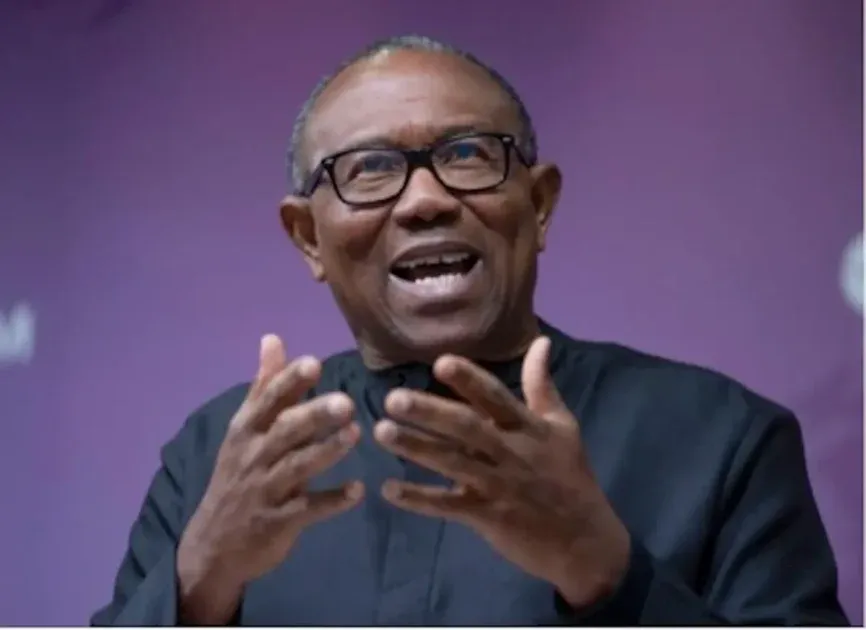
    Labour Party’s presidential candidate in the 2023 election, Mr. Peter Obi, has noted that Nigeria’s current foreign exchange liquidity challenges is primarily due to insufficient supply of the greenback to the ma

    Fielding questions on Arise TV’s ‘The Morning Show’ on Monday, Obi said there should have been broad consultation before the government rolled out the policy.

    “You can’t float a currency you don’t have supply with. It’s like building a non-gated house in a criminal-ridden society. You have to have a defence mechanism. Nobody floats what you don’t have a supply for. I believe that now that we have new CBN leadership, they have to look at the overall monetary policy.

    “It’s again not something you announce haphazardly. It’s something you look at critically. Nobody floats his currency without having an adequate supply. When you don’t have adequate supply, there will be pressure and criminality. We should have worked on eliminating those criminalities and excesses in our FX regime,” he said.

    The former Anambra State governor insisted that rather than float the naira, he would have devalued the naira.

    “What we would have done is devalue the currency to about 600 or thereabout while trying to manage what you have and encouraging exports. I can tell you that not even in the developed world has anybody left their currency to market forces because you might not be able to control it. After all, you cannot reverse your policy.

    “These are announcement defects that would have been well thought through by a proper economic team and consultation,” he added.

    It would be recalled that in June 2023, the Central Bank of Nigeria (CBN) unified exchange rate windows to maintain Naira stability against foreign currencies, notably the United States Dollar.

    The exchange rate in the investors’ and exporters’ window hit N810.78/$1 on Thursday, the highest rate for the day, and also fell to a low of N590/$1.

    However in the parallel market, bureau de change operators demanded an average rate of N1008 per dollar.