
Category: Business

  • Microsoft to pay $20m to settle child privacy violations

    United States tech giant Microsoft agreed to pay a 20 million U.S. dollars penalty to settle allegations it collected personal information from children without their parents’ consent.

    The United States Federal Trade Commission (FTC) alleged Microsoft collected personal information from children who signed up to its Xbox gaming system without notifying their parents or obtaining their parents’ consent.

    It said that Microsoft illegally retained the children’s personal information.

    The FTC said Microsoft’s actions violated the Children’s Online Privacy Protection Act (COPPA).

    As well as the fine, Microsoft will be required to bolster privacy protections for younger users of its Xbox system.

    The FTC said it would also extend COPPA protections to third-party gaming publishers with whom Microsoft shares children’s data.

    “Our proposed order makes it easier for parents to protect their children’s privacy on Xbox, and limits what information Microsoft can collect and retain about kids,” Samuel Levine, director of the FTC’s Bureau of Consumer Protection, said.

    “This action should also make it abundantly clear that kids’ avatars, biometric data, and health information are not exempt from COPPA.”

    The order must be approved by a federal court before it can go into effect.

  • Equity market opens negative, sheds N7bn

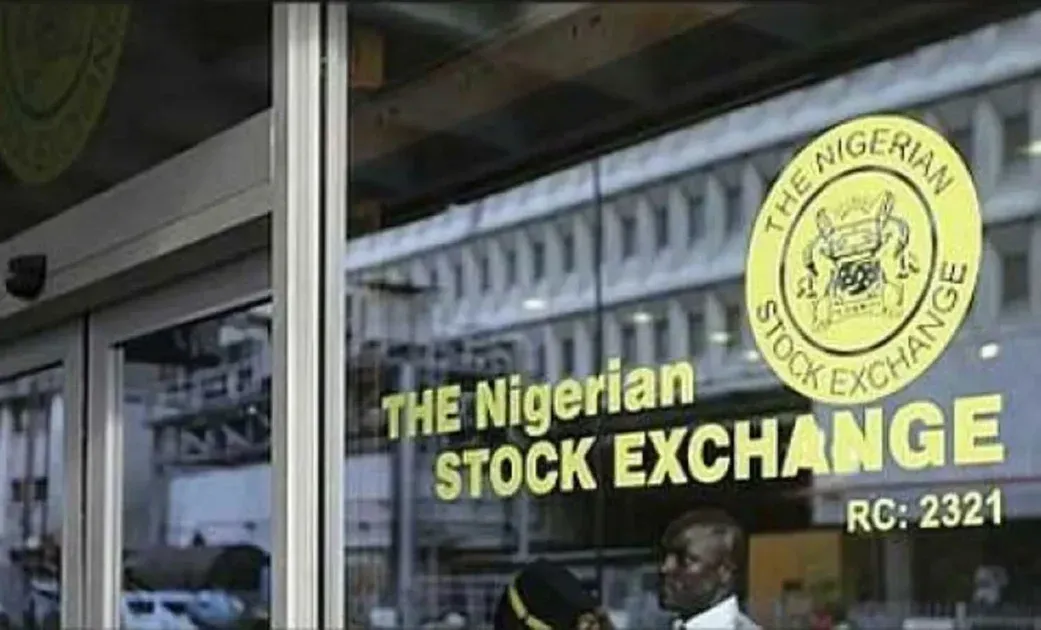
    Domestic equity on Monday returned to a negative trend, declining by N7 billion.


    Market capitalisation of listed equities depreciated by 0.02 per cent to N30.387 trillion from N30.394 trillion reported the previous day.


    The NGX All Share Index also declined by 13.79 basis points to 55806.71 points from. 55820.50 points traded on Friday.


    A review of the investment showed that Omotek, NEM Insurance led gainers table during the day in percentage terms, gaining 10 per cent each to close at N0.22 Kobo and N5.50 Kobo respectively.


    Conoil and MRS followed with a gain of 9.94 per cent each  to close at N76.85 and N54.20 per unit respectively while Eterna Plc fell by 9.73 per cent to close at N10.15 per share.


    On the contrary, JohnHolt recorded the highest loss in percentage terms, declining by 9.95 per cent to N1.72 per unit, Courtvellle Business Solutions trailed with a loss of 9.80 per cent  to close at N0.46 per unit, Chams Plc down by 9.76 per cent to close at N0.32 per share, Wapic Insurance fell by 9.76 per cent to close at N0.42 per unit, Academy Press down by 7.89 per cent to close at N1.75 per unit.


    Investors exchanged 369.779  million shares valued at N19.841 billion in 7221 deals against 455.760 million shares worth N6.117 billion exchanged hands the previous day in 7457 deals.


    Transactions in the shares of Geregu Power led activity during the day, with 52.491 million shares valued at N16.365 billion, NPF MicroFinance Bank followed with account of 50.023 million shares cost N90.041 million, Access Corp traded 46.234 million shares valued at N573.551 million, Zenith Bank traded 28.745 million shares cost N800.619 million, United Bank for Africa traded 16.246 million shares worth N151.743 million.

  • Farmers call for diversion of subsidy proceeds to agric fund

    Women and Youth Farmers Associations have called on the Federal Government to put funds that would be saved from the removal of petrol subsidy into the National Agricultural Development Fund (NADF).

    The groups made the call in collaboration with commodity associations.

    Speaking during a joint press conference of Youth and Women Farmers and other Critical Commodity Associations, the National President, Nigeria Young Farmers Network, Dr. Abubakar Bamai Musa, said putting funds into the National Agricultural Development Fund will enhance agricultural productivity, promote technological advancements, and improve the livelihoods of farmers across the country.

    He said, “We commend the government most sincerely for the right decision and employ it to as a matter of urgency divert a great percentage of the proceeds gained from the withdrawal of this fuel subsidy to the NADF to foster sustainable agricultural practices and support the growth and development of Nigeria’s agricultural sector and enhance food security.

    “We have confidence in the membership of the Board of Directors of the National Agricultural Development Fund and its leadership under Dr. Garzali Muhammed Abubakar Recognizing the critical role that agriculture plays in our nation’s economy, it is imperative that we invest in its long-term sustainability.”

    Commending the past administration for initiating the NADF, National President, Date Farmers, Processor and Marketers Association of Nigeria, Professor Hussaini Garba Dikko, said the managers of the NADF are credible personnel that can be trusted with such huge funds.

    He said investing in critical agricultural infrastructure such as irrigation systems, rural roads, storage facilities, and processing centers to facilitate efficient value chain management and reduce post-harvest losses will positively impact on the country’s economy.

    The President, Association of Livestock Managers, Mr. Ilyasur Bulamai, said livestock is the most important product in Nigeria due to its ability to generate revenue more than any other commodity association.

    “If you calculate the number of our products consumed every day and night, I think you will be encouraged to fund livestock farming. Livestock does not have a season, you can produce and market anytime, and that’s why we are different from others.”  

  • REA begins PUE implementation, targets 24,500 MSMEs

    The Rural and Electrification Agency (REA) has started implementing the productive use of equipment and appliances (PUE) for rural and underserved communities.

    The Agency said the PUE would ensure unhindered access to energy-efficient and electric-productive equipment for rural communities.

    The PUE would also encourage the use of low-cost productive appliances in unserved and underserved communities to improve rural productivity, economic growth, and also rural development.

    REA, through its Nigeria Electrification Project (NEP), aims to provide 24,500 Micro, Small, and Medium Enterprises (MSME) with energy-efficient productive use appliances, while ensuring that 1,050,000 people have improved access to energy services.

    Mr.

    Speaking at the grant agreement signing for the productive use of the equipment and appliances, Managing Director of the REA, Ahmad Salihijo Ahmad, said the support from African Development Bank Group AfDB would drive the sustainability of off-grid energy infrastructure across communities in the country.

    “We are here for the Grant Agreement Signing for the Productive Use Appliances Component of the Nigeria Electrification Project (NEP) under the African Development Bank funding stream.

    “At REA, our mandate is to provide access to electricity to unserved and underserved households and MSMEs in rural communities of Nigeria. The Agency from inception, has continued to collaborate and support private-sector participation in our dedication and commitment to achieve this mandate.

    “Beyond keeping the lights on, we are very deliberate about the optimization of productive use equipment and appliances to catalyze socio-economic development in off-grid communities,” he said.

  • Dangote wins most admired African Brand for record 6th time

    The Dangote brand has, for the sixth consecutive year, been adjudged the most admired African brand among top 100 brands on the continent.

    The company announced the development in a statement signed by Mr Francis Awowole- Browne, corporate communications personnel, Dangote Group, in Lagos.

    According to the statement, the telecommunication outfit, MTN came in second position while Digital Satellite Television (DSTV) took third place, both of South African origin.

    It added that the pan-African conglomerate brand was also adjudged as the number one African Pride Brand followed by Ethiopian Airline and MTN respectively.

    The statement disclosed that in a newly introduced category, the Dangote brand came second in sustainability, by brands doing good for the people, society and the environment.

    “Brand Africa in its statement announcing the ranking, also disclosed UNICEF as the number one NGO and Coca-Cola as the number one non-African brand.

    “Brand Africa disclosed that Dangote retained the number one spot for the sixth time, in spite of African brands slipping to 14 percent of the top 100 most admired brands in Africa as non-African brands entrench their position in the continent,” the statement read.

    Reacting to the survey, Group Chief, Branding and Communication, Dangote Industries Limited, Mr Anthony Chiejina, said the awards were well deserved.

    This, he said, was because the Dangote brand generated strong nationalistic impressions and powerful feelings across the continent in terms of industrialisation, self-sufficiency, prosperity, power and production.

    Chiejina stated that this was further strengthened with the recent commissioning of 650,000 bpd Dangote Petroleum Refinery & Petrochemical complex which was a huge industrial complex.

    “The brand portends the inevitability of Nigerian global ascendancy and a gateway to regional and continental development,” he said.

    Established in 2010, Brand Africa is an intergenerational movement to inspire a brand-led African renaissance to drive Africa’s competitiveness, connect Africa and create a positive image of the continent.

  • NDIC seeks stakeholders’ inputs towards robust DPAS Framework

    Following the recent review of its Differential Premium Assessment System (DPAS) Framework, the Nigeria Deposit Insurance Corporation (NDIC) has sought input from critical stakeholders towards making the document more robust and all embracing.

    In a release by the Director, Communication and Public Affairs Department, Bashir Alhassan Nuhu, the NDIC said the Differential Premium Assessment System Framework was reviewed to make it more risk sensitive and account for significant developments that had taken place in the Nigeria banking system since its adoption in 2008.

    It stated further that the review was informed by the need to ensure that the framework conforms to the recommendations of the International Association of Deposit Insurers (IADI) and other global best practices.

    Bashir said now that the review is at consultation stage, it is imperative for the Corporation to solicit input from its critical stakeholders, adding that the exposure draft has been placed on the Corporation’s Website, www.ndic.gov.ng for review.

    The release urged stakeholders to forward their input, comments and recommendations to NDIC Director, Insurance and Surveillance Department on aliyuam@ndic.gov.ng  latest by 30th June 2023

    The NDIC adopted the Differential Premium Assessment System (DPAS) in 2008 following the issuance of its framework in 2007 to differentiate premiums payable by Insured Financial Institutions based on their respective risk profile. 

    The DPAS was aimed at introducing fairness into the premium assessment process, encouraging effective risk management practices in insured institutions and applying a risk differential approach in the deposit insurance premium assessment of insured financial institutions.

    The DPAS was also introduced to enable banks in the lower risk categories to pay relatively lower premium rates, charge banks in the higher risk categories additional premium for their extra risks, incentivise regulatory compliance and mitigate moral hazard.

  • FG’s approval for private importers will crash fuel price, says IPMAN

    The Independent Petroleum Marketers Association of Nigeria (IPMAN), has commended the Federal Government for approving the importation of petroleum products by private firms.

    Mr. Chinedu Anyaso, Chairman of IPMAN Enugu Depot Community, in charge of Anambra, Ebonyi and Enugu States, said this while reacting to the development in Awka on Sunday.

    The Managing Director of the Nigerian Midstream and Downstream Petroleum Regulatory Authority (NMDPRA), Farouk Ahmed, on Friday, said private marketers could now import petrol into the country.

    Farouk said under the new arrangement, the NNPCL had ceased to be the sole importer of petrol into Nigeria.

    “We put the regulation in place, we make sure quality control is complied with, we make sure the product is there and we give licence to any prospective importer.

    “The market is now open for everybody that wants to import as far as they meet all the requirements. The NMDPRA will no longer fix prices or release templates for petrol.

    “As far as we are concerned in the NMDPRA, this is not like before when the PPPRA fixes the price; in a deregulated market, it is the market force that dictates the price,” he said.

    Anyaso said this was a positive development and appropriate responses to the demands of marketers and Nigerian masses who had condemned the monopolistic grip of NNPCL on the oil and gas sector for decades.

    He said this would create the much needed competitive pricing environment and allow market forces to demand price of products.

    According to him, “two days ago, I repeated the call that the Federal Government should issue import licences to private investigators, I also said it is wrong for the NNPCL, which is a private company, to be the sole importer and determiner of prices.

    “I am happy that the same NMDPRA also announced that approval has been given to private importers. This is how it should be in a deregulated Industry.

    “The competition that will begin in the coming days will surely ease the pain of high prices of products,” he said.

    Anyaso commended the Federal Government for its bold step and called on it to extend the same to refineries to complement the contributions of Dangote refinery when it commenced production.

    He said the four existing refineries should be repaired to produce at optimal capacity while licences are issued to more people who could build modular refineries.

    He said this was the time to address the problem of Enugu Depot which had been moribund for over 15 years and had made distribution of products in the zone difficult as a result.

    “We are appealing that as the government is addressing the issue of supply, they should also address the problem of distribution, Enugu Depot has not functioned for over 15 years, we need the Federal Government to fix it.

    “It has not been easy for our members who source products from Lagos, Warri, Calabar and bring by road, the risk, accident and losses have been too much,” he said.

  • Unity Bank posts impressive 21% growth in Q1

    Unity Bank posts impressive 21% growth in Q1

    Unity Bank PLC has recorded sustained improved performance in its first quarter of 2023.

    In its unaudited financials for the first quarter of 2023, the bank stated that it recorded a Profit after Tax of N1.04 billion, a 21 percent growth against N869.2 million it earned in the corresponding period of 2022.

    Its gross earnings for the quarter were put at N15.9 billion, a 17 per cent growth from N13.6 billion generated in the corresponding period of 2022.

    Managing Director/Chief Executive Officer, Unity Bank Plc, Mrs Tomi Somefun, said that the bank would remain laser-focused on its strategic choices and key growth drivers to push all the indices and elevate growth to double-digit territory.

    “The performance posted for Q1’23 in terms of the PBT, gross earnings, and other key indicators are strong reinforcement of adequate measures being adopted and a testament of our resolve to sustain and equally improve upon the fundamental initiatives adopted to strengthen growth throughout the course of the financial year.

    “Since late 2022, the bank has begun significant investment in technology and innovation in line with its strategic pursuits to win in the retail space with our focus on digital and lifestyle banking, dynamic product development, and accelerated onboarding.

    “As part of our transformation journey, we will double down on these investments in the coming months in order to achieve our aspirations of significantly reducing customer pain points and simplifying customer experience.

    “We will increase the rate of customer acquisition; expand the frontiers of partnerships; and ultimately develop new and sustainable income lines for the Bank,” she said.

    Somefun said that the bank would further give attention to fast-paced process automation, cost and resource efficiency, targeted value chain relationships, and brand visibility as it expands the range of products and services to meet the evolving needs of its esteemed customers.

    She said also that the bank’s focus on building back momentum had continue to reflect in the key performance indicators despite economic headwinds and volatilities that characterised the operating environment in the 2022 financial year.

    “There are highs and lows as we look at the gross earnings, with 13.7 per cent growth, increase in liquid assets by 7.5 per cent and deposits recording moderate growth of 1.6 per cent, while maintaining steady growth in profitability.

    “Overall, the financial statement thus threw up both strong and less optimal points which inform the outlook for our business”, she said.

    A major highlight of the financial year ended Dec 2022, is the growth in total comprehensive income, which rose by 262.1per cent to N1.2 billion from N744 million in the corresponding period of 2021.

    The bank grew Profit before Tax (PBT) by N1.1 billion, while Profit After Tax stood at N941.4 million.

    With the loan book sustaining an expansion by 7.5 per cent to N289.4 billion from N269.3 billion within the period under review, the interest and similar income consequently witnessed significant growth rising 7.5 per cent to close at N48.9 billion compared to N43.2 billion in the corresponding period of 2021.

    Similarly, income from fees and commissions recorded significant growth, rising by 25.7per cent to N7.68 billion from N6.1 billion within the period under review.

    More so, deposits from customers saw marginal growth, increasing by 1.6 per cent to N327.4 billion from N322.2 billion in the corresponding period of 2021 as the bank pushes for deeper penetration of its retail footprint with the rollout of products targeting different segments of the market.

  • Beef price rises by 23.13% in 12 months – NBS

    The average price of 1kg of Beef boneless stood at N2,495.69 in April 2023, the National Bureau of Statistics (NBS) has said.  

    In its Selected Food Price Watch for April 2023 report, the statistics bureau noted that it indicates a 23.13 per cent rise in price on a year-on-year basis, from N2,026.85 recorded in April 2022 and a 0.65 per cent rise in price on a month-on-month basis from N2,479.61 in March 2023.

    “The average price of 1kg of Tomato increased by 13.73% on a year-on-year basis from N426.54 in April 2022 to N485.10 in April 2023.

    “On a month-on-month basis, the average price of this item increased by 3.97% in April 2023,” the report said.  

    The average price of 1kg of brown Beans rose by 16.03 per cent on a year-on-year basis from N530.62 in April 2022 to N615.67 in April 2023.

    On a month-on-month basis, it increased by 3.13 percent from N596.96 in March 2023. 

  • Reps back NIMASA on CVFF disbursement

    Reps back NIMASA on CVFF disbursement

    *It’s a milestone for cabotage implementation – NIMASA 

    The Nigerian Maritime Administration and Safety Agency (NIMASA) has received support from the House of Representatives to disburse the $360 million Cabotage Vessel Finance Fund (CVFF) to qualified Nigerian ship-owners.

    A committee of the House chaired by Hon. Legor Idagbo in its report gave the nod for disbursement at the end of its investigation.

    According to a statement by Assistant Director, Public Relations, NIMASA Osagie Edward, “The Committee requested the Nigerian Maritime Administration and Safety Agency and the Ministry of Transportation to provide detailed information on the total amount accrued to the Fund and disbursements since inception.

    “The Committee met with the Minister of Transportation and the Director-General of the Nigerian Maritime Administration and Safety Agency (NIMASA) on Thursday, 11 May 2023 to find out about the details concerning the matter. 

    “After a thorough analysis of the various submissions, coupled with the explanations given by the Ministry and NIMASA, the Committee discovered that due process was followed in the planned disbursement of the Cabotage Vessel Finance Fund.

    “It was also discovered that the total funds of $360m in the Cabotage Vessel Finance Fund (CVFF) account with the Central Bank of Nigeria (CBN) represents 50%, while the remaining counterpart funds of 50% is from stakeholders and banks, which is 15% and 35% respectively”.

    The Committee commended the Nigerian National Petroleum Corporation Limited (NNPCL) for its commitment to awarding shipping contracts to indigenous companies that have built capacity to the level where they can successfully execute these contracts.

    Reacting, NIMASA Director General Dr. Bashir Jamoh, thanked the lawmakers for their interest in verifying the due process being followed by the agency.

    Dr. Jamoh who expressed optimism that the NNPCL’s resolve to award maritime contracts to indigenous companies will give strength to the Cabotage regime being championed by the Agency, reaffirmed NIMASA’s transparency resolve in all facets of the Agency’s operation

    The DG also called for more stakeholder support, saying the CVFF will evolve into greater benefit for more Nigerians, and grow the per capita income and Gross Domestic Product (GDP) of Nigeria, through the maritime industry.