

Category: Energy

  • FG Unveils Direct Cash Support Scheme for Nigerians 

    FG Unveils Direct Cash Support Scheme for Nigerians 

    In a move aimed at alleviating poverty and enhancing economic stability, Nigeria’s government has introduced a cash transfer programme to assist 20 million low-income individuals. 

    Finance Minister Wale Edun revealed this development at the Nigeria Economic Summit, emphasizing the government’s efforts to allocate its improved revenue toward social welfare programs.

    The initiative targets the most vulnerable, covering around 60% of the nation’s poorest citizens. 

    Currently, the programme supports four million households, which equates to approximately 20 million people. 

    The plan includes an expansion phase that seeks to reach 15 million households nationwide.

    The government’s revenue for the first half of 2024 saw a remarkable rise to ₦9.1 trillion, a considerable increase from the ₦4.06 trillion collected during the same period in 2023. 

    This surge has enabled the administration to invest heavily in social programs that address the cost of living and other economic challenges faced by Nigerians.

    Edun also discussed the broader fiscal reform plan, which involves utilizing technology to enhance tax collection and ensure compliance from various government entities. 

    This approach has facilitated an increase in domestic resource mobilization, allowing the government to allocate more funds toward social initiatives.

    The programme’s expansion is in line with the government’s focus on developing sectors like agriculture, manufacturing, oil, and housing. The aim is to curb inflation, improve food production, and make essential goods more affordable. 

    The initiative reflects the government’s commitment to enhancing the quality of life for Nigerians through targeted economic interventions and sectoral development.

  • South Korean Consortium to Establish Four Refineries in Nigeria

    South Korean Consortium to Establish Four Refineries in Nigeria

    Heineken Lokpobiri, Nigeria’s Junior oil Minister has hinted of a South Korean consortium establishing four refineries in Nigeria.

    Lokpobiri announced in Lagos, October 8, at the inaugural summit of Refineries Owners Association of Nigeria in Lagos, that each of the refineries will have 100,000 barrels/day capacity.

    The government is actively encouraging investments in the petroleum sector by creating a favorable environment for private partnerships. 

    Recently, an invitation was extended to the consortium, which aims to construct the refineries in different locations across the country. 

    Lokpobiri emphasized the government’s commitment to energy security and the need for more modular and mega refineries to boost the industry. 

    The approach involves a public-private partnership model to facilitate investment in the oil and gas sector’s midstream and downstream segments.

    To support local refineries, the Nigerian Upstream Petroleum Regulatory Commission has established guidelines to ensure a transparent supply of crude oil. 

    The government is also focusing on providing special concessions to local refinery owners, thereby enhancing their access to feedstock.

    Furthermore, Lokpobiri discussed the government’s plans to deregulate the downstream sector fully and ease tax burdens on imported refinery equipment.

     This initiative aims to position Nigeria as Africa’s leading petroleum refining hub and achieve self-sufficiency in petroleum production.

    In response to the challenges of crude oil theft and illegal refining, an international emergency committee has been formed to develop sustainable solutions for domestic refining operations. 

    The ministry is also exploring partnerships with international bodies to enhance knowledge transfer and technological advancements in the refining sector.

  • Petrol landing cost drops amid naira appreciation

    The landing cost of petrol has dropped from the N981/litre recorded on September 25, 2024, to N945.63/litre as of September 27.
    This is according to data released by the Major Energies Marketers Association of Nigeria on Monday.
    The drop in the landing cost of petrol happened following the appreciation of the naira against the United States dollar.
    In the MEMAN report, a dollar was said to have been exchanged for N1,586.26 on September 27 while it was N1,667.22 on September 25.
    Also, Brent, the global benchmark for crude, dropped from the $73.67/barrel recorded in the last report released by MEMAN to $72.45 in the latest report on Monday.
    The fall must have also contributed to the reduction in the landing cost of imported petrol.
    The average ex-depot prices of PMS saw a marginal reduction in Lagos, Calabar, and Port Harcourt.
    The major marketers disclosed that the landing cost of diesel, which was N1,089/litre previously, dropped to N1,068.04/litre, while that aviation fuel also fell from N1,117.34/litre to N1,079.79/litre.
    It was observed that the difference between imported petrol and that of Dangote might be less than N46 if calculated by the N898/litre which the Nigerian National Petroleum Company claimed it bought the Dangote fuel.
  • Subsidy Has To Go – Dangote To Nigerian Government

    Subsidy Has To Go – Dangote To Nigerian Government

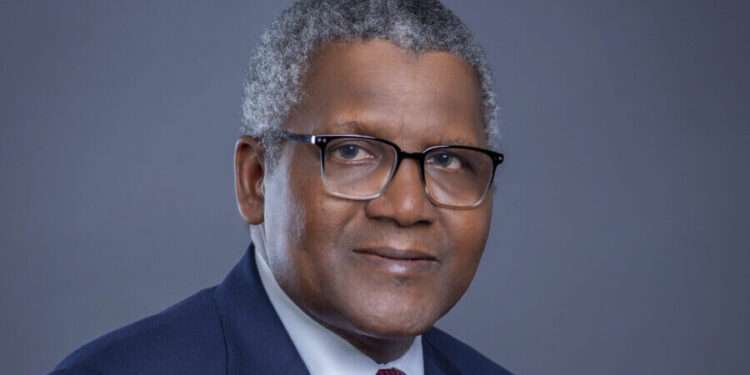
    As Nigerians grapple with prohibitive pump price of petrol and consequent spiraling inflation, Alhaji Aliko Dangote, the President and Chief Executive of Dangote Refinery, repeats the call for removal of fuel subsidy.
    The businessman asserted that the removal would determine the actual petrol consumption in the country.
    Speaking in a 26-minute interview with Bloomberg Television in New York on Monday, he confirmed ownership of two oil blocks in the upstream sector with an expected production date of next month.
    Dangote also stated that fuel production from his $20bn mega refinery in Lagos will help ease pressures on the naira.
    Speaking further, he noted that ending petrol imports will have a huge upside in easing currency pressures.
    According to him, “Subsidy is a very sensitive issue. Once you are subsidising something then people will bloat the price and then the government will end up paying what they are not supposed to be paying. It is the right time to get rid of subsidies.
    “But this refinery will resolve a lot of issues out there, you know, it will show the real consumption of Nigeria, because, you know, nobody can tell you. Some people say 60 million litres of gasoline per day.
    “Some say, it’s less. But right now, if you look at it by us producing, everything can be counted. So everything can be accounted for, particularly for most of the trucks or ships that will come to load from us. We are going to put a tracker on them to be sure they are going to take the oil within Nigeria, and that, I think, can help the government save quite a lot of money. I think it is the right time, you know, to remove the subsidy.”
    On whether the subsidy will make the refinery viable, Dangote said, “Well, you see, we have a choice of either one. We produce, we export, and when we produce, we sell locally. But we are a big private company. And yes, it’s true, we have to make a profit. We build something worth $20bn so definitely we have to make money.
    “The removal of subsidies is totally dependent on the government, not on us. We cannot change the price, but I think the government will have to give up something for something. So I think at the end of the day, this subsidy will have to go.”
  • FG to supply Dangote Refinery 12m barrels of crude in October

    The Federal Government and Dangote Refinery have finalized an agreement for the supply of 12 million barrels of crude oil to the facility in October.
    Aliko Dangote, the chief executive officer of Dangote Refinery, confirmed this information during an interview with Bloomberg TV in the United States.
    He stated that the crude oil supply is a component of an ongoing agreement with the federal government, aimed at allowing the refinery to process crude domestically and produce petrol, diesel, and jet fuel for the local market.
    This arrangement is part of the “Crude Oil for Naira” initiative, which represents a strategic collaboration between the Dangote Group and the Nigerian government.
    “We are working towards a solid agreement with the federal government that ensures energy security for the country. This means no more fuel queues,” Dangote stated.
    “The government has committed to providing us with crude oil, and in October, they will deliver 12 million barrels, which translates to roughly 390,000 barrels a day. We will refine this crude to produce gasoline, diesel, and aviation fuel for the local market. Any surplus will be exported.”
    Dangote further noted that it will help bring 50 to 60 per cent of currently non-operational filling stations back into service, drastically improving access to fuel across the country.
    “The deal with the government ensures that we sell the refined products to all marketers, which will mean the reopening of 50 per cent to 60 per cent of our petrol stations that have been idle. This will also reduce the costs tied to having ships floating off the coasts of Lomé and elsewhere. In terms of demurrage alone, we are looking at saving over $1 billion,” Dangote added
  • NERC Transfers Regulatory Oversight Of Electricity Market To KSERC

    NERC Transfers Regulatory Oversight Of Electricity Market To KSERC

    The Nigerian Electricity Regulatory Commission, NERC has transferred regulatory oversight of the electricity market in Kogi State from the Commission to the Kogi State Electricity Regulatory Commission (KSERC).
    The commission said the transfer complies with the amended Constitution of the Federal Republic of Nigeria (CFRN) and the Electricity Act EA 2023 (Amended).
    This was contained in a statement issued by the commission on Wednesday morning.
    According to the statement, it can be recalled that with the EA 2023, the commission retains the role as a central regulator with regulatory oversight on the inter-state/international generation, transmission, supply, trading, and system operations.
    It noted that the EA also mandates any state that intends to establish and regulate intrastate electricity markets to deliver a formal notification of its processes and requests NERC to transfer regulatory authority over electricity operations in the state to the State Regulator.
    “Based on this, the Government of Kogi State complied with the conditions precedent in the laws, duly notified NERC, and requested for the transfer of regulatory oversight of the intrastate electricity market in Kogi State,” the statement reads.
    “The transfer Order by NERC has the following provisions:
    “Direct Abuja Electricity Distribution Company (AEDC) to incorporate a subsidiary (AEDC SubCo) to assume responsibilities for intrastate supply and distribution of electricity in Kogi State from AEDC.
    “AEDC shall complete the incorporation of AEDC SubCo within 60 days from 13th September 2024. The subcompany shall apply for and obtain licence for the intrastate supply and distribution of electricity from KSERC, among other directives.
    “All transfers envisaged by this order shall be completed by 12th March 2025.”
  • Wale Edun flags off Commencement Fuel Lifting from Dangote Refinery

    Wale Edun flags off Commencement Fuel Lifting from Dangote Refinery

    History was made this afternoon, Sunday, September 15, 2024 as the the Nigerian National Petroleum Company Ltd (NNPCL) commences lifting of fuel from the Dangote Refinery.

    Flagging off the epoch making exercise, Finance Minister and Coordinating Minister of the Economy, Wale Edun thanked Alhaji Aliko Dangote for the initiative that positions Nigeria for the attainment of energy efficiency.

    Nigeria, a prominent member of the OPEC is currently going through crippling fuel supply emergency running into weeks.


  • Still on the Dangote Refinery ‘Clearer Fuel’

    Still on the Dangote Refinery ‘Clearer Fuel’

    President of Dangote Group, Alhaji Aliko Dangote, has shed light on why the first batch of Premium Motor Spirit (PMS), commonly known as petrol, produced at his refinery appears noticeably clearer than the petrol currently available in the market.
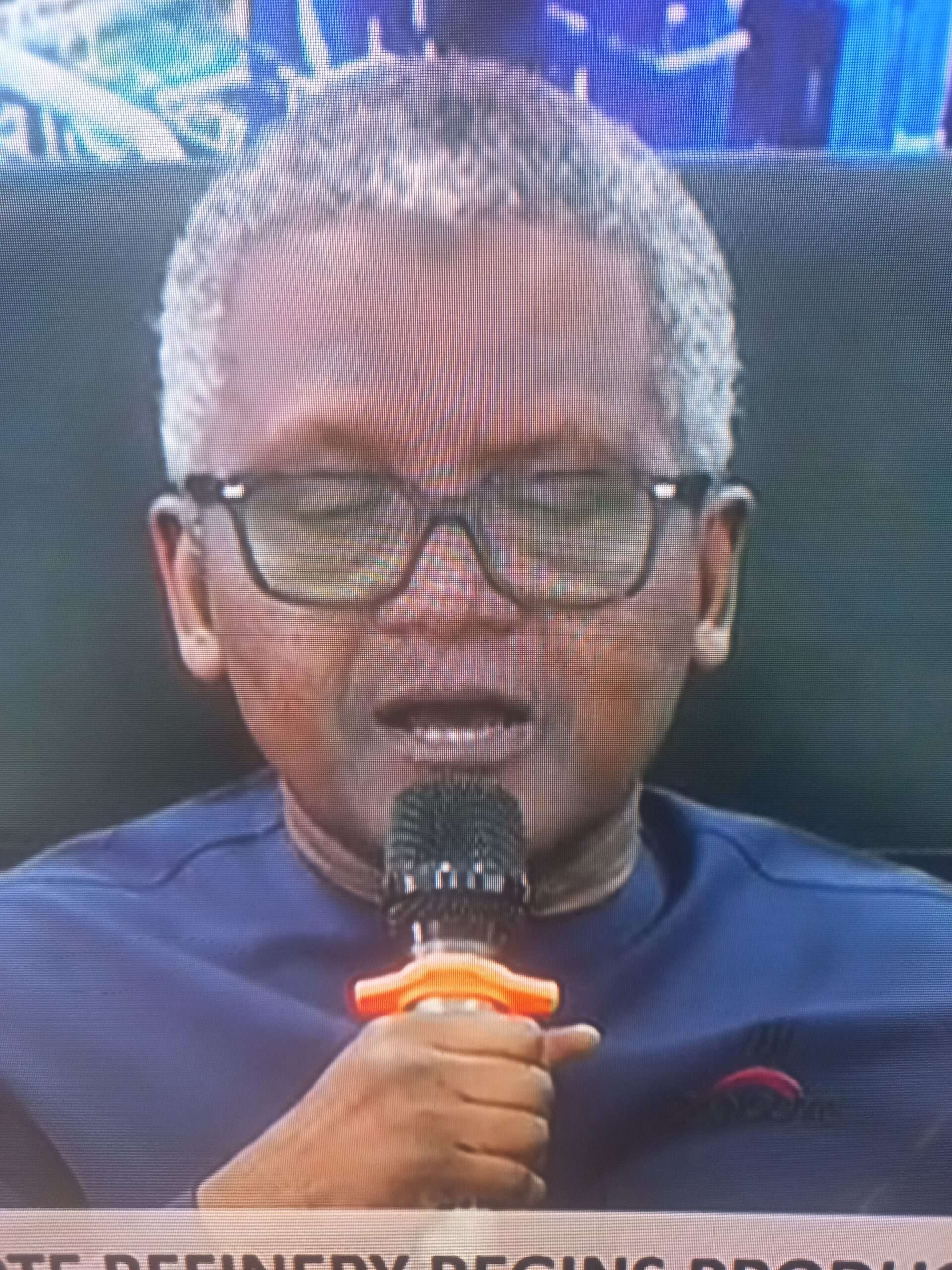
    During a broadcast from his refinery in the Ibeju-Lekki area of Lagos State, Dangote explained that the clarity of this petrol is indicative of its higher environmental standards.
    He emphasized that the cleaner petrol is designed to be more eco-friendly, potentially reducing health risks associated with the pollutants found in traditional petroleum products.
    Dangote also highlighted the benefits of this refined petrol in protecting vehicle engines from the damage typically caused by the lower-quality petrol available on the market.
    “This is the sample of the petrol. You see it as a different colour but that is the real deal. You are now going to have a good and real product,” Dangote stated.
    Speaking about the diesel produced at the refinery, Dangote added, “I am sure Nigerians have not seen this colour of diesel before.
    “This is called Euro-5 diesel. It contains less than 10 parts per million (PPM) of sulfur. This will help vehicles, engines, and generators last longer.”
    He further emphasized the importance of this development for public health and environmental safety, stating, “The health of the people and the environment will not be compromised. This is the real deal.”
  • Dangote Refinery: End of fuel queues

    Dangote Refinery: End of fuel queues

    For the first time in 28 years, Dangote Refining and Petrochemical Company commences the production of fuel in Nigeria.

    “This marks the end of fuel scarcity and fuel queues in Nigeria” Alhaji Aliko Dangote, the President of Dangote Refining and Petrochemical Company said.

    “No more foreign exchange woes to import fuel,” he said.

    Seeing, it is claimed in Nigeria, is believing and Alhaji Aliko Dangote has demonstrated that axiom as he lifted a sample of petrol produced in his factory today, at Ibeju Lekky, Lagos.

    “I hope the attainment of this milestone by the refinery will change the dynamics not only in Nigeria but the entire sub-saharan Africa” an elated Dangote said.

    He drew attention to the unique crystal clear colour of the product and said that it represents “the highest quality which is friendly with car engines and meets the best international standards.”

    He appreciated President Tinubu for the support of his government which has enabled the commencement of the refining activities in the factory.

    With this major breakthrough the Dangote Refinery has broken the jinx about petrol refining in Nigeria which happened for the last time 28 years ago.

    Dangote also posited that with the commencement of this operation, the refinery had assisted Nigeria to kill several birds with one stone.

    Linking it to the leadership of the country, he said the refinery now has an opportunity to produce energy for growth and productivity.

    Hopes that the move will stabilise the Naira, reduce inflation and improve the quality of life.

    He asserted also that there will be no more import of polypropylene.

    Also appreciated the government for the opportunity to purchase crude in Naira.


  • Nigerians want moribund refineries sold

    Nigerians want moribund refineries sold

    Notorious for flip flops in policy enunciation, implementation and monitoring, the Nigerian National Petroleum Company Limited (NNPCL) has come up with a new plan to hand over its two moribund refineries in Warri and Kaduna to private maintenance operators.

    The NNPCL made the announcement via a post on its official X handle on Friday.

    This decision is not sitting well with some Nigerians and industry watchers who wonder why this is happening after the national oil company had pumped huge sums in billions of dollar during numerous rounds of Turn Around Maintenance (TAM).

    An analyst on Arise TV, Godwin Ibe advised for an outright sale of the refineries, insisting if the government still wanted to participate in its management it should retain some minimum amount of shares.

    Whereas  the Kaduna refinery with a 50,000 B/D capacity was put into service in 1980 to deliver petroleum products to Northern Nigeria. By constructing a second 50,000 B/D crude train in 1983 specifically for the production of lubricating oils (lubes), the capacity was increased to 100,000 B/D. The initial crude train’s capacity was increased to 60,000 B/D in 1986. The refinery’s current nameplate capacity is 110,000 B/D thanks to the additions.

    In 1978, the Delta State refinery at Warri came into production. The refinery is a sophisticated conversion unit with a nameplate distillation capacity of 12,55,000 bpd or 6,250,000 MTA. One of the petrochemical plants in the refinery complex was put into operation in 1988 and has the capacity to produce 18,000 MTA of carbon black and 13,000 MTA of polypropylene. The refinery is intended to supply markets in most of Southern Nigeria.