


Category: Economy

  • Skepticism as FG Budgets N6.69bn for Idle Ajaokuta Steel Company

    Skepticism as FG Budgets N6.69bn for Idle Ajaokuta Steel Company

    Stakeholders have expressed strong reservations and deep skepticism over the Federal Government’s decision to allocate N6.69 billion to the long-idle Ajaokuta Steel Company Limited (ASCL) in the 2026 Appropriation Bill.

    Speaking to the News Agency of Nigeria (NAN) on Monday in Abuja they warned that continued spending without production amounts to institutionalised waste..

    Established in 1979 and once envisioned as the backbone of Nigeria’s industrial revolution, ASCL has remained non-functional for decades, despite repeated promises, policy resets and billions of naira in public expenditure.

    NAN reports that the 2026 allocation represents a 4.9 per cent reduction from the N7.03 billion approved in 2025. Of the total amount, N6.04 billion is earmarked for personnel costs, N233.6 million for overheads, and just N410.8 million for capital projects — a breakdown critics say exposes the absence of a genuine revival strategy.

    While government officials argue that the funding aligns with President Bola Tinubu’s economic diversification agenda, several civil society leaders described the allocation as symbolic spending divorced from industrial reality.

    Mr Philip Jakpor, Executive Director of the Renevyln Development Initiative (RDI), said the steel plant had become a recurring budget line with no measurable outcomes.

    “For decades, administrations have poured billions into Ajaokuta with nothing to show for it. The mill has not produced steel for a single day, yet allocations continue. At this point, it looks less like industrial policy and more like a drain pipe for public funds,” Jakpor said.

    He alleged that ASCL had been repeatedly used by successive governments as a financial conduit under the guise of rehabilitation.

    Dr Abdullahi Jabi, Chairman of the North Central Zone of the Campaign for Democracy, Human Rights Advocacy, and Civil Society of Nigeria, said Nigeria’s industrial failure was being reinforced by what he described as budgetary inconsistency and weak implementation discipline.

    “Steel is not a ceremonial sector. You cannot industrialise through MoUs, press statements and budget speeches. Without strict execution, these allocations are meaningless,” Jabi said.

    He added that the continued neglect of technical expertise and specialised manpower had left Nigeria’s steel ambitions hollow.

    A former ASCL resident, Dr Emmanuel Shuiabu, described the current state of the plant as a national tragedy, recalling that Ajaokuta once symbolised Nigeria’s industrial promise.

    Shuiabu, who lived in the steel town between 1982 and 2002, said ASCL was formerly Nigeria’s largest employer, providing over 10,000 direct jobs, while its in-house power infrastructure supplied uninterrupted electricity to the host community for years.

    “Beyond political slogans, what is missing is decisive action. The original builders of the plant must be brought back, and experienced hands who ran the facility should be re-engaged. Anything short of that is cosmetic,” he said.

    Shuiabu, a finance expert, also noted that rising allocations often masked the reality that budgeted funds were frequently not released, further weakening implementation credibility.

    NAN recalls that the Minister of Steel Development, Shuaibu Audu, admitted in his New Year message that funds appropriated for the 2025 budget were largely not released, despite claims of sustained reform momentum.

    A Lokoja-based public analyst, who requested anonymity, said activities at the plant were limited to basic maintenance.

    “They are simply preventing total collapse — nothing more. It’s like keeping a patient on life support without any plan for recovery. The same pattern exists at the Jos Steel Rolling Mill,” he said.

    Mrs Victoria Ola, a former staff member who lived in the company’s quarters, said surrounding communities had deteriorated economically and socially as the plant remained idle.

    “Entire livelihoods vanished when the steel plant died. What remains are empty houses, broken infrastructure and lost opportunities,” she said, though she urged citizens to give the government time to deliver on its promises.

    A government official, who spoke on condition of anonymity, confirmed that over 90 per cent of the 2026 allocation was devoted to salaries and upkeep, while capital expenditure accounted for just 6.1 per cent, a figure widely regarded as inadequate for any meaningful industrial turnaround.

    NAN further recalls that Prof. Linus Asuquo, Director-General of the National Metallurgical Development Centre, Jos, disclosed at the 2025 National Steel Summit that ASCL costs Nigeria over N1 billion annually in pensions, salaries, taxes and administrative expenses — despite producing no steel.

    In defence of the government’s position, Audu said Nigeria had advanced talks with prospective Chinese investors to revive the plant and disclosed that a 500-million-dollar investment by NNPCL and partners was underway to establish five mini-LNG plants within the Ajaokuta complex.

    He also said the ministry had signed an MoU with the Federal Ministry of Defence to establish a Military Industrial Complex and commence local production of military hardware at ASCL in collaboration with the Defence Industries Corporation of Nigeria.

    However, critics insist that without timelines, transparency and production benchmarks, Ajaokuta risks remaining Nigeria’s most expensive industrial monument to failure.

  • World Bank Commends Tinubu’s Reform Drive, Calls Nigeria Global Reference Point

    World Bank Commends Tinubu’s Reform Drive, Calls Nigeria Global Reference Point

    The World Bank has commended President Bola Tinubu for his administration’s reform drive, describing Nigeria as a frequent global reference point for reform implementation and results.

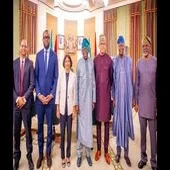
    The bank’s Managing Director of Operations, Anna Bjerde, made the remarks on Tuesday while leading a World Bank Group delegation to meet the president at the State House in Abuja.

    Bjerde said the outcomes of Nigeria’s reforms over the past two years were widely discussed among global leaders, policymakers and investors, noting that the scale and pace of progress had drawn international attention.

    “Nigeria is a frequent example in my discussions around the world because the results achieved in two years are really commendable,” she said.

    She praised President Tinubu’s consistency in communicating the necessity of the reforms, adding that his steady leadership had helped sustain confidence despite the challenges associated with implementation.

    “Even when reform implementation is difficult, there is no turning back. You are staying the course,” Bjerde said.

    According to her, feedback from Nigeria’s private sector indicates that reform outcomes are becoming more visible, with improving investor sentiment and growing confidence in the policy direction of the government.

    On the forthcoming Country Partnership Framework, Bjerde said the new programme would be anchored on Nigeria’s development ambition of building a $1 trillion economy and achieving seven per cent economic growth. She stressed that job creation would be central to the partnership, particularly in light of Africa’s growing population and the urgency of employment opportunities for young people.

    She identified infrastructure investment, agricultural modernisation and improved access to finance for small and medium-sized enterprises as priority areas for collaboration, noting that Nigeria’s infrastructure spending remains low relative to its gross domestic product.

    Bjerde said this gap would require innovative public-private partnerships to unlock private capital and accelerate development. She disclosed that the World Bank’s public sector portfolio in Nigeria currently stands at about $17 billion, while its private-sector arm, the International Finance Corporation, invests approximately $5 billion annually in the country.

    She added that a new reform-linked budget support operation was being prepared, alongside expanded risk guarantee instruments designed to attract more private investment.

    “Your reforms and our budget support go hand in hand,” Bjerde said.

    Earlier, President Tinubu reaffirmed that his administration’s reform agenda was irreversible, declaring that Nigeria had “its hands on the plough” and would not retreat from the path of reform.

    “Since we went into this turn of reform, we are never going to look back,” the president said.

    Tinubu acknowledged that the reforms had been painful at the initial stage but said they were necessary to secure long-term economic stability and sustainable growth. He identified agriculture as a key pillar of the reform agenda, citing the establishment of mechanisation centres and Nigeria’s openness to World Bank support in the areas of improved seeds and productivity.

    The president also reiterated his commitment to transparency and accountability, describing the removal of fuel subsidies and the unification of the foreign exchange rate as difficult but unavoidable decisions.

    “The first reaction was high inflation, but it has come down dramatically. Now that it is stable, we can help investors,” Tinubu said.

    He urged the World Bank to accelerate innovative financing solutions, reduce bureaucratic bottlenecks and deepen support for skills development, while assuring the institution of Nigeria’s readiness for deeper engagement and a sustained partnership.

  • NGF Prioritises Sugar Production to Boost Industrial Development in Nigeria

    NGF Prioritises Sugar Production to Boost Industrial Development in Nigeria

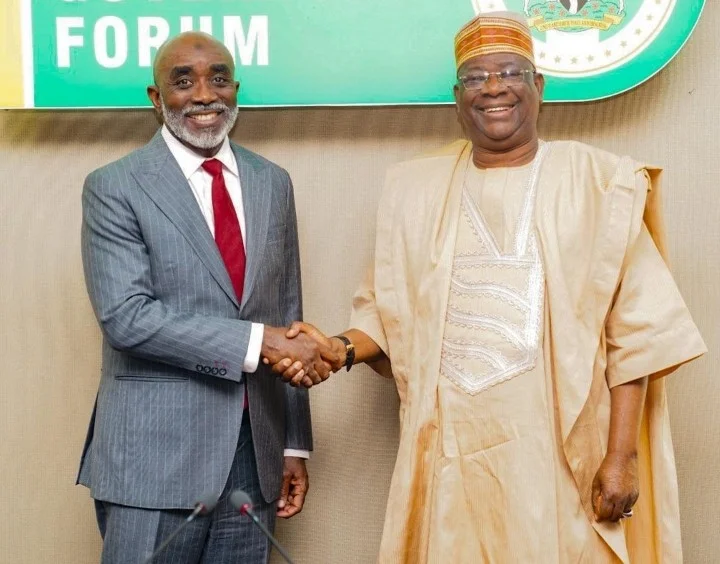
    The Nigeria Governors’ Forum (NGF) has agreed to prioritise sugar as a key product for accelerating industrial development across states of the federation, in a move aimed at reducing imports, creating jobs and achieving national self-sufficiency.

    The Executive Secretary and Chief Executive Officer of the National Sugar Development Council (NSDC), Kamar Bakrin, disclosed this in a statement issued on Sunday in Abuja.

    Bakrin said the decision followed a request by the NSDC to the NGF as part of broader efforts to develop Nigeria’s sugar sector and halt the continued importation of raw sugar.

    Under the arrangement, the NGF secretariat will include sugar projects as priority beneficiaries in its engagements with development partners both within and outside Nigeria. The forum will also collaborate with the NSDC to support states in preparing and positioning investor-ready sugar projects.

    According to Bakrin, the partnership will facilitate structured engagement between state governments, investors and industry operators, while improving coordination around critical enablers such as land access, infrastructure provision and incentive frameworks.

    During a meeting with the NGF leadership, Bakrin highlighted the vast investment opportunities in the sugar sector and urged governors of sugarcane-viable states to embrace large-scale sugar project development.

    He identified 11 states with proven land suitability for profitable sugar production as Oyo, Kwara, Niger, Nasarawa, Kaduna, Kano, Bauchi, Gombe, Jigawa, Adamawa and Taraba.

    The NSDC boss noted that recent macroeconomic developments had improved the competitiveness and profitability of local sugar production. He explained that while global sugar prices had remained relatively stable in dollar terms, exchange rate movements had made sugar imports significantly more expensive.

    “Exchange rate movements have made imports significantly more expensive, thereby enhancing the commercial viability of domestically produced sugar, whose inputs are largely naira-denominated,” Bakrin said.

    He added that Nigeria now had strong operational fundamentals for sugar production, with assessments identifying about 1.2 million hectares of prime land suitable for large-scale sugarcane cultivation nationwide. However, only about 200,000 hectares would be required to achieve national self-sufficiency.

    Bakrin said the Nigerian sugar sector is currently valued at about $2 billion, adding that opportunities would expand significantly under the African Continental Free Trade Agreement (AfCFTA). He estimated the continental sugar market at $7 billion, while the market for sugar by-products alone was valued at about $10 billion in Nigeria.

    He explained that a model sugar project producing 100,000 metric tonnes annually would require an estimated investment of $250 million and deliver an internal rate of return of about 24 per cent. Such projects would also generate valuable by-products including ethanol and bio-electricity.

    Bakrin emphasised that sugar projects promote inclusive development by integrating host communities into the value chain through outgrower schemes and employment opportunities, while also supporting environmental sustainability.

    Meanwhile, the Director-General of the NGF, Abdulateef Shittu, said many state governments were already engaged or keen to invest in sugar-related projects spanning land development, agricultural schemes and agro-industrial initiatives.

    Shittu said unlocking the sector’s potential would require effective coordination, credible investment frameworks and strong alignment between federal policy objectives and state-level development priorities.

    He pledged the commitment of the NGF secretariat to ensuring that state development priorities increasingly focus on sugar investments, given their capacity to drive rural development and job creation.

  • ONICCIMA Calls for Dialogue as Anambra Shuts Onitsha Main Market

    ONICCIMA Calls for Dialogue as Anambra Shuts Onitsha Main Market

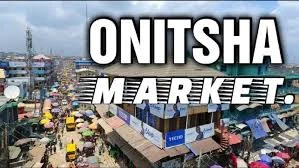
    The Onitsha Chamber of Commerce, Industry, Mines and Agriculture (ONICCIMA) has urged the Anambra State Government to embrace dialogue in resolving the closure of Onitsha Main Market, warning that prolonged shutdowns could deepen economic hardship for traders and residents.

    The appeal followed a one-week closure of the market ordered by Governor Chukwuma Soludo in response to the continued observance of the Monday sit-at-home across parts of the state.

    In a statement signed by its President, Chinedu Nwonu, and made available to journalists in Onitsha on Wednesday, the chamber acknowledged the constitutional duty of government to maintain law, order, and an enabling environment for businesses to thrive, noting that such stability is critical to the state’s Internally Generated Revenue (IGR).

    ONICCIMA said government records indicate that the South-East loses an estimated ₦19.6 billion weekly to sit-at-home activities, with Anambra State accounting for about ₦8 billion of that figure.

    It warned that the scale and frequency of the losses pose a serious risk of economic dislocation and instability.

    While expressing support for decisive actions to restore lawful economic activities, the chamber cautioned against the use of prolonged market closures as punitive measures, describing them as economically and socially damaging.

    According to the chamber, the closure of Onitsha Main Market disrupts supply chains, erodes investor confidence, heightens social tension, and threatens the livelihoods of thousands of households dependent on daily trading activities.

    It added that continued disruption of market operations could negatively affect manufacturers, importers, wholesalers, and retailers nationwide, leading to scarcity of goods, increased transportation costs, and inflationary pressures that would ultimately be borne by consumers.

    ONICCIMA therefore called on the state government to strike a balance between enforcement and engagement, security and economic sensitivity, and authority and partnership, in the overall interest of the people and the state’s economy.

    It urged the government to restore confidence, protect businesses, and ensure the full return of Onitsha Main Market to normal Monday-to-Saturday operations in a safe, secure, and sustainable manner.

  • Nigeria Records 3.98% GDP Growth in Q3 2025, Misses Target

    Nigeria Records 3.98% GDP Growth in Q3 2025, Misses Target

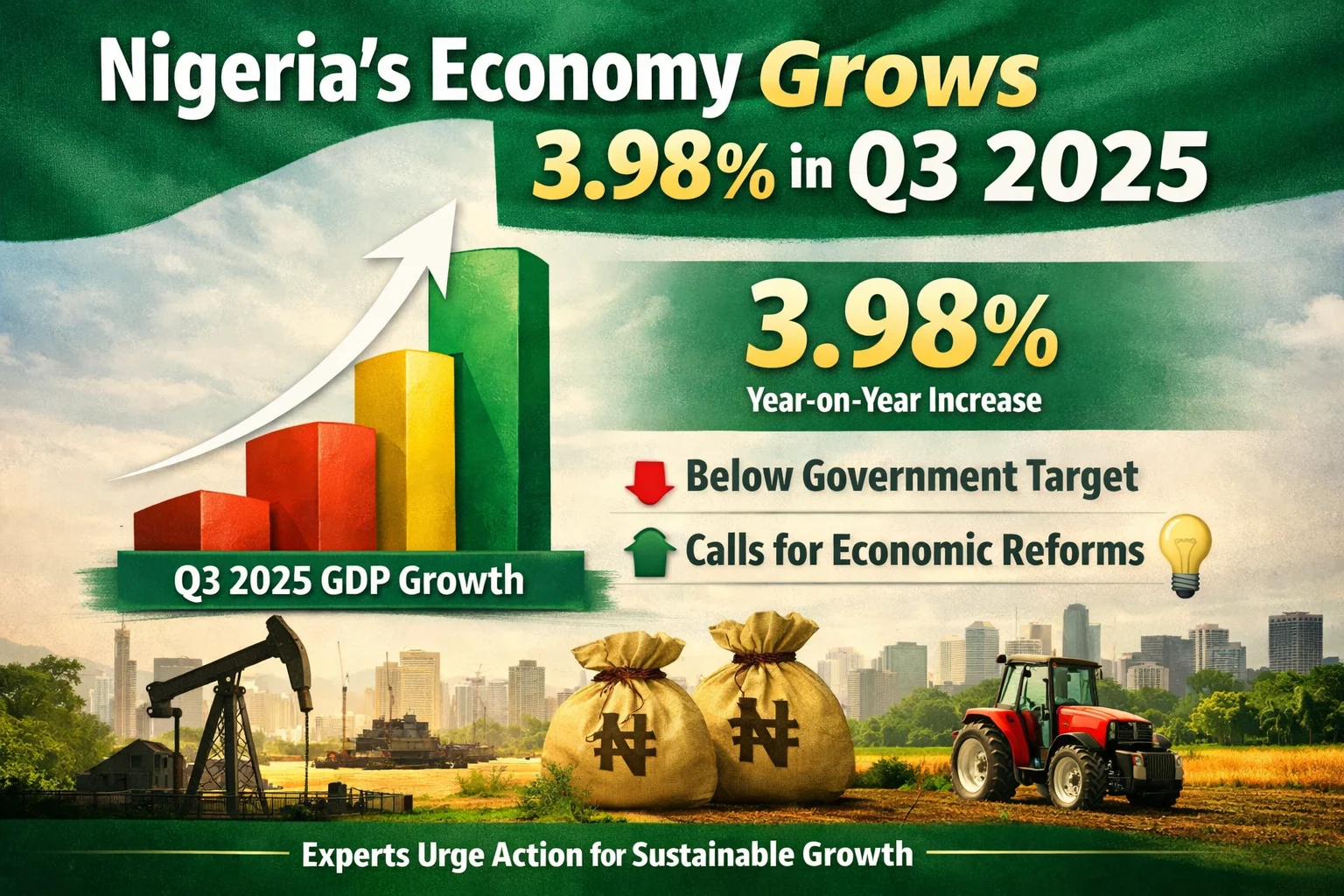
    Abuja / Lagos — Nigeria’s economy recorded a 3.98 per cent growth in the third quarter of 2025, a modest expansion that has intensified calls for decisive reforms to unlock faster, broader-based and more sustainable growth.

    The National Bureau of Statistics (NBS) said the Gross Domestic Product (GDP) grew in real terms on a year-on-year basis, reflecting increased output of goods and services across key sectors of the economy.

    However, the performance remains below the Federal Government’s 4.6 per cent growth target for 2025, and its long-term ambition of achieving about seven per cent annual growth needed to drive sustainable development.

    The Central Bank of Nigeria (CBN) had projected a 4.1 per cent growth rate for 2025, citing easing inflation and improved foreign exchange inflows, while the International Monetary Fund (IMF) recently revised Nigeria’s growth forecast upward to 3.9 per cent.

    Economists Call for Targeted Interventions

    Against this backdrop, economists who spoke with to the media on Friday said targeted policy interventions could help bridge the gap between projections and actual performance.

    Prof. Sherifdeen Tella of the Department of Economics, Babcock University, urged the government to prioritise investment in the industrial sector to stimulate domestic production.

    “The government should empower domestic production firms in critical areas with funds that can be repaid in the future,” Tella said, likening the approach to the U.S. industrial bailout during the 2008 global financial crisis.

    He also stressed the importance of subsidising energy, particularly electricity and petroleum products, to support productivity, and called for sustained peace in the Niger Delta to boost oil production and export earnings.

    Business Environment and Security

    Similarly, Prof. Ndubisi Nwokoma of Caleb University said improving the business environment and ensuring macroeconomic stability were essential to accelerating growth.

    “Insecurity must be reduced to restore investor confidence in the economy,” he said, adding that Nigeria should prioritise the development of its rare earth minerals through partnerships with experienced private firms to boost exports and revenue.

    Agriculture as Growth Driver

    Former President of the Chartered Institute of Bankers of Nigeria (CIBN), Mr Okechukwu Unegbu, said increased investment in modern agriculture could significantly accelerate economic growth.

    He urged the government to allocate at least 10 per cent of the annual budget to agriculture, in line with recommendations by the Food and Agriculture Organisation (FAO), to mechanise the sector and strengthen its value chain.

    Unegbu also called for incentives to encourage private sector participation in agricultural processing and packaging, noting that value addition would enhance the sector’s contribution to the economy.

  • Tinubu Presents 2026 Budget, Projects ₦34.33tr Revenue, ₦58.18tr Spending

    Tinubu Presents 2026 Budget, Projects ₦34.33tr Revenue, ₦58.18tr Spending

    By Caroline Ameh

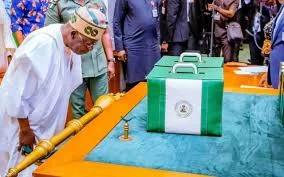
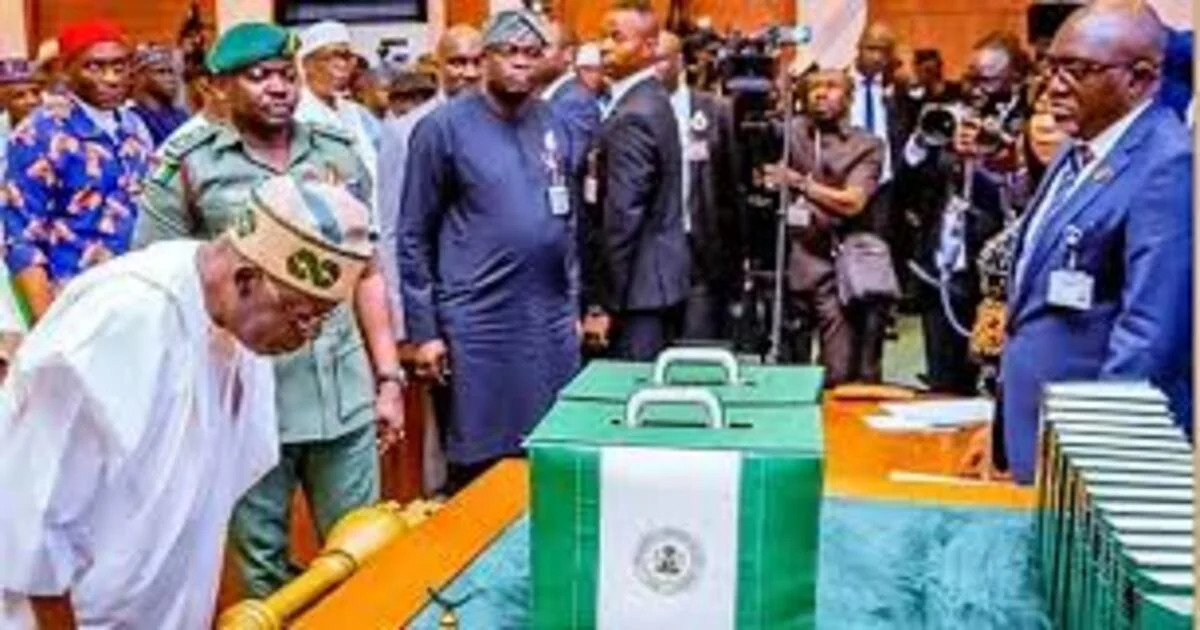
    President Bola Ahmed Tinubu on Friday presented the 2026 Appropriation Bill to a joint sitting of the National Assembly, pledging stricter discipline in budget execution, stronger accountability and enhanced monitoring of public spending in the new fiscal year.

    The budget, titled “Budget of Consolidation, Renewed Resilience and Shared Prosperity,” seeks to entrench recent economic reforms, stabilise macroeconomic conditions and convert recovery gains into sustained, inclusive growth.

    Addressing lawmakers, the President said he had directed key fiscal authorities—including the Minister of Finance and Coordinating Minister of the Economy, the Minister of Budget and Economic Planning, the Accountant-General of the Federation and the Director-General of the Budget Office—to enforce strict adherence to the approved budget framework and implementation timelines.

    “2026 will mark a turning point in budget execution. We will demand accountability, rigorous monitoring and reporting that translate policy into measurable outcomes for Nigerians,” Tinubu said.

    The President said the budget was formulated against a backdrop of emerging macroeconomic stability, following what he described as difficult but necessary policy adjustments implemented by his administration.

    He reported that Nigeria’s economy expanded by 3.98 per cent in the third quarter of 2025, up from 3.86 per cent in the corresponding period of 2024, while inflation declined for eight consecutive months to 14.45 per cent in November 2025, from 24.23 per cent in March.

    Tinubu further cited improved crude oil output, stronger non-oil revenue mobilisation driven by tax administration reforms, rising investor confidence and external reserves estimated at $47 billion, sufficient to cover more than 10 months of imports.

    “These results reflect deliberate policy choices. The task before us is to consolidate these gains so that stability evolves into prosperity and prosperity is broadly shared,” he said.

    Reviewing the performance of the 2025 budget, the President said the government realised ₦18.6 trillion in revenue and ₦24.66 trillion in expenditure by the third quarter, representing 61 per cent and 60 per cent of their respective annual targets.

    He attributed delays in capital releases partly to the extension of the 2024 capital budget into 2025, noting that the experience highlighted the need for firmer fiscal discipline in the 2026 budget cycle.

    For 2026, the President projected total revenue of ₦34.33 trillion and total expenditure of ₦58.18 trillion, including ₦15.52 trillion earmarked for debt servicing.

    Recurrent non-debt expenditure is estimated at ₦15.25 trillion, while capital expenditure is projected at ₦26.08 trillion. The resulting budget deficit of ₦23.85 trillion, he said, represents 4.28 per cent of Gross Domestic Product (GDP).

    Underlying the projections are assumptions of a crude oil price benchmark of $64.85 per barrel, daily production of 1.84 million barrels, and an exchange rate of ₦1,400 to the US dollar.

    The budget prioritises national security, infrastructure development and human capital investment, with proposed allocations of ₦5.41 trillion for defence and security, ₦3.56 trillion for infrastructure, ₦3.52 trillion for education and ₦2.48 trillion for health.

    Tinubu said security spending would be outcome-based, aligned with the implementation of a new national counter-terrorism doctrine and expanded intelligence-led operations.

    On education, he referenced the Nigerian Education Loan Fund, which has supported more than 418,000 students across 229 tertiary institutions, while noting that healthcare expenditure represents six per cent of total budgetary spending, net of liabilities.

    The President warned government-owned enterprises to meet their revenue remittance obligations, announcing plans to deploy digitised revenue collection systems to curb leakages and strengthen fiscal transparency.

    “A budget’s true value lies not in its announcement, but in its execution,” Tinubu said, pledging prudent expenditure management, enhanced revenue mobilisation and tighter oversight.

    He urged the National Assembly to support the proposals, expressing confidence that effective executive-legislative collaboration would ensure successful implementation.

    The President subsequently laid the 2026 Appropriation Bill before the National Assembly for legislative consideration.

  • IMF urges stronger tax, smarter spending, hails Nigeria’s fiscal reforms

    IMF urges stronger tax, smarter spending, hails Nigeria’s fiscal reforms

    The International Monetary Fund (IMF) has commended Nigeria’s fiscal reforms, and urged the country adopt smarter spending and stronger tax systems.

    The Division Chief, Fiscal Affairs Department IMF, Davide Furceri, made the statement during a news conference on fiscal monitor, in Washington on Wednesday on the sidelines of the Annual Meetings of the IMF/WorldBank Group.

    Furceri said that Nigeria’s ongoing fiscal and structural reforms were neutral and well aligned with monetary policies designed to curb inflation and stabilise the economy.

    He said that the fund’s latest assessment of fiscal policy across developing economies, especially the Nigeria’s policy direction, was consistent with efforts to strike a balance between revenue mobilisation and efficient expenditure management.

    “Currently, what we are projecting for Nigeria is a neutral fiscal stance, which we believe is consistent with monetary policies aimed at reducing inflation,” he said.

    He advised Nigeria to focus on revenue and expenditure sides of public finance.

    “Nigeria has made significant progress in recent years. Several laws have been passed to streamline the tax code, reduce tax expenditures and ease the compliance burden for businesses and coerce.

    “These are steps in the right direction,” he said.

    Furceri called for greater efficiency in public spending to ensure better outcomes for citizens.

    He said that optimising on how resources are allocated and spent could deliver substantial economic and social gains.

    “In addition, it is important to increase social spending, particularly to support vulnerable households and ensure inclusive growth,” he said.

    He urged Nigeria to continues to implement key fiscal and monetary reforms under its medium-term economic framework, fiscal discipline, improved revenue generation and enhanced transparency in public finance management.

    He said that IMF’s endorsement reflected growing confidence in Nigeria’s reform trajectory, even as the government pushes for policies aimed at boosting growth, reducing inequality and sustaining macroeconomic stability.

    The News Agency of Nigeria (NAN) reports the fiscal monitor explores how governments can improve economic growth prospects by enhancing the efficiency and composition of public spending.

  • Nigeria-UK trade hit all-time-high at N16trn

    Nigeria-UK trade hit all-time-high at N16trn

    British High Commissioner to Nigeria, Richard Montgomery, says the trade value between Nigeria and Britain, which currently stands at 7.9 billion pounds (16 trillion naira) has hit an unprecedented level.

    Montgomery made this known in an interview with the News Agency of Nigeria (NAN) on Wednesday in Abuja.

    He lauded the UK-Nigeria Enhanced Trade and Investment Partnership (ETIP) which he said boosts trade relations by removing non-tariff trade and investment barriers to foster cooperation in priority sectors.

    According to him, the ETIP, which also promotes collaboration with the Developing Countries Trading Scheme (DCTS), would scale the trade value by providing generous trading terms and tariff reductions on Nigerian products. 

    “So I’m really delighted at our most recent trade figures. The 7.9 billion pounds or 16 trillion Naira trade is the highest that it’s ever been between the UK and Nigeria. And so it’s a very positive trajectory.

    “The enhanced Trade and Investment Partnership (ETIP) is exciting because it’s a mutually agreed set of sectors and issues on which the UK and Nigeria government are going to work on.

    “It’s happening under the umbrella of our respective ministers, the federal minister of industry, investment and trade, and the UK business and trade minister,” he said.

    He added: “The exciting thing about ETIP is, and you’ve used the word leverage, that’s precisely right.

    “It identifies through mutual agreement the areas that the UK feels it has a comparative advantage in and the areas that Nigeria wants to create more economic opportunities in.”

    Montgomery said the UK was not competitive in all sectors, but has major advantages in various sectors, including the financial services, new technology, financial technology, artificial intelligence and other digital platforms.

    The British envoy said that in the creative economy, his country has some advanced manufacturing and advanced energy solutions, which are worth looking at, and credible in the Nigerian context.

    He said the UK was doing a lot in higher education investments in the Nigerian education sector, as well as in the agricultural sector to boost Nigeria’s agricultural exports, considering its high potential.

    “So, the ETIP identifies these priorities and we have ways of following up in each sector with the businesses and the government agencies on both sides that can unlock more investment and growth.

    “The aim is mutual growth, it’s creating jobs in both our countries, and that’s why it’s really important that we realise that ETIP is mutually agreed and negotiated, it’s in both our interests,” he added.

  • NGF challenges governors on “true subnational transformation”

    Nigeria Governors’ Forum (NGF) has challenged state governments to do more to attract investments to their domain if “true subnational transformation can be achieved.

    It said Nigeria currently lags behind its peers in the continent like South Africa and Ghana in terms of the volume of Foreign Direct Investment (FDI) which currently stands at a paltry 0.5 percent.

    Kwara state governor and chairman of the NGF, Andulrahman Abdulrazq made these observations at the launch, yesterday in Abuja of Investopedia, an investment information platform.

    Governor Abdulrazaq called the launch “a milestone achievement for the Nigeria Governors’ Forum and for our country,” emphasizing that it “will stand as one of the legacies of my stewardship.” He underscored Nigeria’s potential, noting, “Nigeria is Africa’s largest economy, endowed with abundant human and natural resources.”

    Doubling down on the imperative of FDI, the governor emphasised, “Public budgets alone cannot solve this,” stressing the need to “mobilize both global and African capital to finance projects that create jobs, modernize infrastructure, and drive inclusive growth.”

    Reinforcing the insights of the governor, NGF Director General, Mr. Abdulateef Shittu  remarked that “Over the last decade our inflows of Foreign Direct Investment (FDI) have averaged just 0.5% of GDP, well below the African average and behind peers like Ghana and South Africa,” with 2023 FDI at $1.87 billion.

    Both leaders emphasized the infrastructure financing gap, with Mr. Shittu citing “USD 100 billion annually — nearly USD 1 trillion over the next decade,” and states budgeting “more than N17.5 trillion for capital projects in 2025.”

    Governor Abdulrazaq echoed this, noting annual FDI averages of “only USD 2 billion, which is less than 0.5% of gross domestic product (GDP),” concentrated in “oil and gas, telecommunications, real estate, and agriculture,” would be insufficient for “true sub-national transformation.”

    A statement by NGF Director of Media and Strategic Communications, Mr. Yunusa Abdullahi said the NGF Chairman was represented at the event by Nasarawa state Governor Abdullahi Sule.

    He stated that in his explanation, the DG asserts that the NGF Investopedia addresses these challenges by “curating bankable pipelines of projects across all 36 states,” providing “a one-stop shop to engage with credible opportunities, backed by a transparent process, strong institutional oversight, and global visibility.”

    While Governor Abdulrazaq clarified,  “It is not just a catalogue — it is an entry point, showing investors not only where to invest, but also how to invest in Nigeria with confidence.”

    It was also reported that Mr. Shittu outlined that the publication shall be deployed to, “Simplify investor access by consolidating credible projects into one gateway; provide confidence through due diligence and transparent presentation of opportunities; and mobilize partnerships that go beyond financing to include technical support, capacity-building, and risk mitigation.”

    The launch drew chief executive officers (CEOs), managing directors (MDs), and industry leaders, prompting Mr. Shittu to say: “Your presence signals confidence—and it emboldens our states.”

    Governor Abdulrazaq extended an invitation: “To our distinguished investors, both here in Nigeria, across Africa, and globally, I extend this invitation: Partner with Nigeria’s states. The opportunities are vast, the commitment is firm, and the time is now.”

    The Governor stated that “Public budgets alone cannot solve this,” stressing the need to “mobilize both global and African capital to finance projects that create jobs, modernize infrastructure, and drive inclusive growth.”

    He highlighted growing African Direct Investment (ADI), noting, “Regional investors from South Africa, Morocco, Egypt, and Ghana are expanding into sectors such as banking, fintech, agribusiness, and infrastructure,” signaling “growing confidence among African partners in Nigeria’s markets and opportunities” under the African Continental Free Trade Area (AfCFTA). He said partnerships are central to the initiative.

  • Tinubu support group says Okonjo-Iweala’s commendation validates FG economic programmes

    As suspected, the Tinubu Media Force (TMF), a support group for  President Bola Tinubu, asserts that Dr Ngozi Okonjo-Iweala’s recent remarks validates the administration’s economic management.

    The TMF National Coordinator, Mr Oluwagbenga Abiola, said  this  in a statement on Friday in Lagos.

    Abiola was reacting to Okonjo-Iweala, ‘s commendation of the President’s economic policies.

    Okonjo-Iweala, Director-General of World Trade Organisation(WTO), on Thursday commended Tinubu for working to stabilise the  economy, saying  his administration’s reforms  are moving in the right direction.

    Okonjo-Iweala, a globally respected economist and a former Minister of Finance, spoke to State House correspondents after a courtesy visit to the President on Thursday in Abuja.

    He said: “For the Tinubu Media Force, this endorsement is further proof that the administration’s reforms are laying the right foundations for sustainable growth.

    “Economic data support this view. Nigeria’s GDP grew by 3.13 per cent in the first quarter of 2025, with the services sector surging by over 5 per cent.

    “The Tinubu administration is targeting 7 per cent annual growth by 2027 and a quadrupling of the economy by 2030, anchored on a rebased GDP of N372.8 trillion. Key reforms span energy, transport, education, agriculture, and industry.”

    Noting that education remains a flagship priority for Tinubu’s administration, Abiola said that the Nigerian Education Loan Fund (NELFUND) had disbursed over N104 billion to no fewer than  600,000 students in federal tertiary institutions.

    According to him, this includes N20.07 billion in tuition payments to 192,906 students and N12.82 billion in stipends to 169,114 students.

    “With over 9,000 applications processed daily, the scheme has been described as a lifeline for Nigerian families,” he said.

    On infrastructure, Abiola said that the administration was driving landmark projects such as the 700km Lagos-Calabar Coastal Highway, projected at $11 billion to connect nine states and create millions of jobs.

    “Work on the first 47.47km segment is underway, backed by $747 million in funding,” he said.

    Abiola said that other major road projects include the 1,000km Sokoto-Badagry Superhighway, dualisation of the Kano–Maiduguri Road, rehabilitation of the Enugu-Port Harcourt Expressway, completion of the Abuja-Kaduna-Zaria-Kano Road, and reconstruction of over 330 roads and bridges across the country.

    According to him, beyond roads, the government has launched construction of 10,000 affordable housing units, expanded the national health insurance scheme to include children, improved passport processing, and stabilised electricity supply across board.

    He said that the government has also commissioned new federal medical centres  for affordable access to health care .

    “Agricultural reforms and the introduction of compressed natural gas (CNG) as an affordable transport fuel are also expected to reduce food and transportation costs,” he said.

    According to him, the proposed tax reform bill also aims to ease burdens on low and middle income earners by eliminating regressive levies, simplifying tax collection, and focusing more on high income sectors and large corporations.

    Commending Okonjo-Iweala for her “objective and fact-based” analysis, Abiola urged commentators to evaluate the administration’s performance on measurable achievements rather than partisan narratives.