
Category: Economy

  • Tinubu Unveils 2025 Budget

    Tinubu Unveils 2025 Budget

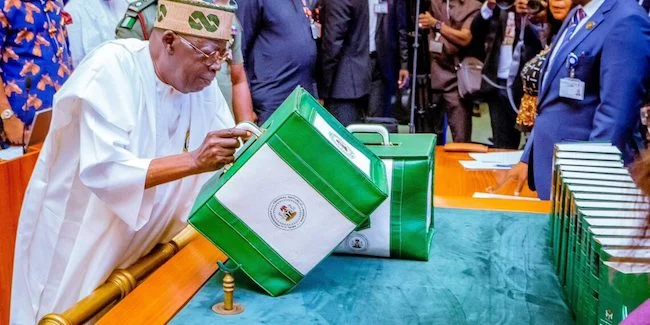
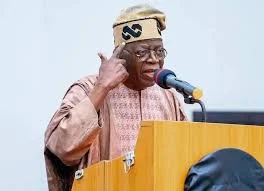
    President Bola Ahmed Tinubu has presented the 2025 budget proposal to the National Assembly, marking a pivotal step in his administration’s efforts to stabilize and transform Nigeria’s economy. 

    Dubbed “The Budget of Restoration: Securing Peace, Rebuilding Prosperity,” the plan lays out strategic investments to tackle economic challenges and rebuild critical sectors.  

    The proposed N47.90 trillion expenditure includes key allocations for defense, infrastructure, education, and healthcare.

     Tinubu emphasized bolstering security, improving infrastructure, and fostering self-sufficiency in agriculture. Revenue projections stand at N34.82 trillion, while the budget deficit is pegged at N13.08 trillion.  

    The president highlighted significant milestones achieved under the 2024 budget, such as a 3.46% economic growth rate in Q3 and robust foreign reserves nearing $42 billion. 

    For 2025, the focus shifts to reducing inflation, enhancing trade, and driving industrial output.  

    With plans to reduce dependency on food and oil imports while boosting exports, Tinubu assured Nigerians of a brighter future, calling for collective action to overcome challenges and build a more prosperous nation.

  • Nigeria inflate rate surges higher, hits 34.60%

    The most realistic sign that the Federal Government’s economic policies are not yielding the desired result emerged again today as figures released by the National Bureau of Statistics (NBS) show a relentless rise in the rate of inflation from 33.88% in October to 34.60% in November.

    The Central Bank of Nigeria’s (CBN) in furtherance of efforts to curtail the rise in inflation took the following measures during 298th Monetary Policy Committee (MPC) meeting on November 25–26, 2024.

    Despite these measures which the current management of the CBN had embarked upon since assuming office, the rate of inflation continues to soar, thereby confirming the contrary opinion of analyst who think the apex bank is not only prescribing the wrong medication but has missed the diagnosis.

    Further, the NBS figure indicates that on a year-on-year basis, the Headline inflation rate was 6.40% points higher than the rate recorded in November 2023 (28.20%). This shows that the Headline inflation rate (year-on-year basis) increased in November 2024 compared to the same month in the preceding year (i.e., November 2023).

    It is noteworthy to observe however, that on a month-on-month basis, the “Headline inflation rate in November 2024 was 2.638%, which was 0.002% points lower than the rate recorded in October 2024 (2.640%). This means that in November 2024, the rate of increase in the average price level is slightly lower than the rate of increase in the average price level in October 2024,” it was stated in the report.

    Food inflation after easing at the peak of the harvest period between July and September has spiked, rising, year on year from 39.16% in November 2023 to 39.93% at the end of November 2024.

    Month on month, the rate rose gently from 2.94% at the end of October to 2.98% in November.
    2.98 39.93

    The NBS stated in the report that, “Every month, 10,534 informants spread across the country provide price data for the computation of the CPI. The market items currently comprise 740 goods and services regularly priced.”

  • CBN to Fine Banks Caught Selling Mint Notes to Hawkers N150million

    CBN to Fine Banks Caught Selling Mint Notes to Hawkers N150million

    Concerned about the illegitimate sale of the national currency, the Central Bank of Nigeria (CBN) has introduced a ₦150 million fine on banks caught supplying mint naira notes to street hawkers. 

    This action targets curbing the unauthorized sale of the naira, which has disrupted cash flow and accessibility for citizens.  

    The directive, issued by the Acting Director of Currency Operations, Mohammed Olayemi, outlines that any branch of a Deposit Money Bank (DMB) found guilty will face the penalty, with harsher sanctions for repeated violations under the Banks and Other Financial Institutions Act (BOFIA) 2020.  

    The CBN plans to intensify monitoring by conducting unannounced checks at banking halls and ATMs while deploying undercover agents to identify hawking locations. 

    Banks are also urged to strengthen internal controls to prevent exploitation for illegal cash transactions.  

    This move comes as the apex bank reaffirms the validity of old ₦1000, ₦500, and ₦200 notes following a Supreme Court ruling and warns against hoarding cash. 

    The CBN is determined to ensure proper distribution and discourage illicit practices that hinder access to funds.  

  • FG Allocates N1.727 Trillion to State Governments in November  

    FG Allocates N1.727 Trillion to State Governments in November  

    In November 2024, the Federal Government distributed N1.727 trillion among federal, state, and local governments, sourced from a gross revenue of N3.143 trillion. 

    The allocation was decided during the December meeting of the Federation Account Allocation Committee (FAAC), led by Finance Minister Wale Edun.  

    From the total, the federal government received N581.856 billion, states were allocated N549.792 billion, and local governments got N402.553 billion.

     Additionally, N193.291 billion was set aside for oil-producing states as 13% derivation revenue.  

    The Value Added Tax (VAT) revenue for November stood at N628.972 billion, a drop of N39.318 billion from the previous month. 

    After deductions for collection costs and transfers, N628.973 billion was shared: N87.855 billion went to the federal government, N292.850 billion to states, and N204.995 billion to local councils.  

    Gross statutory revenue climbed to N1.827 trillion, an increase of N490.339 billion from October. 

    Out of this, N455.354 billion was shared among the three tiers, with the federal government receiving N175.690 billion, states N89.113 billion, and local councils N68.702 billion.  

    Revenue from the Electronic Money Transfer Levy (EMTL) totaled N15.046 billion, with federal, state, and local governments receiving N2.257 billion, N7.523 billion, and N5.266 billion, respectively. 

    An exchange rate adjustment also added N671.392 billion to the distributable pool, with allocations spread across the three levels of government.  

    Despite the boost in oil and gas royalties, revenues from other streams like import duties, excise taxes, and electronic transfer levies saw declines.

  • Nigeria’s Economic Decisions Beginning to Pay Off, Says FG

    Nigeria’s Economic Decisions Beginning to Pay Off, Says FG

    The Federal Government has expressed optimism about the positive effects of its tough economic decisions, citing recent growth in Nigeria’s GDP as a sign of progress.

     Vice President Kashim Shettima made the statement during the National Economic Council’s (NEC) 147th meeting in Abuja on December 13, 2024.

     He noted that the 3.46% GDP growth reported for the third quarter of 2024 was an indication of better economic times ahead. 

    Shettima acknowledged the contributions of the Council’s members and urged them to prepare for the coming year, taking into account how this year’s policies and projects have shaped the nation’s economic trajectory. 

    He emphasized that, despite the challenges, the government’s reforms are starting to show results.

    In addition, the meeting included a discussion on the World Bank’s Economic Report, which highlighted efforts to strengthen Nigeria’s education and healthcare sectors. 

    Shettima pointed out that these initiatives aim to improve human capital, reduce inequalities, and better equip the workforce to thrive globally.

  • Tinubu to Unveil N47 Trillion 2025 Budget Next Week

    Tinubu to Unveil N47 Trillion 2025 Budget Next Week

    In further of yearly ritual, President Bola Tinubu is set to present the 2025 budget to the National Assembly on December 17, 2024.

     This announcement was made by Senate President Godswill Akpabio during a plenary session on Thursday.

    The 2025 budget, totaling N47.9 trillion, is expected to be the largest in Nigeria’s history. 

    The presentation will take place at the House of Representatives Chamber. 

    Lawmakers recently reviewed and submitted the government’s medium-term expenditure framework (MTEF), which underpins the budget figures. 

    Key assumptions in the plan include a $75 oil price per barrel, a daily oil production target of 2.06 million barrels, and an exchange rate of N1,400 to $1.

     The document also projects a GDP growth rate of 6.4%. The Senate Committee on Finance is tasked with reviewing the MTEF/FSP and providing a report within one week.

    Budget making in Nigeria of recent has been characterized by a lot of subterfuge and shenanigan employed by politicians to steal public fund.

    Experts observe that, through what the legislators referred as budget padding, vague project items are infused into the budget to enable both legislators and the executive to commit the heist of public fund.

  • Reps Push for Urgent Action on Cash Scarcity  

    Reps Push for Urgent Action on Cash Scarcity  

    Even as analysts wonder if this was some way of combating spiraling inflation by cutting currency in circulation, the national assembly has urged the Central Bank of Nigeria to take urgent steps to curtail biting cash scarcity.

    To be precise, the House of Representatives, yesterday called on the apex bank to take swift action to alleviate the growing economic burden on citizens.  

    During a plenary session, lawmakers emphasized the disruptive effects of the crisis, which has hindered access to funds for daily transactions, leaving many Nigerians stranded. 

    Rural communities, particularly reliant on cash transactions, have been hardest hit, as they lack alternatives like digital payments.  

    The current situation stems from a 2022 CBN directive limiting cash withdrawals to N500,000 for individuals and N5 million for corporate entities. 

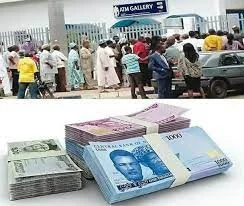
    Bank customers queue for cash

    Despite this policy, banks reportedly cap withdrawals at much lower amounts or fail to disburse cash entirely.

    Meanwhile, Point of Sale (POS) operators seem to have unrestricted access to cash, often reselling it at inflated rates.  

    Lawmakers voiced concerns about the disconnect between commercial banks and POS agents and called for immediate intervention to prevent the situation from escalating, especially with the festive season approaching.  

    To address the issue, the House has tasked its Committee on Banking Regulations with investigating the cash shortage and reporting back within a week, while directing the CBN to resolve the scarcity urgently.

  • Why We Won’t Withdraw Tax Reform Bills – Akpabio 

    Why We Won’t Withdraw Tax Reform Bills – Akpabio 

    The Senate President has affirmed the determination of the red chamber to proceed with discussions on the Tax Reform Bills, insisting that the process has not been halted.

     Senator Godswill Akpabio clarified during Thursday’s plenary session that the legislative body remains focused on fulfilling its duties despite external pressures.  

    Addressing a motion raised by Senate Leader Opeyemi Bamidele, Akpabio countered media reports suggesting a suspension or withdrawal of the bills.

     He stated that the Senate’s work on the reforms, which aim to address Nigeria’s fiscal challenges, will continue uninterrupted.  

    In a bid to address contentious issues surrounding the bills, a special committee was formed to collaborate with the Attorney General of the Federation, Lateef Fagbemi.

     The committee will also consult stakeholders, including governors, business leaders, and religious groups, to ensure inclusivity in the process.  

    Public hearings and stakeholder engagements are expected to address concerns, especially resistance from parts of the country. 

    The Senate emphasized that these consultations are critical to achieving a comprehensive and transparent reform.  

    The Tax Reform Bills, forwarded by President Bola Ahmed Tinubu in October, have faced opposition but remain a key focus for the legislature. 

    Lawmakers assured the public of their commitment to addressing concerns while maintaining legislative independence.

  • Senate to probe N8.4 Trillion Claimed by NNPCL as Subsidy Funds

    Senate to probe N8.4 Trillion Claimed by NNPCL as Subsidy Funds


    …Approves Medium Term Expenditure Framework (MTEF) and Fiscal Strategy Paper (FSP)

    The Senate has mandated an investigation into allegations that the Nigerian National Petroleum Company Limited (NNPCL) illegally withheld N8.48 trillion as claimed petrol subsidies.

    The allegation was made by the Revenue Mobilisation, Allocation and Fiscal Commission (RMAFC).

    The investigation, which will be conducted by the Committees on Finance, Petroleum (Upstream), Petroleum (Downstream), and Gas, will also address findings by the Nigeria Extractive Industries Transparency Initiative (NEITI) report.

    The NEITI report alleged that NNPCL failed to remit $2 billion (N3.6 trillion) in taxes to the Federation Account.

    The Senate further directed its committees to verify the cumulative amount of unremitted revenue from the sale of Premium Motor Spirit (PMS) by NNPCL between 2020 and 2023.

    Additionally, the committees will scrutinize revenue remittance agreements involving NNPCL, Nigerian Liquefied Natural Gas (NLNG), and Immigration Services.

    Also, ahead of the 2025 budget presentation by President Bola Ahmed Tinubu, the Senate on Tuesday approved the 2025–2027 Medium Term Expenditure Framework (MTEF) and Fiscal Strategy Paper (FSP).

    This decision follows the adoption of a report presented by the Senate Joint Committees on Finance, and National Planning & Economic Affairs, chaired by Senator Sani Musa (APC, Niger East), during plenary.

    The Federal Government’s proposed 2025 budget is projected at N47.9 trillion, with retained revenue of N34.82 trillion. New borrowings of N9.22 trillion will be split between domestic and foreign sources. The capital expenditure is set at N16.48 trillion, statutory transfers at N4.26 trillion, and sinking funds at N430.27 billion.

    During the debate, Senator Solomon Adeola (APC, Ogun West), chairman of the Senate Committee on Appropriation, highlighted the Federal Government’s Compressed Natural Gas (CNG) initiative as a potential game changer.

    “With functioning refineries and the CNG initiative, the demand for foreign exchange will drop. For instance, traveling from Benin to Lagos costs about N130,000 with petrol, but with CNG, it’s less than N48,000,” Adeola said.

    Senator Yahaya Abdullahi (PDP, Kebbi North), a former Senate Leader, emphasized the need for support to manufacturing industries to meet MTEF projections.

    Commendations and Next Steps

    Senate President, Godswill Akpabio lauded the joint committees for their thorough analysis and work on the MTEF/FSP document.

    Fielding questions after the plenary, Senator Sani Musa expressed confidence in the achievability of the projections and underscored the importance of ongoing consultations on tax reform bills.

    “The issue of tax reform requires wider consultation. It’s not about regions; it’s about what benefits all Nigerians,” Musa stated.

    The stage is set for President Tinubu’s presentation of the 2025 budget to the National Assembly later this week.