
Category: Economy

  • Tax Reform Bill Not Against The North – Presidency Makes Clarification

    Tax Reform Bill Not Against The North – Presidency Makes Clarification

    The Nigerian Presidency has clarified that the proposed tax reform bills are not designed to unfairly target the North, but rather to benefit all states in Nigeria.

    The Clarification comes after the Governors of 19 Northern States, on Monday, expressed opposition to the new derivation-based model for Value-Added Tax (VAT) distribution.

    Reacting, Bayo Onanuga, Tinubu’s Special Adviser on Information and Strategy, said the tax reform aims to streamline Nigeria’s tax administration processes, enhance efficiency, and eliminate redundancies.

    He said, “While we commend the Governors and traditional rulers for supporting President Bola Tinubu over the success recorded in addressing the country’s security challenges, we consider it necessary to address the misunderstandings and misgivings around the tax reform already embarked upon by the administration.

    “President Tinubu and the Federal Executive Council recently endorsed new policy initiatives aimed at streamlining Nigeria’s tax administration processes, enhancing efficiency and eliminating redundancies across the nation’s tax operations.

    “These reforms emerged after an extensive review of existing tax laws. The National Assembly is considering four executive bills designed to transform and modernise Nigeria’s tax landscape.

    “First is the Nigeria Tax Bill, which aims to eliminate unintended multiple taxation and make Nigeria’s economy more competitive by simplifying tax obligations for businesses and individuals nationwide.

    “Second, the Nigeria Tax Administration Bill (NTAB) proposes new rules governing the administration of all taxes in the country. Its objective is to harmonise tax administrative processes across federal, state and local jurisdictions for ease of compliance for taxpayers in all parts of the country.

    “Third, the Nigeria Revenue Service (Establishment) Bill seeks to rename the Federal Inland Revenue Service (FIRS) as the Nigeria Revenue Service (NRS) to better reflect the mandate of the Service as the revenue agency for the entire federation, not just the Federal Government.

    “Fourth, the Joint Revenue Board Establishment Bill proposes the creation of a Joint Revenue Board to replace the Joint Tax Board, covering federal and all states’ tax authorities.

    “The fourth bill also suggests establishing the Office of Tax Ombudsman under the Joint Revenue Board, which would serve as a complaint resolution body for taxpayers.

    “It is instructive to note that these proposed laws will not increase the number of taxes currently in operation. Instead, they are designed to optimise and simplify existing tax frameworks.

    “The tax rates or percentages will remain the same under these reforms, as they focus on ensuring a more equitable distribution of tax obligations without adding to the burden on Nigerians.

    “The reforms will not lead to job losses. On the contrary, they are structured to stimulate new avenues for job creation by supporting a dynamic, growth-oriented economy.

    “Importantly, these laws will not absorb or eliminate the duties of any existing department, agency, or ministry. Instead, they aim to harmonise revenue collection and administration across the federation to ensure efficiency and cooperation.

    “At the moment, tax administration lacks coordination among federal, state, and local tax authorities, often resulting in overlapping responsibilities, confusion, and inefficiency. Without reform, this inefficiency will persist.

    “The proposed laws aim to coordinate efforts between different tiers of government, resulting in better tax resource management and greater clarity for taxpayers.

    “Under existing laws, taxes like Company Income Tax (CIT), Personal Income Tax (PIT), Capital Gains Tax (CGT), Petroleum Profits Tax (PPT), Tertiary Education Tax (TET), Value-Added Tax (VAT), and other taxing provisions in numerous laws are administered separately, with individual legislative frameworks.

    “The proposed reforms seek to consolidate these multiple taxes, integrating CIT, PIT, CGT, VAT, PPT, and excise duties into a unified structure to reduce administrative fragmentation.

    “On the proposed derivation-based VAT distribution model, which the Northern Governors oppose, it must be stressed that the new proposal, as enunciated in the Bill, is designed to create a fairer system.

    “The current model for distributing VAT is based on where the tax is remitted rather than where goods and services are supplied or consumed. The ongoing tax reform seeks to correct the inherent inequity in the current derivation model as a basis for distributing VAT revenue.

    “The new proposal before the National Assembly outlines a different form of derivation which considers the place of supply or consumption for relevant goods and services. This means that states in the Northern region that produce the food we eat should not lose out just because their products are VAT-exempt or consumed in other states.

    “These reforms are critical to improving the lives of Nigerians and were not put forward by President Tinubu to undermine any part of the country. There is no better time than now for the National Assembly to give due consideration to these bills that will overhaul our tax systems and create the revenue all the tiers of government require to fund the development our country and people urgently need.”

  • Old naira notes remain valid indefinitely – CBN

    Old naira notes remain valid indefinitely – CBN

    The Central Bank of Nigeria has clarified that the old series of N200, N500, and N1,000 banknotes will remain valid indefinitely, refuting claims that the notes would cease to be legal tender by December 31, 2024.

    In a statement released on Thursday by The acting Director of Corporate Communications, Sidi Hakama, the CBN emphasised that such reports are false and intended to disrupt the nation’s payment system.

    The statement read, “The attention of the Central Bank of Nigeria has been drawn to discussions at different fora suggesting that the old series of the N200, N500, and N1,000 banknotes shall cease to be legal tender on December 31, 2024. We wish to state categorically that such claims are false and calculated to disrupt the country’s payment system.

    “For the avoidance of doubt, the order of the Supreme Court of Nigeria on Wednesday, November 29, 2023, granting the prayer of the Attorney-General of the Federation and Minister of Justice to extend the use of old Naira banknotes ad infinitum, subsists.”

    The CBN reaffirmed its commitment to ensuring that all Nigerian banknotes, including both the old and redesigned series, remain in circulation.

    “Similarly, the CBN’s directive to all its branches to continue to issue and accept all denominations of Nigerian banknotes, old and re-designed, to and from deposit money banks remains in force,” the apex bank noted in its statement.

    The bank reminded the public that the Supreme Court’s order for the continued use of old naira notes alongside the redesigned versions is still in effect.

    “Accordingly, all banknotes issued by the Central Bank of Nigeria will continue to remain legal tender indefinitely,” the statement added.

    The CBN urged Nigerians to disregard any suggestions that the old series of banknotes will cease to be valid from the end of 2024.

    It also called on citizens to continue using both old and redesigned naira notes for transactions and advised them to handle the notes with care to preserve their quality and lifespan.

    The CBN further encouraged the public to embrace alternative payment channels to ease the demand for physical cash.

    ReplyForwardAdd reaction
  • Tinubu Orders Ministers, Heads Of Agencies to Travel in Convoy of Three Vehicles, Five Security Personnel

    Tinubu Orders Ministers, Heads Of Agencies to Travel in Convoy of Three Vehicles, Five Security Personnel

    In a feeble effort towards cost cutting President Tinubu orders ministers and heads of agencies not to travel in a convey of more than three vehicles in their official convoys.

    A release by Bayo Onanuga, the Special Adviser to the President (Information & Strategy) on Thursday said this was a “reduction in cost of governance” measure by the Tinubu’s administration.

    The presidency added that Tinubu also ordered all ministers, ministers of state, and heads of agencies to have at most five security personnel attached to them.

    The security team would comprise four police officers and one Department of State Services (DSS) officer.

    The release said, “President Bola Tinubu has restricted Ministers, Ministers of State, and Heads of Agencies of the Federal Government to a maximum of three vehicles in their official convoys.

    No additional vehicles will be assigned to them for movement.”

    The cost-cutting measure was announced today in a statement signed by the President.

    In January this year, President Tinubu took significant steps to reduce government expenditure by reducing his entourage on foreign trips from 50 to 20 officials.

    For local trips, he reduced it to 25 officials. “He similarly reduced the Vice President’s entourage to five officials on foreign trips and 15 for local trips.

    In the directive issued today, President Tinubu also ordered all ministers, ministers of state, and heads of agencies to have at most five security personnel attached to them.

    The security team will comprise four police officers and one Department of State Services (DSS) officer.

    No additional security personnel will be assigned, he ordered.

    “President Tinubu instructed the National Security Adviser to engage with the Military, Paramilitary and Security Agencies to determine a suitable reduction in their vehicle and security personnel deployment.

    “All affected officials are expected to comply with these new measures immediately, underscoring the urgency and seriousness of these changes.”

  • Old, dirty Naira notes: House of Reps demands immediate replacement by the CBN

    Old, dirty Naira notes: House of Reps demands immediate replacement by the CBN

    The House of Representatives has urged the Central Bank of Nigeria (CBN) to ensure wide circulation of new notes of N200, N500 and N1000 as well as begin a gradual withdrawal of the old notes from circulation.

    This call was made after a motion raised by Adam Victor Ogene (LP, Anambra), demanding that the Central Bank of Nigeria (CBN) should kick-start awareness programmes for Nigerians to be aware and prepare for the deadline of December 31, 2024.

    Contributing to the discussion, the Labour Party lawmaker recounted the hardship, frustration, controversy and chaotic situation the implementation of the policy earlier caused in 2023.

    He added that the scarcity of the new currency notes led to untold hardship in the nation as a result of the CBN’s inability to supply new versions of the changed currency notes.

    “Going by the Supreme Court’s subsequent ruling and order, the N200, N500 and N1000 notes shall cease to be legal tender, medium of exchange for goods and services in Nigeria, and shall also cease to be in circulation as from January 1, 2025,” the lawmaker said.

    In 2022, a controversy erupted in Nigeria after the Central Bank of Nigeria (CBN), under the leadership of then-Governor Godwin Emefiele, announced plans to redesign and introduce new versions of three denominations of banknotes: N200, N500, and N1000.

    The existing notes were to remain valid until January 31, 2023.

    The move had sparked widespread debate and discussion across the country.

    According to Emefiele, the decision was reached due to persisting concerns around the number of naira notes outside the banking system.

    Over one year after, findings showed that the CBN policy which was reported to have gulped over N74 billion failed.

  • Tinubu resumes office after two-week vacation

    Tinubu resumes office after two-week vacation

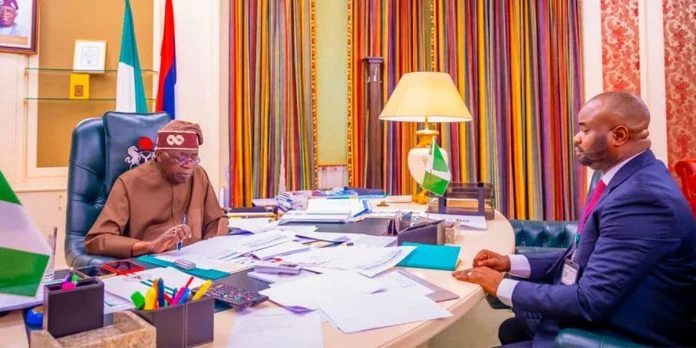
    President Bola Tinubu has resumed duties at the Aso Rock Presidential Villa, Abuja.

    Pictures released from the State House Monday showed the President at his desk receiving a briefing from the Chairman of the Federal Inland Revenue Service, Mr Zacch Adedeji.

    It read, “President Bola Tinubu at his desk this morning, after returning from a two-week vacation.

    Mr President received a briefing from Zaccheus Adedeji, Chairman, Federal Inland Revenue Service. Abuja, Monday, October 21, 2024.”

    Tinubu arrived in Abuja, on Saturday, after a two-week working vacation in the United Kingdom and France.

    The President departed Abuja on Wednesday, October 2, a statement issued by his Special Adviser on Information and Strategy, Bayo Onanuga, revealed.

    Onanuga said, “President Bola Tinubu will depart Abuja today for the United Kingdom to begin a two-week vacation, part of his yearly leave.“

    He will use the two weeks as a working vacation and a retreat to reflect on his administration’s economic reforms.“He will return to the country after the leave expires,” the statement said.

    On October 11, President Tinubu left the UK for Paris in France for “an important engagement,” his Senior Special Assistant on Political and Other Matters, Ibrahim Masari, disclosed in a tweet that Friday.

    He returns amid concerns over delays in the presentation of the 2025 appropriation bill.

  • Your policies not yielding desired results– Bauchi gov tells Tinubu

    Your policies not yielding desired results– Bauchi gov tells Tinubu

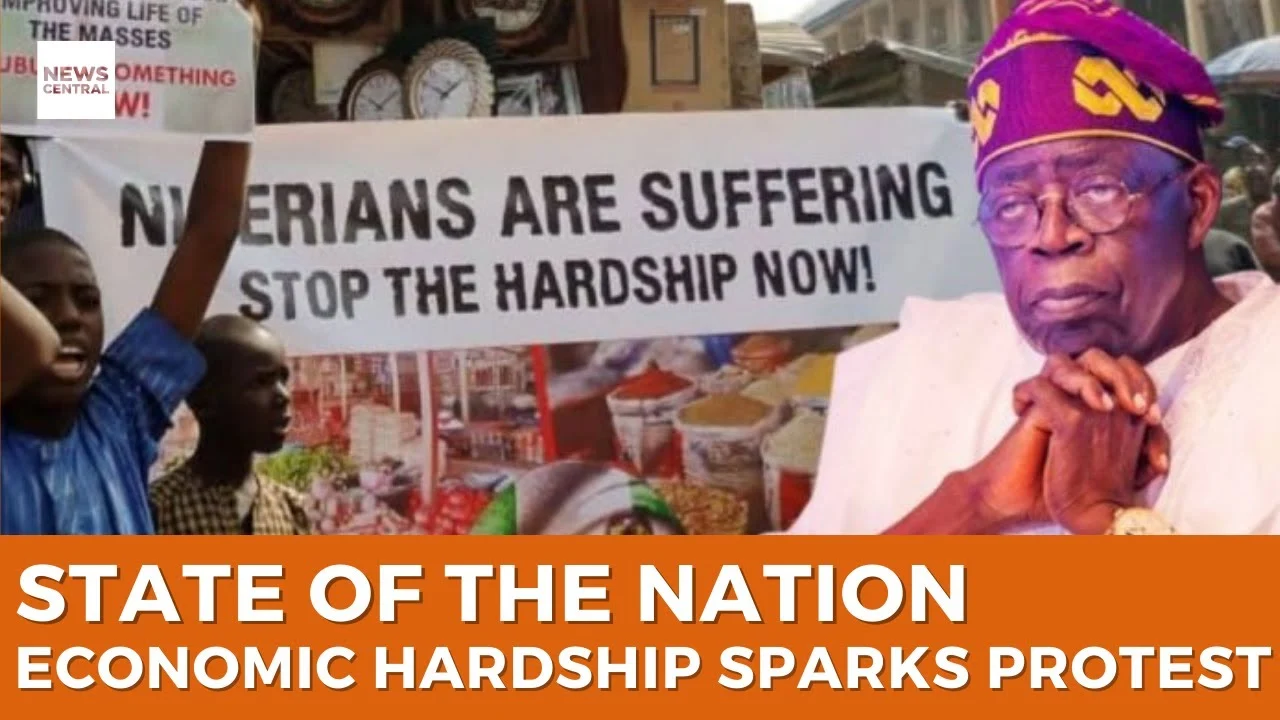
    The Governor of Bauchi State, Bala Mohammed, has criticised the policies of the Federal Government, which have led to increased hardship in the country.

    Speaking at the launch of the Nigeria Development Update report by the World Bank in Abuja on Thursday, he said that the economic policies of the President Bola Tinubu-led administration were not yielding the desired results.

    Mohammed also said that the revenues available to state governments are not enough to address the challenges in states.

    He said, “We should go back to the basics. Nigerians are not enjoying the regime at this time across board, not only the federal government, including the state and local governments.

    Therefore, the onus rests on you, the finance and the managers of the economy.

    “We need to come up with a budget programme with economic policies that will reduce hardship. The money that we are sharing is not enough.

    The report spoke about employment, wages, and how many per cent of Nigerians are even employed. Most of our people live in the informal sector; we should look at how we can make them self-employed.

    “The purchasing power has dwindled, these policies are not working and you know that.”

    While introducing the new report, Alex Sienaert, lead economist of the World Bank in Nigeria, said that to achieve the desired growth in the nation’s economy, the recently introduced macroeconomic stabilisation reforms should be backed up by creating productive jobs.

    Also, the World Bank Country Director for Nigeria, Dr. Ndiame Diop, said that while the reforms may be challenging, they are crucial for the nation’s long-term stability.

    He added that opposing or reversing these reforms would be detrimental to the development of the country.

  • Reps Call for Petrol Price Reversal Amid Economic Hardship

    Reps Call for Petrol Price Reversal Amid Economic Hardship

    The Nigerian House of Representatives has urged the Federal Government to reconsider the recent hike in fuel and cooking gas prices, citing concerns over rising economic challenges faced by citizens. 

    This call comes after a meeting between government officials and labor unions on the matter ended without resolution.

    Petrol prices in major cities like Abuja and Lagos saw significant increases, which led to higher transportation and food costs. 

    Lawmakers stressed the need for immediate action, warning that the continued price hike could worsen inflation and put further strain on the livelihoods of ordinary Nigerians.

    The House highlighted the need for swift intervention, emphasizing the burden placed on small businesses and households due to escalating fuel costs.

     They also called for urgent repairs of domestic refineries to reduce dependence on imported petroleum products.

    As the government and labour unions continue discussions, many Nigerians await relief from the rising costs.