
Category: Economy

  • Tax Reforms Will Simplify System, Maintain Key Agencies – Presidency 

    Tax Reforms Will Simplify System, Maintain Key Agencies – Presidency 

    Further to ongoing debate on proposed tax reform bills, the Presidency said yesterday, that opposition to the legislation were sparked misinformation, with critics misinterpreting key aspects of the legislation. 

    Contrary to claims, the presidency has revealed that the bills do not propose dismantling agencies like NASENI, TETFUND, or NITDA. Instead, they aim to streamline the nation’s complex tax system, easing the burden on businesses while ensuring sustainable funding for these organizations.  

    The reforms focus on consolidating multiple taxes into a single levy, simplifying compliance for businesses and improving the overall economic environment. 

    This shift will allow government agencies to access funds through budgetary allocations and other sources, ensuring their continued operation.  

    The current tax structure, criticized for overburdening businesses and discouraging investment, has driven some companies to relocate. 

    The new approach seeks to address these challenges, fostering economic growth and ensuring equitable development across all regions.  

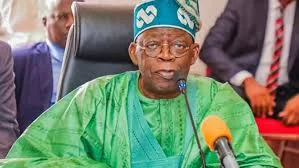
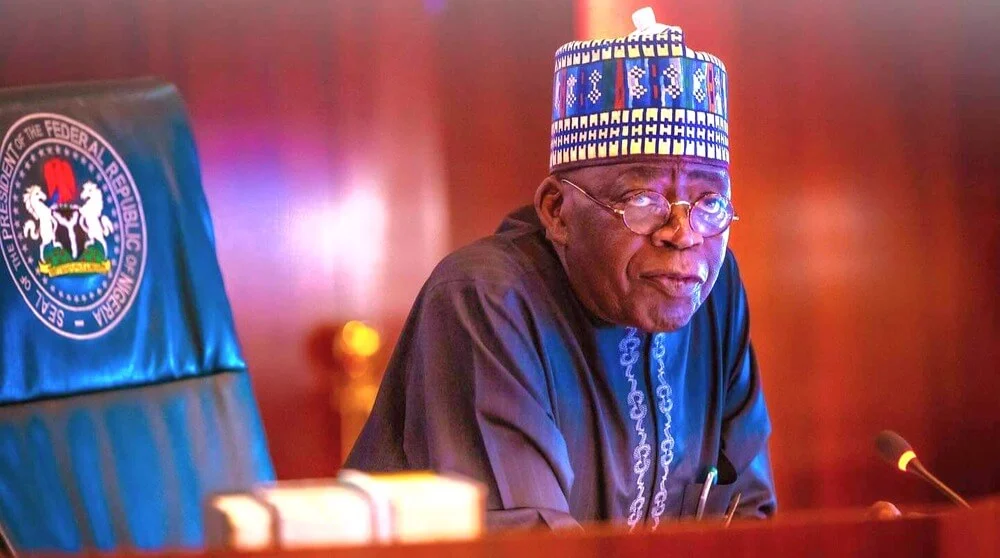
    President Tinubu has encouraged stakeholders to engage constructively through the National Assembly’s planned public hearings, emphasizing the importance of informed contributions to the reform process.

  • CBN to Sack 1,000 Workers, Offers N50bn Incentive Package

    CBN to Sack 1,000 Workers, Offers N50bn Incentive Package

    Even though 17 directors whose appointments were recently terminated are still in court, the Central Bank of Nigeria (CBN) has initiated an Early Exit Package to eliminate 1,000 employees.

    Sources close to the apex bank reveal that targeted staff members were given up to December 31, 2024, to either take the offer or grapple with whatever comes their way.

    The voluntary Early Exit Package (EEP) will cost the bank over N50 billion.  

    A circular released by the CBN announced that the EEP application is open to staff across all levels, except those with less than a year of service.

     The exit date is fixed for December 31, 2024. 

    Employees opting for the package will receive financial compensation based on their remaining years in service, with additional benefits such as financial planning support and extended healthcare.  

    As of now, 860 employees have applied for the program, fueling concerns among staff about the impact of the downsizing.

     The initiative follows the disengagement of 17 directors earlier this year, whose positions remain vacant. 

    As of now, the Yemi Cardoso-led bank has not given any clear reason for this purge other than to say that the program presents an opportunity for employees to explore new career paths.  

    This development occurs at a very crunchy time when many Nigerians are grappling with harsh economic realities precipitated by difficult economic reform policies by the Federal Government.

  • Sen Orji Kalu, Others Disagree with the FG on Tax Reform Bills

    Sen Orji Kalu, Others Disagree with the FG on Tax Reform Bills

    The President Tinubu administration has been advised to follow the due process and not rush the passage of the Tax Reform Bills into law.

    Senator Orji Uzor Kalu and other discussants who spoke on Thisday Live, an Arise TV talkshow, yesterday berated the Federal Government for not consulting adequately before presenting the proposal to the national assembly.

    The panelists wondered why, for instance, neither the Council of State nor the Nigerian Governors Forum was consulted, seeing as the reform has implications for constitutional review.

    The programme which was anchored by Dr. Reuben Abati also featured Barr Jide Ologun and human rights activist, Opeyemi Adamoleku, Executive Director, Enough is Enough.

    Senator Kalu said the “Federal Government erred by not seeking the buy-in of the Council of State, the Governors Forum and the public before coming up with the bill.”

    He remarked that the Presidency even had to break ranks when it disagreed openly with the National Economic Council (NEC) that is chaired by the Vice President, Senator Kashim Shettima, when the body called for caution.

    He explained that it is for that it was for those reasons that he supports the position canvassed by Senator Ali Ndume and some other northern Senators who called for more time for consultations and consensus building.

    Senator Kalu commended the stance of senator Ndume because, as he argued, “that’s what democracy is all about.”

    Sen. Kalu was however, optimistic that all the grey areas of the Bills will be cleaned up during the public hearing, even as Dr. Abati wondered if there would be a “proper public hearing that can pass the integrity test.”

    Regarding the accusation by some analysts that President Tinubu has a “Lagosnisation Agenda.” By which they imply that the Bills and other policies of the government are geared towards empowering Lagos, the home state of the President, Senator Kalu replied:

    “The bill is very progressive and brings back Fiscal Federalism. There will be no kangaroo public hearing. Any part of the bill that conflicts with our constitution will not fly.”

    According to him, “Tinubu needs to work on the integration of the country.”

    In her reaction, Ms. Adamolekun said, regardless of the nobility or otherwise of the proposed tax laws, since it relates to constitutional amendment, it should have been passed through the Council of States and subjected to a thorough engagement with the people.

    She added that not doing so gave rise to the present emotive outbursts on the matter.

    On his part, Barr Jide Ologun said he aligns with the northern senators and governors that aspects of the laws have the potency to pauperise the people, if implemented as proposed, even though it is an aspect of fiscal federalism.

    He argues that “our ultimate consideration should be the national interest.”

    He contends however, that the speed at which the Bills are being processed is a bit too much. He admonished that the government should “consider the interest of the nation before you do this, because the country is in dire need.”

  • Tinubu’s Tax Reform Bills: The Beginning of Fiscal Federalism?

    Tinubu’s Tax Reform Bills: The Beginning of Fiscal Federalism?

    Not a few notable figures from the northern part of the country have expressed vehement opposition to the four tax reform bills proposed by President Bola Tinubu. Apart from the resistance to the piece of legislation by senators Abdul Nigi and Ali Ndume from Bauchi and Borno States, respectively, the greatest salvo yet, was delivered by Governor Babagana Zulum of Borno state who has raised alarms about the potential consequences of the proposed tax reform bills. 

    Governor Zulum warned that the legislation, advancing rapidly through the National Assembly, could severely harm the economic prospects of the North and other regions of Nigeria.

    He compared the swift legislative action on the tax bills to the prolonged process of the Petroleum Industry Bill, which took nearly two decades to pass.  He cautioned that the bills, if enacted, could hinder development efforts, including the ability to pay salaries in Northern states.

    The governor argued that the tax reforms would disproportionately affect certain regions, particularly in the North, as well as parts of the South West and South East. He expressed concern that the bills were being pushed through with little regard for their long-term effects on the country’s future.

    Zulum’s opposition may have been informed by the general intent of the bills which represents a significant shift in the manner of the distribution of VAT revenue.

    The new laws tend to mark the beginning of the much clamoured call for fiscal federalism as it provides for the allocation of VAT revenues based on the states where goods and services are consumed rather than pooling them centrally for redistribution as done for proceeds from the sale of oil and other national assets.

    Mr. Zacch Adedeji, the Federal Inland Revenue Service (FIRS) Chairman argued at a forum that the proposed sharing arrangement aligns VAT with its nature as a consumption tax.

    On the contrary, the north being largely agrarian, produces most cereals and other produce for the food and industrial raw materials needs of the country. Yet they do not benefit from VAT, even though the finished products are taxed.

    It is this mismatch or anomaly that may have been inflaming passions.

    Governor Zulum, however, emphasized that his opposition to the bills did not equate to opposition to the current administration but rather a plea for reconsideration.

     He also stated that some individuals may be misleading President Bola Tinubu into thinking the North does not support his government.

  • Tax Reform Bills Scale Second Reading at the Senate

    Tax Reform Bills Scale Second Reading at the Senate

    The Senate has moved forward with the four tax reform bills presented by President Bola Tinubu, sending them to a second reading on Thursday. 

    After a lengthy debate, the bills were referred to the Finance Committee for further review, with a deadline of six weeks for a report.

    Among the key proposals are the Nigeria Tax Bill 2024, aimed at restructuring the country’s tax framework, and the Tax Administration Bill, which seeks to resolve disputes and create a clearer legal structure for taxes. 

    Additionally, the Nigeria Revenue Service Establishment Bill intends to replace the Federal Inland Revenue Service Act, while the Joint Revenue Board Establishment Bill would establish a tax tribunal and ombudsman.

    Several lawmakers, including Senators Sani Musa and Seriake Dickson, expressed support for the bills, emphasizing the benefits to small businesses and the potential to reduce taxes. 

    In contrast, Senator Ali Ndume raised concerns about the timing of the reforms and issues related to derivation and VAT.

    The bills were further explained to lawmakers by President Tinubu’s economic team during the plenary session.

     Despite some opposition, the Senate voted in favor of advancing the bills to the next stage.

  • House of Reps Approves 2025-2027 Budget Framework 

    House of Reps Approves 2025-2027 Budget Framework 

    The House of Representatives has approved the Medium-Term Expenditure Framework (MTEF) and Fiscal Strategy Paper for the years 2025 to 2027. 

    The approval came with a mandate for several committees to investigate allegations involving the Nigerian National Petroleum Company Limited (NNPCL). 

    Reports from the Revenue Mobilization, Allocation, and Fiscal Responsibility Commission claim that NNPCL has withheld ₦8.48 trillion, citing petrol subsidies.

     Furthermore, the Nigeria Extractive Industries Transparency Initiative’s report suggests that NNPCL failed to remit $2 billion (₦3.6 trillion) in taxes to the federal government.

    The committees are also instructed to verify the total unremitted revenue from the sale of petrol between 2020 and 2023.

    The approved framework includes projections for oil benchmarks, domestic oil production, GDP growth, exchange rates, and inflation for the next three years.

     These figures include an oil benchmark of $75 per barrel for 2025, 2026, and 2027, and GDP growth rates of 4.6%, 4.4%, and 5.5% for the respective years.

     The exchange rate is set at ₦1400/USD, subject to review in 2025. Inflation is projected at 15.75% for 2025, decreasing to 14.21% in 2026, and 10.04% by 2027.

  • Nigeria, Brazil sign pact to Further Collaboration in Agricultural Transformation

    Nigeria, Brazil sign pact to Further Collaboration in Agricultural Transformation

    Nigeria deepens its economic ties with Brazil as she signs an MoU with the South American nation’s Fundação Getulio Vargas (FGV).

    The new pact is aimed at stimulating private sector growth within Nigeria’s agricultural industry.

     The agreement, covers several key areas including fertilizer production, hybrid seed development, and agricultural finance.

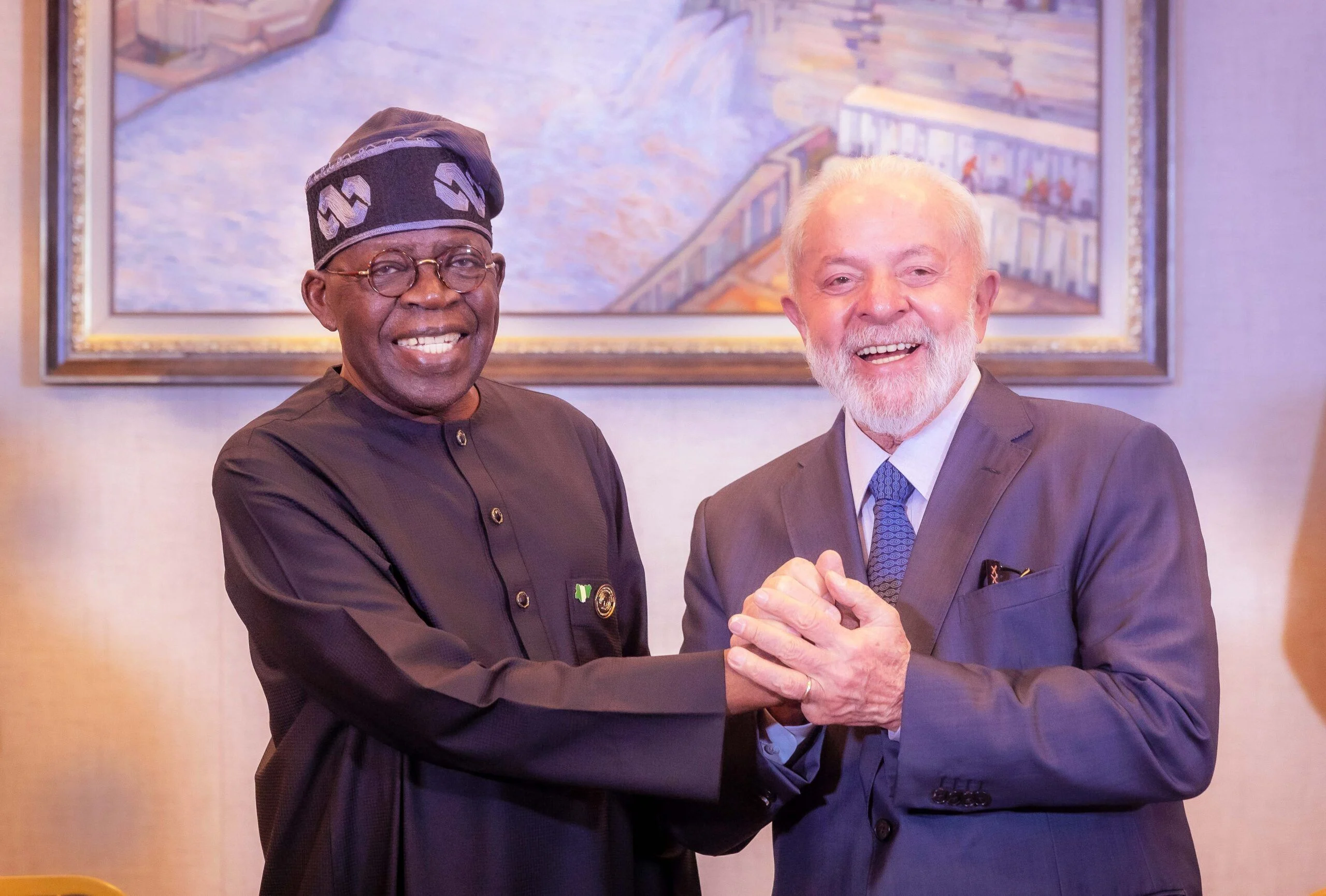
    The agreement was signed in Rio de Janeiro, Brazil, on the sidelines of the G20 Leaders’ Summit.

    The MOU was signed by Mr. Temitope Fashedemi, Permanent Secretary of the Nigerian Ministry of Agriculture and Food Security (FMAFS), and Professor Carlos Ivan Simonsen Leal, President of FGV.

     This partnership marks a new phase in the ongoing collaboration between Nigeria and Brazil, which has already been in motion through the Green Imperative Project (GIP).

     This project, valued at $1.2 billion, is aimed at modernizing Nigerian agriculture with the help of Brazilian expertise in tropical farming.

    The Green Imperative Project, which was first initiated in 2018, represents a significant international cooperation effort.

     Over the course of the project’s ten-year duration, it will focus on transferring advanced agricultural technologies and best practices from Brazil to Nigeria. 

    The aim is to make Nigerian agriculture more efficient, sustainable, and capable of supporting the country’s growing population.

    The project is designed to support agribusinesses across Nigeria’s 774 local government areas, providing them with both the financial and technical resources needed to thrive. 

    With an eye on sustainable economic growth, the initiative will focus on fostering businesses that can contribute to Nigeria’s food security and economic development.

    Moreover, the MOU aims to attract private-sector investments totaling $4.3 billion, directed toward vital sectors like fertilizer manufacturing, seed innovation, and agricultural finance. 

    By attracting such investment, the project hopes to create lasting improvements in Nigeria’s agricultural landscape.

    The signing ceremony, attended by Nigerian government officials and FGV leaders, signals the beginning of a strong partnership that is expected to bring meaningful change to Nigeria’s agricultural economy.

  • Livestock Sector Investment to Address Crises, Boost Nigeria’s Economy – Tinubu 

    Livestock Sector Investment to Address Crises, Boost Nigeria’s Economy – Tinubu 

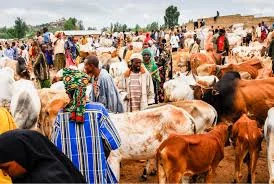
    As policy analysts express the concern that beyond the buzzword, Nigerian Governments often lack the discipline of synchronising their plans to address policy pronouncements, President Bola Tinubu insists that his administration’s prioritizing investments in the livestock sector will address long-standing challenges like farmer-herder conflicts, hunger, and poverty, as well as fostering economic growth. 

    Speaking in Rio de Janeiro, Brazil, during the signing of a collaboration agreement with JBS S.A., a leading global meat processing company, President Tinubu emphasized the potential of the $2.5 billion livestock investment opportunity in Nigeria.  

    The president noted that these investments will not only provide solutions to existing problems but also unlock vast economic potential. 

    By leveraging Nigeria’s large population and JBS S.A.’s expertise in food security, President Tinubu is confident that the country can transform its agricultural challenges into opportunities for growth and prosperity.  

    During his visit to Brazil, the president also dispatched a Nigerian delegation to explore livestock development and meat processing opportunities, which culminated in the partnership with JBS S.A., one of the world’s largest meat processors. 

    JBS S.A. processes up to 33,000 cattle and over 8 million birds daily, using advanced zero-waste technology.  

    Wesley Batista, the company’s president, expressed eagerness to collaborate with Nigeria to turn it into a key supplier of protein to Africa, stating that JBS’s global reach and operational capacity align with Nigeria’s agricultural ambitions.  

    The collaboration aims to create jobs, enhance food security, and build a thriving livestock industry that can benefit both local and international markets.

  • FAAC Distributes ₦1.411 Trillion for October Revenue  

    FAAC Distributes ₦1.411 Trillion for October Revenue  

    The Federation Accounts Allocation Committee (FAAC) has shared ₦1.411 trillion among the Federal, State, and Local Governments as revenue for October 2024.

     This allocation followed the committee’s November meeting in Bauchi State, which coincided with the 2024 National Council on Finance and Economic Development hosted by the Bauchi State Government.  

    The total distributable sum included revenues from statutory sources, Value Added Tax (VAT), Electronic Money Transfer Levy (EMTL), and Exchange Difference income.

     Statutory revenue accounted for ₦206.319 billion, VAT contributed ₦622.312 billion, EMTL added ₦17.111 billion, and Exchange Difference revenue made up ₦566.000 billion.  

    Out of the shared revenue, the Federal Government received ₦433.021 billion, while States got ₦490.696 billion. 

    Local Government Councils were allocated ₦355.621 billion, and ₦132.404 billion went to mineral revenue derivation for oil-producing states.  

    Revenue collections from Oil and Gas Royalty, VAT, Petroleum Profit Tax, and Companies Income Tax improved in October, while EMTL and CET Levies saw declines. 

    Gross revenue for the month stood at ₦2.668 trillion, with deductions for costs and other transfers reducing the distributable amount.  

    READ THIS: TINUBU RESCHUFFLES UNIVERSITY LEADERSHIP OVER ALLEGED IRREGULARITIES

  • Each Nigerian Owes N619,501 as Debt Profile Hits N134 Trillion  

    Each Nigerian Owes N619,501 as Debt Profile Hits N134 Trillion  

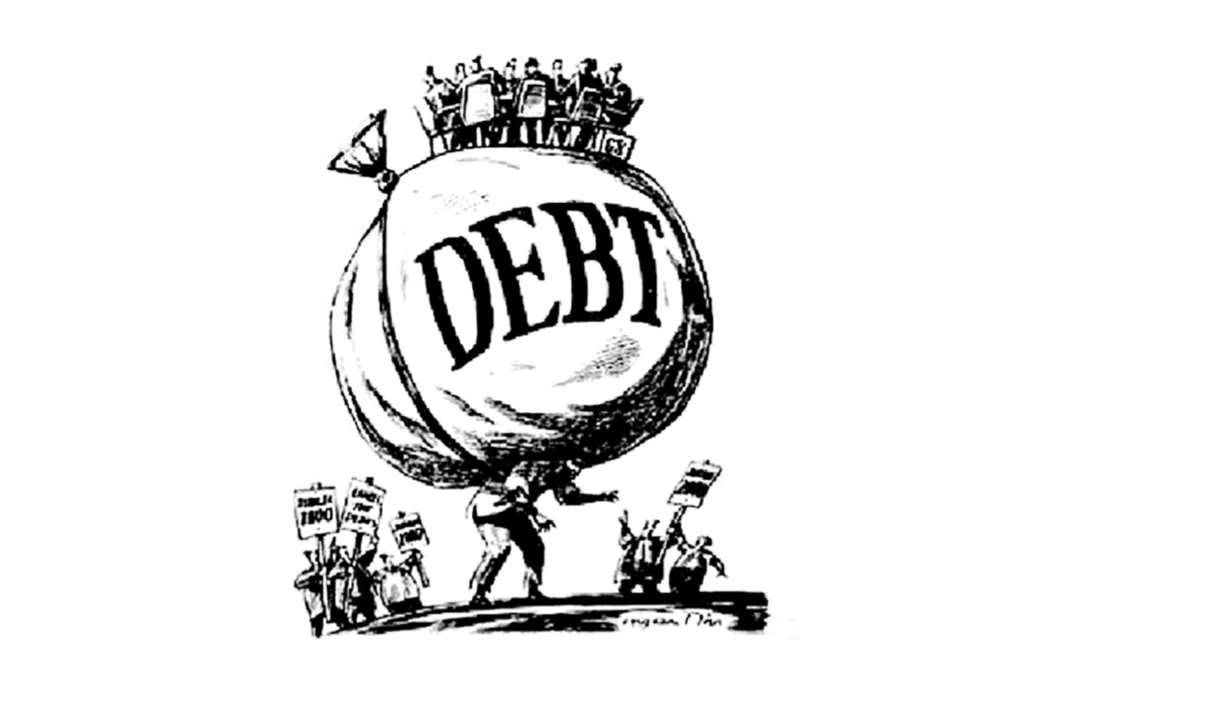
    Nigeria’s ever surging debt hits N134.297 trillion as of last June, dragging each citizen into a N619,501 debt burden without much to show for it.

    Nigeria’s Debt Management Office (DMO) reports that the figure stems from Nigeria’s total public debt, which surged to N134.297 trillion by the end of June 2024.  

    With the country’s population estimated at 216.7 million by the National Bureau of Statistics (NBS), the debt burden per capita reflects the mounting financial strain on citizens. 

    This amount is equivalent to nine times the newly approved minimum wage of N70,000.  

    A breakdown of the debt reveals that domestic liabilities stand at N71.2 trillion, while external obligations amount to N63 trillion. 

    The federal government accounts for a significant portion, with domestic debt at N66.9 trillion and external debt at N55.8 trillion. State governments owe a combined N11.3 trillion.  

    The N134 trillion debt figure represents a N13 trillion increase since March 2024, raising concerns about the country’s growing dependence on borrowing to finance its operations.