
Category: Analysis

  • Will Trump’s DOGE eat Elon Musk for dinner?

    Will Trump’s DOGE eat Elon Musk for dinner?

    By

    UGO ONUOHA

    DOGE is the acronym for the United States Department for Government Efficiency. Mired in controversy, it was created with so much swagger by President Donald Trump at the start of his non-consecutive second term last January 20. DOGE has been synonymous with Elon Musk. As president it was within Trump’s remit to create a new government department, but he shares this power with the US Congress [parliament] which should ordinarily give such institutions legal teeth through legislation. The president appoints the heads of the departments with some of the nominees requiring screening and confirmation by the senate, the generally regarded upper chamber of the legislature . The departments are part of the executive branch of government, and are responsible for implementing specific policies and programmes. Prominent departments in the US federal government include Department of State which is responsible for foreign policy and international relations; Department of Defence for national defence and military operations; Department of Education for education policy and programmes [Trump says he will scrap it, anyway]; and, Department of Health and Human Services which is charged with healthcare and social services. Though the executive and legislative branches share in responsibilities in creating departments, only the Congress has the authority to abolish departments through legislation. However, the president can reorganise or merge departments through executive orders though that is subject to Congressional oversight. But all these fanciful arrangements backed by law in some cases and convention in others were before the second coming of Donald Trump.

    Some of the processes and conventions that had been taken as given have been casually upended by the new sheriff in town. Trump may have been emboldened by the fact that while he was out of power and office, and was facing trial for some alleged wrongdoings in his first incarnation as president, the US Supreme Court [SCOTUS] ruled that a president could not be tried for any offences he might have committed in the course of his official duty. The controversial ruling by the SCOTUS appears to fly in the face of the American Constitution which prescribed equality before the law. The Constitution did not explicitly state that ‘nobody is above the law’, but it contains principles that imply equality under the law, that was until the SCOTUS ruled otherwise in 2024. Before then it was widely believed that the Constitution was based on the rule of law, which means that everyone, including government officials, is subject to the law. The 14th equal protection clause prescribes that no state shall ‘deny to any person within its jurisdiction the equal protection of the laws’. And this clause has been interpreted to mean that individuals should be treated equally under the law. In addition, the grundnorm system of checks and balances was supposedly designed to ensure that no one branch of the US government has absolute power. The intent should be to help curb abuses of authority. So, though the phrase that ‘nobody is above the law’ was not directly stated in the Constitution, it had been a fundamental principle of the 249 years old American democracy, until it seems not to be so again because of Trump.

    Trump may be irrational, egoistic, unconventional and unpredictable, but he surely knows where to draw the line in the overall interest of the US. He will not hand over any advantage on a platter to China, a mortal rival in the war for global supremacy.”

    DOGE was created as a US government department by Trump on January 20 via an executive order. It was Trump’s first day in office and it was among the more than allegedly 100 executive orders signed by the president that day alone. Some watchers of the American presidency claimed that the action was unprecedented. Tech billionaire who’s the owner of the e-vehicle company Tesla, and SpaceX, among others, Elon Musk, was tapped to head the new agency. Opponents derisively describe Musk as the man who bought the presidency for Trump by his injection of almost $300 million into Trump’s campaign. He was an early endorser of Triumph for president. He was prominent in stomping for him on the campaign trail. He virtually lived with Trump in Mar-a-Lago in the weeks before the November 5, 2024 presidential election. He had a front row seat at Trump’s inauguration on January 20. And also lived with Trump in the White House in the days after the inauguration. He attended cabinet meetings while the bromance lasted. Musk was an unrepentant advocate for small government and curbing alleged waste in the public sector. He rails against subsidies but ironically his businesses ranked very high in receiving subsidies from the government. So in the eyes of Trump, Elon Musk was the unrivaled man for the job of rolling back the government, or in their words cutting out ‘fraud, waste, and  abuse’ in government operations. So DOGE under Musk was mandated to reduce public expenditures by reviewing government contracts, eliminating unnecessary spending, and cutting bureaucratic red tape; to detect fraud by identifying and preventing fraudulent activities in federal spending, ensuring transparency and accountability; to streamline processes through the deployment of artificial intelligence and emerging technologies to automate and accelerate administrative processes; and, to enhance productivity by restructuring federal agencies to ensure higher productivity and transparency. To detractors the only ‘achievement’ of Musk in his 130 days long employment in government was taking and brandishing a chainsaw at a public event to dramatise how he intended to deal a lasting and deadly blow to the US federal government bureaucracy. It was a jarring spectacle. By the way, Trump employed Musk as a special adviser to avoid his being required to be screened by the senate. It was feared that it would’ve been a very contentious screening that the narrow majority of the ruling Republican Party may not save him. Musk was that toxic to some politicians across the aisle.

    In no time Musk’s 130 days as a special government employee expired and he had to step down. Even his departure was as controversial as his entry. When their quarrel started simmering Trump said he was sacked but Musk countered that the president lied. Days after Elon Musk started attacking Trump’s so-called ‘one big beautiful bill’ which encapsulated the key ingredients of his presidency. Musk called the budget bill a ‘disgusting abomination’, ‘utterly ins@ne’, ‘pork-filled’, and ‘destructive’. He said it was a reversal of the job he [Musk] thought he had accomplished with DOGE. There was a very public falling out between Trump and Musk. Musk said that the bill would balloon the debts which already hover around $37 trillion. But Trump said that Musk’s grouse was because the bill would cut off subsidies to Tesla, Elon Musk’s signature company. Musk threatened that he would ensure the defeat of any lawmaker who voted to support the passage of the bill into law during the midterm election in November 2026. In addition, Musk claimed that without him Trump would have lost the presidential election last November, and Republicans would not have won their narrow majority in the house of representatives. He even suggested that Trump should be impeached and that Trump’s name featured prominently in the Jeffrey Epstein files/tapes which was why the Republican-led government had refused to release the files. Epstein was a friend of Trump. He was a convicted sex trafficker and pedophile. He died in prison in 2019. Musk later walked back some of his allegations against Trump but it was too late. Trump was piqued. He said that DOGE, that same DOGE that Musk used to terrorise others, may be unleashed on Musk and his businesses for alleged ‘fraud, waste and abuse’. And then the clincher. President Trump said that Musk, a naturalised American citizen, could be deported to his native South Africa. So the men who started the American presidency as ‘First Buddies’ gradually became ‘First Monsters’ or ‘First Enemies’. Who blinks first.

    This will be hard to figure out. Trump as the US president is the most powerful man in the world. Musk, the tech billionaire, is the richest man in the world. No other person could afford to lose about $140 billion  in one trading day last month in the valuation of one of his firms in the stock market, and about $37 billion in his personal wealth and still remain the richest man in the world. The Trump-Musk tussle might yet turn out to be a case of two elephants fighting. Not likely. In this fight none may come out of it unscathed. Trump may have the power ‘to do and undo’ as we say here in Nigeria when talking about a person with unrivaled power, but Musk is at the heart of America’s global economic power. Tesla’s biggest manufacturing plant outside the US is in China, a country that has been projected to dethrone America as the number one in the global economic ranking. And China is helping to stoke the row between Trump and Musk. It’s also courting and making offers to Musk and his businesses if the US becomes antagonistic and unaccommodating. Trump may be irrational, egoistic, unconventional and unpredictable, but he surely knows where to draw the line in the overall interest of the US. He will not hand over any advantage on a platter to China, a mortal rival in the war for global supremacy. These are men with big egos. But they will settle because they have so much to lose if their face-off spirals out of control. However, settling for now will not prevent them from quarreling again. Soon. And probably throughout the presidency of Donald J. Trump in the next three and half years. The setting up of the America Party by Musk to rival the traditional two-party system in the US – Democrats and Republicans – will not make the prospects of future frictions any better. Indeed, Musk could just be opening multiple battle fronts against traditional and professional politicians in the US. That could prove an Achilles heel for him. For over 150 years no third political party has produced a president of the United States. It may not be about to change in spite of the enormous wealth of Elon Musk, and what appears to be the appetite of Americans for a change.

    Ugo Onuoha, a veteran journalist was the Managing Director/Editor-in-Chief, Champion Newspapers Limited

  • Dr. Alex Chioma Otti: The titan of Abia’s rebirth

    By

    Romanus Ike Azuka

    Government, in its noblest form, is a sacred trust, ordained to uplift the governed, as John Locke decreed: “The end of government is the good of mankind” ( Two Treaties of Government). In Abia, Dr. Alex Chioma Otti redeems this covenant, reigning as the state’s apotheosis, a sui generis steward whose two years have sculpted a New Abia from the ruins of neglect. With Promethean zeal and an economist’s precision, this hors concurs governor has paved roads and lit skies, transmuting despair into a citadel of hope. As Abraham Lincoln declared, “The best way to predict the future is to create it” ( attributed). Otti, architect of Abia’s destiny, forges a future where faith in governance is reborn. For me, a diaspora son of Anambra whose heart beats for Aba, his feats are a personal redemption. My frequent sojourns in Aba and Port Harcourt; summers lost in Ariaria Market’s frenetic bustle, dodging Ngwa Road’s treacherous craters, navigating nights cloaked in Osisioma’s oppressive darkness, revealed a city strangled by misrule. From abroad, I marvel at Otti’s alchemy, conjuring resources for structural magic that shames Nigeria’s profligate elite. His love for Abians, etched in every asphalt vein and electric pulse, ignites a political awakening, daring us to ask: could Nigeria’s leaders, blessed with abundant means, restore the nation’s glory, yet choose to plunder its soul? Behold the marquee of excellence, a presidential beacon whose legacy restores Aba to glory.

    Roads: Paving Pathways to Prosperity

    Abia’s roads,once a labyrinth of ruin,now gleam as Otti’s testament to progress. As Nelson Mandela averred, “A leader is like a shepherd…letting the most nimble go out ahead”( Long Walk to Freedom). Otti, Abia’s shepherd, declared a road emergency on May 29, 2023, unleashing a renaissance. Over 40 roads shine anew, with Aba’s Port Harcourt Road—-where my treks to Eziukwu Market and my travels to Port Harcourt faltered amid axle- snapping potholes—-reborn under Julius Berger’s mastery. Cemetery Road, Umuimo Road,and MCC/Old Express Road boast smooth asphalt,while Ossah Road in Umuahia,aglow with solar lights, rivals global capitals. Beyond Aba( my Enyimba City), Umuahia-Uzoakoli and Umuokomiri-Obehie knit communities together. My memories of Ngwa Road, where traders cursed rutted paths, haunt me; Otti’s roads erase that shame. Unlike past Abia governors, whose 24- year PDP reign left 50 roads forsaken, Otti’s 16 rehabilitated and six new projects dazzle. Compared to Nigerian leaders, whose vows dissolve, Otti embodies Machiavelli’s dictate: “A Prince must build on solid foundations”( The Prince). His roads are arteries of commerce, binding Abians to dignity.

    Electricity: Illuminating Abia’s Future

    Otti’s conquest of darkness crowns Abia a beacon of power. As Ronald Reagan proclaimed, “Government’s first duty is to protect the people”( Inaugural Address,1981), and Malcolm X affirmed, “A man who stands for nothing will fall for anything”(Speech,1963). Otti stands resolute,protecting Abians from years of darkness through the Abia Electricity Law,seizing 60% of Enugu Electricity Distribution Company’s assets. The Alaojii Power Station revival energizes Aba, while the Geometric Power Plant, ignited February 26, 2024, delivers 141 megawatts to nine local governments. Solar initiatives, like Solar for Health, light hospitals, and Independent grids ensure steady supply. I recall Aba’s nights, where kerosene lanterns cast flickering shadows over Osisioma’s stalls; Otti’s 24-hour power banishes that gloom. Past governors let Aba’s industries wither, but Otti outshines their inertia. Unlike Nigerian incompetent leaders, mired in power quagmires, Otti’s electric pulse is a love letter to Abians, fuelling dreams.

    The Alchemy of Resources: A Political Awakening

    How does Otti conjure funds for this structural magic? Abia’s revenue soared from N19.8 billion in 2022 to N24 billion in 2023,fueled by transparent e-taxation. He cleared N72 billion in debt, paid arrears,and axed ghost workers, borrowing only for progress. Unlike predecessors who plundered,or Nigerian political leaders whose budgets vanish, Otti heeds Immanuel Kant: “Act so that you treat humanity—-always as an end and never as a means only”( Groundwork of the Metaphysics of Morals). His fiscal wizardry stuns,raising Rousseau’s query: “Why are the people so often deceived by their leaders?”( The Social Contract). As a boy from Anambra, my frequent sojourns to Aba saw Ariaria’s chaotic stalls, Eziukwu’s traders haggling under dim lamps, Ngwa Road’s ruts jolting my steps; Otti revives those hopes. From abroad, I see his transparency —- publishing budgets,scrapping ex-governors’ pensions—- shame Nigeria’s political elite. Otti’s governance, rooted in love, stirs a political consciousness,echoing Marcus Garvey: “A people without the knowledge of their past…is like a tree without roots”( Philosophy and Opinions). He proves Nigeria’s salvation lies in will, not wealth

    Governance: A Meritocratic Maestro

    Otti’s meritocracy—- appointing technocrats,irrespective of state of origin,not kin—-defines his administration,unlike Tinubu’s nepotistic plunder. His court, wise and bold, echoes Lee Kuan Yew’s advisors, shaming Nigeria’s political and professional sycophants. His 2023 Road Revolution, rebuilding Port Harcourt Road with Julius Berger, sparked no scandal, unlike Tinubu’s Rivers State charade. Montesquieu’s maxim, “The spirit of moderation should be that of the legislator”( Spirit of the Laws,1748),exalts his integrity. My Anambra heart, stirred by Port Harcourt Road’s beauty, rejoices in his virture, like Trump’s brash accountability.

    A Legacy of Glory

    Age is no barrier to leadership,for wisdom may crown the old or vigor the young, as history attests. Abia’s governor, Dr. Alex Chioma Otti, a political titan at 60, proves brilliance transcends time. He soars where his Nigerian political contemporaries stumble. Aristotle declared, “Excellence is never an accident”(Nicomachean Ethos); Otti embodies this, his vision a lodestar for Nigeria’s political firmament. Unlike lesser men, he joins political giants like Konrad Adenauer, rebuilding Germany at 87; Lee Kuan Yew, forging Singapore at 42; Javier Milei, slashing Argentina’s deficit at 54; Nayib Bukele, securing El Salvador at 40; Ibrahim Traore, defying empires at 37.

    A Legacy of Love and Leadership

    Dr. Otti is Abia’s cynosure, his roads and lights a hymn to his people. As Rotimi Amaechi lauded, his works are “incredible”(The Guardian, June 7, 2025). Unlike past governors, whose legacies are potholes, or Nigerian political leaders chasing headlines, Otti builds with purpose, embodying Winston Churchill’s maxim: “Success is not final…it is the courage to continue that counts”(Speech,1941). My Aba memories: Ariaria’s pulse, Eziukwu’s lanes, Osisioma’s dark nights, Nnamdi Azikiwe’s neglected Road—-once spelt decay; Otti’s Abia is glory reborn. His structural magic indicts Nigeria’s political wastrels, proving, as Martin Luther king Jr said, “The ultimate measure of a man is […] where he stands at times of challenge”( Speech,1963). Otti stands tall,a presidential titan, beckoning Nigeria toward a boundless future.

    Romanus Azuka is a law graduate and Sociologist.

  • NAFDAC, Onitsha and an agency’s terrorism

    NAFDAC, Onitsha and an agency’s terrorism

    By

    UGO ONUOHA

    NOTHING in, of, and from Onitsha comes in a small package. In many respects that town located on the fringe of Anambra state in the Igbo nation has a reputation for being big, bad and ugly. Interestingly, some who live there will not exchange it for anywhere else in this country, and probably in the world. Conversely, there are some Nigerians including the Igbo who will never be caught dead living in Onitsha irrespective of any incentives that could be on the table to lure them. [By the way, Nigeria’s political gadfly and the conscience of the country, Mr. Peter Obi, lives there]. For some travelers, passing through Onitsha whilst on a journey is a prospect that paralyzes their thoughts, makes their heart beats skip, and cripples their body. Their fear is palpable. But there’s no small measures for the majority of the people who live and work in that sprawling settlement on the banks of the River Niger. The houses in Onitsha are big and sometimes bogus [I really mean bogus as in false]. The people are boisterous, boastful, and loud. Its crowd is maddening and frightening. When it produces an armed robber, the terror of such a person with felony conviction is etched for life in a victim’s memory. Ironically, two of our country’s urbane personages live in Onitsha – Peter Obi as I said earlier, and the town’s traditional ruler, Obi of Onitsha, Igwe Ugochukwu Achebe, a former executive of the oil giant Shell Petroleum Development Company [SPDC] of Nigeria.

    Onitsha used to be described as the biggest market in Africa. I was no longer sure of this status at the point of writing this on Sunday. So I asked Meta AI if Onitsha was still the largest market in West Africa? It said: “Onitsha Main Market is indeed considered one of the largest markets in West Africa and even Africa as a whole. Located in Onitsha, Anambra state, Nigeria, it’s a commercial powerhouse that attracts merchants from the ECOWAS sub-region, including Accra [Ghana], Abidjan [Côte d’Ivoire], Duala [Cameroon], Niamey [Niger Republic], and Cotonou [Republic of Benin]. The market’s vast size and volume of goods have earned it recognition as the largest market in Africa…” It will be no hyperbole to say that you can get anything and everything in Onitsha because the town’s markets have grown beyond specific places and locations. Every building and every structure and every shanty and every shed and every road and every park [for vehicles and leisure seekers] in Onitsha has become a buzzing marketplace for jewelry and clothing, household and industrial equipment; foodstuffs and sundry articles; timber and building materials; and, electrical and motor spare parts; as well as, medicines and health-related products in “Ogbo Ogwu” or depot for pharmaceuticals. And it is this last place – ogbo ogwu – that’s of immense interest to us given what has been happening there since the beginning of this year.

    NAFDAC Raid

    On February 9, the National Agency for Food and Drug Administration and Control [NAFDAC] officers raided the ‘ogbo ogwu’ section of the Main Market in Onitsha, where they claimed to have uncovered 10 trucks of fake drugs with a market value in excess of N1 trillion. The team was led by the agency’s south east zone director, Martins Iluyomade. That arm of the market was subsequently shut down about a week later while the alleged fake drugs were reportedly destroyed at a dump site in Awka, the Anambra state capital. For the following three months NAFDAC kept the market shut for it [NAFDAC] and its personnel to negotiate ransom payments by all the traders in ogbo ogwu. Estimates put the number of affected shops in ogbo ogwu at anywhere between 1000 and 3000. In our country we have between seven to 10 dependents for every bread winner. So if we multiply three thousand shop owners by 10 dependents, we will have about 30,000 hapless citizens who were being subjected to punishment by NAFDAC. The agency ignored all pleas to do the right thing in its regulatory functions. As the shut down lingered the traders claimed that the food and drugs control agency asked each shop owner to pay N700,000 to a designated central bank account for their shops to be allowed to reopen. Some traders allegedly paid the ransom money, others went to court while the market remained shut.

    As the impasse continued the stories kept unravelling. NAFDAC said that in addition to fake and adulterated drugs, the storage conditions in that market did not meet acceptable standards. And that reasonable fees to lift the siege on the market were imposed but that they were nowhere close to the figures being bandied by the traders. On their part the traders showed social media influencers what they claimed was evidence of the payments of an alleged N700,000 each into a CBN account with the name NAFDAC Project. The battle raged in both the court of law and the court of public opinion. While it lasted, the affected people, their businesses and dependents suffered in this cruel Tinubu economy. Now let’s get it right. The issue of fake and adulterated drugs is real and pervasive in Nigeria. The former head of NAFDAC, the much beloved Dora Akunyili, almost paid with her life while she battled the merchants of death. Yes, that’s what they are – merchants of death. They are not selling medicines, they are selling poison and killing people including their own. Those who sell fake and adulterated drugs deserve neither respite nor mercy. They are evil who have no qualms with making and living off blood money. They should not be spared when caught. They should be made to suffer to the fullest extent of the laws.

    But that does not appear to be what the NAFDAC was doing in the ‘ogbo ogwu’ case. By shutting down the whole market the agency gave the impression that all the traders in the market were involved in the perfidy. But it could not establish it. We are not acquainted with any parts of the laws of Nigeria that prescribed collective punishment for any alleged crime. And that was what NAFDAC did in ogbo ogwu for three months – punishing the alleged guilty merchants of death along with the innocent business people. That, to us, is problematic, unacceptable, and unjust. Among others, collective punishment leads to injustice, resentment and suspicion of the motives of government agencies, demoralisation of those who walk the straight and narrow path, and lack of accountability by the real criminals and outlaws. Blanket punishment makes it attractive and profitable for all the traders in ogbo ogwu in Onitsha to join the bandwagon of evil doers and the merchants of death. The right and sensible approach would have been to identify those responsible in all the medicine markets that were raided in Onitsha and Lagos, and hold them accountable. The likely argument would be financially costly, painstaking and inconvenient cannot justify collective punishment.

    Crime prevention is cheaper than raiding the hideouts of criminals, arresting and detaining them. But in our country there’s little evidence, if any, of collaboration and liaison between agencies with overlapping functions. It’s a known fact that some fake, substandard and adulterated medicines are compounded in Nigeria by unconscionable business people, but the truth is that much of such drugs are imported into the country through formal and informal routes. In both routes from where the deadly merchandise comes into the country, the relevant officers with the mandate to stop the flow are at best incompetent, and at worst collaborators with the merchants of death. They are partakers and beneficiaries of blood money. There’s another reason why the flow of killer drugs into Nigeria seems unstoppable. Relevant government agencies are under pressure to become profit centres. So, many public agencies have become revenue generating outposts to the detriment of their core mandates. For instance, the Nigerian Customs Service is measured for performance by the billions or trillions of Naira it brings to the coffers of the federal government than its primary mandate of ensuring national security and trade facilitation between Nigeria and other countries. The same yardstick applies to the Joint Admissions and Matriculation Board [JAMB], an examination body which is now better known for remitting billions of Naira to the federal government. JAMB does not think that it is unconscionable to charge pauperized parents huge examination fees every year and tax candidates, only to remit the excess money to a notoriously profligate government. JAMB is not alone. If other examination bodies are not making returns to the government, it will only be because their leaders are stealing the excess funds as was the case with JAMB under previous registrars or heads. Many things are going wrong in the country but our rulers are not really bothered. They are incapable of enlightened self interest as obtains with the ruling elite in some other climes.

  • My Advice to My Fellow Nigerian Diaspora Baby-boomers and Empty-Nesters

    My Advice to My Fellow Nigerian Diaspora Baby-boomers and Empty-Nesters

    Happy Easter to everyone. I just popped in on this platform after over two months of hiatus. Sadly nothing seems to have changed. Tinubu bashing still lives on supremely. My advice, don’t make your judgement about Nigeria based on the hyperbolic shenanigans you read on social media. Before I am misunderstood and misrepresented, let me state clearly that Nigeria remains a poor under-developed country it has been for a very long time. So if you are comparing Nigeria with the U.S, UK or Canada or whichever country to reside in, you are still living in lalaland. Yes, Nigeria is no Nirvana but neither is the country you reside in. Every nation has its own fair share of shit. We are now seeing that sons of the countries we used to lionize have more shit than we ever imagined.

    Having made that clear, many of us in the diaspora who haven’t gone home in a long while might not recognize their streets when they return home. While many of us are here moaning and gripping about how bad life is in Nigeria, your community is being transformed with redevelopment. The mud house facing the street where mama Mukaila used to sell moinmoin has been bought probably by an Igbo brother. Mama Mukaila’s husband whose body was buried in front of the house has been exhumed and reburied. In its place a glittering glasshouse grocery store is now booming with customers. This is happening particularly in the southwest which has become the safe haven for our Igbo brethren and other Nigerian ethnicities running away from the insecurity in their villages. Dangote has staked almost his entire investment nest egg in the southwest not because he hates his Fulani homeland but because he sees value in it. While we are running away from our homeland and complaining how terrible the Nigerian system and institutions are, foreigners are coming in and finding opportunity in the high risk low reward Nigerian business ecosystem and thriving.

    Challenge and opportunity are two sides of the same coin, if you focus too much on the one side and do not flip it over, you will be seeing only half of the movie. Yes, Fulani herdsmen and kidnappers are still at their nefarious business, yet the Lagos-Ibadan express is no longer just littered with mega churches but with mega industrial parks. Warehouses and manufacturing outfits. Someone is building them and they don’t have two heads.

    The force of market competition is now gradually controlling fuel prices and many independent oil marketers who used to manipulate supply to gouge people during oil scarcity will soon have to merge with big marketers or be squeezed out of business. Long lines at NNPC stations which used to wrap around sometimes for miles because NNPC used to have the cheapest price are long gone. I remember people parking their car overnight at NNPC stations but no longer. You will not read that story on your WhatsApp fora.

    The arrival hall into Nigeria used to be our national embarrassment with disorderliness reigning supreme, well that has changed. While not yet perfect, the arrival hall is slowly becoming a national pride. The escalator still runs a little faster than necessary but you might be shocked how smooth the immigration check-in has become if you hadn’t been home a while. While Nigerian airline agents have not totally stopped their shenanigans about weighing passengers luggage, even the check-in process has improved.

    Yes, youth unemployment, insecurity, grinding poverty, our dilapidated public schools and large mass of unschooled children remain huge challenges and the ever widening gap between the rich and poor is now wider than the Gulf of Mexico. Yes you read me right, it is still called the Gulf of Mexico by the sane rational world. But there are signs of progress if you take your blinders off and shut down your WhatsApp forum for a while to regain your sanity.

    President Tinubu is no Midas who can turn rubble to gold. His government is not without the the usual Nigerian political shenanigans, but slowly, methodically and without making noise Tinubu is restructuring Nigeria institutionally. He is doing so with local government autonomy, the proposed tax bill, and recently the setting up of regional development authorities for each of the six geopolitical zones. If we now fail as Nigeria to take hold of the new opportunities presented by local government autonomy to hold those who collect the monthly allocation for our villages accountable, the shame is on us. Ditto for the regional development institutions. Rather than sit ten thousands miles in another man’s land throwing stones at your homeland, go home once in a while and visit your village. The country you live in is no paradise on earth. If in doubt listen to your local evening news on your local TV stations. How many people got shot today in Chicago, Miami or Philadelphia? If you a visitor would you not be too scared to venture outside yet we all go about our daily lives. Nigerians are doing the same back home, making lemonade out of lemon.

    Many of us armchair critics who see nothing but hell in Nigeria will be shocked if in a few years, we find Nigeria unavoidable. Our saving grace is still the favorable exchange rate. With the way our man in DC is running this place and the decimation of our 401k, that advantage might not last forever.

    Nigerians celebrating Diaspora Day

    My advice especially with the level of xenophobia in the U.S. and across the globe and the fast nature of life abroad and our children doing their own thing, getting old in this place with no backup plan back home is a fool’s choice. Your retirement nest eggs will go further outside of this place. By the way, even your American born colleagues are spending their retirement years japaing to low cost South America and Europe. Why shouldn’t you make your own back-up plan.

    Our folks back home are not sitting idly, complaining. The uncle who keeps telling there is nothing to return home to in Nigeria is living in his own house, no matter how modest it is. Many Nigerians in the diaspora can’t compete with many of our classmates back home and not all of them are corrupt politicians.

    Those who enjoy bashing Tinubu can do so. Remember eni ba fi Oju Ana woku Nigeria, Ebora a bo laso. Some of us need to go home and smell the roses and stay off the negativity of WhatsApp fora.

    Ire o.

    Adewale Alonge, PhD, Founder & President, Africa Diaspora Partnership for Empowerment and Development. www.adped.org, writes from Dadeland, Miami, Florida

  • Fr. Hyacinth Alia, you are decidedly wrong!

    Fr. Hyacinth Alia, you are decidedly wrong!

    An open letter by Professor Sebastian T. Hon (SAN, DSSRS) to Governor Hyacinth Alia

    Preface
    I personally refused to watch your media chat of Thursday, 10th April, 2025. The reason was plain enough: I was strongly persuaded in my spirit that you would not raise the hope of, let alone console, your subjects on the security situation in the State you are governing. My suspicion and hunch came to be true when I later watched it! What a sad day for the people of Benue State!

    It was Khalil Gibran who once said “You talk when you cease to be at peace with your thoughts.” I cannot, as a Lawyer of this height (with all sense of humility and responsibility) be silent and allow your wrong opinion on the ECOWAS Transhumance Protocol to go unchallenged. Proper consultation would have made you avoid that area, even if you would want, as you have clearly shown, to take no single interest in protecting the lives of the Benue people.

    Your interpretation of the ECOWAS protocol is wrong

    First of all, the Protocol was the product of the 21st Conference of Heads of States of ECOWAS countries, reached in 1998, not 1978, and registered as “Decision A/DEC.5/10/98.”

    Secondly, contrary to the deliberately wrong information passed by you at the said media chat that the Protocol willy-nilly permits the movement of cattle in the West African Sub-region, the following provisions of the Protocol created preconditions for such movement:

    (a) Article 3, while granting such right of movement, states that such movement shall be subject to “the conditions set out in this Decision.”
    (b) Article 5 then sets the conditions for such movement in the following words:

    Article 5
    “All transhumance livestock shall be allowed free passage across points of entry into and departure from each country on the condition that they have the ECOWAS International Transhumance Certificate, a sample of which is annexed to this Regulation.

    The aims of the Certificate are:

    • to enable authorities to monitor the herds before they leave the country of origin;
    • to protect the health of local herds;
    • to make it possible to inform the host communities of the arrival of transhumance animals.
      The Certificate contains details on the composition of the herd, the vaccination given, the itinerary of the herds, the border posts to be crossed, and the final destination. It is issued by the livestock department and initiated by the local administrative authorities in the country of origin.”

    Drawing from the above, I openly challenge you or any of those herders you are so eager to protect to show to the Benue people EVEN A SINGLE CERTIFICATE issued to any of those herders to embark on transhumance. Remember to also show to the Benue people whether any such Certificate (if any) has satisfied the following conditions:

    (a) Has stated the composition of the herds of cattle that are thronging Benue State and indeed Nigeria;
    (b) Has indicated the vaccinations given to those herds;
    (c) Has shown in clear terms the itinerary of those herders in Nigeria generally and in Benue State particularly;
    (d) Has shown the border posts crossed into Nigeria and the final destination of the herders and their cows; and
    (e) Has shown the country of origin, to enable facts about the issuing authority to be verifiable.
    In addition to the above, Article 6 of the Protocol requires that the said Certificate in question “shall be verified and counter-signed by the competent authorities at the entry and exit points in the host country.” I will, therefore, require you to point out where any “competent authority” signed any such Certificate (if any).

    Not yet done, Article 7 mandatorily provides as follows: “Transhumance herds shall follow the routes defined by Member States in accordance with the itinerary indicated on the ECOWAS International Transhumance Certificate.” My Governor, I hereby humbly request you to prove that ECOWAS Members States, including Nigeria, have designed the routes followed by these herdsmen! I BOLDLY STATE TO YOU THAT NO SUCH ROUTES HAVE BEEN DESIGNATED TO DATE! PROVE ME WRONG, IF YOU CAN!

    Another provision is Article 9, which provides that, in addition to other sanctions provided in the laws of host countries, “herds not covered by a Certificate shall be placed under quarantine and the costs borne by the owners.” This means that those cows are supposed to have been quarantined on your orders, not the other way round, Mr. Governor.

    Article 12 requires herdsmen to be in possession of ID papers “duly signed by the competent authorities in their countries of origin.” Also, Article 13 provides that stray animals must be apprehended and impounded.” Have we not had instances of those animals straying into farmlands in Nigeria at large and in Benue State in particular? Have you ordered for the apprehension and impoundment of any of them? Where are the ID cards of those herdsmen?

    To show you that you are thoroughly wrong in your assertions, I will hereby quote verbatim the provisions of Articles 14, 15 and 16 of the Protocol:

    “Article 14
    Each host country shall fix the period during which migrating livestock may enter into and depart from its territory, and inform the other States accordingly.

    “Article 15
    Each State shall define the areas where transhumant animal may be stocked and shall determine the maximum, capacity of each zone thus identified. The accompanying herdsman must pen up his herd in the zone of which he is directed by officials, at the point of entry.

    “Article 16
    Herdsmen accompanying transhumant livestock and who are legally admitted into the host country shall be given protection by the authorities and their fundamental rights shall be guaranteed by the judicial institutions of the host country. In return, such herdsmen shall observe all laws and regulations of the host country, particularly those concerning the conservation of forest reserves and forest resources and the management of watering points and pastoral land.”

    Has any of those conditions been met by these your friends? Haba, Your Excellency!
    Let me inform you, if you are not aware, that till date, none of the contracting parties to the Protocol, including Nigeria, has satisfied EVEN ONE OF THOSE CONDITIONS, including issuance of the Transhumance Certificate, which is the fons et origo (source) of all those other conditions listed above. In other words, neither the primary condition (issuance of Transhumance Certificates) nor the secondary conditions (all the other conditions listed above – as provided for in the Protocol) has been satisfied by the ECOWAS Member States! CONTRADICT ME ON THIS, IF YOU CAN!

    Consequently, the said Protocol is, till date, a sleeping document that is yet to be implemented! Counter me on this, my Governor!

    The African Charter is superior to the Protocol
    Even if the said Protocol had come into force (which is not true), its provisions, under public international law, would be inferior to those of the African Charter, which is a Regional (African) legal document – if there are conflicts between the two documents. The Protocol is a mere sub-regional document. Confirm this with your Lawyers.

    Nigeria is not just a signatory to the African Charter, 1981, but has also domesticated its provisions, pursuant to section 12 of the 1999 Constitution as amended. The domesticated version of it is known as the African Charter on Human and Peoples’ Rights (Ratification and Enforcement) Act, LFN 2004. By the provisions of section 12 of the 1999 Constitution as amended, therefore, the provisions of this Charter are enforceable and indeed have been enforced by Nigerian Courts.

    Now, the following Articles of this Act (Charter) are on a collision course with the so called ‘free movement of cattle in the West African Sub-region,” namely:

    (a) The right of ‘every individual’ to “be equal before the law” and also to “be entitled to equal protection of the law;” vide: Article 3 of the Charter. The fully armed herdsmen see themselves as superior humans to the sedentary farmers. Indeed, they see their cows as being superior to human beings!

    (b) The right of ‘every human being’ to “be entitled to respect for his life and the integrity of his person;” vide: Article 4 of the Charter. How can we, in the face of the wanton killing of farmers, be said to be protected by this provision?

    (c) The right of ‘every individual’ “to the security of his person;” vide: Article 5 of the Charter. Are we enjoying security in Benue State, particularly in view of the activities of these your friends?

    (d) The right to property, which may only be encroached upon “in the interest of public need or in the general interest of the community and in accordance with the provisions of appropriate laws;” vide: Article 14 of the Charter. Are the various acts of encroachments carried out by the herdsmen done “in the interest” of the Benue Communities?

    (e) The right of ‘all peoples’ to be equal; for them to “enjoy the same respect and… have the same rights;” and the non-justification of “the dominion of a people by another;” vide: Article 19 of the Charter. This is self-explanatory, my dear Governor.

    (f) The right of ‘all peoples’ to freely dispose of their wealth and natural resources; vide: Article 21 of the Charter. Farmers in Benue cultivate their lands not just to feed but also to sell (to dispose of their wealth). Is this still possible with the armed invasion by herdsmen and pillaging of those investments by the farmers?

    (g) The right of ‘all persons’ “to their economic, social and cultural development with due regard to their freedom and identity and in the equal enjoyment of the common heritage of mankind;” vide: Article 22 of the Charter. This is also self-explanatory, my Governor.

    (h) The right of ‘all people’ to “a general satisfactory environment favourable to their development;” vide: Article 24 of the Charter. Is the presence of the herdsmen in Benue State aiding or hampering our development as a people?

    In further response to arguments about the so called freedom of movement of the herders, I hereby refer you to the provisions of Article 12 of the African Charter, which cover both internal and external migration or movement. It provides as follows:

    “Article 12

    1. Every individual shall have the right to freedom of movement and residence within the borders of a State provided he abides by the law.
    2. Every individual shall have the right to leave any country including his own, and to return to his country. This right may only be subject to restrictions, provided for by law for the protection of national security, law and order, public health and morality.”

    Conclusion
    The Benue people elected you. You are under duty to protect them. Indeed, you took an oath on the day of your inauguration to do so. Why are you shirking from this solemn duty?

    Please, retrace your steps now! Your subjects are dying for no just cause.

    I am yours truly,
    PROF. SEBASTINE T. HON, SAN, DSSRS

  • Sen Natasha Akpoti-Uduaghan orchestrated recall: a new low in misogyny and abuse of power.

    Sen Natasha Akpoti-Uduaghan orchestrated recall: a new low in misogyny and abuse of power.

    By Wale Alonge

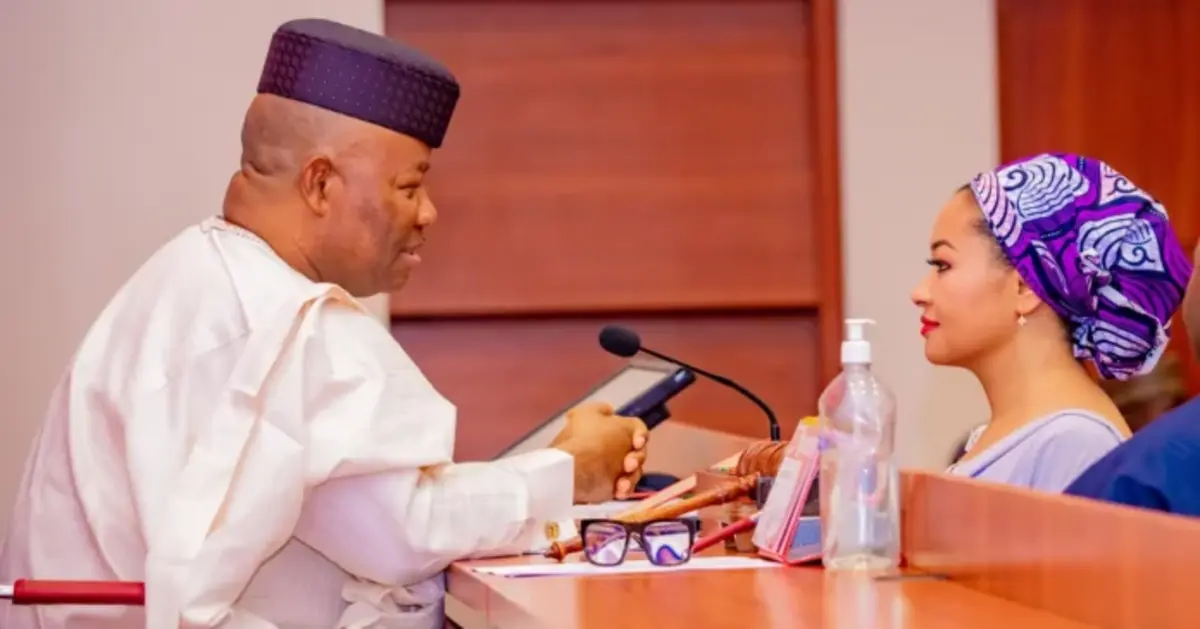
    The prevalence of misogyny, acquiescence to egregious abuse of power, and the flagrant disregard for procedures on display in the defense of a man accused of sexually harassing a senator is alarming and disheartening. The orchestrated effort to maliciously discredit the alleged victim, supported by numerous individuals on social media, including the COYN platform, is equally disturbing.

    It is widely acknowledged that sexual harassment and exploitation of women are pervasive issues in our society. Yet, many men have chosen to support and justify one of the most egregious abuses of power in the Nigerian senate, citing senate rules as a justification.

    I pose the following questions to some of the male folk who are attempting to persuade us to disregard common sense and the evidence before us by advocating for the “sequence of events theory”: That their posers about the breach of senate rule by Senator Natasha preceded chronologically her allegation of sexual harassment against Senate President Akoabio. Hence her accusation had nothing to do with her allegation. If you genuinely believe that the accusation of breaching senate rules against Senator Natasha Akpoti Uduaghan was unrelated to her allegation of sexual harassment against senate president Akpabio, then please answer the following questions:

    If you cannot answer affirmatively to any of these questions, how can anyone objectively defend the blatant abuse of power exhibited by the Nigerian senate in its treatment of Senator Natasha Akpoti Uduaghan? This defense defies logic, fairness, objectivity, respect for justice, and adherence to rule-based politics.

    In conclusion, the Nigerian senate has established a new low in misogyny and abuse of power in its handling of the Natasha-Akpabio scandal. It is essential to note that no one is disputing the guilt or innocence of the two individuals involved in the scandal. The truth of the events is known only to the two parties. What is being contested is the unmistakable effort by the Nigerian senate to tip the scales of justice in favor of the alleged perpetrator and to excoriate and punish the alleged victim in the most severe and appalling manner. In a reasonable system, the victim would have been given the benefit of the doubt, especially considering our society’s alarming statistics on sexual harassment and exploitation of women. This is an undeniable fact supported by extensive research data and our collective lived experience.

    The impact about the blight of the Natasha-Akpabio scandal will reverberate for decades to come. Its victims might by our daunted or granddaughters who are now witnessing the re-victimization, brutal excoriation and the crude and severe punishment being meted out to powerful Senator Natasha Akpoti Uduaghan would get the chilling message that in Nigeria, victims of sexual harassment had better kept their mouth shut and take their abuse and dehumanization in silence. That society will punish them severely if they spoke out. This is indeed a sad watershed episode in our nation’s history and the treatment of victims of sexual harassment and exploitation.

    Adewale Alonge, PhD, is Founder & President, Africa Diaspora Partnership for Empowerment and Development. www.adped.org

  • How the courts stopped illegal suspension of legislators in Nigeria

    How the courts stopped illegal suspension of legislators in Nigeria

    By Femi Falana, SAN

    1.In 2010, our law firm (Falana & Falana’s Chambers) handled the case of Hon Dino Melaye & 10 other legislators who were suspended for accusing the Dimeji Bankole-led House of Representative of wallowing in corruption The Federal High Court declared the suspension of the legislators illegal and unconstitutional and ordered the payment of their withheld salaries and allowances.

    2.In 2012, our law firm also handled the case of Honourable Rifkatu Danna, the only female member of the 31-member Bauchi State House of Assembly. Danna was suspended in June 2012 for allegedly making uncomplimentary remarks when she challenged the lawmakers’ decision to approve the relocation of the headquarters of Tafawa Balewa Local Government Area of Bauchi State. But the Bauchi State High Court declared her suspension illegal and ordered the Bauchi State House of Assembly to reinstate her and pay her withheld salaries and allowances.

    3.In 2017, the Court of Appeal dismissed the appeal filed against the judgment of the Bauchi State High Court in respect of the illegal suspension of Honourable Rifkatu Danna. The Court upheld our submission to the effect that the suspension of the legislator constituted a breach of the right of the Bogoro Constutuency to be representated by her in the state house of assembly. The Court equally held that the decision of the House to withhold the salaries and allowances of the legislator was illegal as she was not an employee but an elected member of the Bauchi State House of Assembly.

    4.In 2018, our law firm equally handled the case of Honourable Abdulmumin Jibrin, a member of the House of Representatives who was suspended for 180 days for accusing the Yakubu Dogara-led House of padding the 2016 national budget. The Federal High Court nullified the suspension and ordered the payment of the withheld salaries and allowances of the legislator.

    5.Based on the case of the Speaker, Bauchi State House of Assembly v Honourable Honourable Rifkatu Danna (2017) 49 WRN 82 which is the locus classicus on the subject matter, the 2017 suspension of Senator Ali Ndume by the Bukola Saraki-led Senate was annulled by the Federal High Court. The case filed on behalf of the Senator his lawyer, Marcel Oru Esq.

    6.In the same vein, the 2020 suspension of Senator Ovie Omo-Agege was declared illegal and unconstitutional by the Federal High Court. The case was filed on behalf of the Senator by Edward Omaga Esq.

    7.Sometime in 2020, the Jigawa State House of Assembly suspended a lawmaker, Hon. Sani Iyaku, over alleged criticism of the state governor, Alhaji Muhammad Abubakar Badaru who was on a visit to Hadejia town for a wedding ceremony. Honourable Iyaku challenged his suspension in the Jigawa State High Court. The trial Judge, Justice Ahmed ruled that the action of the Assembly did not comply with order 15 rule 74 (2)(c) and (3) a, b of the state House of Assembly standing orders 2017 and therefore declared the suspension illegal, inappropriate, null and void. The court also directed that the defendant be paid his three months allowances withheld to the tune of N3 million.

    8.On November 18, 2020, the Court of Appeal, sitting in Akure, Ondo State dismissed the motion for stay of execution filed by the state House of Assembly against the judgment of the High court reinstating the three suspended members of the state assembly. The Presiding Judge, Justice Folayemi Omoleye, queried the appellants for bringing a frivolous appeal before the court, directing that the lawmakers should be reinstated immediately to resume their legislative duties.

    9.On August 13, 2024, the same court reinstated Hon. Iroju Ogundeji as the Deputy Speaker of the State House of Assembly. In a unanimous ruling, Justices Oyebisi Folayemi Omoleye, Frederick Oziakpono-Oho, and Yusuf Alhaji Bashir affirmed the decision made by Justice Akintan Osadebey, which reinstated the two-term legislator representing the Odigbo state constituency.

    10.In the past five years, the High Court sitting in Lokoja, Kogi State, and the National Industrial Court nullified the illegal suspension of members of the Houses of Assembly of Kogi and Edo State respectively.

    11.In March 2024, the Godswill Akpabio-led Senate suspended Senator Abdul Ningi (PDP; Bauchi) for three months for alleging that Nigeria’s 2024 budget was padded. The Senator instructed our law firm to challenge the suspension in the Federal High Court. We wrote to the leadership of the Senate to review the suspension in view of the illegality of the action. As we were preparing to challenge the suspension in the Federal High Court, the Senate recalled Senator Ningi and paid his withheld salaries and allowances.

    12.In view of the definitive pronouncements of the several High Court and the Court of Appeal on the illegality of the suspension of elected members of legislative houses in Nigeria, the suspension of Senator Natasha Akpoti-Uduaghan is the height of legislative recklessness. The illegal suspension should be lifted without any further delay. Since the Federal High Court had restrained the Senate Ethics Committee from hearing the complaint against the embattled Senator pending the determination of the motion on notice the Senate ought to have stayed action in accordance with the rule of law.

    13.Finally, the official impunity of suspending legislators at the whims and caprices of leaders of the federal and state legislative houses must not be allowed to continue in Nigeria.

  • American Schizophrenic Politics and Foreign Policy

    American Schizophrenic Politics and Foreign Policy

    It is so confusing how to square the release posted by the Obama White House in 2014 (see link below), at the height of the kidnap of the Chibok Girls by Boko Haram, during which Michelle Obama played a crucial role to bring global attention to that crisis, with the bombshell allegation by Pennsylvania Congressman Scott Perry’s that the USAID under the Obama and then the Biden presidencies was actually financing the Boko Haram terrorist group.

    It makes absolutely no sense except within the context of Elon Musk’s DOGE team and their MAGA supporters dropping whoppers of falsehood, outright lies, and disinformation to justify their gestapo approach to “reforming” the U.S. public service. Engaging in mindless firing of government officials, disbanding government agencies and conducting loyalty test within the Justice and security agencies. It is impossible to differentiate facts from fictions. Remember the story about $59 million condoms in Gaza!!

    READ THIS: FACT SHEET: U.S. Efforts to Assist the Nigerian Government in its Fight against Boko Haram

    President Trump just a few days ago blamed President Biden for instigating the Putin invasion of Ukraine when everyone knows that Putin has had his eye on Ukraine for years since the collapse of the Soviet Union. Putin invaded and took over Cremea without provocation during Obama regime. Obama made a strategic mistake by doing absolutely nothing about it other than imposing ineffectual sanctions which probably emboldened him to invade.

    We all need to take a deep breath and treat with more than a grain of salt anything coming from the MAGA crowd which believes in flooding the zone with disinformation and outright falsehoods. They will do or say anything to justify the destruction of what they perceive as the disloyal woke deep-state. Otherwise, why would a Republican congressman openly declare that the U.S. government sponsored ISIS, Alkeida (two sworn enemies of the U.S.) and Boko Haram. One would have expected such a statement from the likes of Bonnie Sander and the ultra liberal Ocasio not from a conservative pro-national security Republican congressman from Pennsylvania. This is turning politics over its head. It makes absolutely no sense just like what’s happening in the U.S. is mind-numbingly nonsensical. You have the U.S. government trusting Putin over its long term allies in Europe. The U.S. VP openly castigated European governments in Munich and openly supported an ultra-right, fringe Nazis political party in Germany as it prepares for an election. Totalitarian Orban of Hungary is a darling of Washington DC. Elon Musk is openly campaigning and offering financial support for political parties aligned with Nazis ideology. We are truly in schizophrenic uncharted political territory.

    _________________________________________________________________________________________________________________

    Scott Perry’s “Africa Lovefest and the Character Assassination of President Barack Obama

    US Congressman: Scott Perry

    Isn’t it curious that both the do-gooder US democrat liberals who are scrambling to save the USAID and the Republican conservatives who are hell bent on destroying it are both using their gullible whipping boy Africa to make their case? The democrat liberals, many of who simply play to the gallery to hide their racist condescending disdain for Africa are storming the USAID HQ claiming that without the USAID all African children would starve to death and our contagious Eboma will jump over the Atlantic and devastate their American Homeland. The conservative Scott Perry and his White Supremacist Apartheid South African Elon Musk argue that they are trying to demolish USAID to safe Africa from Obama and Biden’s USAID which is the sponsor and financial backbone of Boko Haram.

    Yet rather than been outraged by this constant negative narrative and weaponizing Africa poverty by the West to push their theory of the racial inferiority of Africans, we are falling one another to push this same negative narrative.

    What is so demoralizing as an African is that African elites and so called intellectuals are playing true to type to the Whiteman’s characterization of us as gullible people who are driven by their emotion rather than their intellect. That is what is so frustrating with how African intellectuals have fallen head of heel spreading the disinformation by Scott Perry that Obama and Biden were sponsors of Boko Haram.

    Politics makes for strange bedfellows. Who could have imagined in a million years that a Republican for that matter would be the one “spilling the beans” about how the U.S supposedly sponsors terrorism all over the world. Has anyone wondered why this new “activist” in defense of Nigeria. Scott Perry just selectively and conveniently decides to expose the evil that the USAID does just as Elon Musk was driving his bulldozer over the USAID and it just happens that it was during Barrack Obama and Biden presidency that the USAID was sponsoring Boko Haram. What happened during the transition from Obama to Trump before Biden took over. Apparently, Trump the lover of Africa and her shit-hole countries stopped the funding of Boko Haram and Biden continued from where his former boss, Obama stopped.

    Is that logically? But in the post-truth era where confirmation bias is king people no longer critically analyze facts before running to town with disinformation, propaganda and fake news.

    That exactly is the reason Congressman Scott Scott Perry, could get away with accusing the U.S. Agency for International Development, USAID, of funding terrorist organisations, including Boko Haram. Just like Trump just blamed Biden for instigating the Russian invasion of Ukraine when in fact Russia took over Cremea way back in 2014. Truth does not matter anymore if you can flood the social media airwave with falsehood, fake news, half truths, and disinformation.

    The Blackman capacity for self hate is mind-numbing. The Nigerian social media has been overtaken with the caricaturitization and character assassination of the Barrack Obama the historic first Black US president.

    Who did this to us?

    Adewale Alonge, PhD, is Founder & President, Africa Diaspora Partnership for Empowerment and Development. www.adped.org

  • Why Nigerians should not pay tax

    Why Nigerians should not pay tax

    By

    Madaki O. Ameh

    Introduction

    The evolution of the Nation-State in pre-historic times brought with it some attributes, which was designed by early thinkers to make it easier for the State authorities to carry on its assigned roles in society.  As the citizens of the Nation-State subdued their individual rights to that of organised civil society where they agreed to be governed by uniform rules and regulations of human conduct, and also confer on the State some rights to sanction deviant behaviour, the modern day society as we know it today gradually evolved from the “Hobbestian state of nature”, where life was nasty, brutish and short, and might was right. 

    One of the mechanisms through which the State, not being itself engaged in any income generating ventures, was expected to generate resources with which to provide for the common good of all, was to take a little of that income which accrued to individuals, and create a pool of funds from which common amenities like security, roads, utilities, schools, healthcare, etc., could be provided.  Thus evolved the concept of taxation, as we know it today.  From humble beginnings when taxation was no more than 5% of average income of individuals, the appetite of the State to more funds grew as the needs of society became more complex.  Different taxes and levies started being imposed on individuals and corporate organisations, and what initially started as a voluntary contribution to the State gradually assumed a compulsive nature, such that laws were made to punish evasion of taxes by different governments. 

    To date, the average direct tax rate the world over is 30% of earned income, with variations from country to country.  Tax relief became a tool of manipulation and political campaigns at election times.  The governments which promised the most tax relief were more favoured by the citizenry, who often paid taxes under duress, obviously having better things to do with their incomes than handing it over to a bogus apparatus called the State, as they were not always able to tell the direct benefits they obtained from the government for payment of those taxes.

    The level of resistance to taxation in different places differs in degree and complexity.  Whereas citizens of most underdeveloped and developing countries rely on the non availability of population and income data in the hands of the taxing authorities to evade taxes, thereby leaving the burden of taxation to be borne by a few in regular employment, in the more advanced and sophisticated economies, people rely on the services of tax planners and other experts to cleverly avoid tax through lawfully recognised means.  One common feature in resistance to taxation is however the perception of the populace towards their governments in the area of effectiveness in meeting their common needs.  In areas where the governments are perceived to be up and doing, and people can visibly assess the impact of government on their daily lives, governments have been more able to rely on taxes as a major chunk of their national income than other places where governments are perceived as non-performing.  

    It must however be borne in mind that the basic justification of the state in collection of taxes remains the need to raise funds to provide amenities for the common good.  Where those amenities are either lacking completely, or where they exist, are largely provided by the citizens themselves without any input from government, then the moral or legal right of the State to impose such taxes becomes suspect.

    This essay attempts to examine the various facets of life in Nigeria from the point of view of the respective obligations of the citizens to pay their taxes, and the duty of the State to provide amenities, and comes to the inevitable conclusion that nowhere in the world is there a better justification for evasion of taxes than in Nigeria, as the governments here have done little or nothing to deserve any form of contribution from the citizens by way of taxes.  That being so, the paper advocates a well articulated and structured resistance to taxation, especially by workers in the oil and gas industry in the country, who are undoubtedly the most unjustly taxed sector of the Nigerian economy.

    For the purpose of this essay, the amenities legitimately expected from Government can be classified into Personal Security, Roads, Public Utilities, Schools, Social Security, Medicare, Housing, and a general enabling environment for economic and social activities to thrive, as would be expected of any civilised human setting.  These different aspects will be discussed in turn, to establish that in all these areas, successive Nigerian governments have failed woefully in its social contract with the citizenry, and that any form of taxation in Nigeria is unjustified and amounts to blatant stealing by government.

    Personal Security

    It is a generally accepted fact that Nigeria is a very insecure place to live in.  Crimes are committed against decent and law-abiding citizens on a regular and routine basis, and there are no effective avenues to redress those wrongs.  The sense of insecurity pervades the living pattern of the people, and reflects even in the way they build their houses.  Unlike most places in the developed world or other saner environments in neighbouring African countries where people just build their houses without needing to erect fences, in Nigeria, when one thinks of building a house, the first thing that comes to mind is putting up a high fence.  Apart from helping you to secure the land from encroachment, which in itself is a criminal offence, the high fence gives a feeling of obtaining at least a temporary reprieve in the event of an attack by hoodlums, which is sure to come.  Thus, in many cases, the fences are higher than the houses themselves, giving the feeling of living in prison. 

    This essay attempts to examine the various facets of life in Nigeria from the point of view of the respective obligations of the citizens to pay their taxes, and the duty of the State to provide amenities, and comes to the inevitable conclusion that nowhere in the world is there a better justification for evasion of taxes than in Nigeria, as the governments here have done little or nothing to deserve any form of contribution from the citizens by way of taxes.

    Even after those fences are erected and the houses are built, they have to be fortified with burglary proofs, which pose a real hazard in the event of fire.  Entire families have been known to roast to death in such houses, but because of the pervading feeling of insecurity in the land, there is hardly any house in Nigeria which does not have re-enforced burglary proofs, with all the added costs. 

    This essay attempts to examine the various facets of life in Nigeria from the point of view of the respective obligations of the citizens to pay their taxes, and the duty of the State to provide amenities, and comes to the inevitable conclusion that nowhere in the world is there a better justification for evasion of taxes than in Nigeria, as the governments here have done little or nothing to deserve any form of contribution from the citizens by way of taxes.   At the end of the month, these persons have to be paid from the after tax income of the citizen, thereby further reducing his purchasing power.   In an environment where everyone is up and doing, there would be no need for the individual to be put to the extra expense of providing his own security, as such roles properly belong to the State.  But alas, not in Nigeria.

    Even when crimes are committed, the lack-lustre attitude of the Police to investigation and prosecution of the offenders leaves so much to be desired, and even emboldens prospective criminals.  The rate of success in criminal prosecution in Nigeria is abysmally low, as the Police, not being interested in the prosecution process, usually abandons it midway, leading to the escape of known criminals from justice.  But for the total lack of crime data in Nigeria, the country could easily pass as the one with the highest number of unsolved crimes in the world!  People are murdered daily and their corpses left on the roads to decay and disappear into the dust, often in very close vicinity to Police checkpoints where they perpetually stop to collect bribes from law-abiding but helpless citizens. 

    The state of insecurity and decay is so much that most Nigerians have resigned to their fates and come to realise that as far as their personal security and safety of their lives is concerned, they are entirely on their own.  Meanwhile, bogus budgetary votes are made yearly for security agencies, but the impact is not felt anywhere.  The only time heinous crimes attract attention is when prominent Nigerians are involved.  Even then, the outcry lasts only for a few days, and pales into insignificance as the days go by and other more important news takes their place.  As soon as the public outcry disappears, the interest of the Police in the case also disappears, often after parading some people they allege to be the suspects, which most people know to be false!  To date, the brutal murder, in his own house, of the former Chief Law Officer of the country, Chief Bola Ige, remains a subject of politicking, with one of the principal suspects having been sworn in as a serving Senator of the Federal Republic of Nigeria, having won his election while in detention for the offence of murder!  That feat is almost certainly a world first, and a sure material for the Guinness Book of Records!

    The Police checkpoints which have sprung up everywhere, as a show of government effort at providing security, has more often than not, served as avenues for brutalisation of Nigerians.  It is a known fact that in spite of the much touted and sermonised anti-corruption posture of the present Nigerian government, the country remains one of the most corrupt in the world, with Policemen openly extorting money from citizens on the roads, with the threat of being shot with guns purchased with taxpayers money, should they be bold enough to refuse.  Demands for all imaginary manner of documents and “particulars” are used as the guise for extortion by the Police, thereby making road travel within Nigeria a major nightmare.  Meanwhile, the criminals, who are all well known to the Police, roam the streets and hold the people to ransome, whereas the law-abiding citizens live in perpetual fear of the Police, who are forever able to come up with all manner of mischievous guises to deny them their legitimate rights to liberty.

    Extra judicial murders are rampant in Nigeria, even in the so-called democratic dispensation.  Innocent citizens who dare to stand up to the extortionist tendencies of the Nigerian Police, are routinely arrested and detained on trumped up charges.  It is not unusual for such people to be shot dead while in detention, and be branded armed robbers who were killed in a shoot out with the Police!  Even when that happens and there is public outcry, as is sometimes reported in the papers, there is never any investigation conducted to ascertain the truth or otherwise of the story.  The Police carries on with business as usual, and terrorises the citizenry at will!

    It is possible to go on and on, but suffice it to say that life, not really having progressed from the Hobbestian state of nature in Nigeria, there is no justification on the part of any government to demand and collect any taxes from Nigerians for provision of an amenity like security, which is clearly non-existent at the moment, or grossly inadequate.

    Roads

    Another aspect of public infrastructure which governments are expected to provide in the civilised world, are motorable roads.  Roads link different places to each other and facilitate commerce, social interaction and the wellbeing of the citizenry.  In times of emergency, roads are also used to access areas of distress to bring help and succour to distressed people. 

    In Nigeria, due to the largely unplanned nature of most settlements, there are no roads, or where they exist, they are mere death traps and tracks created by the residents to be able to get to their places of abode, no matter how miserable the process may be.   In Rivers State where I live, work and pay my taxes, there are hardly any roads of note in the entire place.  Even where the few tarred roads exist, there are no drains, so whenever it rains, the whole place is flooded, with residents practically needing canoes and flying boats to get by!  When this occurs along major tarred roads, one wonders what the fate of those who live in other places with untarred roads would be.  The houses are flooded, and people live under sub-human conditions, amidst captivating government propaganda that all the problems of the people have been solved!  The situation is not any better in other parts of the country. 

    To ameliorate their suffering, it is not unusual for residents to come together and contribute money to construct their roads, and at least provide access to their houses.  Due to the swampy terrain of most areas, such exercises are usually very expensive but ineffective, as the next major rain is sure to wash away such roads and return the people to their erstwhile misery.  The funds contributed for such community development efforts in the face of government neglect are not tax deductible, thereby further reducing the disposable income of the taxpayer on a service, which the government has already been paid through taxes to provide.

    Public utilities

    This comprises of electricity, potable water, sewage and refuse disposal systems. There is no doubt that these amenities, which are largely taken for granted in other places, are hardly in existence in Nigeria.

    Electricity supply in Nigeria has been as epileptic as it can ever be.  Most of the country is still not connected to the National grid.  In the few towns and cities which enjoy this facility, the service is more often than not, never available.  Governments have, from time to time, paid lip service to improving the availability of electricity, and recognised the fact that genuine development will continue to elude the county as long as power remains epileptic.  Different deadlines have been set by the government to provide stable power.  The last of those deadlines, announced by President Obasanjo himself on National television, was 31st December 2001.  Almost two years since that deadline expired, Nigerians have continued to witness more epileptic power supply, even as so much money has been squandered on the National Electric Power Authority (NEPA), which is generally recognised as a haven of official corruption.  Electric transformers bought by government to aid in electricity distribution are routinely sold to individuals and residents of layouts, and the monies shared by NEPA officials.  Residents of areas who genuinely need these transformers are denied their installation, unless they comply with the demands of NEPA officials and pay huge sums of money to them.  When they have to comply, such payments are not tax deductible and further impoverishes the taxpayer and reduces his purchasing power on an item the government should legitimately provide. 

    In the meantime, individuals are forced, due to the epileptic nature of power supply, to spend huge sums of money on generators.  Apart from the initial cost of purchasing the sets, the cost of maintenance and fuelling, especially in the never ending regime of fuel price increase and black marketeering in Nigeria, further serves to impoverish the taxpayer. 

    As for potable water, the story is even a more sorry one.  Unlike most places in the civilised world where public water works exist and are taken for granted, in Nigeria, plans for house construction are never complete without provision for a private borehole.  Any attempt to overlook this very important item will result in dreadful consequences, as there will be no water to take care of basic needs in the house.  And to rub salt in an already sore injury, some Local Governments go about demanding payment for private water borehole licenses, when the failure of government to provide this all-important natural resource is responsible for people embarking on the needless expense of providing private boreholes for themselves!

    Sewage and refuse disposal systems are also non-existent in Nigeria, even though these are legitimately within the purview of government to provide.  Every house has to have its private septic tanks, and the cost of regular dislodgement is borne by the individual residents.  The same goes for refuse disposal systems.  Failure to make private arrangements, at own costs, for these items means that the residents are on their own, and will therefore bear the consequences of any ailments that arise as a result, including the cost of Medicare.  In other civilised countries where the government is alive to its responsibilities to the citizens, integrated sewage systems are provided, and run by the state as part of public utilities.

    Schools

    Education is recognised the world over as a veritable tool for economic, social and political advancement of the people.  Since the discovery of education in its modern form, responsible governments the world over have invested heavily in this invaluable resource, as the only sure way to salvage their peoples from the trappings of poverty, ignorance, and want.  No amount of funding and efforts is seen to be too great in this area, since the benefit to society at large is immense.  In many counties, education is either absolutely free, or heavily subsidised by the government.  Expenditure properly incurred in the education of one’s children and wards is treated as tax-deductible, to encourage people to give their children the very best education possible, in the sure realisation that the larger society stands to benefit immensely from it.

    However, in Nigeria, the story is entirely different.  Everyone is on their own as far as education is concerned.  The few available public schools are never known to have functioned well in a long time.  Instead of things improving with time, the Nigerian educational system has deteriorated over time.  The schools are poorly equipped; teachers are very poorly motivated, and are hardly paid their salaries in time, if at all.  The popular saying in Nigeria is that the reward of teachers is in heaven, after they would have long died from starvation on earth!  Successive governments have paid little or no attention to education, thereby leaving majority of Nigerians ignorant and illiterate, with no hope in sight. 

    Schools are closed most of the time because the teachers are embarking on one strike action or the other to press home demands for something as basic in other places, as salaries, wages, allowances, and teaching aids!  And the government officials are not bothered because most of their children are not affected, since they can afford to send them to expensive Ivy League schools outside the shores of this country on funds stolen from the public purse! 

    It has also been argued in some quarters that the neglect of education in Nigeria is a deliberate design by government officials to ensure that the people are kept in the dark, so that only their own children and relations will be equipped with the requisite knowledge capital to take over from them when they die off in old age!

    As a result of government neglect of education, private schools have sprung up everywhere, some of them with suspect practices and curricula.  Due to near total absence of supervision to ensure that standards are maintained, these schools are allowed to carry on the way they please, but the parents have no option than patronise the schools, because the public schools are non-existent.

    The school fees charged by the private schools, starting from the pre-nursery schools to the few private universities, are at best embarrassing, and bear no relationship to the services rendered to students in these schools.  The average school fees in a private Nursery/Primary school in Port Harcourt which boasts of any standard at all, as at the time of writing, is N30,000.00 a term!  How can the average Nigerian worker, who earns less than N10,000.00 a month afford to pay for his children’s school fees at such schools?  And what choice does he have, when the public schools are not functioning?  At the end of the day, most children of eligible school age are sent by their parents to hawk wares in traffic jams, just to make ends meet.  As time wears on, these children join the ranks of the uninformed and illiterate, and more often than not, veer into crime out of frustration.

    Meanwhile, the exorbitant school fees paid by the few who can afford it is not tax deductible, as the State does not care whether the parents are paying for the education of their children or not.  Since the taxes paid by the citizenry are meant for provision of amenities like education, which does not exist or is grossly inadequate, where then lies the justification of continued taxation of the people?

    Social Security

    In caring societies, the government provides a sense of belonging to all its citizens, irrespective of whether they are strong or weak.  Those who are strong and able to work are consciously encouraged to engage in gainful ventures, which create wealth.  Others who are not so lucky, either due to ill health or other causes, are recognised as such by the society and provided for in a caring manner.

    In Nigeria however, the reverse is the case.  The few people in government consume most of the national wealth through a bogus government bureaucracy, which adds next to no value to the lives of the people.  Government recently admitted that 85% of the national budget is spent on recurrent expenditure, leaving only 15% for all other expenditure that touches the lives of the people.  Meanwhile, less than 1% of the total population of the country works for government, and another very few are engaged in any form of meaningful employment.  The irresponsible manner in which the national wealth is frittered away without any form of accountability to the people, makes public office very attractive in Nigeria.  Government officials do not have to do anything for the people.  If a Governor constructs a road, people hail him as having tried!  They fail to realise that provision of such common amenities, is the reason for the existence of government in the first place. 

    The National Social Insurance Trust Fund is another drain pipe where workers in the organised sector are compelled to make contributions, without any hope of being able to reap any benefits from it whenever they lose their jobs, or become unable to earn an income, for any reason, as is the case in other societies where the idea was borrowed from. 

    In Nigeria, unless you are strong and able to fend for yourself, no one cares for you.  Your daily meal is entirely your responsibility, and if you are unable to provide it for any reason, you may as well starve to death!  In any event, the government does not even know that you exist!  Due to complete lack of data on its citizens, Nigerians are of no statistical importance. Census figures are always fraudulently manipulated to serve some mischievous ends, thereby leading to a situation where no useful data is available for any form of planning. In the event of natural disasters, casualty figures are only estimated, as no one knows for sure who is alive or dead at any point in time.  After the bomb blast disaster in Lagos, over 1,000 people were estimated to have died, because that figure was close to the number of the actual dead recovered from the swamps! This situation can be contrasted with the unfortunate disaster at the World Trade Centre on September 11 2001, where every casualty, to the last man, is today known by name!

    In an uncaring society such as ours in Nigeria, one wonders what the purpose of taxation is.  The money realised from taxes are not put to any use that people can see, and those who are unable to provide for themselves are completely neglected and left to die, or eke out a living by inconveniencing others.  Destitutes are all over the place on the streets, begging for money to eat, with no hope of any provision from the social welfare departments, as is the case in other saner societies.

    Medicare

    The state of healthcare delivery in Nigeria is legendary, in its neglect of the people.  Government officials only parrotise the general saying that health is wealth without knowing or caring what its underlying meaning should be. 

    Most hospitals in Nigeria are an eye sore, to say the least.  The environments are smelly, with suffering and pain everywhere.  One of the most harrowing experiences a person can face is to be ill and go to a public hospital in Nigeria, or have to attend to a relation who is ill in hospital.  Nothing is available!  Even water, which is quite basic, has to be bought by the sick person or his relations before operations are performed on them.  This is certainly true of the Braithwaite Memorial Hospital in Port Harcourt, which is supposed to be a centre of medical excellence in Rivers State.  When water is not available, how can one talk of drugs?  The doctors are disgruntled, either from poor pay or inadequate conditions of service, or the frustration that flows from not having the most basic tools to work with.  Most of them resort to referring patients to their private hospitals, where they can at least earn some money from them, and also provide some semblance of Medicare, albeit at exorbitant costs!

    In view of this, most Nigerians meet their untimely deaths from ailments which can be easily treated, and from other ailments which they contact while waiting in the unhygienic environments of the public hospitals, waiting in vain for never available healthcare.

    As is always the case where public services fail, many private hospitals have sprung up, to cash in on the non-availability of healthcare from the public sector.  These private hospitals are however either too expensive, or due to lack of standards, end up being as bad as the public ones.  It is not unheard of for people who are not even doctors, to set up “hospitals” in Nigeria, and even perform surgical operations!

    For years, governments have touted the idea of health insurance, as a way of introducing some sanity to healthcare delivery.  But like all other things Nigerian in nature, health insurance, which works so well in other countries, and is private sector driven, remains perpetually at the conceptual stage, with huge sums of money being wasted annually on setting up its bogus infrastructure, which will never work as currently conceived.

    Housing

    A shelter over one’s head is one of the basic necessities of life, and responsible governments the world over, strive to provide this amenity, or encourage its provision through private enterprise.   Thus, functional mortgage institutions whose responsibility it is to build houses and sell the same to people at affordable rates, exist in different countries, and serve as the main ways through which people own houses in other places.  Where houses are sold to people, the interest rates are made very affordable and spread over a long period of time, for ease of payment.  It is therefore an aberration in most of the civilised world, to see homeless people, who are not being provided any form of care by the social welfare authorities. 

    In Nigeria however, the sight of people sleeping under the bridges, in uncompleted buildings and under the open sky, even in peacetime, is very common.  Embarking on a building project is one of the most harrowing experiences in adult life.  Apart from the high cost of the land and the intrigues surrounding land ownership which has led many unlucky people to fall victims of fraudsters and land speculators, the actual experience of supervising a building project, from inception to completion is both exhausting and harrowing.  The cost is also quite another thing, and one has to live in debt for a long time afterwards, if you are not a government official who just takes the money from the public coffers to embark on such private project. 

    In a sane environment where government is interested in planning for its people, mortgage payments are tax deductible, and people who embark on such projects do not have to unnecessarily strain themselves and their families before being able to live in their own houses.  In Nigeria, you can hardly, if ever get tax rebates for money borrowed to build houses, and there are no organisations ready to lend money for such long-term ventures.  In the end, most Nigerians live in shanties called houses, with no visible efforts by government to put policies in place to encourage home ownership.  The National Housing Fund remains a tool for political gimmicks, and in spite of the many years since its conceptualisation, it remains a thought process yet to deliver any houses to Nigerians, either now in the foreseeable future.

    General enabling environment

    Amidst all the numerous bottlenecks highlighted above, survival in Nigeria is difficult for the citizens, thereby resulting in many of them jetting out of the shores of this country, even if in search of menial jobs in other places, at least to be able to fend for themselves.  This trend, which the government is very much aware of but has done nothing to stem, has led to the loss of very good brains who would otherwise be in Nigeria today contributing to its development.  Government pays lip service to desiring development for the country, without putting any concrete plans in place to ensure that this happens in a transparent and auditable manner.   Year in year out, huge sums are budgeted by the government, but there are always complaints of funds not being released for projects, even by the government agencies.  Many vital government agencies, such as the National Drug Law Enforcement Agency, the Immigration Service, the Nigerian Prisons Service, to mention a few, are starved of funds, and are therefore unable to play their assigned roles in addressing specific areas of national need. 

    Meaningful tax reliefs

    The tax structure as it currently operates in Nigeria today is outdated, and offers

    no meaningful relief to taxpayers.  The point has already been made that government cannot justify tax collection in Nigeria because no services are rendered in exchange for the taxes paid by the citizenry.  But even if taxation is not entirely eliminated because government has somehow become used to this source of unjustified revenue, then meaningful tax relief which bear a relationship with actual expenditure outlays of taxpayers should be introduced.  The following are suggested areas which must be looked at as a matter of urgency:

     All expenditure necessarily incurred by an individual tax payer in the provision of amenities which should have been provided by government, such as roads, security, water, Medicare, education, houses, etc. as outlined above, should be fully deductible before computation of tax liability;

    The rates for personal allowances should be drastically increased from the current rate of 15% of earned income, to 70%, to take care of the numerous responsibilities the average worker in Nigeria has to shoulder in taking care of brothers and sisters, relations, aged parents, etc., all of which are part of the burdens which in African tradition, are required to be borne by those who are perceived to be doing better than others and should therefore be their brothers’ keepers in an environment of an uncaring government.

     The balance of the taxable income, after all the deductions suggested above, should then be subjected to taxation at a graduated rate which results in a maximum tax rate of 10% of earned income.

    Government performance should be constantly measured against its set roles, in line with the concept of social contract, with the provision that the tax rates may be reviewed upwards or downwards, depending on how well government is adjudged to be performing in providing basic amenities for the people.

    Accountability to the people should be the watchword of government, such that the present neglect and distance from the people by those in government should be discouraged.  People should have free access to those they elected, to complain about inadequacies in their lives, and seek redress.  Failure to comply with such minimum such minimum standards should be a good ground for recalling such elected officials, no matter how highly placed, in a process devoid of fraud, intimidation and rigging, as is usually witnessed in Nigeria’s electoral processes. 

    Conclusion

    Nigeria is a potentially great nation, so we have heard, and have been told for years.  Those potentials are however never going to be realised, the way we are carrying on at the moment.  The journey of a thousand miles begins with the first step, if only in the right direction.  We are currently headed in no direction at all, and since we cannot remain stagnant, we are actually retrogressing. Drastic changes therefore need to be made by honest and dedicated leaders, who do not merely pay lip service to issues, but are genuinely interested in seeing to the emancipation of the citizenry, from a largely hopeless people, to those who can wake up with confidence, knowing that their problems, even though many, are in capable hands and are therefore sure to be solved with time.

    • The article was first published in 2001. Twenty-four years after, the points argued in the essay remain relevant to the ongoing national debate on tax reforms.

    Madaki O. Ameh, Managing Partner at Bbh Consulting is a lawyer and former Management staff of Shell Petroleum. He can be reached via email: madakiameh@gmail.com

  • Addressing challenge of frequent grid collapse in Nigeria

    Addressing challenge of frequent grid collapse in Nigeria

    By Constance Athekame

    )

    The recurrent rate of frequent collapse of the country’s national grid is a pressing issue that needs to be addressed urgently for Nigerians to enjoy  a stable and reliable power supply,

    A stable power supply is crucial for social economic development to thrive.

    In 2024 alone, the national electricity grid collapsed more than eight times, throwing the nation into frequent darkness.

    Millions of homes and businesses continue to suffer regular power outages due to the frequent grid collapse,   resulting in huge losses.

    Small and Medium-sized Enterprises (SMEs), which form the backbone of the country’s economy, suffer even more because many of them do not have the capital to invest in alternative power sources, leaving them at the mercy of the erratic national grid.

    Experts and stakeholders in the power sector attribute the repeated grid collapse to factors like ageing facilities, lack of maintenance and requisite investment, as well as alleged sabotage by vandals.

    They listed other factors to include obsolete equipment, inadequate gas supply, improper coordination of plants and gas pipelines, lack of operating/spinning reserve and voltage support scheme.

    They called for Supervisory Control and Data Acquisition, (SCADA) system to help sustain stability in power supply. 

     The SCADA system is used for controlling, monitoring, and analysing industrial devices.

    The experts have warned that the incessant national grid collapse may persist if urgent steps were not taken to address the several challenges bedeviling the power sector.

    READ ALSO:

    The Minister of Power, Mr Adebayo Adelabu, said  that there was a need to have power grids in different regions or states.

    According to Adelabu,  having multiple power grids in each region and state would ensure stability.

    He said that the decentralisation of the power sector would help the plan to build grids in each region.

    “This has been made possible by the Electricity Act (EA) signed by President Bola Tinubu in 2023, which  has decentralised power.

    “It has enabled all the state governments and the local government councils to be able to participate in the generation, transmission, and distribution of electricity.

    “We all rely on a single national grid today; if there is a disturbance of the national grid, it affects all 36 states. It should not be like that.

    “The EA will enable us to start moving gradually towards having regional groups and possibly having state grids, and each of these grids will be removed and shielded from each other,” he said.

    Adelabu said that the Federal Government was  overhauling the national grid to reduce the frequent disturbances and improve power supply across the country.

    According to him, the grid is over 50 years old, with weak, obsolete components, which includes the lines, sub-stations with old transformers

    He said that most of the tower installed a long time ago were falling due to effect of weather and climate changes.

    “This  grid requires a huge revenue for maintenance.

    “But what we have now, we will continue to manage it and prevent frequent disturbances until we are able to completely overhaul this infrastructure, ‘’ he said.

    Adelabu said that the Federal Government was not quiet about revamping the entire grid structure as various programmes were being   put in place to ensure that old infrastructure were replaced.

    He listed the programmes to include Presidential Power Initiative (PPI) known as the Siemens project which is currently ongoing.

    Power Grid Formation

    “There is also the Transmission Company of Nigeria (TCN)’s expansion programme supported by the World Bank and African Development Bank (AfDB) .

    ”So, what we have now, we will continue to manage and prevent frequent disturbances until we are able to overhaul these infrastructure a 100 per cent, ‘’ he said.

    Some experts  said that the only way to reduce the incessant grid collapse was for the Federal Government and stakeholders to invest more in the sector.

    Mr Isreal Abraham, the President, Chartered Institute of Power Engineers (CIPEN), said that power infrastructure needed a lot of maintenance, adding that it was very costly to take care of equipment.

    Abraham said that the grid collapsed often because there was no constant maintenance both from the generation, distribution and transmission companies.

    “ The transmission company is doing its best,  but more needs to be done and this should be done massively.

    “A lot of things need to be put in place, and lot of funds are required  to upgrade power facilities to the level where we can be sure that things are in the right place.

    “For instance, the last collapse was as a result of shattered equipment that helps to manage the grid.

    “If that equipment was maintained or replaced, it would not have gotten burnt easily, and the possibility of it breaking down would have been averted, ” he said.

    Abraham also said that discipline was essential in managing the grid by ensuring that the right things are done.

    According to him, the regulator, especially the system operators, are expected  to direct the grid managers  to do the right thing.

    He said that anyone that failed to comply with such directives should be sanctioned.

    “This goes for both the generation, transmission and distribution companies.

    “All of them are supposed to comply with the instruction of the grid operator. So grid discipline is one of the major things that has to be done, ”he said.

    Mr Denis Ukwuez, the Executive Director, CIPEN, said that the major cause of non-performance in the power sector was lack of adequate financing.

    Ukwuez said that there were projects in the power sector that had been there for more than 20 years and had not been completed.

    ”We have projects in transmission which have been there for more than 20 years and not completed.

    ”Some of these power plants are taking over 30 years to be completed because of funding,”he said.

    A power expert, Prof. Stephen Ogaji, emphasised the need for the system operator to complete and inaugurate the SCADA project to effectively supervise the national grid.

    Ogaji also urged the system operator to implement the Generation Dispatch Tool (GDT) and enforce all provisions of the grid code.

    He called on the Nigerian Electricity Regulation Commission (NERC) to approve the procurement of Ancillary Services that provide secondary controls (Spinning Reserve).

    He warned that the incessant disruption of normal grid operation could lead to reduced plant availability, high generation costs, and significant revenue losses.

    He said that the country had already recorded great losses in revenue due to the inability to generate power into the grid.

    The expert also highlighted the impact of thermal fatigue on key components of power generation equipment, resulting in millions of dollars in damages.

    He said that the entire economic system, not just utilities, was affected by the unstable power supply.

    As Nigerians continue to endure epileptic power supply,  stakeholders are unanimous that more investments should be channelled towards grid maintenance  for the country to enjoy stable and reliable power supply.

    Constance Athekame writes for the News Agency of Nigeria (NAN)