
Category: Opinion

  • Kid-hostages and the trial of T-Pain’s regime

    Kid-hostages and the trial of T-Pain’s regime

    THE pictures match. Perfectly. Whenever freelance and hardened criminals released their kidnapped victims, those fortunate victims looked haggard, jaded, famished, hungry, disorganised, disoriented, and generally forlorn. Fortunate kidnap victims? Yes. The unfortunate ones do not come back alive even after family, friends and relatives had paid the usual steep ransom, or the negotiated variant. The pictures and videos of the #ENDBADGOVERNANCE protests prisoners who were arraigned in an Abuja court last week were replicas of the fares we have treated to and will still be treated to in our collective march into further darkness. The message embedded therein is that no matter who kidnapped you, you will end up being treated the same way. If the street kidnapper abducts you in your home or on the highway, you will be roughened up, starved, and tried. The torture and trial are embedded in the ransom negotiations and the constant threats to kill and throw your body to wild animals. If the security agencies of this emerging totalitarian state kidnap you, you will undergo similar experience. You will be imprisoned even before you get a day in court. You will be tortured possibly inside an underground dungeon. You will be starved. Like the victim of street kidnappers, you could be killed execution style. The street kidnapper has no mandate to preserve your life. The state kidnapper has a bounding duty of care for you. But it does not. And it is not often held to account.

    It has been said that if you want to measure the health or otherwise of any country, visit its prisons. Our country does not allow you to break that sweat. They bring the evidence of our diseased country to the court of law, and put it in open and public display. That was what happened in Abuja last weekend. Some Nigerians who protested against poverty, privations, hunger, and hopelessness imposed and inflicted on them by the dumb economic policy options taken by Nigeria’s president, Alhaji Bola Ahmed Tinubu’s regime, were arbitrarily arrested and herded into prisons. Many of the prisoners were minors even though the government worked hard to make us not to believe the glaring evidence before our eyes. All the prisoners looked withered and weather -beaten. But as we know, especially those of us who were in Biafra during the Nigeria -Biafra civil war (1967-1970), malnutrition has a way of ravaging and savaging younger people. If the minors who were shamelessly brought to court by agents of the state were to stay a little longer in prison, the footage the world would have seen could have competed with what was seen during the civil war. The minors of Abuja were in prison for three months and their images competed vigorously with the images of Biafran kids at the receiving end of starvation as a weapon of war for three years. This administration brought our children to court ostensibly pretending to seek justice but the world saw a demonstrably insecure regime which came to court not to prosecute but to persecute and to intimidate. The regime must have reasoned that if they made an example of their present set of hostages they could succeed in cowering the rest of Nigerians who do not agree with the direction that the country is headed.

    The irony which regime enforcers may not in their life be able to comprehend is that the minors and the young adults that they brought to court for persecution were the children of Tinubu. Yes, they were to the extent that in our part of the world the president is generally, even if sometimes misguidedly, regarded as the father of the nation. Since obviously Nigeria is not yet a nation, Tinubu might as well pass as the father of the country, a benighted one at that. If Tinubu is the father of the country, then Nigerian children and youths do not really need a father. A father protects, Tinubu does not. A typical father fights for his children, this one stands aloof. A father sacrifices for his children, this one gorges the children’s dinner and ravishes the grand children’s breakfast. If the minors of Abuja manifested tell-tale signs of starvation and malnutrition, could it not be because the state is focused in serving the vanities of our president and his cohorts by providing appointed jets, spectacular yacht, fancy sport utility vehicles (SUVs), vacations abroad, and luxury mansions in choice locations.

    If this regime were to have its way it would love for the spectacle of last week to continue. That explains why a captured judge in a cowed judiciary adjourned the sham case to January of 2025. In which jurisdiction except under an aspiring dictatorship would a citizen, and a minor for that matter, be slapped with charges of treason for protesting against bad governance, deprivation, and hunger? Where else?

    Without doubt, this regime has its designs for Nigeria and Nigerians, and those designs are not for the good of a majority of the people. And in this regard, Nigerians need to pay special attention to the Nigerian Police Force (NPF). This security agency does not leave Nigerians in any doubt that they are not on the side of the people. The hackneyed slogan that police is your friend is a ruse to lure citizens to sleep. This police is a friend of the regime, and the regime alone. If you are in doubt read and analyse the statement issued in the name of the inspector – general of police by the Force’s spokesman. Study what that statement said, and especially what it failed to say. The IGP said 76 persons were arraigned on charges including ‘terrorism, arson, and treasonable felony’. The statement proceeded to claim that the ‘suspects were initially presented in court, where they were formally charged, and a remand order was issued by the court’. You are invited to note that the date the suspects were presented in court was not stated, the cadre of the court was not mentioned, the duration of the remand order was avoided, and no mention was made of legal representation for the suspects during that arraignment. Neither was it revealed the nature of the suspects’ plea. What’s the police hiding? Such number of suspects cannot be taken to court at once, and Nigerians would not get wind of it. Did the police procure a secret remand order, and which court issued it? Or was it an oluwole remand order since it seems nothing is now beyond the NPF in the service of their current masters? The police needs to come clean.

    Furthermore, the police boss said that,’Under Nigerian law, individuals who have reached the age of criminal responsibility are answerable for their actions, regardless of their age’, and that globally, accountability applies to ‘young individuals who commit serious offences:. As in this sham case the prosecution (police) is at liberty to claim that the suspects committed serious offences but it’s the court or judge that determines the severity of the crime and the punishment thereto. There’s an implied assumption in the police statement that the suspects actually committed the offences they have been charged with. In our laws it is a given that every suspect is innocent of the charges until a competent court of law vested with the requisite jurisdiction pronounced otherwise. How many conscientious judges do we still have in the country?

    A more pathetic case in this drama of the absurd was that of a man who addressed journalists within the precincts of the Abuja court. He is ostensibly a lawyer who was excited by the crumbs of the police brief on the case. This one would also refer to himself as a learned person. Really! We will reproduce much of his gibberish in support of the police and the regime and then leave you to make the call. He said: “These boys we brought to the court today are adults. Most of them are married men. None of them is a minor. Some of them are university graduates… Do you know how much it cost us to be at this level of democracy in this country? These boys are trying to destabilise Nigeria using the Russian flags and other countries, while calling on the military to remove our president. Is it fair? To even remove the state governor. If they don’t want democracy again, are we forcing them? Everybody is enjoying their fundamental human rights. Nobody is abusing their rights. Everything is moving on well in the country only for these boys for no reason started protests with Russia and other countries’ flags”. If this so-called lawyer’s statement didn’t make sense, it’s just because it didn’t make sense. Freedom of speech and freedom of gibberish are not the same. There’s need for routine house cleaning amongst lawyers.

    But there is a silver lining in the insight reportedly provided by a senior lawyer, JB Daudu, a former president of the Nigerian Bar Association (NBA). “The only thing obscene about the federal high court proceeding in Abuja yesterday (Friday) is the nature of the charge, which is allegedly treason. Minors and that is if they are less than 16 years are usually treated as adults when they are found committing crimes. So had they been charged for the right offences in the territory of their States where they allegedly misconducted themselves, I would have had no problems. For me the highest offences that they could have been charged for are ‘conduct likely to cause a breach of the peace’, ‘unlawful assembly’, wilful destruction of public property ‘, ‘theft’ otherwise known in the South of Nigeria as ‘Stealing’, and other offences of like nature i.e, Affray’, which are not only State Offences but bailable offences”.

    Daudu went on to submit that the attorney general of the federation has no locus to charge any of the young men “we saw in the dock for any offence committed during the #end bad governance riots within the territory of their respective States. It is a complete caricature of the Federalism that we claim to operate in Nigeria, where State Governments abdicate their responsibilities to the Federal Government and turn a blind eye to the pillaging of the rights of their citizens. For the avoidance of doubt, there was nothing treasonable in the conduct of these children or young men as discernable from the charge, and if our systems were working they could easily have been charged for offences mentioned above in Juvenile or Magistrate’s Courts, within the territory of the States where it is alleged they committed those riots induced offences”.

    He submitted and rightly so that nobody should gloss over the fact that the defendants, be they children or adults, have already spent over three months in ”very dehumanising detention conditions. This is very inhumane and a breach of their fundamental rights. It is my view that even if they committed the offences they are being accused of, (certainly not Treason) the maximum sentences that could have been handed down should have been reasonable fines and in serious cases, imprisonment not exceeding three months in the proximate correctional facility. For Daudu the case should be discontinued by the federal government, with “adequate rehabilitative compensation paid” to the victims.

    Dehumanising Nigerians is a regular fare with our rulers. If what’s going on with these minors and young adults was not with the prior knowledge of the attorney general of the federation, and indeed the president, then the police have gone rogue and they need to be reined in. There are serious security challenges across the country, and this distraction serves nobody no good. Let the children go and pay them ‘rehabilitative compensation’ to rebuild their lives. They should not suffer double jeopardy in that some of the minors could be among the 20 million out-of-school kids who are now also being visited with the rough edges of selective application of twisted laws.

  • Professor Yakubu Ochefu: The gentle, giant, academic departs CVCNU

    Describing a professor as highly cerebral, in certain circumstances, may sound redundant. Otherwise, some may ask, why is he/she a professor? This becomes tenable however, when you are in the midst of men and women of letters and the need arises for you to try differentiating between ‘six and half a dozen.’ So it was, Thursday, October 31, 2024, at an Events Centre tucked in the Asoko Military Zone where de crème de la crème of the nation’s academia gathered to honour one of their own: Professor Yakubu Aboki Ochefu, a pivot of the Col. Anthony Ochefu clan.

    Professor Ochefu is essentially a Historian with historical significance. He is a professor of history and the son of the former Military Governor of defunct Eastern State. Professor Ochefu is a man of tremendous stature; physically and otherwise. He stands above six feet with a huge frame that passes him for a typical American Basketballer. No wonder, he was an avid sportsman who represented his alma mater in Judo, cricket, hockey and basketball at the Nigerian Universities Games (NUGA).

    Ochefu is a professor of Economic History and Development Studies. He is a unique historian with a penchant for perplexing inquisition into the sciences. His recent intellectual pursuits include “researching disruptive technologies,” “Artificial Intelligence,” “Virtual/Augmented/ Mixed Reality” and “Quantum Computing.” He is truly a man of many parts. A thorough academic and prolific administrator who has traversed the halls of many University Senates, either as Dean, Deputy Vice Chancellor or Vice Chancellor. Thursday’s gathering was actually a Sent-Forth Ceremony in commemoration of the end of another tour of duty as he clocks out as the Secretary General of the Committee of Vice Chancellors of Nigerian Universities, marking the end of a term of five years.

    It was an occasion that was truly worth its billing as the huge hall brimmed with friends, family, colleagues and associates. In short, there were dignitaries from all works of life who took turns to eulogise Professor Ochefu. Phrases and words like, “record breaker”, “goal getter”, emotionally stable, humble, amiable, cheerful, caring, kind, spontaneous, etc were deployed repeatedly to describe the one I refer to as a ‘gentle giant.’ Professor Ochefu is that proverbial giant upon whose shoulder one must stand to see further than others.

    Of particular note were goodwill messages by Arc Sonny Echono, the Executive Secretary of the Tertiary Educations Trust Fund (TERTFund). Arc Echono recounted how Prof. Ochefu helped out when the Fund needed help regarding the deployment of technology to achieve the Fund’s mandate.

    Also notable were the vivid accounts given by Professor Tijjani Morah, immediate past Chairman of the Conference of Alumni Association of Nigerian Universities (CANNU), Professor Patrick Akase of the Historical Society of Nigeria and Professor Adaji. The list is longer. Not to mention the inspiring recollections by staff of CVCNU who took turns to update the audience with Professor Ochefu’s uniquely motivating work ethic and mentorship acumen.

    Fireside with Prof Ochefu
    Fireside with Professor Ochefu was a brief chat shop that enabled the audience to have a taste of the pudding. In crisp, clinical elocution, the the professors did a troubleshoot of some nagging challenges that currently buffet the educational sector, especially tertiary institutions. The celebrant, for instance, expressed concern about the lack of preparedness of Nigerian universities for the incoming Generation-Alpha. “So far its been a heck of a time accommodating Generation Z,” he argued. He therefore thinks that the Nigerian University system has not been adequately configured to manage the incoming generation alpha.

    “Gen-Alpha are born with iPhone in their hands and AI enhanced, etc,” he said, He wonders if the current technological milieu prevalent in the nation’s universities is enabled to accommodate this group.

    Professor Tijjani Morah, one of the panelists at the fireside with Professor Ochefu lamented the lack of willingness by members of Alumni Associations of Nigerian universities to give back to their alma mater. To further compound the problem, even where they attempt to intervene, Prof. Tijjani argued, some Vice Chancellors do not offer necessary cooperation but view the alumni as competitors.


  • Still on the Guardian Newspaper Editorial Board faux pas

    Still on the Guardian Newspaper Editorial Board faux pas

    The Guardian Editorial Board’s recent article on President Tinubu’s excruciatingly painful economic reform policies and the call for military intervention and the response by the presidency sent shockwave through the polity. The Guardian is the icon of Nigeria print journalism. Mr. Bayo Onanuga, the spokesman for the presidency is undoubtedly one of the most respected in the journalistic business. Hence, beyond the merits of the argument for or against the journalistic propriety of the Guardian’s article in question, let me sincerely thank Mr. Bayo Onanuga for reminding us all of the lost great tradition of excellence in penmanship, the economy of word, analytical logicism, and the succinctness that once characterized the best of journalism in our country.

    Sadly, today that tradition has all but become a rarity. Some of the best in the business now routinely feed us long, unwieldy, incoherent, incomprehensible, emotion-laden, illogical, mumbo jumbo maze of word salad that is a torturous to go through. We are routinely fed with long articles that go on and on with Yoruba folklores, long tales, simile, metaphor, personification, hyperbole, irony, alliteration, onomatopoeia, and puns that are best left for comedic drama performances than journalism. I have often wondered whether today’s journalists including our brothers in the Tribune are compensated based on their word counts as opposed to the logic and journalistic excellence of their posts. What is mind-numbing, bewildering and frustrating is that both the Tribune and Guardian were once the flagship of excellence in journalism that many of grew up to know. Many of us develop a love for writing, from reading mesmerizingly beautiful prose in the Guardian, and the Tribune. Sadly, the same cannot be said today, of these great journalism icons for inspiring the next generation.

    Now to Mr. Bayo Onanuga’s rebuttal to the Guardian article. He is totally on point that the Guardian could have made the points it intended to make in the article, that is the misery and suffering being imposed on the populace by the policies of the Tinubu’s regime without leading with the call for military intervention. Even a first year student in journalism school knows that no part of an article receives more critical attention than the headline. That the headline/title is the most important part that conveys in few attention catching phrase, the intent of the article. The Guardian editorial board knew what it was doing when it chose the headline “Calls for military intervention: misery, harsh policies driving Nigerian military desperate choices”. It was nothing but a tacit acquiescence to the propaganda by a fringe population particularly in the north, who are advocating for military intervention as a way to regain what they perceive as their stolen birthright to rule the country in perpetuity no matter how incompetently and disastrously they have done so for decades.

    In the age of social media of X-Twitter, Instagram and the associated information overload, which has shrunk our attention span to nanoseconds, headlines have taken on much more importance than at any time. Most readers now routinely scan through news headlines without reading the body of the article. It is therefore the height of journalistic malpractice for the Guardian to lead with military take-over headline despite its tepid denunciation of military take-over.

    Yes, our country is going through arguably the most excruciatingly painful span of economic hardship and suffering in a generation, however, no objective analyst will pin the entire culpability for it on the less than 18 months old regime of President Tinubu. More importantly no rational thinking person, especially anyone who understands that the origin of our national disaster and dysfunction, including the apocalyptic Biafra war in which Nigerians turned deadly weapon against one another, could be traced to the military intervention in our nascent experiment with democratic governance during the first republic.

    Yes, our experience with democracy since 1999 has fallen woefully short of our expectations and has in fact left many of us despondent. Nonetheless, it is criminally irresponsible for any journalist, especially from an iconic flagship like the Guardian to even be remotely associated with advocating or justifying military intervention. What is so troubling is that this is not an isolated event. We have witnessed many highly respected journalists including and especially many highly influential Yoruba opinion writers, who have sought to normalize and whitewash the reprehensible, blood curling, ignominious murderous Abacha regime by equating the Tinubu presidency with that regime. We have highly placed Yoruba who have dropped the name of Hitler in the same sentence describing the Tinubu regime. We all must condemn in the strongest term this attempt by influential journalists from the Southwest to normalize evil and justify military intervention.

    The worse democratic government is better than the most benevolent military juntas. The antidote to a bad democratic government is not to sell our suffrage for a pot of military porridge, but to seek a change thorough the electoral process. President Tinubu was explicitly upfront with the electorate about what he would do if they gave him the presidency. He told everyone of us that he would remove the criminal fuel subsidy, and float the currency. He also alerted the citizens that his policy prescriptions would impose excruciating pain to the citizens, albeit temporarily, with a promise of a big pay-off at the end of the pain. The president went a step further doing what many political consultants would consider a kiss of death, by telling the people not to vote for him should his reform policies fail to deliver on its promise.
    Yet, less than two years to his presidency some irresponsible journalists are already joining the wacko crowd mostly from the north, to slyly advocate for military intervention by speaking from both sides of the mouth.

    That is totally unacceptable. It is journalism at its worst form. It must be roundly and unequivocally condemned by everyone.

  • The missing minister and cabinet reshuffle for ‘on your mandate choristers’

    The missing minister and cabinet reshuffle for ‘on your mandate choristers’

    NO serious leader, (Nigeria’s president, Alhaji Bola Ahmed Tinubu, does not qualify as one because he is a ruler), hibernates in two European capitals, first in London (UK), and then in Paris, France, or in any foreign country for that matter, for a very simple and routine task of changing his or her ministers. My recollections may have failed me at this moment, but I do not recall since 1999 when any past president – Olusegun Obasanjo (1999-2007), Musa Yar’Adua (2007-2010), Goodluck Jonathan (2010-2015), and Muhammadu Buhari (2015-2023), going away from the country for weeks on an alleged working vacation to rest and plot on how to sack the persons who are working at his pleasure back home. Not even Yar’Adua nor Buhari who were unfortunately sick for parts of their presidential tenures (Yar’Adua actually died in office midway into his first term) travelled abroad to plot how to sack their ministers. Tinubu’s supporters will have a contrary opinion, but this president is an unserious, and certainly a tired fellow.

    The state of Tinubu’s state has been obvious for decades including while he was the governor of one of Nigeria’s wealthiest states, Lagos, between 1999 and 2007. Those who were close to him back then knew this and whispered about their concerns on the man who is now president. The late Yinka Odumakin was an admirer of Tinubu until he stopped being one, and became his fiercest critic. He, perhaps, more than anybody else, dealt body blows on Tinubu including questioning everything about the Alhaji long before others added their voices. But today is not about Nigeria’s president who has no verifiable and ‘certifiable’ information about much of his life until the 1970s. Officially he claims to be in his 70s. Unofficially, he’s said to be in his 80s. Age is a mere number. So it may not matter much. But truth matters. Among the known unknowns are his blood parents, his siblings if any, his primary school(s), his secondary school(s), his university education (fortunately, depending on where you stand in the country’s sharp and deep political divide, there may soon be a Bola Ahmed Tinubu University in Abia state in the heart of the Igbo nation), his certificates, his employment records bar one, among other puzzles. The president epitomises the word puzzle but not the one of Melchizedek, the high priest in the Judeo-Christian legend who was reputed to have no origins. All unknowns about Tinubu are actually known, though not admitted.

    Achoba ihe buru-uzo ruo ala, egbuo oba mmiri. If you are interested in killing an abominable animal or reptile, then deal with the crocodile. It is the chief of evil doers. But for the pains and privations inflicted on hapless citizens, the regime of this president aka T-Pain has been a joke. After months of assailing Nigerians with the threats of cabinet reshuffle, the administration finally did so last week. As expected it turned out to be a distraction. For a start, the cabinet change was unnecessary; and the method of effecting it smacks of illiteracy. Before we proceed further let’s quickly put one important issue behind us. If there was any need to sack any minister, the first to go should be the minister of petroleum resources, whoever that may be. Why?

    Next to Nigeria’s president in the savaging of the economy in the past 17 months is the petroleum resources minister. The minister failed to warn the president on May 29, 2023, on the foolishness and the dire consequences of his ‘subsidy is gone’ proclamation at the onset of the regime. Since then everything has fallen apart. If the economy is in tailspin (and it is), it’s down to ‘subsidy is gone’. If inflation, especially food inflation, is going through the roof (and certainly it is), it’s down to ‘subsidy is gone’. If about 150 million compatriots (the number could be far more), are living below the poverty line, ‘subsidy is gone’ is implicated. The same petroleum resources minister who should be first in the line for firing is also complicit in failing to quickly arrest the ongoing and brazen industrial scale theft of barrels of our crude oil. It has to be acknowledged, however, that there have been recent claims that the hemorrhaging in that area appears to be abating. Even if the claims are true, it would still amount to too little too late. The minister should have been sacked long before the cabinet reshuffle.

    This same minister who is still sitting pretty in the federal executive council of the federation also superintends the Nigerian National Petroleum Company Limited (NNPCL). Year-on-year studies have shown that this government oil behemoth consistently ranked amongst the most corrupt public institutions in the country. NNPCL has the dubious distinction of spending tens of billions of dollars in the past 10 years, at the minimum, executing turn around maintenance of the country’s four refineries, with no results. None of the four refineries – two in Port Harcourt, one each in Warri and Kaduna – has contributed even one litre of any petroleum products for domestic consumption in more than one decade in spite of the billions allegedly invested in their rehabilitation. In half of the years of their interminable turn around maintenance, an individual had spent about $20 billion to construct and commission what is reputed and reported to be the largest single train refinery and petrochemical company in the world. Yet, the minister who it must be said inherited the mess was not affected by the cabinet reshuffle.

    It is easy and attractive to conclude that the minister who supervises NNPCL has not lifted a finger in the nearly two years that he has been in office because the mess may be beneficial to him. Under a previous petroleum resources minister, the NNPCL boss promised, and gave specific dates for the completion of the maintenance works on the refineries, and their restreaming. He kept none of the promises, not even after moving the goal posts over and over. The previous minister left him untouched. The same NNPCL honcho has been promising the new oil minister the same thing, and failing to deliver. He is still in office because he is a sacred cow. For the appointers and this particular appointee, it’s almost clear that it has been a case of agbata eke. Or a mutually beneficial arrangement.

    Google’s Artificial Intelligence (AI) said when asked that “Past dates for the completion of refineries repairs in Nigeria have been a moving target”. It illustrated with the Port Harcourt refinery which it said “has had several missed deadlines”. It said that the refinery’s rehabilitation was initially expected to occur in three phases, lasting 18, 24 and 44 months respectively. These were all under Buhari. But under Tinubu in 2023, the NNPCL pledged in December that the Port Harcourt refinery would commence operations by the end of the same month. It didn’t. Later NNPCL set a new deadline for early August, 2024, “which was also missed”. Yet, again the goal post was moved to early this month. In two days this month will expire, and still no show.

    Right now nobody is making any promises about the delivery of the refineries and their products. Rather our oil minister who was not affected by the gale of sackings in the cabinet has been busy quarrelling and making up with the owners and operators of the Dangote refinery over the monopoly of Nigeria’s petroleum products market, its capacity to meet domestic supply needs, the supply of crude, in which currency to pay, the quality of the new refinery’s products, the role of NNPCL as a middle man, and other painful contestations. Our minister has no shame, neither does the NNPCL. A few months ago the duo wildly and weirdly celebrated their lining up of about 200 trucks, with pictures to boot, to lift products from what should be a rival or at best a complementary refinery, for delivery to retail outlets nationwide. It was a grotesque sight. But the irony was lost on our rulers. Earlier, Nigerians were told that a loan had been taken in our name to acquire 20% of Dangote’s refinery. It was a lie, 20% was not acquired, and the minister and the NNPCL did not tell us about the change of plan. It took the president of the Dangote Group, Alhaji Aliko Dangote, a serial investor, to burst the bubble that the money that was paid in our name would  earn us only 7% shares in the refinery. Our oil minister is still holding on to the portfolio, and the NNPCL group managing director is still calling the shots. Tell me if agbata eke has any more fitting description or definition?

    There are many more reasons why Tinubu is the current problem with Nigeria, and not his ministers. His cabinet is filled with roaches, light-fingered persons, political hacks, and “on your mandate…” choristers. There are not many in there who have credible second addresses who could look him in the eyes, and tell him the truth. And if he would not listen, then tell him to go to hell. Who? Tell me who? Like the principal many of them are baggage – carriers. Many are tainted by corruption allegations. Some of them have live graft cases which leave them with their feet under the fire. They cannot do pim. The same sorry picture appears to run across the board from the governors’ mansions in the states to the national assembly and to the judiciary. Allegations of incitement of the military to topple the democratic order, and treason charges await the rest of the critical citizens. Tinubu is the most insecure president. He has become a hammer, and everything in this country is a nail. Welcome full blown state capture.

  • Hon Ikwechegh’s Conduct: A reflection of Power drunkenness of some Nigerian Elite

    Hon Ikwechegh’s Conduct: A reflection of Power drunkenness of some Nigerian Elite

    It is quite obvious that had there not been a video recording which quickly went viral, Honorable (a desecration of that word) Ikwechegh would not have quickly shifted from his obscene haughtiness to the damage control penitence posture. In fact it is likely that the poor soul, the Uber driver, would have been picked up by Rep Ikwechegh’s goons and locked up like the powerful and the well-connected often do.

    The sad reality is that our country has become a de facto caste society in which the children of the rich and the less fortunate do not intercept at all. Unlike in our days when poor village kids like us went to the same public school with the children of the high-up, the Tokunbos, the dapperly attired Lagos boys, when what separated us was our academic prowess, not our parents bank accounts, today only the children of the dirt poor attend our dilapidated public schools. Today, it is next to impossible for the child of the poor to marry up to the high society. We then act surprised when these spoilt brats grow up into egomaniac, condescending, entitled brutes.

    So while it is a positive development that Honorable Ikwechegh, who someone suggested was the son of a former governor (just rumor), is showing contrition, it does not take away from the deeper lesson and challenge that this ugly incident portends for our country.

    In our society, the condescending attitude of the Nigerian elites towards the less fortunate, mostly the Nigerian youths whose future they the elites have plundered and reduced to hopelessness, was starkly on display on some of our social media platforms. In some of the platforms which I belong, there were surprisingly some people who chose to circle the wagon, defending the obscene, repulsive and repugnant conduct of the congressman. Someone in one platform wrote about the Uber driver “Some of those streets touts atimes need direct massaging, they are always rude and never polite, it takes only angels to ever consider dealing with them”. How nauseating to read.

    The Nigerian elites expect everyone to gravel before them and wipe their stinking asses with your bare hands. You see it in the way they maltreat, dehumanize and demean their drivers and house maids like pieces of human excrement. Then we wonder why our politicians behave like demi-gods and treat us the citizens like shit.

    Let’s even assume that the delivery guy was rude, which I can bet my house against given the power dynamic here, what right did the congressman have to assault and threaten the guy?

    Someone of the same platform argues that that senators and congressmen in the U.S. are treated like pastors. This left me head -scratching because Florida Senator Rubio used to attend the same church I attended and most people paid him no mind. He sat among the congregants like everyone else. He signed in and out his young children from the church nursery like everyone, no maid, no driver, no entourage.
    He was addressed by his first name. No special seat for the Senator. In Nigeria, a Senator would probably have a special seat reserved for him on the pew. People would be milling around him looking for one favor or another.

    I have written this before that I often advise my Egbe Omo Oduduwa members that on their return from a trip to Nigeria, they had better taken a humility shower to cleanse them from the near slavish worship they enjoyed in Nigeria where everyone calls you dad and would rush and almost body slam you if you dared attempt to wash your own hand after a meal. A lot of men get into fights with their spouses on their return trip from Nigeria when no one is there to pack and wash their dirty dishes after them.

    Perhaps it is the grinding poverty, it is nauseating how shabbily many Nigerian elites treat the less fortunate and how submissive the poor are to this maltreatment.

    I have found it shocking how surprised the people from the lower social economic ladder react when you treat them with their human dignity. My driver was so surprised he didn’t have to wait in the car whenever we went out to a restaurant, or visited my friends. He was surprised he was invited to join us at the dinning table in my friend’s home or that he had his hotel room next to mine whenever we travelled overnight and had to sleep in a hotel. By the way the same malaise quickly inflicts the Nigerian diasporan the moment they return home and drink the power kool-aide. The guy who was so approachable outside the country now will not pick your call and will expect you to wait for hours in his office to see you. I have a policy of not visiting the Nigerian powerful in their offices. When I have to, I have a 30-minute wait policy, after which I am out.

    Our position is in life is a product of fortune. No one is born with two heads. We must stop our slavish worship of power and the powerful in Nigeria or forever forget ever enthroning servant-leadership in our politics.

    I hope the assaulted driver sues the brute congressman for all he has got. Sadly, the poor guy stands a higher chance of being struck by lightning than winning against the brutish egomaniac in a Nigerian court of law. Perhaps now that the video has gone viral and the congressman has apologized, some sort of settlement could be reached. Nothing will change until we start holding the powerful accountable for their behavior.

    Adewale Alonge, PhD, Founder & President, Africa Diaspora Partnership for Empowerment and Development. www.adped.org

  • Communique: Forum of Northern Governors, Traditional Rulers snub President Tinubu?

    Communique: Forum of Northern Governors, Traditional Rulers snub President Tinubu?

    Further sign of a soured relationship between President Tinubu and northern leaders emerged yesterday as his Presidency was denied mention in a five point communique issued at the meeting of Northern Governors and Traditional rulers held in Kaduna.

    The meeting which was held at the Arewa House in Kaduna was attended by members of the Northern State Governors’ Forum, and Chairmen of Northern states Council of Emirs and Chiefs.

    Also in attendance at meeting where issues challenging the north and other parts of Nigeria were discussed was the Chief of Defence Staff (CDS), General Christopher Musa.

    It was admitted in the communique that “the meeting deliberated extensively on matters of common interest” and the CDS was invited to address the meeting on the security situation in the north.

    The Forum sympathised with the People of Jigawa state over the recent incident of petrol tanker explosion that killed many people and the flooding in Maiduguri that followed the collapse of … dam.

    The Forum commended the Chief of Defence Staff for battling various acts of banditry in the north and other parts of Nigeria.

    “Particularly we commend the untiring commitment of the Chief of Defence Staff General C. J Musa whose professionalism and innovative approach has made difference in security architecture of the Country at large,” it was stated.

    The communique dwelt extensively on the role of traditional institution in combating crimes and the need for the government to partner with traditional rulers to arrest the festering violent crimes, they said.

    Even the recent #EndBadGovernance protest and the current power outage in most parts of the north that engaged the attention of the northern leaders at the meeting were mention in the communique.

    This is why some observers of political happenings in the North wonder why no credit was given to President Bola Tinubu in a communique, not to mention that a single word was said about the president.

    A veteran journalist and former Managing Director of Champion Newspapers Ltd, Mr. Ugo Onuoha, commenting on the issue, remarks, “That no credit was given to [President] Tinubu in any area of improvement including security was loud.

    For security, the CDS was lauded. But it’s likely the communique published here was abridged. That was a telling statement of how this group or the region they purport to be speaking for feel about this regime.”

  • Blaming the World Bank will not save our economy. Only us can

    Blaming the World Bank will not save our economy. Only us can

    I stumbled on an article by one Mr. Ahmed Sule ( FCA). It is so disappointing to read. It is nothing but a regurgitation of the same well-worn World Bank blame game. There was not one single alternative policy prescription other than the usual finger pointing and externalization of our problem. Expectedly, Mr. Sule latched on the article in which the World Bank gave its analysis of the Tinubu reform, as the bogey-man. He did not even make an attempt to provide his own counter-point to the World Bank. He failed to provide his position on the Tinubu economic agenda other than a listing of the pains it has inflicted on the populace. The president in his inaugural address stated clearly that his proposed economic reform agenda was going to be excruciatingly painful. He stated unequivocally that he was going to remove fuel subsidy and that he was going to float the currency. He did not trick the electorate. He also told the citizens to render their judgement on the performance of his reform policy with their votes in 2027. Mr. Sule in his social media post pretended as if our economic nightmare began with or was precipitated by the Tinubu regime. He had nothing to say about our profligate and obscene economic mismanagement dating back to the mid 1970s-early 80s during which we frittered away our oil windfall like drunken sailors on a pirate ship.

    World Bank bashing has been our default excuse for our collective failure since the 1986 IMF SAP debacle. We focused on SAP rather than its predicate. We never asked ourselves the hard question about what we did wrong with all the stupendous oil windfall that accrued to our country, and why we ended ended up prostrate in 1986 crawling on our belly to the World Bank and IMF for a bail out.

    The World Bank does not force itself on any country. Countries choose membership of the World Bank out of their free will. They usually approach the World Bank for low interest loan when they are totally out of luck and option, unable to access finance through the open financial market because they have mismanaged their credit worthiness. That was the position Nigeria found itself in 1986. Even after General Obasanjo was able to get a big chunk of our debt written off by the World Bank and other multilateral financial institutions we were indebted to, did we take advantage of that? No, we didn’t. Our politicians continued unabatedly to plunder our commonwealth and they still do.

    The Bible says the debtor is a slave to his creditor. So, when countries like Nigeria have run out of options and are forced by their desolate and desperate circumstances to crawl on their bellies for financial life wire, of course like the slave described in the Bible to their creditors, they are forced to go on a forced diet (conditionalities) in order to access the low interest loan and sometimes outright grants that the World Bank offers due to the “generosity” of the donor members.

    We need to know that donors do not donate their fund to the poor out of philanthropy and benevolence. Foreign aids are a tool of promoting national hegemonic advantage. There are no free lunches in international relations. U. S and Europe are not funding the Ukraine war necessarily because of their love for the Ukrainians. They are dropping billions of ammunition and weapons of death into Ukraine to fight Russia because it advances their geopolitical agenda against Russia. It also creates opportunity for the military industrial complex to dispose their unused weapons, to test new one and create jobs in their local economies. We will be wise to understand that our economic success lies with us doing the hard work of national building and advancing our economic interest in an amoral, survival of the fittest, rigged global economic system. We should never again put our country in the position in which external financial institutions dictate or have a veto on our economic policies. China can tell the World Bank to go to hell with its economic prescriptions. In fact China has created its own alternative to the World Bank. As we romance China, we would be wise to learn that China like the West before it is not a benevolent Father Christmas doling out free money for its Silk Road project.

    The phrase “ World Bank” is in fact a gross abuse, misuse and exaggeration of the financial muscle of the “ World Bank”. When the phrase World Bank was used at its founding it represented an extreme case of hubris. The capital asset of the “World Bank” is minuscule compared to those of global behemoths like the JP Morgan Chase, the China Bank of Industry, or the Bank of America. The world number one bank, China Industrial and Commercial Bank has total assets of $6.3 trillion. By comparison, the World Bank had just about $200 billion of assets under management. The World Bank would not rank among the top 50 banks in the world. In fact, there is a debate whether the term bank can truly be applied to the World Bank.

    There is therefore the tendency by failed economies and misinformed economic analysts to use the World Bank as the bogeyman, “the devil that made them do it”. We can externalize and blame the World Bank all we want, until we owe our economic misfortune and our culpability for it, we will only be spinning wheel stuck in the muck.

    Those who are condemning the Tinubu economic reform policy, which is neither perfect nor the silver bullet by any stretch of imagination, should go beyond finger-pointing and Monday morning quarterbacking. They should show us their alternative economy prescriptions. They should tell us how Nigeria succeeds economically by continuing with the failed policy of fuel subsidy and of artificially juicing and propping up our forex with high interest loan we could not afford so that the oil subsidy and forex mafias can prosper like bandits while mortgaging the future of generations of Nigerians yet unborn.

    You had oil subsidy mafia making billions of dollars by simply pushing unverifiable paper of millions of PMS import which never made it to our shores and the a huge portion of what ultimately makes it to the market is smuggled out of the country for a tidy windfall profit. You also had the forex mafia who bought forex at CBN subsidized rate purportedly to import capital equipment and essential commodities only to turn around to sell the same forex to their foot soldiers in the Bureau de Change at stupendous, huge profit margin. If that is not the definition of madness, please tell us what is.

    In his dream, Pharaoh is standing by the Nile when seven fat cows come up out of the river, followed by seven thin cows that eat the fat cows. In response Pharaoh stored away excess grains in the seven years of abundance to sustain his nation during the seven lean years that would follow. Our situation is the reverse of the Pharaoh situation. We failed over the decades, especially in the heady days of the high global oil market price to save money for the rainy day. Have we forgotten the commonwealth fund that was proposed by Sister Ngozi Okonjo Eweala during the President Jonathan regime to put away our excess oil revenue for the rainy day but rejected by the governors, or the hubris of young General Gowon who in the 70s declared that our country’s problem was not lack of money but how to spend it? Now we all have to endure the lean years we didn’t make provision for, in order for us to survive and be here when hopefully the years of abundance come back again.

    There are no guarantees that President Tinubu’s reform agenda will do the trick, but we are like an extremely critical patient who got into a bad auto accident after a night of excessive drinking and is now on the ER (emergency room) and the doctors are doing everything to safe his life. We have no option than to hold on tight for our dear life, bear the pain of the poking and the electric shock applied by the Defibrillators and hope and pray that it works.

    We must continue in our civic responsibility and obligation to hold the president accountable to live by example, the life of austerity his policy has forced Nigerians to live under. He should tackle and hold people accountable for past endemic corruption that is still rife under his administration. He should cut down on the profligacy that his administration has been accused of. He should rein in the unsustainably high cost of governance and the bloated bureaucracy that supports it. We are still waiting for the cabinet reshuffle to prune out dead wood and non-performing ministers and heads of agencies. He should prioritise competence over political patronage. He should constantly review the performance of his economic reforms agenda against the result in the real economy where the citizens live, and make adjustments when and where necessary. Those are the kind of debates we should be having not this constant whining and blaming the World Bank.

    The true victims of the Nigerian elites, who are the one on social media doing most of the complaining, are the poor masses who did not benefit a thing in the days of economic abundance and the Nigerian youths who have known nothing but tear, pain, sorrow, dashed hope and bleak future all of their life. Those of us who benefitted from the years of abundance should prioritize making the needed sacrifice so that our grandchildren can take over a country they have a chance to rebuild, than this constant complaining. If truth be told many of us cannot with a good conscience claim innocence in the plunder of our economy. Our generation’s obligation now is to make the last sacrifice to save this country for the future generations. Time is running out. We will never be able to hand over to the next generation, a country better than we met it. We are constantly looking back at the old western region era of Chief Awolowo with great nostalgia. That should tell us all we need to know about our abject failure.

    Externalizing the blame for our economic mismanagement to the World Bank is therefore, not a viable economic prescription.

    Adewale Alonge, PhD: Founder& President, Africa-Diaspora Partnership for Empowerment & Development (ADPED). www.adped.org

  • Human Capital Development: Empowering Nigerians for global competitiveness

    Human Capital Development: Empowering Nigerians for global competitiveness

    The growth and development of Third World economies are usually hampered, largely, by the extractive nature of their productive bases. This developmental challenge is quite rife in the African continent.

    Take Nigeria as an example, the highest revenue the country ever recorded from the export of crude oil in a year was $35billion in 2011. As an absolute figure, the amount may seem impressive but it peters out significantly if compared with the country’s productive potential per capita.

     Nigeria is often referenced in very superlative terms as a land brimming with abundant natural and human resources. Nigerians speak of their country with great pride. Of course, they deserve the bragging right. Nigeria is a rich country of very happy people. One in every four black people in the world is a Nigerian, it is claimed. With a GDP of $474.5billion as of 2019, and growing at 3.19% in 2024, Nigeria has the largest economy in Africa.

    Unfortunately, the Nigerian economy is dependent on the export of oil and other natural produce for its mainstay. In other words, several decades of pivoting Nigeria’s development effort on finite resources have not led to much. This has led successive federal administrations to promise diversification of the productive base of the Nigerian economy, with most, if not all of them, failing to walk the talk.

    The most epochal decision to catalyze the economic potential of the Nigerian economy on a sustainable basis was taken in 2018 when the National Economic Council (NEC) initiated the National Human Capital Development Program to address poverty and ensure sustainable economic growth. This decision may have arisen from the realization that the most strategic growth plan is that which targets individuals as economic agents, or the engine room that drives much needed growth and development on a sustainable basis.

    According to NEC, the “HCD Program is an effort to accelerate more and better-streamlined investments in people for equitable and economic growth in Nigeria.” At this juncture, it is timely to address the subject matter of Human Capital Development.

    The World Bank Human Development Project defines Human Capital as consisting “of the knowledge, skills, and health that people accumulate throughout their lives, enabling them to realize their potential as productive members of society.” In other words, HCD is the painstaking exercise of transforming the human population of a society from being a liability to an economic asset that is required for the transformation of such society along a positive growth trajectory.

    According to the National Economic Council (NEC) HCD document: “Over the past decade, many of the key metrics relating to Human Capital Development (HCD) in Nigeria have been going in the wrong direction. Nigeria’s performance across all major global HCD indices, including the United Nations Human Capital Index, the Institute of Health Metrics and Evaluation (IHME) Expected Human Capital Index, and the World Bank Human Capital Index, is below the global average, as well as below the average for developing economies in sub-Saharan Africa (SSA).”

    The reasons for this high rate of underdevelopment of the human capital are not far-fetched, taking into account the low level of budgetary provisioning for education, decrepit state of infrastructure, pervasive state of insecurity and global economic headwinds.

    A lifeline for our nation

    The race towards developing the human capital assets of Nigeria may appear belated but the next best time is NOW! It is the cornerstone from which the building blocks of the Nigerian economy, post-Covid shall be aligned in aid of the realising the overarching objective of establishing a knowledge-based economy.

    According to the Vice President, Senator Kashim Shettima, Chairman of the NEC drives the Human Capital Development project, the “Program is a lifeline for our nation and built on the collective realization that enough is enough.

    Enough of the cycles that have held us back. Enough of the legacies of unplanned high fertility rates and alarming maternal and under-five mortality rates.”

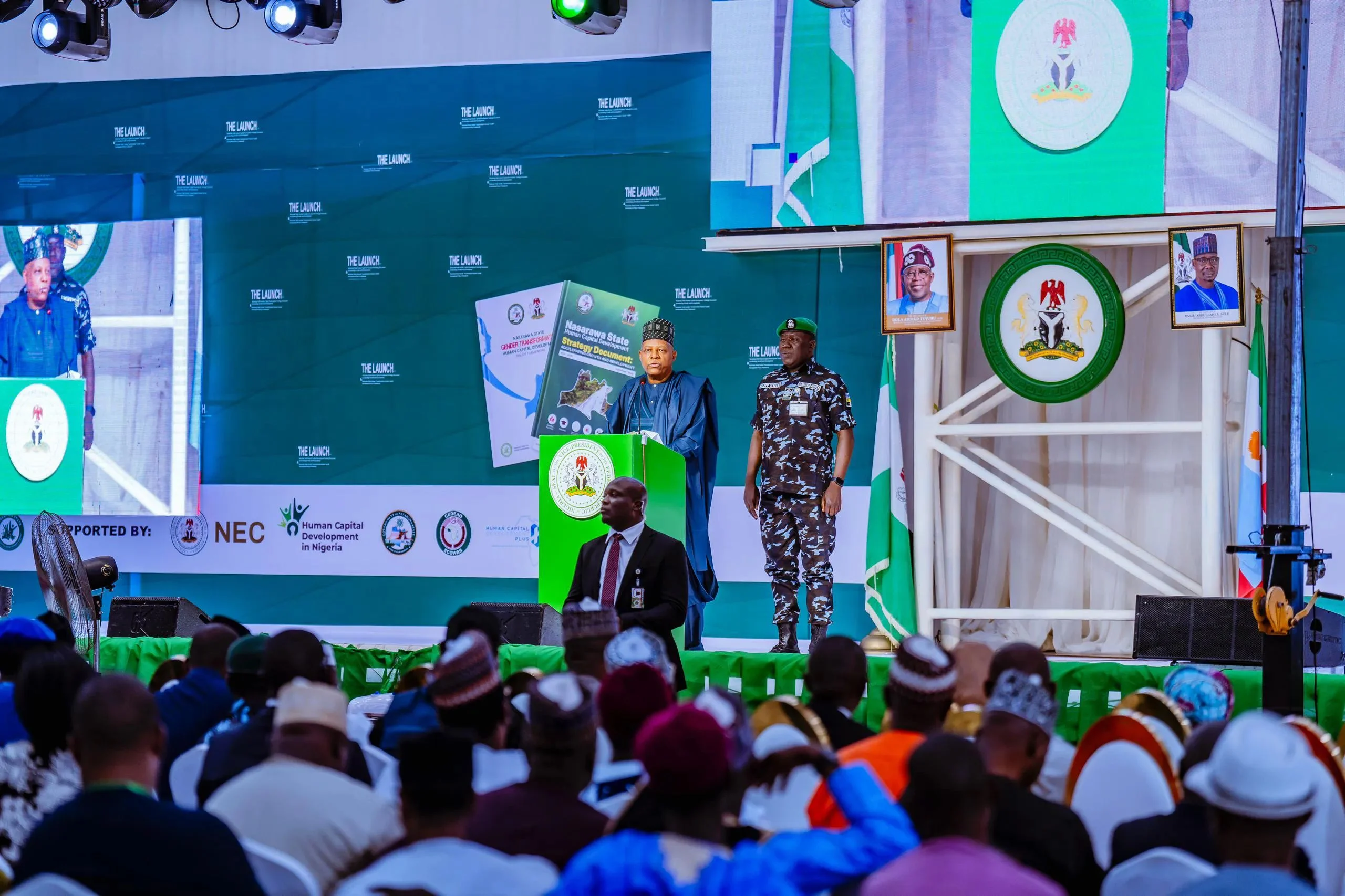
    Senator Shettima who spoke while launching the Nasarawa State Human Capital Development in Lafia declared that HCD is a treasure which contains solutions to Nigeria’s human “capital challenges by focusing on education, health, and workforce development.”

    Nigeria’s Human Capital Development project is now in the second phase (HCD 2.0) with emphasis on gender and equal opportunities, climate change and sustainability, digital economy and financial inclusion as well as food and nutrition.

    With steady progress being made in attaining the set targets in the three thematic areas of health, education and skills, labour force participation and livelihoods, coupled with the avowed determination of the Vice President, as well as the HCD Secretariat towards the attainment of these goals, the presidency is not just walking the talk this time, but resolved to surpass its own targets. This is self-evident from the Vice President’s declaration that “The unemployment rates, the growing informal sector, and low labor force participation must be reversed. This is the dystopia our Human Capital Development Program is designed to abate, under the mandate of His Excellency President Bola Ahmed Tinubu, GCFR. For so long, at the National Economic Council, we have debated the ideal nation we wish to build and the paths we are to achieve it.”

  • Revamping Agriculture: Prioritizing Smallholder Over Commercial Farming in Nigeria.

    Revamping Agriculture: Prioritizing Smallholder Over Commercial Farming in Nigeria.

    By Chris Echikwu

    As we celebrate World Food Day today, it is fitting that Nigeria rethinks its strategies for revamping agriculture.


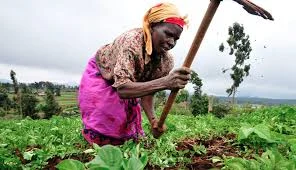
    There is no gainsaying the fact that despite decades-long significant government investment in promoting commercial farming in the country, the results have been largely sub-optimal, failing to significantly improve her food security, rural employment, or economic growth. A shift towards supporting smallholder farming—the backbone of Nigeria’s agriculture—may present a more sustainable and inclusive path to agricultural development.


    Key Arguments for Supporting Smallholder Farming:

    1. Widespread Impact: Nigeria has over 33 million smallholder farmers, making up the majority of the agricultural workforce. Supporting them directly impacts rural livelihoods and boosts food security.
    2. Increased Productivity Potential: With access to improved inputs, training, and finance, smallholder farmers can double or triple yields. Countries like Kenya, Indonesia, Sri Lanka, Bangladesh and India, to mention a few examples from developing countries, have demonstrated the effectiveness of empowering smallholders in driving agricultural growth.
    3. Sustainability and Inclusivity: Smallholder farming is more environmentally sustainable and socially inclusive, benefiting rural communities, women, and youth.
    4. Sub-optimal Commercial Farming Investments:
      Between 2016 and 2021, Nigeria invested well over ₦200 billion through initiatives such as the Anchor Borrowers’ Programme, Commercial Agriculture Credit Scheme (CACS), and other commercial farming projects.
      The ₦13 billion on commercial rice farming and ₦10 billion on cassava farming have resulted in marginal gains, with projects plagued by inefficiencies and lack of access to rural infrastructure.
    5. Better Return on Investment: Studies show that investing in smallholder farming can yield better outcomes per Naira spent compared to large-scale commercial farms, especially in job creation, food security, and poverty alleviation.
      Conclusion:
      Reinvigorating farm extension services, imposing better coordination and supervision of farming practices in the rural areas as well as redirecting a portion of government spending directly towards smallholder farmers—through subsidies for seeds, fertilizers, irrigation, and training—can deliver better outcomes, including higher food production, economic empowerment, and long-term sustainability.

    Chris Echikwu is a retired General Manager of Nigeria Commodity Exchange

  • Ndume begs Tinubu to reduce fuel, food prices

    Ndume begs Tinubu to reduce fuel, food prices

    Says Nigerians suffering, bad advisers sabotaging govt

    The senator representing Borno South in the National Assembly, Mohammed Ali Ndume, has raised the alarm that certain fifth columnists working hard to sabotage the administration of President Bola Ahmed Tinubu.

    Ndume said the astronomical increase in the prices of fuel, food, essential goods and services is becoming unaffordable to average Nigerians and the poor that form the majority,

    In a statement made available to newsmen in Abuja, Ndume said the bad elements are trying hard to pitch the people against the administration of President Tinubu by pushing for harsh reforms and bad policies instead of controlling inflation and exchange rate that are making life unbearable for Nigerians.

    The ranking senator said those who are bent on making the President look bad will stop at nothing in inflicting pains on Nigerians through the “so-called reforms until things get out of hand and the blame will be on President Tinubu.”

    While advising the administration of President Tinubu, Ndume said many families can barely meet up with daily demands in their houses as a result of the hyperinflation caused by incessant increase in the price of essential goods and services.

    Ndume said: “I personally believe President Bola Ahmed Tinubu means well for Nigeria and Nigerians. I know this because I know what he stands for. But some of his advisers who don’t mean well for the people of this country give him wrong advise.

    I’m appealing to him to resist these bad people who want to pitch the people against his administration. The hardship these people are inflicting on Nigerians is becoming unbearable. I’m currently in Borno, and I know what I’m talking about. People are really suffering, hungry, frustrated and angry.

    In Borno State here, many families can’t even feed anymore. The untold hardship of these frequent increases in the prices is unimaginable. Farmers can not even move their farm products anymore because of the high cost of transportation.

    Those who can still do this add the cost of transportation to the prices of food items they sell, and that’s why many people can’t feed again. People can’t travel anymore. To travel by road from Abuja to Maiduguri, for instance, is a fortune. How many of our people can afford that?

    I know that President Tinubu means well for Nigerians, and therefore he should not stay back and allow a few bad advisers to destroy this country. That’s why I’m begging him to do something before it is too late. It is not good to test the patience of Nigerians, and that’s exactly what these bad advisers are doing.

    As soon as the President returns to Nigeria, I urge him to look into these issues and address them urgently. The purchasing power of Nigerians is too poor, and they can’t afford the things that are being pushed on them every day by enemies of state.”