Author: admin

  • China Pushes Back Against UN Replacement Talk, Vows to Defend UN-Led Global Order

    China Pushes Back Against UN Replacement Talk, Vows to Defend UN-Led Global Order

    China has reaffirmed its commitment to multilateralism and to safeguarding the international system with the United Nations at its core, as questions emerge over the future role of the global body following remarks by U.S. President Donald Trump.

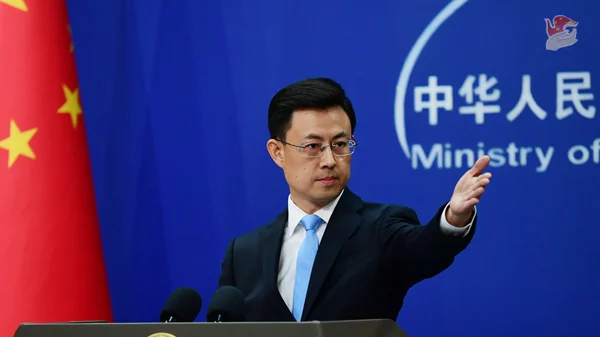
    Foreign Ministry spokesperson Guo Jiakun made the comments on Wednesday at a regular press briefing, responding to Trump’s statement a day earlier that the United Nations should continue because of its potential, while suggesting that a proposed “Board of Peace” could possibly replace the organization.

    Guo stressed that China’s position on the United Nations and the international order remains firm and unchanged. “No matter how the international situation evolves, China will resolutely safeguard the international system with the United Nations at its core,” he said.

    According to Guo, China has consistently advocated for true multilateralism and believes the UN plays an irreplaceable role in maintaining international peace and security, promoting development, and addressing global challenges.

    He emphasized that the UN-centered system reflects the collective will of the international community and should not be weakened or undermined.

    Guo further noted that China will continue to uphold the international order underpinned by international law, as well as the basic norms governing international relations based on the purposes and principles of the UN Charter.

    These principles, he said, remain the cornerstone of global governance and cooperation.

    The remarks come amid broader international debate over reforms to global governance institutions and concerns about unilateral approaches to international affairs.

    China, Guo added, supports strengthening the authority and effectiveness of the United Nations through cooperation and dialogue, rather than replacing existing multilateral mechanisms.

    “China will work with all parties to defend fairness and justice in international affairs, promote cooperation among countries, and contribute to a more stable and orderly international system,” Guo said.

  • Lagos Assembly in 2025: Between Institutional Crisis and Legislative Productivity

    Lagos Assembly in 2025: Between Institutional Crisis and Legislative Productivity

    The Lagos State House of Assembly in 2025 presented a study in contrasts: a legislature shaken by a profound leadership crisis, yet paradoxically productive in lawmaking and oversight. The events of the year exposed both the fragility and resilience of legislative institutions in Nigeria’s most politically influential state.

    At the centre of the crisis was the dramatic removal of Speaker Mudashiru Obasa on Jan. 13 by 36 lawmakers, followed by the election of Deputy Speaker Mojisola Meranda. Lawmakers justified the action as a corrective step aimed at addressing alleged misconduct and abuse of power, and as an attempt to reset the leadership culture of the Assembly.

    However, the decision to remove a sitting Speaker while he was abroad created a legitimacy problem that quickly escalated into a full-blown institutional crisis. Rather than stabilising the House, the move deepened internal divisions, weakened cohesion among lawmakers, and opened the Assembly to intense political pressure from outside forces.

    The failure of party mechanisms to swiftly resolve the dispute was particularly instructive. Interventions by senior figures of the All Progressives Congress (APC), including former governors Chief Bisi Akande and Chief Olusegun Osoba, failed to restore unity. Even the Governance Advisory Council (GAC), traditionally regarded as the party’s ultimate authority in Lagos politics, proved unable to impose a settlement. That some stakeholders openly suggested that only President Bola Tinubu could resolve the crisis underscored the limits of institutional autonomy within the state’s political structure.

    The crisis reached its most dramatic point on Feb. 17, when Obasa returned to the Assembly complex with security operatives and declared himself the lawful Speaker. His brief occupation of the Speaker’s Office symbolised not just a personal power struggle, but a broader contest over authority, legality and control of the legislature. The episode further polarised lawmakers and exposed the Assembly to public embarrassment.

    Mrs Meranda’s short tenure as Speaker unfolded in an atmosphere of instability, culminating in a clash between officials of the Department of State Services (DSS) and legislative workers. The arrests that followed raised concerns about the encroachment of security agencies into legislative affairs and further highlighted the erosion of internal order within the Assembly.

    Ultimately, the resolution of the crisis on March 3 — through the intervention of President Tinubu, the resignation of Meranda and the reinstatement of Obasa — reinforced perceptions that political power, rather than legislative process, remains decisive in resolving elite conflicts. While the intervention restored surface stability, it left unresolved questions about legislative independence, internal democracy and succession norms within the House.

    Yet, beyond the political drama, the Assembly’s legislative output in 2025 tells a more complex story. Despite internal discord, lawmakers continued to function, passing several significant bills that have long-term implications for governance in Lagos State.

    The swift passage of the N3.37 trillion 2025 Appropriation Bill early in the year demonstrated institutional continuity amid crisis. The “Budget of Sustainability,” with its emphasis on infrastructure, economic diversification and social inclusion, reflected policy consistency between the legislature and executive, even as leadership battles raged within the House.

    Similarly, the passage of the Local Government Administration Bill signalled an effort to modernise governance at the grassroots by harmonising existing laws and aligning state frameworks with national reforms. The E-GIS Bill, aimed at improving land administration and transparency, addressed long-standing structural weaknesses in land management — a critical issue in a rapidly urbanising state like Lagos.

    The Assembly also showed responsiveness to social pressures through bills such as the Tenancy and Recovery of Premises Bill. By seeking to regulate rent practices, curb illegal evictions and reduce agency fees, the House positioned itself as an arbiter in the increasingly contentious landlord–tenant relationship. If effectively implemented, the bill could significantly alter housing dynamics in the state.

    In the health sector, the bill establishing the Lagos State University of Medicine and Health Sciences reflected a strategic attempt to address chronic manpower shortages, while other proposed laws on correctional services, cancer treatment and policing pointed to a broader agenda of institutional reform.

    Oversight activities further demonstrated that legislative functions did not completely grind to a halt. Committees continued to scrutinise ministries, departments and agencies, reviewed executive appointments and monitored policy implementation, reinforcing the Assembly’s constitutional role despite internal divisions.

    Stakeholder assessments of the Assembly’s performance reflect this dual reality. Civil society actors and former lawmakers acknowledged the damaging effect of the leadership crisis but also credited the House with passing impactful legislation and sustaining debate and oversight. Public reactions, particularly from residents and community leaders, suggest that constituency-level interventions and empowerment programmes helped buffer the reputational damage caused by the crisis.

    In sum, the Lagos State House of Assembly in 2025 illustrated the tension between politics and institution-building in Nigeria’s democratic practice. The leadership crisis exposed vulnerabilities in legislative governance and party control, while the volume and substance of legislative work highlighted the Assembly’s underlying capacity to function.

    Whether the House builds on its legislative gains or remains vulnerable to future power struggles will depend on lessons drawn from the crisis — particularly the need for clearer internal processes, stronger institutional autonomy and mechanisms for resolving leadership disputes without external intervention. The trajectory of 2026 will test whether the Assembly can move from crisis management to genuine institutional consolidation.

  • Abia Government Rolls Out Civil Service Estate, Boosts City Beautification

    Abia Government Rolls Out Civil Service Estate, Boosts City Beautification

    Umuahia, Abia State – January 20, 2026 – The Abia State Government has announced plans to construct a Civil Service Commission/Pocket Layout Estate in Umuahia, aimed at delivering affordable and quality housing for residents. The announcement was made by Commissioner for Information, Mr. Okey Kanu, following the State Executive Council meeting.

    “The Ministry of Housing will soon commence work on the project, in line with Governor Alex Otti’s vision to improve the welfare of Abia citizens through sustainable housing,” Kanu said.

    The government is also in advanced discussions with private developers under a Public-Private Partnership (PPP) to develop housing estates at Mbaisii and Mgbarakuma, Umuahia. Agreements are near completion to allow construction to begin promptly.

    As part of its Urban Renewal Programme, the state has intensified efforts to beautify the capital, including tree planting, road repairs, installation of signs, and removal of shanties and illegal building projections. Residents and landlords have been given deadlines to comply, with enforcement by the Umuahia Capital Development Authority (UCDA). Landlords are required to carry out routine maintenance or facelifts within four weeks.

    In the health sector, the state has recruited 649 medical personnel, including 432 nurses deployed to primary healthcare centers and a neurosurgeon with a rare specialty. Recruitment will continue until the approved 771 positions are filled.

    On transportation, temporary charging stations have been installed to support the government’s free electric bus services, while two distribution substations at the Umuahia Bus Terminal are 80% completed.

    In the power sector, the Abia State Electricity Regulatory Authority (ASERA) will soon regulate electricity activities, enhancing consumer protection and service delivery following the transfer of regulatory authority from NERC.

    The government also banned illegal commercial vehicle parking and warned defaulters of impoundment.

    The Forum of Academic Doctors recently recognized Governor Alex Otti as the best performing governor in the South-East, citing reforms across housing, health, power, and urban development.

  • Brigadier Ademulegun and 60 years of nightmare

    Brigadier Ademulegun and 60 years of nightmare

    By

    UGO ONUOHA

    RITUALS have a way of degrading and over shadowing the substance and raisin d’etre of almost every memorial. That much can be said for January 15 every year in Nigeria. That day was symbolically and whimsically chosen to mark the end of the fratricidal Nigeria – Biafra civil war, 1967- 1970. That bloody war, in which combatants especially on the federal side appeared to have paid scant regard to the internationally prescribed rules of engagement in such strife, cost between one million to three million lives, especially on the side of the self-determination protagonists. The body count and the labelling of the two sides would depend on whose account of the history of the war you are reading.

    The Nigerian civil war did not just happen. There was a build up, and some of the seeds that culminated in the war were sown long before the country gained political independence on October 1,1960. The constitutional conferences that preceded the country’s independence were marked by toxic debates, disagreements that bordered on irreconcilable differences, and widespread suspicions amongst the leaders of the various regions – east, west, and north. It was so bad that the regional leaders could not find accommodation in determining when self government would start in the regions. That explains why self government commenced earlier in the east and the west, and much later and ostensibly reluctantly in the northern region.

    The subsequent attainment of independence in 1960 did not stem the deep-seated, pervasive, and mortal mutual suspicions. At the root of the trust deficit were the differences in religion, the level of exposure to Western education, and the fear of domination of the north by the south, a part of the country that was perceived to be more educated and sophisticated. The south also dominated the public/civil service and the officer corps of the armed forces and other security agencies at the time. That was the reality. The fear of one another was manifest during the horse trading for political alliances in the aftermath of the pre-independence election which failed to hand any of the major political parties – National Council of Nigeria and Cameroon [NCNC], Northern People’s Congress [NPC], and the Action Group [AG] – a clear electoral majority and the mandate to govern.

    The country’s politicians and rulers fumbled and wobbled into the general elections of 1964 which turned out to be violent and bloody especially in the defunct Western region. At that point it became clear to the discerning that the fledgeling and floundering Nigerian republic and its nascent democracy were heading for the rocks. That chapter was fast tracked to its inevitable end through widespread violence, manipulations, curious political trials, imprisonment, and perceived pervasive corruption in governments particularly at the federal level.

    So in January 1966, the army struck and sacked the democratically elected civilian government headed by Sir Abubakar Tafawa Balewa who was the prime minister, and Dr. Nnamdi Azikiwe, who was the president, head of state and commander-in-chief of the armed forces. That bloody military coup which had Major Chukwuma Kaduna Nzeogwu as its putative head stirred the hornets’ nest. When the coup was foiled by the then Col. Chukwuemeka Odumegwu-Ojukwu and a few other military officers, Major-General Johnson Thomas Umunnakwe [JTU] Aguiyi-Ironsi assumed the office of the head of state and supreme commander of the armed forces. The January 1966 coup which victims were perceived to be preponderantly from the north incubated a revenge coup of July 1966 which was yet another bloodbath this time of the eastern military and political leaders. Civilians of eastern extraction living in other parts of the country, particularly in the north were not spared. Some historians described what happened in July 1966 and thereafter as a pogrom and genocide on the Igbo.

    But our major concern in this season of the ritual of this year’s Armed Forces Celebration and Remembrance Day [AFCRD] was about a particular sad and lingering event during the January 1966 coup. It was the gruesome murder of Brigadier Samuel Ademulegun and his wife, Latifat, who was eight months pregnant, in their Kaduna home. He was the commander of the 1st Brigade of the army and the third highest ranking officer of the Nigerian Armed Forces. When you sign up for the army, you sign either to live or to die. That should not be in contention. You enlist to defend the territorial integrity of your country and to lay down your life for that purpose should the need arise. It will also be your bounden duty to protect and preserve legally constituted governmental authorities. And that was what Brigadier Ademulegun was doing in the  the early hours of January 15, 1966, when a coup plotter, Major Timothy Onwuatuegwu, led his team of mutineers into the bedroom of his commander to shoot him and his pregnant wife. The brigadier was said to have refused to surrender the keys to the armoury to the mutineers.

    So, General Ademulegun [that’s what he should be in today’s nomenclature], an authentic Nigerian patriot, his doting wife who was reportedly shot and killed because she used her body and the baby in her womb in her attempt to shield her husband from harm, died in active service. In service to Nigeria. In the years since Gen. Ademulegun, his wife [a London – trained nurse], and her unborn baby were murdered and their children who witnessed the killing were traumatized, our country has had a national anthem which included this line: “…the labours of our heroes past shall never be in vain…” At a point in our country’s epochal and chequered journey that anthem was discarded for being too colonial. But the extant regime in a sleight of hand, and in connivance with a spineless national assembly restored the old anthem in the dead of the night, in a manner of speaking. That line in that anthem is a blatant lie as it pertains to Gen. Ademulegun and his grieving children who have been crying for 60 years, this year.

    In the room or close by on that fateful day when the Ademulegun couple were killed were three of their six children – Solape, six years, Goke, four, and Kole, 13 in a nearby room. In spite of what happened to their father, Francis Bamidele Ademulegun still joined the military and became a Group Captain (red neck) in the Nigerian Air Force. He died without knowing where his father was interred. The same fate befell Adekunle and Bankole. But their siblings, Gbenga, Solape [now Ademulegun – Agbi], and Goke remain unrelenting in asking questions about what happened to the remains of their officer and gentleman father [N/3] and their Sisi Nurse mother? The Nigerian army owes them an answer. President Bola Ahmed Tinubu owes them an answer or an explanation. He is the Commander-in-Chief of the Armed Forces. Sixty years should be enough time to put a closure to this matter. A national monument in honour of the gallant officer and some kind of compensation for his survivors would not be out of place. The Nigerian Army can, and should treat the remains and memories of one of its pioneering officers better than what has happened in the last 60 years. It’s inconceivable that the Nigerian Army does not know the whereabouts of the remains of Gen. Ademulegun, his wife, and their unborn baby. If that were to be the case, then the Nigerian Army should be an institution of particular concern.

    The Ademulegun children did not just wake up 60 years after to ask questions about what happened to their parents. They have been crying for 60 years. They have campaigned. They have written letters to relevant persons and institutions. They have lobbied. They have petitioned. They have begged. But they have met brick walls. On Thursday, January 15, the family again packaged an event in Lagos to celebrate and pay tribute to the memory of the Ondo state-born army general and his wife who hailed from Lagos. “For 60 years [and counting], we have sought answers to many questions from those in authority. The most saddening being the fact that we do not know where they, our parents, were buried”, Solape Ademulegun – Agbi lamented last week.

    “The years have since gone by. We want to celebrate their gallant and heroic lives. Even when there is still no closure and our hearts still bleed everyday. But right now we believe that President Bola Tinubu can ease our pains. We are appealing to the president to direct the military authorities to show us from their records where exactly… our parents [were] buried. This will go a long way to help us to put this tortuous pain, tears, and grief behind us”. This plea should have been attended to yesterday. But if it is answered today, it could be said to be late but not too late for the grieving surviving children. May the grandchildren of Gen. Ademulegun and Sisi Nurse, authentic Nigerian patriots, not be saddled with searching for where their grandparents were interred. Amen.

  • FCTA Sweeps 607 Beggars, Mentally Challenged Persons Off Abuja Streets

    FCTA Sweeps 607 Beggars, Mentally Challenged Persons Off Abuja Streets

    The Federal Capital Territory Administration (FCTA) has removed no fewer than 607 beggars and mentally challenged individuals from the streets of Abuja between July 2025 and date, as part of efforts to enhance security and maintain order in the nation’s capital.

    Mrs Ukachi Adebayo, Head of Enforcement at the FCT Social Development Secretariat (SDS), disclosed this in an interview with the News Agency of Nigeria (NAN) on Monday in Abuja.

    Adebayo said the exercise was carried out by the Operation Sweep Abuja team, established to rid the city of criminal elements. She explained that out of the 607 persons evacuated, 583 were beggars, while 23 were mentally challenged individuals.

    According to her, those apprehended were counselled and profiled before being taken to their respective state liaison offices for return to their states of origin, where they are expected to undergo rehabilitation.

    “What we do when we apprehend them is to counsel them in order to properly profile them. After that, we take them to their liaison offices to be returned to their states,” Adebayo said.

    She noted that despite repeated evacuations, many of the individuals often return to the streets of Abuja, attributing the trend to insecurity in some states of origin. She added that the operation would remain ongoing.

    Similarly, the Acting Director of Social Welfare at the SDS, Mrs Gloria Onwuka, said investigations revealed that some children seen begging on the streets were brought in from other states by unidentified individuals who collect the proceeds from them.

    Onwuka disclosed that in many cases, women arrested with children begging were not their biological mothers, describing street begging as a growing business.

    “Begging is now run like a business. People hire children from other states and bring them to Abuja to beg, while the families of the children are often unaware,” she said.

    Also speaking, Dr Peter Olumuji, Secretary of the FCTA Command and Control Centre, said Operation Sweep Abuja is a joint security operation involving relevant security agencies as well as FCT secretariats, departments and agencies.

    He explained that the initiative was instituted by the FCT Minister, Mr Nyesom Wike, to rid Abuja of miscreants, beggars, scavengers and other criminal elements, noting that beggars pose security threats and contribute to the defacing of the city.

    Olumuji added that some beggars serve as informants to criminals, while others become victims of kidnapping and ritual-related crimes.

    He recalled that Wike, in October 2024, declared a war on street begging in Abuja, citing concerns that the city was fast turning into a “beggars’ city.”

    The minister had stressed that the move was aimed at strengthening security and ensuring that residents and visitors could live and move around the capital without fear.

  • Benue South and the Politics of Listening: Inside Hon. David Olofu’s Unusual Town Hall

    Benue South and the Politics of Listening: Inside Hon. David Olofu’s Unusual Town Hall

    By

    Dahiru Ali

    In a political culture long defined by monologues, Hon. David Olofu’s interactive session held last Friday at the serene Armed Forces Officers’ Mess and Suite, near Lungi Barracks, Abuja felt disarmingly different. It was not a rally. It was not a coronation. It was, quite deliberately, a conversation.

    For many in attendance, that alone marked a departure from the norm. Never before, participants said, had a senatorial aspirant from the district convened such a broad gathering of Idoma elders, former legislators, academics, technocrats, professionals, and youth leaders, not for endorsement, but for interrogation. One participant described the audience as “the crème de la crème of Idoma sons and daughters,” brought together to think, not applaud.

    The meeting carried the mood of a long-delayed beginning, quiet, deliberate, and heavy with expectation. In a country where citizens often encounter power only after decisions have been made, the symbolism of listening first was not lost on anyone in the room.

    A Deliberate Tone

    Proceedings opened with prayers by Pastor Omale, lending solemnity to what would become an unusually reflective political engagement. Dr. Adakole Elaija moderated the session with steady restraint, while respected figures such as Venerable Akp’olofu and Barrister John Ochoga anchored the event with moral and legal weight.

    The welcome address by Prof. David Salifu, former Secretary to the Government of Benue State, set the intellectual tone. Drawing on history, he recalled how the Idoma people began “hearing from the horse’s mouth” as far back as 1865 in Czarist Russia, an evocative metaphor for direct engagement and political awareness. The message was clear: this was not to be politics at a distance.

    Dr. Elaija reinforced that framing, describing Hon. Olofu’s aspiration as rooted in equity, fairness, and justice, values he argued must define any serious effort to reposition Benue South in the national equation.

    Naming the Problem Without Evasion

    When Hon. David Olofu spoke, he avoided flourish. Instead, he offered a blunt diagnosis. Years of moving through communities across Benue South, he said, had revealed a stubborn reality: poverty in its most pervasive form. Poor schools. Weak healthcare. Crumbling infrastructure. Limited opportunity.

    These conditions, he argued, are not isolated failures but symptoms of deeper structural neglect. Benue South’s underdevelopment, in his telling, is less about absence of effort and more about absence of equity. Representation, he insisted, must go beyond presence in Abuja to sustained advocacy that delivers tangible outcomes.

    Equality as a Political Project

    Guided by the principles of People, Power, Prosperity, and Progress, Hon. Olofu outlined a twelve-point legislative and advocacy agenda. At its core is a single, insistent demand: equal treatment of senatorial districts in national policy, budgeting, and resource allocation.

    Although senatorial districts are constitutionally equal, he noted, practice tells a different story. Some districts attract infrastructure, investment, and federal attention; others are left to stagnate. Correcting this imbalance, he said, would be a defining priority of his tenure.

    “There is no fairness, equity, or equality among senatorial districts nationwide,” he stated plainly, promising to press the issue consistently within the National Assembly.

    From Policy to Practical Outcomes

    Beyond advocacy, Hon. Olofu presented a development blueprint that cut across sectors. Education, he said, must be reimagined as social engagement, with a deliberate shift toward science, technology, engineering, and mathematics. Healthcare reform would focus on upgrading Primary Healthcare Centres to strengthen access at the grassroots.

    Agriculture featured prominently, framed not as subsistence but as a pathway to industrialisation and shared prosperity. Mechanised farming, beginning with land clearing, would anchor this shift. Entrepreneurship and SME support, particularly access to capital, were identified as engines for expanding commercial activity across the district.

    The aspirant also placed strong emphasis on ICT, proposing hubs and incubation centres to channel youth creativity into productive enterprise. Infrastructure renewal, local government reforms, and insecurity rounded out the agenda. On security, he called for a review of existing laws and the establishment of a command-and-control coordination system in Otukpo.

    Redefining Representation

    What most distinguished the session, however, was Hon. Olofu’s approach to governance itself. Rejecting the idea of representation as a solo act, he proposed institutionalised citizen participation through the creation of a Benue South People’s Assembly to monitor project implementation, and a Benue South Council to provide advisory input and early warning signals.

    Under these bodies, thematic working groups would help shape legislative priorities, ensuring that governance remains responsive rather than remote. It was an approach many present described as rare in Nigeria’s political space.

    Industry, energy, strategic partnerships, diaspora engagement, and women, youth, and sports development were also highlighted as essential to human capital development and long-term economic revival.

    The audience listens in rapt attention

    The Room Responds

    The floor discussion was candid. Hassan Sale described the agenda as ambitious but urged the aspirant to sharpen priorities and remain focused on district-wide needs rather than narrow community concerns.

    Dr. Odatche, Convener of the Benue Rebirth Movement, commended the interactive format and encouraged sustained focus on agriculture, ICT, sports, and youth development as levers for social change.

    Participants also raised politically charged questions: How many terms does Hon. Olofu intend to serve if elected? What is his position on lobbying for the creation of Apa State? The questions underscored the seriousness with which the audience engaged the process.

    Beyond Party, Toward Purpose

    As the session closed, one sentiment cut across party lines. The Idoma nation, speakers agreed, has an opportunity to make a decisive statement in Zone C, not merely through electoral numbers, but through clarity of purpose and unity of voice.

    In the end, Hon. David Olofu’s interactive session did not promise miracles. What it offered instead was something rarer: the politics of listening, the discipline of inclusion, and the possibility that representation, properly imagined, can still mean something. Whether that promise survives the heat of electoral politics remains to be seen. But for a few hours in Benue South, the conversation itself felt like progress.e South, the conversation itself felt like progress.

  • Chelle Praises Eagles’ Grit as Nwabali Secures AFCON 2025 Bronze

    Chelle Praises Eagles’ Grit as Nwabali Secures AFCON 2025 Bronze

    Super Eagles head coach Eric Chelle has praised his players’ resilience after Nigeria defeated Egypt to claim the bronze medal at the 2025 Africa Cup of Nations (AFCON) in Morocco.

    The third-place play-off, played on Saturday in Casablanca, ended goalless after regulation time before Nigeria triumphed 4–2 in a penalty shootout.

    Goalkeeper Stanley Nwabali was the hero of the encounter, saving two penalties to secure Nigeria’s place on the podium.

    Reacting after the match, Chelle said the victory was the result of character and collective effort following the team’s semi-final loss to hosts Morocco.

    Nigerian Striker, Ademola Lookman taking the decisive strike against Egypt.

    “Being a coach is never easy. I felt disappointment before, but today I feel deep pride in these players. They gave everything until exhaustion,” Chelle said.

    The coach described the bronze medal as the product of months of preparation, sacrifice and belief within the squad.

    “This achievement did not come by chance. It came from a full year of continuous work and belief,” he said.

    Chelle also highlighted the importance of unity and effective team management, noting that experimentation during the tournament was part of the team’s growth.

    “This is not a one-night story. It is part of a longer journey for the future of this team,” he added.

    Meanwhile, Nwabali described the bronze medal victory as a collective achievement, despite being named Man of the Match.

    “It was a very difficult match against a great Egyptian team. Nobody wanted to make a mistake,” the goalkeeper said.

    He added that calmness was key during the shootout.

    “I stayed calm, read the takers and trusted my instincts,” Nwabali said.

    The goalkeeper praised the defensive unit and team spirit shown throughout the match.

    “This victory came from collective effort. Everyone stayed united,” he said.

    Nigeria finished AFCON Morocco 2025 on the podium, with Nwabali’s penalty saves proving decisive in the third-place play-off.

  • NGF, HiiL Seal Partnership to Advance People-Centred Justice in Nigeria

    NGF, HiiL Seal Partnership to Advance People-Centred Justice in Nigeria

    The Nigeria Governors’ Forum (NGF) has entered into a formal partnership with the Hague Institute for Innovation of Law (HiiL) to deepen justice sector reforms and promote people-centred justice across Nigeria’s 36 states.

    The partnership was sealed through the signing of a Memorandum of Understanding (MoU) at the NGF Secretariat in Abuja, marking a shift from years of engagement between both institutions to a more structured and long-term collaboration focused on measurable outcomes for citizens.

    Speaking at the event, the Director-General of the NGF, Dr. Abdulateef Shittu, said the agreement builds on an existing relationship shaped by sustained, evidence-based dialogue on justice reform. He described the collaboration as timely, given ongoing challenges around access to justice, affordability, and public trust in justice institutions.

    According to Shittu, a key milestone in the NGF–HiiL relationship was the launch of the Justice Needs and Satisfaction in Nigeria 2023 Report, which he said has provided policymakers and justice sector stakeholders with credible data on how Nigerians experience justice and where critical gaps remain.

    He noted that the report has helped move reform conversations beyond assumptions, enabling governments and practitioners to design interventions that respond more directly to citizens’ needs.

    Under the MoU, both organisations will work together to promote justice systems that are accessible, fair, affordable, and responsive, with a particular focus on the subnational level where most justice challenges occur.

    Shittu explained that the agreement is not intended to be symbolic, but rather a platform for coordinated action, innovation, and learning. “This is a commitment to action and measurable impact across Nigeria’s justice landscape,” he said.

    Sitting (l-r): Dr. Abdulateef Shittu, Director General, NGF, and Udo Jude Ilo, Chief Executive Officer (CEO), HiiL

    The NGF’s role places state governments at the centre of the reform effort. As the coordinating body for Nigeria’s 36 governors, the Forum is expected to use the partnership to position states as testing grounds for people-centred justice models that reflect local realities.

    The collaboration is also expected to support reforms that strengthen justice institutions while ensuring that legal systems respond to how people experience everyday disputes, including land, family, commercial, and service-related issues.

    Shittu acknowledged HiiL’s technical expertise and global experience in justice innovation, expressing optimism that research insights generated through the partnership would translate into practical solutions that improve efficiency, inclusion, and trust in justice delivery.

    A press statement by NGF Director of Media and Strategic Communications, Mr. Yunusa Tanko Abdullahi explains that HiiL has operated in Nigeria for several years and reputed for its people-centred justice approach, which focuses on outcomes rather than procedures and integrates formal and informal justice pathways.

    It States further that the partnership with the NGF is expected to help scale such approaches across states through stronger institutional alignment.

    Both parties committed to working in good faith to expand access to justice through data-driven reforms, innovation, and collaboration, with specific initiatives to be developed under the MoU framework.

    As Nigeria continues to confront long-standing challenges related to justice delivery, observers say the NGF–HiiL partnership signals a renewed effort to place citizens at the centre of justice reform.

  • Rivers Assembly Begins Impeachment Process Against Gov Fubara

    Rivers Assembly Begins Impeachment Process Against Gov Fubara

    Contrary to public expectations of renewed presidential intervention, the Rivers State House of Assembly has voted overwhelmingly to commence an investigation into allegations leveled against Governor Siminalayi Fubara.

    Twenty-five of the state assembly’s 32 lawmakers voted in favor of initiating the impeachment process. The decision came after efforts to resolve the political impasse through behind-the-scenes negotiations proved futile.

    Lawmakers announced the decision on Friday at the temporary Assembly complex, addressing the press on why the impeachment process had reached what they described as a point of no return. During the briefing, a member read a written statement outlining the Assembly’s position.

    The House said the decision followed the presentation of formal allegations against the governor and the subsequent resolution to proceed with an investigation.

    Some lawmakers who had previously distanced themselves from the impeachment threat have now reversed their positions. Hon. Emelia Amadi, speaking at the Assembly premises, said she had decided to close ranks with her colleagues, citing what she described as Governor Fubara’s continued unconstitutional actions.

    Other members reiterated their resolve to continue with the process, emphasizing that their actions were guided by constitutional responsibility and the need to uphold the rule of law.


    The impeachment of a state governor in Nigeria is governed by Section 188 of the 1999 Constitution (as amended).

    Under the Constitution, impeachment may be initiated on grounds of gross misconduct, defined as grave violations of the Constitution or serious misconduct in the performance of official duties.

    The process begins with a notice of allegation signed by at least one-third of the members of the State House of Assembly and served on the governor. Within 14 days, the Assembly must decide whether to investigate the allegations. Such a decision must be supported by not less than two-thirds of all members.

    If approved, the Speaker requests the Chief Judge of the State to constitute a seven-member investigative panel of persons of unquestionable integrity. The panel is required to investigate the allegations and allow the governor to respond.

    The panel must submit its report within three months. If the allegations are not proven, the matter ends. If they are proven, the House may proceed to adopt the report.

    A governor is removed from office only if the panel’s report is adopted by a resolution supported by not less than two-thirds of the Assembly members, after which the removal takes immediate effect.

    While the Constitution limits court interference in impeachment proceedings, the process must strictly comply with constitutional provisions to be valid.

  • Hon. David Olofu: When Preparation Meets the Moment

    Hon. David Olofu: When Preparation Meets the Moment

    A technocrat shaped by fiscal discipline, community loyalty, and quiet conviction steps forward to test experience against the demands of electoral leadership in Benue South.

    Shortly after dawn in Abuja, as the city settles into its familiar rhythm of traffic, briefings, and guarded optimism, a quieter political moment begins to take shape. At an understated venue, Hon. David Olofu prepares to meet the media, not to stage a spectacle, but to explain a decision that has been forming over years of public service.

    Further to his declaration in October 2025 to contest the Benue South Senatorial seat in the 2027 General Election, Olofu’s interactive session with journalists this morning marks a defining point in his political journey. It is the moment where preparation meets public intent, where experience built largely away from cameras is brought deliberately into open conversation.

    For those who have followed his path, the step feels less like an announcement than a culmination.

    Olofu’s story begins far from Abuja, in Opaha, Edikwu Ward 2 of Apa Local Government Area, where community life leaves little room for abstraction. Growing up within the Idoma nation, he learned early that leadership is measured by proximity to people and responsiveness to shared challenges. Those formative experiences never loosened their hold on him, even as his career carried him into the inner workings of government.

    That grounding became especially evident in 2015, when he assumed office as Commissioner for Finance and Budget in Benue State. Over the next eight years, he worked in one of the most demanding corners of governance, steering fiscal planning through economic uncertainty and mounting public expectations. Colleagues recall a man methodical under pressure, convinced that budgets were not merely technical exercises but moral documents—expressions of government’s priorities and credibility.

    His steady stewardship soon drew national attention. Between 2019 and 2023, Olofu served as Chairman of the Forum of State Commissioners for Finance in Nigeria, coordinating fiscal conversations among the states and engaging federal institutions on sustainability and reform. His later appointment as Senior Technical Adviser to the Nigeria Governors’ Forum placed him within national policy spaces where decisions quietly shape the direction of states long after political cycles turn.

    Yet, national relevance only sharpened an enduring question: how could this experience be translated into direct representation for the people who shaped him?

    That question came into focus in June 2025, when Olofu resigned from the People’s Democratic Party (PDP) after years of membership. The move was neither abrupt nor confrontational. Instead, he described it as a recalibration, an effort to align platform with principle and representation with conviction. In Apa Local Government Area, the decision ignited renewed political conversations, positioning him as a rallying figure for those seeking leadership defined more by competence than allegiance. His eventual alignment with the African Democratic Congress (ADC) reflected this evolving political direction.

    By October 2025, months of consultations across Benue South matured into resolve. Olofu formally declared his intention to contest the senatorial seat, following engagements that included community meetings, stakeholder dialogues, and symbolic royal blessings in Ugbokpo, Otukpo, Obagaji, and Ohimini. Across these interactions, his message remained consistent: development anchored on infrastructure, improved security, economic inclusion, and deliberate youth empowerment—pursued through informed and effective legislative action.

    Running parallel to this political journey is a quieter, deeply personal commitment to service. Through the Apa Legacy and Sustainability Initiative, Olofu has invested in education, healthcare, and community empowerment. His ₦50 million Education Support Fund has enabled Idoma students to remain in tertiary institutions, while his ₦10 million contribution to maternal and infant healthcare at St. Helen’s Specialist Hospital, Otukpo, addressed urgent local needs. To those close to him, these efforts are not political gestures but reflections of a leadership philosophy that views service as continuous rather than episodic.

    Taken together, Olofu’s profile reveals a leadership style shaped by patience, preparation, and proximity to people. With a background in finance, a record of public accountability, and enduring grassroots ties, he represents a growing class of Nigerian leaders whose credibility is built quietly and sustained deliberately.

    As Benue South looks toward the 2027 elections, Olofu’s transition from state commissioner to national policy adviser and now senatorial aspirant reads less like a leap and more like a progression, anchored in experience, guided by conviction, and sustained by belonging. As he sits before the media in Abuja this morning, he does so not with urgency, but with intent, offering himself for a responsibility he believes he has long been preparing to carry.

    In a political season often defined by haste and high volume, David Olofu’s entrance is measured, an argument that leadership, like trust, is best built before it is demanded.