Author: admin

  • ADC Warns Aspirants’ Supporters Against Divisive Rhetoric Ahead of June Primaries

    ADC Warns Aspirants’ Supporters Against Divisive Rhetoric Ahead of June Primaries

    The African Democratic Congress (ADC) has cautioned supporters of its presidential aspirants to desist from promoting division and claims of exceptionality ahead of the party’s June primaries.

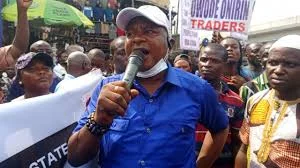
    The party’s National Publicity Secretary, Mallam Bolaji Abdullahi, issued the warning on Saturday while speaking during a live audio conversation on X (formerly Twitter) on the state of the nation and the polity in Abuja.

    Abdullahi said divisive rhetoric among aspirants’ supporters could weaken the party and work to the advantage of the ruling All Progressives Congress (APC), stressing that unity was critical to ADC’s chances in the next general elections.

    He also described the proposal to hold the 2027 general elections in 2026 as a “double-edged sword” for the party, noting that while an early election could make it difficult for ADC to heal internal wounds, it could also benefit the party as Nigerians were increasingly dissatisfied with the current administration.

    According to him, the party leadership is actively engaging key political figures to strengthen internal cohesion ahead of the elections.

    “I spent time talking to Atiku Abubakar, Peter Obi, Rotimi Amaechi and Nasir El-Rufai on uniting the party and improving Nigeria,” Abdullahi said.

    “Our leaders are aware of the task ahead, and every one of them is committed to ensuring that we win this election together resolutely.”

    Speaking further on the timing of the elections, Abdullahi said, “Whether elections hold this year or next year, it will work for and against us as opposition.”

    He warned supporters against adopting an “all-or-nothing” posture around any aspirant, saying such attitudes undermine the party’s broader goal of winning elections.

    “Saying it is either this candidate or nothing is not helpful; winning the election matters, and divisiveness cannot deliver victory for the party,” he said.

    Abdullahi added that all ADC aspirants were qualified, cautioning against the vilification of individuals or regions, which he said complicates efforts to build nationwide support.

    “We will ignore people creating exceptionality and focus on our work because we want to win these elections credibly, peacefully and inclusively nationwide together as one,” he stated.

    He specifically criticised slogans suggesting “Peter Obi or nothing,” arguing that such rhetoric limits outreach and hardens positions needed for electoral success across regions.

    The ADC spokesman also said the party was taking the forthcoming Federal Capital Territory (FCT) area council elections seriously, following its poor showing in the Anambra off-season governorship election, and hoped to make a strong statement in the FCT polls.

    In addition, Abdullahi expressed concern over reports that some state governments were allegedly compelling civil servants with National Identification Numbers (NIN) to register as members of their political parties.

  • Altered After Parliament: Nigeria’s Tax Laws and the Crisis of Executive Power

    Altered After Parliament: Nigeria’s Tax Laws and the Crisis of Executive Power

    By

    Dahiru Ali

    Nigeria’s recent tax reform laws, widely seen as a landmark step toward modernizing the country’s revenue system, have become the focus of growing scrutiny following allegations that the laws were altered after parliamentary approval. The House of Representatives Minority caucus has accused relevant actors of introducing unauthorized changes, raising questions not only about procedural integrity but also about the broader balance of power between the executive and legislative branches in Nigeria.

    The controversy came into the public eye in mid-December 2025 when Abdussamad Dasuki, a member of the House, claimed that key provisions of the newly enacted tax laws had been altered in the versions gazetted for public release. The allegations immediately sparked public debate, with some Nigerians calling for a suspension of implementation pending clarification. The concern, critics argue, is that changes made outside the legislative process could have significant legal, economic, and political consequences.

    A day before Dasuki’s public allegations, the leadership of both chambers of the National Assembly had instructed Kamoru Ogunlana, clerk of the Assembly, to coordinate with executive agencies to re-gazette the laws. Some analysts interpreted this directive as a tacit acknowledgment that the original gazetted versions contained errors or deviations from the versions approved by lawmakers.

    The laws in question include the Nigeria Tax Act, 2025, the Nigeria Tax Administration Act, 2025, the Joint Revenue Board of Nigeria (Establishment) Act, 2025, and the Nigeria Revenue Service (Establishment) Act, 2025. Each of these laws represents a key component of the government’s broader fiscal reform agenda, aimed at streamlining tax administration, broadening the tax base, and improving revenue mobilization.

    Yet preliminary findings from a seven-member committee appointed by Minority Leader Kingsley Chinda suggest that substantive alterations may have been introduced in some of the laws after passage. The committee, chaired by Afam Ogene, includes representatives from all six geopolitical zones: Aliyu Garu (Bauchi), Stanley Adedeji (Oyo), Ibe Osonwa (Abia), Marie Ebikake (Bayelsa), Shehu Fagge (Kano), and Gaza Jonathan (Nasarawa). Their mandate is to investigate discrepancies between the National Assembly-certified copies of the laws and the gazetted versions.

    Key Alleged Discrepancies

    According to Ogene, the Nigeria Tax Administration Act, 2025, shows the greatest variation among the four laws. The committee identified multiple areas of concern:

    • Tax compliance thresholds: Section 29(1) of the House-certified version set the tax compliance reporting threshold at ₦50 million for individuals and ₦100 million for companies. In the gazetted version, the threshold for individuals was reportedly reduced to ₦25 million, with company thresholds altered as well. Critics argue that such a change could significantly expand the number of taxpayers subject to reporting requirements.
    • Appeal conditions: Sections 41(8) and 41(9) were allegedly added in the gazetted copy, requiring taxpayers to deposit 20 percent of disputed tax amounts before appealing to the High Court. These provisions were reportedly not part of the version passed by the National Assembly.
    • Expanded enforcement powers: The gazetted law allegedly empowers tax authorities to arrest suspected offenders and sell seized assets without a court order, a provision absent from the original legislative version.
    • Altered definition of federal taxes: Section 3(1)(b) of the House-certified version defined federal taxes to include income tax, petroleum income tax, stamp duties, and value-added tax (VAT). The gazetted copy reportedly removed petroleum income tax and VAT from federal administration, potentially impacting revenue streams and intergovernmental fiscal relations.
    • Dollar-denominated petroleum tax computation: Section 39(3) of the gazetted version mandates that petroleum tax calculations be conducted in US dollars rather than in the currency of the transaction, diverging from the version passed by parliament.
    • Oversight provisions weakened: The National Revenue Service (Establishment) Act, 2025, allegedly had clauses removed that allowed lawmakers to summon officials, demand reports, and ensure accountability. Sections 30(1)(d) and 30(3), which provided for quarterly and annual reports to parliament, were reportedly deleted, raising concerns about the weakening of legislative oversight.

    Implications for Governance and the Rule of Law

    Experts argue that if these discrepancies are confirmed, they could have far-reaching consequences for governance in Nigeria. “The National Assembly is constitutionally empowered to make laws, and any unilateral alterations outside the legislative process undermine both the rule of law and democratic accountability,” said a constitutional law scholar who spoke on condition of anonymity.

    The controversy highlights the perennial tension in Nigeria’s governance system between the executive and legislative branches. While the executive is charged with implementation, the legislature retains the mandate to make and oversee laws. Any interference with this process, intentional or accidental, threatens the checks and balances that underpin democratic governance.

    The controversy has also reignited debate over the role of the presidency in legislative affairs. Analysts suggest that any unilateral alterations to passed laws, whether directly authorized or passively tolerated, signal a worrying disregard for democratic norms and the checks and balances that are meant to safeguard the country’s governance. Such actions, critics argue, risk eroding public confidence not only in the presidency but in the broader institutional framework that underpins Nigeria’s democracy.

    The issue also underscores broader concerns about transparency and procedural rigor in the publication of laws. Legal experts note that discrepancies between parliamentary-certified copies and gazetted versions could lead to confusion among taxpayers, enforcement agencies, and courts, creating uncertainty that may hinder the effective application of the tax reforms.

    Historical Context

    Nigeria has experienced similar controversies in the past, where differences between legislative texts and official publications have sparked public debate and legal challenges. Historically, such incidents have often fueled debates about executive overreach, the reliability of government documentation, and the integrity of legislative processes. Observers note that while these controversies sometimes resolve through clarifications or re-gazetting, the reputational impact on institutions can be long-lasting.

    The current allegations gain additional weight in the context of Nigeria’s ambitious economic reform agenda. Tax reforms are central to the government’s strategy to reduce dependence on oil revenue, expand the tax base, and modernize public finance management. Any procedural irregularities in the laws themselves risk undermining public confidence and investor trust, which are essential for successful implementation.

    Next Steps

    The House Minority committee has requested an extension of time to complete its review. Ogene emphasized that the committee’s work is aimed at ensuring accountability and safeguarding the constitutional role of the legislature. “Given the anomalies, illegalities, and potential procedural lapses, a thorough examination is warranted before the laws are fully implemented,” he said.

    Meanwhile, lawmakers, taxpayers, and policy analysts are closely watching the situation. Questions remain about who authorized the alleged changes, how they were made, and whether corrective action—including possible re-gazetting—will be sufficient to restore confidence in the legislative process.

    The controversy also serves as a reminder of the importance of transparency, meticulous record-keeping, and public oversight in the lawmaking process. As Nigeria continues to pursue economic and fiscal reforms, the integrity of legislative procedures will remain a critical factor in ensuring that reforms are both effective and legitimate.

    Broader Lessons

    At its core, this issue is not just about tax thresholds or procedural discrepancies; it is a reflection of the broader governance challenges that Nigeria faces. The balance of power between the executive and legislature, the clarity of legal texts, and the robustness of oversight mechanisms are all tested when allegations of post-passage alterations emerge.

    As the investigation unfolds, it provides an opportunity for Nigerian institutions to reinforce accountability, clarify procedural standards, and ensure that reforms—especially those with wide-reaching economic and social impact—are implemented with both transparency and legitimacy. For citizens, policymakers, and investors, the outcome of this scrutiny will offer insights into the resilience of Nigeria’s democratic and institutional processes.

    For now, the country watches as the investigation continues, aware that the resolution of this controversy will have implications not only for the implementation of the tax reforms but also for the credibility of Nigeria’s legislative and governance institutions.

  • Reps Minority Alleges Illegal Tampering with Nigeria’s Tax Laws

    Reps Minority Alleges Illegal Tampering with Nigeria’s Tax Laws

    Lawmakers say gazetted versions differ from Acts passed by parliament, accuse executive of undermining legislative authority

    The minority caucus of the House of Representatives has alleged that Nigeria’s newly enacted tax reform laws were illegally altered after passage, triggering a fresh controversy over the integrity of the country’s legislative process and the separation of powers.

    The allegation was contained in a statement issued on Friday by Afam Ogene, chairman of a seven-member committee set up by the caucus to investigate discrepancies between the laws passed by the National Assembly and the versions later published in the official gazette.

    According to Ogene, the committee’s preliminary findings reveal that multiple versions of the tax laws are currently in circulation, with significant differences between the Certified True Copies (CTCs) released by the House of Representatives and the gazetted copies made available to the public.

    Background to the controversy

    The issue first came to public attention on December 17, when Abdussamad Dasuki, a member of the House, alleged that key provisions of the tax laws had been altered after they were passed by parliament. The claim sparked widespread public outrage, with some Nigerians calling for the suspension of the implementation of the laws pending clarification.

    A day earlier, on December 16, the leadership of the Senate and the House of Representatives had directed Kamoru Ogunlana, clerk of the National Assembly, to work with relevant executive agencies to re-gazette the tax laws, a move critics interpreted as an implicit admission that the original gazetted versions were flawed.

    The laws in question are:

    • the Nigeria Tax Act, 2025
    • the Nigeria Tax Administration Act (NTAA), 2025
    • the Joint Revenue Board of Nigeria (Establishment) Act, 2025
    • the Nigeria Revenue Service (Establishment) Act, 2025

    On January 3, the House of Representatives released the gazetted copies of the laws for public scrutiny.

    ‘Clear indication of procedural anomalies’

    Ogene said the directive by the leadership of both chambers to “take steps to align” the Acts passed by parliament with the versions printed by the Federal Government Printing Press was a clear indication that serious procedural anomalies had occurred.

    “This action illegally encroached on the core mandate of the National Assembly,” he said.

    He disclosed that Kingsley Chinda, the minority leader of the House, constituted the investigative committee on January 2 to thoroughly examine what he described as a “legislative scandal.”

    Members of the committee were drawn from the six geopolitical zones and include Aliyu Garu (Bauchi), Stanley Adedeji (Oyo), Ibe Osonwa (Abia), Marie Ebikake (Bayelsa), Shehu Fagge (Kano), and Gaza Jonathan (Nasarawa).

    Multiple discrepancies uncovered

    Ogene said the committee’s review showed that the Nigeria Tax Administration Act, 2025, was the most affected, with three different versions of the document discovered.

    Among the major discrepancies highlighted:

    Lowered tax compliance thresholds
    Under section 29(1), the version certified by the National Assembly fixed the tax compliance reporting threshold at ₦50 million for individuals and ₦100 million for companies. However, the gazetted version reportedly reduced the threshold for individuals to ₦25 million and altered the figure for companies.

    “This is a clear case of the executive undermining legislative powers by illegally altering an already passed law to drag more taxpayers into the net,” Ogene said.

    New appeal conditions inserted
    In section 41, the gazetted copy allegedly introduced new subsections 41(8) and 41(9), compelling taxpayers to deposit 20 percent of the disputed tax amount before appealing decisions of the Tax Appeal Tribunal to the High Court. Ogene said these provisions were never passed by the National Assembly.

    Expanded enforcement powers
    The committee also alleged that section 64 of the gazetted law illegally expanded the powers of tax authorities to include arresting suspected tax offenders through law enforcement agencies and selling seized assets without a court order.

    Altered definition of federal taxes
    Ogene said section 3(1)(b) of the House-certified version defined federal taxes to include income tax, petroleum income tax, stamp duties, and VAT. The gazetted copy, however, reportedly removed petroleum income tax and VAT from the list of taxes administered by the federal government.

    Dollar-denominated petroleum tax computation
    Another contentious change was found in section 39(3), where the gazetted version mandated that tax computations for petroleum operations be carried out in US dollars, contrary to the version passed by parliament, which provided for calculations in the currency of the transaction.

    Oversight provisions removed

    The committee further alleged that the National Revenue Service (Establishment) Act, 2025, was altered to weaken legislative oversight.

    According to Ogene, sections 30(1)(d) and 30(3) of the version passed by the National Assembly empowered lawmakers to summon officials, demand reports, and enforce accountability. These provisions, including requirements for quarterly and annual reports to parliament, were allegedly deleted in the gazetted version.

    He described the deletions as a blatant disregard for the National Assembly and the constitutional doctrine of checks and balances.

    Call for deeper investigation

    “Given the anomalies, illegalities, and impunity observed, which clearly undermine the National Assembly’s constitutional powers and democracy, the committee finds the current evidence sufficient to warrant a deeper investigation,” Ogene said.

    He added that the committee has formally requested an extension of time to conduct a more thorough examination and ensure accountability for what it described as an affront against the legislature.

    As the controversy deepens, the allegations raise serious questions about who altered the laws, how the changes were made, and whether the implementation of the tax reforms can proceed without further legal and political fallout.

  • Presidency Slams Wike’s Actions, Reaffirms Fubara’s Authority in Rivers

    Presidency Slams Wike’s Actions, Reaffirms Fubara’s Authority in Rivers

    In what appears to be the clearest expression yet of official disapproval of his actions, the Presidency has reportedly cautioned the Minister of the Federal Capital Territory (FCT), Nyesom Wike, to desist from further actions perceived as undermining the administration of Governor Siminalayi Fubara of Rivers State.

    The directive was conveyed through the President’s Special Adviser on Media and Policy Implementation, Daniel Bwala, who spoke on behalf of the Presidency amid the lingering political crisis in Rivers State.

    According to Bwala, President Bola Ahmed Tinubu made it clear that Wike, a former governor of Rivers State, has been “adequately compensated” by his appointment into the Federal Executive Council and therefore should not pursue personal or political interests at the expense of national stability and governance.

    The Presidency emphasized that the ongoing tensions in Rivers State must not be allowed to disrupt governance or undermine democratic institutions, stressing that all parties involved should place the interests of Nigeria above individual political ambitions.

    Regarding the purported plan of the Rivers House of Assembly to impeach Gov. Fubara, Mr. Bwala advised the governor to take necessary legal steps to quash the move.

    In a significant political statement, the President also reaffirmed Governor Siminalayi Fubara as the undisputed leader of the ruling party in Rivers State, a declaration widely seen as a strong show of support for the embattled governor.

    Disclosing these details on a Channel TV programme titled “Hard Copy,” the Presidency warned that no individual or group should obstruct the governor from freely carrying out his constitutional responsibilities as the duly elected chief executive of the state.

    The Rivers State political crisis, which has been marked by a power struggle between Wike and his former political ally, Fubara, has generated widespread concern within political circles and among the public.

    Analysts believe the Presidency’s intervention signals a decisive move to de-escalate the conflict and reinforce party discipline and constitutional order.

    Observers also interpret the President’s remarks as a reminder to political actors that federal appointments are not licenses to interfere in state governance, particularly where such actions threaten political stability.

    As tensions persist, stakeholders are calling for reconciliation, restraint, and respect for democratic norms to ensure peace and effective governance in Rivers State.

  • Nigerian Navy Seeks Advanced Maritime Platforms, Technology Transfer at DIMDEX 2026

    Nigerian Navy Seeks Advanced Maritime Platforms, Technology Transfer at DIMDEX 2026

    The Chief of the Naval Staff (CNS), Vice Admiral Idi Abbas, has said the Nigerian Navy is pursuing advanced maritime platforms and enhanced technology transfer to strengthen its operational capacity.

    Abbas made this known at the 9th Doha International Maritime Defence Exhibition and Conference (DIMDEX 2026) held in Qatar.

    This was disclosed in a statement issued on Thursday in Abuja by the Director of Naval Information, Commodore Aiwuyor Adams-Aliu.

    According to the CNS, the Nigerian Navy has made significant progress in local shipbuilding, having constructed five seagoing platforms domestically. These include MV Sauka Lafia, NNS Andoni, NNS Karaduwa and NNS Oji.

    He noted that improved technology transfer would further reposition the Nigerian Navy as a leading manufacturer of warships on the African continent.

    DIMDEX 2026, held from January 19 to January 22 under the patronage of the Amir of the State of Qatar, Sheikh Tamim bin Hamad Al Thani, was hosted by the Qatar Armed Forces.

    The exhibition, regarded as the largest maritime defence and security showcase in the Middle East, offered the Nigerian Navy opportunities to explore cutting-edge maritime technologies and innovative naval platforms.

    During the four-day event, Vice Admiral Abbas engaged with leading global defence solution providers on emerging trends in shipbuilding, acquisition of naval platforms and technology transfer aimed at enhancing indigenous ship production.

    Several warships from partner nations were also berthed at Hamad Port and opened for inspection by dignitaries and participants.

    DIMDEX 2026 also enabled the Nigerian Navy to preview a range of precision-guided munitions suitable for maritime security operations and naval gunfire support within Nigerian waters.

    The CNS said the Navy’s participation aligns with his vision of building a modern, agile and professional naval force capable of securing Nigeria’s maritime interests in collaboration with other security agencies.

  • Starmer to Meet Danish PM After Trump Drops Tariff Threat Over Greenland

    Starmer to Meet Danish PM After Trump Drops Tariff Threat Over Greenland

    UK Prime Minister Keir Starmer will meet Danish Prime Minister Mette Frederiksen on Thursday, a day after U.S. President Donald Trump withdrew his threat to impose tariffs on the UK and other NATO allies over their opposition to his ambitions concerning Greenland.

    Trump stepped back from the proposed tariffs on Wednesday evening following talks with NATO Secretary-General Mark Rutte on the sidelines of the World Economic Forum in Davos, Switzerland. The meeting, according to Trump, led to the formation of a framework for a future security agreement in the Arctic region.

    The development capped a turbulent day for NATO’s European members after Trump ruled out the use of force to secure Greenland, a self-governing territory of Denmark rich in critical minerals. He had earlier threatened to impose 10 per cent tariffs on eight NATO countries, including the UK, for opposing his stance on the territory.

    However, after what he described as a “very productive meeting” with Rutte, Trump indicated he had reconsidered his position.

    Writing on his Truth Social platform, the U.S. president said: “We have formed the framework of a future deal with respect to Greenland, and in fact, the entire Arctic Region. This solution, if consummated, will be a great one for the United States of America and all NATO Nations.

    “Based upon this understanding, I will not be imposing the tariffs that were scheduled to go into effect on Feb. 1.”

    Denmark’s Foreign Minister, Lars Lokke Rasmussen, welcomed the shift in tone, saying the day was “ending on a better note than it began.”

    “Now, let’s sit down and find out how we can address the American security concerns in the Arctic while respecting the red lines of the Kingdom of Denmark,” he said.

    Frederiksen’s visit to Britain is expected to include discussions with Starmer on Greenland’s sovereignty and wider Arctic security, although few details have emerged about the agreement reached between Trump and the NATO chief.

    Trump told reporters the arrangement would be a “long-term deal” and an “infinite deal,” but declined to say whether it would involve the United States gaining ownership of Greenland.

    UK government sources suggested there was quiet satisfaction in London that Starmer’s diplomatic approach—urging restraint and dialogue rather than direct confrontation with Trump—had paid off.

    Earlier on Wednesday, Starmer told the House of Commons he would “not yield” on the issue of Greenland’s sovereignty, marking his strongest public stance yet against the U.S. president and pledging to stand firm in defence of international law and allied unity.

  • MTN Foundation Trains Over 2,000 Young Nigerians in Digital, Business Skills

    MTN Foundation Trains Over 2,000 Young Nigerians in Digital, Business Skills

    he MTN Foundation has trained more than 2,000 young Nigerians in digital and business skills under its Information and Communication Technology (ICT) Skills and Training Programme.

    Speaking on the initiative in a statement, the Executive Director of the MTN Foundation, Mrs Odunayo Sanya, said the programme was designed to equip young entrepreneurs with practical digital skills tailored to their business needs.

    She said small businesses remained the backbone of the Nigerian economy and that supporting young entrepreneurs with simple, affordable digital tools could significantly improve productivity and drive long-term growth.

    According to Sanya, the training, now in its seventh cohort, focuses on helping Small and Medium-sized Enterprises (SMEs) adopt digital tools to enhance productivity and sustainability. She noted that SMEs account for over 90 per cent of businesses in Nigeria and employ a large proportion of the workforce, according to data from the National Bureau of Statistics (NBS).

    The foundation said the programme followed a call for applications in September 2025, which attracted more than 5,000 entries from Nigerians aged between 18 and 35 years.

    Sanya explained that successful applicants are currently participating in a five-week virtual training programme scheduled to end in February 2026. The training began with a general onboarding session across four business tracks and is focused on practical digital growth for small businesses.

    Participants were drawn from sectors including food services, fashion, retail, logistics, beauty and printing, she said, adding that the training emphasises the use of affordable digital tools suitable for small and early-stage enterprises.

    The programme also promotes gradual digital transformation, encouraging participants to digitise basic operations before scaling up over time.

    The sessions are facilitated by a Business Analyst and Digital Transformation Expert, Mr Babajide Jolaolu-Kehinde, who highlighted the benefits of automating repetitive tasks to save time, reduce errors and improve efficiency.

    He introduced participants to tools such as WhatsApp and WhatsApp Business for customer engagement, as well as MTN’s MoMo API for digital payments. Through case studies, he demonstrated how digital tools could help small businesses expand their customer base and increase sales.

    The foundation added that participants would continue to have access to learning materials and recorded sessions throughout the duration of the programme.

  • Human Trafficking: NAPTIP Raises Alarm Over Baby-Selling in Akwa Ibom, rescue 68 victims

    Human Trafficking: NAPTIP Raises Alarm Over Baby-Selling in Akwa Ibom, rescue 68 victims

    NAPTIP rescued 68 victims of human trafficking and arrested 62 suspected traffickers in Akwa Ibom State in 2025, raising fresh concerns over the state’s deepening trafficking crisis.

    The Uyo Zonal Commander of the agency, Mr Ubong Ekwere, disclosed this on Thursday in Uyo during an interview with the News Agency of Nigeria (NAN).

    Ekwere said 51 of the rescued victims were females, while 17 were males. Five victims—two males, one female and two babies—are still receiving care at NAPTIP’s shelter, while others have been reunited with their families.

    He revealed that the command handled 58 trafficking cases during the year, with five transferred from the police, four from the Department of State Services (DSS), two from the Nigeria Immigration Service and 47 handled directly by the Uyo command.

    Despite the scale of the problem, Ekwere said only two convictions were secured, while 22 cases remain in court at various stages of prosecution. He, however, expressed confidence that more convictions would follow to serve as a strong deterrent.

    Describing Akwa Ibom as an endemic hub for human trafficking, the zonal commander warned of a disturbing new trend involving the sale of babies, which he described as a grave crime against the state.

    He urged parents and guardians to be alert to traffickers’ tactics, particularly promises of greener pastures for young girls, which often end in child labour or prostitution.

    Ekwere said NAPTIP would intensify aggressive sensitisation across churches, mosques, schools and rural communities to expose trafficking networks and protect vulnerable children.

    He called on state and local governments, corporate organisations and well-meaning individuals to support the agency, lamenting the absence of an operational vehicle to patrol the state’s 31 local government areas.

    The commander commended sister security agencies for intelligence sharing and warned traffickers to desist, stressing that Akwa Ibom and Nigeria were no longer safe for the crime.

  • NIA 2024 Digest: NEM Insurance Tops Motor Insurance Market as Competition Intensifies

    NIA 2024 Digest: NEM Insurance Tops Motor Insurance Market as Competition Intensifies

    Lagos — The Nigerian Insurers Association (NIA) has released its 2024 Digest, ranking the top 10 insurance companies by motor insurance underwriting and revealing sustained growth and heightened competition in the segment over the past five years.

    According to the report, which was made available to journalists on Thursday in Lagos, NEM Insurance Plc retained its position as Nigeria’s leading motor insurance underwriter in 2024, recording the highest premium income in the category.

    NEM Insurance posted ₦23.483 billion in comprehensive motor premiums, ₦2.148 billion in third-party premiums and ₦156.8 million from third-party fire and theft policies, bringing its total motor insurance premium to ₦25.8 billion for the year. This represents a significant increase from ₦20.1 billion recorded in 2023 and ₦10 billion in 2020.

    The insurer first emerged as the market leader in motor insurance underwriting in 2015 and has maintained the top position for more than a decade, steadily widening its lead over competitors.

    Mutual Benefits Insurance Plc and Leadway Assurance Ltd. followed with strong performances. Mutual Benefits generated ₦14.05 billion in comprehensive premiums and ₦157.08 million in third-party premiums, bringing its total motor premium to ₦14.21 billion, while Leadway recorded ₦11.05 billion.

    Custodian and Allied Assurance Ltd. ranked fourth with ₦10.48 billion, closely followed by Consolidated Hallmark Insurance Ltd., which posted ₦7.02 billion, placing both companies among the top five motor insurance underwriters in 2024.

    Other insurers that featured prominently in the ranking included Sovereign Trust Insurance Plc, AIICO Insurance Plc, Coronation Insurance Plc, AXA Mansard Insurance Plc and Zenith Insurance Ltd., all of which recorded varying levels of growth during the review period.

    The NIA data showed that comprehensive motor insurance premiums among leading insurers more than tripled between 2020 and 2024, with NEM Insurance accounting for a substantial share of the expansion.

    Industry analysts attributed the growth in the motor insurance segment to stronger regulatory enforcement, rising vehicle ownership and increasing awareness of the importance of motor insurance among Nigerians.

    They noted that the segment remains one of the most competitive in the industry and is expected to continue expanding in the coming years, supported by consistent year-on-year growth among major players.

  • France Pushes NATO Exercise in Greenland as Arctic Security Tensions Rise

    France Pushes NATO Exercise in Greenland as Arctic Security Tensions Rise

    Paris / Copenhagen / Washington — France has urged NATO to conduct a military exercise in Greenland, signaling European concern over the strategic and security challenges emerging in the Arctic.

    Élysée Palace sources confirmed Wednesday that Paris is ready to participate, stressing that safeguarding the Arctic is increasingly vital amid shifting geopolitical dynamics.

    The announcement comes as Denmark has formally requested a permanent NATO presence on the island, local media reported Tuesday.

    Danish Prime Minister Mette Frederiksen suggested that NATO’s enhanced presence in the Baltic Sea and the Baltic States could serve as a blueprint for Greenland, highlighting the alliance’s potential role in countering growing Russian influence in the region.

    Both Denmark and Greenland have previously proposed a NATO mission in the Arctic, reflecting the strategic importance of the territory.

    Earlier this month, international troops—including units from Germany and France—visited Greenland on a multi-day reconnaissance mission. Danish officials emphasized that this operation was Danish-led and not an official NATO exercise, though it underscored Greenland’s emerging significance on the international security stage.

    Complicating matters, U.S. President Donald Trump has openly expressed interest in acquiring Greenland, a semi-autonomous territory of Denmark, fueling tensions with European allies.

    White House spokeswoman Karoline Leavitt noted last week that the Danish-led reconnaissance mission was unlikely to influence the President’s decisions regarding Greenland.

    In a dramatic escalation, Trump announced punitive tariffs on eight countries starting February 1, in apparent response to European NATO nations backing Denmark’s desire to maintain Greenland’s current status.

    The tariffs have drawn immediate criticism from the affected nations and other global actors, signaling potential friction between U.S. economic policies and European security priorities.

    As the Arctic gains strategic, economic, and environmental importance, NATO exercises and international cooperation are increasingly seen as essential measures to ensure stability.

    France’s call for a NATO operation in Greenland reflects a broader European effort to assert influence and maintain balance in a region of growing geopolitical significance.