Author: admin

  • Naira Extends Weekly Rally, Appreciates to ₦1,386.55/$ on CBN Reforms

    Naira Extends Weekly Rally, Appreciates to ₦1,386.55/$ on CBN Reforms

    he naira closed the week on a stronger note on Friday, appreciating further against the U.S. dollar at the official market to trade at ₦1,386.55/$1.

    Data published on the official website of the Central Bank of Nigeria (CBN) showed that the local currency gained ₦10.43, representing a 0.7 per cent appreciation compared with Thursday’s closing rate of ₦1,396.99/$1.

    The naira has remained relatively stable in recent days, buoyed by ongoing CBN reforms, recording a week-long appreciation trend.

    Earlier in the week, the currency traded at ₦1,418.95 on Monday, ₦1,401.22 on Tuesday, and ₦1,400.47 on Wednesday.

  • Turaki Rejects Ibadan Judgment, Vows Legal Battle as Opposing Faction Claims Victory

    Turaki Rejects Ibadan Judgment, Vows Legal Battle as Opposing Faction Claims Victory

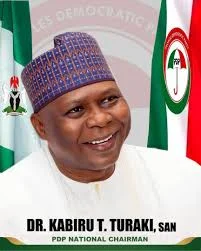
    The Chairman of the embattled faction of the Peoples Democratic Party (PDP), Tanimu Turaki (SAN), has furiously rejected Friday’s judgment of the Federal High Court sitting in Ibadan, describing it as perverse, politically motivated and a dangerous assault on internal party democracy.

    In a strongly worded statement, Turaki said the ruling nullifying the party’s National Convention of Nov. 15 and Nov. 16, 2025, was a clear travesty of justice that failed to reflect the facts, evidence and binding legal authorities presented before the court.

    He accused the court of overreaching its jurisdiction, insisting that the conduct of the convention fell squarely within the internal affairs of the party and was carried out in substantial compliance with the PDP Constitution and the Electoral Act.

    “This judgment represents a disturbing departure from settled judicial principles. It amounts to judicial endorsement of impunity and rewards those who chose chaos, disobedience and manipulation over lawful party processes,” Turaki declared.

    The senior advocate further alleged that the opposing faction deliberately engaged in forum shopping, misleading the court and weaponising the judiciary to seize control of the party through the back door after failing to gain legitimacy from PDP stakeholders.

    Turaki maintained that his leadership enjoys overwhelming support across the states and warned that the judgment, if allowed to stand, would set a dangerous precedent capable of destabilising political parties nationwide.

    “We will not surrender the PDP to impostors masquerading under court orders obtained through deception. Our legal team has been instructed to immediately challenge this judgment at the appellate court,” he said.

    He urged PDP members loyal to his leadership to remain resolute, describing the ruling as a temporary setback that would be overturned, while cautioning against any attempt by the opposing faction to forcefully take over party structures.

    Reacting with equal force, the PDP National Caretaker Working Committee dismissed Turaki’s claims as baseless, reckless and contemptuous of the judiciary, insisting that the judgment had exposed what it described as the illegality underpinning the Turaki-led faction.

    In a statement issued in Abuja, Jungude Mohammed, National Publicity Secretary of the Caretaker Committee, said the ruling of the Federal High Court was a crushing blow to “years of impersonation, lawlessness and constitutional violations.”

    Mohammed said the court’s decision conclusively proved that the Ibadan convention was convened in blatant defiance of subsisting court orders and in total disregard of the PDP Constitution.

    “The era of self-help and illegal occupation of party offices is over. No amount of propaganda or legal gymnastics can overturn the truth established by the court,” Mohammed said.

    He accused the Turaki faction of deliberately undermining party unity while falsely presenting themselves as reformers.

    “Those who desecrated the PDP Constitution cannot now pretend to be victims. The judgment has stripped them bare and returned the party to the path of legality,” he added.

    Mohammed warned that any attempt by the Turaki-led group to continue parading as party leaders would amount to contempt of court, stressing that the PDP National Caretaker Committee, under Abdulrahman Mohammed, would not hesitate to enforce the ruling through lawful means.

    While reiterating the committee’s openness to reconciliation, Mohammed insisted that it must be based on submission to the rule of law, not intimidation or blackmail.

    “This judgment is final as far as legality is concerned. Anyone genuinely interested in the future of the PDP must first respect the law and the party constitution,” he said.

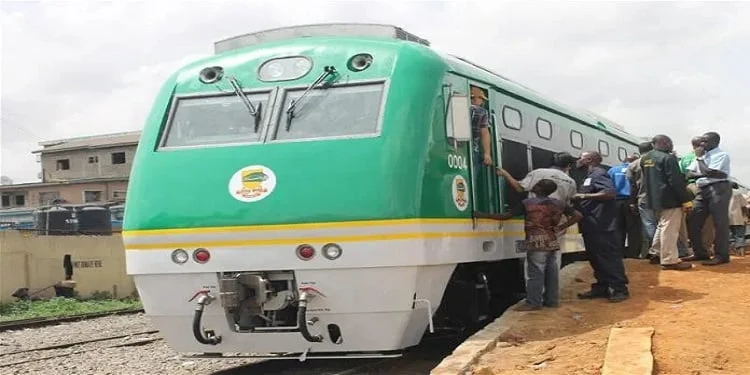
  • Senate Launches Probe as as Nigeria’s Rail Services Plummet

    Senate Launches Probe as as Nigeria’s Rail Services Plummet

    The Senate has launched an investigation into Nigeria’s railway contracts and project execution following a sharp decline in services across key routes.


    Lawmakers expressed alarm that major lines such as the Kano–Kaduna corridor now operate just one passenger trip per day, while cargo delays have nearly doubled.


    During plenary, senators cited persistent bandit attacks, poor maintenance, and aging infrastructure as major setbacks undermining the rail sector’s revival.


    Senate President Godswill Akpabio directed relevant committees to conduct a comprehensive review of all ongoing and completed rail projects, focusing on their design, funding, execution, and maintenance records.


    The probe, lawmakers said, seeks to determine why Nigeria’s railway system, once seen as the backbone of national transport, is now struggling to meet basic operational standards.

  • ONICCIMA Calls for Dialogue as Anambra Shuts Onitsha Main Market

    ONICCIMA Calls for Dialogue as Anambra Shuts Onitsha Main Market

    The Onitsha Chamber of Commerce, Industry, Mines and Agriculture (ONICCIMA) has urged the Anambra State Government to embrace dialogue in resolving the closure of Onitsha Main Market, warning that prolonged shutdowns could deepen economic hardship for traders and residents.

    The appeal followed a one-week closure of the market ordered by Governor Chukwuma Soludo in response to the continued observance of the Monday sit-at-home across parts of the state.

    In a statement signed by its President, Chinedu Nwonu, and made available to journalists in Onitsha on Wednesday, the chamber acknowledged the constitutional duty of government to maintain law, order, and an enabling environment for businesses to thrive, noting that such stability is critical to the state’s Internally Generated Revenue (IGR).

    ONICCIMA said government records indicate that the South-East loses an estimated ₦19.6 billion weekly to sit-at-home activities, with Anambra State accounting for about ₦8 billion of that figure.

    It warned that the scale and frequency of the losses pose a serious risk of economic dislocation and instability.

    While expressing support for decisive actions to restore lawful economic activities, the chamber cautioned against the use of prolonged market closures as punitive measures, describing them as economically and socially damaging.

    According to the chamber, the closure of Onitsha Main Market disrupts supply chains, erodes investor confidence, heightens social tension, and threatens the livelihoods of thousands of households dependent on daily trading activities.

    It added that continued disruption of market operations could negatively affect manufacturers, importers, wholesalers, and retailers nationwide, leading to scarcity of goods, increased transportation costs, and inflationary pressures that would ultimately be borne by consumers.

    ONICCIMA therefore called on the state government to strike a balance between enforcement and engagement, security and economic sensitivity, and authority and partnership, in the overall interest of the people and the state’s economy.

    It urged the government to restore confidence, protect businesses, and ensure the full return of Onitsha Main Market to normal Monday-to-Saturday operations in a safe, secure, and sustainable manner.

  • Police Crack Down on Protest Against Forced Evictions in Lagos

    Police Crack Down on Protest Against Forced Evictions in Lagos

    Police officers attached to the Lagos State Police Command, including members of the Rapid Response Squad (RRS), on Wednesday fired tear gas to disperse residents protesting the demolition of homes in several parts of Lagos.

    The protesters, drawn from communities such as Makoko, Iyana-Oworo, Otumara and Owode-Onirin, said their homes were destroyed without proper notice, consultation or plans for resettlement. They described the demolitions as forced evictions that have left many families homeless and without livelihoods.

    The protest, organised by the Coalition Against Demolition, Forced Eviction, Land Grabbing and Displacement in Lagos, began peacefully at Ikeja Bridge and moved towards Alausa before stopping at the Lagos State House of Assembly, where protesters hoped lawmakers would intervene.

    Witnesses said police fired tear gas outside the Assembly complex, causing panic and injuries. Several protesters, including the protest leader popularly known as Comrade Soweto, were arrested. Blood stains were seen on the ground, while the exact number of injured or detained persons remained unclear.

    Rights advocates say both the police response and the demolitions raise serious concerns. They point to previous rulings by the Lagos State High Court, which have declared that demolishing homes without proper notice, consultation or alternative housing violates the dignity and basic rights of residents. Courts have also ordered the Lagos State Government to stop such evictions unless due process is followed.

    Protesters carried placards reading, “Lagos is not for the rich alone” and “A megacity cannot be built on the bones and blood of the poor,” highlighting fears that development projects are pushing poor communities out of the city.

    Human rights groups have called on the Lagos State Government to stop further demolitions, release those arrested during the protest, and engage affected communities to find fair and humane solutions.

    As of mid-afternoon, security operatives remained stationed around the state secretariat, while tension lingered in the area.

  • ADC Signals Ideas-First Politics With 50-Member Policy Committee

    ADC Signals Ideas-First Politics With 50-Member Policy Committee

    The African Democratic Congress (ADC) has constituted a 50-member Wise Men and Women Policy and Manifesto Committee to provide strategic direction and shape the party’s ideological and policy framework ahead of future political engagements.

    The committee is chaired by former National Chairman of the APC, John Odigie-Oyegun, bringing decades of political leadership experience to the role. Serving as Deputy Chairman is renowned political economist and public intellectual Pat Utomi, while seasoned political organiser Salihu Lukman will act as Secretary, overseeing coordination and documentation.

    Other prominent members of the committee include former Senator Gershon Bassey, former Deputy Governor of Kogi State Simon Achuba, former Chief of Defence Staff Sadique Abubakar(rtd.), and respected diplomat Abioye Mohammed.

    The committee also features leading academics and policy experts, including Chidi Odinkalu, Remi Sonaiya, Anthony Kila, Sam Amadi, Jude Njoku, and Ibrahim Garba, underscoring the party’s emphasis on intellectual depth and evidence-based governance.

    Civil society representation is strong, with the inclusion of Oseloka Obaze, Otive Igbuzor, Nkoyo Toyo, Yemi Adamolekun, and Usman Bugaje.

    Gender inclusion is reinforced through the participation of figures such as Funke Awolowo, Hafsat Moji Bello, Jumoke Olawoyin, and Salametu Izuagie.

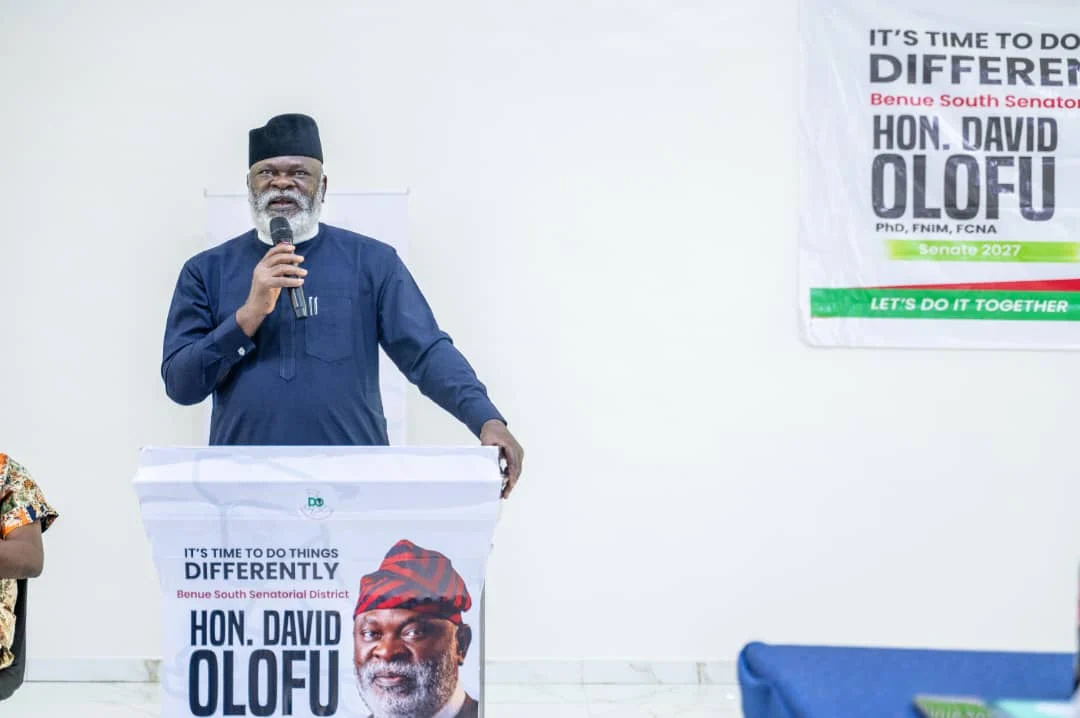
    Also listed is David Olofu, an emerging political figure in Benue State and aspirant for the Benue South Senatorial seat in the 2027 general election.

    According to the party, the committee reflects the ADC’s commitment to inclusivity, national spread, and cross-sector expertise, drawing members from politics, academia, security, civil society, and professional practice.

    The formal inauguration of the committee is scheduled for Monday, February 2, 2026, at the ADC National Secretariat in Abuja, where members are expected to commence deliberations on the party’s manifesto and long-term policy vision.

  • FUHSO and the Cost of Governing Without Foresight

    FUHSO and the Cost of Governing Without Foresight

    The difficulties confronting the Federal University of Health Sciences, Otukpo (FUHSO) reflect the challenges that arise when institutional ambition outpaces careful planning. Established to contribute meaningfully to Nigeria’s health workforce development, the university is now struggling to deliver one of the most basic requirements of medical education, clinical training. The fact that several cohorts of medical students are unable to progress because a teaching hospital is not yet operational points to gaps in planning, funding execution, and oversight that deserve urgent and thoughtful attention. Addressing this situation will require coordinated action by the relevant ministries and regulatory bodies to prioritise the completion of core clinical infrastructure, strengthen budget implementation, and ensure that future institutional decisions are guided by long-term sustainability rather than short-term expediency.

    What makes the situation particularly concerning is that it was neither sudden nor unforeseeable. Medical education is among the most capital-intensive forms of tertiary training, and the absence of a functional teaching hospital inevitably undermines any programme designed to produce doctors. Yet admissions proceeded, cohorts advanced through pre-clinical studies, and the warning signs were allowed to accumulate. The resulting bottleneck now confronting students underscores the consequences of launching critical institutions without fully aligning timelines, infrastructure, and financing, a pattern that has too often characterised public sector projects in Nigeria.

    Insiders familiar with the situation say the problem began long before the first students were stranded. The old Otukpo General Hospital, redesignated as FUHSO’s teaching hospital, has seen little more than cosmetic attention. Although funds were captured in the federal budget for its upgrade, an official disclosed that roughly ₦1 billion earmarked for the project could not be meaningfully accessed. The explanation points to Nigeria’s chronic budget implementation failures, allocations announced with fanfare but trapped in bureaucratic bottlenecks, released too late or not at all.

    But the funding story, troubling as it is, does not fully explain the depth of FUHSO’s crisis.

    Records and interviews suggest that early leadership decisions compounded the institution’s vulnerability. Instead of pursuing low-cost, temporary arrangements using existing government facilities, abandoned schools, idle public buildings, or shared spaces common in the early life of many public universities, the university’s pioneer management opted to operate from rented hotels and privately owned structures. These choices consumed scarce take-off funds without building any lasting academic or clinical capacity.

    Education analysts describe this as a classic case of misplaced priorities. While administrative comfort was secured, the essentials of a medical university, laboratories, teaching wards, clinical partnerships, were deferred. Allegations of opaque leasing arrangements and potential conflicts of interest have only deepened concerns, particularly in the absence of publicly available breakdowns of how early funds were spent.

    The contrast with other federally funded health institutions is stark. In the same national budgets where FUHSO struggled to secure just over a billion naira for capital development, established teaching hospitals such as those in Kano, Awka, and Lagos received tens of billions of naira each. These hospitals serve as training grounds for medical students across the country, yet FUHSO, a university designed to anchor health education, was left trying to build from scratch with a fraction of the resources.

    Even among federal universities, the disparity is glaring. While long-established institutions routinely receive allocations approaching ₦50 billion annually, newer specialised universities like FUHSO have been confined to single-digit billions, regardless of the capital-intensive nature of medical education. This raises uncomfortable questions about national priorities and whether the decision to establish such institutions was matched by the willingness to fund them properly.

    The human cost of these failures is now unavoidable. Students face indefinite delays, uncertainty about accreditation, and the emotional and financial strain of a medical education placed on pause. For a country already battling an exodus of healthcare workers, the irony is painful: an institution meant to strengthen the health system is instead producing stalled graduates.

    Regulatory bodies have not escaped scrutiny. The National Universities Commission and relevant medical training authorities approved programmes and admissions without ensuring that minimum clinical infrastructure was in place. Their silence as the crisis deepens suggests a regulatory culture more reactive than preventive.

    What is happening at FUHSO is not an isolated mishap. It reflects a broader national pattern in which institutions are created for political symbolism, budgets are announced without execution plans, and accountability is diffused across ministries, councils, and agencies until responsibility belongs to no one.

    As students remain trapped in academic limbo and public funds continue to trickle into administrative overheads rather than concrete outcomes, the question grows louder: who will answer for the gap between promise and reality at FUHSO? Until this question is confronted honestly, Otukpo will remain a cautionary tale, not of what Nigeria lacks, but of what it repeatedly fails to do with what it has.

    Beyond the immediate impact on affected students, the situation at FUHSO carries broader implications for Nigeria’s health system and national development. At a time when the country faces persistent shortages of medical professionals and the steady migration of trained doctors abroad, allowing a specialised health sciences university to drift without its core clinical capacity is a cost Nigeria can ill afford. Resolving this challenge promptly and transparently would not only restore confidence among students and staff, but also signal a renewed commitment to disciplined planning and accountability in public institutions, principles that remain essential to achieving sustainable progress.

  • Trump’s World Cup stress test and prospects of Europe’s boycott

    Trump’s World Cup stress test and prospects of Europe’s boycott

    By

    UGO ONUOHA

    FEDERATION of International Football Associations [FIFA] awarded hosting rights for this year’s football World Cup tournament to three North American countries about eight years ago, precisely on June 13, 2018. That was in keeping with the longstanding tradition of the world’s football governing body. FIFA allows the host nation sufficient time to provide or improve facilities for the global fiesta. Thousands of people including officials, footballers, fans, tourists and others usually converged on the host nation to attend the events. Some persons who may not be football fans and followers use the opportunity of the World Cup for sightseeing and tourism.

    This year’s World Cup football tournament will be different in many respects. It will be the first time that three neighbouring countries – the United States, Canada and Mexico – will be jointly hosting the tournament. The highest combination, to the best of our recollections, was joint hosting between South Korea and Japan in 2002. All the while it had been solo hosting by willing and endowed countries beginning from Uruguay in 1930 to Qatar four years ago. Again, while there were 32 countries battling for supremacy in Qatar in 2022, 48 countries will be contending for the Cup this year in the United States, Canada and Mexico. This has never happened before.

    And because of the expanded format, Africa was allotted nine automatic slots with the potential to be 10 through a play-off, against the five slots allocated to the continent in the 32-country arrangement. Sadly, and in spite of the 100% increase in the slots available to Africa, Nigeria which is arguably a footballing giant on the continent could not pick a slot. It failed in the automatic qualification for one of the nine spots. It qualified to pick the remaining slot through a play-off in Africa and a final meeting with a qualifier from another confederation. Again, Nigeria failed at the Africa huddle, losing to the Democratic Republic of Congo [DRC]. Nigeria, the self-styled giant of Africa will be MIA [missing in action] in successive world cup tournaments, Qatar 2022 and US/Canada/Mexico 2026. How has the mighty fallen?

    This year’s football tournament has been projected to be the best attended, the most spectacular and the most profitable. But it could turn out not to be. In 2018 when the hosting right was awarded to the US and its neighbours, Donald J. Trump was the president of America. In the years while the US prepared to host a potentially spectacular event, Trump was out of power having lost his reelection bid to Joe Biden in 2020. He still denies that he lost that election and also rejected accusations that he inspired the storming of the Capitol [parliament] by his supporters who violently attempted to stop the certification of the election results. Trump was returned to the American presidency in January this year, in time to be the chief host of the American leg of the tournament. And that’s where the problem starts. Before Trump acceded to the White House in 2016, he gave indications during the campaigns that he would be an unconventional president. And he was. However, there were people embedded in American politics and bureaucracy who worked against him and curbed his excesses. He was constrained and was frustrated.

    But Trump 2.0 has been a different ballgame from the very beginning last January 20. He returned prepared and appointed those who shared his weird governing philosophy to strategic positions. He ignored Congress [parliament] and set up DOGE [the so-called department for government efficiency], armed his now estranged friend and billionaire, Elon Musk, with a chainsaw to decimate the bureaucracy. He did in sacking many government workers but failed in the goal to save money. Indeed, the report was that the exercise ended up increasing the cost of the government. Ostensibly by design, Musk’s name was not forwarded to Congress for consideration as a member of Trump’s Cabinet. Apart from Musk, Trump also had the almost 1000-page Agenda 2025, a governing template pre-prepared for Trump by the arch-conservative Heritage Foundation as a governing philosophy. When the document was exposed prior to the 2024 election, Trump had vehemently denied knowledge of the document and any association with the promoters. Americans knew that he was lying but voted for him anyway.

    The challenge now is that Trump’s unconventional or peculiar way of running the United States is spilling over into the organisation of the World Cup. Before now and with lesser mortals, FIFA would never have tolerated the meddling into the management of football and the organisation of its tournaments by politically exposed persons and government officials. Not anymore or so it seems. Trump fired the first salvo by threatening to strip some American cities of hosting rights, and arbitrarily transferring the same to other cities ostensibly controlled by Republicans. By design or coincidence, some of the host cities and states under threat of stripping them of hosting rights are those administered by Democrats as mayors or governors. Trump is Republican. He claims that cities and states run by Democrats were prone to protests and riots without providing evidence.  For the first time since Uruguay hosted the maiden World Cup in 1930, 96 years ago, political affiliation has become a consideration for cities to host world cup matches in a host country.

    However, FIFA’s vice president, Victor Montagliani, quickly shot back telling Trump that football was bigger than any country. He had said that “with all due respect to … world leaders football is bigger than them and football would survive their regime, and their government, and slogans”. But before this face-off, the American state department had announced visa restrictions on about 75 countries including a big footballing nation, Brazil. All the qualifying countries from Africa, nine of them, are under the hammer of these visa restrictions except South Africa. Even that exception falls under what the US state department describes as qualified visa restriction. In effect, all the qualifying countries from Africa are in dire danger of the disruptions of the movements of their teams, associated staff, football federation officials, and supporters into the US for the football fiesta that starts on June 11 in Mexico, about five months away.

    For Africans in particular, football would lose its essence in the absence of the travelling supporters of the national teams. The non-stop singing and drumming and dancing in stadiums will be felt and will take a toll on the motivations of the players during matches. Arguably, Nigeria has the most vocal supporters club for their national team. But Nigeria did not qualify for this World Cup so the national team’s supporters club would not have valid reasons to seek visas into the US this time. But what about South Africa and their vuvuzela which they introduced when they hosted a highly successful World Cup tournament in 2010. You can argue that a vuvuzela can be picked up in any neighbourhood shop in any American host city, but a vuvuzela in the hands and the mouths of its creator, a South African, sounded differently and certainly more menacingly. South Africans have a way of using the vuvuzela to pass coded messages to their players who are doing battle in the field. National team supporters constitute the 12th player in the field of 11 players.

    FIFA promotes football as a tool and force for unity. This slogan will face an acid test in Trump’s America in the World Cup months of June and July. The vicious and violent anti-immigrants policy of President Trump will ensure that. An immigration policy that has no respect for sanctuary cities in some states in America, the churches and the law courts, will certainly pay scant regard to stadiums and fan zones as no-go areas during the World Cup. Overzealous Immigration and Customs Enforcement [ICE] operatives will find stadiums and fan zones and hotels as fertile grounds to meet their monthly targets for the arrest of immigrants for detention and deportation. What this means is that legal migrants and undocumented ones from countries that qualified for the tournament will avoid match venues for their own safety.

    Football enthusiasts from Iran and Haiti are forbidden from travelling to the US. They are fully banned though their national football teams qualified for the tournament. Of the nine qualifiers from Africa so far, only South Africa can be said to be partially off the hook. The rest – Algeria, Cape Verde, Egypt, Ghana, Ivory Coast, Morocco, Senegal and Tunisia – are under one form of the American visa restrictions or the other. If DR Congo which eliminated Nigeria from the race succeeds in the inter-confederations play-off it will fall under the visa restrictions category. FIFA is trapped in America. Its aspiration of inclusivity through football is directly in conflict with Trump’s divisive immigration policy. The rigging by Gianni Infantino, FIFA’s president, of the so-called FIFA Peace Prize specially for Trump to appease him when the Nobel Peace Prize committee overlooked him in the 2025 award, has not helped the situation. The presentation ceremony for the award and the fawning of Infantino over Trump at the event was a spectacle with unrivalled ugly dimension.

    Now Infantino will have to contend with a troubled tournament even before the games start. He may have to preside over a tournament that could fell far short of expectations and projections. He will have to superintendent a World Cup that excludes three quarters of the world, among them football loving countries. And football as we know it is neither the number one sport in America nor even number two. For Infantino this will be a dilemma with implications for the future. He has allowed Trump to use his corrosive brand of politics to trump football. Future host nations of the World Cup would also be inclined to introduce politics to the game. For instance, Saudi Arabia is slated to host the World Cup in 2034. It will be the sole host of the 48-country format unlike this year’s that will be jointly hosted by the US, Canada and Mexico. What will Infantino and FIFA do on the eve of the tournament if the Saudis introduce a visa policy that excludes gay people? What Trump is doing to the world of football could be the beginning of the diminution of football as a global brand and a force for unity not tainted by overt partisan politics of member countries of FIFA and host nations of the tournament.

    There are other implications of the exclusion of three quarters of the world from the 2026 tournament by the US which is one of the host nations. Airline bookings to the match centres are likely to crater; hotel reservations by football fans from countries affected by visa bans and restrictions would be cancelled; restaurants in the host cities may have to review their plans and projections; the same would apply to tour operators; and, companies that sponsor interpreters but which operate in the countries under visa bans or restrictions may have to review their operations. Apart from these, global brands who are the major sponsors of the World Cup would now be wondering whether their investments would be worthwhile given the virtual exclusion of broadcast audiences from emerging markets. These markets are the new frontiers they are working to reach with their messages, products and services. They could be wondering whether football lovers in such countries would still be enthusiastic in following the tournament on television, radio or through other means. It will be a tough call. But it will not be a call for Infantino alone.

    Postscript

    The prospects of a tragic 2026 World Cup became starker at the weekend with the vice president of the DFA, the German football federation, Oke Gottlich, hinting at Germany boycotting the tournament because of Trump’s immigration and imperialist policies. Trump has been talking about seizing Greenland, an autonomous island under the sovereignty of Denmark. Analysts say that if Germany shuns the World Cup, Denmark is likely to follow suit immediately. Indeed, the potential boycott of the tournament will have a domino effect with European nations walking away. No disrespect intended, but nobody goes to the World Cup to watch Haiti play against DR Congo. No global brand will expend millions of Dollars on any World Cup tournament sponsorship in which European football power houses are excluded. That will not happen. No broadcasting network will pay for rights for such a tournament. If Europe boycotts the World Cup, it means that half of the 48 countries will be out of the tournament. And if countries under the current US visa restrictions join Europe, it will be game over, no pun intended. And all these will be down to one man – Donald Trump.

    Ugo Onuoha is a Veteran Journalist and former Managing Director/Editor-in-Chief, Champion Newspapers Limited

  • Breaking News! NNPC, Chevron Record Major Oil Find in Awodi-07 Well

    Breaking News! NNPC, Chevron Record Major Oil Find in Awodi-07 Well

    Efforts to grow Nigeria’s hydrocarbon reserves have received a significant boost following the confirmation of a hydrocarbon discovery at the Awodi-07 appraisal and exploration well by the NNPC Ltd/Chevron Nigeria Limited Joint Venture in the shallow offshore western Niger Delta.

    The well, operated by Chevron Nigeria Limited, was drilled as part of the joint venture’s ongoing exploration and appraisal programme aimed at further delineating reserves and unlocking additional hydrocarbon potential within its asset portfolio. Drilling operations commenced in late November 2025 and were completed in mid-December 2025.

    According to a statement released, Monday afternoon in Abuja, by NNPC Ltd Chief Corporate Communications Officer, Mr. Andy Odeh, the drilling campaign was executed safely, efficiently, and in full compliance with approved operational and regulatory requirements.

    The operation was carried out under the oversight of the Nigerian Upstream Petroleum Regulatory Commission (NUPRC), in line with applicable upstream regulations.

    Following the completion of drilling activities, the well underwent comprehensive logging, testing, and data acquisition to evaluate reservoir characteristics, after which it was safely secured.

    Data obtained from the well is expected to be submitted to the NUPRC for detailed technical review as part of the post-drilling regulatory process.

    NNPC Ltd said results from the Awodi-07 well confirmed the presence of hydrocarbons across multiple reservoir zones, describing the outcome as encouraging and a significant milestone for the joint venture.

    The discovery strengthens confidence in the asset and further reinforces the prospectivity of the shallow offshore western Niger Delta.

    In the statement, the Group Chief Executive Officer of NNPC Ltd, Engr. Bashir Bayo Ojulari, was reported to have said that the success of the Awodi-07 well highlights the strength of the partnership between NNPC Ltd and Chevron Nigeria Limited and supports national efforts to grow Nigeria’s hydrocarbon reserves.

    Also commenting, the Executive Vice President, Upstream, NNPC Ltd, Mr. Udy Ntia, said the results demonstrate the importance of disciplined exploration programmes, sound technical evaluation, and sustained collaboration between joint venture partners.

    Under the Petroleum Industry Act (PIA), discoveries such as Awodi-07 are expected to progress through a structured appraisal and development process, including further reservoir evaluation, submission of field development plans, and regulatory approvals from the NUPRC prior to any final investment decision.

    Industry sources say the NNPC Ltd/Chevron Joint Venture is expected to review the Awodi-07 data to determine the scope of additional appraisal drilling and commercial viability.

    Subject to regulatory approvals, the discovery could be matured towards development and eventual monetisation.

    The NNPC Ltd/Chevron Joint Venture operates several onshore and offshore oil and gas assets in Nigeria’s Niger Delta under a joint venture arrangement in which Chevron holds a 40 per cent participating interest, while NNPC Ltd owns the remaining share.

    The partners are targeting an increase in oil production to approximately 146,000 barrels per day, a move expected to support government revenue, job creation, and Nigeria’s energy supply.

  • JAMB Screens 924 CBT Centres Ahead of 2026 UTME

    JAMB Screens 924 CBT Centres Ahead of 2026 UTME

    The Joint Admissions and Matriculation Board (JAMB) has screened a total of 924 Computer-Based Test (CBT) centres nationwide in preparation for the 2026 Unified Tertiary Matriculation Examination (UTME).

    The Registrar of JAMB, Prof. Ishaq Oloyede, disclosed this on Saturday during an interactive session with State Commissioners for Education held in Lagos.

    Oloyede explained that the screened centres would undergo final tests before receiving full accreditation to participate in the 2026 UTME registration and examination.

    According to him, the board routinely conducts accreditation exercises before the commencement of registration to assess the suitability of CBT centres for its examinations.

    “A rigorous accreditation exercise has been carried out for the 2026 UTME. Members of the accreditation team included Chief External Examiners such as Vice-Chancellors, Rectors and Provosts, as well as Technical Advisors, JAMB State Coordinators and Technical Officers,” he said.

    He added that the engagement with commissioners was aimed at strengthening collaboration to ensure smooth registration and hitch-free conduct of the 2026 UTME and Direct Entry (DE) examinations.

    The registrar said the meeting also served to share JAMB’s vision, policies and strategies for the 2026 exercise, introduce new measures to enhance integrity and efficiency, improve public sensitisation, and gather feedback from stakeholders at the grassroots level.

    Oloyede further noted that joint efforts would be intensified to curb examination malpractice and other unethical practices.

    Providing details on the registration timeline, he said UTME and mock candidates would register before Direct Entry candidates.

    “The sale of UTME application documents (e-PINs) will commence ahead of the registration period. UTME registration will take place from January 26 to February 28, while e-PIN sales will run from January 19 to February 26,” he said.

    He added that the mock examination selection would close on February 16, while the sale of Direct Entry application documents and e-PINs would begin on March 2 and end on April 25. Registration would also be available at all JAMB offices.

    On age eligibility, Oloyede stated that only candidates who would be at least 16 years old by September 30, 2026, were eligible for the UTME.

    He described admission for candidates below 16 as a rare exception, noting that underage candidates would undergo intensive evaluation to qualify for a waiver.

    Such candidates, he said, must score at least 80 per cent in the UTME, A’ Level, Post-UTME, SSCE and an exceptional candidate assessment before their results could be released.

    Oloyede also warned against examination malpractice, revealing that JAMB uncovered syndicates during the 2025 UTME involved in identity manipulation, including the use of multiple National Identification Numbers (NINs).

    “Any candidate found engaging in multiple registrations or identity manipulation will have all associated registrations cancelled and will be disqualified from the examination and admission processes,” he warned.