Author: admin

  • Is Nigeria Beginning to Shut Down?

    Is Nigeria Beginning to Shut Down?


    By UGO ONUOHA

    The prospects for the future wellbeing of this country, Nigeria, are not looking good, the pretenses of our rulers to the contrary notwithstanding. And this is not about its distant future. It’s about the near future. Nigeria is rapidly deteriorating from not working to falling apart.

    The assertion that the country is not working is a notorious fact, but the claim that it is falling apart could be treated as crying wolf. It may not be out of place if we reassure ourselves that we have been at the precipice on more than one occasion in the past.

    The country was barely seven years old from independence when it was plunged into a fratricidal civil war during which millions of lives were lost in the space of three years, 1967–1970. Some commentators, rightly or wrongly, regard that civil war and the events that preceded and precipitated it as the beginning of genocide on the Igbo, a significant nation inside this country.

    Others, especially from the side of the victorious Yoruba nation of the southwest region, Hausa, Fulani and other minority nations of the northern region, regard the war as a necessary conflict to Go On With One Nigeria (Gowon). Yakubu Gowon, now in his 90s, was the military head of state who led the triumphant federal side.


    History Written by the Victors

    The dominant history of any war, which also passes as the authentic one, is usually written by the victors and their collaborators. So it has been with the Nigeria–Biafra war.

    The victors claim that between 200,000 and 300,000 people died on the Biafran side, but the victims put the figure at between 2,000,000 and 3,000,000 deaths. The victors say that one of the events that snowballed into the bloody war — the January 1966 military coup — was plotted and selectively executed by the ultimate losers, wherein their (victors’) military and political leaders were gruesomely murdered.

    The victors’ collaborators, the British Broadcasting Corporation (BBC), was in overdrive to propagate and perpetuate the falsehoods. Fifty-five years since that war, the BBC has not relented. It has become more sophisticated, more daring, and more demonic. Its record at distortion and baiting genocide is in public sight.

    Some British taxpayers who fund the corporation and prominent politicians have seen through the evils of the BBC and are now demanding that it be scrapped. The BBC may yet get its deserved comeuppance if the U.S. President, Donald Trump, delivers on his vow to sue that corporation for billions of dollars.

    The BBC had reportedly interviewed Trump and then fiddled with his responses to convey a different message and portray the American leader in poor light. It’s the corporation’s stock-in-trade. It has been begging Trump for forgiveness ever since. It has sacked at least two of its top executives, including the CEO. Thus far, Trump, who revels in court litigations, appears implacable.

    If Trump sues for defamation and wins billions of dollars, that could help to quickly bury the BBC and erase the evil the corporation represents. In spite of whatever some people might think, the world will surely be better for it. If Nigeria is unravelling for the worse, the fingerprints of the BBC have been on it from the beginning.


    The Signs of a Failing Nation

    There’s no doubt that Nigeria is seriously beginning to shut down after many years of protracted abuse by insiders and outsiders. The unravelling has been noticeable since 1960, and even before.

    The signals were obvious at the various negotiations and constitutional conferences that led to self-government at different times for different regions of this country. They were there when some of the country’s founding fathers from the north made violent vows to dip the Koran in the ocean and to ensure that the emergent country became the estate of their forebear, Uthman Dan Fodio.

    The Fulani hegemons also boasted that they would never allow the infidels of the southern regions to rule over them, and the minorities in their midst in the north to be in control of their own destiny.

    The signs were there when elections were rigged, violence unleashed, and politicians induced to cross carpet in the southwest to stop a victorious non-son of the soil from forming and heading the regional government in Ibadan.

    The schism led to the dislocated non-indigene moving to Enugu, his ethnic base, which ensured that the premiership of the defunct eastern region was wrestled from a minority politician to accommodate the returnee ‘big man’. Bad blood started spreading.


    A History of Ignored Warnings

    The January 1966 military coup and the July 1966 counter-coup, and the acrimonious killings that ensued, were clear signs that the Nigerian construct or project was a sham. “Araba,” the violent chant of the separatist agitators of the north, was unheeded.

    Historically, elements from the north were the first to demand the dissolution of Nigeria. Indeed, they did not want independence when it happened. It’s instructive that the British were reportedly the people who persuaded the north to remain in the federation, which was structured to favour them.

    In the period that “araba” lasted, an opportunity to deal with a fractured and flailing federation was lost.

    Before independence in 1960, the man who saw tomorrow, Obafemi Awolowo of the Yoruba stock, had vigorously canvassed for a very loose federation, but Nnamdi Azikiwe, the pan-Nigerian, Pan-Africanist, and incurable optimist, argued to the contrary.

    Given what has been happening in this country for so many years, it would be hypocritical to argue that the jury is still out on whose vision would have served this now-benighted country better.

    The bestiality of the civil war and the scorched-earth tactic in punishing the losers, and in the sharing of the booties by the winners, were also markers that all was not well. We papered over the cracked walls and pretended to be moving on.

    When, after the war, the slogan of “reconciliation, reconstruction, and rehabilitation” failed to materialize, we shrugged our shoulders and moved on in the belief that the defeated people should pull themselves up by their bootstraps.

    It would be their misfortune if they couldn’t, and didn’t. We probably were convinced that we had perfected the act of ignoring iniquities and inequities and the structural defects of the federation. In reality, we were stacking the odds against building a nation out of a country.


    The Chickens Coming Home to Roost

    Now it should be obvious that the chickens are coming home to roost. Tragedies have become the byword for our country.

    In the 1980s, a celebrity journalist and columnist, the late Dele Giwa of the National Concord newspaper, and later Newswatch magazine, which he co-founded, wrote an opinion article in which he said that Nigerians had become “unshockable.” And to think now that those were the years of innocence.

    Today Nigerians are inured to shock, with the lived experience of multiple tragedies of monumental proportions every day.

    This is a peek into the picture of our country in the last week, and not every tragedy was reported or captured.

    A serving general in the armed forces and three of his men were captured and executed by terrorists in Borno State on Friday, November 14; 64 people, including women and children, were abducted by terrorists in Tsafe Local Government Area of Zamfara State on Saturday, November 15.

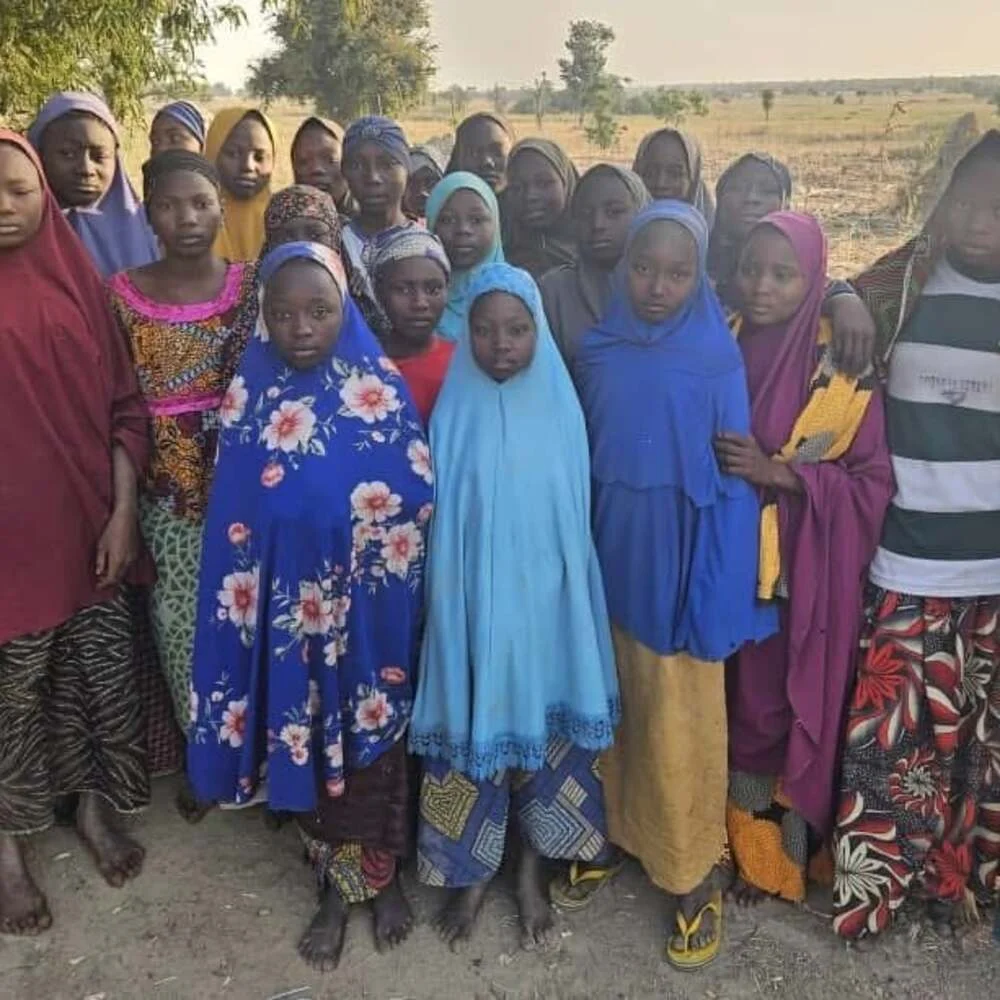
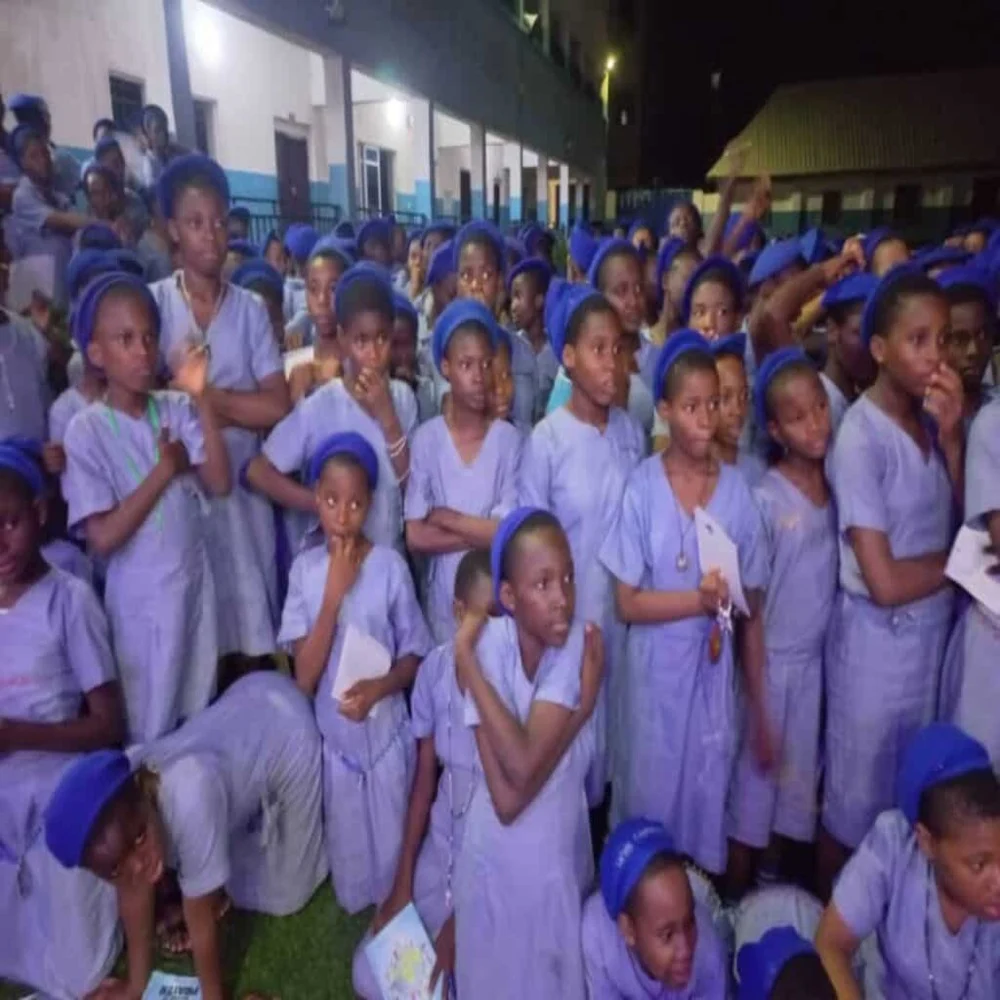
    The next day, Sunday, November 16, 25 female students and their principal were abducted from their school in Maga, Kebbi State, by terrorists. The vice principal was shot and killed.

    Soon after, terrorists invaded a Christ Apostolic Church (CAC) in Eruku, Kwara State, killing two worshippers and abducting 38 others. The terrorists are reportedly demanding ₦100 million for each of the abductees.

    Elsewhere, one policeman was killed by terrorists in Geidam, Yobe State; eight members of a civilian security taskforce were killed by terrorists and three others abducted in Gwoza, Borno State; terrorists abducted 15 persons, including four nursing mothers and babies, in Sabon Birni in Sokoto State. Two persons were killed by the terrorists in that operation.

    Back in Kwara State, terrorists killed four rice farmers in an attack in Edu; and on Friday, November 21, terrorists invaded St. Mary’s School, a private Catholic college, in Papiri, Niger State, and abducted more than 300 pupils, students, and staff.


    The Looming Abyss

    This past week could be the worst in terms of insecurity in our country thus far. But the likelihood is that it could get worse.

    The American president has been threatening to use the military to attack Islamist terrorists in Nigeria, who he accused of committing genocide on Christians. He repeated the threat last weekend, and he has reportedly gotten approval from Congress to do whatever pleased him in that regard.

    Now imagine this scenario: Islamist terrorists increase the spate of kidnapping Christians and non-fundamentalist Muslims, who they would use as human shields against American drone strikes if the situation deteriorates further.

    In effect, the expectation of a spike in abductions — as is beginning to manifest presently by sectarian terrorists — should not be treated as far-fetched or as a red herring.

    Nigeria is unravelling, and the prospects are foreboding. The situation will not be helped by the position of Nigeria’s president, Alhaji Bola Ahmed Tinubu, that he is depressed by the country’s worsening security situation.

    He was not installed in the presidency to throw up his arms in seeming surrender and to leave citizens to the devices of terrorists and sundry violent non-state agents of evil.


    Ugo Onuoha is a veteran journalist, former Managing Director/Editor-in-Chief, Champion Newspapers Ltd, columnist, and public affairs analyst. His works often explore governance, power dynamics, and civic accountability in Nigeria’s evolving democracy. He writes from Lagos.

  • NNPC Limited Unveils Record ₦5.4 Trillion Profit

    NNPC Limited Unveils Record ₦5.4 Trillion Profit

    Announces $60 Billion Expansion Plan,

    … As Ojulari Pledges Strategic Investments to Sustain Growth into Next Decade

    NNPC Limited has recorded a historic Profit After Tax of ₦5.4 trillion on revenue of ₦45.1 trillion for 2024, marking its strongest financial performance in recent years.

    The results showcase the company’s operational excellence and set the stage for ambitious investments to sustain growth through the next decade.

    Strong Financial Performance

    In a statement, Andy Odeh, Chief Corporate Communications Officer, quotes Bayo Ojulari, NNPC Ltd Group Chief Executive Officer as saying that the results reflect NNPC Limited’s financial resilience and the success of its transformation into a fully commercial, profit-driven entity.

    Key figures from the 2024 financial year include:

    • Revenue: ₦45.1 trillion, up 88% year-on-year
    • Profit After Tax: ₦5.4 trillion, up 64% year-on-year
    • Earnings Per Share (EPS): ₦27.07, up 64%

    “The 2024 results demonstrate the positive impact of our ongoing transformation and the dedication of our workforce,” Ojulari said.

    “They provide a strong foundation for the company’s ambitious growth plans and reaffirm our commitment to delivering value to Nigerians.”

    $60 Billion Investment Pipeline

    NNPC Limited is accelerating investments across oil and gas production, infrastructure, and clean energy initiatives to drive energy security and economic growth.

    Strategic targets include:

    • Crude Oil Production: 2 million barrels per day (bpd) by 2027; 3 million bpd by 2030
    • Natural Gas Production: 10 billion cubic feet per day (bcf/d) by 2027; 12 bcf/d by 2030
    • Completion of major gas infrastructure projects including Ajaokuta-Kaduna-Kano (AKK), Escravos-Lagos Pipeline System (ELPS), and Obiafu-Obrikom-Oben (OB3) pipelines
    • Mobilising $60 billion in investments across upstream, midstream, and downstream sectors by 2030

    “Our transformation is anchored on transparency, innovation, and disciplined growth,” Ojulari added. “NNPC Limited is positioning itself as a globally competitive energy company, delivering sustainable returns while powering the future of Nigeria and Africa.”

    About NNPC Limited

    Founded in 1977, NNPC Limited is Nigeria’s leading oil and gas company.

    The organisation, fully commercial and profit-driven since 2022 under the Petroleum Industry Act (PIA), operates across the entire oil and gas value chain, from exploration and production to refining and distribution.

    NNPC Limited plays a pivotal role in driving energy security and economic growth for Nigeria and the continent.

    The 2024 Audited Financial Statement is available at www.nnpcgroup.com.


  • Kebbi, Niger Abductions linked to killing of Terror Commander

    Kebbi, Niger Abductions linked to killing of Terror Commander

    Fresh intelligence has linked the recent abduction of schoolchildren in parts of Kebbi and Niger States to the killing of a notorious terror commander, Babangida, during Nigerian Air Force (NAF) airstrikes in Niger State.

    A credible security source told the Nigerian Anchor that residents of communities along the riverside axis of Shiroro have been celebrating after confirmation of Babangida’s death.

    According to the source, the slain commander was a key lieutenant to the feared bandits’ kingpin, Dogo Gideh.

    “Babangida died on November 18 while receiving treatment for injuries sustained during an air interdiction mission at the outskirts of Kurebe community, where several terrorists were neutralised,” the source revealed.

    The source added that the recent abductions were likely orchestrated by loyalists of the late commander as a retaliatory show of force, intended to reassert their relevance after suffering heavy losses from sustained military offensives.

    NAN gathered that following Babangida’s death, community leaders from Kwaki, Buresidna, Chukuba, Buwidna, Kuchidna, Banda, Shalupe and other surrounding villages visited the Palleli home of Gideh’s mother on November 19, where she was seen mourning her son’s fallen ally.

    A senior intelligence officer, who spoke on condition of anonymity, described Babangida’s death as “a significant blow” to the terror network but warned of possible reprisal attacks targeting vulnerable communities, schools, and security personnel.

    “Security agencies are on heightened alert,” the officer said. “Operations have been intensified to prevent further attacks and ensure the safe rescue of abducted students.”

    Residents in Shiroro expressed relief over the commander’s death, saying it had rekindled hope for reduced bandit activities in the area, which has been plagued by insecurity for years.

    Military authorities assured that coordinated land and air operations would continue until the capabilities of terror groups are fully degraded across the region.


  • CAN Condemns Attack on Catholic Schools in Niger

    CAN Condemns Attack on Catholic Schools in Niger

    The Christian Association of Nigeria (CAN), Niger State chapter, has condemned the gunmen attack on St. Mary’s Catholic Primary and Secondary Schools in Papiri, Agwara Local Government Area.

    In a statement issued in Minna on Friday, the Chairman of CAN in Niger and Catholic Bishop of Kontagora Diocese, Rev. Bulus Yohanna, described the incident as “distressing and unacceptable.”

    According to Yohanna, the gunmen invaded the schools between 1 a.m. and 3 a.m., shooting the security guard before abducting pupils, students, teachers, and a security personnel.

    “We are deeply disturbed by this attack and the abduction of innocent children and their teachers,” Yohanna said. “This level of violence against educational institutions is completely unacceptable.”

    He expressed concern for the safety of the abducted victims and the trauma endured by their families. Yohanna assured that CAN was working with security agencies, community leaders, and government authorities to support ongoing rescue operations.

    “We appeal to residents to remain calm and cooperate with security operatives,” he added. “Christians and all Nigerians should continue to pray for the safe and quick return of those abducted.”

    The CAN chairman reaffirmed the association’s commitment to advocating for the protection of children and enhanced security in schools across the state.

    “May the Lord grant quick release to those abducted and continue to protect His people from all dangers,” Yohanna prayed.


  • TETFund Mourns Veteran Journalist Chief Dan Agbese

    TETFund Mourns Veteran Journalist Chief Dan Agbese

    The Tertiary Education Trust Fund (TETFund) has expressed deep sorrow over the passing of Chief Dan Agbese, OFR, co-founder of Newswatch magazine and one of Nigeria’s most celebrated journalists.

    In a tribute signed by its Executive Secretary, Arc. Sonny S.T. Echono, the Fund described Chief Agbese as “a legendary journalist and a pillar of Nigeria’s media landscape whose impact will be felt for generations.”

    “His writing was a masterful blend of satire, humour, and incisive commentary that captivated readers and inspired a generation of journalists,” Echono said. “Chief Agbese’s contributions to journalism in Nigeria are immeasurable.”

    Echono noted that Agbese’s leadership at Newswatch helped shape the direction of investigative journalism in Nigeria, adding that his unique style — which “effortlessly combined wit and wisdom” — earned him respect across the media industry.

    Beyond journalism, Chief Agbese was celebrated as a teacher and mentor who trained and influenced many young journalists. Echono described him as “a dedicated professional whose passion for journalism was contagious.”

    “Through his writing, Chief Agbese informed, educated, and entertained millions of Nigerians, leaving an indelible mark on the country’s media landscape,” the statement read. “The man from Agila was not only a brilliant journalist but also a proud ambassador of his community.”

    Executive Secretary, TertFund, Arc Sonny Echono

    The TETFund boss added that Chief Agbese’s life exemplified integrity, courage, and dedication to truth and national progress.

    “His passing leaves a void that will be difficult to fill, but his ideals and legacy will continue to inspire generations of journalists and Nigerians,” Echono said.

    Echono prayed that God would grant the family and associates of the late media icon the strength to bear the loss and that his soul would rest in peace.

    Nigerian Anchor reports that Chief Dan Agbese, who co-founded Newswatch magazine alongside Dele Giwa and Ray Ekpu, was widely regarded as one of the foremost figures who shaped modern Nigerian journalism through fearless reporting and insightful commentary.

  • Tinubu Hails Jonathan as Guardian of Democracy

    Tinubu Hails Jonathan as Guardian of Democracy


    President Bola Tinubu has described former President Goodluck Jonathan as a guardian of democracy whose influence extends far beyond his time in office.

    Tinubu, represented by Vice-President Kashim Shettima, gave the commendation on Thursday at a dinner marking the 10th anniversary of the Goodluck Jonathan Foundation (GJF) in Abuja.

    He said Jonathan remains a powerful example of life after public service, noting that he safeguarded Nigeria’s democracy at a critical moment in history.

    Tinubu observed that Jonathan’s decision to establish the foundation demonstrated that service to humanity continues even after leaving high office.

    “There are not enough words to convey the country’s gratitude. Dr Jonathan has upheld national values since leaving office,” he said.

    The President contrasted leaders who use their post-office influence destructively with those who dedicate themselves to the public good.

    According to him, while some pursue narrow interests that can harm the society that once supported them, others choose the nobler path of serving humanity.

    Tinubu noted that democracy in West Africa and across the world has faced severe threats in the past decade, weakened by “adventurists and extremists who treat institutions as inconveniences and elections as mere formalities.”

    He commended Jonathan for proving that “no ambition should override the sovereignty of the state,” urging Nigerians to promote national unity and respect for democratic processes.

    “Democracy depends on respecting the choices of others. Mandates can always be renewed, but peace must be preserved,” he added.

    Tinubu described the Goodluck Jonathan Foundation as a model for leadership beyond office, emphasizing that governments succeed only with citizens’ cooperation and citizens progress under responsive leadership.

    “Nigeria’s democracy endures because of individuals like Jonathan who place the nation above personal ambition,” he said.

    He congratulated Jonathan and his team, expressing hope that the foundation would continue to guide Africa toward peace and prosperity.

    In his response, Jonathan thanked Vice-President Shettima, former President Ernest Koroma of Sierra Leone, and other dignitaries for honouring the event.

    He said the foundation’s mission was inspired by his experiences and challenges while leading Nigeria.

    According to him, the GJF has continued to focus on diplomacy, good governance, election management, and strengthening democratic institutions.

    Jonathan also sympathised with victims of recent abductions and attacks across the country, urging political leaders to act responsibly in addressing the security and welfare challenges facing Nigerians.

    Guest speaker, Dr Mohammed Ibn Chambas, underscored the importance of functional democracy, stressing that Africa’s future depends on strong institutions, youth empowerment, a free press, and an independent judiciary.

    He praised Jonathan’s leadership, describing him as “a believer in genuine democracy who values the sanctity of human life.”


  • The Misuse of “Genocide” in Nigeria’s Public Discourse

    The Misuse of “Genocide” in Nigeria’s Public Discourse

    Contextualizing The Horrific Killings in Nigeria Within The International Convention Against Genocide

    By Wale Alonge

    Since President Donald Trump’s 2020 threat to “invade Nigeria” to stop what he called “the targeted genocide of Nigerian Christians by Muslims,” the term genocide has gained sudden, viral currency across Nigerian social media. It is now used casually, cavalierly, and often without any understanding of its historical roots or the international legal framework that defines it.

    When such a morally charged word is used loosely, it dilutes its moral and legal force — and makes enforcement far more difficult in genuine cases of genocide. That is why it is critical to define and apply it precisely, something sorely lacking in Nigeria’s public conversations.

    It is deeply ironic that the same President Trump who refuses to describe the state-sponsored mass killing, starvation, and displacement of Palestinians in Gaza as genocide was so quick to use the word for Nigeria’s communal violence.

    I am a Christian, so this is not a case of a non-Christian downplaying the killings of Christians. There is no doubt that many Nigerian Christians have been victims of murderous attacks by Islamist jihadist groups — often targeted specifically in their houses of worship. Only yesterday, reports emerged from Kwara State of Christians being slaughtered and kidnapped in church.

    But so have Muslims — indeed, in larger numbers according to widely available data — including many attacked in mosques. These killings are largely random, carried out by non-state insurgents and criminal militias using hit-and-run, opportunistic tactics, often also targeting government forces. There is no demonstrated element of state-sponsored intent to destroy a protected group, which is central to any credible genocide claim.

    What “Genocide” Actually Means

    The word itself derives from the Greek genos (“tribe” or “race”) and the Latin caedere (“to kill”). Polish lawyer Raphael Lemkin coined it during World War II, and in 1946 the United Nations General Assembly first recognized genocide as an international crime. It was later codified in the 1948 Convention on the Prevention and Punishment of the Crime of Genocide.

    Article II of the Convention defines genocide as any of the following acts committed with intent to destroy, in whole or in part, a national, ethnic, racial, or religious group:

    • Killing members of the group
    • Causing serious bodily or mental harm
    • Deliberately inflicting conditions of life aimed at destroying the group
    • Imposing measures intended to prevent births
    • Forcibly transferring children to another group

    The most difficult and crucial element is intent. Genocide requires a proven intention to physically destroy a protected group — not merely to displace it, weaken it, or target individuals for other reasons. This “special intent” (dolus specialis) distinguishes genocide from other international crimes.

    Nigeria’s Reality

    Every innocent life unjustly taken is one life too many. Nothing in this analysis minimizes the suffering of Nigerian Christians killed or displaced by jihadists or murderous Fulani militias that have devastated farming communities — particularly in the Middle Belt — through cycles of violence stretching back decades.

    But as horrific as these crimes are, to call them genocide is to misapply the term. The Genocide Convention arose from the ashes of the Holocaust — the targeted, systematic, state-orchestrated extermination of millions of Jews by Nazi Germany. That context matters.

    Nigeria’s insecurity is a grave humanitarian crisis, but not one that fits the legal or moral definition of genocide. The danger in misusing the word lies not just in linguistic carelessness, but in the erosion of its power to mobilize international justice where it is most needed — in places where governments, not bandits, plot the destruction of entire peoples.

    If we are to confront Nigeria’s violence meaningfully, we must name it for what it is: terrorism, mass atrocity, and state failure — not genocide. To do otherwise cheapens both the suffering of the victims and the gravity of one of humanity’s most serious crimes.


    Adewale Alonge, PhD, Founder & President, Africa Diaspora Partnership for Empowerment and Development. www.adped.org, writes in from Dadeland, Miami, Florida, USA.


  • Fear Is the Enemy: Nigerians Must Resist 2027’s Weaponized Terror Politics

    Fear Is the Enemy: Nigerians Must Resist 2027’s Weaponized Terror Politics


    By Wale Alonge

    Administration after administration, the Nigerian state has failed in its most basic responsibility: guaranteeing the safety and security of its citizens. Ordinary Nigerians live in perpetual fear, often petrified to leave their homes after dawn. Let’s accept this as the backdrop before the usual critics start targeting the messenger.

    As the 2027 presidential election approaches, citizens must brace for a surge of terror-driven political propaganda. Expect real attacks, fabricated incidents, recycled videos, AI-generated scenes of carnage, kidnappings, and orchestrated chaos, strategically pushed into our WhatsApp groups and social media feeds.

    Violence is not new in Nigerian elections. From the First Republic to the “Wet e” era, political contests have often been marred by bloodshed. But the playbook has evolved—and worsened. The 2015 election between Jonathan and Buhari, and the 2023 contest among Obi, Atiku, and Tinubu, revealed how fear can be weaponized.

    The stakes in 2027 are higher than ever, and ordinary Nigerians will bear the brunt. Expect spikes in terror attacks and gruesome content engineered to manipulate emotions. Social media will be awash with shocking videos, some real, many doctored, others entirely fictional but frighteningly convincing. Politicians will exploit these to control public perception and electoral outcomes.

    Why does this work? Fear hijacks the human brain. Dopamine surges at shocking images, just as bloodthirsty crowds once roared in the Roman Colosseum. Bad news spreads faster than truth because it hooks emotions and triggers compulsive sharing. Fear and terror remain the most potent tools in the political power game, and those who seek control understand this perfectly.

    We must resist. We must not allow manufactured, exaggerated, or even real terror to manipulate our choices. We must tame our fingers before hitting “share.” Panic is a political strategy, and we are the targets.

    Social media algorithms—designed by what I call the true “evil geniuses,” exploit our emotional vulnerabilities. They monetize fear, incentivize outrage, and erode social and moral values. AI-generated fake news will only get harder to distinguish from reality. But intentionality, verification, and discipline can save us.

    The fight is not just against political actors but against a system that thrives on fear, chaos, and manipulation. We must educate ourselves, question sensational content, and prioritize truth over virality.

    As Nigerians, resisting the weaponization of fear is not optional—it is necessary for the survival of our democracy and the integrity of our electoral process.

    May God save us from what lies ahead.

    Adewale Alonge, PhD, Founder & President, Africa Diaspora Partnership for Empowerment and Development. www.adped.org, writes in from Dadeland, Miami, Florida, USA.


  • Nnadozie Wins CAF Women’s Goalkeeper of the Year for Third Time

    Nnadozie Wins CAF Women’s Goalkeeper of the Year for Third Time

    Super Falcons goalkeeper Chiamaka Nnadozie has been crowned the CAF Women’s Goalkeeper of the Year for the third consecutive time.

    The award was presented on Wednesday at the 2025 CAF Awards held at the Mohammed VI Polytechnic University in Rabat, Morocco.

    Winners of CAF Awards 2025

    Nnadozie, who has been in outstanding form for both club and country, continues to affirm her reputation as one of Africa’s finest goalkeepers.

    The 24-year-old’s performances for the Super Falcons and her French club, Paris FC, have earned her widespread recognition, particularly for her heroics during Nigeria’s campaign at the 2024 Women’s Africa Cup of Nations (WAFCON).

    In addition to Nnadozie’s feat, the Super Falcons were named CAF Women’s National Team of the Year, following a remarkable season that saw them clinch their 10th WAFCON title, further consolidating their dominance on the continent.

  • Governors’ Forum Launches Women Affairs Network to Boost Gender Equity

    Governors’ Forum Launches Women Affairs Network to Boost Gender Equity

    :


    Abuja — The Nigeria Governors’ Forum (NGF) has inaugurated the first Community of Practice (COP) for Commissioners of Women Affairs, marking a significant step toward advancing gender equality.

    In a statement by Yunusa Tanko Abdullahi
    Director, Media & Strategic Communications, the the programme is also targeted at women’s empowerment, and inclusive governance across the country.

    NGF Chairman and Governor of Kwara State, AbdulRahman AbdulRazaq, described the initiative as “a turning point in Nigeria’s commitment to women and girls.”

    “Our collective efforts have brought together dedication, resources, and strategic initiatives to make gender inclusion an essential part of governance and development at all levels,” AbdulRazaq said.

    He announced the creation of a Gender Affairs Department at the NGF Secretariat and unveiled the Gender Equality and Women’s Economic Empowerment Strategic Plan (2025–2029), aligned with the National Gender Policy and the Sustainable Development Goals (SDGs).

    AbdulRazaq also said the Nigeria for Women Programme, initially piloted in six states, has expanded to 31 states, with Kaduna, Kwara, and Lagos leading in the adoption of the Women’s Economic Empowerment Policy.

    “This Community of Practice will empower commissioners, gender advocates, and technical experts to collaborate, share best practices, and drive action on economic inclusion, political participation, and protection from gender-based violence,” he added.


    Forum Reaffirms Commitment to Women’s Inclusion

    Declaring the platform open, NGF Director General, Dr. Abdulateef Shittu, said gender equity remains a core driver of development and inclusive governance.

    “Collaboration, not isolation, is the gateway to real progress. States are doing incredible work, but exchanging lessons, aligning strategies, and building a unified voice will accelerate the impact across the country,” Shittu said.

    He noted that the COP would promote shared learning, accountability, and long-term coordination among states. Shittu also commended the Bill & Melinda Gates Foundation and other partners for supporting the Forum’s vision.


    Commissioners Pledge Joint Action

    Dean of Commissioners of Women Affairs and Commissioner for Cross River State, Hon. Edema Irom, described the inauguration as “historic and timely.”

    She said the commissioners would focus on five key priorities: full domestication of the National Women’s Economic Empowerment Policy, stronger coordination with national and development partners, increased representation of women in leadership, expansion of the Nigeria for Women Project, and peer learning through the COP.

    “Progress for women and girls is inseparable from the nation’s growth. The commitments made today represent a strong start toward a more inclusive future where women’s participation and potential are fully recognized,” she said.


    NGF Outlines Gender Affairs Vision

    NGF Director of Gender Affairs, Barrister Hauwa Haliru, said the COP would enhance collaboration and policy coherence across all states.

    She said the platform would facilitate the exchange of best practices, promote stakeholder engagement, organize training sessions, and develop joint monitoring frameworks for gender policies.

    “The COP connects commissioners, leverages shared expertise, and amplifies collective influence for measurable gender outcomes,” Haliru said.

    She added that quarterly review meetings, state mentoring, and rapid response task teams will help commissioners address policy and operational challenges promptly.


    • FIDA Urges Reserved Seats for Women in Legislature — The International Federation of Women Lawyers says underrepresentation of women weakens Nigeria’s governance structure.
    • Shettima Reaffirms APC’s Inclusivity Drive — Vice President Kashim Shettima says inclusivity and competence remain key pillars of President Tinubu’s leadership.
    • Africa Trade Forum Calls for Gender-Sensitive Economic Reforms — Experts at the C-PACT Conference urge policymakers to design trade policies that empower women and bridge gender gaps in African markets.