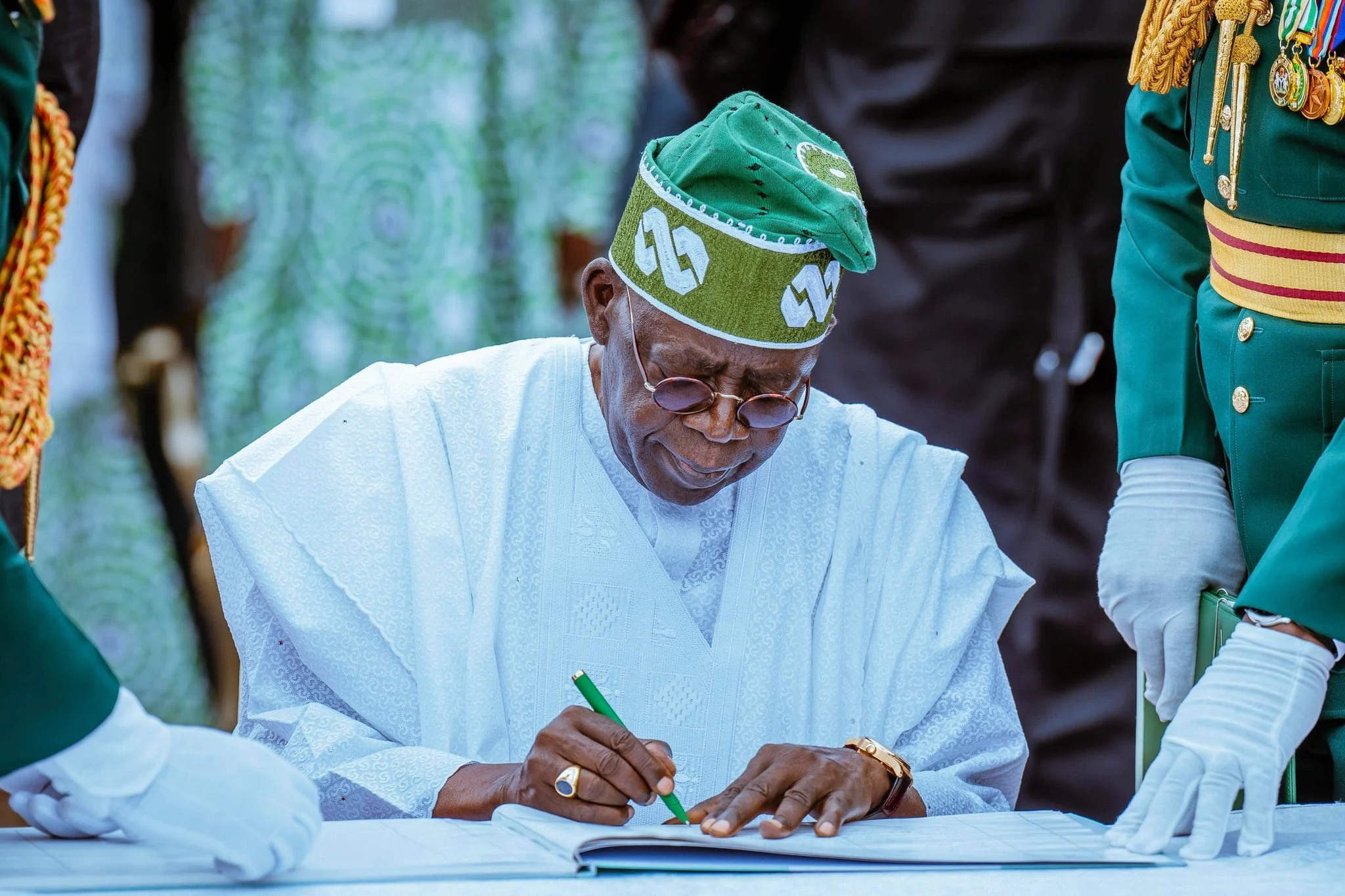
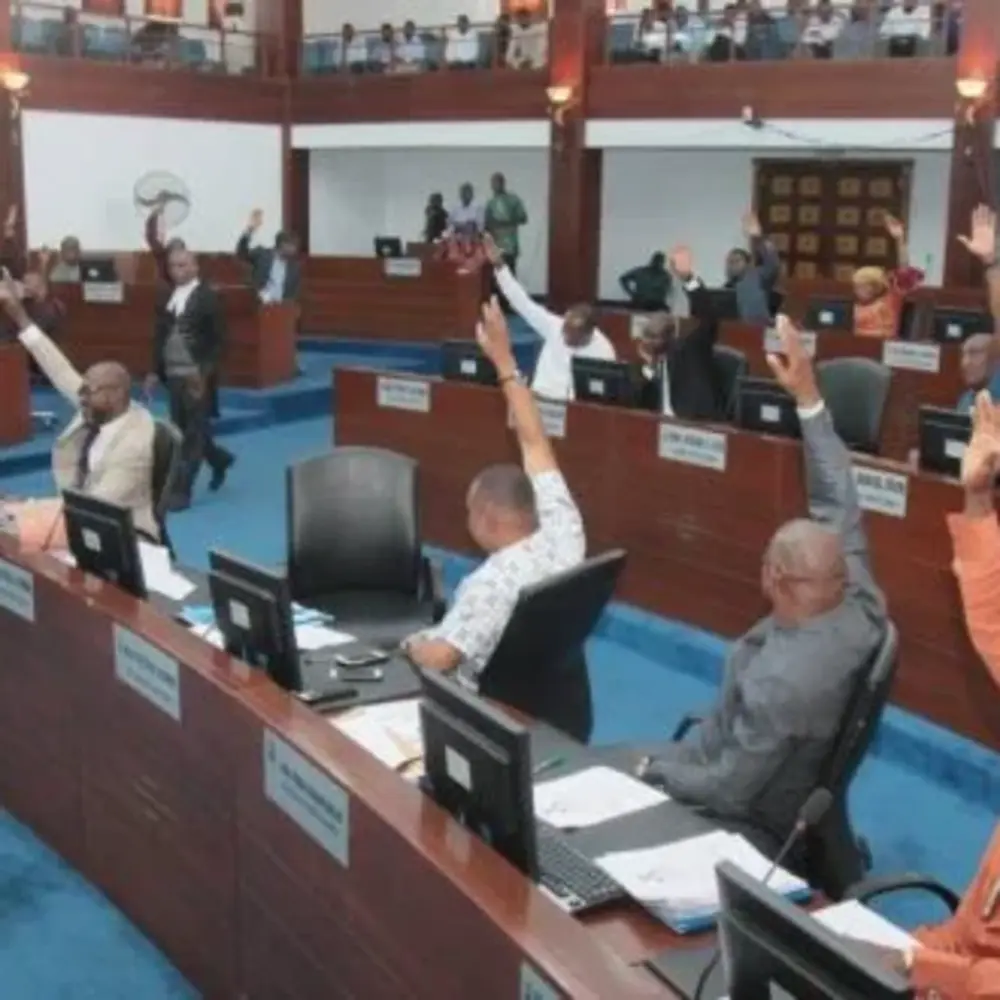
In a move many described as politically motivated, the Rivers State House of Assembly has endorsed President Bola Ahmed Tinubu for a second term in office.
The endorsement, announced on Wednesday, was presented as a vote of confidence in appreciation of what the lawmakers called the “numerous Federal Government projects and interventions” in the state under Tinubu’s leadership.
The motion, signed by 26 members and read by the House Leader, Mr. Major Jack (Akuku-Toru), claimed that Tinubu’s administration had demonstrated commitment to peace, stability, and development.
In a controversial justification, the legislators cited Tinubu’s declaration of a state of emergency and the temporary suspension of the state legislature, moves widely criticized by Nigerians and international observers, as evidence of his “fatherly role” in restoring order.
Speaker of the House, Mr. Martin Amaewhule (Obio/Akpor I), praised the president as a “compassionate father” working to reposition the nation for growth.
He also lauded the appointment of Rivers indigenes into key federal positions, saying it reflected Tinubu’s inclusiveness and strengthened the state’s relationship with the Federal Government.
The lawmakers further pledged loyalty to the Minister of the Federal Capital Territory (FCT), Nyesom Wike, and promised to mobilize grassroots support for Tinubu’s “Renewed Hope Agenda.”
President Bola Ahmed Tinubu has nominated General Christopher Gwabin Musa as Nigeria’s new Minister of Defence.
In a letter to Senate President Godswill Akpabio, President Tinubu announced the appointment of General Musa as the successor to Alhaji Mohammed Badaru Abubakar, who resigned from the position on Monday.
General Musa, 58, who was born on December 25, 1967, is a distinguished military officer who served as Chief of Defence Staff from 2023 until October 2025.
He is a recipient of the prestigious Colin Powell Award for Soldiering (2012).
Born in Sokoto, General Musa attended primary and secondary schools in the state before proceeding to the College of Advanced Studies, Zaria.
He graduated in 1986 and enrolled at the Nigerian Defence Academy the same year, earning a Bachelor of Science degree in 1991.
Commissioned as a Second Lieutenant in 1991, Musa has held several key positions in the Nigerian Army, including:
General Staff Officer 1, Training/Operations, HQ 81 Division
Commanding Officer, 73 Battalion
Assistant Director, Operational Requirements, Department of Army Policy and Plans
Infantry Representative and Member, Training Team, HQ Nigerian Army Armour Corps
He later served as Deputy Chief of Staff (Training/Operations) at the Infantry Centre and Corps Headquarters, and as Commander of Sector 3, Operation Lafiya Dole, and the Multinational Joint Task Force in the Lake Chad Region.
In 2021, Musa was appointed Theatre Commander, Operation Hadin Kai, and later became Commander of the Nigerian Army Infantry Corps before being elevated to Chief of Defence Staff by President Tinubu in 2023.
In his letter to the Senate, President Tinubu expressed confidence in General Musa’s capacity to lead the Ministry of Defence and strengthen Nigeria’s security architecture.
KHOST, Afghanistan — Afghanistan’s Taliban-controlled Supreme Court has executed a man publicly in Khost for his role in the killing of 13 members of a family.
The Supreme Court identified the man as Mangal, who was convicted of intentionally killing another Afghan with a Kalashnikov rifle. The victim’s family declined an offer of forgiveness, prompting the so-called retaliation punishment, known as qisas under Islamic law.
Mustaghfir Gurbaz, spokesman for the provincial governor, said the man had been involved in the incident about 10 months ago that resulted in the deaths of 13 people, including women and children. Two other men convicted in the same case have also received qisas sentences, but their executions were postponed as the victims’ families are currently abroad.
Since returning to power in August 2021, the Taliban have reinstated corporal punishments, including public executions and floggings, for crimes such as murder, robbery, and adultery. This latest execution marks the 11th public execution carried out under Taliban rule.
The United Nations has condemned the Taliban’s use of corporal punishment, saying it violates the UN Convention against Torture and calling for an end to such practices. Taliban officials, however, defend the measures as consistent with Afghan law and necessary for public security.
The execution took place in a stadium in the presence of local residents and Taliban officials.
The Nigerian Navy has launched a renewed drive to strengthen its legal capacity in response to rising concerns over failed maritime prosecutions, procedural lapses, and the growing complexity of enforcing the law across Nigeria’s waters.
Rear Admiral Jonathan Mamman, Chief of Administration of the Navy, announced the initiative at the opening of the Navy’s inaugural Legal Training Seminar in Abuja on Tuesday.
Mamman described legal weaknesses as a critical national security gap, allowing maritime offenders to exploit loopholes and evade justice. He said the three-day seminar, themed “Strategic Enforcement of Maritime and Labour Law for Enhanced Naval Operations and Justice Delivery in Nigeria,” is aimed at addressing systemic shortcomings in handling maritime crimes, including piracy, illegal oil bunkering, smuggling, and unlawful vessel operations.
“The challenges in prosecuting maritime-related offences are no longer abstract—they affect operations, morale, and national security. Too many cases collapse due to technicalities and avoidable errors. This must stop,” Mamman said.
He identified four major problem areas: weak prosecution due to poor documentation, mishandled evidence, and gaps in inter-agency coordination; procedural inconsistencies in Standing Courts Martial; labour and personnel-related disputes; and issues in civil–military relations and rules of engagement, which intersect with human rights and international law.
Mamman emphasized that the seminar will equip naval legal officers with enhanced skills in maritime law enforcement, vessel detention procedures, prosecution of maritime and military offences, and compliance with national and international legal frameworks. He noted that hosting the seminar at a Nigerian Army facility underscores the growing tri-service approach to operational justice.
He also commended the Chief of Naval Staff, Vice Admiral Idi Abbas, for championing legal reforms and supporting initiatives to strengthen legal professionalism.
Representing the Minister of State for Defence, Bello Matawalle, Director Legal of the Ministry of Defence, Mr. Usman Muhammed, praised the Navy for its commitment to upholding the rule of law. He described the seminar as a testament to the Navy’s dedication to professionalism and its resolve to operate within legal frameworks.
“The Nigerian Navy plays a vital role in safeguarding our nation’s interests. It is imperative that operations are guided by a thorough understanding of laws governing both land and sea,” Muhammed said, urging participants to leverage the seminar to enhance their expertise and share knowledge with colleagues.
The event also featured paper presentations by prominent legal professionals from the military, judiciary, and academia, providing a platform to tackle legal challenges and reinforce the Navy’s operational effectiveness.
The Lagos State chapter of the Peoples Democratic Party (PDP) has defended Governor Ademola Adeleke’s decision to leave the party ahead of the 2026 Osun governorship election.
Briefing newsmen on Tuesday, Mr. Hakeem Olalemi, PDP Vice Chairman, Lagos Central, said Adeleke acted wisely given the party’s ongoing leadership crises and internal instability.
Olalemi noted that despite the recent election of new PDP national executives at the November convention in Ibadan, the Independent National Electoral Commission (INEC) still recognizes former officials Amb. Umar Damagum and Sen. Samuel Anyanwu, creating uncertainty over who would sign Adeleke’s 2026 nomination forms if he stayed.
“No governor would risk his mandate on a platform battling legitimacy issues,” Olalemi said, stressing that Adeleke’s decision was one of self-preservation, not disloyalty.
He added that internal conflicts have made the PDP unsafe for any serious candidate, accusing some influential governors of exacerbating the crisis for personal reasons.
Olalemi urged the party’s founding fathers to intervene and restore peace, warning that unresolved disputes could threaten the PDP’s survival.
Adeleke officially announced his resignation on Monday, notifying the party through a letter sent to Ward 2, Sagba Abogunde, Ede, on November 4. He has not yet revealed his next political move.
The National Bureau of Statistics (NBS) has reported a decline in average retail fuel prices in October 2025.
According to the bureau’s Petrol Price Watch released in Abuja, the average price of a litre of petrol fell to ₦1,052.31, down from ₦1,184.83 in October 2024, marking an 11.18% year-on-year decrease.
However, compared to September 2025, petrol prices rose by 8.42%, from ₦970.59.
State-level data showed Kogi recorded the highest average price at ₦1,110.00, followed by Sokoto (₦1,105.93) and Borno (₦1,101.63).
The lowest prices were in Oyo (₦1,001.79), Nasarawa (₦1,009.38), and Abia (₦1,012.50).
Zone analysis indicated the North-East had the highest average at ₦1,072.74, while the South-West recorded the lowest at ₦1,032.81.
In the diesel market, the NBS Diesel Price Watch revealed an average retail price of ₦1,398.57 per litre in October 2025, representing a 2.96% decrease year-on-year from ₦1,441.28 in October 2024. Month-on-month, diesel prices increased by 9.45% from ₦1,277.81 in September 2025.
State-wise, Enugu had the highest diesel price at ₦1,468.29, followed by Niger (₦1,465.69) and Jigawa (₦1,437.40).
The lowest prices were recorded in Katsina (₦1,301.24), Edo (₦1,307.84), and Kebbi (₦1,308.94). By zone, the South-East led with ₦1,415.85, while the South-South recorded the lowest at ₦1,387.18.
A Strategic Pathway to Revitalising the Shea Sector
By:
Chris Echikwu
Nigeria sits atop the world’s Shea belt, producing nearly half of the global output. Yet, despite this natural advantage, the country earns little from the multi-billion-dollar global Shea industry. Every year, millions of rural women across Nigeria’s Middle Belt and northern states gather tonnes of Shea nuts — only for most of it to be exported raw.
The paradox is painful but clear: Nigeria is rich in Shea, yet poor in Shea wealth.
Industry experts say the problem isn’t production — it’s structure. The Shea sector remains informal, uncoordinated, and largely unregulated. Without organisation, the country’s Shea economy continues to bleed value that could have transformed rural livelihoods and boosted non-oil exports.
An Economy Lost to Fragmentation
Across Nigeria’s Shea-producing communities, rural women collect nuts individually, selling them to itinerant traders who dictate prices. This opaque system has produced a long list of setbacks — inconsistent quality, high contamination, lack of grading, and a complete absence of reliable production data.
The consequences ripple across the value chain: falling prices discourage processing investments, factories operate below capacity, and rural incomes stagnate. What should be a thriving export sector remains stuck in a cycle of poverty and inefficiency.
“Nigeria’s problem is not a lack of Shea — it’s a lack of structure,” says industry analyst and retired Nigeria Commodity Exchange Director, Mr. Chris Echikwu.
Aggregation as the Turning Point
The game changer, Echikwu argues, lies in building an organised Shea nut aggregation system.
Aggregation is more than logistics — it’s the backbone of a sustainable Shea economy. Under such a framework, producers would form Village Shea Producer Groups, linked to Primary Collection Points for grading and controlled intake. These would feed into Secondary Aggregation Centres for bulk storage, logistics, and quality control.
Licensed buyers would operate transparently under regulatory oversight. Digital traceability platforms and warehouse receipt systems would ensure accountability, price stability, and access to finance.
This model aligns incentives across the value chain while protecting the most vulnerable — the rural women collectors.
Empowering Women, Strengthening Communities
Over 80 percent of Nigeria’s Shea collectors are women. A functioning aggregation framework is therefore also a gender empowerment policy.
“When women are organised into cooperatives with transparent pricing, quality training, and access to finance, they shift from being invisible collectors to recognised economic actors,” Echikwu notes.
Structured aggregation allows rural women to enjoy predictable incomes, gain credit access, and take leadership roles within cooperatives — combining gender inclusion with export competitiveness.
NASPAN: The Institutional Backbone
For the vision to succeed, institutional coordination is essential. Echikwu highlights the National Association of Shea Products of Nigeria (NASPAN) as the central pillar for reform.
NASPAN’s mandate, he suggests, should include policy leadership, buyer licensing, registry management, industry dialogue, and donor coordination. Only a nationally empowered body can anchor reforms beyond the cycle of changing administrations and regional politics.
Government’s Role and Coordination
The Federal Government already recognises Shea as a strategic export crop, but acknowledgment alone is not enough. This to call attention to a tighter coordination among key agencies — including the Federal Ministry of Agriculture and Food Security, the Federal Ministry of Industry, Trade and Investment, RMRDC, NEPC, SON, NAFDAC, and the State Ministries of Agriculture.
“Without government ownership, no national aggregation system can be sustained,” he warns.
Why Donor Support Matters
Transforming the Shea sector requires more than good policy — it needs patient capital and technical assistance. Development partners such as GIZ, FAO, UNDP, ITC, IFAD, and the Global Shea Alliance (GSA) are already active in parts of West Africa. Their support will be critical in financing pilot aggregation centres, building digital traceability platforms, training producer cooperatives, and connecting Nigerian producers to international markets.
Unlocking Nigeria’s Shea Potential
If Nigeria succeeds in structuring its Shea value chain, the rewards could be enormous:
Rural incomes could grow by up to 50 percent;
New processing investments would emerge;
Export earnings could surpass ₦500 billion annually; and
Employment would expand across rural communities.
The belief is that this is Nigeria’s opportunity to dominate the African Shea market — not only in production, but in value creation.
Conclusion
The Shea economy cannot thrive on informality. Nigeria must choose: remain a raw material supplier, or become a value leader.
A sustainable aggregation mechanism is not optional — it is imperative.
Chris Echikwu is a retired Director from the Nigeria Commodity Exchange, Abuja.
THE safe thing to do is to say that Nigeria is not working at its optimal best. But that will amount to playing the ostrich. Because the reality is that our country is not working, not at all, not even for the ruling political and economic elites who currently think that they are having a swell time. If only they knew how much more they would be better if the right things were to be done to make this country work for the majority of its citizens. Sadly, the understanding of our elites (and this is a wrong label for them) is limited, warped, myopic, and parochial.
It has to be acknowledged that the roles of elites, whether political, economic, or intellectual, in nation-building anywhere can be a mixed bag of the good, the bad, and the ugly. The sad reality in our case is that the impacts of Nigeria’s elites on the country over time have gravitated between the bad and the ugly. Any semblance of the elites doing good to the society started and ended in the first republic, 1960-1966. In varying degrees the political elites in that republic represented by the numero uno, Dr. Nnamdi Azikiwe, Chief Obafemi Awolowo, and Sir Abubakar Tafawa Balewa, among others, were the elites who significantly positively impacted the country. Their impact was not just in wresting independence from Britain, but in growing the regions through healthy rivalry and dedication to serving the public good. In this category of service we had Dr. Michael Okpara (Premier of the Eastern region), Chief Dennis Osadebay (Premier of the Mid-Western region), Chief Awolowo (Premier, Western region), and Sir Ahmadu Bello (Premier, Northern region). They have not come any better since then.
The first republic had its own drawbacks and a plethora of crises one of which led to the military coup and counter coup of 1966, and then to a bloody civil war. But in many respects that period could be described as Nigeria’s golden era. The respective political elites took governance seriously and drove the development of their regions. For instance, the Western region under Awolowo was renowned for the introduction of universal free education at the primary and secondary school levels, a policy which still resonates up till today and which transformed the lives of many, especially the indigent. It was also during that period that the Eastern region with Okpara at the helm was acknowledged as the fastest growing economy of any subregion anywhere in the world. Each region had something that was going for it. Many of the enduring institutions in the country currently can be traced back to that era including universities and teaching hospitals, stadiums, industrial layouts, housing estates, and many more. Of course, human capital formation through access to quality and affordable education at home and abroad remained unrivalled.
We need to accept that the coups of 1966, and the long stretch of military dictatorships over about 33 years with civilian rule interregnums, took a heavy toll on the building of civil political culture. The lack of trust by the politicians in the military rulers compounded the problem. For instance, in the late 1990s when the last military dictator, Gen. Abdusalami Abubakar, promised to hand over power to civilians, not many people in the political class believed him. The nightmare of the shifting or fluid hand over dates of the military president, Ibrahim Badamasi Babangida, and the attempted transmutation of Gen. Sani Abacha from a military dictator to a civilian president made the political class doubt the sincerity of the juntas. In the wake of the unbelief of traditional politicians in the military’s transition programme ahead of the 1999 elections, some charlatans moved in and seized Nigeria’s political space. Motorpark touts, advance fee fraudsters [419ners], loafers, jetsams and floatsams, persons of dubious and questionable characters, and sundry elements moved in and filled the void. Has it not been proven that nature abhors vacuum.
These characters got themselves elected into offices wherever the superintending military rulers of the transition, such as the presidency, had no preferred candidates. Early in this republic, a retired ranking police officer who was also a lawmaker said that many of his erstwhile colleagues in the national assembly [NASS] were fraudsters. He claimed that he had participated in probing and arraigning some of them in court. It was also during that period that some Nigerians fled from the United States and other places to Nigeria as fugitives. They contested and won elections mostly into governorship and legislative offices. Once inside government, they started looting the commonwealth, amassing wealth, and consolidating power. Overtime, more of the criminal types joined the early birds in their vice grip on politics, power, and government. Twenty – six years after the start of this dispensation, there are still criminals, especially advance fee fraudsters and fugitives from the law from the US embedded in Nigeria’s Three Arm Zone which houses the National Assembly, Presidency, and the Judiciary. The same applies in some governors mansions in many of our geopolitical zones and state legislatures. This is one other reason why Nigeria is not working.
Yusuf Musa is the CEO of the Kaduna – based Centre for Contemporary Studies [CCS]. He wrote recently that “nations do not collapse merely because a global power intervenes” as American president, Donald Trump, has been threatening to do to Nigeria. He said that they collapse “because their internal foundations had weakened so badly that intervention (becomes) possible, profitable (and) convenient”. Musa submitted that vulnerable nations were usually first “hollowed out by their own internal contradictions and domestic mismanagement”. If Nigeria is at the precipice, and all indications are that it is, then the problem has to be down to lingering internal contradictions and gross mismanagement of its diversity by the successive ruling political elites. For instance, more than half a century after, the wounds of the Nigeria – Biafra civil war are still festering. Reconciliation has been difficult to attain simply because there has been no commitment to it by the victors. The same applies to rehabilitation of the defeated Biafrans. Of course, lip service had been paid to the reconstruction of the areas devastated by bombs and other munitions during the war.
Every major component of the country bears one unresolved grudge or the other against the other components. The northern region still will not let go of the killing of their political and military leaders in 1966; untill recently the western region grumbled about being left out of political power in the centre for years; the Midwestern region is suspicious of everybody; and, the many minority nations of the country are perpetually under the fear of being dominated by their bigger neighbours. So Nigeria is essentially made up of centrifugal forces pulling in different directions. Nobody trusts anybody. A nation cannot be forged from a collection of peoples who do not trust one another, a people with almost irreconcilable world views, a people with diverse and contradictory cultural and religious backgrounds, and a people with self-serving and predatory political and governing elites. Primitive accumulation appears to be the only common thread binding the elites.
How do we expect this country to grow when there’s no Nigerian in the true sense of the word. We are first of all Igbo, Yoruba, Hausa, Efik, Ijaw, tiv, Idoma, Ika etc. before becoming Nigerians. Our rulers do not help the matter. If an Hausa man is born and raised in the heart of Igbo land, say Owerri in Imo state, goes to school there, work in a paid employment or founds a business, marries an Igbo woman, raise a family, pay his taxes there, he remains an Hausa person. He will never be from Imo state. Indeed, the government constantly reminds us of who we are and where we come from. To illustrate, if you have a need to fill a form for any public or private institutions, one of the requirements is likely to be a question on your state of origin. The same applies when filling out a questionnaire for national census or headcount. You may have been born and resident in Maiduguri, Borno state all your life, but you are compelled to write and identify with a state you may not have been to simply because your parents were originally from that state. If as a Yoruba man you’re married to an Igbo woman, and your wife desires to contest for elective position, she will by law including the 1999 Constitution (as amended) be required to go back to her so-called state of origin and seek out the appropriate constituency to consummate her political aspiration. A similar thing also obtains in appointive offices. How do we forge a nation from this incongruities?
But the more damning evidence that Nigeria is not working is the prevalent attitude of Nigerians to Nigeria. This attitude is worse among the younger generation. To an extent it also applies to the middle aged and the older folks. Nigeria as a country counts for little or nothing in the hearts and minds of many so-called Nigerians. There’s no sense of belonging. There’s no sense of ownership. There’s no stakeholder mentality. To many, Nigeria is a strange place, and there’s a growing feeling of being trapped in a space that’s increasingly becoming unfamiliar and troubling. And our rulers, by commission or omission, do not help the citizen to make a sense of the situation. The prevalent feeling is that this country might just be on a journey to nowhere. In Igbo it appears to be “ebe oku nyuru awusa owa”, or wherever the candle light flickers out, we drop the stick and move on.
The crisis within the People’s Democratic Party (PDP) deepened on Tuesday following the resignation of Osun State Governor, Ademola Adeleke, from the party.
Adeleke’s decision was contained in a letter dated November 4 and addressed to the PDP Chairman of Sagba Abogunde Ward 2 in Ede North Local Government Area of the state.
In the letter, which was made available to journalists in Osogbo in the early hours of Tuesday, the governor attributed his resignation to the persistent leadership crisis rocking the party at the national level.
The letter read: “Due to the ongoing crisis within the national leadership of the People’s Democratic Party (PDP), I hereby resign my membership of the party with immediate effect.
“I wish to express my appreciation to the PDP for the platform and opportunities it provided me to serve as Senator representing Osun West and as Governor of Osun State.”
Although Adeleke did not disclose his next political move, sources indicate that he may be on the verge of joining the Accord Party in the coming days.
The Independent National Electoral Commission (INEC) has scheduled the Osun State governorship election for August 8, 2026.
For decades, the national conversation around the Nigerian National Petroleum Company Limited (NNPCL) has been clouded by politics, suspicion, and loosely framed financial arguments. The latest controversy broke out when a legislative committee claimed that N210 trillion had gone missing from the company’s accounts, a figure that travelled quickly across headlines and social media.
But behind the uproar lies a more fundamental issue: a public debate often disconnected from how national oil revenues actually flow. What emerges from a closer examination is not a tale of vanishing trillions, but of a company undergoing a difficult, disciplined rebuild, one anchored in clearer accounting, stronger governance, and a determined break from decades of opaque practices.
Experts dismissed the N210 trillion claim almost immediately, not out of corporate loyalty, but because the maths simply did not hold. As one analyst put it, the allegation was “an accounting impossibility that betrays a basic misunderstanding of national cash flows.” The amount exceeds Nigeria’s entire gross domestic product (GDP) and far outstrips what decades of crude exports could yield. More critically, it treats gross national oil revenue as if it were NNPC’s personal cash, which it never was.
Under the old model, NNPC acted as the government’s crude marketer, obligated to cover multiple first-line costs before remitting anything to the Federation Account. Joint venture (JV) cash calls had to be paid to keep rigs running, petrol subsidies were funded to stabilize pump prices, and operating expenses had to be met. The remaining balance, often unpredictable, was what eventually found its way into national coffers.
These deductions, long misunderstood by the public, sustained the oil sector but also fed confusion and mistrust. The Petroleum Industry Act (PIA) sought to fix that by transforming NNPC into a limited liability company, a taxable, dividend-paying entity with finances distinct from the federal purse. Where money once flowed through a single opaque channel, it now moves through auditable, rule-based streams.
Another chronic problem was NNPC’s mountain of unpaid cash calls to its JV partners. The arrears had a disabling effect on investment and production, though the cause was structural rather than ethical: government budgets simply couldn’t keep pace with the rising cost of oil production.
Here again, the PIA triggered a quiet revolution. The shift to incorporated joint ventures (IJVs) and alternative funding models has changed the game. Each JV now raises its own financing, taking liabilities off NNPC’s books and freeing the company from legacy debt traps.
So, when NNPC declares today that it owes no current cash calls, that statement is accurate under the new structure. Old arrears are being reconciled separately, while ongoing operations are funded in real time. The change has already begun to restore investor confidence, with partners once again backing multi-billion-dollar upstream projects
Then came the headline number: N5.4 trillion profit in 2024. It raised eyebrows – and questions. Could it last? Analysts say part of the surge came from subsidy removal, which erased a major cost centre that had drained profits for decades. But they also point to deeper, more meaningful improvements: operational efficiency, falling production costs per barrel, and better refinery utilization. These shifts suggest that the profit reflects more than just policy windfalls – it reflects management discipline.
The real test, experts warn, will be how NNPC deploys its earnings. Reinvesting in upstream projects and critical gas infrastructure could sustain long-term growth. Allowing quasi-fiscal pressures to creep back in could unravel the gains. Encouragingly, the company’s current strategy, published and publicly defended, leans toward reinvestment, financial discipline, and a long-term growth model.
Criticism of opaque remittances, while valid in the past, now belongs to a fading era when NNPC acted both as operator and collector. Today’s system is simpler: NNPC sells crude, pays taxes, pays royalties, and declares dividends. Each stream is traceable through statutory reporting and subject to independent audit. The adoption of IFRS-compliant accounting standards and audits by a major international firm adds another layer of credibility. Transparency is no longer aspirational; it is structural.
Skeptics have also questioned whether large-scale gas projects like the Ajaokuta–Kaduna–Kano (AKK) pipeline risk becoming stranded in a world turning toward renewables. But analysts counter that such concerns misread both global energy trends and Nigeria’s developmental realities.
Global gas demand is projected to remain stable for decades as nations use it to balance renewables until large-scale storage matures. For Nigeria, the AKK pipeline is primarily a domestic growth engine, designed to displace diesel, cut emissions, power industries, and diversify the economy. It also carries strategic flexibility: the infrastructure can be retrofitted for hydrogen in the future, aligning with global energy transition pathways.
Ultimately, the most convincing evidence of NNPC’s transformation may not lie in its profit margins, but in its new corporate discipline. The decision to hold earnings calls, publish audited reports, and discuss a potential IPO openly marks a clear cultural shift. It exposes management to investor scrutiny – something impossible under the old regime. “You can’t fake this for long,” one analyst noted. “The market will punish any backsliding.”
That willingness to operate under market standards, and be judged by them, may be the clearest sign that NNPC’s transformation is real. After decades defined by opacity and public mistrust, Nigeria’s energy giant is slowly evolving into something more than a state behemoth. It is learning to act like a modern company, disciplined, transparent, and accountable. In a sector long haunted by secrecy, that alone is a turning point.