Author: admin

  • Benue at 50: Ochetoha K’Idoma Salutes Progress, Raises Alarm Over Political Exclusion

    Benue at 50: Ochetoha K’Idoma Salutes Progress, Raises Alarm Over Political Exclusion

    As Benue State marks 50 years since its creation, the apex socio-cultural organisation of the Idoma people worldwide, Ochetoha K’Idoma, joins the Golden Jubilee celebrations with warm congratulations—but also with a firm call for reflection on what it describes as a deep and persistent imbalance in the state’s political life.

    Speaking for the organisation, its President-General, Yakubu Aboki Ochefu, says the anniversary is both symbolic and instructive. While acknowledging the progress recorded over five decades, he argues that the state’s political history reveals a pattern of exclusion that continues to sideline Benue South Senatorial District from the highest levels of power.

    Ochefu recalls that Benue State comes into existence on February 3, 1976, under the military administration of the late Murtala Muhammed, following earlier political arrangements that place Idoma land within the former Northern Region and later Benue-Plateau State. Long before these administrative constructs, he says, the Idoma people occupy the fertile Benue Valley for centuries, sustaining a distinct identity while maintaining a reputation for resilience, hospitality, and peaceful coexistence.

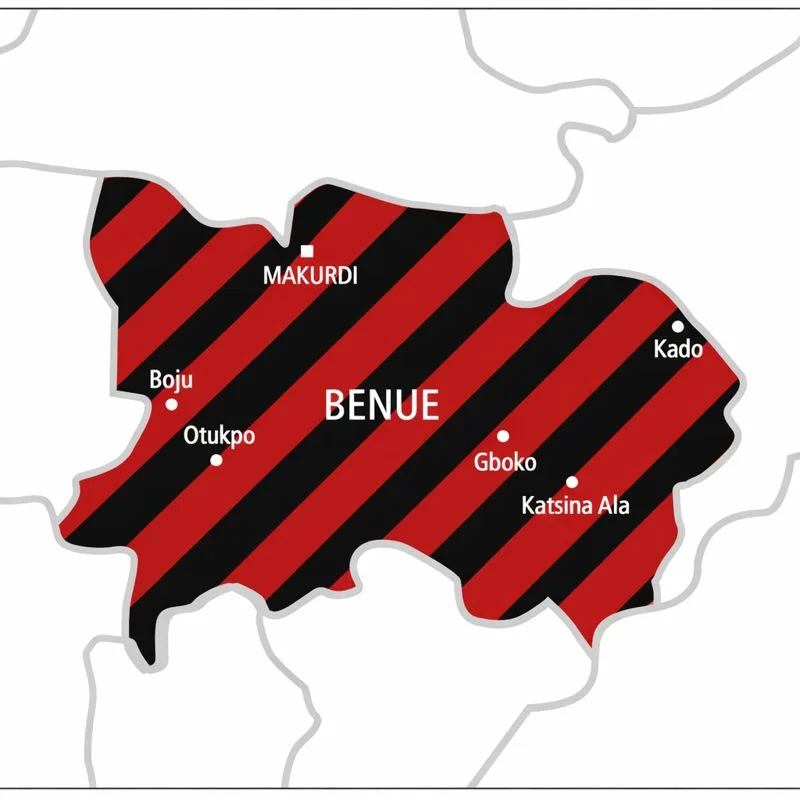
    Map of Benue State @50

    He says the Idoma experience within Nigeria is defined by consistent national service. Despite being a numerical minority, Idoma sons and daughters, according to him, have left enduring footprints across governance, the civil service, the military, academia, culture, sports, and faith. From the early post-independence years to the present, their influence cuts across generations. Ochefu cites Dr. Edwin Ogbu, who becomes the first indigene of Benue State to serve as a Federal Permanent Secretary in 1966, and Abu Obe, who later rises to Head of the Civil Service of the Federation, as early markers of that contribution.

    In legislative politics, he notes that Idoma land produces two Presidents of the Senate—Ameh Ebute and David Mark. Mark’s eight-year tenure, spanning four consecutive terms, remains the longest in Nigeria’s democratic history and, Ochefu says, firmly places the Idoma nation at the centre of national leadership. He also points to the national roles played by Audu Ogbeh, former Minister of Agriculture and ex-national chairman of the Peoples Democratic Party, as well as Senator Abba Moro and the late Professor Jerry Agada, all of whom serve at ministerial level.

    Beyond politics, Ochefu says the Idoma presence remains deeply woven into Nigeria’s security architecture. From participation in the Second World War and the Nigerian Civil War to leadership at the highest levels of the armed forces, Idoma officers continue to play defining roles. He references the late Ebije Ikwe, who serves as Chief of Air Staff between 1967 and 1975, as well as several Idoma military governors who administer states across the federation.

    In education and culture, Ochefu says the Idoma people produce Benue State’s first university graduate as far back as 1954 and go on to contribute professors, vice-chancellors, and national policy thinkers whose work shapes Nigeria’s intellectual and professional landscape. He also highlights the global reach of Idoma creativity, pointing to the late Bongos Ikwue, whose genre-blending sound defines an era, and Afrobeats icon 2Baba, whose music projects Nigerian identity to international audiences.

    Yet, Ochefu says, this long record of contribution stands in stark contrast to the political reality within Benue State itself. In 50 years, he notes, Benue South has never produced a governor or a speaker of the State House of Assembly, has produced only one Chief Judge, and has never produced a Vice-Chancellor of Benue State University. He describes the pattern as structural rather than accidental, warning that prolonged exclusion erodes trust, weakens cohesion, and contradicts the ideals of unity on which the state is built.

    On development, Ochefu acknowledges the presence of key federal institutions in Idoma land, including the Federal University of Health Sciences in Otukpo, but says sustained industrial investment remains largely absent since the administration of former Governor Aper Aku. He argues that without deliberate investment in infrastructure, agriculture, solid minerals, and youth-driven enterprise, the economic potential of Benue South will remain unrealised.

    He also commends Elaigwu Odogbo Obagaji John, the Och’Idoma V and Paramount Ruler of the Idoma Nation, for providing steady leadership and promoting peace and unity across Idoma land amid growing social and security challenges.

    Looking ahead, Ochefu says the next phase of Benue State’s history must be defined by inclusion, balance, and fairness. The aspiration for an Idoma governor, he stresses, should not be framed as a request for concession but recognised as a legitimate democratic expectation in a state that claims unity as a foundational value.

    Only through equity, mutual respect, and intentional inclusion, he concludes, can Benue State fully harness its diversity and build a future that delivers shared prosperity for all its people.

  • Ezhiba Community Laments Neglect, Urges Gov. Sule to Fix Ezhiba/Akpata Road

    Ezhiba Community Laments Neglect, Urges Gov. Sule to Fix Ezhiba/Akpata Road

    Residents of Ezhiba community in Nasarawa State have raised concern over what they describe as years of neglect, appealing to Governor Abdullahi Sule to urgently intervene in the deplorable condition of the over five-kilometre Ezhiba/Akpata road, which they say continues to undermine agriculture, economic activities, and the overall quality of life in the area.

    Their concern was conveyed by the Village Head of Ezhiba, Chief Danlami Umbugadu, when he led members of the community on a courtesy visit to Akun Area Administrative Council, where they met with the council’s Administrator, Garba Adigizi, in Akpata.

    Umbugadu said the deplorable condition of the road has continued to hinder economic growth and agricultural activities in the area, stressing that residents and other road users endure serious hardship daily.

    “This road is in a very bad shape. Our people and other users are suffering while plying it. We are appealing to His Excellency, Governor Abdullahi Sule, to construct this road so as to improve our standard of living,” he said.

    According to the traditional ruler, rehabilitating the Ezhiba/Akpata road would significantly boost agricultural productivity, ease transportation of farm produce, and enhance socio-economic activities within the community and its environs.

    Beyond road infrastructure, Umbugadu also appealed to the state government to consider employing and appointing qualified sons and daughters of Ezhiba into various government positions, noting that greater inclusion would further strengthen development and a sense of belonging among the people.

    He assured the governor and the Akun Area Administrative Council of the community’s continued loyalty and unwavering support for the current administration.

    Other prominent sons of the community who spoke during the visit included Mr. Lami Martina Bako, a former Speaker of Akun Development Area; Mr. Charles Jatau Shari, a retired Director in the State Ministry of Education; and Mr. Umbugadu Angbashim, Chairman of the Ezhiba community. They all reiterated their support for the governor and the council administrator, while calling for sustained government attention to grassroots development.

    Responding, Adigizi thanked the Ezhiba community for the visit and assured them of his commitment to partnering with the people to drive development in the area.

    He further pledged to uphold inclusive leadership that would promote unity, peace, and sustainable growth across communities under the Akun Area Administrative Council.

    The administrator also expressed readiness to initiate people-oriented policies and programmes that would have a direct and positive impact on the lives of residents.

  • Human Capital Development: Ebonyi Sends 47 Scholars to UK on Scholarship

    Human Capital Development: Ebonyi Sends 47 Scholars to UK on Scholarship

    No fewer than 47 beneficiaries on Monday departed Ebonyi State for the United Kingdom under the state government’s overseas scholarship scheme, as Governor Francis Nwifuru reaffirmed his administration’s commitment to human capital development.

    The beneficiaries departed from the Chuba Okadigbo Airport, where the governor described the programme as a strategic investment in the future prosperity of Ebonyi State.

    Speaking during the send-off ceremony, Nwifuru urged the scholars to remain disciplined and serve as worthy ambassadors of the state, noting that their journey symbolised more than international travel.

    “This event is not just about boarding a flight but destiny taking flight.
    This is about hope leaving the shores of Ebonyi to soar into the future,” the governor said.

    He explained that the scholarship scheme ranked among the most financially demanding interventions of his administration, second only to major infrastructure projects. According to him, the programme initially faced stiff opposition due to economic pressures and competing development needs.

    “Several people called for its suspension, arguing that the resources should be channelled towards roads, hospitals and other pressing needs,” Nwifuru said. “However, we would be mortgaging the future of Ebonyi if we fail to invest in the youths.”

    The governor added that the initiative aligned with his administration’s People’s Charter of Needs, which places human capital development at the core of governance.

    “This initiative is deeply personal, as the beneficiaries are being offered opportunities I and many others never had,” he said. “Every fund spent on it is a collective sacrifice of traders, civil servants, artisans and taxpayers, aimed at making the path easier for the next generation.”

    Also speaking, the Chairman of the Ebonyi Scholarship Board, Chief Chaka Nweze, said the selection of beneficiaries was conducted strictly on merit.

    “We concentrated on first-class graduates, but due to prevailing developments, we also considered those with Second Class Upper division (2:1) with a CGPA of 3.0 and above,” Nweze said.

    He disclosed that an additional 43 beneficiaries would depart at a later date, as they were still awaiting visa clearance. He further revealed that all beneficiaries signed a bond committing them to return to Nigeria and serve Ebonyi State for a minimum of five years after their studies.

    According to him, the scholars would be deployed to educational institutions currently being inaugurated across the state, after which they would be free to pursue personal endeavours upon completing their service period.

    The scholarship scheme is part of the Ebonyi State Government’s broader strategy to build a skilled workforce capable of driving sustainable development and long-term growth.

  • Ugly optics from Turkiye and return of our visiting president

    Ugly optics from Turkiye and return of our visiting president

    By

    UGO ONUOHA

    Nigeria’s president, Alhaji Bola Ahmed Tinubu, enjoys gallivanting. Put together he has been out of the country for more than half of one year in the two years and some months that he had been in office so far. For this period alone counting from December 28, 2025 to today, February 3, 2026, Tinubu would have spent only 11 days in Nigeria out of 34 days, less than one-third. He has set the tone for this year because the Igbo say that “ana esi n’uto ahuru mara uto nsi”. For decency we will just say that this means that the taste of the pudding is in the eating. But in truth, the transliteration of that Igbo sentence would come out as “you can guess the taste of feces from the smell of the fart that preceded it”. Those who keep tabs on presidential travels in the modern era of our country may yet find out that he holds the record as the most travelled Nigerian head of state in the first two years of their being in office.

    Tinubu has spent about 220 days abroad since he acceded to office on May 29, 2023. He just returned to the country on Saturday, several days after the state visit to Turkiye ended. That was not unusual. That explains why his handlers announce his departure dates but never the return dates. It’s the same when he goes to Brazil as an observer during the BRICS [Brazil, Russia, India, China and South Africa] summit. It’s the same when he visits London. It becomes worse whenever he is in Paris, France, his preferred home which coincidentally is the abode of his long time friend and business associate, Gilbert Chargouri [GCON], the Lebanese Nigerian. Some angry Nigerians have dubbed this secretly awarded medal of Grand Commander of the Order of Nigeria as Gilbert Chargouri Order of Nigeria [GCON].

    Whenever President Tinubu travels out of the country, which turns out to be very very often, the only thing that is known is the date for his departure. His return date is never or at best seldom stated in presidential communications. Sometimes the country he would be going to is never named. For instance, on December 28, 2025, one of the president’s spokespersons, Bayo Onanuga, caused a statement to be issued wherein Nigerians were told in a contemptuous, disdainful and derisive manner that Tinubu had departed for Europe as part of his end of year activities. He said that from Europe, the president would go to Abu Dhabi in the United Arab Emirates [UAE] for a programme. That event was scheduled to last for one week. On that trip, the president stayed away from the country for three weeks. The name[s] of the European country[ies] he went to remained a mystery. Though he was said to have been sighted in Paris during that period.

    When he returned from Abu Dhabi,Tinubu managed to spend one week in Nigeria, the very country he swore an oath to govern, and then he hurried out to Turkiye for a state visit. Though the presidency avoided putting a timeframe to the visit, the understanding was that the Turkiye state visit was not meant to last beyond two days. That’s the way it should be. Nobody should expect the president of Turkiye, Recep Tayyip Erdogan, a busy and obviously serious-minded leader of a country to devote or waste one week babysitting the president of another ostensibly unfocused and unserious country whose ruler may desire to even stay longer in a foreign land. For Tinubu, it’s obvious that better anywhere else but in Nigeria.

    In hindsight it should now be obvious even to the not too discerning that this ruler of Nigeria had a game plan for the duration of his presidency – four years, eight years or any number of years in-between. Travel. Travel. And travel. That should explain why he hastily acquired a well-appointed wide body Airbus aircraft as an addition to the presidential fleet. The prior talks that the aircraft in the presidential fleet were too many to start a commercial aviation service were not for him. Tinubu had made up his mind that he would rule Nigeria from the skies, and from across oceans, and from foreign lands. Of course, as should be expected for a jet procured in a hurry and in an untardy manner, there was no appropriation for it by what has turned out to be a supine national assembly [NASS]. Onanuga later explained, obviously reluctantly amidst national outcry, that the multi billion Naira jet was bought with monies from a slush fund otherwise called Service Wide Vote. It has to be said that this Vote is not unique to this regime. Tinubu did not create it. It has been in existence. Such opaque budgetary provisions are not unusual in jurisdictions such as Nigeria’s where kleptomania rules. To accentuate the proclivity to hedonism, an armour-plated and bomb-resistant Cadillac was added to spruce up the comfort and safety of President tinubu.

    However, Tinubu’s state visit to Turkiye last week demonstrated that there is so much that the perks and appurtenances of a high and demanding office can mask. They cannot mask a man suspected of infirmity to become suddenly strong. Even a performance enhancing steroid wears away over time. Comforts and access to the best of medical facilities and technologies and inventions are useful and life-enhancing. But they cannot cure slowdowns and noticeable sluggishness that come with age. It gets worse when there’s a combination of infirmity and old age. To be sure old age could be grace that comes from on high which many actually covet but do not have. It has to be said, however, that for some people old age could be karma designed to serve them cold dinner in the twilight of their lives when they are helpless and most vulnerable. When suspected infirmity combines with old age, living a jet-set lifestyle becomes ill-advised. It certainly will not be good for a man in his mid-70s or actually in his mid-80s.

    In national terms Nigeria is in a dire straits in almost all facets. If Nigeria were to be a human being it would be a key candidate for admission in the ICU [intensive care unit]. Its politics is bastardised. Its economy is comatose. Paranoid. Paralysed. Its sovereignty is challenged by domestic non-state actors and foreign powers with morbid interests. The claims of the unity of the country and its indissolubility are convenient and self-serving slogans in the mouths of the members of the corrupt and looting ruling elite. In Turkiye last week, it was the instability of Nigeria that was in the global spotlight. Tinubu merely approximated it. The world saw Nigeria on display through their ruler. Nigeria told the world that this was the best it had on offer. The irony is that this country is still a mystery to the international community. It presents a contradictory image of itself – a country of young and tech savvy people and, at the same time, a country of a bungling and utterly corrupt ruling class. It’s a mystery. And an enigma.

    There’s no attempt here to diagnose the health status of President Tinubu. I am not a certificated health professional. And I am not his personal physician. But the telltale signs of a stumbling and tumbling man in Turkiye last week who needed to be assisted by his host to stabilise and focus should be concerning, nay troubling for any Nigerian who means well for this country. The signs were writ large prior to the 2023 election after which he was declared the winner. What this means in effect is that this country which is in ICU has had the dubious burden of nursing its nurse for the better part of 10 years. A president should be a nurse for an ailing country.

    The affliction of Nigeria who masqueraded as its president from 2015-2023, Maj. Gen.[rtd] Muhammadu Buhari, became a patient instead of a nurse for the country. He was in and out of hospitals abroad for the duration of his eight years of reign. At a time he was on a hospital bed in London for 103 consecutive days. His appointees formed cabals which ran the country to benefit themselves. The chickens are now coming home to roost. The only achievement of Buhari was ‘non-governance’ which ensured that the country went back by at least 30 years. It will be frightening if  this country is on the cusp of witnessing a déjà vu. Already, people who should be in the know are indicating that Tinubu is not firmly in control of his regime. They claimed that contending cabals have been pulling at opposite ends which accounts for the many missteps by the regime including smuggling a strange name into the list of ambassadors-designate. Indeed, the strangler had been assigned to a duty post before the scheme was uncovered. The burgeoning perception and image of Nigeria as a rolling crime scene is foreboding.

    UGU ONUOHA, Veteran Journalist, Managing Director/Editor-in-Chief, Champion Newspapers Limited writes from Lagos, Nigeria’s Centre of Excellence

  • Tinubu’s Türkiye Visit: Diplomatic Ambitions Meet Domestic Scrutiny

    Tinubu’s Türkiye Visit: Diplomatic Ambitions Meet Domestic Scrutiny

    Abuja — President Bola Ahmed Tinubu returned to Abuja late Saturday night from a State Visit to the Republic of Türkiye that was officially billed as a diplomatic success but unfolded into a far more complicated political moment at home.

    The visit, which culminated in the signing of nine bilateral agreements with Türkiye, was intended to signal Nigeria’s renewed international engagement and strategic outreach under Tinubu’s administration. Instead, it has opened a broader conversation, one that blends diplomacy with domestic unease, policy ambition with public scepticism, and substance with symbolism.

    At the formal level, the trip delivered what governments typically seek from state visits. Tinubu held high-level talks with Turkish President Recep Tayyip Erdoğan, and both leaders reaffirmed their commitment to deeper cooperation in defence, energy, security, research, and trade. Officials described the agreements as instruments for investment growth, security collaboration, and long-term institutional partnerships.

    Yet even as handshakes were exchanged and documents signed, questions began to surface. Beyond general statements, the Nigerian government offered little detail on the specific terms of the agreements, how they will be financed, who bears what obligations, and when tangible outcomes can be expected. In a country shaped by past experiences of ambitious memoranda that never matured into real projects, the lack of clarity quickly became a source of concern.

    Security cooperation, in particular, attracted close scrutiny. Nigeria’s prolonged struggle with insurgency, banditry, and violent crime has made foreign defence partnerships politically sensitive. While Türkiye’s growing defence industry positions it as an attractive partner, many analysts argue that past international security arrangements have failed to deliver decisive results. Without clear safeguards, performance benchmarks, and legislative oversight, sceptics fear history could repeat itself.

    The economic promises attached to the visit were also met with caution. Nigeria–Türkiye trade remains modest when measured against Nigeria’s engagements with other global partners. Economists and policy watchers argue that unless the agreements contain enforceable provisions for local content, technology transfer, and job creation, their impact may be limited—especially at a time when Nigerians are under intense economic pressure.

    But perhaps the most politically charged dimension of the visit emerged not from policy documents, but from images.

    Photos and videos from official ceremonies in Türkiye circulated rapidly across social media and opposition platforms. In several of them, the President appeared subdued during extended protocol events, prompting sharp commentary and, in some quarters, unflattering interpretations. Supporters dismissed the reaction as exaggerated and partisan, arguing that long ceremonial routines often produce awkward still images. Critics, however, seized on the visuals as emblematic of broader concerns about leadership optics and preparedness.

    In modern politics, such moments rarely remain superficial. Analysts note that in an age of instant digital circulation, images can define narratives more powerfully than communiqués. For an administration seeking to project confidence, strength, and momentum on the global stage, the visual language of a state visit matters almost as much as its diplomatic content. In this case, the imagery shifted attention away from signed agreements and toward questions of presentation and perception.

    The timing of the visit further complicated its reception. As Nigerians confront inflation, currency volatility, and rising living costs, foreign travel by political leaders is increasingly judged through a domestic lens. Supporters argue that diplomacy is essential for long-term recovery and international credibility. Critics counter that such engagements must produce visible, near-term benefits to justify their political cost.

    By the time Tinubu’s aircraft touched down at the Presidential Wing of the Nnamdi Azikiwe International Airport, the Türkiye visit had become more than a foreign policy exercise. It had evolved into a mirror reflecting Nigeria’s anxieties about governance, communication, and results.

    Ultimately, the political meaning of the trip will not be determined in Ankara or Abuja’s VIP lounges, but in the months ahead. If the agreements translate into real investment, improved security capacity, and measurable economic gains, the doubts may fade. If they do not, the visit risks being remembered less for what was signed and more for the questions it raised.

    For President Tinubu, the Türkiye trip stands as a reminder that in contemporary politics, diplomacy is judged not only by documents and declarations, but by delivery, and by the images that linger long after the ceremonies end.hat in contemporary politics, diplomacy is judged not only by documents and declarations, but by delivery—and by the images that linger long after the ceremonies end.ical sessions that led to the finalisation of the agreements.

  • NGF Prioritises Sugar Production to Boost Industrial Development in Nigeria

    NGF Prioritises Sugar Production to Boost Industrial Development in Nigeria

    The Nigeria Governors’ Forum (NGF) has agreed to prioritise sugar as a key product for accelerating industrial development across states of the federation, in a move aimed at reducing imports, creating jobs and achieving national self-sufficiency.

    The Executive Secretary and Chief Executive Officer of the National Sugar Development Council (NSDC), Kamar Bakrin, disclosed this in a statement issued on Sunday in Abuja.

    Bakrin said the decision followed a request by the NSDC to the NGF as part of broader efforts to develop Nigeria’s sugar sector and halt the continued importation of raw sugar.

    Under the arrangement, the NGF secretariat will include sugar projects as priority beneficiaries in its engagements with development partners both within and outside Nigeria. The forum will also collaborate with the NSDC to support states in preparing and positioning investor-ready sugar projects.

    According to Bakrin, the partnership will facilitate structured engagement between state governments, investors and industry operators, while improving coordination around critical enablers such as land access, infrastructure provision and incentive frameworks.

    During a meeting with the NGF leadership, Bakrin highlighted the vast investment opportunities in the sugar sector and urged governors of sugarcane-viable states to embrace large-scale sugar project development.

    He identified 11 states with proven land suitability for profitable sugar production as Oyo, Kwara, Niger, Nasarawa, Kaduna, Kano, Bauchi, Gombe, Jigawa, Adamawa and Taraba.

    The NSDC boss noted that recent macroeconomic developments had improved the competitiveness and profitability of local sugar production. He explained that while global sugar prices had remained relatively stable in dollar terms, exchange rate movements had made sugar imports significantly more expensive.

    “Exchange rate movements have made imports significantly more expensive, thereby enhancing the commercial viability of domestically produced sugar, whose inputs are largely naira-denominated,” Bakrin said.

    He added that Nigeria now had strong operational fundamentals for sugar production, with assessments identifying about 1.2 million hectares of prime land suitable for large-scale sugarcane cultivation nationwide. However, only about 200,000 hectares would be required to achieve national self-sufficiency.

    Bakrin said the Nigerian sugar sector is currently valued at about $2 billion, adding that opportunities would expand significantly under the African Continental Free Trade Agreement (AfCFTA). He estimated the continental sugar market at $7 billion, while the market for sugar by-products alone was valued at about $10 billion in Nigeria.

    He explained that a model sugar project producing 100,000 metric tonnes annually would require an estimated investment of $250 million and deliver an internal rate of return of about 24 per cent. Such projects would also generate valuable by-products including ethanol and bio-electricity.

    Bakrin emphasised that sugar projects promote inclusive development by integrating host communities into the value chain through outgrower schemes and employment opportunities, while also supporting environmental sustainability.

    Meanwhile, the Director-General of the NGF, Abdulateef Shittu, said many state governments were already engaged or keen to invest in sugar-related projects spanning land development, agricultural schemes and agro-industrial initiatives.

    Shittu said unlocking the sector’s potential would require effective coordination, credible investment frameworks and strong alignment between federal policy objectives and state-level development priorities.

    He pledged the commitment of the NGF secretariat to ensuring that state development priorities increasingly focus on sugar investments, given their capacity to drive rural development and job creation.

  • Wikki Tourists, Nasarawa United Share Spoils in Bauchi NPFL Clash

    Wikki Tourists, Nasarawa United Share Spoils in Bauchi NPFL Clash

    Wikki Tourists FC and Nasarawa United FC played out a 1–1 draw on Sunday in a keenly contested Nigeria Premier Football League (NPFL) Matchday 24 fixture at the Abubakar Tafawa Balewa Stadium.

    Nasarawa United took the lead in the 28th minute after Izuchukwu Chimezie capitalised on a defensive lapse to slot home the opener.

    Wikki Tourists responded before the interval, with Jonathan Mairiga restoring parity in the 41st minute to ensure both sides went into the break level.

    The News Agency of Nigeria (NAN) reports that the encounter was highly competitive, as both teams displayed tactical discipline and determination throughout the match.

    Wikki Tourists had an opportunity to go ahead in the second half but failed to convert a penalty, and no further goals were recorded as the match ended in a stalemate.

    The result leaves Wikki Tourists on 28 points from 24 matches, sitting 14th on the Nigeria Premier Football League standings.

    Sports analyst Bala Sani described the match as exciting, noting that Nasarawa United appeared better organised technically and well-prepared for the encounter.

    Reacting after the game, Wikki Tourists Chief Coach, Bala Saleh, attributed his team’s display to fatigue, explaining that the strain resulted from playing three consecutive matches. He, however, expressed confidence ahead of their next fixture against Katsina United.

    Also speaking, Nasarawa United Assistant Coach, Stephen Moga, praised his players for their professionalism, saying they executed the game plan effectively despite the pressure of playing away from home.

  • Northern Rulers Pledge Support for Security in South-South, South-East

    Northern Rulers Pledge Support for Security in South-South, South-East

    The Northern Traditional Rulers Council for the South-South and South-East has pledged to support security agencies and state governments in addressing security challenges across the two regions.

    The council’s chairman, Alhaji Yaro Danladi, disclosed this on Sunday while briefing journalists on the outcome of a two-day emergency meeting held in Umuahia, Abia State.

    Danladi said the council resolved that northern communities resident in the regions would work closely with state governments, host communities and security agencies to promote peace, stability and harmonious coexistence.

    “We agreed to work hand-in-hand with our governors and live peacefully with the indigenous people of our host states,” he said.

    He explained that the meeting was convened in response to emerging security concerns, adding that the council resolved to support security agencies through timely intelligence gathering and information sharing.

    According to him, representatives would be appointed in northern communities across the regions, including at local government levels, to ensure the swift transmission of security-related information to relevant authorities.

    “Once any incident occurs, information will reach us promptly, and we will immediately alert the appropriate security agencies,” Danladi said.

    He reaffirmed the council’s commitment to supporting state governments in the fight against crime and criminality, stressing that no criminal element within northern communities would be protected.

    “We do not support criminals. Anyone found engaging in criminal activities will be handed over to law enforcement agencies for prosecution,” he said.

    Danladi also urged youths from northern communities to respect the laws of their host states and continue to live peacefully with their neighbours. He called on state governments to strengthen collaboration with northern leaders in identifying and integrating long-term residents, noting that many northerners had lived in the regions for decades.

    Similarly, the leader of the Hausa community in Enugu State, Alhaji Abubakar Sambo, reiterated the council’s resolve to strengthen peace, security, cooperation and welfare in the South-East and South-South.

    Sambo, who is also the National Vice Chairman of the Inter-Tribal Traditional Leaders Association of Nigeria, said the council discussed strategies to enhance intelligence gathering and coordination within northern communities in support of state security efforts.

    He said the council resolved to establish a coordinated structure for northern communities in each state, down to local government and community levels, to improve engagement, welfare delivery and rapid information sharing.

    Sambo also reaffirmed the traditional role of the Sarkin Hausawa as the recognised leaders and primary point of contact for northern communities across the states.

    He called for sustained collaboration between the council and state governments, describing such partnership as critical to addressing security challenges and maintaining peaceful coexistence.

    In his remarks, the Head of the Hausa Muslim Umma in Cross River State, Alhaji Garba Lawan, said northern communities in the region had continued to enjoy cordial relations with host communities and state governments.

    Lawan said the communities had benefited from government support and security protection over the years, reflecting long-standing peaceful coexistence.

    Commenting on concerns over scavenging activities, he said the trade was not exclusive to northerners and noted that members of the Hausa Muslim Umma had been sensitised on lawful conduct and compliance with regulations.

    He recalled that scavenging was previously banned in Cross River State due to security concerns but said the ban was recently lifted following consultations between the government and key stakeholders, with strict conditions attached.

  • Olofu Engages Benue South Stakeholders in Lagos Over Senate Agenda

    Olofu Engages Benue South Stakeholders in Lagos Over Senate Agenda

    Breaking from conventional campaign outreach, Dr. David Olofu at the weekend used a Lagos engagement to deepen consultations for his Senate race, convening diaspora stakeholders alongside leaders from the home front in the Benue South Senatorial District.

    The meeting brought together representatives from the district’s nine local government areas, including community leaders, professionals, retired public officers, party stakeholders, and members of the Benue South diaspora, to examine development priorities and the future of representation.

    Addressing the gathering, Olofu said his decision to seek elective office followed extensive consultations and growing dissatisfaction with the state of representation in the district. He described Lagos as a strategic venue, noting its position as Nigeria’s commercial nerve centre and home to a significant population of Benue South indigenes.

    According to him, consultations with traditional rulers, professionals, and grassroots leaders informed a legislative agenda anchored on four pillars, People, Power, Prosperity, and Progress, aimed at converting the district’s agricultural, human, and economic potential into sustainable development.

    He stressed that effective representation must translate into equitable policies, balanced development, and fair resource allocation across all communities.

    Olofu also announced plans to establish the Benue South Peoples Assembly (BSPA) and the Benue South Peoples Council (BSPC), which he said would institutionalise inclusive, bottom-up policymaking and sustained citizen participation.

    He outlined twelve priority areas for legislative intervention, including agriculture and food security, education, health, entrepreneurship and youth empowerment, ICT and innovation, infrastructure and road networks, local government reforms, security and peacebuilding, law and justice, industry and energy partnerships, diaspora engagement, and women and sports development.

    The event featured goodwill messages from several leaders. Chief Abu Abdul opened the session with prayers, while Rt. Hon. John Ngbede, who led the delegation, said the engagement was notable for its inclusiveness, with representatives from various Idoma dialect groups and communities present.

    Former Secretary to the State Government, Prof. David Salihu, and governorship aspirant Dr. Peter Adejo commended the consultative approach and stressed the need for leadership grounded in broad stakeholder input.

    Dr. Olofu Addressing the Stakeholders at Ikeja, Lagos

    Other speakers included Chief Patrick Ogbu; former Okpokwu Local Government Chairman Barr. Jacob Ogwuche; former Oju Local Government Chairman Hon. Edwin Okpe; retired Assistant Comptroller-General of Customs Odaudu Salihu; retired Assistant Inspector-General of Police Tony Olofu; Dr. Michael Adah, Chairman of Opiatoha K’Idoma Lagos; retired Rear Admiral Andy Onoja Odeh; Dr. Mike Adah, General Secretary of Opiatoha Club Lagos; and Godwin Onyeke, President of Okpotuche Club Lagos.

    An elder statesman and party stalwart, Alhaji Usman Lungu, urged loyalists to mobilise effectively for the aspirant’s success, pledging to work across party lines toward that objective.

    Also speaking, Chief Luke Akubo, the Och’Idoma in Lagos, offered prayers and blessings for Olofu, praising his philanthropy, governance experience, and commitment to the emancipation of the Idoma nation.

    Popular activist Chris Adaba Aba, also known as Mad Lion, described the engagement as a call for Idoma unity, while a prominent woman leader and community organiser, Madam Cynthia Egwa, said the consultations were unprecedented, citing years of neglect of the senatorial district.

    Some speakers likened the consultations to a “know-your-customer” governance model, arguing that understanding community needs should precede policy formulation.

    The Lagos engagement concluded with prayers and goodwill messages and forms part of Olofu’s wider consultation tour across Benue State as he seeks the Senate seat on the platform of the African Democratic Congress.

  • Olofu to Hold Diaspora Dialogue in Lagos as Part of Senate Bid

    Olofu to Hold Diaspora Dialogue in Lagos as Part of Senate Bid

    ADC senatorial aspirant to host focus group discussion ahead of Benue South party primaries

    In line with a growing shift toward participatory and forward-looking politics, David Olofu, senatorial aspirant for the Benue South Senatorial District is expected to continue his stakeholder engagement drive this Saturday with a Focus Group Discussion (FGD) involving Idoma socio-cultural groupings based in Lagos.

    Dr. Olofu is a member of the African Democratic Congress (ADC).

    The engagement, which will form part of Olofu’s evolving bottom-up consultative strategy, is aimed at harnessing diaspora perspectives to shape responsive representation ahead of the forthcoming elections.

    Political observers note that such consultations increasingly reflect a transition toward citizen-driven politics, where policy priorities are informed by structured dialogue with constituents.

    According to the campaign, the Lagos-based Idoma diaspora is expected to contribute views on governance, development priorities, and effective legislative representation for Benue South.

    The aspirant has maintained that opinions formed within the diaspora often influence voting behavior and political conversations at the grassroots level back home.

    The FGD is also anticipated to provide a platform for building sustainable interpersonal relationships between the aspirant and a broad spectrum of his constituents, while encouraging participatory engagement beyond the electoral cycle.

    Discussions are expected to touch on governance innovation, youth inclusion, economic development, and future-ready leadership.

    Olofu is expected to reiterate his commitment to inclusive, transparent, and people-centered leadership, with assurances that similar stakeholder engagements will be extended to other demographic and professional groups as part of a long-term vision for effective representation in the National Assembly.