
Category: Business

  • Conducive Business Environment, Panacea To Ending Africa’s Youth Migration –Elumelu

    The Founder/Chairman, Tony Elumelu Foundation (TEF), Mr. Tony Elumelu, has said that a conducive business environment is the panacea to Africa’s youth migration.

    Elumelu, who said this at a dinner held for visiting European Union Commissioner for International Partnerships, Ms Jutta Urpilainen in Abuja, added that youth migration can only stop when the continent’s leaders develop an economy where there is employment and prosperity.

    According to him, private sector players, development partners and the government must join hands saying that it was about time citizens were economically empowered rather than the occasional handouts that are doled out.  

    He said, “What is important is for all of us to demonstrate confidence and continue to push and advocate for better governance and the right enabling environment.

    “There are so many global private capitals looking for the right investment destination. If we turn our country to the right investment destination, capital will come and when capital comes, we are able to develop the country to create employment, jobs and fix insecurity and in that process, we create prosperity for posterity.”

    Speaking further, the TEF Founder said it was about time the EU and other development partners pool resources together to empower young Africans.

    “We want to see our young men and women live well in Africa in our lifetime and is this possible? Yes. But how do we make it possible? When all of us – successful rich Africans, friends of Africa like the EU – when we all team up to bring resources together, collaborate to prioritise young Africans, we will achieve that.

    “We believe the ultimate solution to insecurity is economic empowerment and we believe that in the 21st century, it is not about handouts but about economically empowering people so they can look after themselves.”

    Elumelu revealed that since its inception, the Foundation has spent over $100 million empowering over 18,000 young African entrepreneurs.

    According to him, they were able to create wealth through careful entrepreneurship empowerment.

    He said, “The Tony Elumelu Foundation has committed $100 million to impact 18,000 young African entrepreneurs by giving them a seed capital of $5,000 and training them for six weeks as well as providing mentors to coach them. They in turn have gone to create thousands of jobs, which is the impact we want to see.

    “The impact report of the foundation shows that it has created over 400,000 jobs and we will continue to invest more in youth entrepreneurship.”

    He said the partnership with the EU will further deepen the collaboration as the Foundation seeks to attract investments into the continent.

    In her remarks, Urpilainen said the EU is committed to its partnership with TEF, noting that the Foundation was doing a great job through the empowerment of young entrepreneurs across the continent.

    She said, “I wanted to get rid of this kind of donor-reciFoundation was doing a great job of pient relationship where we as donors tell and impose what we expect from Africans under our partnerships;

    “So, we really wanted to change the paradigm and create mutually beneficial partnerships.

    “And in order to be able to succeed, we also created this Global Gateway Investment Strategy and it was adopted two years ago.

  • 2023 TII: DBN Emerges Highest-Ranked Public Institution – CeFTIW Survey

    The Development Bank of Nigeria (DBN) has again emerged as the highest-ranked public institution in Nigeria in the 2023 Transparency and Integrity Index (TII). 

    The TII index recently released by the Center for Fiscal Transparency and Integrity Watch is a collaboration between the Centre for Fiscal Transparency and Integrity Watch (CeFTIW) and the Bureau for Public Sector Reform, with support from the MacArthur Foundation. 

    It assesses 511 MDAs and public sector institutions on their level of transparency and accountability in government processes. 

    To retain its first position, DBN scored 73.26%, moving up from the 58.74% it scored in 2022, a testament to the bank’s commitment to promoting transparency, accountability, and proactive partnerships. 

    Speaking at the public presentation of the index, the Secretary to the Government of the Federation, Senator George Akume, represented by the Permanent Secretary, Cabinet Office, Mr. Maurice Mbaeri pointed out that “proactive disclosure of information as enshrined in the Freedom of Information Act seeks to enable public institutions to adopt a proactive stance in disclosing information to the public”. 

    Akume noted that while access to information is a powerful tool that empowers citizens to request and access government-held information, these “tools are essential to reinforce good governance as it enhances openness and accountability”. 

    Also speaking, the Chairman, Board of Trustees, CeFTIW, Amb. Angela Nworgu explained that the centre introduced the Transparency and Integrity Index as an annual assessment of public institutions’ compliance with national laws and international conventions that promote transparency, and accountability and minimize corruption. 

    “The Index was developed to strengthen already existing fiscal transparency legal frameworks, institutional capacity on the requirement of these frameworks and most importantly build a well-informed citizenry that holds the government accountable”, she added. 

    Reacting to this development, the Managing Director/CEO of DBN, Dr. Tony Okpanachi expressed delight at the report, regarding the ranking as a reflection of the company’s corporate governance, ethics and processes. 

    Dr. Okpanachi further highlighted, “This report underscores our unwavering dedication to fulfilling our mandate, which involves addressing the financing challenges encountered by Micro, Small, and Medium Scale Enterprises (MSMEs) in Nigeria. We achieve this by offering financing, partial credit guarantees, and technical assistance to eligible financial intermediaries in a manner that aligns with market conventions and ensures complete financial sustainability.”

    He reassured that the organization would continue to actively promote the principles of accountability, transparency, sustainability, excellence, diversity, and innovation that are deeply embedded in its corporate philosophy.  

  • Tinubu Appoints New BOI CEO, Olasupo Olusi

    President Bola Tinubu has approved the appointment of Dr Olasupo Olusi as the Managing Director and Chief Executive Officer of the Bank of Industry (BOI) for a term of four years in the first instance.

    The appointment was announced in a statement by Ajuri Ngelale, Special Adviser to the President on Media and Publicity, on Thursday in Abuja.

    The statement said the appointment of Olusi followed the voluntary resignation of the former BOI Managing Director and Chief Executive Officer, Mr Olukayode Pitan.

    “Olusi has served as a World Bank economist and development finance expert over the past 20 years.

    “Between 2011 and 2015, Olusi served as the economic adviser to then Coordinating Minister of the Economy and Minister of Finance.

    “He is an alumnus of Hull University, United Kingdom,” said the statement.

    Olusi also obtained a Masters degree in International Money, Finance, and Investment, as well as a Doctorate in Finance & Economics from Durham University, United Kingdom, in 2005.

    The President tasked the new BOI Chief Executive to ensure that Nigerians operating all sizes of enterprises across sectors were given fair and equitable access to much needed support.

    He said this would bolster employment generation and wealth creation among income groups in the country with special regard for lower and middle income enterprise operators.

  • Nigeria’s Equity Market Sheds N140bn

    Nigeria’s Equity Market Sheds N140bn

    Trading on the floor of Nigerian Exchange ((NGX)) on Thursday closed negative, shedding N140 billion following losses recorded by Nigerian Breweries, Stanbic IBTC and other companies which impacted negatively on the market.

    Market capitalisation of listed equities declined by 0.38 per cent to N36.864 trillion from N37.004 trillion reported the previous day.

    The NGX All Share Index also depreciated by 254.43 basis points to 67098.80 points from 66353.23 points traded on Wednesday.

    Learn Africa led gainers table in percentage terms with 10 per cent to N3.30 per share, Daar Communication followed with 9.52 per cent to close at N0.23 per share, UPDC gained 8.00 per cent to close at N1.35 per share, Thomas Way added 6.80 per cent to N3.30 per unit, SUNU Assurance gained 6.67 per cent to close at N1.12 per share.

    Mcnichols recorded the highest loss, dropping by 8.82 per cent to close at N0.62 per share, Omatek trailed with a loss of 8.70 per cent to close at N0.42 per unit, Stanbic IBTC down by 8.49 per cent to close at N69.55 per unit, Ikeja Hotel declined by 6.98 per cent to close at N2.93 per unit.

    Volume of trades during the day declined by 98.873 million, representing 24.87 per cent as investors traded 298.687 million shares valued at N4.483 billion in 5453 deals against 397.970 million shares worth N4.699 billion traded in 6165 deals.

    Transactions in the shares of United Bank for Africa led market activities with 56.287 million shares valued at N1.053 billion, Fidelity Bank followed with account of 33.882 million shares worth N282.308 million, AccessCorp traded 22.173 million shares cost N364.027 million, Transnational Corporation of Nigeria exchanged 21.823 million shares valued at N135.261 million, Ellah Lakes sold a total of 20.195 million shares valued at N81.726 million.

  • We Won’t Increase Taxes, FIRS Assures Companies

    Acting chairman of the Federal Inland Revenue Service (FIRS), Zacch Adedeji, has allayed fears being expressed by corporate organisations that the resolve of FIRS to increase the country’s tax-to-GDP ratio to 18 per cent from 10.86 will lead to a hike in taxes.

    According to a statement by Special Adviser on Media and Communication to the Ag Executive Chairman, FIRS, Dare Adekanmbi, Adedeji said such resolve would not necessarily lead to increase in taxes or introduction of new taxes as the President Bola Tinubu-led administration is determined to create a wholesome environment for businesses to flourish.

    The FIRS chairman had said the agency under his leadership would in the next three years achieve an eight per cent raise in tax-to-GDP ratio to surpass Africa’s average of 16.5% without stifling investment or economic growth.

    The plan had triggered muffled apprehensions among entities corporate that the decision could cause an increase in tax rates or introduction of new ones.

    Addressing representatives of top large tax-paying companies during a get-together at Four Points by Sheraton in Lagos on Wednesday, Adedeji said, “Our belief, understanding and vision as a revenue-generating agency is not to introduce any new tax as we only want to use data to improve compliance.”

    A statement by his Special Adviser on Media and Communication, Dare Adekanmbi, quoted the FIRS chairman as saying that the invited companies and those willing to voluntarily carry out their tax obligations have nothing to be afraid of.

    “Our plan is simple. We want to grow tax revenue and we only want to tax prosperity and not poverty. Therefore, it is not in our interest to kill the trees that bear the fruits. My first ‘love letter’ to you is to appreciate what you have done. So, you don’t have anything to be afraid of.

    “We will not collect what is not due to us. But we don’t want anyone not to pay what is due to us. Fair engagement is our plan. Rest assured that the 18% tax-to-GDP target will not translate to increase in taxes.

    “If you have been listening to Mr Taiwo Oyedele who is the chairman of the Presidential Committee on Fiscal Policy and Tax Reforms, you will have known that part of the mandate of the committee is to reduce the number of taxes,” he said.

    According to him, the purpose of the engagement with the companies is to factor their inputs into the strategic action plan being mapped out in order to address challenges hampering tax revenue collection.

    He lauded the invited companies for their high sense of responsibility, urging them to continue to discharge their tax obligation diligently.  

    “I must also commend your commitment to upholding high tax compliance standards and responsible corporate citizenship, which sets you apart as the top taxpayers in Nigeria.

    “This aligns perfectly with our vision of making taxation the pivot of national development through voluntary compliance. Your respective industries play a pivotal role in generating substantial tax revenue for government and in shaping economic and fiscal stability of the nation.

    “We are not unmindful of the challenges facing businesses in Nigeria with the ongoing reforms to improve economic performance. These are painful but necessary choices we must make as a nation to attain our full potential,” he said.

    The chairman, while responding to some of the concerns raised by representatives of the companies such as multiplicity of taxes, duplication of tax oversight on corporate entities, promised to address the issues raised.

    Some of the companies at the event included Nestlé Nigeria Plc, ExxonMobil, Shell, Guinness, Nigerian Breweries Plc, Flour Mills, Dangote Group, MTN, British American Tobacco company, First Bank, Access Bank, Guaranty Trust Bank, Zenith Bank Plc, KC Gaming Limited (Bet9ja), Airtel, Seplat, BUA Cement, Nigeria Liquified Natural Gas, NNPC Limited and others.

  • DisCos Record 95.21% Market Remittance In Q2 2023 –NERC

    DisCos Record 95.21% Market Remittance In Q2 2023 –NERC

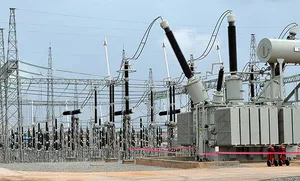
    The Nigerian Electricity Regulatory Commission (NERC) has stated that electricity distribution companies (DisCos) recorded 95.21 percent market remittances in the second quarter of 2023.

    This represents the highest remittance by the distribution companies so far.

    The Commission, in its just published ‘Electricity on Demand; report, on Tuesday, indicated that the combined upstream bill that DisCos were expected to pay totaled N194.69 billion, comprising N154.04 billion for generation costs from the Nigerian Bulk Electricity Trading (NBET) and N40.65 billion for transmission and administrative services facilitated by the Market Operator (MO).

    Out of this amount, the DisCos remitted a total of N185.36 billion (N152.48bn for NBET and N32.88bn for the MO), leaving an outstanding balance of N9.32 billion, representing a remittance performance of 95.21 per cent in Q2 2023 compared to the 67.43 per cent recorded in the previous quarter.

    Industry analysts believe that the improved remittance by the DisCos in the quarter indicates that they did better in fulfilling their financial obligations to NBET and MO, ensuring a higher percentage of payments made in relation to the total amount due.

    On revenue generation, the report indicated that the DisCos collected a total of N267 billion in revenue in Q2 2023 reflecting a collection efficiency of 75.54 per cent for the quarter out of the total billing value amounting to N354.61 billion.

    The Commission reported that the improved revenue generation capacity showed an improvement of 6.79 per cent when compared to the first quarter of 2023, when the collection efficiency stood at 68.75 per cent.

    The NERC linked the boost in collection efficiency to two main factors, namely the increased metering of consumers, which ensured a more accurate measurement of electricity consumption, as well as the DisCos’ sundry collection campaigns targeting pre-paid customers, which encouraged timely and complete remittances.

    The report further said that the ATC&C loss stood at 38.41 per cent and comprised technical and commercial losses of 18.47 per cent and collection losses of 24.46 per cent.

    Even then the ATC & C loss still reflected an improvement, as it decreased by 7.98 percentage points when compared to the 46.39 per cent loss recorded in Q1 2023.

  • Digital Payments, Key To Microfinance Banking Growth, Innovation, Experts Say

    Leaders and experts in the financial technology sub-sector have said digital payments hold the key to the success and stay of Nigeria microfinance banking sector of the country’s economy.

    The experts spoke at Africa’s leading integrated payments and digital commerce company, Interswitch TechConnect event held in Port-Harcourt where they explored the transformative impact of digital payments in the microfinance sector.

    Keynote speaker and Group Head, Financial Services Business, Digital Infrastructure & Managed Services (Interswitch Systegra) Tyoyila Aga emphasized the pivotal roles latest trends in digital payment solutions, such as mobile wallets, QR codes, and contactless payments play in shaping the future landscape of microfinance banking.

    Aga noted that digital payments innovation is big for the microfinance sector as it comes with opportunities for growth, and ultimately, financial inclusion, hence the reason Interswitch is at the forefront of driving the growth of digital payments across the country and beyond.

    He said, “We are excited to have come this far in propagating the good news around what digital payment innovation holds for our microfinance sector. At Interswitch, we are all about innovation and as a company committed to driving the digital transformation of Nigeria’s financial services, we are proud to play a leading role in shaping the future of microfinance banking.”

    Attendees who spoke to our correspondent said they gained valuable insights into the technological advancements that are revolutionizing financial services and the potential these innovations hold for financial inclusion and economic empowerment.

    The event also featured panel discussions, where industry leaders engaged in conversations on different strategies for growth in the microfinance sector, sharing their perspectives on leveraging digital technologies to drive growth in the financial sector.

    The discussion covered topics ranging from cybersecurity and regulatory compliance to the integration of emerging technologies, providing attendees with a comprehensive understanding of the multifaceted aspects of digital transformation.

  • BIP: Dangote Sugar Employs 7,000 Nigerian Youths Yearly -Official 

    The Dangote Sugar Refinery (DSR) employs no fewer than 7,000 workers yearly in its Backward Integration Project (BIP) in Numan, Adamawa State.  

    Speaking during a media tour of the company in Numan, the company’s Group General Manager, Operations, Bello Abdullahi Dan-Musa, said that despite employing thousands of abled- youths as direct employees, the company also employed more than 7,000 youths at the peak of the production season.  

    It would be noted that Dangote Group is Nigeria’s biggest employer of labour after the Government.  

    Only recently, he said the company paid over N500 million to the out-growers for the sugarcane they produced under the DSR Numan out-growers scheme.   

    The current capacity of the DSR Numan refinery of 4,800 Tons of Cane Per Day (TCD), he said, is being upgraded to 6,000 TCD by the end of 2023, 9,800TCD by 2024, and subsequently to 15,000TCD.    

    According to Mr. Dan-Musa, Dangote Sugar Refinery Numan has contributed immensely in the realization of the Backward Integration programme of the Federal Government.  “Dangote Sugar Refinery is Nigeria’s largest producer of household and commercial sugar” he said.  

    President of the Dangote Group, Aliko Dangote, had said that upon completion of the BIP projects, his sugar company will be able to create about three hundred thousand direct and indirect jobs, with positive multiplier effects on the national economy. 

    Speaking during the media tour, Chief Executive Officer/Managing Director, Chinnaya Sylvain Judex, said the expansion drive has reached a significant mileage. 

    According to him, the company has acquired state-of-the-art machines to support its production process, adding that its facilities are environmentally friendly.  

    Mr. Judex said its Backward Integration goal is to become a global force in sugar production, by producing 1.5M MT/PA of refined sugar from locally grown sugar cane for the domestic and export markets.  

    He said the company operates an independent power system, and that excess energy will be redirected to the national grid.  

    According to him, the power, from the Dangote Sugar Refinery, Numan, when redirected to the National Grid has the potential to contribute immensely to the rapid development of the economy of the entire Northeast. 

    Mr. Judex added that the energy will bring about accelerated development and industrialization in the region.   

    Meanwhile, the Paramount Ruler of Bachama Kingdom in Adamawa state, Dr. Daniel Ismailia has commended the company for its numerous Corporate Social Responsibility activities in the host communities. 

    Speaking when a team of journalists from the state visited his office, he described the intervention of the company as huge.  

    The Paramount Ruler said the presence of the company has helped bring down the rate of criminalities in the state. 

    He commended the company for creating thousands of job opportunities for the people of Adamawa State, and Nigeria, adding that his Kingdom is the biggest beneficiary of the company.   

    The Executive Director, Climate Africa Media Initiative and Centre (CAMIC) Mr. Aliu Akoshile commended the Hama Bachama for providing the peaceful environment needed to do business in his domain.  

    The State Chairman of the Nigerian Union of Journalists (NUJ), Comrade Ishaka Donald Dedan, commended the Monarch for always playing a fatherly role, adding that the Adamawa people are proud that the company has provided jobs for their people.  

    In his earlier presentation, Prof. John Ngamsa of Modibbo Adama University, Yola, urged journalists to invest in environmental journalism with all seriousness because the environment is man’s only protective territory.

  • Bulls Return As Equity Market Gains N158bn

    Bulls Return As Equity Market Gains N158bn

    Nigeria’s equity market on Tuesday returned to bullish trend, gaining N158 billion, following gains recorded by small and medium stocks.


    Market capitalisation of listed equities increased by 0.43 per cent to N36.988 trillion from N36.830 trillion it closed Monday.


    The NGX All Share Index also appreciated by 67326.12 points from 67037.93 points traded the previous day.


    An analysis of the investment showed that Julius Berger led gainers table during the day, in percentage terms, gaining 10 per cent to N36.30 per share, CWG followed with a gain of 9.83 per cent to N9.50 per unit, Champion Breweries gained 9.76 per cent to N3.71 per unit, Oando Plc increased by 9.58 per cent to close at N9.15 per share while Thomas Way up by 9.29 per cent to close at N3.06 per share.


    On the contrary, Multiverse recorded the highest loss in percentage terms, declining by 9.49 per cent to close at N2.67 per unit, Unity Bank trailed with a loss of 9.00 per cent to close at N0.91 per unit, Ellah Lakes fell by 8.05 per cent to N4.00, Nigerian Breweries dipped by 7.38 per cent to N38.90 per unit while ETranzact down by 6.67 per cent to close at N8.40 per share.


    Volume of transactions increased by 161.90 million, representing 74.92 per cent as investors traded 377.970 million shares valued at N5.169 billion in 6729 deals against 216.070 million shares worth N3.551 billion in 5965 deals.


    Trading in the shares of ETranzact led market activities with 440.694 million shares valued at N370.152 million, United Bank for Africa followed with account of 42.300 million shares worth N796.358 million, AccessCorp traded 33.319 million shares cost N560.388 million, Fidelity Bank traded 31.200 million shares cost N257.179 million while Sterling Bank traded 24.676 million shares cost N84.263 million.