
The management of Kaduna Electric has said it is continuing with the maintenance work on some of its 33KV feeders across its network in order to guarantee improvement in quality of power supply to its customers.
Some of the 33KV feeders the maintenance work has since commenced on include; Water Works, Rigasa, Gonin Gora, Olam and Unguwan Boro. Others are 33KV Abakpa and Doka in Kaduna as well as 33KV PZ in Zaria.
A statement issued by the company’s Head of Corporate Communication, Abdulazeez Abdullahi, quoted the Chief Technical Officer (CTO), Engr. Lawal Aliyu Mashi, as saying the maintenance work on the feeders entail replacement of weak jumpers, bad cross arms and pot insulators.
It also includes tree trimming, aligning lengthy and sagged spans and retensioning them. The maintenance will also see to the replacement of bad poles and under sized conductors.
The CTO said the maintenance work is near completion on 33KV Water Works, Rigasa, Unguwan Boro, Abakpa while that on Gonin Gora, Olam and others are ongoing and will be completed before month end.
The maintenance work he said is being done in a phsaed manner which targets other feeders in other parts of Kaduna, Sokoto, Zamfara and Kebbi States.
Kaduna Electric therefore urged customers to reciprocate by paying the bills on time and in full to ensure uninterrupted services. It reiterated its commitment to exceptional service delivery in its franchise states with the support of all stakeholders.
The Association of Licensed Telecoms Operators of Nigeria (ALTON), has said that it may take legal action against banks in order to recover their unpaid N130 billion Unstructured Supplementary Service Data (USSD).
The National Chairman of the telecom operators’ umbrella group (ALTON), Engr. Gbenga Adebayo, said ALTON has decided to take the option of legal battle as the last resort, after several failed attempts to amicably resolve the indebtedness matter.
He explained the issue of unpaid USSD debt was part of the association’s submission to the new Minister of Communications, Innovation and Digital Economy, Dr. Bosun Tijani, when the ALTON’s team paid a courtesy visit to him last week in Abuja
According to him, the minister expressed his concern over the lingering issue of unpaid USSD debt and advised telecom operators to have an independent Think-Tank that would look at the issues surrounding telecoms operations in Nigeria and develop empirical data that would best explain the economic implications of the challenges.
The ALTON President said: “The issue of USSD debt was discussed with the Minister, and he was quite concerned and worried that the matter has lingered for too long unresolved.
“Since the matter has dragged for too long, the best bet is to withdraw the USSD service from the banks and challenge them to pay for the accumulated debt that has reached N130 billion as at September this year. To get this done, we are contemplating at going to court to resolve the matter.
“The issue has lingered for too long and debt accumulated, and I think it’s time to go to court to address the issue. We are thinking so because every effort made by telcos and the government to make the banks pay their debt, has not yielded positive result. It has been like taking two steps forward and taking one step backward”, Adebayo added.
He said telecom operators have a commercial service agreement with the banks several to provide them with the USSD service that would enable seamless financial transactions like money transfers through the mobile phones, lamenting that despite the agreement, the banks have refused to obey the terms of the agreement, which had provisions for third party intervention, that include legal action.
“The agreement permits parties to go to anywhere, including law court to resolve issues. So instead of the continuous meetings that have not yielded results, we are contemplating taking the next line of action, which is to go to court,” he said.
The Abia State government has refuted claims that it instructed Northern cattle dealers at Lokpanta Market in Umunneochi Local Government Area to relocate to the North.
Earlier reports suggested that traders in the market had appealed to President Bola Tinubu to intervene and prevent their eviction from Lokpanta market by the Abia State government.
These traders asserted that Governor Alex Otti’s administration had given them a two-week notice to vacate the market.
However, Navy Commander MacDonald Ubah (retd.), the Special Adviser to the Governor on Security, addressed the media in Umuahia and categorically dismissed these claims as baseless and malicious.
Ubah clarified that the government had only implemented a policy to change the operational hours of the cattle market. Instead of being a residential area, it would now operate daily.
He accused those circulating the rumor of distorting the government’s straightforward directive to create confusion and tarnish the reputation of Governor Alex Otti’s administration.
He explained that the governor had never issued an order for Northerners to leave the cattle market but had simply decided that the market would no longer function at night due to security concerns.
The decision was a response to the area’s history as a hotspot for criminal activities.
Ubah elaborated, “Three weeks ago, we took deliberate and measured actions in response to persistent reports of kidnappings in the Uturu-Umunneochi axis. During our operations, we discovered shanty brothels with over 160 rooms. These were identified and demolished, and we confiscated millions of Naira suspected to be proceeds from kidnapping.”
“Criminal elements had turned the median of the Expressway into a parking lot, creating artificial traffic congestion and using the opportunity to alert their fellow gang members about the approach of their victims. We made arrests, and investigations are ongoing. Our plan is to make the market a daily one, like any other market in the state. It is impossible to attract development to an area plagued by kidnapping, armed robbery, and other security issues.”
He noted that the cattle market, once a place for peaceful cattle trade, had transformed into a hub for criminals, rogues, and kidnappers. It had relocated from the Garki area, now the site of the ShopRite, to Ubakala, and then to Okigwe in Imo State.
Toyota has announced the partial suspension of its production in Japan following an explosion at one of its supplier’s plants.
The incident occurred at a Chuo Spring factory in Aichi Prefecture, prompting Toyota to halt ten production lines across six of its factories.
While the suspension is expected to be temporary, the automaker is conducting assessments to determine when production can safely resume.
This disruption comes after Toyota briefly halted its domestic production due to a server issue. The company has 14 assembly plants in Japan, where it manufactures vehicles for both domestic and international markets.
While these recent setbacks are inconvenient, Toyota’s reputation for quality and efficiency suggests that they will likely be able to recover quickly and continue meeting the strong global demand for their vehicles.
Toyota remains a cornerstone of Japan’s manufacturing industry, and any disturbances in its operations have implications for the broader economy.
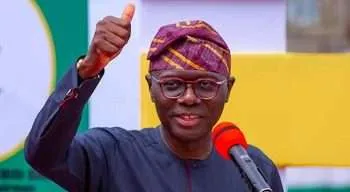
The Lagos State Governor, Mr Babajide Sanwo-Olu has disclosed that the first phase of the largest food logistics hub in West Africa will be inaugurated in 2024 to boost food security in the state.
Sanwo-Olu stated this while addressing journalists at the grand finale of the 2023 World Food Day celebration at the Nigeria Police College, Ikeja, Lagos.
The governor, accompanied by Ms Abisola Olusanya, State Commissioner for Agriculture, Dr Oluwarotimi Fashola, Special Adviser to the governor on Rice Initiative and members of the state executive council inspected various agricultural produce and product on display.
Farmers from the 20 local governments and 37 local council development areas participated in the fair.
The programme tagged: Farm Fair, Shop, Eat and Learn” is to commemorate the 2023 World Food Day with the theme: “Water is Life, Water is Food, Leave No One Behind”.
The World Food Day is an annual celebration by the Food and Agriculture Organisation of the United Nations on Oct.16, to encourage action on food insecurity.
“A part from the middle level markets that we are building, we are building the largest food logistics hub in the whole of West Africa.
“You were part of the ground breaking ceremony which we did last year and I want to inform you that before this time next year, we should have finished the phase one of the project.
“It is the largest logistics hub in the whole of West Africa, you can take a trip there independently and see for yourself, the amount of work that is going on there.
“That logistics food market is supposed to be the central hub where all sort of food in Lagos will come in, it has cold storage and dry storage and all sorts.
“Our plan, if you remember that two years ago, we flagged with our five-year plan, it will now take them to the middle level market; we have built about three of them and we are building additional five.
“The middle level markets will now take it from main hubs before it now goes to last mile, the corner show markets and the markets that all of you see in the state,” he said.
The governor said the state had a robust integrated plan that would ensure food sufficiency and food adequacy in Lagos.
He noted that the plan became important because food security globally was becoming an issue.
“We have a robust integrated plan at ensuring that food sufficiency, food adequacy in Lagos is secured because food security globally is becoming an issue.
“For us as a government, we need to be able to help the market, we need to be able to help the farmers and we need to help our citizens.
“That’s why I have come here personally to come and celebrate with them, to come and celebrate them and to come and say it to them that we will not leave them alone.
“We will continue to bring about infrastructure and funding to ensure that the theme for this year leave know one behind,” he said.
The governor encouraged more people to go into rice cultivation to sustain the state’s rice mill in Imota, Ikorodu.
“We are looking for paddy rice growers in Lagos because we have the biggest rice mill and we are also collaborating with other states.
“Our rice mill still needs a lot of paddy. It does not matter the quantity of tonnes of paddy that they grow, we will buy it off them.
“The same thing with other paddy growers in the country and we need to begin to ensure that food is also affordable and accessible.
“We know that the price of food has gone up but with intervention like this, that brings market closer to the consumers, am sure that all of the produce that have been brought here today will be picked up and bought-up,” he said.
Sanwo-Olu said that his administration was committed to encouraging farmers, while assuring that farming was important to his administration to ensure that food was affordable and accessible for all.
“I am here this afternoon to give them all the encouragement, to show to the world that Lagos can begin to show the way for urban farming.
“We do not have a lot of land but the little one that we have, we are encouraging our farmers to continue to support the need of the citizens because we know that we need to grow what we eat and eat what we grow.
“We can collaborate with other neighbouring states and other parts of the country to bring all of these produce to Lagos because the population is here.
“For me, it is to continue to encourage of the Ministry of Agric and all of their officers, extension workers and project managers to continue to help and hold these farmers.
“Especially in the aquaculture farming, piggery, fishing, poultry and all of the other areas in which we can excel.
“It’s another year of celebration to celebrate them, to thank them, and for the media to know that farming for us is important.
Earlier, Ms Abisola Olusanya, State Commissioner for Agriculture, said farmers and farmers’ groups with exceptional produce would be recognised and awarded prizes at the event.
Olusanya noted that farmers, fishermen, and processors from the entire length and breadth of the state participated in the celebration.
She said that the farmers had put in a lot of work in their different value chains to feed Lagosians and as the saying goes, “no farmer, no nation”.
Dr Femi Oke, the Chairman All Farmers Association of Nigeria (AFAN) in Lagos and South-West Zone, said insecurity, flooding and poor funding pose a great danger to food security in the country.
Oke urged the federal and state governments to increase budgetary allocation to the agricultural sector to increase funding to farmers.
He also called for reduction in interest rates for farmers and agro processors to reduce the price of food commodities.
“It is not too conducive for a farmer to be paying between 18 to 24 per cent as interest rate.
“We are looking at how government can come in with a single digit interest rate for farmers so that it can reduce the price of commodities in the markets.
“We are seeking the government support in this area as we celebrate the
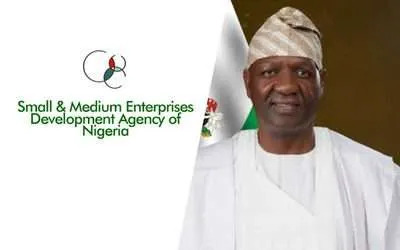
The new Director General of the Small and Medium Enterprises Development Agency of Nigeria (SMEDAN), Mr. Charles Odu has said that the agency leverages technology to drive its service to small businesses.
The Director General made the pledge during the handing over ceremony by the outgoing DG, Dr Olawale Fasanya Monday in Abuja.
Mr. Odu noted that while SMEDAN’s goal remains unchanged the method and approach must be improved upon stressing that the agency will work private and public institutions at all levels to eliminate barriers, whether in policy or infrastructure, that limit the growth of SMEs and threaten their survival.
“We will leverage useful tools and technology to achieve our core objective, beginning with the rapid formalization of small and medium-sized businesses to improve the quality of our data and the services we provide.
“We will explore local and international funding opportunities and democratize access to capital for entrepreneurs with valuable ideas and the right motivation no matter where they live in the country.
“Nigerians should be able to conceive of an idea and register a business seamlessly. They must be given a fighting chance with readily available access to funding and a business environment conducive to growth,” he said.
While thanking President Bola Tinubu for the opportunity to serve, he insisted that the agency will continue to fulfill its role as the main driver of economic growth, the source of innovation and the engine of job creation. “We have the duty to ensure they receive the support and resources they need to thrive,” he added.
“SMEs will receive the training and skills they need to grow sustainably, meet local demand and become global players by exporting value. We will build production hubs where businesses can gain affordable access to the facilities they need, and we will showcase their products to the nation and the rest of the world through masterful storytelling and exhibitions and fairs staged in partnership with relevant stakeholders.
“We will achieve this together as a team united by a common purpose. I am eager to collaborate with all of you to make a difference. Together, we can shape a future where our small and medium enterprises are not only surviving but thriving, and in doing so, contribute significantly to the prosperity of our nation.
Earlier, SMEDAN outgoing DG, Dr. Fasanya, said there was a need to support SMEs to grow as they contribute about 80 per cent to employment in Nigeria.
“The population of this sector is enormous. Like the last survey, we have not less than 39.6million people and largely most of them are informal. You cannot move from one house to the other without seeing one man’s business. It is important to segregate nano from micro in giving the right attention.
“We really need to support them because they are not usually affected by the economic shocks. We are on this journey together. I will keep offering my advice and I believe that very soon, people will begin to feel the sector is changing,” he said.
The Lagos State Government has reopened Ladipo Market, Mushin, after meeting the most essential criteria set for reopening sealed markets.
The Commissioner for the Environment and Water Resources, Mr Tokunbo Wahab, said this in a statement on Monday.
Wahab said business activities would commence at the popular spare parts market, after its recent closure for various environmental infractions.
Wahab noted that the administration of Gov. Babajide Sanwo-Olu priotised the issue of clean environment, public health, and safety in line with the THEMES Plus agenda.
This, he said, informed the recent drive to enforce strict compliance with waste management best practice across markets in the state.
Also commenting on the reopening of the market, the Managing Director of LAWMA, Dr Muyiwa Gbadegesin, reaffirmed the Authority’s commitment to environmental sustainability and public safety, particularly within markets and around business facilities.
Gbadegesin said the goal was to ensure all markets in Lagos State followed laid down environmental rules, resulting in a safer and healthier business environment for buyers and sellers.
He urged the traders to support the efforts of the state government, by adhering strictly to the environmental laws, as market that runs foul risked indefinite closure
Earlier on Monday, the state government reopened the Mile 12 International Market after meeting the required conditions.
The Lagos Chamber of Commerce and Industry (LCCI) have urged the CBN to adopt creative financing options for clearing the short to medium-term backlog of foreign exchange.
LCCI noted that the new FX policy of the CBN unbanning the 43 items that were excluded from accessing FX at the official market is a market-friendly step towards unifying the exchange rates and is expected to curtail inflationary pressures in the short term.
The body also said the policy change was expected to reduce the demand pressure on the parallel market and ensure there is a gradual convergence in FX market rates.
The President/Chairman of Council, LCCI, Asiwaju Michael Olawale-Cole, said this in a statement at the weekend, adding that the policy would promote orderliness and professional conduct by all market participants to ensure market forces determine exchange rates on a willing buyer- willing seller principle.
“The Chamber recommends that the CBN adopt creative financing options for clearing the short to medium-term backlog and establish a mechanism to address forex unification under the current system.
“The Chamber believes the authorities must pursue the right monetary policy reforms to improve the investment climate and boost investor confidence. We call on the CBN to ensure transparency and accountability in banks’ foreign exchange dealings at the Investors & Exporters window”.
Recall that the CBN recently lifted the forex ban on 43 items and also promised to intervene in the FX market from “time to time”.
The apex bank had in 2015 restricted the items from accessing FX from the I&E window, saying they were “not valid for foreign exchange and could be produced in the country. Items affected include rice, cement, palm kernel, meat and processed meat products, poultry, soap, and cosmetics among others.
But in a statement, the bank’s Director of Corporate Communications Isa AbdulMumin said the ban has been lifted.
“As part of its responsibility to ensure price stability, the CBN will boost liquidity in the Nigerian Foreign Exchange Market by interventions from time to time. As market liquidity improves, these CBN interventions will gradually decrease,” the Thursday statement read.
“As part of its responsibility to ensure price stability, the CBN will boost liquidity in the Nigerian Foreign Exchange Market by interventions from time to time. As market liquidity improves, these CBN interventions will gradually decrease.”
“The CBN has set as one of its goals the attainment of a single FX market. Consultation is ongoing with market participants to achieve this goal,” CBN added.
The Minister of Power, Adebayo Adelabu, has warned electricity generating and distribution companies over the poor distribution of electricity to Nigerians stressing that the government will no longer listen to their excuses.
Adelabu, who made this known to Discos and generating companies during a meeting Saturday in Abuja, said the meeting was to find a lasting solution to the issues surrounding power distribution.
According to a statement signed by the Minister’s Special Adviser, Strategic Communication and Media Relations Bolaji Tunji, Adelabu said: “We called this meeting to learn from you and the only way to salvage a bad situation is to understand the real issues on the ground.
“Power is one of the most important things we need to energize the economy in terms of achieving the desired economic growth and Industrial development.
”The President has identified the power sector as a major driver of economic growth; therefore no excuse will be entertained for non-performance.”
The minister also said that the meeting will become regular to create a stable and accessible environment that will enable discussions surrounding the generating, transmitting, and distribution value chain of electricity to be reviewed and decisions reached.
He added that this development will make an impact in the power sector within two to three years.
The International Monetary Fund (IMF) has posited that the ability of individuals and business borrowers to service their debts is diminishing due to higher for longer interest rates.
According to the Fund in its Global Financial Stability Report making debt more expensive is an intended consequence of tightening monetary policy to contain inflation.
“The risk, however, is that borrowers might already be in precarious positions financially, and the higher interest rates could amplify these fragilities, leading to a surge of defaults,” it said.
The Bretton Woods Institute noted that many businesses suffered closures during the pandemic, and others emerged with healthy cash buffers thanks in part to fiscal support in many countries.
However, the lender pointed out that many firms were able to protect their profit margins even though inflation had picked up saying that in a higher-for-longer world, however, many firms are drawing down cash buffers as earnings moderate and debt servicing costs rise.
“Indeed, the GFSR shows increasing shares of small and mid-sized firms in both advanced and emerging market economies with barely enough cash to pay their interest expenses. And defaults are on the rise in the leveraged loan market, where financially weaker firms borrow. These troubles are likely going to worsen in the coming year as more than $5.5 trillion of corporate debt comes due.
“Households too have been drawing down their buffers. Excess savings in advanced economies have steadily declined from peak levels early last year that were equal to 4 percent to 8 percent of gross domestic product. There are also signs of rising delinquencies in credit cards and auto loans.
“Headwinds also confront real estate. Home mortgages, typically the largest category of household borrowing, now carry much higher interest rates than just a year ago, eroding savings and weighing on housing markets. Countries with predominantly floating rate mortgages have generally experienced larger home price declines as higher interest rates translate more quickly into mortgage payment difficulties. Commercial real estate faces similar strains as higher interest rates have resulted in funding sources drying up, transactions slowing, and defaults rising,” the Fund said.