
Category: Business

  • Chinese Yuan achieves stronger position at 7.1527 against US dollar

    On Thursday, the Chinese currency renminbi, commonly known as the yuan, exhibited strength against the US dollar as its central parity rate strengthened to 7.1527.

    This increase of 238 pips was reported by the China Foreign Exchange Trade System, indicating a positive movement for the yuan.

    In China’s spot foreign exchange market, the yuan is permitted to fluctuate within a two percent band, either rising or falling, from the central parity rate on a daily basis.

    This flexibility allows the market to reflect the supply and demand dynamics, contributing to a more market-driven exchange rate.

    The central parity rate of the yuan against the dollar is determined by calculating a weighted average of prices offered by market makers before the opening of the interbank market each business day. This process ensures a comprehensive representation of market conditions and aims to provide a fair and stable reference point for currency trading.

    The strengthening of the yuan against the dollar may have several implications. Firstly, it suggests increased confidence in the Chinese economy, as a stronger currency can reflect positive economic performance and attract foreign investment. It can also lead to improved purchasing power for Chinese consumers, as imports become relatively cheaper.

    Furthermore, a stronger yuan can have an impact on international trade dynamics. Chinese exports may become more expensive, potentially affecting the competitiveness of Chinese goods in global markets. Conversely, it could make imports more affordable, providing benefits for domestic businesses and consumers reliant on foreign products.

    The Chinese government has been pursuing policies aimed at internationalizing the yuan and expanding its influence in global financial markets. A stronger currency can enhance China’s standing and potentially increase the yuan’s appeal as a reserve currency for central banks around the world.

    It’s important to note that currency exchange rates are subject to various factors, including economic indicators, geopolitical events, and monetary policies of different countries. Fluctuations in exchange rates are common and can occur due to both domestic and international developments.

    Market participants, including investors, businesses, and financial institutions, closely monitor currency movements and exchange rates to make informed decisions regarding investments, trade strategies, and risk management.

    Overall, the strengthening of the Chinese yuan to 7.1527 against the US dollar reflects the current market conditions and highlights the dynamic nature of global currency markets. It signifies the interplay between economic factors, policy decisions, and market forces that collectively shape currency valuations.

  • NCAA suspends operation of Max Air’s B737 aircraft fleet

    NCAA suspends operation of Max Air’s B737 aircraft fleet

    The Nigeria Civil Aviation Authority (NCAA) has suspended the operations of all Boeing 737 aircraft in Max Air fleet.

    The suspension was issued through a letter dated July 12 titled “Suspension of Parts A3 and D43 of the Operations Specifications issued to Max Air with immediate effect”

    The letter was signed by Captain Ibrahim Dambazau, Director, Operations Training and Licensing, NCAA, on behalf of Captain Musa Nuhu, Director General (NCAA).

    Part A3 deals with the airline’s aircraft authorisation and D43 deals with Aircraft Listing of the operations specification issued to Max Air Ltd.

    “The Nigerian Civil Aviation Authority (NCAA) hereby suspends Parts A3 (Aircraft Authorisation) and D43 (Aircraft Listing) of the Operations Specifications issued to Max Air Ltd. with regards to the operations of the Boeing B737 aircraft type in your fleet.

    “With the above suspension, you are to immediately suspend the operations of all Boeing B737 aircraft in your fleet,” the letter read in part.

    The NCAA listed several occurrences that involved B737 aircraft in the fleet of the airline that promoted its action.

    The aviation regulator, in the letter, said it had constituted a team of inspectors to conduct an audit of the airline.

    It added that the results of the audit must be found satisfactory by the authority prior to considering the restoration of the operation specifications to the organization to further operate the aircraft type.

  • NNPCL to sell shares soon, says Kyari

    The Nigerian National Petroleum Company Limited (NNPCL) has reiterated its plans to issue Initial Public Offer (IPO) to investors very soon.

    The Group Chief Executive Officer (GCEO) of NNPC Ltd, Mele Kyari said this at the 22nd edition of the 2023 Nigeria Oil and Gas (NOG) Energy conference and Exhibtion on Tuesday in Abuja.

    The theme of the conference is “Powering Nigeria’s Sustainable Energy Future”
    Kyari while speaking on ”Redefining Nigeria’s Energy Landscape for a Sustainable Energy Future’’ said the decision was based on the law.

    ”As a Company that it is guided under the regulations of the Companies and Allied Matters Act, the NNPC Ltd.will declare its shares to the public for acquisition very soon.

    “We will pay taxes; we will pay royalties like anyone; we will also pay dividends to our shareholders which many of you are.

    ”We are in business and business means competition. We are a private sector, forget about the fact that we are own by the government 100 per cent.

    “ You are also aware, we are going Initial Public Offer very soon, we will sell a part of our equity.

    ” It is in the law, and once that happens, we will not be any different for any of you and it will be a very different business environment,”he said.

    On subsidy removal, kyari said it had ensured positive change in the sector by freeing up capital for powering the sustainable supply of energy.

    “Are we positioned to facilitate business? Yes, but our partnership produced over 80 per cent of the oil and gas in the country either directly or through our off stream company or through our partnership.

    “I am in a position to facilitate business. On the PSC today, we are just agents of the state, trying to make sure we deliver value to them and then they will pay.

    “I am sure you appreciate this new relationship. The PSCs are not on the balance sheet on the NNPCL.

    ”We make sure you do your work because when you do, we are compensated 40 per cent of your profit oil, so it is important for us as well as business for us,”he said.

    On energy poverty, the NNPCL boss said the focus was now to ensure that more people had access to energy.

    Kyari said, “Over 30 per cent do not have access to electricity. So, is energy available or is it the problem of affordability.

    ”Or it is that we have an unsustainable situation or is it combination of all of them? I think we are dealing with the combination of all.”

    According to him, energy is not available, it is not affordable in definite sense.

    He said this was due to many structures and issues that made affordability a matter of concern for everybody.

    “We supply gas, we do not get payment for it; We supply power and we do not get payment for it.

    ”So, you cannot run any business this way. You cannot be sustainable. You cannot create affordable energy and it will not be available.”

    According to him, affordability, accessibility and sustainability are the drivers of Nigeria’s energy future.

    He said that key initiatives on the horizon for NNPCL would include expanding gas infrastructure to deliver gas across West Africa and potentially, Europe.

    He further said expansion of liquefaction capacity of NLNG and enabling availability of LPG as a cooking fuel and CNG as alternative fuel for automobiles were paramount.

    Kyari then reiterated the need to bridge the skilled manpower gap, ensure asset security, and invest in infrastructure to transform challenges into opportunities.

    The NOG Energy Week is Nigeria’s foremost international energy conference aimed at discussing policy implementation, vital energy agenda and investments, among others.

    The ongoing event was attended by policymakers, regulators, leaders, stakeholders and partners of the industry.

  • Nigeria’s FDI drops to $469m in 2022 – AfDB

    Nigeria’s FDI drops to $469m in 2022 – AfDB

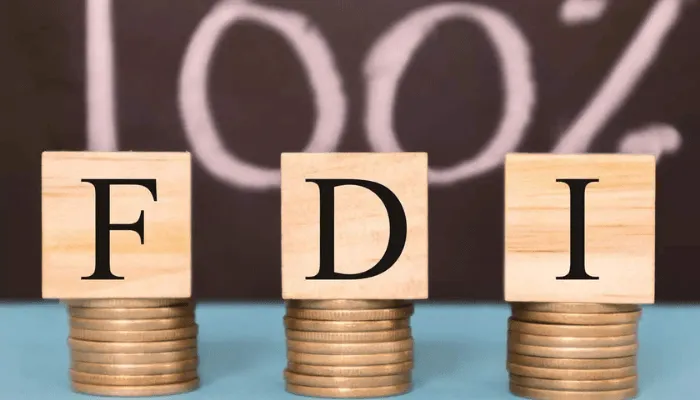
    The African Development Bank (AfDB) has said that foreign direct investment inflows into Nigeria fell to $469 million in 2022 from about $8.8 billion in 2011.

    Describing it as the lowest in a decade, AfDB’s Director General, Nigeria Country Department, Mr. Lamin Barrow, noted in Abuja that Nigeria’s private sector is hamstrung by policy inconsistencies and implicit taxation. 

    According to him, “many private sector firms in Nigeria are overburdened byimplicit taxes; they provide their own electricity, sink boreholes to get access to water, and repair roads in their towns and neighborhoods.”

    Speaking on “Trade and Non-Oil: Changing the Narratives for Rapid National Development” at the 2023 Nigeria Employers’ Summit, Barrow said closer collaboration and dialogue between the Federal Government and the private sector is critical to policy making and position Nigeria as an ideal investment destination. 

    The AfDB chief said that a vibrant and competitive private sector can accelerate diversification of the economy and boost exports.

    Over the years, successive administrations have mouthed economic diversification without matching it with action.

     He said that the unification of the exchange ratemanagement system and the removal of fuel subsidies, has shown that the government was ready to engage in bold reforms that will transform the country into an economic powerhouse.  

    “If the Federal Government implements bold strategies to take advantage of investment and market access opportunities. Rising labor costs and technological upgrading in countries such as China, India, and Brazil offer an excellent opportunity to developing economies, including Nigeria, to attract FDI and diversify their exports,” he said.

    Barrow further said that trade offers a great opportunity to further diversify the Nigerian economy.

    According to him, with the coming into force of the African Continental Free Trade Area, Africa is becoming more integrated, with a larger market for exports from Nigeria. 

    “Developing regional infrastructure and putting in place the requisite trade policies are a necessary condition for tapping opportunities in the regional and international markets. 

    “A good starting point is the effective utilization of Trade Agreements to which Nigeria is currently a signatory. However, Nigeria’s trade policies should prioritize the promotion of value-added exports. 

    “The significance of the non-oil exports in driving inclusive growth, sustainable development job creation, especially for the women and youth, cannot be overemphasized,” Barrow explained.

  • CIT Returns: FIRS extends filing date till August 31st

    In a bid to encourage compliance, the Federal Inland Revenue Service (FIRS) has extended the due date for filing Company Income Tax returns. 

    Special Assistant (Media & Communication) to the Executive Chairman of FIRS, Johannes Oluwatobi Wojuola, in a statement to journalists Monday, said the filing for CIT will not attract penalties or interest.

    The Service said: “Companies that were unable to file their Companies Income Tax returns for the 2023 year of assessment (YOA) that fell due on the 30th of June 2023 have been given up to 31st August, 2023 to submit their returns to the Federal Inland Revenue Service (FIRS).”

    According to the Service, it received numerous calls from companies requesting the extension of time to submit their Companies Income Tax (CIT) returns as they were unable to meet up with the deadline due on 30th June 2023. 

    A public notice signed by FIRS boss, Muhammed NAMI, notes that as a measure of goodwill and in line with relevant provisions of the Companies Income Tax Act, “all companies whose CIT returns for the 2023 year of assessment that fall due between 30th June and 31st August 2023 (both days inclusive) are given up to 31st August 2023 to submit the returns to the Service.”

    The FIRS noted that the relevant Companies’ Income Tax returns will not attract late filing penalties or interests if payments were made on or before 31st August 2023, noting further that where companies fail to file by the extended date, the penalty and interest for late payment will be computed from the original due date. 

    “The relevant CIT returns shall, therefore, not attract Late Filing Penalty or interest for late payment if submitted to the Service on or before 31st August 2023.

    “Where relevant CIT returns are not filed by the extended date, penalty and interest for late payment shall be computed from the original due date and not the extended date.”

    The Service also stated that the extension of the filing date is only for Companies’ Income Tax and does not include returns for withholding tax, value-added tax, and personal income tax (PAYE), among others. 

    “The Service invites all relevant taxpayers to take the opportunity afforded by this extension to submit their CIT returns within the specified time, pay the taxes due and avoid payment of penalty and interest,” the notice read.

  • Development Bank builds capacity of 1,000 MSMEs

    Development Bank builds capacity of 1,000 MSMEs

    In continuation of its capacity development training programmes for Micro, Small and Medium Enterprises (MSMEs) in Nigeria, the Development Bank of Nigeria (DBN) has organised a one-day training for over 1,000 small businesses across six states in the North-East and North-West.

    The MSMEs were spread across Gombe, Maiduguri, Adamawa, Katsina, Sokoto and Kebbi states. 

    The capacity training programme, which was conducted in each of the locations, had facilitators with experts in business management for small and medium-scale enterprises. 

    A statement from DBN stated that the training focused on optimisation and development of skills, aimed at further strengthening the capacity of the beneficiaries to scale up their businesses. 

    It also said the key objective of the training programme across locations, was to help the owners of the businesses develop their capacity and gain better knowledge of how they could access the DBN funding through the participating financial intermediaries (PFI).

    The Managing Director/CEO, Development Bank of Nigeria, Dr. Tony Okpanachi, commended the facilitators for bringing their expertise and experience to bear and expressed the optimism that the training would have a lasting impact on the participants and their businesses.  

    He affirmed that the training was in line with the Bank’s unwavering commitment to strengthening the capacity of MSMEs in the country so that they can continue to contribute more to the economic growth and development of the country. 

    Okpanachi said: “The strategic role of MSMEs as enablers of socio-economic development cannot be over-emphasised. A larger percentage of businesses in Nigeria are in the informal sector dominated by MSMEs. The MSMEs sector is a significant pillar of Nigerian economic growth; they make up 97 percent of businesses, generate six million jobs and contribute 50 per cent of the national GDP.

    “Small businesses are value-creators and they create wealth for individuals. At DBN, we are passionately committed to seeing MSMEs increase their capacity for growth and expansion, and being more sustainable so that together, we can continue to build a stronger economy for the benefit of all Nigerians.”

    The Development Bank of Nigeria through its numerous capacity training platforms has enriched the knowledge and capacity of MSMEs owners in the country through regular highly-enriching training initiatives and retooling, thereby positioning them for sustainable growth and expansion.  

    One of the platforms is the annual DBN Entrepreneurship Training Programme (DBNETP) currently in its 5th Cycle and has benefitted over 2000 MSMEs across Nigeria who have been trained digitally and physically, leveraging partnerships and the DBN Learning Management System (LMS).

  • AMAC Chairman kicks against FCT-IRS revenue harmonisation

    *Wants harmonisation to start with DOAS, AEPB, VIO, others 

    The Chairman of Abuja Municipal Area Council (AMAC), Hon. Christopher Zakka Maikalangu, has expressed worry about the planned implementation of the harmonisation of revenue in the FCT by the Federal Capital Territory Internal Revenue Service (FCT-IRS).

    The Federal Capital Territory Internal Revenue Service (FCT-IRS) is planning to harmonise revenue collection in Abuja.

    Speaking at a panel discussion during a town hall meeting on the harmonization of revenue on Monday in Abuja, Maikalangu lamented that the FCT-IRS did not feature in the panel, but instead left after the acting Executive Secretary had presented his speech. 

    He said: “I initially didn’t want to talk, but as the Chairman of AMAC and landlord of many agencies, I have to say what is on my mind and what many stakeholders may be thinking. In fact, I align with the position of His Royal Highness, the Onah of Abaji, that FCT-IRS should start the revenue harmonisation with DOAS, AEPC, VIO, Water Board and others. 

    “I sincerely wonder why the FCT-IRS is not here on this panel. There should be a stakeholders meeting where we will ask questions and get answers. It should not be a rushed thing. What is worth doing is worth doing well. Also, I don’t want to be misunderstood or misquoted as being against revenue harmonisation. I support revenue harmonisation, but things should be done the right way.

    “Many have been alleging that I was bought over by the FCTA to support the harmonisation of revenue issues, but that is not true. I didn’t collect a dime from anybody to support the idea. However, I repeat that FCTA should do the right thing with regards to the implementation of the idea.”

    Speaking earlier, the Acting Executive Chairman FCT-IRS, Haruna Abdullahi pleaded for the cooperation of the six area councils and stakeholders, saying the harmonization is for the interest of all FCT residents. 

    It could be recalled that revenue collection has been a major issue between the FCTA and AMAC, often leading to litigations between the two governments entities.

  • Net-zero emission not achievable with Green tax suspension – Expert

    An environmental expert, Mr Olumide Idowu, has faulted the suspension of the green tax on Single-Use Plastic, saying it would slow down the progress so far recorded by Nigeria in that regard.

    Former President Muhammadu Buhari had in a circular dated April 20, approved a 10 percent tax on Single Use Plastic (SUP) a few weeks before leaving office on May 29. And last week, President Bola Tinubu ordered the suspension of the newly introduced 10 percent tax on SUPs in a move targeted at reducing the cost of business in Nigeria. 

    Nigeria plans to achieve net zero emission by 2050.  

    He said that the suspension of the tax meant that there would not be an additional charge or tax on activities that harm the environment.

    The suspension of the tax has generated a lot of reactions from environmentalists and climate change experts across the country.

    While some believe the decision would promote the ease of doing business in the country, others believe the suspension would hinder progress at curbing the menace of plastic pollution.

    Speaking Monday in Lagos, the Executive Director of International Climate Change Development Institute (ICCDI), said the suspension would be problematic as green tax is meant to discourage polluting activities and encourage environmentally friendly practices.

    “Achieving net zero means that the country’s GreenHouse Gas (GHG) emissions are balanced out by removing an equivalent amount of greenhouse gases from the atmosphere.

    “It is an important goal in fighting climate change.

    “However, without the green tax, there may be less incentive for industries and individuals to reduce their carbon footprint and adopt cleaner technologies,” Idowu said.

    Idowu said that green tax helps to fund renewable energy projects, environmental conservation efforts, and other initiatives that promote sustainability.

    He urged the government to consider the long-term effects and the impact on the environment when making decisions about policies like the green tax.

    He urged the government to find alternative ways to encourage and support sustainable practices that could help Nigeria move closer to achieving its net zero goals.

  • Shun Ponzi schemes, SEC advises FRSC personnel

    Officers of the Federal Road Safety Corps (FRSC) have been urged to avoid Ponzi schemes and only invest in entities registered with the regulatory body.

    The Securities and Exchange Commission gave the advice during an investor enlightenment programme tagged “Investor Safety” for FRSC officers in its zonal offices across the Federation.

    The events were held in Lagos, Port-Harcourt, Enugu, Edo, and Osun States and it’s the third in the series of sensitizing the officers of the FRSC with the first being in November 2022, and the second in May 2023.

    While enjoining the officers to be wary of any investment that is proposing return levels that are unreasonably high, the SEC also advised investors to always cross-check that such fund managers and the products they are offering are registered with the Commission.

    According to the SEC, the capital market is properly positioned to attract Nigerians and provide benefits to Nigerians who invest therein.

    The Officers were taught the red flags of Ponzi schemes and how to expose them. Other topics include the functions of the SEC, the availability of Non-Interest Finance, and complaints management mechanisms in the capital market among others.

    According to the SEC, “This enlightenment programme is part of a commitment to developing the capital market, creating knowledge of available products in the market as well as increasing investors’ confidence”

    “The programme was held in collaboration with the Fund Managers Association of Nigeria (FMAN) to also expose the Officers to legitimate channels of investments and the Association of Dealing Houses of Nigeria (ASHON) to address issues that bother on investments, unclaimed dividends and related matters.