
Category: Business

  • Crypto poses significant tax problems – Experts

    Crypto poses significant tax problems – Experts

    Experts have warned that the use of cryptocurrencies poses significant challenges to tax collection and administration.

    They argue that the bewildering speed with which they have developed and the pseudonymity they can provide have left tax systems playing catchup.

    According to a new paper on IMF Blog, they say the situation has left policymakers struggling to accommodate cryptocurrencies within their tax system.

    It is estimated that a 20 percent tax on capital gains from cryptos would have raised about $100 billion worldwide amid soaring prices in 2021, which is about 4 percent of global corporate income tax revenues, or 0.4 percent of total tax collection.

    “But with total crypto market capitalization down 63 per cent from the late-2021 peak, tax revenues would then have shriveled. If these losses were fully offset against other taxes, there would be a corresponding reduction in revenue. In more normal times and with the current market size, global crypto tax revenues would probably average less than $25 billion a year.

    “There are also important fairness issues at stake. Though their pseudonymity makes it hard to be sure exactly who holds crypto, there are signs that ownership is heavily concentrated among the relatively wealthy—even though holding crypto is strikingly common across people with low incomes too.

    “There is also VAT. Crypto transactions have similarities to those in cash in their potential for being hidden from tax administrations. Today, the share of purchases made with crypto is still small. But widespread use, if tax systems were not prepared, could someday mean widespread evasion of VAT and sales taxes, leading to materially lower government revenues. This may be the biggest threat from crypto,” the report showed.

    The report noted that due to their ‘pseudonymous’ nature, it is difficult to tax crypto assets as most transactions use public addresses that are extremely difficult to link with individuals or firms.

    “A more troubling possibility is that reporting rules (and the failures of some crypto intermediaries) could induce people to transact increasingly through decentralized exchanges or directly through peer-to-peer trades where no central governing body oversees these transactions. Those are still extremely difficult for tax administrators to penetrate.

    “Given the complexity of the fundamental challenges posed by pseudonymity, the rapidity of innovation, the vast information gaps, and the uncertainties ahead, the tide has not yet turned in the battle to incorporate crypto properly into the wider tax system. Some of the elements needed for doing so—such as clarity in their classification for tax purposes—are clear.

    “But the challenges are fundamental, and the risks, particularly to the VAT and sales taxes, may be greater than people recognize. As many (though far from all) governments are beginning to realize, policymakers need to develop clear, coherent, and effective frameworks for taxing crypto,” it added.

  • ALTON calls for total abolition of 5% telecoms tax

    The Association of Licensed Telecoms Operators of Nigeria (ALTON), has called on President Bola Ahmed Tinubu to go a step further and abolish the 5 per cent Excise Duty on telecommunications services.  

    The ALTON Chairman, who made the call on a ChannelsTV programme monitored by the NIGERIAN ANCHOR, said telecommunications companies offer services and that subscribers will bear the brunt if the suspension is not lifted.

    On Thursday, President Tinubu signed four Executive Orders, one of which is suspending the 5 percent tax on telecoms companies.

    According to Adebayo, the 5 per cent tax on telecoms companies was unnecessary in the first place as they only offer services.

    Adebayo said: “If they bring it back, we will pass the burden to subscribers.”

    While saying that the sector needs protection from the three tiers of government, the ALTON Chairman said multiplicity of taxes had tremendously increased the cost of service delivery to subscribers.

    “The weight of the tax itself would have been on the subscribers. As a sector, we face over 39 taxes and levies across the country. And sadly, a number of them are not captured in any document and some of them are repeated at both the federal and the state levels.

    “And when we talk of high cost of service delivery and the burden being passed to the end users, all of them are due to multiple taxation on the services that we provide. For greater good, government should consider the total abolition of the 5 per cent Excise Duty on telecoms services,” he explained.

  • Nigeria’s equity market transactions rise to 543.4%

    The volume of activities on the floor of the Nigerian Exchange on Thursday increased by 543.4% following huge investments in the shares of FBNHoldings, FCMB, AccessCorp Japaul Gold and others.

    The volume of transactions rose by 4.596 billion, representing 543.14% as investors traded 5.443 billion shares valued at N95.005 billion in 9948 deals against 846.323 million shares worth N10.305 billion in 9815 deals.

    Also, market capitalisation of listed equities also increased by N270 billion, indicating growth of 0.81 per cent to N33.770 trillion from N33.500 trillion reported the previous day.

    The NGX All Share Index also appreciated by 496.31 basis points to 62019.88 points from 61523.57 reported on Wednesday.

    An analysis of the investment showed that five listed companies recorded 10 per cent gain at the close of transactions on Thursday. Learn Africa, Union Bank of Nigeria, Conoil Plc, MRS and Eterna Plc gained 10 per cent each to close at N3.52 per share, N8.25, N102.30 per unit, N91.30 and N25.85 per share respectively.

    On the contrary, Wapic Insurance topped losers chart, declining by 9.59 per cent to N0.66 per share, UPDC trailed with a loss of 9.24 per cent to N1.08 per unit, International Energy Insurance dipped by 9.09 per cent to close at N1.30 per unit, Chellaram down by 8.90 per cent to close at N1.33 per shares, HoneyWell Flour fell by 7.46 per cent to close at N3.35 per unit.

    Transactions in the shares of FBNHoldings led market activity with 4.691 billion shares valued at N87.808 billion,, FCMB group followed with account of 126.766 million shares worth N744.090 million, AccessCorp traded 56.481 million shares cost N1.018 billion, Japaul Gold traded 55.246 million shares cost N55.775 million while Transnational Corporation of Nigeria exchanged 49.184 million shares valued at N185.758 million.

  • New Executive Order’ll improve Nigeria’s business environment – Uwaleke

    As reactions continue to trail the Executive Orders signed by President Bola Ahmed Tinubu on Thursday, a Don of Finance and the Capital Market at the Nasarawa State University, Prof. Uche Uwaleke, has said the President’s action would improve Nigeria’s business environment.

    In an exclusive the NIGERIAN ANCHOR, also said it would moderate the country’s rising inflation.

    Nigeria’s inflation figures currently stand at 22.41% with the World Bank’s Nigerian Development Update report projecting that the rates may hit 25% by the end of 2023.

    Analysts have also said severally that the ease of doing business in Nigeria was stifling ventures, especially SMEs.

    “The recently signed Executive Orders represent a welcome development as they will no doubt enhance the business environment and consequently improve the country’s ranking in the Ease of Doing Business.

    “The suspension of the proposed import tax adjustment levy on certain vehicles and the Excise tax on telecommunications and other locally manufactured products will help to moderate the rising inflation and increase productivity.

    “Also, the Finance Act Variation Order 2023 is equal in order to enable taxpayers to adjust to the new provisions in line with the National Tax Policy,” Uwaleke said.

    The Don also called for the immediate rollout of palliatives to ease the pains being experienced by Nigerians since fuel subsidy was pronounced ‘gone’ by President Tinubu.

    “Much as these developments will help moderate rising inflation, more measures with direct impact on the population need to be put in place in order to significantly ameliorate the adverse consequences of the fuel subsidy removal. These should include the immediate rollout of palliatives promised by the government,” he added.

  • Executive Order: Tinubu suspends 5% tax on telecoms

    President Bola Tinubu has suspended the 5 percent excise duty on telecommunication services as well as the excise duties escalation on locally manufactured products.

    This is contained in four Executive Orders signed Thursday in Abuja.

    The four EO is part of President Tinubu’s pledge to address unfriendly fiscal policy measures and multiplicity of taxes that hamper business growth.

    According to the Special Adviser to the President on Special Duties, Communications and Strategy, Dele Alake at a press briefing at the State House further disclosed that President Tinubu also signed the Finance Act (Effective Date Variation) Order, 2023, which now defers the commencement date of the changes contained in the Act from May 23, 2023 to September 1, 2023.

    According to the presidential spokesman, this is to ensure adherence to the 90 days’ minimum advance notice for tax changes as contained in the 2017 National Tax Policy.

    President Tinubu also signed The Customs, Excise Tariff (Variation) Amendment Order, 2023, shifting the commencement date of the tax changes from March 27, 2023 to August 1, 2023 and also in line with the National Tax Policy.

    Tinubu also ordered the suspension of the newly introduced Green Tax by way of Excise Tax on Single-Use Plastics, including plastic containers and bottles as well as the suspension of Import Tax Adjustment levy on certain vehicles.

    Alake equally explained that the President issued these orders to ameliorate the negative impacts of the tax adjustments on businesses and chokehold on households across affected sectors.

    He however reiterated the President’s commitment to reviewing complaints about multiple taxation, local and anti-business inhibitions.

    He also noted that President Tinubu’s administration will, therefore, continue to give requisite stimulus by way of friendly policies to allow businesses to flourish in the country.

    The President assured Nigerians that there will not be further tax raise without robust and wide consultations undertaken within the context of a coherent fiscal policy framework.

  • Sterling HoldCo appoints Oduniyi as new GMD/CEO

    Sterling Financial Holdings Company Plc has announced the appointment of Yemi Odubiyi as the new Group Managing Director/Chief Executive Officer of the company.

    The Holding Company also announced the appointment of Yemi Adeola as the new Chairman while Abubakar Suleiman and Shola Adekoya were appointed as Non-Executive Directors. In addition, Ms. Aisha Bashir and Mrs. Eniye Ambakederemo are to take up the role of Independent Non-Executive Directors, and Mr. Olayinka Oni as Executive Director. 

    In an official statement to the Nigeria Exchange Limited (NGX), the company said the appointments were approved by the Central Bank of Nigeria (CBN).

    Odubiyi started his banking career with the Nigeria unit of Citibank as an Operations & Technology Generalist serving across all its Operations and Technology functions and was thereafter enrolled in its Management Associate programme undertaking stints across all key units of the Bank. 

    He left Citibank to join the turnaround team of the then Trust Bank of Africa in 2003 as Head of Operations & Technology. Upon the consolidation of Trust Bank into Sterling Bank Plc, Yemi served as the pioneer Group Head, Trade Services.

    In 2008, he was mandated to build the Structured Finance Group and also assumed oversight for corporate strategy serving as Chief Strategy Officer.

    The new GMD served as the Executive Director, Corporate and Investment Banking at Sterling Bank Limited from February 2015 to June 2023. He holds a bachelor’s degree in Estate Management and a master’s in international law from the University of Lagos.

    He has undertaken senior public management/executive education programme in Risk Management, Finance, and General Management at leading international educational institutions including the London and Harvard Business Schools. 

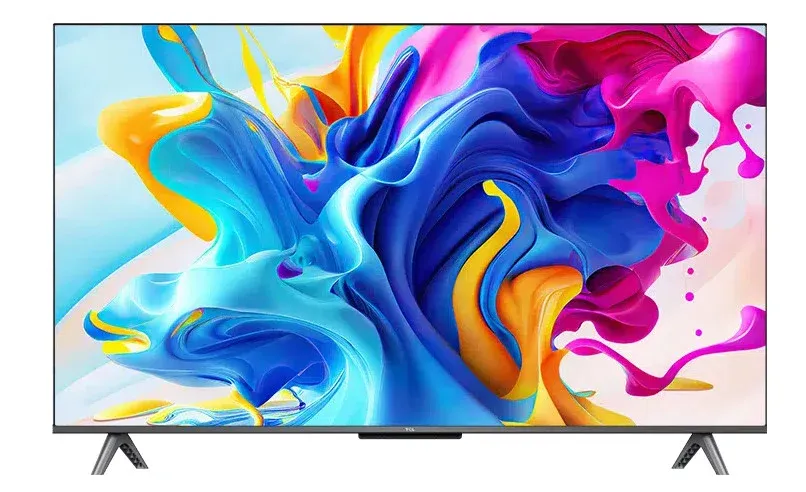
  • TCL launches new C645 QLED TV

    TCL launches new C645 QLED TV

    TCL Electronics has launched its new TCL 4K QLED TV C645 which is an excellent value for those who want high-quality, interactive home entertainment to enjoy any HDR movies, sports, and games, as part of a connected and smart lifestyle.

    TCL Electronics is the global top 2 TV brand and top 1 98-inch TV brand.

    Founded in 1981, the company is a fast-growing consumer electronics company and a leading player in the global TV industry that operates in over 160 markets globally.  The company specializes in the research, development and manufacturing of consumer electronics products ranging from TVs, audio and smart home appliances.

    Thanks to state-of-the-art Quantum Dot Technology, the TCL C645 delivers genuine cinematic colour made from over a billion colours and shades (all of the colours that cinema cameras can capture). It delivers an enjoyable level of brightness that even in midsummer when the sun shines into the room, users still can see clear pictures with vivid colours.

    In addition, C645 is equipped with HDR10+ for a superior High Dynamic Range (HDR) experience delivering great contrast, vivid accurate colours, but also shadow and finest details.

    When combined with assortment of visual features the QLED TV can achieve its best performance.

    With Dolby Vision, C645 enhances the demonstration of Dolby exclusive contents, by displaying a greater number of colours, increasing contrast, and boosting brightness levels, as if in a theater rather than just at home.

    To complete the image quality, featuring high quality speakers, users can enjoy immersive Dolby Atmos sound quality or pass it through TCL soundbar, to enjoy a sound that moves all around with breathtaking realism.

    TCL C645’s MEMC, advanced motion enhancement algorithm, steps up to the plate while users are watching sports or fast-paced movies or video games, to help reduce motion display blur and keep motion trails to a minimum.

    C645 is also a smooth and responsive screen offering an optimized gaming experience: with HDMI 2.1 and ALLM, gamers will experience lowest latency and the best picture settings for gaming, automatically. On C645, 120Hz Game accelerator is achieved via unique algorithms and TCL technology.

    This new TCL QLED 4K TV comes with Google TV, meaning that users will get endless content options (movies, shows, TV, and more) aggregated across streaming services. Users will also discover new movies and shows with suggestions based on what they have watched and what interests them. They can even add to their Watchlist right from their phone, so their recommendations are always up to date. This new Series is also equipped with advanced and integrated Hands-free voice control combined to Google Assistant built-in, to make users’ life smarter and easier.

  • Nigeria’s equity market rebounds, gains N441bn

    Transactions on the floor of the Nigerian Stock Exchange rebounded Wednesday after appreciating by N441 billion as FBNHoldings, AccessCorp, United Bank for Africa, FCMB group and others lifted market activities.

    Market capitalisation of listed equities appreciated by 1.33 percent to N33.500 trillion from N33.059 trillion reported the previous day.

    The NGX All Share Index also increased by 808.53 basis points to 61523.57 points from 60715.04 points recorded on Tuesday.

    Learn Africa led the gainers’ table during the day appreciating by 9.97 percent to close at N3.20 per share, Gold Breweries followed with 9.95 percent to close at N2.21 per unit, Chellaram gained 9.77 percent to close at N1.46 per unit, John Holt added 9.62 percent to close at N1.14 per share, Omatek grew by 9.52 percent to close at N0.46 per unit.

    On the contrary, NSL Tech, Mutual Benefits Assurance, Lasaco Insurance, and NEM Insurance topped the losers’ chart, shedding 10 percent each to close at N0.27 per share, N0.54 per unit, N2.07 and N5.58 per unit, respectively.

    Wapic Insurance trailed with a loss of 9.88 percent to close at N0.73 per share.

    The volume of trades increased by 260.677 million, representing 23.55 percent as investors traded 846.323 million shares valued at N10.305 billion in 9815 deals against 1.107 billion shares worth N12.209 billion exchanged hands in 12194 deals.

    Transaction in the shares of FBNHoldings led market activity with 89.237 million shares valued at N1.649 billion, Transnational Corporation of Nigeria (Transcorp) followed with account of 89.232 million shares worth N323.507 million, AccessCorp traded 85.911 million shares valued at N1.536 billion, FCMB group sold 85.031 million shares valued at N477.154 million, United Bank for Africa traded 57.512 million shares cost N749.766 million.

  • Africa boosts Russian oil flow to 1,172.7% in March

    Russia has increased its crude oil sales through Africa following sanctions from Western nations.

    Russia’s refined product exports to Africa have skyrocketed since the invasion of Ukraine, increasing 14-fold in just over a year, following a diplomatic onslaught on the continent by Russian officials.

    Prior to the war, Russia exported 33,000 b/d of refined products to Africa, much of it gasoline and by March 2023, that had soared to 420,000 b/d, illustrating the geopolitics at play, shipments to countries such as Nigeria, Tunisia, and Libya jumped sharply in February, when the European Union placed an embargo on Russian products.

    The embargo followed independent decisions from many Western countries to halt imports of Russian oil.

    These sanctions have forced Russia to redirect significant oil export volumes to alternative markets, including Africa. India, China, and Turkey are also becoming increasingly important export markets.

    Experts say a new “scramble for Africa” has gathered pace since the invasion began early last year, with Russia, China, the US, Turkey, Gulf states, and former colonial powers Britain and France all vying for influence on the world’s fastest-growing continent.

    Sergei Lavrov, Russia’s foreign minister, visited seven African countries in the space of a month last year in a bid to firm up ties with key countries and open up new markets for Russian oil products, independent Russia analyst Timur Kulakhmetov told S&P Global Commodity Insights.

    Meanwhile, Russian mercenaries with the Wagner Group have provided security for African rulers in return for lucrative mining contracts, and Russian energy companies have eyed investments on the continent. At the United Nations General Assembly in March, 22 African countries refused to condemn Vladimir Putin’s full-scale invasion.

    Perhaps the clearest evidence of strengthened ties is in Russian refined product exports since an EU embargo on imports of most Russian oil products came into force Feb. 5. A G7, EU, and Australia price cap of $100/b on Russian products that typically trade at a premium to crude including gasoline and gasoil was introduced at the same time.

    This left Moscow “struggling to keep a foothold in the raw materials ladder, by seeking new markets for commodity exports,” Kulakhmetov said.

    A lower price cap of $45/b on petroleum products traded at a discount to crude oil came into force on the same date.

    Although Russian refined product flows dipped slightly after the February 2022 invasion, they reached a seven-year high of 1.9 million b/d in March 2023.

    And while shipments to European countries, like France and Belgium, have cratered in recent months, shipments to African countries—particularly northerly ones—have skyrocketed, particularly after the EU embargo on product imports came into force.

    Russia was “a key product supplier to the European market before sanctions, especially of diesel, fuel oil, and naphtha,” said Rebeka Foley, senior analyst of near-term oil markets, at S&P Global.

    “But the market has re-balanced—in light of sanctions, more Russian diesel has been heading to Africa, Turkey, the Middle East, and Latin America.”

    In the first quarter of 2022, Tunisia imported just 2,700 b/d of Russian products, but that rose to 66,300 b/d in Q1 of this year, according to S&P Global Commodities at Sea data, while Nigeria—Africa’s biggest oil producer and most populous nation—saw imports rise almost five-fold year on year to 57,400 b/d in Q1 2023.

    Morocco, Libya, and Egypt have also recorded huge rises in Russian imports. “[Lavrov’s] flurry of diplomatic activity makes it abundantly clear. These steps are about Russia seeking alternative routes for their commodity exports,” Kulakhmetov added. “Therefore, North African states are playing a significant role for Russia in mitigating implications of oil and oil product ban.”

    At the heart of the new flows is Litasco, the Geneva-based trading arm of Russian oil company Lukoil, which has been active in Africa for decades. Western-owned Vitol and Guvnor have also continued shipping Russian products. In addition, trading entities in the UAE, Hong Kong, and Singapore have sprung up in recent months.

    The reorientation of product flows has been aided by falling imports into Africa of Dutch gasoline after regulators in the Netherlands imposed new rules on sulfur, benzene, and manganese content for fuel exports. In turn, some African countries—such as Morocco—have seen their own refined products exports increase, fueling accusations they have been re-exporting Russian products to Europe. “African recipients of Russian fossil fuels have blended them with other oil products and re-exported them to other states, primarily to Europe,” said Kulakhmetov.

    Pre-war, Morocco did not export gasoline, gasoil, or naphtha, but in 2023 it supplied fairly large quantities to Europe. Morocco is reportedly the only African country to have supplied weapons to Ukraine. In June, the North African country shipped 61,400 b/d to Spain, according to the data.

    The true numbers could be even higher amid surging dark ship-to-ship transfers.

    An investigation by S&P Global Market Intelligence found a 225% increase globally in the shadowy practice of ships switching off their automatic identification systems, which track shipments of oil, since before Russia was sanctioned.

    “Russia has managed to find new markets for its key refined product exports, and these new trade flows are structural changes to the market that are here to stay,” said Foley, although she cautioned, “Since the sanctions began, the marketplace has certainly become murkier and harder to track.”

  • N11.34trn Budget Deficit: FG goes after N553bn unremitted shipping taxes

    The Federal Government says it intends to recoup over N553 billion in unremitted taxes from international petroleum shipping companies operating in Nigeria.

    The Director, International Tax, Federal Inland Revenue Service (FIRS), Mr Abdullahi Aliyu said that recouping the sum which accrued between the years 2010 to 2019 would help address the nation’s budget deficits.

    Aliyu noted that with the nation’s overall budget deficit of N11.34 trillion, the N553 billion unremitted taxes represents 5.03 percent and was a viable alternative to addressing the Nigeria’s economic woes instead of borrowing.

    Aliyu said this while speaking at a virtual summit organised by the Nigerian Chamber of Shipping (NCS) on Wednesday with the theme; “Sensitising the Nigerian Maritime Industry on the New Tax Policy and Objectives”

    The FIRS draws its legal backing from Section 14(1) of the Companies Income Tax Act (CITA), titled “Companies engaged in shipping or air transport”.

    It states that: “Where a company other than a Nigerian company carries on the business of transport by sea or air, and any ship or aircraft owned or chartered by it calls at any port or airport in Nigeria, its profit or loss to be deemed to be derived from Nigeria shall be the full profits or loss arising from the carriage of passengers, mails, livestock or goods shipped or loaded into an aircraft in Nigeria”,

    At the summit, the International Association of Independent Tanker Owners (INTERTANKO), the International Chamber of Shipping (ICS), indigenous ship-owners, tax experts, among others called for more clarity and time for operators to understand the Nigerian tax regime.

    The global bodies also claimed that their members were not aware of the tax provisions and public notice given by FIRS, and expressed fears on Nigeria’s insistence on recouping taxes on previous transactions between 2010 and 2019.

    Aliyu, however, noted that shipping companies involved in dry cargo activities in Nigeria and foreign airlines had been complying with the same tax laws that most operators in the oil sector had neglected.

    “The onus is on global businesses to understand the local laws and taxation in the countries where they transact business, and this specific laws have been in place in the nation for decades.

    “Nigerian taxes are more favourable to non-residents compared to indigenous companies, thereby creating an unfair business environment for local operators,” he said.

    In his paper presentation, the Assistant Director, Tax, FIRS, Mr Oluwole Oni pointed out that the agency had advertised the planned taxation exercise in December 2021 to prevent disruptions in the essential global shipping business.

    “Non-resident vessels earn freight income for the transportation services provided in transporting the petroleum products (crude oil and gas products) from Nigeria to the agreed location, outside of Nigeria.

    “Irrespective of the commercial arrangement adopted by the non-resident vessels to lift crude oil from Nigeria, the freight income attributable to Nigeria, is taxable in line with provisions of the Companies Income Tax Act (CITA),” he said.

    Oni said that the FIRS had written officially to operators who owe taxes for the period between 2010 and 2019, adding that the companies are expected to send in their responses within 30 days.

    “Those who received the letters are expected to send in their responses which isn’t only about payment. The response could be an acknowledgement of receipt, a demand for clarification, payment, etc.

    “The first step to compliance is registration with FIRS and most operators are yet to register,” Oni said.

    On her part, the Senior Advisor for Shipping Policy at the ICS, Georgia Spencer-Rowland stated that the communication on the tax regime was not properly carried out as most members of the ICS are oblivious of the tax framework.

    Noting that the members of ICS comprise over 80 per cent of the world’s merchant ships and 40 national ship-owners associations, she encouraged the FIRS to clearly communicate in an official document the period allotted as grace period for the tax implementation.

    “Do these taxes affect inbound or outbound ships? Are the taxes payable on freight, income or profits? Will ICS members as stakeholders be allowed to participate in the Presidential Technical Committee ahead of the implementation of these taxes?” Georgia asked.

    Meanwhile, the Legal Counsel to INTERTANKO, Ms Selena Challacombe, remarked that the figures and volumes quoted by FIRS for taxation was not the actual figures in the transactions carried out by INTERTANKO members.

    Challacombe equally hinted that there could be challenges in recouping taxes with the figures for 2010 to 2019 as ship charterers are unlikely to provide the vital information seen as germane to their businesses.

    She said the situation should not be termed tax evasion when the alleged violators had not profited from the negligence of taxes they never knew existed.

    She added that Australia had a similar law enacted since 1936 and members of INTERTANKO factored in the taxes when undertaking contracts for Australia.

    In his welcome remarks, the President of NCS, Mr Aminu Umar stressed the need for collaboration among stakeholders and government agencies for a smooth implementation of the taxation.
    Umar noted that the chamber was willing to partner with the government in its bid to collect revenue for national sustainability, but added that there must be collective input to rightly shape the shipping sector and encourage investments.
    He also described the Presidential Technical Committee for the implementation of taxation as an ideal avenue for collaborations between local and global shipping operators as well as government agencies to advance the nation’s maritime sector.
    Other dignitaries who attended the summit were; President of the Ship Owners Association of Nigeria (SOAN), Dr Mkgeorge Onyung; Vice President of NCS, Ify Akerele; President, Nigerian Ship-owners Association (NISA), Mr Sola Adewumi; among others.