
Category: Economy

  • No Shortage Of Naira Notes In Circulation, Says CBN

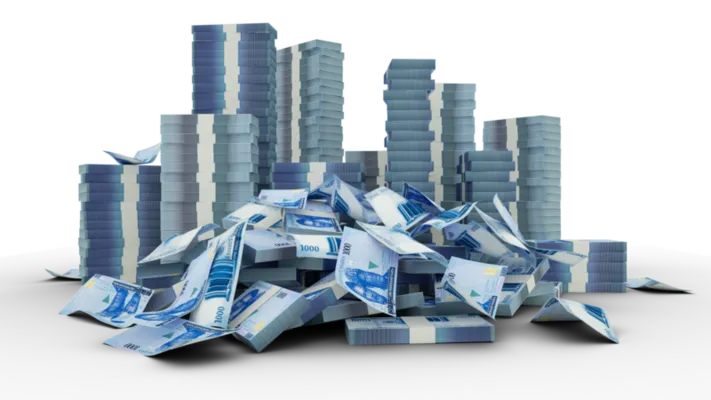
    The Central Bank of Nigeria (CBN), has assured Nigerians that there is adequate supply of Naira notes in the economy.

    The bank’s Director, Corporate Communications, Isa AbdulMumin, said this in a statement on Thursday in Abuja.

    Some bank customers in recent times have been complaining about scarcity of Naira notes at the counters, Automated Teller Machines (ATMs), Point of Sale (PoS), and Bureaux de Change (BDCs).

    According to Abdulmumin, the seeming currency scarcity is occasioned by large volume withdrawal of cash from various CBN branches by Deposit Money Banks (DMBs).

    He said that panic withdrawals by bank customers was also partly responsible for the seeming scarcity.

    “The attention of the CBN has been drawn to reports of alleged scarcity of
    cash at banks, ATMs, PoS and BDCs in some major cities across the country.

    “Our findings reveal that the seeming cash scarcity in some locations is due largely to high volume withdrawals from the CBN branches by DMBs and panic withdrawals by customers from the ATMs.

    “While we note the concerns of Nigerians on the availability of cash for financial transactions, we wish to assure the public that there is sufficient stock of currency notes for economic activities in the country.

    “The branches of the CBN across the country are also working to ensure the seamless circulation of cash in their respective states of operation,” he said.

    The director advised members of the public to guard against panic withdrawals as there was sufficient stock to facilitate economic activities.

    He also advised Nigerians to embrace alternative modes of payment, which would reduce pressure on using physical cash. 

  • Reps Throw Out N5bn Presidential Yacht From Supplementary Budget

    *Increase Students’ Loan To N10bn

    The House of Representatives has yanked off the budgetary allocation of N5.09 billion for purchase of a presidential yacht in the N2.176trn supplementary budget submitted to the lawmakers.

    The House, instead, moved the proposed sum to students’ loan thereby increasing allocation for students’ loan to 10bn as against 5. 5bn earlier provided in the supplementary budget.

    The action of the lawmakers followed the public outcry that trailed the provision made a presidential yacht amidst the hardship Nigerians are facing following the removal of fuel subsidy and other policies by the current administration.

    Chairman of the House Committee on Appropriations, Abubakar Bichi Abubakar (APC, Kano) made this known while addressing newsmen after the passage of the N2.176 trillion supplementary budget.

    He said the need became necessary following low budgetary allocation for students.

    He said the committee also increased budgetary allocation of the Ministry of Defence from 476bn to 546bn following security concerns.

    Bichi also disclosed that the minimum wage for workers was considered and approved for onward transmission to the executive while promising proper legislative oversight to ensure 100 percent implementation.

    In the supplementary budget sent to the National Assembly by the president, the federal government allocated N5.09 billion to purchase a presidential yacht.

    The proposed sum was under the capital expenditure of the Nigerian Navy’s budget.

    According to the breakdown, the Navy will require N62.8 billion for its operations, with recurrent expenditure and capital expenditure gulping N20.4 billion and N42.3 billion, respectively.

    But Bichi said the five billion naira for the presidential yacht has been yanked off from the budget.

    On the presidential yacht, Bichi said, “Actually, as far as we are concerned, we don’t have that anymore. We have increased the student loan. Initially, the student loan was N5bn in the budget but we have increased it to N5bn so that our students can access that facility in order for them to go to school. We don’t have the yacht anymore in budget.

  • No Plans To Re-Denominate Naira, Says CBN

    No Plans To Re-Denominate Naira, Says CBN

    The Central Bank of Nigeria (CBN) has insisted that it has no plans to re-denominate the Naira, saying such reports are misleading.  

    According to a statement by the Director, Corporate Communications of the Apex Bank Dr. Isa AbdulMumin, he wondered why a narrative that had been refuted by the Bank continues to gain traction.

    “The attention of the Central Bank of Nigeria (CBN) has been drawn to the wide circulation of a text message suggesting that the Bank plans to redenominate the country’s legal tender, the Naira, with effect from January 2024.

    “We are concerned that this narrative, which we had refuted before now, appears to be gaining traction with several debates on the implication of such a policy for the Nigerian economy.

    “We wish to reiterate that the contents of the message are misleading,” it said.

    The Apex Bank noted that the “authors of the message, in their mischief, modified text eked from an old policy move by a previous CBN Governor in 2007 to make it appear recent.

    “For the avoidance of doubt, there is currently no plan by the Bank to restructure and redenominate the naira as it considers reforms”, according to laid down procedures in line with the provisions of the CBN Act, 2007.

    The regulator advised Nigerians to ignore the news report, “as it is speculative and calculated to cause panic in the polity.”

  • Naira To Reach ‘Fair Value’ Of N750/$ By Year’s End – FG

    The Federal Government is planning to introduce new foreign exchange rules — including a crackdown on illegal currency trading — that it hopes will result in the naira closing its more-than-45 per cent gap with the unofficial rate and reaching a “fair price” by year-end, a top official has said.

    The government plans to clear a backlog of dollar demand estimated at about $6.7 billion, bolster the naira forward market, and set transparent rules for the operations of the official market, Taiwo Oyedele, chair of the presidential committee on fiscal policy and tax reforms, said in an interview with Bloomberg.

    The government sees a “fair price” for the dollar at N650 to N750, Oyedele said.

    In the parallel market, it traded at N1,165 per dollar yesterday, already beginning to recede from the former high of about N1,130 to the dollar.

    The government plans to clear a backlog of dollar demand estimated at about $6.7 billion, bolster the naira forward market, and set transparent rules for the operations of the official market, Oyedele said.

    It also aims to expand the official market to include all legitimate transactions, while snuffing out the illicit “black market” for foreign currency, he said.

    “We think all of that will happen before December, and maybe in a matter of a couple of weeks we will begin to see the results, such that before the end of the calendar year, naira should find its true value, not the one that is being done currently in the parallel market,” Oyedele said.

  • Despite Slight Appreciation, Naira Still Weak – Report

    Despite Slight Appreciation, Naira Still Weak – Report

    In spite of the slight appreciation of the Naira at the weekend, the World Bank has listed Nigeria’s local currency as being among the worst-performing currencies in Sub-Saharan African in the first ten months of 2023.

    According to figures obtained from Aboki forex, the naira was bought and sold for 1,140/$ and 1,150/$1 at the weekend on the parallel section of the foreign exchange market as against the 1,310/$ on Thursday.

    Over the past two weeks, the Naira has been hitting new lows, as it sold as low as N1300/$ at the black market, and N848/$ at the official market. However, within the past few days, the currency has been on an upward swing, as it appreciated to N789.84/$ on Friday.

    But in a report by the World Bank the Nigerian Naira has posted a year-to-date depreciation of about 40 per cent, making it the weakest currency in Sub-Saharan Africa, alongside the Angolan Kwanza.

    Other currencies with significant losses include the South Sudanese pound which has depreciated by about 33 per cent YTD, the Burundian Franc which has depreciated by 27 per cent YTD, the Congolese Franc (18 per cent), Kenyan Shilling (16 per cent), Zambian Kwacha (12 per cent), Ghanaian Cedis (12 per cent), and Rwandan Franc (11 per cent).

    In the report, it highlighted that between March 2020 and June 2023, there was a widening disparity between the parallel market exchange rate and the official exchange rate.

    The disparity widened to as much as 80 per cent in November 2022 and dropped to 60 per cent in June 2023.

    The prioritization of strategic sectors and the imposed price ceilings and trade restrictions pushed transactions to the parallel market, which started to account for a large share of the foreign exchange transactions in the country, including for remittances, tourism, and exports of non-oil products.

    After the unification and liberalization of the exchange rates in June 2023, the NAFEX rate converged to the parallel one, closing the gap.

    However, resistance toward the increasing pressure on the Nigerian naira coupled with limited supply of FX at the official window has led to the reemergence of the parallel market premium.

    Figures obtained from the Central Bank of Nigeria on movement of foreign reserves showed that the country’s external reserves recorded $76.82m accretion in one week, after it moved up from $33.249bn on October 19, 2023 to $33.326bn as of the end of October 26, 2023.

    It had earlier lost $841.75m in three months after it fell from $34.07bn as of July 7, 2023, to $33.23bn as of October 5, 2023.

    Meanwhile, an economist and Chief Executive Officer, Centre for the Promotion of Private Enterprise, Dr Muda Yusuf, attributed the naira appreciation to the Supreme Court judgment that brought finality to the litigation around the presidential election. He said the judgment removed uncertainty in the economy.

    “The pronouncement that the President made about efforts to boost the liquidity in the forex market may have also affected the level of confidence and influenced expectations because if people have expectations that liquidity will improve and the naira will appreciate, they would quickly begin to offload the dollars they have at a lower rate.

    “We need to seize the opportunity to push down the demand for foreign goods. We must reduce the demand for the dollars. We can have the naira appreciate better.”

  • Nigeria’s Currency Circulation Jumps To N66.4trn -CBN

    The Central Bank of Nigeria CBN) has reported that Nigeria’s total money supply (M2) increased to N66.4 trillion in September 2023.

    The data from the apex bank on money supply in the economy in the month other review comprising demand deposits, quasi-money, and currency outside banks, reflected increases in the components.

    Specifically, quasi-money, which pertains to financial tools that can be easily converted to cash, rose from N40.8 trillion in the preceding month to N41 trillion; demand deposits, primarily made up of funds in banks accessible without prior notice, moved from N21.7 trillion to N23 trillion while currency outside banks’ vaults marginally increased from N2.29 trillion to N2.3 trillion.

    Over the past few years, Nigeria’s money supply has been increasing based on the micro and macroeconomic whirlwinds of the economy, particularly the surging inflation rate, FX pressure on the Naira, and declining interest rates.

    The money supply, also known as M2, represents the total amount of money available in the economy at a particular moment, including physical currency such as coins and banknotes as well as deposits maintained by individuals, enterprises, and institutions in banks and other financial entities.

    However, the nation’s Net Foreign Assets dipped in September from N7.1 trillion to just N591 billion while Net Domestic Assets rose to N66.5 trillion from N58.3 trillion.

    A further analysis of the M2 trend during the month under review showed that the net domestic credit rose from N87.2 trillion to N92.7 trillion, thereby raising the net domestic credit to GDP by around 42.7 per cent.

    The breakdown of the net domestic credit indicated that credit to the government marginally increased to N34.1 trillion from N32.5 trillion while credit to the organized private sector surged from N54.7 trillion in the preceding month to N58.6 trillion, representing 63% of net domestic credit.

  • Nigeria Earns $5bn From Gas Production Annually- FG 

    Nigeria earns around $5bn from gas production, Vice President Kashim Shettima has disclosed.

    The Vice President, who made the disclosure at the 6th Value-chain Annual Lecture and Awards on Thursday in Abuja, added that the amount is 40 per cent less than Egypt, whose gas reserves is 30 per cent of Nigeria’s gas reserves.

    Nigeria has about 208.83 trillion cubic feet of gas which represents 33 per cent of Africa’s total gas reserves of 620TCF.

    He said, “Our production to reserve ratio is less than a 3rd of Egypt’s, less than a quarter of Algeria’s and around 10 per cent of Malaysia.

    “In the aftermath of the Russia-Ukraine war, the EU and many other nations were shopping for LNG at the same time that Nigeria’s largest LNG assets were operating significantly below capacity because gas supply was inadequate.

    “At this rate, according to Decade of Gas analysis, we could have a demand-supply gap of up to 10bscfd of gas by 2030.”

    The Vice President, who was represented by Special Adviser to the President on Energy and Power Infrastructure, Office of the Vice President, Sodiq Wanka, said there is a dire need for the country to exploit its proven gas reserves to vastly enhance its fiscal position.

    With gas accounting for 80 per cent of power generation, authorities are focused on increasing gas utilization in the country as it seeks to make it a critical transition fuel as its 2060 net-zero target beckons.

    The number of industries that are gas-based and those that utilize gas for power are many, from fertilizer and methanol to cement and consumer goods.

    But the story of Nigeria’s gas riches and potential cannot be complete without understanding that we are far off from that potential and have a lot of work to do, as public sector leaders and as captains of industry.

    Shettima stressed that the government is working actively to resolve long standing liquidity issues in the power sector as it is set to roll out ambitious customer metering initiatives that would boost the sector.

    “We will continue to strengthen sector governance that favours only technically and financially sound investors to own key assets in the power sector. We will drive the implementation of the Electricity Act 2023 to create a new narrative and new national framework for electricity that will bring investment to the electricity sector. In terms of upstream gas, the commitment of the government on ensuring the right tariffs to encourage exploitation of non-associated gas remains strong,” he said.

    The Vice President noted that despite the enormous amount of work left to be done, the AKK pipeline projects are on course to be completed.

    “The Obigbo-Umuahia-Ajaokuta pipeline will be key to ensuring the AKK pipeline is not gas-constrained while opening up new demand along its right of way. There is much work left on expanding the ELPS network among others. These projects can be significantly accelerated if we focus on making investments in them more attractive.

    “Our network code must adequately cover private pipelines; we have to ensure that private investors are able to recover their costs and make a return on their investments by creating a new framework for tariffs that is not too rigid. And we need to have clear guidelines for tolling. The story is similar for other midstream infrastructure.

    On security of oil and gas assets, Dhettima said, the “government will also not rest in continuing to pursue a holistic approach to the issue of security of petroleum assets – from strengthening the operationalization of the Host Communities Trust Fund to closer community engagement, surveillance and prosecution of identified vandals.

    He urged the private sector to play a pivotal role by making the right investments in the sector.

    “Nigeria cannot be a net exporter of LPG and still import LPG for domestic use because of infrastructure gaps. Our private sector must strengthen its resolve to look beyond short-term challenges and make investments taking a long-term view,” he said.  

  • Naira Freefall: FG To Receive $10bn Forex Inflow – Finance Minister

    The fortunes of the naira may soon be reversed with the Finance Minister, Wale Edun assuring that about $10 billion naira is expected to flow into the economy in a matter of week

    Edun made this known during a panel session at the ongoing Nigeria Economic Summit Group (NESG) question and answer session concerning stabilizing the foreign exchange market and enshrining liquidity in the market.

    Since the unification of the foreign exchange market in June, the naira’s value has slumped by over 100 per cent on the parallel market.

    The current CBN management has introduced a slew of measures to provide liquidity but the chasm between the rate on the I&E window and parallel market continues to widen.

    The minister said, “in addition, from the supply of foreign exchange through NNPC, increased production, reduced expenditure, from transactions such as forward sales, from our discussions with sovereign wealth funds, that are ready to invest and provide advanced alongside that investment, there is a line of sight of $10 billion worth of foreign exchange in the relatively near future in weeks rather months.”

    The Minister further said President Tinubu has signed two executive orders geared towards ensuring liquidity in the forex market.

    He said, “Mr. President announced that he had taken measures to ease illiquidity in the forex market which we know is very problematic at this time.”

    “The market is illiquid; it’s not functioning properly because there is no supply and there are various reasons for that. The solution that the President has put on the table is that he has signed an executive order that effectively allows under forbearance all the cash that is in the domestic economy to legally come into the formal money supply”

    “Along with that, there is another executive order that allows domestic issuance of foreign currency instruments so that they will have the incentive to provide that foreign exchange from whatever source.”

  • Naira Hits All-Time N1065/$ Low, As BDC Operators Seek Urgent Reforms

    The nation’s currency, the Naira, experienced a historic low on Wednesday in the parallel market, with the unofficial exchange rate reaching an unprecedented N1065 to the US dollar.

    On Tuesday, the Naira closed at N1060 to the dollar on the unofficial market, driven by a shortage of dollars, leading to a rapid depreciation of the currency.

    Additionally, the Naira weakened by 8.9 percent to N848.12 against the dollar in the official Investors and Exporters (I&E) forex market on Tuesday, according to data from FMDQ.

    Foreign exchange trades took place within the range of N700 to N981 per dollar, with the dollar’s trading volume surging to $133 million, according to an investment note by the Lagos-based investment banking firm Chapel Hill.

    The Central Bank of Nigeria (CBN) had relaxed foreign exchange controls in mid-June following criticism of monetary policy measures by President Bola Tinubu and a pledge to end the multiple exchange rate regime.

    The official rate briefly aligned with the parallel market, plunging 40 percent, but the spread began to widen again. Until Tuesday, the official rate remained near N800 to the dollar, while the street rate surpassed N1,000 to a dollar.

    Foreign exchange operators attributed the Naira’s depreciation to persistent illiquidity in the market in the absence of central bank intervention. The widening premium between the official rate and the black market is a sign that the exchange rate has not found a clearing price.

    The Chairman of the Association of Bureau de Change Operators in Nigeria (ABCON), Aminu Gwadabe, explained that the Naira’s rapid devaluation is due to significant liquidity driving up demand for unavailable dollars in the market. He also pointed to uncertainties, loss of public and international confidence in the economy, rising inflation, and a low interbank market interest rate, which have reduced the appeal for alternative investments.

    Gwadabe recommended abolishing the I&E window and allowing willing buyers and sellers to dictate price mechanisms with legislative backing.