
Category: International News

  • Kemi Badenoch Becomes First African To Win Leadership of Britain’s Conservative Leadership Election

    Kemi Badenoch Becomes First African To Win Leadership of Britain’s Conservative Leadership Election

    Kemi Badenoch, British Nigerian, on Saturday won the election to replace Rishi Sunak as leader of the Conservative Party.

    The BBC reported that Badenoch, 44, beat Robert Jenrick after a four-month contest, sparked by Sunak’s resignation in the wake of a humiliating election defeat.

    She is the first person of African heritage to lead the Tories.

    The vote saw a turnout of 72% according to Conservative MP, Bob Blackman.

    Most people said they had not formed an opinion of Ms Badenoch yet, according to a YouGov poll.

    But 40 per cent of those questioned said they disliked her.

    Former justice secretary Robert Buckland said that as a leader Ms Badenoch “will be an excellent person to work with”, having seen her strong character and abilities first-hand when they worked in government together.

    “She knows that the party’s values need to be reset and that we’ve got to win trust as without trust, we don’t get anywhere in terms of electoral success,” he added.

    “I think she better understands that more than most and that’s why she deserved to win.”

    The role as opposition leader was an “unenviable task” and Ms Badenoch “will not be under any doubt about the scale of work ahead to win back power”, he added.

    “She is the person who had more MP support than any other in the leadership race so people need to knuckle down and get on with the job of opposing the government, not opposing each other.”

    He added that he hoped a “new phase in politics” would see Ms Badenoch unite the party and “the Tories regrouping”.

    He also suggested that she listens to think tanks and policy units who have the expertise to provide her with new and innovative policies.

    “It’s going to be very hard and unglamorous, but I believe Kemi has the strength of spirit to do it,” he said

  • Nigeria, 12 Others Join BRICS As Partner Countries

    Nigeria, 12 Others Join BRICS As Partner Countries

    Thirteen nations, including Nigeria, have joined BRICS as partner countries.

    The announcement was made during the BRICS summit, held in Kazan, Russia, from October 22 to 24, 2024.

    The thirteen partner countries countries are Algeria, Belarus, Bolivia, Cuba, Indonesia, Kazakhstan, Malaysia, Nigeria, Thailand, Turkey, Uganda, Uzbekistan, and Vietnam.

    The Bloc confirmed the list of partner countries on Thursday in a post on X.

    Partner countries means the new countries are not full members of the bloc yet.

    The post reads, “BRICS officially adds 13 new nations to the alliance as partner countries (not full members).”

    The spokesperson for the Ministry of Foreign Affairs, Amb. Eche Abu-Obe also confirmed to The PUNCH that Nigeria has joined BRICS as a partner.

    “It is true that Nigeria joined BRICS as a partner,” he said.

    Founded in June, 2009, BRICS, originally an acronym for Brazil, Russia, India, and China, expanded in 2010 to include South Africa, thus forming BRICS.

    The bloc later expanded to include countries like Egypt, Ethiopia, Iran, and the United Arab Emirates as full members earlier in 2024, all of whom attended this year’s summit as full participants.

    The aim of the bloc is to foster trade, investment, development, security, and cooperation among leading emerging market economies.

  • US Navy Plane Crash: Search and Rescue Underway

    US Navy Plane Crash: Search and Rescue Underway

    A serious incident unfolded in Washington state on Tuesday evening when a United States Navy aircraft crashed near Mount Rainier.

    The plane, an EA-18G Growler, was on a standard training flight with two crew members aboard.

    Following the crash, a comprehensive search and rescue operation was quickly initiated.

    The Navy has confirmed that efforts to locate the aircraft and its crew are being led by an MH-60S helicopter, which was dispatched from Naval Air Station Whidbey Island.

    This base, located north of Seattle, is known for its role in various Navy operations.

    As search efforts progress, the Navy has yet to clarify the reason behind the crash or provide updates regarding the condition of the crew.

    As of 7 p.m. on October 15, the situation remains fluid, with the Navy committing to keep the public informed as new developments arise.

    The focus remains on the well-being of the two crew members, and rescue teams are working diligently to locate them and ascertain their status in this troubling incident.

  • UK Envoy Clarifies Status of Sunday Igboho’s Petition

    UK Envoy Clarifies Status of Sunday Igboho’s Petition

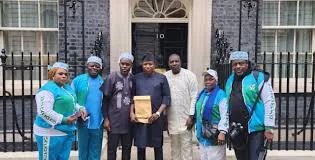
    The British High Commissioner to Nigeria, Richard Montgomery, has clarified that the petition submitted by Sunday Igboho, also known as Sunday Adeniyi Adeyemo, to the UK Prime Minister, Keir Starmer, regarding the creation of a Yoruba nation has not been officially recognized by the UK government or any parliamentary committee.

    Montgomery’s remarks followed media reports suggesting the UK government’s endorsement of the petition. 

    According to the British envoy, the receipt of such petitions at 10 Downing Street is a customary procedure, not an indication of governmental support.

    Olayomi Koiki, Igboho’s spokesman, had previously stated that the petition was submitted on behalf of Yoruba Nation leader Prof. Adebanji Akintoye.

     However, Montgomery emphasized that the UK government typically does not engage with petitions related to the domestic affairs of other nations.

    The High Commissioner addressed the issue after being summoned by Nigeria’s Ministry of Foreign Affairs. 

    He stated that past petitions of a similar nature have been dismissed by the UK government. 

    Montgomery reiterated the commitment to maintaining positive bilateral relations between the UK and Nigeria, while clarifying the misunderstanding surrounding the petition’s significance.

    ReplyForwardAdd reaction
  • Kenya’s Vice President Faces Impeachment Amid Corruption Allegations

    Kenya’s Vice President Faces Impeachment Amid Corruption Allegations

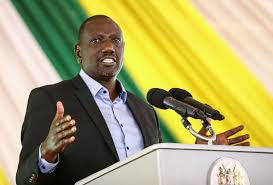
    Kenya’s Deputy President, Rigathi Gachagua, is facing an impeachment vote in parliament following accusations of corruption and undermining the government.

     The vote is set for Tuesday, exposing internal divisions within the ruling party.

     Lawmakers have raised concerns about Gachagua’s alleged involvement in ethnically divisive politics, corruption, and supporting anti-government protests that began in June 2024.

    Gachagua, a businessman from the Kikuyu tribe, ascended to his position as Deputy President in August 2022 after a closely contested election alongside President William Ruto.

     However, tensions between the two have surfaced in recent weeks, with Gachagua claiming he has been sidelined and accused of backing youth-led protests against tax increases.

    Lawmakers have listed 11 grounds for his impeachment, including allegations of acquiring assets worth 5.2 billion shillings ($40 million) since the election, despite an annual salary of just $93,000.

     One of the notable assets includes the famous Treetops Hotel. Despite these accusations, Gachagua maintains that his wealth stems from legitimate business dealings and inheritance.

    The impeachment process was initiated on October 1, with 291 members of parliament supporting the motion.

     If two-thirds of the National Assembly back the impeachment, it will proceed to the Senate for further consideration.

     Should the vote pass, Gachagua would be the first Deputy President to be impeached under Kenya’s 2010 constitution.

  • UK Prime Minister’s Chief of Staff Resigns

    UK Prime Minister’s Chief of Staff Resigns

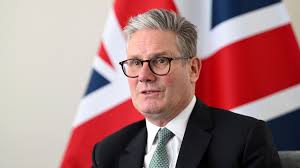
    Sue Gray, the Chief of Staff to UK Prime Minister Keir Starmer, has officially stepped down from her position.

     Gray is expected to assume a new responsibility as the Prime Minister’s envoy for nations and regions. 

    This move follows her involvement in internal disagreements, particularly concerning her salary, which was reportedly higher than the Prime Minister’s.

    Morgan McSweeney, who previously served as the Prime Minister’s Chief Adviser, will take over from Gray.

     Keir Starmer expressed gratitude for Gray’s contributions, especially for her role in preparing the government for its current agenda.

     Gray, who gained attention for her investigation into the pandemic-related parties at Downing Street, leaves amid ongoing discussions regarding her influence within Downing Street.

  • FG advises Nigerians in Lebanon to leave amid escalating Israeli attacks

    FG advises Nigerians in Lebanon to leave amid escalating Israeli attacks

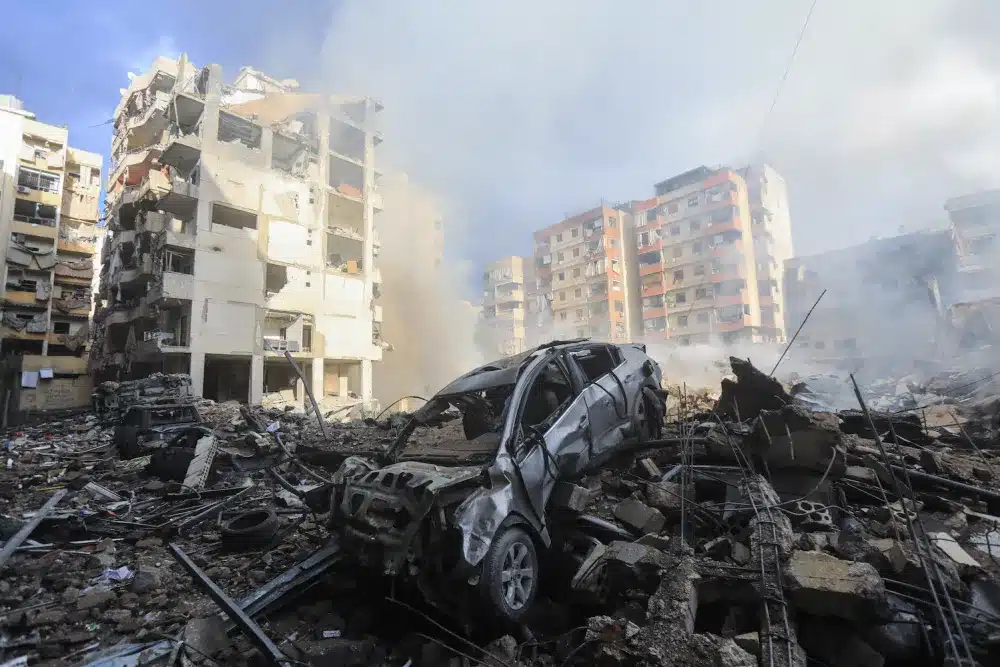
    Nigerians in Diaspora Commission (NIDCOM) has advised nationals living in Lebanon to consider moving out of the country now that commercial flights are still in operation.
    Nigerians are also urged to liaise with the Nigerian Embassy in Lebanon for necessary guidance regarding their safety.
    This advice comes amid attacks on Hezbollah and other areas in Lebanon by Israeli government.
    This was made known via a statement by Director of Media, Public Relations and Protocols Unit, NiDCOM, Abdur-Rahman Balogun, on Wednesday, October 2.
    The statement reads: “Worried by the attacks on Hezbollah and other areas in Lebanon by Israeli government, the Nigerians in Diaspora Commission (NIDCOM) is hereby advising Nigerians resident in Lebanon to consider moving out of the country now that commercial flights are still in operation.
    “Though information from the Nigerian community in Lebanon indicated that most Nigerians have relocated from the southern part and are now relatively safe, we hereby advise them to keep safe until the ceasefire is in place.
    “It is gratifying to note that thus far, no Nigerian has witnessed any form of accident or injury and wish to advise them to continue to remain safe while the war lasts.
    “Nigerians are equally advised to liaise with our Embassy in Lebanon for necessary guidance regarding their safety and be rest assured that their welfare and safety is of utmost concern to President Bola Ahmed Tinubu.”
  • Benin Republic Thwarts Alleged Coup Plot, Arrests Top Officials

    Benin Republic Thwarts Alleged Coup Plot, Arrests Top Officials

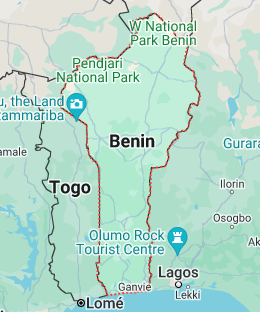
    Authorities in Benin Republic claim to have successfully foiled a planned coup attempt that was set to take place on Friday.
    Prosecutors revealed on Wednesday that the alleged plot involved high-ranking officials and was uncovered just days before the scheduled event.
    A special prosecutor at Benin’s court for financial crimes and terrorism, Elonm Metonou, disclosed that a former sports minister, Oswald Homeky, was apprehended on Tuesday night.
    Homeky was reportedly caught handing over six bags filled with cash to Djimon Tevoedjre, the commander of the republican guard, who is responsible for the security of President Patrice Talon.
    “It appears the Republican Guard commander in charge of the president’s security was engaged by the minister Oswald Homeky and Olivier Boko in order to carry out a coup by force on September 27, 2024,” Metonou stated.
    According to the prosecutor, the seized bags contained approximately 1.5 billion West African CFA francs, equivalent to about $2.5 million.
    Investigations revealed that a bank account was opened in Côte d’Ivoire under Tevoedjre’s name on August 6. The funds were reportedly transported in Homeky’s vehicle, a Toyota Prado fitted with fake license plates.
    Olivier Boko, a businessman and close associate of President Talon, was also implicated in the conspiracy. He was arrested earlier in the week in Cotonou, Benin’s commercial hub.
    Boko, who has made his presidential ambitions clear ahead of the 2026 election, allegedly collaborated with Homeky in paying off the military commander to ensure there would be no resistance during the coup.
    Investigations are ongoing, with authorities working to track down other individuals involved in the plot.
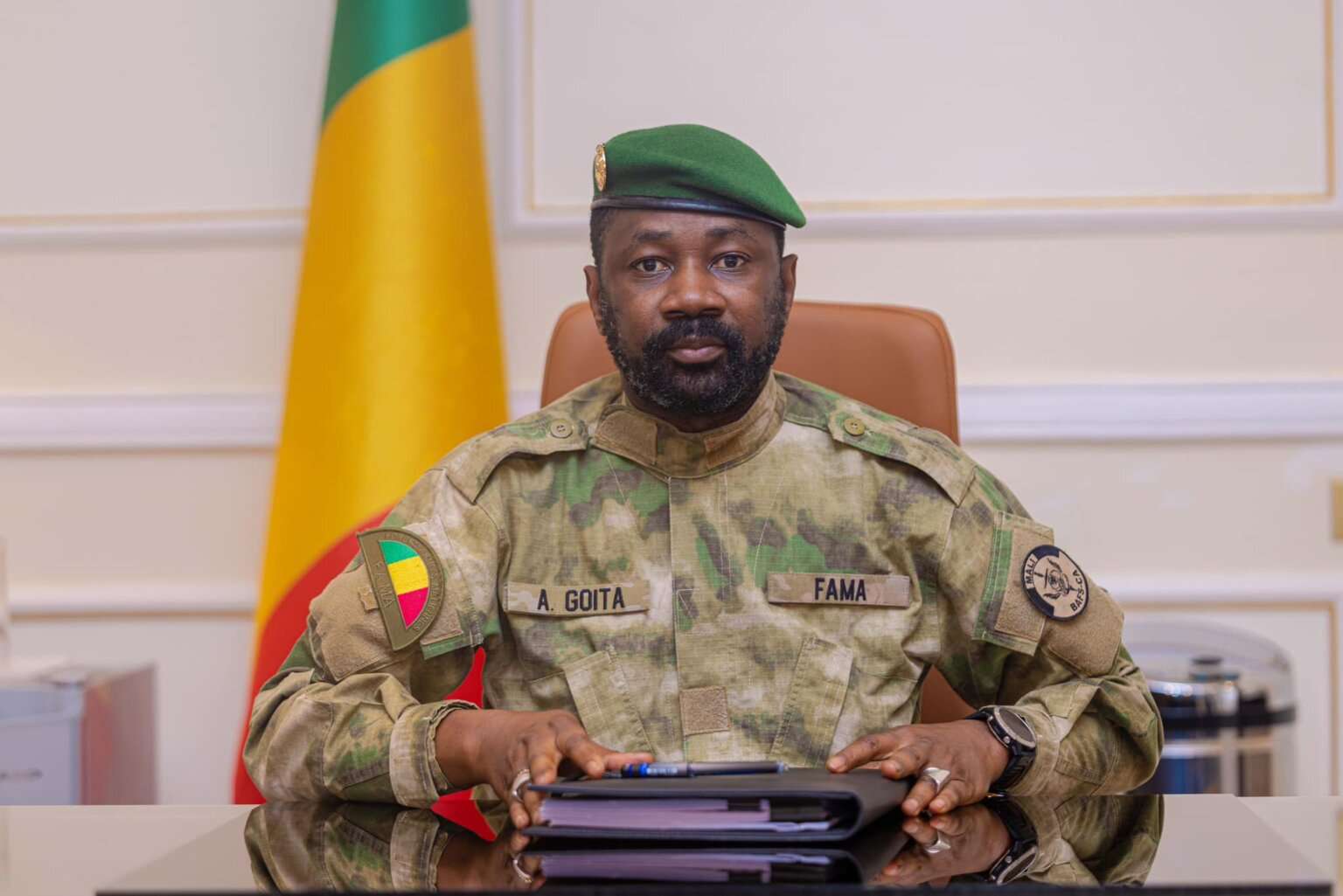
    Since 2020, several West African nations have experienced successful coups or attempted military takeovers.
    President Talon, who has governed Benin since 2016, has come under scrutiny, with critics accusing him of gradually dismantling democratic institutions and tightening his grip on power.
  • President Tinubu’s UNGA79 Address: Some Key Points

    President Tinubu’s UNGA79 Address: Some Key Points

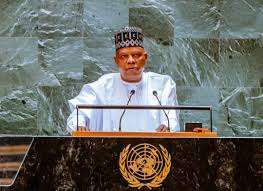
    In Nigeria’s national statement delivered at the 79th session of the United Nations General Assembly (UNGA) late Tuesday, President Bola Tinubu, made an appeal to global leaders, urging them to prioritize debt forgiveness for Nigeria and other developing nations.
    The president emphasized the need for relief from multilateral financial institutions and creditors during the 79th Session of the UNGA in New York.
    Represented by Vice President Kashim Shettima, Tinubu stressed that the nations of the Global South cannot achieve meaningful economic progress without concessions on their overwhelming debt burdens.
    His call for debt relief and reforms came amid the pressing economic challenges these nations face.
    In a press release issued by Stanley Nkwocha, Senior Special Assistant to the President on Media and Communications (Office of the Vice President), the Nigerian leader highlighted to the UN how the global debt crisis is crippling countries’ abilities to address the needs of their citizens.
    He also pointed out that trade barriers and protectionist policies are shattering nations’ aspirations, while unchecked competition is stifling motivation and obstructing global investment opportunities.
    The Debt Management Office, in its Q1 2024 report, revealed that Nigeria’s total domestic and external debts amounted to ₦121.67 trillion ($91.46 billion).
    With state governments seeing a 122% increase in external debt servicing in the first half of 2024, the economic strain has been severe, with Kaduna and Lagos states paying the highest servicing costs.
    During the first half of 2024, Nigerian states witnessed a 122% rise in external debt servicing, reaching ₦139.92 billion, up from ₦63.06 billion in 2023.
    This increase was driven by escalating borrowing costs due to currency depreciation, which has severely affected state-level spending and fiscal stability.
    Addressing world leaders, Tinubu stated, “We must ensure that any reform of the international financial system includes comprehensive debt relief measures, to enable sustainable financing for development.
    “Countries of the global South cannot make meaningful economic progress without special concessions and a review of their current debt burden.”
    The Nigerian leader also called for the recovery of funds lost through corruption and illicit financial flows.
    He urged international cooperation to recover and return stolen assets, noting that the return of such funds to their countries of origin is essential under the United Nations Convention against Corruption.
    “Therefore, the international community must promote practical measures to strengthen international cooperation to recover and return stolen assets and to eradicate safe havens that facilitate illicit flows of funds from developing countries to the developed economies,” The Nigerian leader said.
    Tinubu expressed concerns over rising nationalism and unilateralism, warning that these trends threaten global peace and cooperation.
    He argued that such an inward focus detracts from efforts to tackle pressing issues like terrorism, climate change, poverty, food crises, inflation, and growing debt.
    The President also underscored that multilateralism, rooted in inclusivity, equality, and cooperation, remains the surest path toward addressing these challenges.
    Reflecting on global conflicts and other ongoing crises, Tinubu highlighted the UN’s failure to achieve its core objectives, stating that billions of dollars are funneled into wars and conflicts rather than resolving issues such as poverty, hunger, and inequality.
    “Today, these pillars of our organisation are threatened. They risk being broken by the relentless pursuit of individual national priorities rather than the collective needs of the nations that are assembled here today.
    “While commitment to multilateralism offers us the surest guarantee of global action to address the existential challenges we face, singularity and nationalism are undermining the aspirations towards the peaceful and collective resolution of such challenges.
    “From last year’s summit, and indeed from previous years, we have carried over the numerous challenges of terrorism, armed conflict, inequality, poverty, racial discrimination, human rights abuses, food crises, hunger, irregular migration, piracy, global pandemics, hyper-inflation, nuclear proliferation, grinding debt burden, climate change, and a host of other vexations.
    “The continued manifestation of these challenges testifies to our failings rather than to any lofty achievements on our part. Billions of dollars are being committed to the prosecution of wars and the fanning of the embers of conflict,” he said.
    Tinubu reaffirmed what he termed “Nigeria’s steadfast commitment to the deepening of multilateralism,” just as it did 65 years ago when it joined the United Nations as the 99th member-state.
    “We remain committed to that desire to remain friendly with all nations and participate actively in the works of the United Nations, as expressed by our founding Prime Minister, Sir Abubakar Tafawa Balewa,” he said.
    Speaking on Africa, Tinubu expressed deep concern over the resurgence of military coups and unconstitutional changes in governance.
    He explained that these events underscore the fragility of democracy when not accompanied by economic development, peace, and security.
    These challenges, he said, must be a central focus of deliberations at the UNGA, as the lack of development and security fuels dissatisfaction among African citizens.
    “Our people need employment. They need decent livelihoods. They desire good and affordable education and healthcare for their children and families. They need to live in healthy, safe and secure environments. They need hope and they need opportunity,” he added.
    Tinubu also called for reforms in the global financial system and a fair, transparent multilateral trading regime.
    He urged that the “Pact for the Future” be used to reposition developing economies and implement concrete measures to overcome their unique challenges.
    “It is for this and other reasons that we reiterate the call by countries, especially of the global South, for reform of the international financial architecture and promotion of a rules-based, non-discriminatory, open, fair, inclusive, equitable and transparent multilateral trading system,” he noted.
    Addressing the issue of insecurity, Tinubu highlighted how it has driven citizens into extreme hardship, eroding their trust in democracy.
    He emphasized that restoring confidence in democratic governance and constitutional order is a responsibility that rests with the global community.
    He stated, “We cannot build durable societies with the threat of terrorism, banditry and insurgency growing in our countries and regions. Indeed, violent extremism remains an existential threat to both national and international peace, security and development. We are making concerted efforts to contain and roll back this threat.”
    Tinubu reassured world leaders that the “High-Level African Counter-Terrorism Meeting” hosted by Nigeria in April 2024, along with its outcome—The Abuja Declaration—aims to offer practical solutions to address the challenges posed by terrorism and insurgencies.
    Tinubu also warned of the growing risks posed by climate change, citing the devastating floods in Nigeria that submerged parts of the country, including Maiduguri.
    He called for the international community to honor their commitments made at various Conference of the Parties (COP) meetings, arguing that the consequences of climate inaction would affect every nation.
    The President also spoke on the role of the United Nations in conflict prevention, lamenting the normalization of global conflicts.
    Tinubu pointed out that conflict prevention was a core objective of the United Nations at its inception. However, he expressed regret that this mission has become increasingly difficult, as conflicts have become normalized.
    “When even the condemnation of violence, civilian casualties, and calls for a ceasefire are viewed as controversial,” he remarked, it becomes clear how challenging the task has become.
    He went on to outline key root causes of global conflicts, including poverty, hunger, ignorance, inequality, exclusion, and other forms of injustice.
    He referenced specific conflicts, such as those in Sudan and the war in Gaza and other Palestinian territories, as examples.
    “What this tells us is that the international community has failed to live up to the spirit and aspirations of the United Nations to rid the world of inequality, violence and domination of one people by another. Justice is antithetical to revenge,” he emphasized.
    The President also called for significant reforms in the United Nations Security Council, advocating for permanent seats for Nigeria and other African nations.
    He stressed the urgency for the UN to enhance its relevance and credibility in an increasingly fast-paced global landscape.
    The United Nations Security Council (UNSC) is one of the six key organs of the UN, responsible for maintaining international peace and security. It comprises 15 members, with the five permanent members holding veto power.
    The Security Council plays a critical role in recommending the admission of new members to the UN General Assembly and approving amendments to the UN Charter.
    Additionally, the UNSC has the authority to initiate peacekeeping missions, impose international sanctions, and authorize military actions when necessary to address global security threats.
    Tinubu said, “Some permanent members of the United Nations Security Council have offered encouraging, if tentative, indications of support on the issue of reform of the Council. We welcome the change in tone and urge an acceleration in momentum to the process.
    “The Security Council should be expanded, in the permanent and non-permanent member categories, to reflect the diversity and plurality of the world. We fully support the efforts of Secretary-General Guterres in this regard.
    “Africa must be accorded the respect that it deserves in the Security Council. Our Continent deserves a place in the permanent members category of the Security Council, with the same rights and responsibilities as other Permanent Members.”
    Tinubu concluded by urging the UN to accelerate the momentum toward Security Council reform, pointing out that some permanent members had expressed tentative support.
    He reaffirmed Nigeria’s commitment to multilateralism and cooperation, stressing that only through collective action can the world hope to resolve the existential challenges it currently faces.
  • Trump unveils new cryptocurrency platform 

    Trump unveils new cryptocurrency platform 

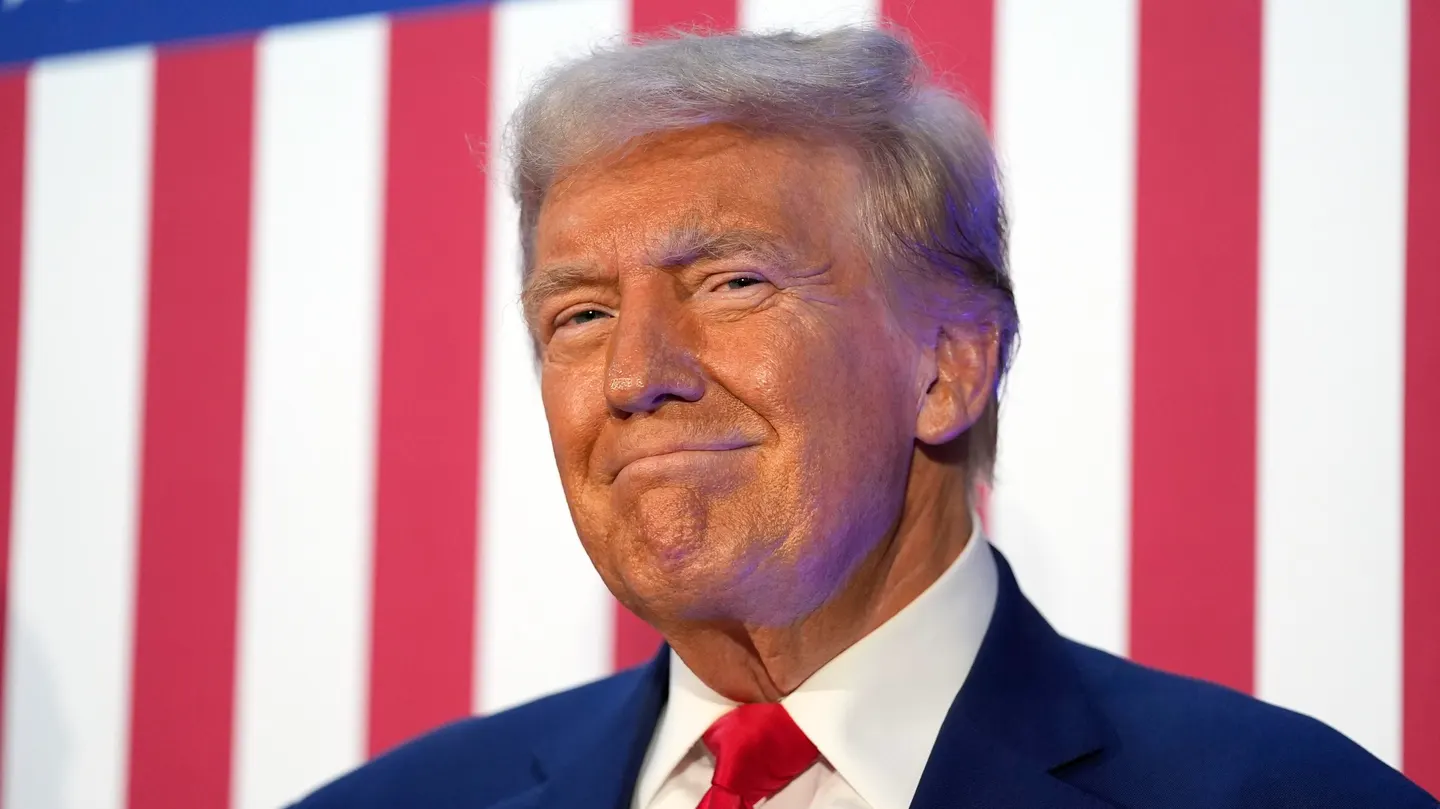
    Notorious for failed startups and suing for bankruptcy, former US president, Donald Trump along with his sons and entrepreneurs late Monday launched a cryptocurrency platform but provided few details.
    Little was revealed about the Trump family crypto project during a two-hour online presentation other than an offer to let people buy digital “tokens” giving them a vote in platform decisions.
    The event went ahead as planned despite an apparent assassination attempt against Trump on Sunday at his golf club in West Palm Beach, Florida.
    World Liberty Financial intends to offer services based on so-called decentralized finance, a mechanism that eliminates the need for an intermediary such as a bank to carry out transactions with a third party, the politics-laced discussion indicated.
    Decentralized finance, or DeFi, is based on so-called blockchain technology, which keeps a theoretically open but tamper-proof record of transactions.
    World Liberty Financial will enable users to lend or borrow cryptocurrencies to or from one another, a service already offered by many platforms, one of the best-known of which is Aave.
    The former president’s son Donald Trump Jr. touted this as “the start of a financial revolution,” during a session streamed on X, formerly Twitter.
    Zachary Folkman and Chase Herro, the linchpins of the project and established cryptocurrency entrepreneurs, said the platform would primarily use “stablecoins”, which are backed by a traditional currency, most often the dollar.
    Trump’s vicinity at golf course
    As a result, they are free from the sometimes brutal fluctuations experienced by digital currencies untethered to real-world money.
    World Liberty Financial wants to attract the masses to cryptocurrencies, creating a platform easily accessible to people, Folkman said.
    Project leaders said they would sell tokens that give owners the right to take part in the governance of the platform, with 63 per cent of them offered to the public, 20 per cent going to the founding team and the rest set aside as rewards for users.
    No timetable for the project was disclosed.
    During his presidency Trump referred to cryptocurrencies as a scam, but has since radically changed his position, presenting himself as a “pro-bitcoin president” if elected in November.
    In so doing, he is standing in opposition to the Biden administration, which is seen as a proponent of regulating the sector.