
Category: Opinion

  • UNIVERSITY OF ABUJA: THE END OF AN INGLORIOUS REIGN

    UNIVERSITY OF ABUJA: THE END OF AN INGLORIOUS REIGN

    By Samson Gbemiga Ogunwoye

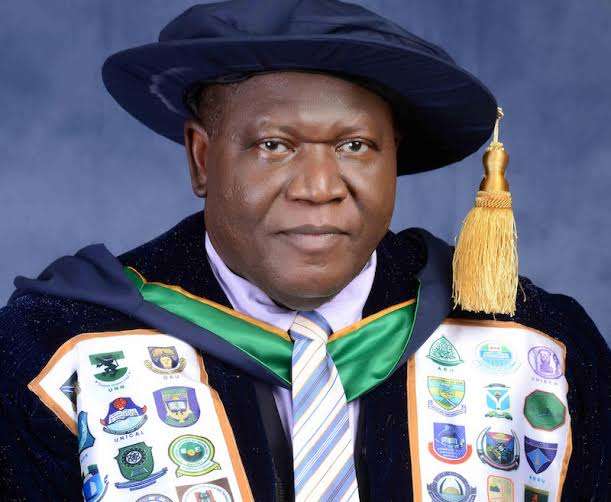
    The controversial reign of Prof. Abdul Rasheed Na’Aallah as the Vice Chancellor of the University of Abuja has come to an end. It is worth noting that his administration left a bitter-sweet taste in the mouths of many, with many believing that the tenure of the Kwara State born academic was characterized by an Osama-like terror, Hitler’s bullying, and Abacha’s impunity. As it is to be expected, the end of every reality is sacrosanct, and hence, this farewell dirge to a man many dreaded like a tyrant

    Upon his assumption of office, many were under the euphoria that he was coming to make a positive difference, seeing as the university was several years behind its growth projections as a befitting Ivory Tower in the national capital of Africa’s largest country. Unfortunately, this turned out to be a mistaken perception that was largely fueled by his initial grandstanding and loquacious posturing about his leadership acumen and a nonexistent developmental footprint. Prof. Na’Allah, was discovered to be a braggadocio that sees himself as a superior entity to every mortal. No student, not even a lecturer, could look into his eyes and dare to offer a contrary opinion; even the people that facilitated his appointment were pushed down the ladder; used and discarded.

    When Prof. Na’Allah took over management of the University of Abuja, it was ranked 9th best university in Nigeria by the National University Commission (NUC) in 2019. Within five years of a ruthless act of misgovernance, he is handing over a citadel of learning that now ranks 27th in the country. His tenure is therefore a tragic moment of management that should never befall any institution in Nigeria again.

    During his five years in office, Na’Allah raised the school fees five times. When he arrived in 2019, school fees were as low as N23,000, but as of today, when he is departing, some are as much as N250,000. The acceptance fee was arbitrarily increased from N4,500 to N50,000.

    Arbitrary fee increments forced many known students out of school. Our association found itself in a puzzling situation most times, where it had to raise funds for affected students. Many students had to wait for more years because they could not write exams due to late payment of school fees or delays in course registration due to the continuous technical glitches experienced with the so-called Integrated Portal that he imported from his former University, which consumes more funds than necessary.

    There is no doubting the fact that he took commendable strides in the effort to improve physical infrastructure of the university, but virtually all the structures he built were alleged to be at astronomically inflated prices. A testament to the overloaded contracts with substandard delivery were the dilapidated and moribund state of buildings, barely two years after completion. Many of the build structures have had their roofs repaired with unabated leakages. Bad furniture, substandard facilities like air conditioning, electronics, amongst others have been consigned unserviceable, several years ahead of their expected lifespan. It is pathetic that Malam Na’Allah built more mosques than hostels and libraries within the campus.

    Numerous recruitment exercises were ill-fated because they were largely underscored by impeccable mediocrity, bigotry and impunity. In several instances, he imported second class lower as a graduate assistant at the expense of internally qualified candidates with first class and strong second-class lower degree. He did a great disservice to the University of Abuja graduates by projecting us as unemployable. The fact that 90% of his employees are from other universities lends credence to that assertion. If the illegal recruitment is allowed to stand, the repercussions of the deleterious exercise will be indelible, not only within Abuja but throughout the larger society, that will feel the impact of the half-baked graduates that this new set of lecturers will produce.

    The VC is alleged to show total disregard for federal character in a university that prides itself on being a university of national unity. About 90% of the people employed are from one region or religion. A lady from Baze University who got employed into my department reportedly said she got the job against her wish even though her father paid for it. Na’Allah was not alone, as there was evidence that top officials in the ministry of education and some top politicians were accomplices, thus turning an ivory tower into a cash and carry market.

    The sordid incident that occurred at the Department of Sociology is worthy of recount just to buttress the degree of high-handedness of the departing Vice Chancellor.

    Na’Allah brought in a graduate with a second-class lower degree from another university and engaged the fellow as a lecturer. But the then lady HOD stood her ground and refused to sign the guy into the department.

    The following day, the lady was abruptly removed as HOD, and a junior lecturer who was hired by Na’Allah less than a year earlier was made the new HOD to do all the dirty work. These are not fallacies, but realities. It happened.

    Na’Allah met a functional Alumni Association but paralysed it in his bid to silence all the prospective dissenting voices and opinions.

    The divide and rule tactic adopted as strategy by the VC weakened ASUU for several years, as it took the union almost five years to introspect and re-strategize before they could confront the monster in Na’Allah. It’s pathetic to know that Na’Allah met a University of Abuja without strike but left the school on strike.

    With his gangs of academic hooligans, Na’Allah practically killed the Student Union. Two variants of student union leaders were nurtured by Na’Allah: the lollipop generation with milk spilled all over their mouths and the crumble eaters who survive from patronage, most especially from National Association of Nigerian Students (NANS).

    The former were bullied to acute silence, and Na’Allah feasted on their credulity and timidity, while the latter were fed with crumbs, and he rode on their gluttonous appetite. The few dissenting voices, who refused to sell out, frequently faced rustication and severe intimidation. It’s on record that Na’Allah expelled and rusticated students who called for Congress to discuss students’ welfare.

    The student union election is tele-guided by the management, as the chief security officer of the school decides who is to be cleared for the election, while the office of the dean of student affairs decides who to win. This highhanded tactic has led to chronic apathy where less than 600 out of about 20,000 students now participate in voting because they have lost confidence in the process.

    The Office of the Dean manages the electronic voting without any input from the students, and the contestants and their observers sit outside to hear the doctored results.

    In Na’Allah’s University of Abuja, students pay a regularization fee to Jamb, but Na’allah also charges his own fee for the same reason.

    More troublingly, graduates spend 5 months or more for clearance and to get their Statement of Results, which is given to students on convocation day in other schools. Some departments have not released the results of the last graduating set for NYSC till date due to issues in the portal he brought from his former university.

    A VC from another Federal University once disclosed that Na’Allah would brag at the meeting of VCs that if he sneezes, University of Abuja catches a cold! Yes! That was truly the case! He bullied even our professors into silence. ASUU became moribund until recent times. There was mutual suspicion among the lecturers as, with the help of some natives, he planted moles amongst the rank of teaching staff members.

    If you make any accusations against Na’Allah in your role as a lecturer, you will receive an invitation to respond to several allegations the next day. The five years of Na’Allah were frightening and cumbersome for the university community. He became lord of the university as he managed the school with an iron fist while he silenced every dissenting voice.

    Nothing lasts forever, and with a heavy sigh of relief, many now rejoice, realizing that, like yesterday, Na’Allah’s administration has been consigned into the dustbin of history where it shall be remembered as a dark era in the annals of the history of University of Abuja.

    At the moment, all hands must be on deck to make sure that Na’Allah and his cronies do not decide the next VC. At this critical juncture where a new Vice Chancellor shall be elected, the most important consideration should be to ensure a native VC; a credible lecturer who has grown through the ranks at the university should be considered.

    As they carry the university’s identity for the rest of their lives, it is their duty to join the patriotic voices and legitimate effort to ensure that the University of Abuja is restored to its pride of place as a centre of universal learning worthy of the appellation.

    Samson Gbemiga Ogunwoye,
    Director, Diaspora Affairs,
    NANS

  • Gov Abba Yusuf: Kano People say, “We’re yet to feel your Joseph”

    Gov Abba Yusuf: Kano People say, “We’re yet to feel your Joseph”

    All politics is local and the impact on the economy affects individuals personally. So, like the rest of Nigeria, the people of Kano say they are hurting. The catchphrase on the streets of kano now is, “Governor Yusuf Abba, we are yet to feel your Joseph”

    Nigeria’s democracy is unravelling very fast. Unfortunately, this is happening at the market square in a global village where citizen journalism has left no stone unturned. The royal rumble in Kano and the river of trouble, red with human blood, flowing freely on the streets of Port Harcourt are two poster images that tell all onlookers that all may not be well with the largest democracy in Africa.

    While the madness in Rivers State may be a needless fight that has been nurtured to become a monstrous brawl may be, because someone in the corridor of power has a vested interest, the same cannot be said about the festering inferno in the ancestral home of Malam Ibrahim Dabo which must be put out fast before it engulfs the entire metropolis.

    As it is common knowledge today, Muhammadu Sanusi II dan Chiroman Kano Aminu dan Muhammadu Sanusi I dan Abdullahi Bayero (2014-2020) and Aminu dan Ado dan Abdullahi Bayero (2020–2024), both protagonists in the current tussle for the emirship of Kano, are all grandchildren of Abdulahi Bayero, the eighth Emir of Kano (1926-1953) and a grandchild of Ibrahim Dabo, the first Emir and founder of the Dabo Dynasty.

    The reign of Fulani rulers of Kano has enjoyed relative peace and growth over the years. This continued until the late 1970s and early 80s when the late Governor of Kano state, Alhaji Abubakar Rimi attempted to balkanize the Emirate Council into five, namely; Gaya, Karaye, Bichi, Rano and Kano. Of course, he paid dearly for it as it caused him his re-election. Being not one known to be restrained by the huge moral demands of his office, former Governor Abdulahi Ganduje embarked on a repeat of this controversial exercise when he split the Council into five same Emirates and went a step further to depose the fourteenth emir of kano, Muhammadu Sanusi II in 2019.

    Governor Abba Yusuf, like his predecessor Sabo Bakin Zuwo in 1983, has also gone ahead to reverse all that Governor Ganduje did by reverting to the single emirate structure, deposing Alhaji Aminu Bayero and re-instating Muhammadu Sanusi II. Now the dye is caste and there is bedlam in Kano. The clan of Abdulahi Bayero, the Kano populace, the State Government and institutions of the Federal Government have locked horns in an Olympian duel with potentials for massive upset of the peace. Unfortunately, the prospect of an early resolution of the conflict is now being progressively encumbered by the same judiciary that should lead that charge, as courts at various levels give orders and counter orders and judgements without adequate recourse to established cases.

    Every politics is local and the impact on the economy affects individuals personally. So, like the rest of Nigeria, the people of Kano say they are hurting. The catchphrase on the streets of Kano now is, “Governor Yusuf Abba, we are yet to see your Joseph.” This is an apparent reference to both the Quranic and Biblical reference to the suffering of Prophet Joseph (Annabi Yusuf) before ascending to the position of leadership over his people and the redeemer of Egypt and the surrounding nations from the seven-year famine.

    Located at the North Western part of Nigeria, Kano, with a GDP of $13.6billion, is the commercial capital of northern Nigeria and the country’s second largest economy after Lagos with a GDP of USD 29 billion as of 2020. Kano, unlike most states in Nigeria is essentially a one city state with Kano city contributing most of the attributes that define the state. Growing at 3.06%, the population of Kano metropolis is estimated at 4.35million as of 2023, while the state population is put at 16.25m. With 415,598 Kano State had the highest Registered Live Births in the country in 2019. The huge population size, coupled with a GDP that is almost the size of the population makes Kano to rank as the 35th state in terms of GDP per capita. Kano also ranks poorly at the 12th position in terms of business environment, being able to list only 1,829,843 enterprises, compared with 3,345,948 in Lagos and 2,133,096 in Rivers states. About 72 per cent of the population of Kano state or 7.1 million people are actively engaged in economic activities and generating $978 GDP per capita.

    As it is the case with most states in northern Nigeria, most indices of underdevelopment are still looking up. For instance, it is painfully a valid assertion that poverty in Nigeria is essentially a northern phenomenon. As of 2019, 55.1 percent of Kano live below the poverty line. Whereas only 4.5 per cent of the population of Lagos state fall within this bracket. Indeed, apart from Kaduna state with 43.5 per cent more than half of the population of all the states in north western and north eastern Nigeria live below poverty line with Sokoto leading the pack at 87.73 per cent. These figures worsened due to the abysmal economic record during eight years of the Muhammadu Buhari Presidency.

    Take out of school population as an example, with a national estimate of about 20 million, accounts for 989,234 children out of school.

    Added to this is the current cost of living crisis precipitated by wrong policy choices, timing and implementation by the Tinubu Presidency. In an effort to spur investment and raise output, Tinubu has enacted measures since entering office in May of last year, including cutting back on gasoline and energy subsidies and twice depreciating the naira. Which, according to him, are measures required to set Nigeria up for sustained growth. However, President Tinubu’s goal of six percent annual economic growth is far too ambitious compared with the economy’s current growth rate, and the changes have increased inflation to a 28-year high, exacerbating the country’s cost of living crisis, with a direct causative effect on crime wave. These negative headwinds impact Kano state also.

    All of the above, not to mention the challenge of decrepit physical infrastructure, go to show the enormity of challenges that confront the administration of Governor Abba Yusuf. Moreover, the New Nigeria Peoples Party (NNPP), under which banner he won the governorship election, had promised to provide the basic necessities of life that include, but not limited to the provision of qualitative mass education, free primary health care, food and water, housing roads and security, economic empowerment for all Nigerians. Even though a pleasantly surprising sanctuary from the incipient scene of violent crimes that most of Nigeria, especially northern Nigeria had become, Kano, nonetheless shares a lot in common with the rest of the country that is now in the firm grips of cost-of-living crises. And the people are reminding Governor Abba Yusuf to tread carefully as to how well or not he manages the emirate tussle and go on to deliver on his campaign promises are critical to determining his second term ambition.

  • EID-EL-KABIR: Feast of the Sacrifice

    EID-EL-KABIR: Feast of the Sacrifice

    Eid-el-Kabir is an Arabic expression for “Feast of the Sacrifice”. It is also called Bakr-Eid, Sacrifice Feast. Eid-el-Kabir can also be called Eid-al-Adha. The origin of the feast is linked to Ibrahim being ordered to sacrifice his son and he simply obeyed, but, Allah in His infinite mercy gave him a sheep to sacrifice instead of his son Ishmael. 
    It was the angel Jibril that stopped him and told him that due to his submissiveness, his sacrifice had been accepted. Following this was Ibrahim’s journey from Canaan to the rocky desert of Mecca, Saudi Arabia with his wife Hagar, Adnan, and Ishmael.


    On his return to Canaan, he left behind Hagar and Ishmael who ran out of food and water, but by Allah’s divine provision, Hagar and her son were able to drink from a spring of water and even got food to freshen themselves. Ishmael became a prophet and dedicated himself to spreading the message of submission to Allah to nomads in Arabia. This served as a precedent to the Hajj performed during the period.


    Eid-el-Kabir is considered the holiest of the two Muslim celebrations; the other being eid el fitr. 
    During eid, worshippers come out massively for congregational prayers. This is done worldwide. 

    After the prayers, usually at open fields that serve as masjid or mosques, animals are slaughtered symbolising Ibrahim’s own willingness to sacrifice his own son. The symbolic sacrifice is done in various countries by slaughtering a cow, ram, camel or goat, depending on the predominant culture in a given place.


    However, the domestic animal used must be in top form and healthy, outstanding in all ramifications, to qualify for the sacrifice. The animals sacrificed are meant to be divided into three parts. One part is for the family who slaughtered it. While the other two are for relatives and friends. Also, families visit one another and share meals together even after the celebration.


    The period is usually characterized by intensive prayer by the faithful for individual families, those in authority and for global peace. Muslims climax the period with gorgeous dressing. Significantly, women seem to attach more interest to trending fashions. Thanks to their husbands who always provide for their families to ensure their wives and children come out in their best attires.


    Usually, eid festivities are kicked off by annannouncement by the Sultan of Sokoto, Muhammad Sa’ad Abubakar, regarding the sighting of the new moon, following which a date for eid is calculated.
     

    In Nigeria, on the sideline of activities during the period is the flamboyant display by the royals across all the emirates who richly dress and ride on horses that are well decorated, holding durbars and other social activities which attract all citizens.

    There is also an exchange of official visits between the traditional rulers and political leaders. For many years, Eid-El-Kabir celebration, like other religious festivals was used as a tool for galvanizing the citizenry by the government.

    On the ocassion of the 2024 Eid el Adha, Nigerian Anchor Newspaper felicitates  with our Muslim readers and, indeed, all Nigerians on this blessed month, being a period for sacrifice, charity and dedication to the worship of Almighty God. 
    As we celebrate the festival, May God accept our prayers and other acts of devotion and bless our families and our nation with Peace, Stability and Progress.

    Happy Eid-el-Kabir.


  • Controversial Portrait for Democracy Day

    Controversial Portrait for Democracy Day

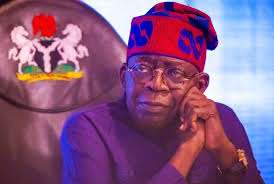
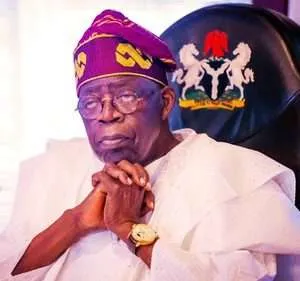
    It may seem too weird to be true, but it turned out that the main event to commemorate this year’s democracy day was the commissioning of his own portrait by President Bola Ahmad Tinubu.

    Claimed to be the largest painted portrait of an individual in the world, the work of art was painted by a group of 37 artists, purportedly drawn from all states of the federation and the Federal Capital Territory (FCT) and unveiled at the Eagle Square, Abuja to Commemorate 25 years of uninterrupted civilian rule in Nigeria.

    Upon commissioning, it was announced at the event, the portrait shall be taken for display at a public gallery at the nation’s capital, Abuja.

    Nigeria, Africa’s largest democracy underwent several fits and starts in its journey to civil rule due to frequent interruptions via military coups d’etat that topple such civilian governments.

    The current effort at democratic governance is the longest in the country, having started in 1999 and running till date, uninterrupted.

    Many however wonder why unveiling a large portrait of the president by the current government should be considered as the appropriate symbolism for this occasion.

    Notable journalist and reknown columnist, Dr. Ruben Abati, and his colleague, Rufai Oseni, both anchors of the Morning Show on Arise TV could not help but wonder aloud whether Nigeria was still a democracy or a civilian dictatorship.

  • N62,000 Minimum Wage: Beware of the rage of the people-Benson Upah

    N62,000 Minimum Wage: Beware of the rage of the people-Benson Upah

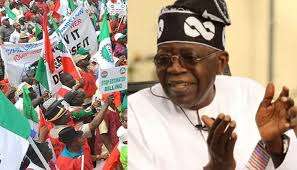
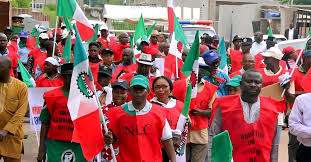
    If the gathering storm is to be taken as a reliable pointer, then Nigeria may be headed for another major labour crisis as organized labour has not only rejected N62,000 minimum wage offered by government but cautioned that “some state governors, were behind the mischief.”

    Speaking at a live television programme this Monday morning, Nigeria Labour Congress (NLC) Head of Information and Public Affairs, Mr. Benson Upah disclosed that about five state governors were bent on “throwing spanners to the works”. Even as he declined mentioning the names of these governors, the NLC spokesman cautioned the mischief makers to be aware that “the rage of labour is more manageable than the rage of the people.”

    Mr. Upah said that contrary to the impression being given to the Nigerian public about the lack of capacity, government revenue has now shot up as the amount being shared by the three tiers of government has moved from N700billion to N1.3trillion. He therefore assured that “Labour is not being difficult but talking about something which is practical and reasonable.”

    Pressed to state what shall be the next action of organized labour, Mr. Upah, who was guest at the Morning Show on Arise TV said, “appropriate organs of labour shall meet and take a decision.”

    He went further to state, “Our troops, our resources, our reaction time, our good intentions are intact. Appropriate organs of the unions will reconvene and take the right action.”

     Organised labour, comprising of the Nigeria Labour Congress and the Trade Union Congress (TUC) have been engaged in protracted negotiations over a new minimum wage, or at best a living wage. The big elephant at the room during these meetings had been the disproportionate pay politicians and other public office holders approve for themselves as compared to the very poor take home pay of the average worker.

    The current agitation for a higher pay had been triggered by ongoing hash economic reforms embarked upon by the Bola Ahmad Tinubu Presidency. First was the withdrawal of controversial subsidy on petrol. This was followed by the liberaisation of the foreign exchange market and the 240% upward review of electricity tariff.

    The combined effect of these changes had led to sudden rise in prices of foodstuff and essential services like the cost of transportation and medicaments.

    Following its rejection of the N62,000 offered by the federal and subnational governments, organized labour has scheduled a National Executive Council (NEC) meeting for tomorrow, Tuesday to deliberate on the next line of action.

  • Noisy vessels and the Presidential Victory Lap

    Noisy vessels and the Presidential Victory Lap

    We hear President Tinubu has directed his Minister of Finance and coordinating Minister of the Economy, Yemi Edu, to furnish him with the template for a reviewed minimum wage within 24 hours.

    And I say, Before nkò?

    If I’m president Tinubu, I’ll also direct the minister to prepare to implement a pay raise of about N120 or N150k immediately.

    Why not? When you win a battle, what do you do but celebrate?

    President Tinubu won this battle.

    Labour sold themselves very cheaply.

    First, the choice of battle was wrong, if you ask me. Organised Labour should not have fought for increase in minimum wage or living wage, slavish as that one sounds.

    How could you be fighting for any of these two in a clime where the top officials of your government rank among the most remunerated in the world?

    Our public officials have cornered the nation’s wealth to themselves. They arrange hefty pay packages for themselves and still go ahead to help themselves to the till without any consequence.
    On top of all that, they have cornered the highest paying MDAs where only their children and close relatives get employed.

    So, it was a very dumb move for NLC and TUC to be fighting for minimum wage instead of duelling for proper wealth distribution through the democratisation of employment opportunities.
    The way to achieve this is for Labour to press for uniform pay for public offices as was the case.
    Labour should be calling for a uniform pay for either all federal parastatals on the one hand or equal pay for all federal government ministries departments or agencies, on the other hand.

    So, whether it is NNPCL, CBN, FIRS or Federal Fire Service, or National Library, you shall operate the same pay structure.

    But as things stand now, whether the minimum wage is reviewed or not, the income gap between the politicians, their children, who are employed in these high-paying parastatals and the rest of us shall remain wide.
    Meanwhile, na the same market we dey go. The same fuel we dey buy, etc.
    At the end of it all, the hurly burly has come and gone at a great relief to President Tinubu and his friends the topmost level of government that this Labour battle cry was full of sound and fury but signifying nothing to be dreaded.

  • Nationwide Strike: kneejerk Reaction to a Serious Governance Challenge

    Nationwide Strike: kneejerk Reaction to a Serious Governance Challenge

    As you read this Nigeria is now under total lockdown, whereby major economic activities in the organized public and private sectors have been completely crippled.

    Labour has made good its threat to commence an indefinite nationwide strike to protest government insensitivity to its plight and clamour for wage review.

    This moment has been long coming, taking into account recent federal government economic policies which impacts have been skewed againts the suffering mass of Nigerians.
    From the withdrawal of fuel subsidy, liberalization of the foreign exchange to the recent hike in electricity tariff and and aborted cybersecurity levy. Most of these reforms are mass focused and have had acute impact on the social and economic wellbeing of poor Nigerians.

    This has pitched labour unions against the government as organized labour agitate for wage increases and better welfare for their members.

    But I am one of a few who do not think that the labour is going about its agitations correctly. The protests and strikes so far have been kneejerk reactions that have been largely ineffectual.
    Put simply, I DO NOT AGREE WITH THIS CALL FOR NATIONWIDE INDEFINITE STRIKE.
    My reasons are simple.

    1. As already stated, this strike and others before it are largely kneejerk reactions to a fundamental error of policy choice, planning and implementation by government.
    2. The strikes are one too many and have a tendency of seeming like one repeating a process and expecting a different outcome.
    3. Some are of the opinion that most of the recent strike actions have been about bread and butter issues and nothing about the very important subject of better governance of the society.

    Here are a few alternatives that labour may want to contemplate if they are desirous of thinking outside the box.
    1. Formulate proper critical engagement with the government on sincere cost cutting measures that affect the highest echelons of the public service and governmental agencies.

    2. Collaborate with the executive to instigate a downward review of the cost of governance.

    3. Encourage the president to prune the size of the cabinet or you partner with the mass public to achieve the same purpose.

    4. Let you labour strike not be always about your interests but the wellbeing of the Nigerian masses.

    These strategies shall assist to endear the labour movement to the Nigerian public and win their confidence and trust.
    Labour can leverage on such goodwill to escalate activities to achieve desired changes in the political arena.

  • The Tinubu Presidency:Renewed Hope or Reincarnation of Controversy

    The Tinubu Presidency:Renewed Hope or Reincarnation of Controversy

    Just as I reflected on a theme to anchor my thoughts on the first anniversary of the Tinubu Presidency, I received two electronic messages from the same source, expressing two diametrically opposed views on the same subject matter.

    What is even more perplexing is the fact that the two messages were official communications purporting to convey a message from the highest office in the land and signed off by two individuals that should have been speaking from the same script.

    The first message, an official communication from the office of the Special Adviser on Media and Publicity to the President, Mr. Ajuri Ngelale read:
    “STATE HOUSE PRESS STATEMENT
    IN COMMEMORATION OF MAY 29 AND THE FIRST ANNIVERSARY OF THE PRESIDENT TINUBU ADMINISTRATION
    In furtherance of his commitment to delivering good governance, President Bola Tinubu has embarked on the inauguration of strategic projects across the country.

    More transformative projects will be inaugurated by President Tinubu’s administration for the benefit of all Nigerians.
    In view of public commentary concerning the President delivering a speech before a Joint Sitting of the National Assembly tomorrow, May 29, 2024, it is important to state that this information is false and unauthorized as the Office of the President was not involved in the planning of the event.” This message was dated My 28, 2024.

    In the same breath, another communication from the presidency and signed by Mr. Bayo Onanuga, the Special Adviser on Information & Strategy to Mr. President was released, and it read:
    “STATE HOUSE PRESS STATEMENT
    PRESIDENT TINUBU TO ADDRESS JOINT SITTING OF NATIONAL ASSEMBLY TOMORROW
    President Bola Ahmed Tinubu will not make a broadcast to the nation on Wednesday to celebrate his first anniversary as the leader of Nigeria.
    Instead, the President will address a joint session of the National Assembly, which has lined up a programme to commemorate 25 years of the nation’s democratic journey at both the executive and legislative levels.

    President Tinubu’s speech will dwell on the achievements of his administration and Nigeria’s democracy since the military ceded power in 1999.
    Former Senate President, Senator David Mark, former speaker of the House of Representatives and now President Tinubu’s Chief of Staff, Rt. Hon. Femi Gbajabiamila are all lined up to address the parliament.

    Also lined up to speak is the former military ruler, General Abdulsalami Abubakar, who handed over power to civilian administration in 1999.
    At the end of the speeches, President Tinubu will commission the National Assembly Library and Resource Center, now to be known as Bola Ahmed Tinubu Building.” This one too, was dated May 28, 2024.

    While we await the stage appearance of President Tinubu, the lead character in this dramaturgy about heroic failures, I can hear some mischief makers murmuring déjà vu. Certainly. It is the reincarnation of controversy, which has become the hallmark of this president.

    Even more controversial is the record of performance of the first twelve months of the Tinubu presidency.

    From last May 29, twelve months ago, when on inauguration day, President Tinubu, looking forlorn but turbo-charged by the excitement of new office pronounced, “subsidy is gone” until this day, cheerleaders and advocates of his policy choices have mastered the art of double-speak. They often argue, ‘even though the policies shall visit pain and hardship on the people, the tough decisions have to be made for the good of the country.’

    Yet, what we see are somersaults and policy reversals that reveal the poor quality of work that was put into these policies. From the withdrawal of subsidy on petrol to the merger of the forex windows through to recent withdrawal of subsidy on power, Nigerians have been served a menu of completely strange dishes that give them no option of choice.

    Unfortunately, this is coming after eight cruel years of nepotistic, corrupt and clueless reign of Gen Muhammad Buhari when virtually every index of misery took an upward swing. President Buhari represented the worst case of dashed hope since the return of civil rule in 1999.
    At ascendancy in 2015, he promised to wrestle corruption to a manageable level, grow the economy and tackle insecurity. Eight years after, he handed Nigeria to his successor and party mate, Bola Ahmed Tinubu as the poverty capital of the world where about 113million, out of a population of 200million, was classified as multidimensionally poor with out-of-school population brimming at 20.2million children.

    President Tinubu, during his numerous electioneering campaign stumps, promised to continue from where President Buhari stopped. It can be assumed that the import of that message was lost on many Nigerians until what some now say was a thoughtless “subsidy is gone” pronouncement.

    From inauguration day till date, it will seem like the President was determined to act like the young king Rehoboam who spoke roughly to his subjects and said in 1 Kings 12.11: “And now, whereas my father put a heavy yoke on you, I will add to your yoke; my father chastised you with whips, but I will chastise you with scourges!”

    What is however, very clear to a discerning Nigerians is the fact that as many compatriots lay prostrate and distraught due to the excruciating burden of “Tinubunomics” his alleged puppeteers, the Bretton Woods institutions, infamous deities of the market-driven economy, may celebrate President Tinubu’s zero-subsidy regimes and the foreign exchange liberalization; two policies that created the current storm in the economy.

    President Tinubu’s leadership mantra is christened, “Renewed Hope.” This contradicts sharply with the reality on ground as many Nigerians and their businesses have been crowded out of the emerging economic landscape. With the naira now a shadow of its old self, since it now exchanges for less than half of its value as at less than a year ago, while the rate of inflation has doubled and unemployment nearing 50 per cent, and with a cabinet that is an unwieldy crowd of round pegs fitted into square holes, it is most doubtful how President Tinubu can turn the corner and restore hope and life to many Nigerians who are already at economic and mental health ICUs.

    What Nigerian politicians and their retinue of advisers are yet to come to terms with is the basic reality that governance is essentially about the welfare of the people. Anything beyond that is mere sophistry.

    Dudley Seers, British and New Zealand development economist captures this convincingly when he “suggests that development is when a country experiences a reduction or elimination of poverty, inequality and unemployment.” In other words, the subject matter of development that should be of interest to our politicians and others in leadership positions is the type of answer they get to the question about what happens to poverty, unemployment, illiteracy, disease, destitution and such other negative indices.

    So, as members of the governing APC and other apparatchiks of the current dispensation takeover media spaces and platforms to pontificate, and most times, lie about the record of performance of this government in the last twelve months, they need to spare a thought about the fact that figures do not lie.

    Nairametrics reports that Nigeria’s misery index has been surging since Tinubu took over power, moving from 73.05 and headed towards the 100% mark. Food inflation as at last April was 40.53%, compared to 24.61% in the same period of last year.

    With all the anti-people policies that have been brought onboard without commensurate implementation and impact assessment plan, President Tinubu has let the genie out of the bottle and it would require doubling down on remediation efforts to buoy the economy, heal the people and “Renew Hope”.

  • ZACCH ADEDEJI’s PRINCIPLES OF TAXATION: A PATHWAY TO NIGERIA’S ECONOMIC GROWTH

    Abdulahi Ismaila Ahmad, PhD

    Since the assumption of Zacch Adedeji, Ph.D to office as the Executive Chairman of the Federal Inland Revenue Service (FIRS), I have followed keenly his enunciation of his principles of taxation, which, to my mind, can translate to a pathway to Nigeria’s economic growth.

    To be sure, Adedeji’s principles of taxation embody some of the normative principles of taxation, which are certainty, flexibility, equity, simplicity, and utmost good faith.

    At every given forum, Adedeji does not fail to reify his wholesome principles of taxation. He is wont to say that, “we will tax the fruit, not the seed; we will tax prosperity, not poverty.”These are statements of certainty and equity, which are altogether refreshing and reassuring.
    The reassurance in his statements is underlined by his insistence that his tax principles are focused on encouraging taxpayers to grow their investments or income so that they can yield enough taxable dividends or profits. In his most philosophical best, he compares taxpayers to gardeners and the taxman as one who waters the garden. He says it is the duty of the government to create a conducive environment for taxpayers and their businesses to thrive in the hope that once they have a fulsome yield, they will gladly pay their taxes. That is why he says the taxman is not aiming to tax poverty but prosperity.

    Adedeji’s principles of taxation anticipate economic boom and discourage tax hikes in times of economic depression. The flexibility principle provides that the amount of tax charged should not be the same all year round; and, that tax rates should be lowered for other social benefits during economic boom, while during economic depression tax rates may be raised to raise maximum funds for developmental projects. Adedeji’s taxation principle does not support tax hikes that will become a burden on the taxpayers or the citizenry.
    Thus, it is obvious that Adedeji’s taxation principle takes cognizance of the fact that taxation is the lifebuoy of the economy. It is the fecund source of economic development. It follows then that when taxes are collected and properly utilized in grooming businesses, empowering citizens through access to low interest loans and grants, diversification of business activities like the creation of value chains, and provision of critical social amenities, there will be enough income in the pool to tax.

    In other words, there will be enough fruit from which to pick.
    Recently, the federal government took the right step in the right direction by establishing the Consumer Credit Scheme, which guarantees access to loans facility for the citizenry to grow their business activities. The logic here is that once there is a boom in economic activities in the informal sector of the economy, there will be a corresponding widening of the tax net without complaint from the tax paying community.
    It is this veritable connection between taxation and economic growth that Adedeji’s principles of taxation seek to highlight, making them the pathway to Nigeria’s economic growth. In concrete terms, Adedeji’s unwavering commitment to expounding his taxation principles has already raked in more than Three Trillion naira in tax revenue in the first quarter of 2024 for the three tiers of government in aid of the execution of the Renewed Hope Agenda of President Bola Ahmed Tinubu. In addition to raising this much revenue, Adedeji has also reorganised the structure of the service to reflect his taxation principle of customer-centricity. He believes that taxpayers should form the focal point of the operations of the Service, and that regard, they be treated with due diligence.
    Presently, the Service is structured based on the category of taxpayers: Large Taxpayers Group, Medium Taxpayers Group, and Small Taxpayers Group; as well as five other services groups, viz, Corporate Services Group, People Services Group, Support Services Group, Compliance and Enforcement Support Group, and the Special Duties. This taxpayers-based operational categorisation is purposely to simplify tax payment processes, which is made more so by the introduction of the various automation platforms.
    And so, it is always both refreshing and reassuring to listen to Adedeji marshals his thoughts around the issue of making taxation the pivot of national development. He often couches his statements in literal parallelism, metaphor, and humour. This rare sagely gift sets him apart as a conscientious taxman. Beneath his jocular mien lies a determination to set Nigeria’s fiscal trajectory and tax system on the pathway of sustainable economic growth.

    ABDULLAHI ISMAILA AHMAD, PHD
    Director of Communications and Liaison Department,
    Federal Inland Revenue Service (FIRS)
    Abuja.

  • Governor El-Rufai’s  Brilliant, Yet Too Cute by Half Federalism Proposition

    Governor El-Rufai’s Brilliant, Yet Too Cute by Half Federalism Proposition

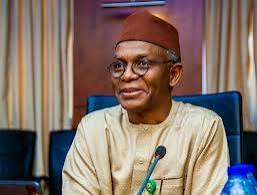
    Governor Nasir El-Rufai’s position paper on federalism is erudite, brilliant, progressive, and actionable. Yet when it comes to federalism and decentralization between state and the local governments, it is not only too cute or too smart by half (take your pick), it reeks of hypocrisy on steroid.

    While recommending total decentralization of power between Abuja and the state governors, El-Rufai proposes that a more prudent, and truly federal, option would be to let the Federation Account fund only the federal and the state governments, while the state governments should then fund and manage governance at the local level as they deem fit, and as reflected in the enabling laws that their respective Houses of Assembly shall enact to that effect. Every state can then have as many or as few local government councils as they may choose.

    El Rufai wants to eat his gubernatorial cake and still have it. While he canvasses the loosening of the top-heavy stranglehold of Abuja on the states, he is not extending the same privilege to the local governments, where the state governors impose even more draconian, more autocratic, and more stifling stranglehold on their finances and administration.

    Governor El-Rufai would like the governor to have their kleptomaniac fingers on the juicy honeycomb of the local government allocation to squeeze it until the Queen and worker bees are starved to death. Giving the governor the kind of monarchical power being advocated by El-Rufai will give governors, who already operate as absolute monarchies, the power of life and death at the local level.
    They would have the power of the purse to punish and strangulate communities that vote for the opposition political parties. It has the potential to lead to the kind of abuse of ethnic minorities and opposition parties of the nature that characterized and eventually derailed the first republic.

    Governor El-Rufai’s position on the relationship between governors and local governments runs counter to the spirit and letter of the U.S. presidential constitution, which was massively and insanely plagiarized to form the basis for the financially crippling 1999 constitution that has been foistered on our country.

    Specifically, the Tenth Amendment to the U.S. Constitution grants all powers not given to the federal government back to the people by way of state and local government. Local governments have control over a plethora of services used on a daily basis by the citizens who vote for them in municipal elections. Among these functions are Police departments, fire departments
    Emergency Medical Services, Libraries, Public works departments, Building and zoning departments,
    Public Schools (K-12), Parks and Recreation, Municipal courts,
    Streets and sanitation departments, roads and street departments, public safety, water sanitation,
    Senior citizen programs,
    Cemeteries, Housing,
    Community development, and
    Environmental protection.

    Local governments fund their activities through property taxes on land, buildings, and personal dwellings, income from licenses, fees, state-operated businesses, federal grants, state grants, and lotteries.

    The state governors can’t have it both ways, by demanding autonomy from the federal government while imposing their autocratic stranglehold on the local government. The local government, by its name and definition, is the level of government closest to the citizenry and is, by extension, the most appropriate arm to provide services to it.

    True federalism, to be effective, must be systemic and all embracing from Abuja to the states and to the remotest local government in the federation. For Governor El-Rufai to advocate for anything less will be hypocrisy on steroids.

    Dr. Alonge is the President of Africa-Diaspora for Empowerment & Development Inc.

    He is based in Miami, Florida, USA.