
Category: Opinion

  • The Hyper-hysteria Over Prince Harry & Meghan Visit to Nigeria

    The Hyper-hysteria Over Prince Harry & Meghan Visit to Nigeria

    There is no question in a celebrity-craze world that the visit of Prince Harry & Meghan is a big deal, especially when one adds the fact of Meghan’s Nigerian ancestry. Forty-three percent Nigerian DNA for mixed race Meghan is remarkable indeed.

    However, the over-the top reception, the media hysteria, and everyone, including governors, falling over one another for a handshake and photo-op with the couple show that the colo-mentality and the racial inferiority complex which Fela sang about decades ago are still alive and thriving in our society.

    Harry and Meghan gave up their royal duties and are technically not representing the British monarchy. But you couldn’t tell that given the hysteria in the social and traditional media.
    Thankfully, the presidency and the foreign affairs diplomats played it just about right.

    Don’t be surprised if, in the next few days, a controversy arises in Nigeria between the Igbo and other Nigerian ethnicities over which ethnicity accounts for Meghan’s DNA.

  • More Burden on Nigerians as the Central Bank Slams Another Tax on Bank Customers

    More Burden on Nigerians as the Central Bank Slams Another Tax on Bank Customers

    It will seem like there may be no respite soon for the toiling mass of Nigerians as they continue to be bombarded by all manners of taxes, tariffs and levies by the government and service providers with the latest being the introduction of a 0.5 per cent “cybersecurity levy” by the Central Bank of Nigeria (CBN).
    Earlier in the day, First Bank Nigeria Plc led others in the reintroduction of two percent processing charge on deposits above N500,000 and three per cent charge on amounts above N3,000,000 for corporate customers. The reintroduction of these charges is coming about four months after the Central Bank of Nigeria suspended such charges for cash deposits above N500,000.
    In a circular signed by Chibuzor Efobi, Director of Payments System Management and Haruna Mustafa, Director of Financial Policy and Regulation, the CBN said collection of the new levy shall commence in two weeks from yesterday, May 6th, 2024 and it shall be remitted to the Office of the National Security Adviser (ONSA).
    Even though the apex bank was silent on the use into which the ONSA will put the proceeds of the new tax to be paid by bank customers, it explained that deduction and collection of the cybersecurity levy is consequent upon the enactment of the Cybercrime (Prohibition, Prevention etc) Amendment Act of 2024.
    It was explained in the circular that Section 44 (2)(a) of the Act, provides for the collection of “a levy of 0.5% (0.005) equivalent to a half percent of all electronic transactions value by the business specified in the second schedule of the Act, is to be remitted to the National Cybersecurity Fund (NCF), which shall be administered by the Office of the National Security Adviser (ONSA).”
    It was further stated that the CBN shall rely on commercial, merchant, non-interest and payment service banks, as well as mobile money operators for the collection of the levy. It also stated that any defaulting institution that fails to remit funds collected shall be liable to a fine of not less than two percent of the annual turnover of the defaulting business.
    “Deductions shall commence within two (2) weeks from the date of this circular for all financial institutions and the monthly remittance of the levies collected in bulk to the NCF account domiciled at the CBN by the 5th business day of every subsequent month,” the bank stated.

  • Prof Jega, 5 Others Warn President Tinubu against Signing Defense pact with America, France

    Prof Jega, 5 Others Warn President Tinubu against Signing Defense pact with America, France

    Nigeria is at the verge of commiting another major political blunder as its leadership is under intense pressure to sign a defense pact that may undermine her sovereignty, complete with all the daunting security implications.

    When signed this pact will enable the redeployment of American and French soldiers that were recently expelled from three countries in the Sahel region to Nigeria and a few other countries in the gulf of Guinea.

    Towards this end, it has been reported that the leadership of Nigeria is currently under intense lobby to give a nod to this plan.

    Sensing that President Ahmed Bola Tinubu may cave-in to the lobby, former INEC Chairman and notable academic, Prof Attahiru Jega and some civil society heavy lifters of Northern extraction penned an open letter to president Tinubu yesterday to dissuade him from nursing any positive thoughts of saying ‘aye’ to the plan.

    Apart from Prof Jega, the other authors of the open letter comprised of Abubakar Siddique Mohammed of the Centre for Democratic Development, Research and Training (CEDDERT),
    Zaria; Kabiru Sulaiman Chafe,
    Arewa Research and Development Project (ARDP), Kaduna; Jibrin Ibrahim
    Centre for Democracy and Development (CDD), Abuja; Auwal Musa (Rafsanjani), Civil Society Legislative Advocacy Centre (CISLAC), Abuja; and Y. Z. Ya’u, Centre for Information Technology and Development (CITAD) in Kano.

    They argued that “Nigerians have consistently opposed defense
    agreement with foreign countries since the 1960s when the Balewa administration was
    forced to abrogate the Anglo-Nigerian Defense Agreement because the agreement contained a clause which allowed the Royal Airforce to overfly and test its aircrafts in Nigeria.”

    They further contended that another reason, which remains valid till this day, why the late Prime Minister was compelled to abrogate the agreement was that it was considered as an “impairment of Nigeria’s freedom of action” as sustaining such agreement could drag the country into a war against its wish.

    The group advanced other compelling reasons, backed by numerous internationally documented cases, to insist that President Tinubu, whom they suspect seemed favourably disposed, must not sign the pact. For instance, they argued that allowing the American and French troops, which were recently flushed out from Niger to resettle in Nigeria would be a major affront that could conflict relations between the two brother nations which were merely separated by colonial demarcation.

    Citing the claim by one of Nigeria’s most successful foreign affairs ministers, late Gen Joseph Garba, they argued, “Nigeria’s neighbors are a matter of colonial
    heritage and socio-cultural diversity; but it is in our Nigeria’s interest to deliberately
    cultivate the friendship of our neighbours.”

    The group therefore pleaded with President Tinubu not to yield to the immense pressure being put on him to sign the pact because of numerous other downsides that include the bad blood that it may breed between Nigeria and its immediate neighbours and other friendly nations from the Eastern bloc.

    The group therefore, advised that the president should not further encumber the current tense security situation of Nigeria by introducing a foreign element into the troubling mix.

  • Funding Universities:  Prof Ochefu Says “Edupreneurs” to the Rescue

    Funding Universities: Prof Ochefu Says “Edupreneurs” to the Rescue

    As governments, unions and other stakeholders grapple with challenges of managing 21st century university system, a former Vice Chancelor and General Secretary of the Committee of Vice Chancellors of Nigerian Universities (CVCNU), Prof Yakubu Ochefu has advised about the emergence of new ownership models that will take over proprietorship of universities in Nigeria.

    He said the new group shall comprise of “Public-Private Institutions, for-profit and publicly traded universities”.
    According to the professor of economic history, this group, which he called the “edupreneurs will grow and overtake existing institutions providing significantly increased personal choice for all, from pre-school to post-graduate studies.”

    Prof Ochefu, who spoke on “Rethinking the Philosophy of University Education in Nigeria in the Era of Education 4.0” was the guest lecturer at the 81st Interdisciplinary Research Discourse of University of Ibadan Postgraduate College.
    Delving into the economics of global education the former Vice Chancellor disclosed that tertiary education has a global market value of $763 billion. He stated further that when compounded, this grows by 14.59% every year.

    He also said that the World Bank estimates that there were 220 million students worldwide in 2020 and that number will rise to 380 million by 2030.The Big ASK is where will we in Nigeria be in all these developments. He then asked, “where will we in Nigeria be in all these developments?”

    The CVCNU helmsman disclosed that Nigeria currently has a total of 116 Public and 149 Private universities. He said 53 public universities are owned by the federal government while 63 are owned by State Governments. He went further to chronicle the challenges confronting public universities in Nigeria to include poor funding, governance issues, lack of qualified teaching and non-teaching staff, poor technology and infrastructure base, amongst others.
    He advised that all stakeholders must make deliberate efforts to address these challenges to enable university education in Nigeria to measure up to the disruptive feature of the Fourth Industrial Revolution.
    Precisely, he admonished that an innovative design for the emerging tertiary educational system must be one that focuses on institutional pedagogical outcomes, which in turn influence curriculum, the flow of knowledge and the type of knowledge shared, as well as the behaviours of students, instructors, and governance team leaders.

    He illustrated his advocacy with the idea of a “Polymath University” that is based on an educational theory that suggests that original thought and creativity can be obtained by connecting seemingly unrelated ideas and concepts.
    Beyond the management structure, Prof Ochefu also dwelt extensively on the nature and pedagogy of university education in the fourth industrial revolution (Education 4.0). He said the disruptive impact of the new era entails ubiquity of learning, aided by the internet, as opposed to localised type as well as overall democratization of access.

    In concluding, Professor Ochefu X-rayed the pivotal role of the Vice Chancellor as the CEO of the university. Referencing the famous British higher education teacher, Geoffrey Boulton, Prof Ochefu asserts, “It could be said that changing a university is like moving a graveyard – you get no help from the people inside!”.

  • Social Responsibility: The Chinese restate commitment to renovation of schools

    Social Responsibility: The Chinese restate commitment to renovation of schools

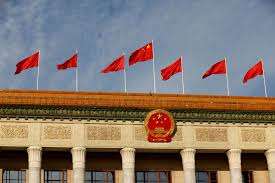
    Chinese Ambassador to Nigeria, Cui Jianchun, has reiterated the country’s commitment to school building, refurbishing, and renovation as part of their social responsibility to Nigeria.

    Ambassador Jianchun stated that Chinese companies have been investing and working with their Nigeria counterpart in building infrastructures that benefit the common man directly.

    Jianchun made this known during the formal commissioning of the upgraded school facilities in China Assisted Model Primary School Nyanya in Abuja.

    The school facilities upgraded are replacement of toilet partition,
    re-painting two sides of the gate wall and replacement of reinforced concrete drainage slab.

    Also donated to the school are 16 whiteboards, 4 of Office Desk With Wooden Top And Metal Legs , 4 Wooden Office Chair With Armrest, 40 Student Backpack and 70 Library Books And Textbooks.

    Also, among the donated items are 960 prices of Notebooks For Schoolwork, 960 pieces of pencils, 450 pieces of pen, 1000 pieces of Remove Pencil Or Ink marks480 pieces of Straight Measuring tools.

    Lastly on the list of donated items are 2 basketball, 4 soccer balls and 20 pieces of slippery ropes, 20 small hand carry bag of premium rice, 20 bottles of premium cooking oil and 224 Bottles of Coca-Cola and Fanta.

    Represented by the Chargé d’affaires of the Chinese Embassy in Nigeria, Mr Zhang Yi, he stated that China Road and Bridge Corporation (CRBC) in a bid to fulfils its social responsibilities and gives back to the local people while carrying out production and operation activities in Nigeria, took the initiative to ask the Chinese Embassy for instructions.

    He expressed its willingness to undertake a repair work and donate relevant teachers’ and students’ supplies so as to provide a better learning environment and conditions for the students.

    Handing over the donated items to the Executive Chairman of FCT Universal Basic Education Board (UBEB), Dr. Alhassan Sule, the Managing Director of CRBC, Zhou Hao, stated that they took advantage of the school holiday period to replace blackboards for the children, repair the bathrooms, and carry out other feasible tasks.

    “In different peoples of different continents, children is the common ground that transcends ethnicity and nationality. They fill the world with hope and brightness. They represent the future’s expectations and aspirations, and they rightfully deserve a better life.

    “This is why we believe that improving children’s educational conditions and environments is a shared goal among people from all sectors in both China and Nigeria.”

    “Respecting local Nigerian culture and focusing on corporate social responsibilities are pillars of CRBC in Nigeria. In cities like Kano, Ibadan, and Uyo, we have donated school equipment to local primary schools, visited local orphanages, repaired roads for the community, and constructed wells and related water facilities.

    “This demonstrates our unwavering commitment to community and development.”

    Appreciating the embassy, the Executive Chairman of FCT UBEB, Dr. Alhassan Sule stated that he wanted to thank the Chinese embassy for their kind gesture.

    Dr Sule informed that education globally is everybody’s responsibility. Today, the difference between developed nations and developing nations is education. Any investment made in education is geared towards developing the society. Nobody on earth can explore potential without classroom.

    Speaking further, he said, “Recently most of our schools are experiencing a facelift, government alone cannot do it that’s why we are soliciting for partners to support education. we are asking for the help of the Chinese embassy to help us convert this school to ICT hub so that anybody anywhere can have access to education. ”

    Represented by the Chargé d’affaires of the Chinese Embassy in Nigeria, Mr Zhang Yi, he stated that China Road and Bridge Corporation (CRBC) in a bid to fulfils its social responsibilities and gives back to the local people while carrying out production and operation activities in Nigeria, took the initiative to ask the Chinese Embassy for instructions.

    He expressed its willingness to undertake a repair work and donate relevant teachers’ and students’ supplies so as to provide a better learning environment and conditions for the students.

    Handing over the donated items to the Executive Chairman of FCT Universal Basic Education Board (UBEB), Dr. Alhassan Sule, the Managing Director of CRBC, Zhou Hao, stated that they took advantage of the school holiday period to replace blackboards for the children, repair the bathrooms, and carry out other feasible tasks.

    “In different peoples of different continents, children is the common ground that transcends ethnicity and nationality. They fill the world with hope and brightness. They represent the future’s expectations and aspirations, and they rightfully deserve a better life.

    “This is why we believe that improving children’s educational conditions and environments is a shared goal among people from all sectors in both China and Nigeria.”

    “Respecting local Nigerian culture and focusing on corporate social responsibilities are pillars of CRBC in Nigeria. In cities like Kano, Ibadan, and Uyo, we have donated school equipment to local primary schools, visited local orphanages, repaired roads for the community, and constructed wells and related water facilities.

    “This demonstrates our unwavering commitment to community and development.”

    Appreciating the embassy, the Executive Chairman of FCT UBEB, Dr. Alhassan Sule stated that he wanted to thank the Chinese embassy for their kind gesture.

    Dr Sule informed that education globally is everybody’s responsibility. Today, the difference between developed nations and developing nations is education. Any investment made in education is geared towards developing the society. Nobody on earth can explore potential without classroom.

    Speaking further, he said, “Recently most of our schools are experiencing a facelift, government alone cannot do it that’s why we are soliciting for partners to support education. We are asking for the help of the Chinese embassy to help us convert this school to an ICT hub so that anybody anywhere can have access to education”.

  • Addressing Agribusiness Challenges in Benue State: Proposal for Commodity Trading Management Agency

    Addressing Agribusiness Challenges in Benue State: Proposal for Commodity Trading Management Agency

    By Chris Echikwu

    Agribusiness, the fusion of agriculture and commerce, plays a crucial role in Nigeria’s economic landscape. In Benue State, often hailed as the Food Basket of the Nation, the agribusiness sector thrives with a plethora of commercially valuable commodities ranging from yams to sesame seeds, palm produce, guinea corn, and more. However, despite its potential, the sector faces several challenges that hinder its growth and profitability.

    Challenges in Benue State’s Agribusiness Sector:

    – Lack of Regulatory Oversight:The absence of a structured regulatory framework allows for exploitative practices such as skewed forward contracts, leading to farmer impoverishment.

    – Quality Assurance Issues: Concerns over the purity and correct measurement of agro-commodities persist, resulting in blacklisting by major buyers.

    – Logistical Constraints:Inadequate transportation infrastructure and limited access to markets contribute to high operational costs.

    – Information Asymmetry:The absence of real-time market information hampers decision-making and transparency.

    -Limited Market Linkages: Farmers lack direct access to end-users, impacting profitability and efficiency.

    – Revenue Collection Challenges:Governments struggle to collect revenues from markets, leading to sub-optimal performance in revenue generation.

    Proposed Solution: Commodity Trading Management Agency/Exchange

    A Commodity Trading Management Agency/Exchange is proposed as a solution to address these challenges. This agency would serve as a virtual or physical platform facilitating transparent and efficient commodity trading. Key responsibilities would include:

    – Regulatory Oversight: Enforcing formal rules and regulations to prevent exploitative practices and ensure fair trade.

    -Market Development: Establishing and managing commodity markets with necessary infrastructure for optimal operations.

    – Stakeholder Engagement:Building formal linkages with domestic and foreign buyers, enhancing market access for farmers.

    – Policy Advisory: Advising government bodies on commodity trading policies and solid minerals development.

    – Community Support: Providing Corporate Social Responsibility (CSR) initiatives to benefit host communities and vulnerable groups.

    -International Collaboration:Establishing connections with national and international commodity trading bodies to foster growth and development.

    The establishment of a Commodity Trading Management Agency/Exchange in Benue State holds the potential to revitalize the agribusiness sector, fostering growth, transparency, and profitability. By addressing existing challenges and providing a structured platform for trade, the agency can positively impact the local, state, and national economy.

    Chris Echikwu was a staff of Nigeria Commodity Exchange as Head of Trading and Client Relations as well as General Manager, Corporate Communications and Strategy

  • Inconvenient Truths We Africans Must Tell Ourselves About the Iniquitous Global Order Which Empty Rhetoric Will Not Change

    Inconvenient Truths We Africans Must Tell Ourselves About the Iniquitous Global Order Which Empty Rhetoric Will Not Change

    A video of our Ghanaian brother berating the U.S. for its threat to sanction Ghana for passing its anti-LGBTQ legislation is making the round on African social media and we are all applauding it as if it was the Geiysburg or the iconic MLK “I have a Dream” speech.

    Our obsession with LGBTQ as our legislative priority speaks volumes about the African mindset of focusing on the mundane when the rest of the world is engaged in the race for the dominance of space and AI. It is the reason we are building mega-churches while our national economic infrastructure and manufacture crumbling. Misplaced and misguided priorities all around. Empty Aluta countia speeches and deflects the responsibility for our self-inflicted dysfunction to others.

    I know I have already lost half of the audience for appearing to support LGBTQ. That’s not the point. Are we, in fact, paragon of sexual morality or morality period with the insane looting, corruption, and the inhumane pauperization of the poor by our kleptocratic political class and their crony capitalists?

    The Bible tells us to remove the moral log in our eyes before pointing at the speck in others. Shouldn’t we care about putting food on the poor’s table, clothing the naked, and housing the homeless before focusing on who sleeps with who in the privacy of their adult beds so long as they are not engaged in pedophilia. By the way, the same Ghana has a video of a twelve year being sexualized and given away in marriage. Why does our culture often turn a blind eye as pre-teens are sometimes married off to septuagenarians in some of our countries? Talk about sexual and morality hypocrisy.

    We Africans need to know that the world does not respect or react to empty talk unless you can back it up. Our Ghanaian brother talks the good talk about Ghanaian sovereignty and economic independence and how Nigerian and Ghanaian are the best doctors in the U.S. The question is, why are our best doctors fleeing our continent while disease ravages our land? Can we walk our talk. It is absolutely the truth which many of us can attest to, that the whiteman is no more intelligent than us. We routinely wipe them with the floor in academic grade, but the world economy is not built on your ability to regurgitate facts to score well in tests. It is built on building the system that allows intelligent, creative people to use their intellect to build things, to transform academic knowledge to technology that adds value to productivity and quality of life and into consumer goods the world absolutely depends on.

    You are irrelevant to the world if you must sell your raw material to survive, if you are stuck with Stone Age farming system like your cave-dwelling ancestors did with rudimentary, back-breaking hoe and cutlass in a world where robots, AI and genetic engineering are revolutionizing food production. The world has no respect for a people nor respond to the empty word of a people who cannot do the most basic thing of adding value to their raw materials, who denigrate their own culture, their own food, their own fashion, their own language, their our religion while we embrace and serenade the foreign and worship their gods.

    The Bible is very explicit about the power dynamic between the rich and the poor. Prov 22:7: “The rich rules over the poor, and the borrower is slave of the lender.” Just like a poor man no matter how intelligent he is, has limited idea and voice when the family is talking money, our bravado and high valuatin talk have no meaning in the commity of nations until we put our economic and political house in order and become strategic players in the global economy and in world affairs.

    The West will look the other way when the Saudi crown Prince dismembered and vaporized the American based journalist because the U.S. economy depends on Saudi oil and its sovereign wealth to survive. Biden knew his political goose was cooked as soon as the Saudis started to squeeze the global oil market with her massive power to control the supply and demand curve. He had to swallow his pride and rhetoric about human rights to visit and pay homage to the Crown Prince with the iconic fist bump the world saw on TV.

    We must understand that the world economy is not the papacy. We have, in fact, just discovered that not even the papacy is squeaky clean. The world affair has never been based on morality, fairness, or justice. Even our cave-dwelling ancestors invaded, looted, plundered, and laid to waste the caves of other ethnic groups. So did the Aztecs, the Romans, the Greeks, the Mongols, the Othman Turks, the Brits, the US, and now the emerging Chinese power. The powerful always dominates and exploits the powerless. It is the law of the survival of the fittest. As it is in the animal world, it is with humans no matter our pretension of moral and intellectual superiority.

    The world has always been a dog-eat-dog: the winner takes it all world from antiquity.

    The story of the harmonious world in the Garden of Eden, if true, died a long time ago. Didn’t Cain kill Abel in the Garden?

    We must stop talking and get to work to compete in the cut-throat world. Great speeches about how the west underdeveloped Africa (which is true, by the way) does not cut it. Masterminding our own development is the best revenge against an exploitative world.

  • The Strengthening Naira: Poetic Justice for Greedy Speculators and Economic Saboteurs

    The Strengthening Naira: Poetic Justice for Greedy Speculators and Economic Saboteurs

    The precipitous decimation of the value of the Naira in the past several months since the Tinubu regime came on board was driven largely by irrational and insanely greedy speculators combined with vested corrupt moneybags who had stacks of Naira in their basement and were hell bent in discrediting and undercutting the Tinubu regime by attacking our currency.

    We also can not forget unpatriotic governors who were alleged to be converting their increased federal allocation into the greenback, which they stacked away in their governor residences. Their evil plot and greed caused the poor masses and the middle class so much grief with galloping inflation pricing them out of basic consumer goods like bread not to talk of critical commodity like cement whose price went as far as above 12,000. It also did tremendous damage to the Tinubu regime with shouts of “ Ebi npawa” we are hungry rendering the land. Even one of his most ardent supporters, Fuji maestro Wasiu Ayinde (aka Kwam 1), even jumped on the critic wagon.

    It is, therefore, poetic justice that the evil plot of these greedy speculators and economic saboteurs has now backfired. Betting against resilient, convention-busting Nigeria remains a bad bet. We have for decades befuddled conventional economists who struggled unsuccessfully to unravel the logic behind Naijanomics, which seems to defy gravity.

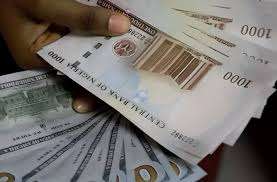
    People might have forgotten that not so long ago, as recently as July last year, the Naira to dollar rate war was around 750. So the Naira falling as low as nearly 1900 against the dollar defied conventional economic theory. People pointed to the removal of the oil subsidies. The sudden rebound of the Naira against the dollar, with the oil subsidies removal still in place, sticks a sharp needle into that balloon.

    What’s most important now for the economy’s health is stability and predictability in the forex market to allow investors to make long-term investment plans and to curtail the price gouging behavior of Nigerian retailers. The question now is will the prices that shot through the roof on the excuse of the skyrocketing dollar to Naira rate for even non-import dependent products like gari and bush meat, come down to earth now that the Naira has regained some of its lost value. Knowing our people, I am not raising my hope too high.

    Another unknown is the rumors making the round about the huge minimum wage hike being proposed for federal employees. No doubt, long suffering, underpaid Nigerian workers deserve their long overdue due raise to a living wage. The risk is that if it is not properly calibrated to the ability of the state and the private sector to pay, it might lead you to inflationary pressure and instability in the forex market. The Caddoso and CBN have their work cut out for them and have many sleepless nights ahead of them.

    Finally, my heart goes out to recent “japanerians” who flung their houses and other valuables assets at hugely discounted prices to finance their japaing by the lure of earning high flying foreign currencies, but many finding out that the green grass across the fence might just be fake artificial turf. The strengthening of the Naira against the dollars throws another wrench to totally mess up their calculus.

  • Women’s Month: Stakeholders to champion financial independence for women

    Women’s Month: Stakeholders to champion financial independence for women

    By Daniel Okejeme

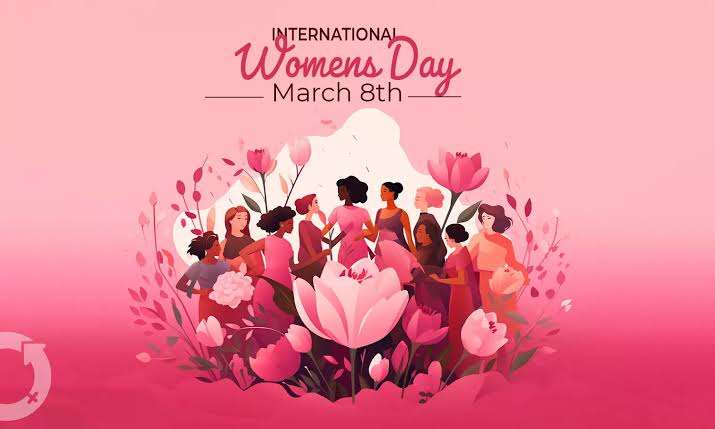
    Still in the spirit of International Women’s Month, stakeholders have been called to champion more financial independence and empower women.

    Lead Consultant for Senema Production (SP),Emmanuel Ohimokhare, who made this call said that people seem to focus more on the issue of gender based violence and equality while neglecting one of the most important challenge, which is women empowerment.

    He made the statement during a workshop organized by SP in conjunction with the Taipei Trade Office in Abuja, titled ‘Empowering Women in the Media, Strategies for thriving in today’s economic landscape’.

    Citing digital space utilization training as one of such empowerments, Ohimokhare advised female journalists to key into the dynamic transformation going on in the media landscape for high- quality journalism and media businesses.

    He said, “Women in journalism who are yet to embrace the digital space are missing out on the number one thing that will benefit their career journey. Learn from the younger generation who understand the impact and visibility digital space bring when leveraged on.

    “Journalism is dynamic. Some years back, there was nothing like social change journalism or investigative journalism, but now it has evolved.

    “We want this workshop to empower the women financially, making them more financially independent,” he said.

    In her speach, Brand Manager and Social Media Expert, Esther Ilesanmi, stated that social change journalism can affect the growth of media in Nigeria through audience engagement by covering stories that address pressing social Issues, people are often drawn to content that resonates with their values and concerns.

    Ilesanmi advised that trust should be built through involving in social change Journalism focuses that focuses on providing accurate and Impactful information about societal issues.

    She said, ” Diversifying revenue streams beyond traditional advertising, media businesses can explore subscription models, events, sponsored content and grants to sustainably monetize their content.

    “Other opportunities for growth
    investment in talent and training are investing in the skills and professional development of journalists, particularly women, which is crucial for enhancing the quality and impact of social change journalism.”

    Ilesanmi informed that negative stories trend more than innovative stories because people like to hear bad stories. Some of the good stories out there don’t get the expected outreach come to bad news.What we need to do as media people is to infiltrate the system with many more good stories so as to shape the narrative and ideologies of people.

  • The Fleecing of Nigeria by a profligate Corrupt Legislature… our senate has become the den of thieves

    The Fleecing of Nigeria by a profligate Corrupt Legislature… our senate has become the den of thieves

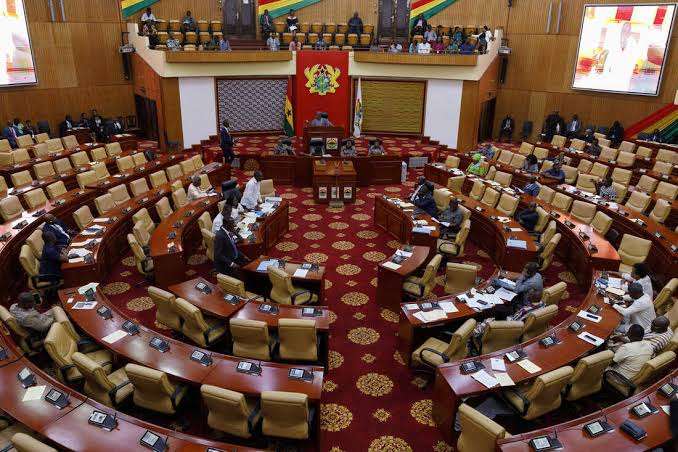
    While we might have all been distracted by the drama and hoopla generated by Senator from the north, we all might have missed the bombshell revelations the scandals revealed yesterday. Earlier, a ranking senator from the south made an allegation that some senior senators each received 500 million Naira padding in the 2024 budget. Padding is the code name for the legislative fleecing of our commonwealth with illegal budget allocation in the name of constituent projects. It is a blackmail tactic that Sister Ngozi Eweala made a lot of noise about as the Minister of Finance and the de facto prime minister in which she alleged that senators and House of Rep members routinely blackmail the executive to include these graft as the conditions to pass the annual budget and to fund the budgetary proposals of the executive arm.

    Well, we just watched the confession video in the speech of Senator Bamidele on the floor of the senate. We might be tempted to gloss over the big news he made during that speech. He confirmed the allegation that some senators actually received 500 million Naira, an allegation by a ranking senator, which the other senators tried to shout down earlier today.

    Our senate is the den of thieves, who are totally disconnected from the daily struggle and anguish of the citizens. Not only did these leeches allocate hundreds of millions of Naira to order plush SUV for meeting the majesty of their highly exulted offices while their citizen starve to death, but the rut goes even deeper.

    This Senator Opeyemi Bamidele just confirmed on the floor of the senate the allegations that they each received 500 million Naira. He asked their constituencies to hold them accountable if they didn’t implement more than 500 million Naira investments in
    Constituent projects like boreholes and solar panels. For goodness sake, in 2024, our senators are celebrating borehole and solar panels, both signs of retrogression and underdevelopment.

    These people have no respect for us, and it’s our fault because we have abandoned politics to the worst of us and to the degenerates.

    When did they change the constitution to grant the legislature the executive power to fund and implement projects using their personal bank accounts with no accountability?

    We need to disband the house of thieves called the Nigerian legislature, where many are double dipping, drawing their pensions as former governors while fleecing our commonwealth through obscene renumeration plus the weekly deposits of illicit fund in their bank accounts. We all heard it on life TV when Senator Akpabio announced hefty Christmas payments into his colleagues’ accounts.

    It used to be Ghana-must-go bags and mobile phone airtime and wifi credits. Today, it is direct deposits or using the budget of MDAs to launder the fund, which is then clandestinely diverted to their personal account.

    We learned recently that ministers in the executive branch routinely use their personal bank account to transact official government expenditure.

    Sister Ngozi Eweala made a lot of noise about the corruption ridden constituency projects, which our legislators routinely used to blackmail the executive branch to pad our annual budget or risk the budget not being passed.

    No wonder the Senate has become the retirement gig for corrupt ex-governors. They are also bankrupting the country with one of the highest legislative remuneration in the world in a country with one of highest concentration of the poorest of the poor living on less than $2 a day. What an outrage.

    We need to thrash the plagiarized American presidential constitution and replace it with a homegrown, institutionally, culturally, and financially compatible one.

    We can’t no longer afford to support these super leeches who are bleeding us to death. They very quickly shot down today with alacrity, a member of cult of thieves who went rogue by spilling the beans about the sleece in the Nigerian Senate. We must break open the code of silence.