
Category: Opinion

  • October 1st, an anniversary, and a country’s blues

    October 1st, an anniversary, and a country’s blues

    If we are a serious people we should be looking back in anger as we celebrate the 65th anniversary of our country tomorrow. We have failed ourselves. We have failed Africa. And we have let down black people all over the world. The countries we started off with [indeed we were in front of some of them] have since left us behind. Nature endowed our country with so much natural resources to make it belong to the First World, but we have consistently given ourselves ruinous rulers whenever we have the opportunity to do so.”

    MOCKERY! This word probably best captures the slogan for the 65th anniversary of the independence of our country. The federal government unveiled the, what might as well be a tongue-in-cheek slogan, when it revealed the activities that will precede the anniversary celebrations of the country tomorrow. Nigeria gained political independence on October 1,1960, amidst funfare and much expectations from Africa and the Black World. The theme for the anniversary which will culminate tomorrow is “Nigeria @65: All Hands on Deck for a Greater Nation”. The theme is ostensibly designed to emphasize the critical place of unity, collaboration, and patriotism ‘among government institutions, the private sector, civil society, and citizens in building a nation of peace, prosperity, and progress”.

    As enunciated by the government the theme underscores the need for collective effort to consolidate past achievements and pursue greater national aspirations ‘under the Renewed Hope Agenda’. That’s where the ‘innovation’ ends. The other contents of the anniversary package are normal, routine and run-of-the-mill. They included Juma’at prayer on Friday, September 26, at 1:00p.m.; Inter-Denominational Church Service, on Sunday, September 28, at 10a.m.; and a World Press Conference, on Monday, September 29, at 10 a.m. During the rituals, and after them, our country will continue or return to its normal routine of bloodletting, grinding poverty, indifference of the ruling elite to the plight of citizens, insecurity, banditry, out of school children, increasing number of internally displaced persons [IDPs] in a country that’s not officially at war, renewed hopelessness, despondency, ‘japa’ syndrome [of youngsters and even adults] voting with their feet by fleeing the country in droves, profligacy of the rulers, arrested development, among other vices.

    Many previous rulers of our country, military and civilians, have been myopic, nepotistic, and suffered from tunnel vision. But the last 10 years of the rulership of the All Progressives Congress [APC] have stood out as signposts and symbols of everything that is designed to put pressure on the country’s fault lines. Former president, the late Maj.Gen. Muhammadu Buhari [2015-2023] was a threat to the cohesion and unity of this country in spite of his claims to the contrary. He had said with his own mouth in a foreign land that while he would be in charge as president, he would only take care of those who voted for him during the 2015 presidential election. That statement that divided the country into 97% positive voters, and 5% naysayers [ignore the percentages that did not add up] became the state policy. The atmosphere of the country was fouled and poisoned, but the consolation for the targeted victims of Buhari’s publicly stated meanness was that during his eight years the country experienced more of his non-presence [not necessarily absence], and  ‘non-governance’. They were eight years of waste that dragged Nigeria backwards by, at least, one generation. During a media chat in December 2015 [the only one in his eight-year underwhelming reign], Buhari berated a section of the country, asking angrily and dismissively “what do the Igbo[s] want”? That was his reaction to a question about youth restiveness in the south east who were demanding for a referendum to settle the issue of the Igbo nation continuing to remain part of Nigeria. Buhari did not fail to tell the global audience of the prime time TV programme that he was part of the marauding soldiers during the civil war [1967-1970] who killed the restive youths’ fathers, their unarmed mothers, and siblings irrespective of whether they were combatants or not. Down the line during his reign, he derisively and derogatively referred to the Igbo nation as a dot in a circle. At no time did the accursed ruler describe any other nation within Nigeria in such demeaning, dismissive and insensitive terms. Buhari’s era may have been marked by ‘ungovernance’, but he left behind a legacy of hate and disunity.

    If some Nigerians thought that Buhari will be the end of a president stoking hate and division, then they did not reckon with the coming of his successor, Alhaji Bola Ahmed Tinubu, also of the APC. Even before he acceded to office and power, he had publicly declared that the presidency was his, and Yoruba’s. Embedded in his ‘emi lo kan’ slogan were selfishness, nepotism, corruption, division, disunity, among other vices. And he is living up to it. His appointments into critical and sensitive public offices are skewed to the extent that they make Buhari look like an apprentice and a saint. To be fair to him, his appointments have, unlike Buhari’s, not been promoting a sectarian agenda. But it may be worse in its appearance of innocence. His appointments create the impression of building a cult and rewarding fealty to a cult leader. That could prove more dangerous and unsettling for this country at critical times. Tinubu is not restrained in putting his name or allowing his acolytes to affix his name on public buildings, institutions, and infrastructure, none of which he built in the two years of his four-year tenure. His appointment of the Yoruba into offices is virtually restricted to Lagos state where he was a governor from 1999-2007. And almost all the beneficiaries are from amongst his boys who worked for him as governor. Of course, there had been some outcasts from that cohort. They are frozen out. Lamentations have been rife in the two years of Tinubu so far including from his own Yoruba nation.

    Buhari made sure he mocked Nigerians during his campaign for reelection in 2018/2019 with his campaign slogan of ‘NextLevel’ which was plagiarized anyway. Now Tinubu is following suit by mocking Nigerians with the theme of the country’s 65th anniversary activities. If he did not intend to be cynical, how do you proclaim ‘All Hands on Deck for a Greater Nation’ while your actions promote the exclusion of swaths of the Nigerian society? There are many instances of Tinubu’s action being at variance with his calls for all hands to be on deck to build a greater country. Let’s illustrate with one. There has not been any national census in this country for about 20 years. The prescription is that a head count should happen in a country every ten years. Nigeria has not had any since the controversial and disputed census of 2006. The bungling and failed regime of Buhari pretended it would conduct one. It didn’t. And it couldn’t have. If it tried, the outcome would have been a disaster. Just as his regime was.Now Tinubu’s regime is preparing for a national head count. I wager that it also will not be able to deliver a credible census before his tenure expires in 2027. By the way, he has put his thumb on the scale, so whatever census he conducts with the present structure and personnel will be controversial and the results will be vigorously and justifiably disputed.

    Nigeria has 36 states and the federal capital territory. For the most part the country operates on the basis of an informal six geopolitical zones-the south east, south west, south south [in the southern part of the country], and the north east, north west, and the north central [in the northern part of the country]. These geopolitical zones are thin on law but strong on convention. As may be necessary, the zones form the basis for appointments and allocation of resources from the central government when states cannot be used. For instance, each geopolitical zone has a regional development commission created, staffed, and funded by the federal government in Abuja. Each of the commission is backed by an Act of the National Assembly [NASS]. However, many months ago this regime constituted a body of supreme overseers for the census it said it was planning to conduct. And the regime showed its hands. It was so glaring that even the blind will see the machinations and devious plots for the census. Members of the High Level Committee on National Population and Housing Census were drawn from three of the country’s six geopolitical zones. Even that does not tell the whole story. The Committee has three members from the North and five members from the south. Still the story is incomplete and the figures misleading. In the north only two geopolitical zones were represented- the north west and the north central. The north east, the zone of the Vice President, Alhaji Mohammed Kashim Shettima, was omitted. The real story is in the membership of the Committee from the south of the country. All five members are from the south west, the region of the president of Nigeria, Alhaji Tinubu. South east was not represented. South South was excluded. If this imbalance is not a basis to challenge the census and dispute the results, then what is? In many countries census results form a strong basis for resource allocations. It’s no less so in our country. How then do you justify the exclusion of critical segments of the country from membership of the High Level Committee which will superintend the population and housing census? But the exclusion of some stakeholders has become the standard fare of this country.

    If we are a serious people we should be looking back in anger as we celebrate the 65th anniversary of our country tomorrow. We have failed ourselves. We have failed Africa. And we have let down black people all over the world. The countries we started off with [indeed we were in front of some of them] have since left us behind. Nature endowed our country with so much natural resources to make it belong to the First World, but we have consistently given ourselves ruinous rulers whenever we have the opportunity to do so. We can console ourselves that we did not give ourselves successive military juntas from the 1960s to the 1990s, but that will be no valid excuse for allowing the ruination of Nigeria. In some other countries, citizens are known to have chased away bad military rulers. For elected leaders, except for once, we have also shown ourselves incapable of removing rulers who failed in their first term but chose to cling on to power by manipulating the ballot. May it never be that we will keep looking into the future in forlorn Hope.

  • From zero to net exporter: Nigeria, NLNG reshaping global supply

    From zero to net exporter: Nigeria, NLNG reshaping global supply

    Dr Philip Mshelbila, Managing Director of NLNG, calls for global cooperation to tackle methane emissions and accelerate climate action.

    By: Desmond Ejibas

    For decades, Nigeria has been a key player in the global oil and gas industry, essentially due to its massive reserves as well as exploration and exportation capacity.

    When stakeholders converged recently on Milan, Italy, for the Gastech Exhibition and Conference, it was an opportunity for the Nigeria Liquefied Natural Gas Limited (NLNG) to present its robust initiatives, including the deployment of Artificial Intelligence (AI) in bolstering efficiency.

    At the conference, which attracted more than 50,000 participants from 150 countries, NLNG and NNPCL showcased sweeping reforms, bold strategies, investments, and future ambitions plans designed to sustain the Nigeria’s status as a net exporter of natural gas.

    In its submissions, Nigeria said it was leveraging artificial intelligence, methane abatement, workforce development, and massive investments to reposition it as a global gas powerhouse reshaping global supply chains.

    Mr Olakunle Osobu, Deputy Managing Director of NLNG, told a panel session that AI had become central to operational excellence, safety, and productivity across the company’s infrastructure.

    “With more 10,000 operators and technicians working simultaneously towards a common goal, the use of AI is not only imperative but compulsory.”

    He explained that AI had been embedded into every aspect of NLNG operations, from safety protocols to machine performance, making the company more efficient, agile, and productive.

    “Our standard is to improve everything we do, every day,” he said.

    Highlighting workforce training breakthroughs, Osobu disclosed that AI-driven tools had cut operator training time from up to 12 months to just two or three months, improving productivity and reducing costs.

    According to him, AI optimises equipment management, enables machines to function faster while generating actionable insights that simplify complex decisions.

    He described the shift as “smart work over hard work”.

    Osobu stressed, however, that the company’s technology team regularly reviewed deployments to ensure cost-effectiveness and demand-driven application.

    More so,  Dr Philip Mshelbila, Managing Director of NLNG, called for global cooperation to tackle methane emissions and accelerate climate action.

    Speaking at another panel, Mshelbila described methane as more than 80 times more potent than carbon dioxide, with a 12-year atmospheric lifespan, making its reduction a fast-track climate solution.

    He said fossil fuel emissions arose from coal mining, flaring, venting, fugitive releases, and incomplete combustion, all requiring targeted mitigation strategies.

    Mshelbila identified prevention, detection and measurement, and intervention as the three pillars for combating methane emissions across the energy sector.

    He explained that prevention required designing facilities to minimise leaks, detection relied on advanced monitoring, while intervention focused on reintegrating otherwise wasted gas into systems.

    “NLNG has reduced Nigeria’s gas flaring by more than 40 per cent since inception 26 years ago. Methane is energy, provided it is kept in-pipe.

    “We have invested in detection, measurement, monitoring, and reporting systems to manage methane emissions,” he said.

    Mshelbila said NLNG had joined the Oil and Gas Methane Partnership and was working towards Gold Standard certification, with a new boil-off gas compressor set for inauguration.

    He announced that the company would soon inaugurate a boil-off gas compressor to reintegrate methane that would otherwise be flared.

    According to him, inclusive frameworks, access to finance, and technology-sharing are crucial for smaller operators to adopt advanced methane abatement systems.

    On supply, Mr Nnamdi Anowi, NLNG’s General Manager of Production, said that the company was shifting towards third-party gas sourcing following International Oil Companies’ divestments.

    “Today, 75 per cent of our feed gas comes from third-party suppliers; by October, we expect our second tranche, ensuring adequate supply into 2026 and 2027.”

    Anowi highlighted Africa’s energy poverty, with 60 per cent of the population lacking access, stressing that affordable gas could transform the continent into a global manufacturing hub.

    “What happened in Nigeria when power availability improved can happen across Africa.

    “With energy, industries thrive, jobs are created, and production shifts to the continent.”

    He described Nigeria as a ‘gas-rice nation with largely untapped offshore reserves,’ stressing the importance of infrastructure and investment to unlock them.

    “The Federal Government has rolled out incentives for offshore gas exploration and production.

    “This is where LNG plays a critical role, delivering energy to the parts of Africa that need it most,” Anowi said.

    He confirmed NLNG’s six-train capacity of 22 million tonnes per annum, with Train 7 under construction to expand output by 30 per cent, despite utilisation averaging 60 per cent in recent years.

    Anowi reaffirmed NLNG’s commitment to combating energy poverty and spurring industrial growth in Africa.

    Dr Sophia Horsfall, NLNG’s General Manager, External Relations and Sustainable Development, addressed workforce development, citing global projections of 14 million new energy jobs by 2030 and a 60 per cent reskilling need.

    She said NLNG’s graduate trainee and professional programmes were designed to bridge digital, renewable, and sustainability skill gaps while embedding purpose, creativity, and hybrid work flexibility.

    Horsfall explained that trainees underwent structured mentorship, rotations, buddy systems, overseas placements, and innovation-driven initiatives such as hackathons and coding clubs.

    “NLNG’s attrition rate remains lower than industry averages. Our young professionals are motivated and engaged because we deliver on our promises,” she said.

    She added that the company had embedded climate priorities into job descriptions while building ESG leadership capacity from staff to board level.

    At the opening plenary, Mr Bayo Ojulari, Group Chief Executive Officer of the Nigerian National Petroleum Company Limited (NNPC Ltd.), said Nigeria was targeting 60 billion dollars in fresh investments.

    He said the plan was to raise natural gas production to 12 billion cubic feet per day, and crude oil output from 1.6 million barrels to three million barrels daily by 2030.

    Ojulari highlighted major projects including the Ajaokuta-Kaduna-Kano pipeline, the Nigeria-Morocco Gas Pipeline, and NLNG expansion projects covering Train 7 and future Trains 8 and 9.

    He said Nigeria already supplied 60 per cent of LNG to Portugal and Spain, while driving LPG adoption and a Compressed Natural Gas transition scheme for vehicles and machinery.

    “Geopolitical shifts such as the Russia-Ukraine war have accelerated regional pipeline projects to strengthen energy security; Nigeria is ready to play a central role,” Ojulari said.

    He noted that the Petroleum Industry Act of 2021 had transformed NNPC into a limited liability company, enabling global partnerships and direct funding.

    In addition, the Minister of State for Petroleum Resources (Gas), Mr Ekperikpe Ekpo, reaffirmed Nigeria’s commitment to using its 210 trillion cubic feet of gas reserves to drive industrialisation.

    Ekpo said Train 7 would boost NLNG’s output to 30 million tonnes annually, while Nigeria pursued regional pipelines with Morocco, Algeria, and Equatorial Guinea to expand connectivity.

    “Our natural gas is the bridge to renewables, and the anchor for developing countries like Nigeria to avoid being left behind in the global energy transition,” he said.

    Sen. John Owan, Minister of State for Industry, said Nigeria’s new strategic framework targeted raising industry’s share of GDP from 10 per cent to 25 per cent by 2035.

    He said the framework, validated under President Bola Tinubu, marked a turning point, shifting Nigeria from a resource-based to a productive and innovative economy.

    Owan highlighted Tinubu’s reforms, including petrol subsidy removal and exchange rate unification, which had stabilised markets and attracted new investment interest.

    “Nigeria is more of a gas-based country than an oil country; our energy policy is grounded in resources and long-term development goals,” he said.

    Mr Olalekan Ogunleye, NNPC’s Executive Vice President, said the company was revising Nigeria’s gas master plan to position the country as a sustainable global supplier.

    He cited the Atlantic Gas Pipeline with Morocco to connect 16 African economies, while also supporting gas-based industries to generate jobs and attract investors.

    “This is the best time to invest in Nigeria. Opportunities are vast, and the environment is ready,” Ogunleye said.

    Oil and gas experts say Nigeria’s participation at Gastech 2025 underscores its ambition to emerge as a leading global energy hub.

    Desmond Ejibas writes for the News Agency of Nigeria (NAN)

  • National oil assets: are the buccaneers coming? [2]

    National oil assets: are the buccaneers coming? [2]

    By UGO ONUOHA

    Federal Government led by the ministry of petroleum incorporated [MOPI] and the ministry of finance incorporated [MOFI], have planned to sell significant portions of Nigeria’s equity in some of our best-performing oil and gas joint ventures”.

    Some commentators have since alleged that this set of our rulers behaves like “usu biara orji ntagbu”, Igbo for ravaging and destructive locusts and cankerworm. They claimed that by the time this journey is over, whenever that will be, the country will be empty and comprehensively hollowed out. The carnage could turn out to be numbing and crippling. By the way, locusts are known to be destructive given their voracious appetite for food. They, like our rulers, are at their worst when they exhibit swarming behaviour under certain conditions. Also like Nigerian politicians, locusts can and do devastate farms and cause significant economic damage wherever and whenever they invade any territory. Desert locusts are reported to be some of the most destructive species. And they are mostly found in Africa. Politicians are some of the worst species in many countries. The worst of the worst are mostly found in Africa with Nigeria competing strongly for the number one position. There are some other interesting bits about locusts that parallel Nigerian politicians. Each locust can eat its weight in plants daily. A typical Nigerian ruler can steal more than he needs in 10 lifetimes. Locust swarms can consume vast amounts of food to rival the daily consumption of residents of well populated cities. The same can be said of the amazing capacity of our rulers to steal from the commonwealth, even money that would confound their successors up to the fourth generation.

    It was not long ago that Nigeria’s president, Alhaji Bola Ahmed Tinubu, reminded us that the problems we are contending with currently, over which he has been exerting so much energy and sleepless nights to reverse, were because his predecessors were nonchalant in their governance style which failed to provide for the upcoming generations. In other words, the earlier rulers spared no thoughts for future generations of Nigerians. The irony was that at the time that Tinubu was grandstanding and waxing philosophical, his regime was busy borrowing and accumulating foreign and domestic debts for the next generations he claimed to be concerned about to repay. For the discerning, the president was engaged in theatre. It was a performance for his choristers, and the unwary. And the background music was the ubiquitous…’On your mandate…’ which is now strongly competing to dislodge the national anthem at events organised by the national assembly, and the ruling All Progressives Congress [APC] political party. At some formal sessions and sittings of the national assembly, including during budget presentations by the president, the partisan ‘On your mandate…’ dwarfs and takes precedent over the national anthem. This speaks to the state of the fears of some people about state capture by this regime.

    Apart from propaganda and the desperate search for wins where there are no wins, the current APC regime is notorious for borrowing and taxation. It has made deceit an artform, and a governance imperative. For them there will always be a lie as a solution to every problem. To tax or borrow and spend on productive ventures can be excused. But to tax and borrow, and then leave Nigerians wondering what happened to the revenues is numbing. It is also troubling to tax and borrow to fund the lavish lifestyles of our rulers, and the profligacy of the regime. Our rulers cannot in good conscience, that’s if they have conscience, ask us to tighten our belts whilst they’re loosening theirs. That’s wicked. That’s evil. That’s unconscionable. Sadly, that’s what is happening now.

    And like buccaneers our rulers are now reported to be training their eyes on our national oil assets. The goal is essentially two folds- increase the revenue accruing to the regime, and asset stripping for the benefit of regime honchos, their collaborators and business partners. The plot is laid out, starting with the amendment of the Petroleum Industry Act [PIA]. The amendment is given since we have a pliable national assembly which has elected to be a parastatal under the presidency. The curated and carefully selected leadership of the national assembly said from the onset that the primary reason for their existence is to accede, without question, to ALL the demands of the president and his executive council. What this means in effect is that looming vandalisation of our national oil assets is a fait accompli unless Nigerians rise to the challenge to say enough is enough. The designs on the oil assets are clear, and coming into the public domain. But that an alarm has been blown on the scheme by industry operators and sundry watchers does not seem to deter the government.

    Instead the regime has started preparing the grounds by falsely claiming that $18billion has been secured through some of its reforms in sectors of the oil and gas industry. “Nigeria secures $18bn in oil and gas investment commitments” was one of the headlines that trended last week. To be sure, ‘commitments’ are not contracts”. As someone wrote, “in the oil and gas sector, they [commitments] often amount to handshake promises, useful for optics [and photo opportunities], but rarely backed by enforceable timelines, financing structures, or regulatory clarity. Without transparency, execution plans, and measurable milestones, such announcements risk becoming political theatre rather than economic transformation. Nigeria deserves more than ceremonial pledges. We need bankable deals, local capacity building, and a clear path to energy security”. The danger is that the planned alteration of the PIA and the expected accompanying assets stripping, and the ceding of portions of our oil commonwealth to self and acolytes and business partners will not ensure and assure “a clear path to energy security” for our country.

    Elsewhere, a commentator who identified as Umar Sani, likened the speculated proposed sale of public investments in some oil assets, and the amendment of the PIA, to winding down [liquidation] of a corporation but in this case the country. His could be an extreme position probably borne out of deep concern over the frightening dimensions of the proposals allegedly by this administration. With this regime and given its insatiable appetite, lust and hankering for money, and more money for hedonistic and less than altruistic purposes, the planned spinning off of the country’s productive, profitable and strategic investments in the oil and gas industry to benefit individuals and private corporations should not be treated as red herring. The trending exposé in the media, even if by unknown author[s], was imbued with the knowledge and expertise of insiders.

    The whistleblowers made their presentations in two parts- asset stripping, and sudden alteration of the PIA. They voiced their opposition to the two plots and urged Nigerians to take a stand because of the feared dire consequences of letting the plot succeed. The first issue they raised was the ‘Planned sale of Federation’s equity in the Upstream oil and gas JVs [Joint Ventures]’, and the ‘Proposed amendment of the Petroleum Industry Act [PIA]’. They described their action as “a call to defend Nigeria’s future and economic security”. They said: (The) “Federal Government led by the ministry of petroleum incorporated [MOPI] and the ministry of finance incorporated [MOFI], have planned to sell significant portions of Nigeria’s equity in some of our best-performing oil and gas joint ventures”. They proceeded to name the JVs in which the Federation’s equity is being sold to private individuals, the prospective beneficiaries, and the percentages involved. Some of the JVs slated for divestments are Renaissance Africa Energy Company [RAEC JV] where 25% of the current 55% held in trust by the NNPCL for the Federation will be sold to an Indian oil firm, Sterling; 25% of the 60% in Oando JV will be spinned off and then sold to Oando Oil Company led by Wale Tinubu. Nigeria’s president is Bola Tinubu. If the sale is effected the Federation will be left with 35% equity in Oando; the Federation holds 60% equity in Seplat Energy Producing Nigeria Unlimited JV. The plan is to sell 35% to an unnamed company which is alleged to be in the orbit of Chagoury & Chagoury, a well known long-standing business partner of Tinubu, Nigeria’s president.

    The whistleblowers contended that the planned divestments will lead to loss of control of strategic national assets. They argued that “handing over control of these JVs to a few individuals [will] take away [the] sovereign ability of the Nigerian state to control its national economic affairs”, and could lead to economic shocks that could threaten the stability of the country. It is also their contention that the sales of the JV assets to a few “well-connected private individuals” will be at great expense to Nigeria’s energy security. “… (T)he revenue coming from these JVs are among the country’s most reliable source of revenue and foreign exchange. Shrinking the Federation’s stake in the JV means shrinking of the Federation’s revenue and Forex inflow. This is simply selling away Nigeria’s assets that have sustained the Nigerian nation since the discovery of crude oil in Nigeria “. They also warned that the planned divestments will be a threat to jobs, discourage skills transfer, blunt vendor opportunities, and make host-community obligations moot. The whistleblowers further argued that selling the identified critical and profitable national oil assets will endanger existing potential employment opportunities. “This is because reduced equity means a weaker say on field development [and] local content targets. This is tantamount to taking Nigerians’ power to manage their resources from them. Once the crown jewels are sold, they are difficult and costly to recover. This will then set a precedent for further disposals and it will greatly undermine intergenerational equity in the management of our natural resources. These assets belong to Nigerians. They must not be traded away behind closed doors for the benefit of a few”.

    The whistleblowers also canvassed against altering the PIA, claiming that the move will work against the interest of Nigerians. “The amendment is planned with personal interest and so it will destroy [the] stability of the [oil and gas] industry and discourage investment. The amendment is designed to hand over the nation’s oil and gas resources in deep water to a…few rich private individuals who are within the corridors of power”. The whistleblowers signed off as a Committee of Patriotic Forces. The gravity of the issues raised above by this so-called Committee of Patriotic Forces notwithstanding, it must be noted that the oil and gas industry is a shark-infested terrain. That business is ‘ike keta orie’ or might is right or the survival of the fittest. It’s not for the faint-hearted. It is a business for the financially well-heeled and politically well-connected. In effect the alarm raised by this Committee could be due to patriotism, but it could also be sour grapes and false alarms by losers in the bazaar of auctioning our collective oil assets by the privileged few for their own personal and selfish purposes. But whichever it is, the government has a bounden duty to lift the veil on the status of the country’s oil assets and provide clarity on its policy concerning this sector of the oil and gas industry. On this allegation, silence cannot be golden.

    UGO ONUOHA, Veteran Journalist, was the Managing Director and Editor-in-Chief, Champion Newspapers Limited

  • National oil assets: are the buccaneers coming?

    National oil assets: are the buccaneers coming?

    By

    UGO ONUOHA

    THE prospects are frightening if the early indications are true that the Presidency is primed to turn its attention to Nigeria’s national oil assets as part of its drive for increased revenue. The tentative framework of the plot of the regime which is currently being debated in not too hushed tones among industry players should be of concern to all Nigerians. Unless something gives, and quickly too, the possible wasting, I am loath to say plundering, of a critical section of that industry could be likened to the infamous and historic activities elsewhere in the world of pirates in the 17th and 18th centuries. But there’s a difference here. The buccaneers and pirates of the gone by centuries virtually personally sent themselves on missions to the high seas to plunder. But in this case, those who may be mandated to sell off Nigeria’s oil assets may claim, and perhaps rightly so, that they are fulfilling their campaign promises of 2023. They could hide under the cover of being promise keepers.

    It might be helpful to recount how some pirates operated in the past centuries without suggesting that our present crop of rulers also operate in the same way. Today’s pirates in the oceans operate in about the same manner but not necessarily with equal brazenness, temerity, and blood-cuddling brutality. An online entry recorded that “buccaneers were pirates or privateers who operated in the Caribbean Sea during the 17th and 18th centuries. They were known for their bravery, cunning, and sometimes brutal tactics”. It’s ironic that our current rulers are famous or notorious, depending on which side you are standing, for their courage, for instance, in their sudden decision to remove subsidy on petrol, and generally on energy, and their bravery in massively devaluing the national currency, the Naira, all in one fell swoop. And all within two months of assumption of office in 2023.

    Continuing, the online record identified some famous buccaneers to include a Welshman, Henry Morgan, who raided Spanish colonies and ships in the Caribbean; an English pirate who was simply known as Blackbeard. He was said to have blockaded the port of Charleston, South Carolina, in the United States of America. He derived his name from his long black beard, and he was fearless in battle. Calico Jack Rackham was yet another English pirate who also operated in the Caribbean. He was famous for having two fearsome female crew members as accomplices, Anne Bonny and Mary Read, who disguised themselves as men to join in the art of plundering merchant ships and sundry seafarers.

    When it comes to money this regime is insatiable. It frequently issues both Naira and Dollar-denominated bonds and treasury bills. It offers, sometimes unreasonable interest rates, which accounts for the rush to buy by foreign portfolio investors [hot money mongers], creating the illusion of increased foreign Investments.

    For good or for bad, “buccaneers played a significant role in shaping the history of piracy and the Caribbean region”, the online report stated. Their exploits captured the imagination of peoples around the world, and inspired “countless books, movies, and other works of fiction”. In like manner, the bravery and the courage as well as the punishing economic reform agenda of our country’s extant regime has captured the imagination of the citizens. And also dazed them probably to stupor. And surrender. As we stated earlier, the buccaneers of old were unelected and so their actions could be deemed to be illegal and criminal. But our rulers can lay claim to legitimacy on account of the fact that the law declared that they were lawfully elected to their present political offices. So their actions in the wake of their mandate could also be described not to be criminal. Nor illegal.

    Meanwhile, we still have about four months until the commencement of the recently comprehensively reviewed tax laws, but some of its provisions have set off alarm bells nationwide. Individuals are apprehensive, fearing that the provisions will make them poorer in spite of the assurances to the contrary by the clearly malicious contrarian postulations of the government. Some industry operators are grumbling loudly that their operations would be negatively d by the proposed reintroduction of hitherto suspended taxes in the new dispensation. The aviation sector is one such example of players who fear the worst of the looming tax dispensation. Thus far the administration appears unperturbed. All it sees are multiple streams of revenues for its own purposes which includes a proclivity to profligacy. It is behaving like a carpenter armed with a hammer and a nail who regards everything in front of him as wood.

    There’s no doubt that the primary motivation for the removal of petrol subsidy on May 29, 2023, was to gather more money into the coffers of the federal government. The same accounted for the devaluation of the Naira about the same time. There appears to be no other substantive reason for the ongoing quest for cost-reflective pricing of other areas of energy [electricity inclusive]. The tragedy, so far, is that the increased revenues have not positively impacted the lives of the people. The tiers of government have experienced increased revenue, though it could actually be an illusion of money, but the poverty afflicting our citizens is not abating. Last year or so, the National Bureau of Statistics (NBS) said that over 133 million Nigerians suffer from multidimensional poverty. And a little over one month ago, a ranking federal government official said publicly that about 180 million Nigerians were not sure where their next meal would come from. There’s a likelihood that the number has risen. Is it not instructive that in the many recent claims of economic wins, this administration has never mentioned that it has lifted any Nigerian out of poverty in the more than two years it has been in office. For a country such as ours, which has consecutively been the poverty capital of the world since 2019, lifting citizens out of poverty should be a standard measure for the success or otherwise of economic policies.

    Nigeria’s Debt Burden

    When it comes to money this regime is insatiable. It frequently issues both Naira and Dollar-denominated bonds and treasury bills. It offers, sometimes unreasonable interest rates, which accounts for the rush to buy by foreign portfolio investors [hot money mongers], creating the illusion of increased foreign Investments. The regime knows that in contrast to foreign direct investment [FDI], portfolio investors are largely unreliable and could prove to be elevated risks to the stability of the economy. They could bail out through massive sell off at the drop of a hat. History is replete with the experiences of economies such as Nigeria’s that had been adversely hit by portfolio investors who cut and run at the first sign of trouble. They have their usefulness but they are a clear and present danger to our economy today. In spite of claims by our current managers of our national economy that we are turning the bend, FDI has remained elusive and seemingly unattainable. To be sure, FDI crashed by a whopping 70% in the first quarter of 2025 when compared with the last quarter of 2024. What this also means is that the prevailing stability in the value of the Naira against other currencies is at best tenuous, fragile, and uncertain.

    Tajudeen Abbas is the Speaker of the House of Representatives. He is a member of the ruling All Progressives Congress [APC] political party. He represents Zaria constituency of Kaduna state. Last week he spoke on the frightening status of the country’s external indebtedness, in the wake of the ongoing borrowings. Within 24 hours he recanted. He must have been reminded that he was chewing more than he can swallow by indicting his real employer, the man in the Villa. In the nature of our democracy, any man or woman who holds any elected office of significance does so because of, and at the pleasure of, the president. But since Abbas spoke the truth based on documents in the public domain, we will use the alarm he mistakenly triggered to justify this government’s insatiable appetite for loans and mindless borrowings.

    Tajudeen Abbass

    On the debt question Speaker Abbas said categorically that the government in which he is a ranking member has broken the law. The law stipulated that the debt-to-GDP ratio should not exceed 40%. It currently stands at 52%. And it is projected to climb to 60% by next year. As at the first quarter of this year, the country’s total public debt was approximately N149.39 trillion which was the equivalent of $97 billion. Before he backtracked on his position on the ballooning debt which is a threat to fiscal sustainability, Abbas had emphasized the urgent need for stronger oversight [supposedly by the national assembly], transparent borrowing practices, and then ensuring tangible and verifiable economic and social returns on borrowed funds. It will be fair to say that if the returns have been obvious, Abbas would not have alluded to them.

    . To be concluded next week with a foray into the prospective designs of this regime on our national oil assets, and why Nigerians should be worried, not just concerned.

    UGO ONUOHA, Veteran Journalist, was the Managing Director/Editor-in-Chief, Champion newspapers Limited.

  • People, privations and public policy priorities [5]

    People, privations and public policy priorities [5]

    By

    UGO ONUOHA

    CALAMITY of unimaginable proportion will befall this already fragile country if the economic reform programme of Nigeria’s president, Alhaji Bola Ahmed Tinubu, fails. And the prognosis for its success is not looking good. Tinubu’s SAP 2.0 is almost a wholesale clone of Ibrahim Babangida’s SAP 1.0 of about 40 years ago. That endeavour failed. There’s nothing yet to suggest that its successor will succeed. Though Babangida was a military ruler, his own SAP and its implementation had a human face and a humane touch.Tinubu’s SAP 2.0 is different. Its prescriptions are wide ranging and their implementation ostensibly designed to punish and pauperise and crush Nigerians. Last week, we said that in the concluding part of our intervention today, we will analyse how the country’s “burgeoning [external] debt, lingering cost of living crisis, currency devaluation, increasing despondency and hopelessness among Nigerians, diminishing faith in democracy, general distrust and mistrust of politicians, among others, will most likely constitute strong, even fierce, headwinds to the ongoing economic agenda [of Nigeria’s president, Alhaji Bola Ahmed] Tinubu”. So we will strive to drill them down and examine how a few of these issues could constitute a drag in the quest for economic recovery. We will start with the continuing devaluation of the Naira. Fortunately for us someone has done a historical story on the trajectory of the devaluation of the currency over the decades.

    About three months ago, one Winifred Amase traced the purchasing power of the Naira over the years, using N100 to illustrate. She wrote on the platform of Voronoi, an organisation that asserts that it visualises data to provide “answers to the world’s questions”. Voronoi’s infographic and historical narration on The Price of 100 Naira over the decades was published on May 26, 2025, the eve of the second anniversary of the rule of Tinubu. Under the headline: ‘Once, N100 Had Serious Buying Power’, Voronoi claimed that “In 1973, N100 could buy 20 bags of rice”. It’s important to remind ourselves that in the 1960s, ‘70s, and even the ‘80s, rice was not our staple food. In the 1960s and the 1970s rice was meal for the elite and the well heeled, and a Sunday Sunday delight for the rest in the cities. For the rural poor, and they are the overwhelming majority, rice was a rare meal reserved for festive seasons such as Christmas, New Year, Easter etc. Children and some adults eagerly looked forward to such occasions. Today, rice meal has been demystified, so much so, that it has become a routine, indeed a daily food stripped of its alluring trappings and garnishing.

    On the average, a 50kg bag of rice now costs about N80,000 in a country where the minimum wage is N70,000. But back to Voronoi’s jarring findings. The same N100 that could buy 20 bags of rice about 50 years ago can barely procure two pure water sachets. “As at January 2025”, Voronoi continues, “it’s [N100] value had dropped so significantly that it could only purchase two pure water sachets. [Pure water aka sachet water is drinking water packaged in heat-sealed sachets. It usually holds around 35cl of drinking water]. This infographic charts the decline in the purchasing power of N100 from 1960 to 2025 – highlighting over six decades of inflation and currency devaluation”. For context, it said that Algeria which gained its independence two years after Nigeria’s, had by 2024 “overtaken Nigeria as the third largest economy in Africa, with its economy maintaining a significantly stronger exchange rate in which 1 Algerian Dinar equals approximately 12 Naira”. Voronoi was mindful to state that Naira was introduced as Nigeria’s national currency in 1973.

    Another person also ran a commentary on the trajectory of the value of the Naira vis-a-vis the United States Dollars in the last 50 years and counting. The commentator said it was $1:N0.58k in 1973 when Gen. Yakubu Gowon was in office; $1:N0.63k in 1974; $1:N0.61k in 1975 under Gen. Murtala Muhammed; under Gen. Olusegun Obasanjo who succeeded the slain Muhammed in 1976, the exchange rate was $1:N0.62k and later during his tenure fell to N0.68k in 1978; in 1979 during the time of the first executive president of Nigeria, Alhaji Shehu Aliyu Shagari, the exchange rate was N0.59k to one United States Dollar. In 1983 during the first incarnation of the man who turned out to be the country’s affliction, one dollar exchanged for N0.72k and N0.76k in 1984: in 1985 with Gen. Ibrahim Babangida as military president, the rate was $1:N0.89kobo. That year was the end of the innocence of the Naira. By 1986 and with the introduction of SAP 1.0, the value of the Naira began the precipitous journey down the slippery slope against the Dollar and the other world currencies. It started from N2.2k to N9.91k in 1992.

    Then came Gen. Sani Abacha in 1993 and $1 exchanged for N21.90k and down to N84. 56k in 1997. At the demise of Abacha and Abdusalami Abubakar took over in 1998, the exchange rate was N84.70k:$1. Nigeria returned to democracy in 1999 with the election of Obasanjo as a civilian president. Here’s how the Naira value fared in the eight years of Obasanjo: 1999, $1:N90; 2000, $1:N105; 2001, $1:N106; 2002, $1:N113; 2003, $1:N127; 2004, $1:N130; 2005, N136; 2006, N131.80k. President Umaru Yar’Adua took office in 2007 with $1 exchanging for N125, but in 2008 a dollar exchanged for N120 in what appeared to be an arrest of the free fall of the Naira. But in 2009, the Naira dropped to N171 to the dollar. Under the presidency of Goodluck Jonathan in 2010 the exchange rate fell from N171 to N199 in 2014, the last full year of his presidency. Gen. Buhari became the elected president in 2015 and the rate fell to N300/$, and left office in 2023 with the rate at N460. Between 2023 and 2024, the first year of President Tinubu, the exchange rate of the Naira fell from N460 to N1,483 to one US dollar. Between 2024 and this year the exchange rate dropped to almost N2000 to the dollar, before currently ‘stabilising’ at about N1560/$. The Naira is currently confronted by the legendary propensity of this regime to lie. Last week, precisely on Wednesday, September 3, the president claimed that the Naira exchanged for N1,900/$1 when he assumed office on May 29, 2023. And that his regime had succeeded in bringing it to N1,450/$1. Both claims were lies. When he took office in 2023 after a controversial and disputed presidential election result, the exchange rate was N460/$1. When he spoke last week the rates in both the official and street markets were above N1,500/$1. And by the way, the projection at the onset of the devaluation gamble two years ago was that the Naira exchange rate against the USD would stabilise at N800/$1. Leading lights in the regime said as much, and their echo chambers in the global financial world affirmed the claim. Regime cheerleaders ran with the story. In local parlance, we ask people who are misguided ‘how (is) market?’ In like manner, regime acolytes claimed earlier this year that Tinubu inherited a broken economy from the late Muhammadu Buhari in 2023 with foreign reserves at $3.5billion. That also was an egregious lie. Though there were encumbrances which were not disclosed but the accretion into the foreign reserves was in excess of $35billion in 2023. No government that erects its phoney policies and phantom accomplishments on propaganda and outright falsehoods can endure. Such regime will ultimately unravel and collapse under the weight of its own contradictions.

    The standard argument has been that when a country devalues its currency, it automatically stimulates exports. The argument rests on the premise of one-size-fits-all. It’s bogus and specious. Nigeria has little or nothing apart from crude oil to export. And the determination of the price of a barrel of crude oil in the international market is not solely in the hands of our country. If indeed currency devaluation stirs exports, how come Nigeria’s export trade has remained the same or even stagnated in the past five decades that we have embarked on devaluation? The truth is that Nigeria’s successive rulers and the current one have treated devaluation as an end in itself. It’s not. It should not be. And it will never be. An unknown author recently submitted that “devaluation is not and cannot be an export engine in Nigeria or anywhere [for that matter]”. The person argues, and rightly so, that our rulers have been erecting devaluation on grossly faulty economic foundations. “For devaluation to make economic sense- reduce imports and increase exports- it must meet sufficient conditions. What are those conditions? Supply of exports must be price elastic. In most cases this does not happen in real life. In the case of Nigeria, we devalued Naira by about 200% and export earnings grew by less than 20%. Demand for imports must also be price elastic. No data in the public domain can support this. We continue to depend critically on imported rice and our largest refinery is importing crude! [oil feedstock]. Demand for imports must also be income inelastic”. The writer submits that “Despite worsening poverty in Nigeria occasioned by devaluation and another destructive domestic energy pricing policy, we are yet to see demand for imports of basic goods..reduce in the same proportion as the devaluation”. In addition, many of the non-oil products that we export are mostly non-processed. In other words, we export raw products and buy processed imports at more than five times the value of what we exported. Raw cocoa export and processed chocolate import is one ready example.

    Another headwind for SAP 2.0 is the rate at which the regime is accumulating external debts. The All Progressives Congress (APC) political party and the administrations it has birthed thus far have been borrowing and creating the impression that they are in a hurry to do so because borrowing will soon go out of fashion. It has been worse under Tinubu. The table of how this regime has piled debts upon debts is in the public domain. Our children, grandchildren, great grandchildren and generations down the line will be saddled with the repayment. It appears that our rulers are determined to eat the dinner of Nigeria’s children down to the fourth generation. The Debt Management Office (DMO) had once, when it was worth its name, warned that this country’s indebtedness to external lenders was becoming unsustainable. Other international institutions including some of those who lend to us have had cause to express anxiety over Nigeria’s increasing indebtedness.

    The federal government itself has projected that Nigeria’s debt-to-GDP ratio will hit 60% by next year. That should be a red flag for any conscious and conscientious ruling elite. What’s debt-to-GDP ratio and what are the implications when it is on the high side? Simply put, it is an economic metric that compares a country’s government debt to its gross domestic product [GDP]. It measures a country’s ability and capacity to pay back its debts based on its economic output. A low debt-to-GDP ratio will indicate that Nigeria’s economy produces sufficient goods and services to pay off debts without incurring further debt. On the reverse side, a high ratio would suggest potential difficulties in debt repayment. Any country which finds itself in this category will suffer from arrested economic growth and will face the heightened risk of default. On the debt-to-GDP issue Nigeria is not particularly in a good place. There could still be a wiggle room but if our rulers sustain the rate of borrowing, our debt-to-GDP ratio will climb beyond 70%. And the alarm bells will be triggered nationwide. Given our population the catastrophe could be more damning than the combined experiences of Zimbabwe, Argentina, Sri Lanka, Somalia, and Venezuela, and the reverberations in their respective subregions. West African countries will be overrun by fleeing Nigerians, and their economies will crash. Far flung countries will not be spared either. For too long Nigeria has been a hope deferred. But may it not get worse than that in spite of the current slogan of Renewed Hope. Anyway, the regime won’t care. It’s already primed for victory lap before the 2027 election irrespective of the material conditions of Nigerians. How do we know? From mounting brazen falsehoods from the administration – including that it has eradicated corruption within two years; that it has been fair to all regions in terms of federal investments in projects and financial allocations; that it inherited an exchange rate of N1,900/$1 in 2023 and had moved it to N1,450/$1 by August 2025; and, that insecurity has been tamed. The expectation is that a regime that could look us in the eyes and tell such stomach – churning lies will glibly claim in 2026, and certainly before the 2027 balloting that it had delivered on all the promises it made to Nigerians in 2023. The voices that would say no will be muffled by every means possible including violently.

    *Concluded.

    Ugo Onuoha, Veteran Journalist, was Managing Director/Editor-in-Chief, Champion Newspapers Limited.

  • LG Autonomy Must Become Nigeria’s 1964 Civil Rights Fight

    LG Autonomy Must Become Nigeria’s 1964 Civil Rights Fight

    President Bola Ahmed Tinubu’s administration will be remembered—for good or ill—for its bold systemic reforms: the removal of fuel subsidy and the floating of the Naira. But perhaps the most consequential, destiny-shaping, and legacy-defining reform is the pursuit of local government autonomy.


    Sadly, its importance is largely unappreciated. We live in survival mode. Nigerians worry about what to eat today, not about distant reforms whose benefits may not be seen tomorrow. Fuel subsidy removal and naira floating shook people at the existential level; hence they dominate the headlines. But local government autonomy—though quieter—has the potential to change Nigeria’s governance forever.


    The Bold Supreme Court Route


    Unlike subsidy removal, which Tinubu casually announced in his inaugural speech, he knew local government autonomy could not pass through the legislature. As a former governor, he understood the enormous grip governors hold over senators and representatives. Any such bill would have been dead on arrival. He therefore chose the unconventional but brilliant route—through the Supreme Court. That singular move reveals how monumental the reform is.


    Governors Will Not Give Up Without a Fight


    Across Nigeria today, governors are doing everything possible to frustrate implementation. They will not give up their honeypot fiefdoms without a titanic fight. Local government allocations are their oxygen, their war chest, their piggy bank.
    Osun State shows us how consequential this struggle is: the government and opposition are locked in a fight-to-the-finish over who controls local government funds. Neither side can afford to lose. Only the suffering masses lose.
    Governors in Nigeria are among the most powerful people on the continent. They are political Santa Clauses, distributing patronage to the loyal and punishment to dissenters. Even powerful cultural organizations such as Afenifere and Ohaneze tread carefully—they too want their share of the goodies. Nobody dares to fall into the bad books of a governor.
    This is why only a handful of so-called “crazies” and “knuckleheads” dare to take them on. But truth be told, the battle for local government autonomy is not a fringe struggle—it is our collective struggle.


    Nigeria’s Civil Rights Moment


    Just as Black Americans in 1964 rose to demand their civil rights against systemic denial, Nigerians must rise to demand true local government autonomy. This is our civil rights moment.
    Why? Because local government is the only tier of government closest to the people. It is where the school roofs collapse, where rural roads decay, where health centers go without medicine, and where farmers are either empowered or abandoned. Without local government autonomy, development remains centralized in the hands of governors who dictate winners and losers.


    Community Efforts Are Not Enough


    In Ijesaland, we have set up a Local Government Monitoring Committee. It is a commendable step, but let us be honest: such committees are like trying to stop a raging elephant with needles. They lack constitutional power to enforce accountability. Governors and their parties control who contests local elections, and unsurprisingly, they always win in landslides. Community monitoring is better than nothing, but it cannot uproot entrenched abuse.


    Freedom Is Never Given Freely


    Let us be clear: governors will never willingly surrender control of local government allocations. Asking them to do so is like asking a pig to abandon its muddy pond. It will not happen voluntarily.
    To wrestle power away requires nothing less than a civil rights–style movement. Freedom is never handed down. It must be fought for, demanded, and seized.
    If Nigerians are serious about grassroots development, accountability, and true democracy, then we must treat local government autonomy as our 1964. Afenifere, COYN, and other activist communities can help mobilize, but the power must come from ordinary Nigerians who refuse to be shut out of their own governance.


    Conclusion


    Tinubu may have taken the boldest step by going through the Supreme Court. But without citizen action, governors will suffocate the reform. This fight is not about Tinubu, APC, or PDP—it is about the people versus the political elite.
    Local government autonomy is not just another policy tweak—it is the foundation of genuine democracy and development in Nigeria.
    The governors will not give it up.
The people must rise up and take it.
This must become Nigeria’s 1964.

    Adewale Alonge, PhD, Founder & President, Africa Diaspora Partnership for Empowerment and Development. www.adped.org

  • President Trump’s visa revocation policy against Nigerians

    President Trump’s visa revocation policy against Nigerians

    A bullying tactic in an incoherent geopolitical game of Throne

    Wale Alonge

    It is beyond ludicrous, the reason purportedly given by the US consular office for the recent revocation of visas already issued to Nigerians. When did Nigeria and Nigerians become a national security threat from which America and Americans must be protected?

    In term of contribution to America’s economy as measured by GDP, number of patents, contribution to technological innovations, to academia as measured by number of published articles in reputable academic journals and numbers of leading professionals in critical areas to American economy from medicine and health care delivery, to the finance and fintech sector, to academia and many others, Nigerians rank among probably the top three of all immigrant community in the USA.

    Like his Tariff policy, President Trump is weaponizing immigration and visa issuance as retaliatory tools in pursuit of his incoherent foreign policy agenda and enemy list.

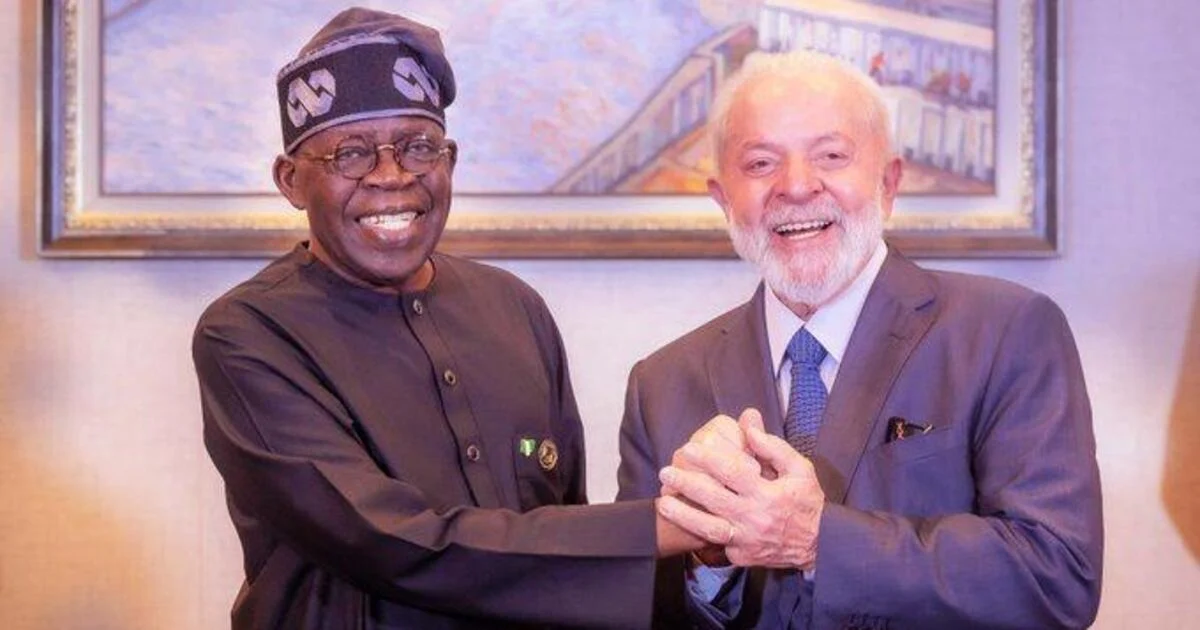
    With the warm embrace between Presidents Lula of Brazil and Tinubu during his recent state visit, Nigeria and Nigerians should be prepared for more visa revocation and other retaliatory policy measures. Brazil has become enemy number one for Trump and he Trump seeks to interfere in Brazil’s domestic policy in the court case against its erstwhile dictator wannabe Trumpian Bosenario.

    Additionally Brazil is one of the arrowheads of BRICS which Nigeria has signified interest in its membership.

    What President Trump is underestimating in his blunt and bullish use of American power, is the power of national power and pride. It was on full display in his now iconic Oval Office verbal brawl with seemingly weak, outmatched and cornered Ukrainian President Zelensky who stood up boldly to Trump and his tag team refusing to subject Ukraine national pride to bullying by Trump.

    Read Also: Visa War: FG explains stances as US slams tighter measures

    Trumps’s Visa crackdown linked to Nigeria’s refusal to house asylum seekers

    Nation states have almost inexhaustible elastic pain tolerance when it comes to defending their national pride and sovereignty. It is the only logical reason Ukraine is still standing against all odd from Russian bombardment just like Great Britain did against Nazi German bombardment during world war 2.

    Trump will soon learn like other bullies that the game is over once you stand up to them. President Trump needs to know that diplomacy is a very nauced delicate game of carrot and stick, overuse either of the two, you lose.

    In the words of incomparable Maya Angelou

    You can revoke Nigerian visas. You may even impose punitive tariff. You may trod us in the very dirt
    But still, like dust, Nigeria Will rise.

    Sadly for America, a country that I love and to whom I have pledged my loyalty as a naturalized citizen for decades, while not forgetting or abandoning my Nigerian roots, Trump’s policy is not advancing American wider foreign policy objective. Rather it is weakening and dissipating the deep well of friendship, goodwill and loyalty from its many allies across the globe and pushing them into the waiting embrace of its most potent competitor for global dominance, China. We are seeing that on display as India, Russia and China are engaged in full romantic embrace for the whole world to see.

    Our collective hope is that this mind numbing season of anomie in US global reputation would not do so much damage that it is becomes almost unrecoverable.

    Adewale Alonge, PhD, Founder & President, Africa Diaspora Partnership for Empowerment and Development. www.adped.org

  • People, privations and public policy priorities (3)

    People, privations and public policy priorities (3)

    By

    UGO ONUOHA

    LAST week, here, we said that we probably have been down the path that the regime of Nigeria’s president, Alhaji Bola Ahmed Tinubu, has been taking us to in the last 27 months through his economic reform agenda. We wrote that the current economic reform bore a striking resemblance to military president, Gen. Ibrahim Badamasi Babangida’s [IBB’s] structural adjustment programme [SAP] of the mid-1980s. Subsequently we dubbed Tinubu’s programme SAP 2.0. The major planks of the Babangida economic recovery agenda which he introduced in 1986 were economic diversification to reduce Nigeria’s over dependence on crude oil revenues; the development of the non-oil sectors like agriculture, manufacturing, and services; to restore fiscal discipline by implementing austerity measures, curbing government expenditures, and controlling inflation; devaluation of the Naira to make exports more competitive, encourage foreign investments, and reduce trade imbalances; liberalise the market by reducing government intervention and control in designated sectors to promote a more market-driven economic system; to privatize state-owned enterprises so that the private sector would be encouraged to drive economic development which was expected to promote efficiency and productivity; to stimulate economic growth by improving resource allocation and utilisation; improve the standard of living of Nigerians through poverty reduction; to improve government revenue by expanding and widening the tax base; and, to enhance resource allocation and utilisation for sustainable economic development. Does the above economic policy direction sound familiar to the adults in the house? Is this déjà vu? A quick reminder: it will be 40 years, next year, since Babangida introduced and implemented his own economic reform agenda. What were the benefits? How did it end? How much pain did it inflict on Nigerians? If it worked, why are we still where we are today? The answers to the questions are obvious. And we will explore some of them in the wake of the current gamble.

    As we said earlier, Tinubu’s economic reform agenda is SAP 2.0. SAP 1.0 failed, and the reasons why Babangida failed may yet afflict Tinubu’s SAP, though he cleverly dodged calling it by its proper name for fear of a backlash and a pushback by Nigerians. So why did Babangida, a military ruler who sat atop his command and control military/government structure for about nine years, fail with his own SAP after putting Nigerians through so much pain 39 years ago? Could it be because his SAP had no buy-in from citizens? Yes, that’s partly the reason. It also suffered from poor implementation. There was no doubt that it was externally imposed shortly after a charade called a national debate on whether to adopt the programme or not was conducted. It was neither well planned nor intentionally and faithfully executed. Unintended consequences which should have been foreseen and provisions made to alleviate them took a huge toll on the programme. It should be concerning that the ongoing economic programme is grappling with the same problems of unintended consequences, lack of buy-in, and poor implementation. SAP objectives also failed to materialize because of the country’s poor and weak infrastructure. In 1986 Nigeria’s infrastructure was not developed enough to support the goals of the programme. Is there evidence today that the country’s public facilities are strong and robust enough to support the ongoing drastic and indeed reckless surgical procedures on the fragile and largely informal economy of the country? Can what is happening be likened to using a chainsaw for brain surgery? Corruption hobbled Babangida’s SAP, and hindered its effectiveness. Has this monster been tamed? Is it capable of dealing a death blow on Nigeria?

    With succeeding administrations corruption became more pervasive. It has been suggested in some quarters that the extant regime is a haven for corrupt politicians and public servants and their collaborators. It’s a well known fact that some of the leaders of this government were suspects in multi-billion Naira fraud cases before their files were conveniently forgotten and allowed to gather dust on the shelves of the so-called anti-graft agencies, the Economic and Financial Crimes Commission [EFCC] and the Independent Corrupt Practices and Other Related Offences Commission [ICPC], the moment they assumed political offices through nepotistic appointments or rigged elections. Ahead of the 2019 election, a former national chairman of the ruling APC who is currently a senator of the federal republic had reportedly said in public that the sins, including looting of the treasury by office holders and opposition politicians, would be forgotten and forgiven once they joined the ruling party. Seven years after, that offer still remains on the table, and suspected and confirmed corrupt politicians have been enjoying the ‘amnesty’ to the detriment of Nigerians. It is now so bad that state governors, state and national assembly lawmakers are hawking and trading mandates given to them on the platforms of opposition parties to seek favours and protection from the APC. It sounds like what obtains in the mafia world. And this could be one of the reasons why a court in Canada was recently reported to have likened Nigeria’s dominant political parties – APC and PDP – to terrorist organisations. These parties thrive in holding Nigerians as hostages, intimidating citizens, extracting oaths of allegiance and fealty to their leaderships, violence and bloodletting. PDP used to have a cult leader or Capone while it was in power at the centre. APC still does probably because it now controls the federal government.

    Meanwhile, like Babangida’s SAP, Tinubu’s SAP 2.0 is primarily focused on economic austerity measures without publicly saying so. At Inception of the economic programme no heed was paid to cushioning the harsh and inevitable painful fallouts from the agenda. Not much has been done in this regard since 2023, bar the student loan scheme. Other palliatives such as the conditional cash transfers to the poorest of the poor households and individuals, and access to funding for small scale enterprises have suffered from credibility problems. In fact, their implementations have been dogged by allegations of political partisanship and the challenge of verification. Even the register of beneficiaries of the cash transfers exists only in the closets of the implementers. Anybody who wants to assess the store that this regime sets on helping the less privileged and vulnerable, that person should look at the state of the ministry of humanitarian affairs. The ministry’s minister under the immediate past failed regime of Muhammadu Buhari is in court on allegations of financial fraud while she was in office. Her successor, another woman this time under Tinubu, was the first to be suspended from office by the regime also on allegations of financial malfeasance. Her suspension has lingered for almost two years. She has not been sacked, and her suspension has not been lifted. About one year ago she was summoned by the EFCC for interrogation over allegations of fraud in the ministry. There’s no evidence that she was ever charged to court. The minister’s slot remained vacant for a long time before a successor, this time a man, was appointed. But the man has also been removed, and promoted as the new national chairman of the APC. Other government agencies that could positively impact the property-less group are in no better stead. So the materially challenged are choking and suffocating under the weight of SAP 2.0. Cries are getting louder from many segments of the society for the regime to step back and to concentrate more on provision of safety nets for the people. Will it listen and reflect and course correct? Not likely because this regime is right in its own eyes.

    Next, the over-reliance on external factors proved to be an Achilles heels of SAP 1.0. The expectation under Babangida was that his economic reform agenda would succeed on the strength of massive influx of foreign investments, and aid from donor agencies and countries. The expectation did not materialise. So the agenda crashed. The situation is worse now with palpable donor-fatique in the international community. One of the biggest donor agencies was the United States Agency for International Development [USAID]. For all intents and purposes, that body has been scrapped by the new administration in America led by non conventional President Donald Trump. The adverse impact of this development has been projected to be telling on less developed countries like Nigeria. Food aid, support for healthcare and others will suffer massive hits. The vanishing support from donors will put further pressure on the already limited financial resources of Nigeria and other countries which are in a similar category. The prospects of the financial wellbeing of many less developed countries do not look good. Indeed, they are scary. The fact that Tinubu virtually lives abroad allegedly in pursuit of foreign investors, loans and aid, and visits Nigeria occasionally has not borne any significant results. And it may not in terms of investment and aid. For loans, we are likely to be getting them with repayment that we will kick down the road for our children, grandchildren, and great grandchildren.

    In the concluding part of this month-long intervention we will analyse how Nigeria’s burgeoning debt, deepening cost of living crisis, currency devaluation, increasing despondency and hopelessness among Nigerians, diminishing faith in democracy, general distrust of politicians, among others, will most likely constitute strong, even fierce, headwinds to the realisation of the ongoing economic agenda of Tinubu.

    Ugo Onuoha, Veteran Journaist, was the Managing Director/Editor-in-Chief, Champion Newspapers Limited.

  • Contextualizing the lovefest between Presidents Lula of Brazil and Tinubu

    Contextualizing the lovefest between Presidents Lula of Brazil and Tinubu

    Wale Alonge

    Many have been totally taken by surprise by the over-the-top grand reception and welcome that has been extended to President Tinubu and his delegation by his host President Lula of Brazil. No doubt, Nigeria and Brazil have had cultural and historical ties dating back to the shipment of our people across the Atlantic on cruel inhumane slave ship. That cultural connection cannot be overemphasized. We also must not underestimate how much the entire global has acknowledged and credited President Tinubu for his bold, transformative, yes painful reform agenda. It has done a lot to restore much needed confidence in our country even as the citizens groan under its excruciating pain. There can be no gain with pain.

    Having said all that, we will be missing the boat if we fail to contextualize the over-the-top warm embrace and welcome mat being extended to Nigeria and President Tinubu by Lula of Brazil within the context of the broad geopolitical realignment taking place in the globe with the erratic unpredictable, and unreliable leadership in Washington DC. The Trump administration is upending what many have assumed for decades as settled norms. America as the bastion of democracy, of federalism, and of a predictable global order is under assault and is being revealed as a mythology.

    The entire globe, including the U.S. once reliable ally, Europe no longer trusts Washington DC. Everyone is scrambling to find a realignment of an alternative global order.

    Brazil’s Lula is looking for allies across the globe in his titanic conflict with Trump. Nigeria, with its reform agenda under the presidency of Tinubu and its re-emergence as Africa’s powerhouse is becoming once again an attractive bride. There is also the BRICS agenda to contend with.

    So, yes while we cannot underestimate the influence of
    Tinubu as president. we must see the lovefest between Nigeria and and Brazil within that broader global context.

    Nigeria is rising and many of us are missing the train by focusing on the current challenge of the reform agenda. Like I tell many of my fellow Nigerians in the diaspora there will be gnashing of the teeth when many people realize that they have lost out of the early bird windfall and find in a few years that Nigeria has become unaffordable the longer they wait to jump in.

    Nigeria is transforming in our very own eyes and yet many are too distracted to see it. Brazil is sending that message loud and clear. The question is will we harken to it and catch the wave before it is too late.

    Wale Alonge

  • People, privations and public policy priorities [3]

    People, privations and public policy priorities [3]

    By

    UGO ONUOHA

    THE buzz recently was media headlines that the Director-General of the World Trade Organisation, Dr. Ngozi Okonjo-Iweala, had endorsed Nigeria’s president, Alhaji Bola Ahmed Tinubu, and his economic policy as well as the ongoing reform agenda. What she said to the state broadcaster, NTA, what the presidency reported in its subsequent press statement, how the media framed it, and the general understanding of the majority of Nigerians, stirred a strong controversy amongst the people, and especially so among political partisans and entrenched interests. Not many of our people understood what Okonjo-Iweala said during her visit to Tinubu in the Aso Rock Villa in Abuja. Probably not many in the presidency did either. If they did then they may have settled to put a positive spin on her ‘endorsement’. But she chose her words carefully and with utmost tact. That should not come as a surprise to the initiated and to the discerning. Dr. Okonjo-Iweala is a Nigerian. She was a finance minister and coordinating minister for the economy a little over 10 years ago under Presidents Olusegun Obasanjo and Dr. Goodluck Jonathan. Her visiting Aso Rock at this time when the jostling for the 2027 election is heating up, or at any time for that, would still have presented a dilemma for her. It would be a walk in a minefield. It would not really matter that she was conducting official business for her employers.

    Her every move would be scrutinized. Her every statement would be analysed. Her every utterance would be dissected, and varied meanings imputed. And that was what happened. The ruling party, the All Progressives Congress [APC], was the first off the block. The operatives of the party described the statement of Okonjo-Iweala, whom some suspected of not being enamoured with candidate Tinubu in 2023, as a validation of the regime’s chosen path to national economic recovery. They were all over the map and turned themselves into echo chambers for the international public servant. There was no missing the not too subtle hints from the APC apparatchiks that a leading light from the ‘opposition’ section of the country has given the regime a ringing endorsement. The ‘opposition nation’ in country being the Igbo who appear to be reluctant to embrace the APC in a whole-hearted manner. In 2015 when the APC ousted the ruling People’s Democratic Party (PDP) at the centre, the south east was probably the only region in which the party did not produce a state governor. It had a sprinkling of national assembly lawmakers. It was as a result of the poor electoral showing that the then elected president, the late Muhammadu Buhari, made the infamous, divisive and extremely insensitive declaration that he would only favour parts of the country that voted massively for him and his party. He said he would reward the sections of the country that voted for him with 97% of national resources and leave the crumb of 5% (don’t bother if the percentages do not add up) for the Igbo nation and a few other ‘rebellious’ ethnic groups. And he put it into practice to a telling effect on the Igbo who remained unbowed.

    On their part, opposition parties and other elements who didn’t believe in the president and his administration countered the regime’s claim about endorsement. They said that there was no such thing. They chose to highlight the portion of Okonjo-Iweala’s admonition that the administration should put a human face to its reform agenda by the provision of safety nets for the majority of the people who have been crushed by the sweeping and drastic changes to the economy. The WTO chief dropped red meat for all the contending forces in the country. She demonstrated acute knowledge of diplomatic ‘speak’. She did not explicitly say that the economy was exacting a heavy toll on the people. And she did not say categorically that the reform has been a roaring success either. She merely said that the regime had stabilised the economy. And the ‘economic stability’ phrase which she used was loaded. The man who drilled it down recently was the erstwhile head of the National Bureau of Statistics [NBS], Yemi Kale, who was said to have left the post in controversial circumstances. Some people believed he was sacked for resisting attempted NBS data tampering by politicians.

    Kale wrote recently to explain what it meant when an economist talks about economic stability. But first he had to make a strenuous effort to inform that his intervention was not driven by partisan politics or sour grape syndrome. He said: “I try to stay away from unnecessary debates but let me offer my own view from a purely technical and economist perspective [for education purposes only] to recent debates that were really unnecessary. When economists say ‘an economy is now stable’, they usually mean that the economy has reached a point where it is no longer experiencing major fluctuations/disruptions. In practical terms, it suggests macroeconomic indicators are steady, predictability and confidence where businesses, investors, and consumers feel more confident making long term plans and there are no immediate crises… An economy being described as ‘stable’ however, does not always mean that citizens are free from hardship. When economists say the economy is ‘stable’, they usually mean that overall indicators [like inflation, exchange rates, and GDP growth] are no longer swinging unpredictably. For example, inflation falling from 25% to 12% and staying steady might be seen as stability.

    “However, prices may still be very high compared to past years, meaning [that] people [would still] continue to struggle. Citizens experience the economy differently through cost of food, housing, transport, healthcare, and wages. EVEN IN A ‘STABLE’ ECONOMY, IF INCOMES ARE LOW AND BASIC GOODS REMAIN EXPENSIVE, FAMILIES STILL FACE HARDSHIP [emphasis mine]. Stability might only mean [that] conditions are not getting worse quickly, not that they’ve improved enough to ease daily struggles. So, stability, which is good, can coexist with hardship, which is bad for several reasons”. The simple and straightforward take aways from Kale’s illuminating intervention is that Nigerians may be in the phase of economic stability but the people are still “hurting from the high cost of living” caused by the crisis; economic stability benefits investors and businesses first and that it could ”take months or even years before [that] stability eases hardship and translates into job creation, higher wages, or cheaper goods for citizens, ASSUMING THE STABILITY HOLDS LONG ENOUGH“. Kale acknowledged that the first step in “reversing hardship is stability and stopping the bleed”. However, Kale who’s currently the Group Chief Economist at the Afreximbank, warned that achieving economic stability on its own would not be a “sufficient condition” for economic recovery. From the foregoing explanations, it’s easy to conclude that Okonjo-Iweala chose her words cautiously and carefully as a diplomat that she is while visiting Aso Rock. It has to be noted that she was a vice president at the World Bank where the possession of diplomatic skills are not optional.

    The distabilisation of Nigeria’s economy in the last 27 months is deep, and the toll on the people has been huge and telling. The expectation now is that citizens should celebrate that ‘economic stability’ has been tentatively achieved which should be a harbinger for our elusive El Dorado. But not so fast. The APC regime of Alhaji Tinubu copied the classical but widely failed prescriptions of the Bretton Woods institutions – the World Bank and the International Monetary Fund]- without formal acknowledgement and the buy-in of Nigerians. The owners of the bitter pill prescriptions had said last year that it would take a minimum of 15 years of administering the doses for there to be light at the end of the tunnel. We are just beginning the third year. So there’s a very long way to go. The main planks of the punishing economic recovery prescriptions include less government, unleashing of market forces, currency devaluation, removal of subsidies, reform of public institutions, privatisation of government corporations, among others. As it stands only two or so of these prescriptions have been effected. And yet the economy and the country have been turned on their heads. Already, there are growing strident demands from individuals and groups across all the segments of the country for the regime to pay greater attention to the suffering in the land. Okonjo-Iweala spoke to the imperatives of safety nets. The Nigerian Guild of Editors [NGE] warned that the situation was critical. Prominent traditional rulers have become restive, fearing that something untoward could give. Hunger, privations, lack, hopelessness, and cries are pervasive. But will the reforms deliver if alleviating the suffering and groaning of Nigerians are factored into their implementation? Have we been here before, that’s economic revival through currency devaluation, privatisation, subsidy removal etc? Is this déjà vu? Could this be another structural adjustment programme [SAP 2.0]?

    *To be continued.

    Ugo Onuoha, Veteran Journalist, Public Affairs Analyst, was the Managing Director/Editor-in-Chief, Champion Newspapers Limited.