
Category: Opinion

  • People, privations and public policy priorities [2]

    By UGO ONUOHA

    WITHOUT any doubts whatsoever, the twin policies of the unplanned, wrong-headed, and precipitate removal of petrol subsidy and the massive devaluation of the national currency, the Naira, have at the root of the serious problems plaguing Nigeria and the pauperisation of about 200 million citizens. This regime pulled the plug on the alleged subsidy on petrol the same day it assumed office on May 29, 2023. In fact, it did so within the hour of taking office. At the time it did so, there was no full complement of the government. There were no advisers, no assistants, no ministers, no carriers of its vision and mission [assuming that it had any, really] except the structures it inherited from its predecessor, a regime that was widely regarded as a monumental failure and a scourge on our people. It was widely acknowledged that Muhammadu Buhari did not just waste eight years of Nigeria, but that it set the country back by a generation, or 30 years. Buhari’s was a sad case of serial bungling and ‘ungovernance’. He was an affliction.

    If corruption and industrial scale theft of crude oil in the upstream sector of the industry were the primary problems as were correctly diagnosed by successive administrations, it then follows that the right thing to have been done would have been to visit the root of the challenges with the full weight of the federal government. This regime didn’t. It was the beginning of it getting its priorities wrong. And that was understandable though unacceptable because high ranking government operatives, leading lights in the military, and other collaborators were the crude oil thieves. Those who stole Nigeria’s crude oil in handheld jerry cans or even those who move them in hundreds or thousands of jerry cans in trucks were not our problem. How much damage can they inflict on the national revenue, that’s, if this category of thieves existed? Almost zero. Stories were rife of huge and monster-size tankers criss-crossing our ocean fronts day and night, and their bellies being filled to the brim, and their leisurely sailing away to export markets in the Americas, Europe and Asia. The monster-like vessels were escorted by some members of the armed/security forces of Nigeria safely out of our territorial waters. The proceeds from the sales go to the global syndicate. Everybody knew that the crude was stolen. The ships’ crews were aware. Regulators and monitors of ships’ movements and registers were aware of the illicit business. The buyers were in the know that they were buying stolen products. But they did not care because it was a case of willing sellers and willing buyers. It was immaterial that illegality was written all over the transactions.

    Read Part 1: People, privations and public policy priorities

    The then new regime turned a blind eye to the bazaar in the Niger Delta and went for the jugular of the soft target-the hapless and helpless citizens of the country. It deregulated (read taxed ) the downstream sector immediately which opened the floodgates of the problems now besetting the country and her citizens. It was a petrol pump head tax. And every act of taxation comes with consequences. While the majority of Nigerians struggled with coping with basic needs of life, the privileged few with access were allowed sufficient time to clean up their act of illegally lifting crude oil to our collective loss and detriment. Because of the new tax (deregulation), the price of a litre of petrol rose rapidly from less than N200 to about N1,500 between 2023 and 2024. The bottom was knocked off our disproportionately informal economy. The impact of the ill-digested action was swift and severe and crushing. The movement of people and goods was mainly by road, and the majority of cars, buses, and trucks were powered by petrol. So the movement of people was affected. The same for goods. It was a common sight in mid and late 2023 to see trending videos of workers, artisans and traders going to and fro their various destinations on foot. Even up till today some people still cover significant distances on foot before completing their journey by bus or tricycles or commercial motorcycles otherwise called ‘okada’ or ‘inaga’. Many car owners ditched their vehicles and opted for commercial buses or even ‘leggediz Benz’ or ‘footwagon’, a deprecating description of covering distances on foot.

    The other day, an otherwise respected economist and public intellectual who indeed was one of my teachers during my chief executive programme [CEP] certificate course at the Lagos Business School [LBS], Dr. Bismark Rewane, was lamenting that the patience of Nigerians was being tasked, taxed, and stretched by the unintended fallouts from the policy options adopted by the ruling All Progressives Congress [APC] in the implementation of its economic reforms. I was scandalised but I took solace in the suspicion that he was striving to be seen by the authorities to be politically correct in his public speech. I reminded myself that there were times during the disastrous years of Buhari that the same Rewane spoke in like manner. What could be unintended or unforeseen in inflation spiking and poverty deepening when the price of petrol was raised five fold in a country where petrol played, still plays, an outsized role in the movement of people and goods? In an environment where other modes of transportation are either underdeveloped or non-existent. Rewane’s lamentation was pathetic and patronising. It was nauseating. And an insult to Nigerians. He could not have forgotten that now Nigeria’s president, Alhaji Bola Ahmed Tinubu, had as an opposition politician in January 2012 or thereabout, written an epistle to the then President Goodluck Jonathan opposing the removal of petrol subsidy. Tinubu’s arguments then were unassailable about the dire negative multiplier effects of such action on Nigerians. To now say that the negative fallouts of petrol subsidy removal, and the subsequent mindless devaluation of the Naira soon after were unanticipated, would amount to a gratuitous insult to our collective sensibilities. The policy of sudden removal of petrol subsidy was wrong. And its haphazard implementation made it worse. It was inconceivable that no measures were thought of, and so none was put in place to cushion the inevitable privations that the measure would inflict on Nigerians, particularly the vulnerable segments of the population.

    The subsequent claim that the country would have gone bankrupt was a poor attempt to gaslight the people. If anything is capable of bankrupting this country, and that could still happen, it is the greed and corruption of the ruling elite. The country was hemorrhaging in terms of revenue because ‘urban bandits’ and sundry barbarians were in charge of the treasury. They are still there. There’s no evidence that they have been flushed out or that any attempts are being made to do so. Indeed, the only available evidence is that more of their types are being recruited into the upper echelons of the system including those who helped the former military head of state, the late Gen. Sani Abacha, to steal and stash billions of dollars of Nigeria’s money abroad. By the way, in which universe do you remove petrol subsidy, and then start borrowing money indiscriminately like a drunken gambler, in some instances from commercial lenders, and in foreign currencies, to combat the problem you created? Will it not be likened to an arsonist turning around to play a firefighter? The country was bleeding revenue because every government agency including Nigerian Customs, the Nigerian Police, the Road Safety Commission, NIMASA, and others abandoned their primary and core mandates to become revenue collectors. The monies so collected allegedly on behalf of the federal government were never transparently accounted for. The men in the field sorted out their bosses in the office. Those ones in the office made returns to the bigger men and women in the supervising ministries. And whatever was paid to the public treasury was accepted without questions because those who should raise alarm have been compromised. Who then would question the returns. At the same time the bigger crooks or their agents were in the crude oil producing and exporting platforms helping themselves to our commonwealth. In the face of the bazaar, the government found it convenient and easier to subject ordinary folks to a chokehold through the so-called subsidy removal and currency devaluation. It was their line of the least resistance.

    Petrol subsidy was pulled in May 2023. And Naira devaluation followed immediately in June. Two policies with the capacity to deal a deadly blow on any economy especially a stunted and paralysed one such as Nigeria’s were unleashed on the heels of each other. And there were no plans in place to reduce their impacts on the people. Governance is not about the whims and caprices of the rulers. It’s not about trial and error. It’s not strictly business in the typical style of running a corporation. Rulers don’t treat citizens as clients. Governance should be about covenants between the leaders and the led. The relationship between the people ‘chosen’ to lead and the citizens may be secular but it is still divine in many respects. Nigeria’s 1999 Constitution as amended is very clear and equivocal while stating in Chapter Two that the primary purpose of government is to ensure the wellbeing of the people. This constitutional prescription was not optional for our rulers and was not designed to be effected when it is convenient for them.

    *To be continued.

    Ugo Onuoha, Veteran Journalist, was Managing Director/ Editor-in-Chief, Champion Newspapers Limited

  • NGF Investopedia to kick-start inclusive growth

    Resolves to hold investment clinics for government-to-government and business-to-government matching in Q3 and Q4 of 2025 and into 2026

    Money, a development banker once told an audience, goes to where it is welcome. It was a gathering of state governors and representatives who had assembled at the dawn of the Fourth Republic to listen to experts and top technocrats deliver a lecture on the 101 of how to woo investment into their states. As we will admit, investment, whether foreign or domestic has become the proverbial golden fleece hotly sought after by governments worldwide. So it happens that in Nigeria, while successive presidents traverse country capitals to hold court with leaders of nations and the men with investment capital, state governors with foresight and the competitive edge make effort to make their domain attractive for investment. Over time, these states have been graded into various categories like ‘most investor friendly states, ‘states with the ease of doing business’ and other similar classifications that have been adopted to advertise the sub-nationals to the investing public.

    Several factors account for the heightening quest to woo investment into their domain by leaders at both national and the sub-nationals.  Like the rest of the world, Nigeria faces growing economic difficulties brought on by the aftereffects of COVID-19 pandemic, increased geopolitical tensions in the Middle East and Europe, and pressure on global supply lines occasioned by the Trump tariff war. Nigeria’s economy, which depends mostly on primary produce, is particularly vulnerable to the effects of climate change, especially extreme weather events. While Nigerian economic growth has demonstrated some degree of tenacity in the face of these obstacles, the global economy has been reluctant to adjust to the difficulties. Despite its great expansion, Nigeria’s economy has not been able to significantly raise the typical Nigerian’s standard of living.

    NGF Investopedia

    Negative opinions about the country’s business climate further impede this robust economic growth. The growing sense of stability about the country’s economic trajectory is a well-deserved narrative that truly captures the positive outcome of the economic policies of the Federal Government.  It is against this background that the launch, tomorrow of an Investopedia by the Nigerian Governors’ Forum (NGF) becomes a revolutionary intervention that will radically open access to information on Nigeria’s sub-nationals.

    It was asserted in a statement by Yunusa Tanko Abdullahi, the NGF Director of Media and Strategic Communications that, among other reasons, the Investopedia is to quickly narrow the gap between Nigeria’s untapped potential and global capital. Accordingly, he stated that the NGF Investopedia is a comprehensive platform designed to spotlight investment opportunities across the country’s 36 states. In his words, the event “will make a high-profile affair which will underscore the initiative’s ambition.”

    The event will create a platform where Governors from all 36 states will showcase priority projects, while a ceremonial Memorandum of Understanding (MoU) signing will formalise partnerships and lay the building block for the NGF Fund, Mr. Abdullahi said. To underscore the significance of the event, Olayemi Cardoso, the Governor of the Central Bank of Nigeria (CBN) shall deliver a keynote to provide sovereign backing, reinforcing the platform’s legitimacy.

    Investors from outside Nigeria, ambassadors, and due diligence experts from Afreximbank, MOFI, UNDP Cavista and the Infrastructure Concession Regulatory Commission (ICRC) will participate, with the event culminating in the distribution of the Investopedia to development finance institutions (DFIs), embassies, and private capital desks investment and business multi-sectoral business communities.

    Why Investopedia?

    Nigeria, Africa’s most populous nation, has long grappled with barriers to investment at the state level. Frequent government transitions create uncertainty, while poor project visibility and weak preparation deter potential backers. Despite trillions in global pension funds, sovereign wealth, and development capital waiting to be deployed, the absence of a trusted mechanism has left many viable projects on the shelf because “Nigeria lacks a trusted, coordinated vehicle to efficiently absorb and deploy this capital,”

    Publishers say Investopedia is a flagship biennial publication that curates multi-sector projects, from infrastructure to agriculture, complete with data-driven analyses, policy incentives, and market insights. More than just a glossy compendium, it is envisioned as a ‘one-stop shop’ for investors – available in high-quality print and as a dynamic digital platform for matchmaking and transactions, hosted by the NGF. It is designed to attract international investor interests and amplify Nigeria’s appeal on the world stage, hitting key forums like the Intra-African Trade Fair in Algeria, the UN General Assembly in New York, and the Africa Investment Forum in Morocco.

    Quick gains

    Investment capital is essentially a ubiquitous but highly coveted commodity available only to sovereign entities that truly deserve it. Above all else, investment capital has the greatest phobia for risk. With recent plaudits for the management of the Nigerian economy from both local and international observers, a lot more attention shall refocus on investment opportunities in the country.

    Further, the launch of the NGF Investopedia shall be handy to provide tenable narratives on persistent challenges such as low investor confidence and fragmented entry points, the initiative promises to transform how subnational projects attract funding, positioning Nigeria as a coordinated and credible destination for high-impact investments.

    An engaging future

    Mr. Abdullahi, in the statement under reference said the publication of Investopedia represents an international push that aims to “position the NGF as a credible investment conduit,” showcasing not just opportunities but practical pathways for engagement. He announced that the strategic goals are clear and multifaceted, all aimed at positioning the NGF as an interface with global investors, institutionalising subnational visibility, and mobilising partnerships for sustained support.

    Looking ahead, the NGF outlines a robust post-launch roadmap. Investment clinics for government-to-government and business-to-government matching are slated for Q3 and Q4 of 2025 and into 2026, alongside capacity-building programs on public-private partnership (PPP) structuring and risk mitigation.

  • People, privations and priorities [1]

    By

    UGO ONUOHA

    WHEN a regime has almost two dozen spokespersons, there will be a tendency for redundancy for some of its operatives. Indeed, it will not be beyond such spokespersons to stoke attacks on their principal or administration from opponents and critics. I once heard a story of a press secretary who had a set of reporters to whom he ‘leaks’ embarrassing stories about a governor, his principal, and the state government, his employer. Then the same press secretary will turn around to ask the governor for a humongous special budget to fight the ‘bad press’. Of course, he will pocket a significant portion of the vote, gather his reporter-collaborators and a few more from outside the clique, and start a counter publicity blitz. I learnt that on one such occasion, the governor was not satisfied with the result of the counter blitz. But the press secretary succeeded in persuading his principal that the odium on the image of their administration would have been worse and debilitating if he had not embarked on the charm offensive. At the time of this incident social media was not pervasive, and fact checking was uncommon. Then governance was a mystery, and the ways of government operatives were mysterious.

    So it was that last weekend the spokespersons of the federal government who were apparently in search of what would keep them busy and relevant in a regime which is neckdeep into propaganda, and sometimes the propagation of outright falsehoods, caused a factual and innocuous editorial opinion of Daily Trust, a national newspaper based in the northern part of the country to attract attention, prominence and weight. The crime of the newspaper which attracted the ire of the apparatchiks of the federal government, and their furious reaction, was that the newspaper placed a mirror in front of the ranking officers of the regime. The editorial which rankled this regime to no end was headlined “Nigerians Are Hungry”. The headline was, sadly still is, a matter of fact. The data  and statistics that were used to support the headline of the editorial were derived from credible government agencies here in Nigeria and from some other institutions abroad. In its attacks on the newspaper, the regime did not bother itself with faulting the assertion of the editorial headline [apparently because the headline was self evident] nor debunking the plethora of statistics as rigged or manipulated. Instead the Presidency only saw mischief and redherring. In fact the regime barely stopped short of invoking treason, its usual default tool for intimidating critics and silencing the opposition.

    The editorial said in part: “To declare that many Nigerians are hungry, suffering, and struggling to survive under hard economic conditions imposed by several economic factors including record-high inflation rates is simply a restatement of the most obvious. While the terribly depleted purchasing power of the citizens continues to bite, the purported reduction of food prices has made little sense to millions of impoverished citizens as the all-season inflation continues to cripple micro and small-scale businesses; eating up entrepreneurs’ hard-raised capitals… As direct or remote consequences of the burden of survival, starvation and malnutrition have since become threats to the health and survival of citizens including a large population of children particularly in some northern states of the country. Earlier in April 2025, the United Nations Children’s Fund [UNICEF] had predicted that 33 million people in Nigeria including over 16 million children will not know where their next meal will come from in 2025. We are already there.

    “With the long history of basic education on a receding tide in the country, the effects of this deplorable situation on school-age children is better imagined as it could deepen further. Malnutrition is a risk factor for low school enrollment, high absenteeism, early drop-outs, and low academic achievement. Similarly, malnourished children are prone to infections and illnesses, which affect school attendance. This is in spite of the hypothetical federal government funded school-feeding programme, which like many other government schemes, has evidently fizzled out. The continuous escalation of survival challenges in the country illustrates a clear disconnect between leaders and Nigerian citizens as if hardship is a virtue”. The newspaper then proceeded to enumerate measures it believes could ameliorate the situation including the immediate suspension of value added tax on foods, suspension of other taxes; release by government of grains from strategic reserves and sale of same at subsidized prices to the vulnerable and less privileged; cash handouts to a category of families; and the intervention by public spirited and well-heeled individuals in providing succour for suffering Nigerians.

    But the Presidency, in its angry reaction, rejected the opinion of the newspaper, saying that the editorial portrayed Nigeria as overwhelmed by hunger and economic hardship. It claimed that the newspaper’s position was “exaggerated, biased and alarmist”, and that it distorted facts and misrepresented government policies. The regime said that to stem hunger in the land it had embarked on some interventionist measures including releasing over 42,000 metric tons of grains from the federal reserves; procured additional 117,000 metric tons; and, scaled up nutrition support in six out of Nigeria’s 36 states. The regime also dismissed the assertion that the national currency, Naira, has become “worthless” by saying that the currency had recovered from N1,800/$1 in March 2024 to approximately N1,525/$1 this month. It said that the Home-Grown School Feeding Programme cannot be said to be dead because it is currently serving 9.8 million children in 53,000 schools. To shore up its counter argument, the Presidency said that the conditional cash transfer scheme is benefitting three million Nigerian households, and that about 400,000 are beneficiaries of student loans.

    The attempt to compel Nigerians not to believe their reality in the last two years and their dire condition of living will do this regime no good. For the first time in the more than 50 years since the end of the civil war in 1970, some researchers in Ibadan, Oyo state, reported months ago that kwashiorkor had staged a return to the country. To be sure, kwashiorkor is usually prevalent in food-insecure and protein-starved countries. So it couldn’t have resurfaced in Nigeria in a void. Kwashiorkor is a form of severe malnutrition essentially characterized by a lack of sufficient protein intake. Kwashiorkor is often implicated for swelling in the feet, ankles, and hands; wasting of the muscle and loss of body mass; liver enlargement because of fat accumulation; various skin changes including lesions and depigmentation; thinning, brittle, and discoloured hair; and, weakened immune system which makes the body vulnerable to infections and illnesses and diseases.

    The irony is that the rebuttal by the Presidency of the editorial by the Daily Trust newspaper that Nigerians Are Hungry turned out to be a confirmation. For instance, why release 42,000 metric tons of grains that were not targeted to serve a particular and specific emergency needs caused by a natural disaster? And why procure another 117,000 metric tons of grains for distribution if all was well? Further questions arise from the defence of the regime. What’s the essence of the so-called ‘nutrition support’ in only six of the country’s 36 states and the federal capital territory [FCT]? Were there natural disasters in the selected six states? Could it be that the six states were worse off in terms of the hunger ravaging the land than the remaining 30 states?

    Next week we will return to this same subject starting with an in-depth analysis to support the newspaper editorial that this regime has within two years made our national currency, the Naira, ‘worthless’ in spite of the futile attempt by the Presidency to gaslight Nigerians.

    *To be continued

    Ugo Onuoha, Veteran Journalist, was the Managing Director/Editor-in-Chief, Champion Newspapers Limited

  • Dystopian nightmare and 161 million Nigerian burnt offerings

    Dystopian nightmare and 161 million Nigerian burnt offerings

    By

    UGO ONUOHA

    There’s this young Nigerian skit maker, as if all of them are not youngsters, whose presentations are either extremely funny or extremely provocative. For him there is no middle course. His words are usually razor sharp. He verbalises his tendencies for violence and also physicalises them. His words are caustic and his resort to physical violence ever present. He always appears to be eternally angry at himself, at everything, and at everybody. I don’t know his name, and I have not consciously tried to know him by name. But he has a unique selling point [USP] which is beyond his scathing skits, and the manner of their presentation. His dress [non]sense and sartorial inelegance give him away as a perpetually angry Nigerian. With no exception that I know of, he religiously and to the annoyance of some people appears in his video skits in ‘shortknickers’, [grant me the indulgence to use this peculiarly Nigerian combo of the words ‘shorts’ and ‘knickers’] with his rope-like belt fastened nearer his chest than by his waist.

    This young man has many skits under his belt. Oh! That could be the reason for choosing to fasten his belt in his chest rather than his waist – to leave enough room to accommodate his angry skits. There are many of his skits that would be award winners were there to be a rating and appraisal agency. But that would depend on who is the assessor. This man’s entries will fall at the first huddle if an agency affiliated to this regime were to be in charge. Of course, he will be utterly foolish, and indeed fatalistic to attempt to compete in such a setting. As I said above, this skit maker has many memorable skits under his belt. But we will try to verbalise two of his skits that we have come in contact with. One of them was in a setting ostensibly in the precincts of a Nigerian courtroom. Two things could be gleaned from this skit-the slow pace of litigation, and the glaring corruption in our court system. A man, the skit maker himself, was sitting on a bench within a court apparently waiting for his suit to be called. He had company. After a while the man looked up from his jotter where he was writing whatever he was writing, yawned, stretched his limbs, and then asked his companions what they would like to eat for lunch. They placed their orders of the usual – rice, beans, plantain, meat, etc.

    Then the man requested one of the young ladies to run the errands. But before she set out the man asked if any of them knew the lunch preference of the judge. One of the girls said yes, that the judge loves ‘dodo’ [fried plantain], rice with stew and assorted meat which must include the intestines of a goat. The man approved that the judge’s food should be part of the order but he reminded the errand woman that she should never forget to include a sealed envelope containing the bribe money for the judge which should be delivered with the lunch pack. A non discerning viewer could just be carried away by the bribe money aspect and lose sight of the slow aspect of going through our courts.

    The other skit that spoke to Nigeria’s situation even if it was not peculiarly Nigerian was this same man’s encounter with a ranking Nigerian government official. In this setting the skit maker was grumbling at the privations visited on Nigerians as a result of the economic policies of this regime, especially the effects of the removal of petrol subsidy and the massive devaluation of the Naira. The government official took his time to ‘educate’ citizen skit-maker on the potential and prospective benefits of the policies that were being implemented. He assured that everything will eventually turn out well for the people. But what angered the skit maker was when the government officer said that there was light at the end of the tunnel. Walking away in fury, the dejected citizen shouted back at the government’s snake oil salesman: ‘must the light always be at the end of the tunnel? Why not at the beginning of the tunnel?’

    No, there will not be any light at the beginning of the tunnel. Certainly not now nor any time soon. What’s currently in the front burner of our country is politics and the 2027 election. Well, it’s been there anyway since after the 2023 presidential election. Nigeria’s president, Alhaji Bola Ahmed Tinubu, had as far back as then challenged the leadership of the Nigerian Labour Congress [NLC] to throw their hats into the political ring during the presidential election if they believed that they had the interest of the Nigerian workers at heart more than himself. This was during the protracted battles to raise the national minimum wage. Tinubu suggested that workers would choose him ahead of the Labour leaders. So, for Tinubu, politics had never been on the back burner. The serial defections of local government councillors, chairmen, state assembly lawmakers, governors, national assembly legislators and sundry elements to the ruling All Progressives Congress [APC] political party did not just happen. If the defections were ordinary we would still be hearing about the allegations of financial fraud against the former Delta state governor, Dr. Arthur Ifeanyi Okowa, by the Economic and Financial Crimes Commission [EFCC]. How much of that alleged heist is still in the public domain since Okowa ‘persuaded’ his successor as governor to move the People’s Democratic Party [PDP] structure on which he was elected, stork and barrel, into the APC? The Okowas abound everywhere in the extant political dispensation.

    Anything apart from plotting to capture and retain the presidency in 2027 will be a distraction. The plan to dominate the digital sphere was unveiled in the presidency in Abuja last weekend. Truth is already marked down to be destroyed with lies and propaganda. Spin doctors have been mobilised. The payout will be irresistible. This same regime that not too long ago mocked data has already started throwing statistics of dubious quality on and at Nigerians. The gang that only yesterday derided data by saying ‘na data we go chop’ is now eating data that bears no relevance to the living conditions and standards of the people. Regime apparatchiks, cheerleaders and choristers have become experts on the rising nominal gross domestic product [GDP], accretion to the foreign reserves and the bullish Nigeria Exchange [the stock market]. But they lose their voices when it comes to talking about the material living condition of a typical Nigerian. Here, their assumed expertise fails them. They avoid such discussion like it is a plague. And it actually is a plague.

    Or how do we explain the fact that about two weeks after an officer of the government reported that 161 million Nigerians, or 74% of the population of the country, would go to bed on a particular July day not knowing where their next meal would come from. If the situation has changed between then and this August day, it will only be for the worse. This dire report of starvation and dying of Nigerians in their hundreds or thousands or even millions have been swept off the media headlines by the politics of 2027. The same thing happened months ago when some Nigerian academics published research findings that child malnutrition as well as kwashiorkor was on the rise. The findings did not gain traction and did not capture our imagination because it was not politics and it was not about 2027. I believe it was the celebrity journalist, Dele Giwa, who was killed by a time bomb, who wrote over 30 years ago that Nigerians were unshockable. This assertion is even truer today than when it was first written. Otherwise, how do we explain that we are obviously not perturbed by a statement by this regime that 161 million compatriots are starving, not sure of their next meal [that’s assuming that they ate the previous meal], and may be facing certain death. They will become burnt offerings for our rulers.

    Nuhu Kilishi is the director of nutrition and food safety in the federal ministry of agriculture and food security. Last month, in Abuja, he painted a grim picture of the deteriorating situation of food insecurity in the country. He said that the proportion of Nigerians facing moderate and severe food insecurity was on the upwards swing, more than doubling from 35% in 2014 to 74% in the first half of this year. He said “only about 20% of Nigerians are currently food secure, meaning that they are certain of their next meal”. Some experts vigorously dispute the 20% food secure Nigerians measured against the type of food available to even about 10% of this 20%. Food can be available but is of dubious nutritional value. They may sometimes taste alike but food and chaff are not the same.

    The ramifications of 161 million or more Nigerians starving possibly to death are far, wide and foreboding. Food insecurity impact every aspect of life and living, the economy, security and the general social fabric of the country. We are not alarmed after being told that 161 million Nigerians are, in simple terms, grappling with malnutrition, weakened immune systems, and exposure to illnesses; emotional distress, anxiety, depression, and mental health issues; impaired cognitive function, low energy levels, and reduced productivity; shame and embarrassment resulting in social isolation; and, vulnerability that makes victims susceptible to exploitation, abuse, or trafficking. Stripped of its fancy jargons, this is what it means to be food insecure. This is the fate that has befallen 74% of Nigerians irrespective of the population figure you are using – 210 million or 220 million or 235 million. There’s no reason to believe that our rulers are fazed by the fact that our country’s last population census was in 2006. Of course, like previous headcounts including those conducted by our colonizers, the 2006 exercise was mired in controversy and the figures widely and vigorously disputed. Ideally, a census should happen every 10 years. But Nigeria has little affinity with normalcy. How much longer will it take for virtually all Nigerians to become burnt offerings on the altars of our thoroughly insensitive and wicked rulers.

  • Broken country and the stolen life of Citizen Gospel

    Broken country and the stolen life of Citizen Gospel

    By

    UGO ONUOHA

    Our country Nigeria is broken. Almost. Beneficiaries of its present state of brokenness are unlikely to admit this. In my Igbo neck of the woods, it is often said that “ala adighi nma bu iru ndi Nze”. People in privileged and leadership positions usually benefit from conflict-ridden situations. In the business world those who are adept at it will tell anyone who cares to listen that a distressed corporation is a fertile ground for personal benefits for its leaders and those occupying strategic positions. I can’t vouch for the veracity of this claim because I didn’t probe further when I was told this about two decades ago. It’s possible to bring illumination to the Igbo adage of “ala adighi nma…” by elaborating on it. In a typical ancient Igbo community [it still holds true even today in some places], only titled men and especially those admitted to the “Nze na Ozo” confraternity were relied upon to settle disputes between individuals or groups or communities.

    An “Nze” is regarded as a truth bearer, above board, without blemish and without reproach. Indeed in the long past era in the Igbo nation, persons with clouds over their lives would never be admitted into the revered group. In that era in some communities in Igbo land, nobody nominated themselves for admission to the group in spite of their personal wealth, prowess, or perceived standing. It’s the kinsmen who will evaluate a person, and then proceed to request him to take the “Ozo” title. It was not a cheap ceremony, and membership was not taken lightly. It was cultural. It was spiritual. It was deep. Members were revered. Membership was exclusive. Membership entails rituals and covenants. But over time, bastardization has set in. Currently, in many parts of the Igbo nation, all manner of people take the “Ozo” title including armed robbers, prolific liars, known adulterers, and advance fee fraudsters. Some diasporan Igbo now take the title in absentia. They just send money home and their relatives will do the needful. Nobody asks questions about their means of livelihood or personal standing in their places of abode abroad.

    For the real “Nze na Ozo”, hosting meetings to resolve disputes does not come cheap. And the parties to the dispute bear the cost of making the provisions for the titled men whenever they meet. So the more frequently there are disputes to settle the better for the arbitrators because of the attendant benefits- in cash and kind. That’s the origin of “ala adighi nma bu uru ndi Nze”. And this is why and how a broken country as is the case with Nigeria comes to the fore. Injustice benefits some people. A few Nigerians profit from corruption. That insurgency has become interminable is because some military generals and civilian collaborators and politicians are reaping billion Naira benefits from the conflicts. Insecurity has become an industry, and combating it, a lucrative business. The more trillions of Naira our governments at all levels sink into battling it, the worse that the situation becomes. If our elections are routinely and brazenly rigged, it’s also down to the fact that there are beneficiaries. There’s pay off for some people in every rotten system.  And there are people left with the short end of the stick.

    It is at this other end of our broken and benighted country that the likes of Citizen Gospel Uebari Kinanee are found. Gospel was a ghost with breath, flesh and blood. He ‘died’ and was ‘mourned’, and ‘buried’, and forgotten by his family. Until he did not die again after 18 years had passed by. He ‘died’ at 14 years and ‘resurrected’ at 32. We will let Haven360 Foundation recount the heart-breaking story of how Nigeria’s security and criminal justice system wasted the life of a citizen. But he was fortunate because he lives to tell the story. First the headline: After 18 Years In Prison As A “Ghost”, Gospel Kinanee Finally Gains Freedom- Reunited With Family After Vanishing At Age 14.

    “In a moment that brought tears to many eyes and renewed our hope in humanity, Gospel Uebari Kinanee, who has been locked away in silence and forgotten for 18 long years, has finally regained his freedom- thanks to the tireless efforts of our team at Haven360 Foundation. We first met Gospel during one of our outreach visits in September 2024. He stood apart- not just physically, but in spirit. He barely spoke, his eyes were distant, his thoughts fragmented. But there was something in him that called out for help, for healing, for justice. As we dug deeper, we encountered a shocking discovery: there was no record of Gospel in the prison system. No case file. No documentation. It was as if he didn’t exist. A ghost behind bars. Authorities had no answers. Prison officials could only say [that] he had ‘been there for years’. How many years? No one could say. Why? No one knew. But we were determined not to leave Gospel behind.

    So, “Despite his mental condition and difficulty [in] communicating, we pressed on- believing that no human being deserves to be abandoned and erased in such a cruel way. After months of letters, investigations, petitions, and sleepless nights, our team traced a possible lead back to a village in Ogoni, Rivers state. And there, everything changed. We found Gospel’s family. His name was not a number. He had not always been lost. He had been loved. According to his heartbroken family, Gospel went missing in 2007, when he was just 14 years old. He had been sleeping outside one [fateful] night when, according to his own account in his native Ogoni language, he was forcefully taken away by the police – allegedly incited by an influential neighbour for reasons he [did] not understand. He remembers only waking up behind prison walls. That’s where his childhood ended. That’s where time stopped for him.

    “His family searched [frantically and] endlessly. They knocked on doors, reported to authorities, prayed, hoped, and eventually mourned him as dead- until…they received a call from Haven360 Foundation that Gospel was alive”. And that was how 18 years of separation and silence “ended in an emotional reunion”. About two weeks ago, precisely on July 17, and in a “deeply moving session at the Goal Delivery, the Chief Judge of Rivers state formally discharged Gospel, confirming that no charge had ever existed [against him]. Gospel walked out of the prison not as a ghost, but as a man reclaiming his name, his story, his right to live”.

    It’s instructive that up until July 17, Gospel counted as one of the staggering 54,000 inmates in Nigeria’s prisons who are awaiting trial in court. But he had no charges preferred against him. In fact he was not officially in detention. He was a ghost. Who knows how many people are in jail but are not in the books of our so-called correctional centres? This raises the possibility that the 54,000 persons formally captured as awaiting trial detainees could be under counting, and the 82,000 total prison population a figment of someone’s imagination. The numbers could be far more than the record shows. In the meantime, authorities of the Nigerian Correctional Service bemoan overcrowding of prisons with awaiting trial inmates accounting for 66% of the total prison population. The high and mighty ensured that hell broke loose when Dele Farotimi said in a book that the country’s criminal justice system was opaque and corrupt, and that it needed to be torn down. The travails of Citizen Gospel Uebari Kinanee illustrate the dire situation of our country. Nigeria will remain a bye word for all that’s disagreeable until it becomes a safe place for the vulnerable and the powerless.

    Ugo Onuoha, a veteran Journalist, was the Managing Director/Editor-in-Chief, Champion Newspapers Limited.

  • Peter Obi and a buffoon called Monday Okpebholo

    By

    UGO ONUOHA

    Who is a buffoon? I will not put my thumb on the scale so that I will not inject my personal bias and anger in the definition of a buffoon. I will simply ask Meta AI. Please AI who is a buffoon? “A buffoon is a person who behaves in a silly, foolish, or absurd way, often causing amusement or annoyance. The term can imply someone who: acts foolishly or absurdly; makes a spectacle of themselves; lacks seriousness or judgment; [and/or] engages in clownish or ridiculous behaviour”. AI elaborates by saying that “In modern usage, ‘buffoon’ can be used to describe someone who is seen as ridiculous, incompetent, or silly, often in a way that’s entertaining or annoying”. It went on to illustrate: “He’s such a buffoon on social media, always posting ridiculous videos”. Which one of these descriptions does not fit the governor of Edo state, Monday Okpebholo? He is silly. He acts foolishly. He is absurd in conduct and utterance. He causes amusement and annoyance at the same time. He makes a spectacle of himself. He never appears to be a serious person. Indications are that he is a dullard.

    Okpebholo lacks good judgment. He’s ridiculous. He is clownish. So far, there is no evidence that he will be a competent governor of an otherwise sophisticated state like Edo. His nomination as the ruling party’s [All Progressives Congress, APC’s] governorship candidate in the last election in Edo state came as a shock to those who knew his antecedents. His stomping for the office was absurd and a depressing spectacle to behold. He struggled to articulate his promises to the electorate. His grasp of the English language was challenged, and sadly continues to be challenged even as a governor. There was no evidence either that he was grounded in his mother tongue.

    Even if he was, how many of the native languages would he have spoken during the campaigns given the diverse languages of the state. Using Nigeria’s special English or pigeon [pidgin English] also appeared a bridge too far for him to cross. He was a disaster as a nominee for a high office. He was a greater disaster as a candidate. And now, daily he is unravelling as a governor. In spite of being a former senator of the federal republic, Monday Okpebholo is neither literate in spoken words nor in written figures. Do you want evidence? Search for videos where he spoke.

    Okpebholo will only be caught dead addressing any audience extempore. Wherever and whenever he does be ready to squirm and to hold your breath for the duration of the exercise. Thankfully, they are all usually short video clips. He is no better with a written speech. He is sure to mangle the words and end up being incomprehensible. Some months ago, Okpebholo could not pronounce the sum total of the 2025 budget of Edo state during its presentation to the house of assembly. He was the presenter. Before the APC, budget presentation was a serious business. At least, there used to be a veneer of seriousness.  Until it stopped being so when the lawmakers in our national assembly started heralding the presentation of Nigeria’s national budgets with the rendering of ‘On your mandate…’, the partisan political song of Alhaji Bola Ahmed Tinubu, Nigeria’s president. In Edo the budget figure that was beyond the pay grade of Okpebholo was the same he is supposed to superintend its implementation.

    Pray, how do you implement what you cannot figure [pun fully intended] out. He tried three times and he failed three times. His subsequent failures were worse than the previous ones. That was how bad he was. And that’s how bad he still is. Okpebholo typifies the typical Nigerian ruler at all levels. The bar is extremely low, encourages fawning, cronyism, and hypocrisy. And we still keep wondering how our country and its sub-nationals keep moving forward in reverse gear. We keep wondering how our country has remained the poverty capital of the world. We keep wondering how and why about 75% or 161 million of our compatriots are today not sure of where their next meal will come from. Why do we wonder with a plethora of the type of Okpebholo in leadership [rulership really] positions, in the driver’s seat across board.

    Before his accession to the Edo state Governor’s Mansion, Okpebholo was a senator. In that role he was not much known for his contributions at plenary or sponsorship of bills or strong advocacy for his constituents and senatorial district. There’s no evidence, but he was probably adept in joining other senators in padding the budget for his personal benefit or for the good of his district. That may have partly accounted for his promotion to be the chief executive of Edo state, a state that had been governed by politically sagacious personages including John Odigie-Oyegun, a former chairman of the APC; an academic and the first First Class graduate of law in 1975 of the University of Nigeria, Enugu campus, Prof. Oserheimen Osunbor [the first Nigerian law student to achieve this feat]; a stormy petrel labour leader, Adams Oshiomhole, who was also chairman of the APC, and now a vibrant senator; as well as a well educated Lucky Igbinedion, one of the sons of the billionaire Esama of Bini Kingdom, Chief Gabriel Igbinedion. Like his fellow party man elsewhere, Okpebholo’s academic career is muddled in controversies, with his political detractors attributing even his marginal success to association with the notorious miracle centre. Miracle or magic centres are special but illegal examination centres designed for those who must be assisted to cheat to pass the joint admissions and matriculation board [JAMB] examination, a prerequisite for admission to tertiary institutions in Nigeria. Even then, his alleged school certificate which was posted online presumably by his political enemies read like a glorification of the ‘D’ poor grade.

    There’s no doubt that Governor Okpebholo passed through the senate but the senate, the upper chamber of the national assembly, obviously did not pass through him. Or how else would he have said what has been attributed to him last week? A trending video showed Okpebholo warning a citizen of Nigeria not to step his feet into Edo state without first getting his [Okpebholo’s] prior approval. In other words, he declared a fellow citizen who was a governor of another state long before the upstart Okpebholo dreamt of being assisted to the governorship a persona non-grata in Edo state. Okpebholo’s order beggars belief. It’s obvious that our country is headed in the wrong direction as highlighted last week by the former president, Olusegun Obasanjo, but it is still arguable that it has sunk this very low where a former senator who is a sitting governor does not know the laws of the land.

    In the video under reference which had yet to be debunked as a forgery as at the weekend, Okpebholo reportedly said: “This message is for the man who claims he has no ‘shishi’ [mimicking Peter Obi who always says he does not give money for frivolities or as bribe during the 2023 presidential campaign]. There’s a new sheriff in town. He cannot just come into Edo without informing me. His security will not be guaranteed. If anything happens to him here, he will have himself to blame. I’m not joking. He came the other day and gave out N15 million. A man who claims to have no money, where did he get that from? After he left, there was unrest in Benin, and three people lost their lives. That’s why I’m saying this: tell Obi not to step into Edo without informing me first”.

    Every other thing in the habit of a man can be cured, but for stupidity there’s no remedy. However, for our readers and other discerning citizens, we will try to deconstruct the stupidity in the warning from Okpebholo. Obi is a well-heeled man financially and this governor who manifests illiteracy at every turn knows that much. Obi, a former governor of Anambra state, has never told anybody that he is a poor man. He fully explained his slogan of not having ‘shishi’ to the effect that his wealth goes into productive causes, and helping people across Nigeria who are genuinely in need, not to indulge people’s frivolities or bribe delegates at political party primaries or voters during elections. And he has lived by that principle by giving to schools in virtually all geopolitical zones of the country, financially supporting internally displaced persons who appear to have been forgotten by our governments, providing for victims of disasters for example in Haiti and recently in Mokwa in Niger state, and generally helping those in need.

    It was a sign of stupidity for Okpebholo to demand that Obi explained the source of the N15 million he gave to a group while he visited Benin recently. Obi does not owe him how he uses his hard earned money. A more sensible governor would have opted to report Obi to the economic and financial crimes commission for money laundering. Apparently, Okpebholo’s stupidity has yet to degenerate to that level. If as the Edo governor claimed, that some persons died the last time Obi visited the state, the proper thing Okpebholo would have done would be to report the incident to the police stating that he reasonably believed that the deaths were caused by Obi. Former governor Obi no longer enjoys any immunity and the police will have no problems probing him and pressing charges in court if a primer facia case is established. The weird idea of Peter Obi applying to, and getting prior approval from Okpebholo whenever he intends to visit or pass through Edo state is bunkum. Okpebholo may be a former lawmaker, but he is as empty as they come. Those in the kindergarten know that freedom of movement is a foundational part of the laws of Nigeria.

    If another person threatened Obi’s life as governor Okpebholo clearly did in his recent outburst, it would have been necessary to call on Nigerians to take judicial notice of his warning and plot to harm Obi, the man who has turned out to be the main issue in Nigeria’s politics and governance. To do so over the comments of a partisan illiterate will be a waste of time. Another viral video from this same bungling man illustrates the stark illiteracy or hypocrisy or both of the man. In the latest video he could be heard telling a crowd in the state that but for the money that President Tinubu has been giving to him, that he would not have been able to govern the state. And to provide the people needed infrastructure. Apparently the governor thinks that the president is doing him a favour by Edo state getting its statutory allocation from the federation account. To Okpebholo, Tinubu is a generous and kind man who gives his state money from his [Tinubu’s] personal wallet. Or the president is so good that he does not seize the monies due Edo state. Okpebholo’s tomfoolery speaks to the damning leadership selection process in Nigeria. He is a tragedy. Unfortunately he’s not alone.

    Ugo Onuoha, a Veteran Journalist, was the Managing Director/Editor-in-Chief, Champion Newspapers Limited.

  • Orphaned Shettima, divided presidency and battles ahead

    By

    UGO ONUOHA

    Nigeria’s Vice President, Alhaji Hashim Mohammed Shettima, is an orphan in the ‘emi lo kan’ presidency of Alhaji Bola Ahmed Tinubu. And this is in spite of the Muslim – Muslim reality at the top of the country’s rulership. There were concerns ahead of the 2023 election when same faith presidential ticket was mooted, and subsequently actualised. Adherents of other faith, particularly Christians, were alarmed and took umbrage at the combination. They said it ran against the grain and political convention for pairing candidates for office at the topmost level in our country. They argued that the move was insensitive, coming at a time that the country was consumed and inflamed by allegations of a plot to Islamise Nigeria.

    But the promoters of the combination, the ruling All Progressives Congress [APC] political party, dismissed such concerns, saying that the fear of domination of the country by Islam and Muslims was unfounded and a red herring. They pointed to 1993 when Moshood Abiola and Baba-Gana Kingibe ran on a Muslim – Muslim presidential ticket, and were coasting to victory before the ruling military junta headed by Gen.[rtd] Ibrahim Badamasi Babangida aborted the electoral process and arrested the results which announcements were almost completed. Now late Prof. Humphrey Nwosu was the chairman of the defunct National Electoral Commission [NEC] that conducted that election which is still widely regarded as the freest and most credible polls in the history of the country more than 30 years after. It’s instructive that since 1993, no fewer than seven national elections have been conducted by the successor ‘Independent’ National Electoral Commission [INEC] but none had been acknowledged as free, fair and credible. But this is Nigeria. Life goes on.

    Part of the argument of the advocates of the Muslim- Muslim ticket was that it would bring harmony to the presidency. But people knew that it was driven by the quest to harvest votes in all parts of the north which is alleged to harbour Muslim majority. However, there were some salient issues. In Nigeria we live with, and by labels, and we play identity politics. Shettima was [is] Kanuri, not the usually preferred Fulani. The Fulani are not the majority nation in the north but they dominate political offices in that part of the Nigerian divide. In reality they are minority of minorites, but through subterfuge and conquest, they dominate and control the commanding heights of the politics and economy of that part of our country. Probably, two things may have recommended his choice for the vice presidential candidate position- his Muslim bonafides and the fact that Tinubu would be more comfortable with a stooge as a running mate. In his first life as Lagos state governor from 1999-2007, Tinubu used no less than three deputy governors during his eight years tour of duty. He surely would not want a repeat of that in the presidency, and so had to settle for a malleable figure. Or so he thought. In any case, from the onset, Tinubu had declared even before he acceded to the office that the presidency was about him alone a section of his Yoruba nation. Any other persons would only be meddlesome interlopers, as lawyers would say. So Shettima was, ab initio, a necessary but inconvenient evil.

    We said that much in this space last April 29th. Permit us to rehash excerpts from that intervention. We wrote: ‘Alhaji Mohammed Kashim Shettima is the nominal vice president of Nigeria… It will be immaterial to explain my use of ‘nominal’ for the current vice president. In this context, I really mean the everyday usage of the word. Nominal here means that Shettima as vice president is small and insignificant in amount and degree. He is a token and a symbol, neither substantial nor significant in the scheme of things in the regime of Alhaji Bola Ahmed Tinubu and a section of the Yoruba nation. Shettima speaks well in the context of the low bar set for public speaking in our country… He is said to be intelligent and possibly a public intellectual… And the man, Shettima, who said [that] he would lead the war against insurgents, bandits and Islamist terrorists has become a ghost. He appears like a comet from outer space once in a while’ to do some menial jobs. Under the sole administratorship of Tinubu, Shettima does not count. In fact he does not exist.

    ‘It’s a crying shame that this country spent about N20 billion recently to complete a vice president’s Mansion for a ghost worker. That’s who Shettima [has been]. The other day he strove very hard to dismiss media reports that he was shut out of the presidential villa. Who cares? What’s important is that ghosts are not allowed to roam around, and about freely. Shettima’s situation is pathetic. He is the nominal vice president who’s completely outside the power vortex. He’s an orphan. He is Kanuri. The Kanuri are said to be the creators of Boko Haram [the Islamist insurgent terrorists who have terrorised a swath of the northern region]. He is not part of Tinubu’s kitchen cabinet. He’s a pariah which explains why in spite of the frequent foreign travels of President Tinubu, he has never been allowed to act in the stead of the president. Shettima was even ignored in the innocuous ceremony of inaugurating one nondescript team on the population census when the president, as usual, was away in France’.

    However, Shettima who appears to be bidding his time came back from the dead last week to speak at a book presentation by Mohammed Adoke, attorney -general and minister of justice in the President Goodluck Jonathan administration [2010-2015]. If he is intelligent, and we have no reason to believe otherwise and, if he is a public intellectual, again we have no obvious grounds to doubt his bonafides, then he must have been very conscious of the weight and implications of the words he spoke at the event. He was humorous but he dropped some words for maximum impact. Sometimes in the cause of the event, it would be difficult not to notice he was speaking over the heads of the personalities who were physically present. His audience was elsewhere, and that place was the Aso Rock Villa, the political class, his political party and Nigerians. There was a background to the Shettima fight back. About a month ago, APC stakeholders in Gombe state in the heart of Shettima’s north east region held a meeting where they endorsed Tinubu for a second term and left out Shettima. Hell broke loose. Shettima’s supporters would have none of it and a fight broke out. Days later the presidency confirmed that the exclusion of Shettima was in order. It said that Tinubu will pick his running mate for 2027 after the party’s nomination convention. In other words, Shettima’s place on the ticket is not guaranteed. With his alleged shutting out of the Villa, the non-endorsement in Gombe, the non-committal statement from the presidency which bothered on a disclaimer, the public begging for the retention of Shettima, and the very public lobbying for the position by ranking APC apparatchiks, it’s almost obvious that Shettima will sooner than later be out in the cold.

    So if Shettima will go down as seems to be the case, then he will do so fighting, and on his feet. That probably explained his not too subtle attack on Tinubu last week. On no fewer than three occasions during his speech he threw barbs at his principal. He said no president has the constitutional power to remove an elected state governor, not even an elected local government councillor. Tinubu did that early this year when he suspended the governor of Rivers state and dismantled all democratic structures in that state for six months. He thanked the author and some other senior lawyers for telling then President Jonathan that it would be illegal for him to remove Shettima as then governor of Borno state as he had contemplated. That was also an indictment of Tinubu’s attorney general for allowing the sacking of the Rivers state governor. By the same token Shettima also condemned the national assembly for endorsing Tinubu’s illegal action. He reportedly referred to the Kogi state deputy governor as a ‘bloody deputy’, an inference to how he himself is being treated as vice president. In addition, Shettima categorically described Malam Nasir el-Rufai, a latter-day implacable enemy of Tinubu and an arrowhead of the opposition to Tinubu’s reelection bid, as ‘the game-changer’ [not a game-changer] in the unfolding political scenario. He said el-Rufai cannot be wished away.

    Last Friday an aide to the vice president, Stanley Nkwocha, claimed that Shettima’s speech was misrepresented and mischaracterized by the media, insisting that there was no crack in the presidency. ‘It is disappointing that some media outlets have twisted the Vice President’s speech into a commentary on the recent suspension of Governor Siminalayi Fubara of Rivers state. This is a deliberate misreading of Shettima’s remarks and a reckless attempt to stoke division. President Tinubu did not remove Governor Fubara. He was suspended, pending further resolution of the crisis, after due consultation and in strict accordance with constitutional provisions’, the statement read. Well, the journey to the elections of 2027 will be long and tedious for the gladiators.

    Ugo Onuoha, Veteran journalist, was the Managing Director/Editor-in-Chief, Champion Newspapers Limited

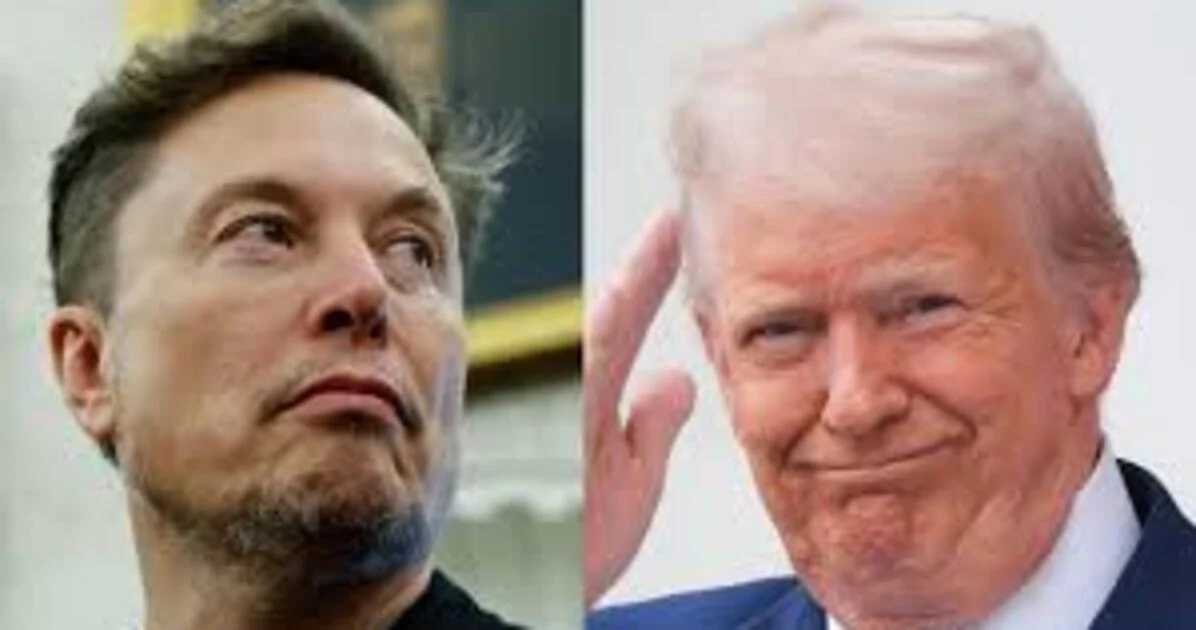
  • Will Trump’s DOGE eat Elon Musk for dinner?

    Will Trump’s DOGE eat Elon Musk for dinner?

    By

    UGO ONUOHA

    DOGE is the acronym for the United States Department for Government Efficiency. Mired in controversy, it was created with so much swagger by President Donald Trump at the start of his non-consecutive second term last January 20. DOGE has been synonymous with Elon Musk. As president it was within Trump’s remit to create a new government department, but he shares this power with the US Congress [parliament] which should ordinarily give such institutions legal teeth through legislation. The president appoints the heads of the departments with some of the nominees requiring screening and confirmation by the senate, the generally regarded upper chamber of the legislature . The departments are part of the executive branch of government, and are responsible for implementing specific policies and programmes. Prominent departments in the US federal government include Department of State which is responsible for foreign policy and international relations; Department of Defence for national defence and military operations; Department of Education for education policy and programmes [Trump says he will scrap it, anyway]; and, Department of Health and Human Services which is charged with healthcare and social services. Though the executive and legislative branches share in responsibilities in creating departments, only the Congress has the authority to abolish departments through legislation. However, the president can reorganise or merge departments through executive orders though that is subject to Congressional oversight. But all these fanciful arrangements backed by law in some cases and convention in others were before the second coming of Donald Trump.

    Some of the processes and conventions that had been taken as given have been casually upended by the new sheriff in town. Trump may have been emboldened by the fact that while he was out of power and office, and was facing trial for some alleged wrongdoings in his first incarnation as president, the US Supreme Court [SCOTUS] ruled that a president could not be tried for any offences he might have committed in the course of his official duty. The controversial ruling by the SCOTUS appears to fly in the face of the American Constitution which prescribed equality before the law. The Constitution did not explicitly state that ‘nobody is above the law’, but it contains principles that imply equality under the law, that was until the SCOTUS ruled otherwise in 2024. Before then it was widely believed that the Constitution was based on the rule of law, which means that everyone, including government officials, is subject to the law. The 14th equal protection clause prescribes that no state shall ‘deny to any person within its jurisdiction the equal protection of the laws’. And this clause has been interpreted to mean that individuals should be treated equally under the law. In addition, the grundnorm system of checks and balances was supposedly designed to ensure that no one branch of the US government has absolute power. The intent should be to help curb abuses of authority. So, though the phrase that ‘nobody is above the law’ was not directly stated in the Constitution, it had been a fundamental principle of the 249 years old American democracy, until it seems not to be so again because of Trump.

    Trump may be irrational, egoistic, unconventional and unpredictable, but he surely knows where to draw the line in the overall interest of the US. He will not hand over any advantage on a platter to China, a mortal rival in the war for global supremacy.”

    DOGE was created as a US government department by Trump on January 20 via an executive order. It was Trump’s first day in office and it was among the more than allegedly 100 executive orders signed by the president that day alone. Some watchers of the American presidency claimed that the action was unprecedented. Tech billionaire who’s the owner of the e-vehicle company Tesla, and SpaceX, among others, Elon Musk, was tapped to head the new agency. Opponents derisively describe Musk as the man who bought the presidency for Trump by his injection of almost $300 million into Trump’s campaign. He was an early endorser of Triumph for president. He was prominent in stomping for him on the campaign trail. He virtually lived with Trump in Mar-a-Lago in the weeks before the November 5, 2024 presidential election. He had a front row seat at Trump’s inauguration on January 20. And also lived with Trump in the White House in the days after the inauguration. He attended cabinet meetings while the bromance lasted. Musk was an unrepentant advocate for small government and curbing alleged waste in the public sector. He rails against subsidies but ironically his businesses ranked very high in receiving subsidies from the government. So in the eyes of Trump, Elon Musk was the unrivaled man for the job of rolling back the government, or in their words cutting out ‘fraud, waste, and  abuse’ in government operations. So DOGE under Musk was mandated to reduce public expenditures by reviewing government contracts, eliminating unnecessary spending, and cutting bureaucratic red tape; to detect fraud by identifying and preventing fraudulent activities in federal spending, ensuring transparency and accountability; to streamline processes through the deployment of artificial intelligence and emerging technologies to automate and accelerate administrative processes; and, to enhance productivity by restructuring federal agencies to ensure higher productivity and transparency. To detractors the only ‘achievement’ of Musk in his 130 days long employment in government was taking and brandishing a chainsaw at a public event to dramatise how he intended to deal a lasting and deadly blow to the US federal government bureaucracy. It was a jarring spectacle. By the way, Trump employed Musk as a special adviser to avoid his being required to be screened by the senate. It was feared that it would’ve been a very contentious screening that the narrow majority of the ruling Republican Party may not save him. Musk was that toxic to some politicians across the aisle.

    In no time Musk’s 130 days as a special government employee expired and he had to step down. Even his departure was as controversial as his entry. When their quarrel started simmering Trump said he was sacked but Musk countered that the president lied. Days after Elon Musk started attacking Trump’s so-called ‘one big beautiful bill’ which encapsulated the key ingredients of his presidency. Musk called the budget bill a ‘disgusting abomination’, ‘utterly ins@ne’, ‘pork-filled’, and ‘destructive’. He said it was a reversal of the job he [Musk] thought he had accomplished with DOGE. There was a very public falling out between Trump and Musk. Musk said that the bill would balloon the debts which already hover around $37 trillion. But Trump said that Musk’s grouse was because the bill would cut off subsidies to Tesla, Elon Musk’s signature company. Musk threatened that he would ensure the defeat of any lawmaker who voted to support the passage of the bill into law during the midterm election in November 2026. In addition, Musk claimed that without him Trump would have lost the presidential election last November, and Republicans would not have won their narrow majority in the house of representatives. He even suggested that Trump should be impeached and that Trump’s name featured prominently in the Jeffrey Epstein files/tapes which was why the Republican-led government had refused to release the files. Epstein was a friend of Trump. He was a convicted sex trafficker and pedophile. He died in prison in 2019. Musk later walked back some of his allegations against Trump but it was too late. Trump was piqued. He said that DOGE, that same DOGE that Musk used to terrorise others, may be unleashed on Musk and his businesses for alleged ‘fraud, waste and abuse’. And then the clincher. President Trump said that Musk, a naturalised American citizen, could be deported to his native South Africa. So the men who started the American presidency as ‘First Buddies’ gradually became ‘First Monsters’ or ‘First Enemies’. Who blinks first.

    This will be hard to figure out. Trump as the US president is the most powerful man in the world. Musk, the tech billionaire, is the richest man in the world. No other person could afford to lose about $140 billion  in one trading day last month in the valuation of one of his firms in the stock market, and about $37 billion in his personal wealth and still remain the richest man in the world. The Trump-Musk tussle might yet turn out to be a case of two elephants fighting. Not likely. In this fight none may come out of it unscathed. Trump may have the power ‘to do and undo’ as we say here in Nigeria when talking about a person with unrivaled power, but Musk is at the heart of America’s global economic power. Tesla’s biggest manufacturing plant outside the US is in China, a country that has been projected to dethrone America as the number one in the global economic ranking. And China is helping to stoke the row between Trump and Musk. It’s also courting and making offers to Musk and his businesses if the US becomes antagonistic and unaccommodating. Trump may be irrational, egoistic, unconventional and unpredictable, but he surely knows where to draw the line in the overall interest of the US. He will not hand over any advantage on a platter to China, a mortal rival in the war for global supremacy. These are men with big egos. But they will settle because they have so much to lose if their face-off spirals out of control. However, settling for now will not prevent them from quarreling again. Soon. And probably throughout the presidency of Donald J. Trump in the next three and half years. The setting up of the America Party by Musk to rival the traditional two-party system in the US – Democrats and Republicans – will not make the prospects of future frictions any better. Indeed, Musk could just be opening multiple battle fronts against traditional and professional politicians in the US. That could prove an Achilles heel for him. For over 150 years no third political party has produced a president of the United States. It may not be about to change in spite of the enormous wealth of Elon Musk, and what appears to be the appetite of Americans for a change.

    Ugo Onuoha, a veteran journalist was the Managing Director/Editor-in-Chief, Champion Newspapers Limited

  • Nigeria’s shadowed cave, cont’d

    This is a continuation of the article of above caption published last Friday, June 27th

    The most painful aspect of the avoidable war is the belief by many that it was “a personal war and collision of egos” between Gowon and Ojukwu. ” There are a number who believe that neither Gowon nor Ojukwu were the right leaders for that desperate time, because they were blinded by ego, hindered by a lack of administrative experience, and obsessed with interpersonal competition and petty rivalries,”( There was a country, 2012). As a consequence, continued Achebe, they failed to make appropriate and wise decisions throughout the conflict and missed several opportunities when compromise could have saved the day.” According to Raph Uwechue( Biafra’s envoy to Paris up until 1968 and then later Nigeria’s ambassador to Mali),”In Biafra, two wars were fought simultaneously. The first was for the survival of the Igbo as a race. The second was for the survival of Ojukwu’s leadership. Ojukwu’s error, which proved fatal for millions of Igbo, was that he put the latter first”( There was a country, 2012). The ethnic cleansing was real. But the two major actors were proved to be incapable of administering the delicate and complex situation. Nigeria’s cave at its deepest and its shadow at its darkest.

    Tribalism’s Lasting Chains

    Tribalism’s poison endures and its tools persist in Nigeria’s quota system, federal character, catchment areas and state of origin policies( The Cable, 2023; Punch, 2022). JAMB’s skewed cut-offs for Northern States (120 vs 160), and NYSC’s cohort postings, ministerial slots by states, University admissions favoring locals, and origin certificates deepen division and chain talent to ethnicity, not merit. Thomas Sowell, American economist, slices through: ” When people are treated as members of groups, rather than as individuals, the result is often a loss of both efficiency and fairness”( Wealth, Poverty and Politics, 2016). These policies, like Awo’s dagger, infantilize tongues, sow dependency, breed resentment, and spit on Zik’s dream (Vanguard, 2023).

    The “Giant of Africa” Lie

    Nigeria is a hollow giant. Suffice it to say that Nigeria’s “giant of Africa” boast is a lie—-its U$253 billion GDP (4th) lags behind South Africa’s U$373 billion(1st) and pales in per- capita wealth (U$1.150) against Mauritius’s U$12.973 (Web: 21). Oil-chained, Nigeria’s 24.5% inflation and naira’s 95.6% fall dwarf South Africa’s diversified stability( mining, banking) and Mauritius’s tourist-driven wealth( Web:23). South Africa’s U$ 6.250 per-capita GDP and Mauritius’s high Human Development Index expose Nigeria’s hollow giant of Africa claim, her 230 million chained by corruption and insecurity( World Bank, 2024). Nigeria’s ” biggest economy” is cancelled by inflation.

    Nigeria’s Security Crisis: A Path Beyond the Shadows

    Nigeria’s security landscape is a battleground of chaos—- Boko Haram’s insurgency in the Northeast, rampant banditry in the Northwest, and kidnappings that paralyze daily life. Added to the illegal stay-at -home imposition every monday on all Southeastern States of the Federation by illegal political and social groups, leading to incalculable economic losses incurred by the region’s business class. These treats choke economic progress, deter investment, and erode trust in governance. Some claim that Nigeria’s diverse, federal structure demands a nuanced approach, preaching a “soft glove” strategy to weaken Boko Haram by addressing root causes: invest in education to counter radicalization, empower communities through local policing, and expand deradicalization programs like Operation Safe Corridor. Addressing poverty and illiteracy counters extremist recruitment..They espouse that Nigeria must blend firm security measures with socioeconomic reforms, ensuring stability without sacrificing democracy, an indirect shot at Nayib Bukele, the president of El Salvador. Too romantic. Bukele’s approach has since proved effective and deserves to be implemented in Nigeria. You don’t treat terrorists with a soft glove, but iron-fisted crackdowns. Our law enforcement agents deserve better and decent security apparatuses.

    The Inertia of Followership: Nigeria’s Silent Complicity in Stagnation

    The awakened consciousness of ordinary citizens has repeatedly altered history’s course. In 44 BCE, Rome’s plebians, roused by Mark Anthony’s fiery oration beside Julius Caesar’s slain body, unleashed protests that shook the Republic, paving the way for the Second Triumvirate’s rise. In 1929, the Aba Women’s Riot in Nigeria saw Igbo women rise against colonial taxes and warrant chiefs, compelling British reforms and marking a pivotal anti-colonial stand. The Arab Spring, ignited in Tunisia in 2010 by Mohamed Bouazizi’s self-immolation, sparked mass protests that toppled President Ben Ali and inspired region-wide demands for democratic change. These movements, driven by collective resolve, highlight the power of followership to change oppression and reshape political landscapes, offering lessons for Nigeria’s struggle against tribalism, corruption and aparthy.

    Nigeria’s followership inertia in politics and society stems from deep-rooted factors. Tribalism plays a significant role in that. Ethnic loyalties, exploited by the profligate elite, deepen divisions and prioritize group interests over national unity, stifling collective action. Politicians leverage tribal identities to secure votes, fostering apathy as citizens align with ethnic patrons rather than demand accountability. Poverty and illiteracy limit civic awareness, making citizens vulnerable to manipulation through ethnic and religious appeals. Fear of reprisals from state or non-state actors stifles political and social activism. Patronage systems, where the elite distribute favors for loyalty, entrench apathy and discourage dissent. Weak institutions and rampant corruption erode trust, fostering resignation among the populace. Colonial legacies and divisive politics further weaken social cohesion, perpetuating passive followership. Grassroots education, economic empowerment, stronger civic institutions and inclusive governance are essential to break this inertia and spur active political and social engagement and galvanize active citizenship.

    Romanus Ike Azuka, Poet, law graduate and Sociologist, writes in from Sao Paulo, Brazil

  • Nigeria’s Shadowed Cave

    By

    Romanus Ike Azuka

    Imagine a cave, shrouded in darkness, where prisoners, chained since birth, gaze at a blank wall. A fire behind them casts shadows of objects; puppets, tools, carried by unseen figures. These flickering shapes are the prisoners’ only reality, their names and tales woven into a false truth. One prisoner breaks free, his chains clattering to the stone floor. Stumbling toward the cave’s mouth, he is blinded by sunlight, a searing truth revealing real objects, the sun itself, a world of intelligence and knowledge beyond the shadows of ignorance. Returning, he pleads with his fellows to escape, but they recoil, mocking his madness, clinging to their familiar illusions. This is Plato’s allegory of the cave, from Book VII of The Republic, a timeless clash of ignorance versus enlightenment. Nigeria, my homeland, languishes in such a cavern, her leaders and followership entranced by tribal shadows, blind to the ideas that forge nations. Like the wanderers in Samuel Beckett’s Waiting for Godot, yearning for a savior who never arrives, Nigeria pines for unity unpromised. Across the Atlantic, America’s Founding Fathers, ignited by John Locke’s vision, crafted a republic where ideas triumphed over factionalism. Nigeria, rich in oil and diversity, stumbles for want of such light. When will Nigeria find her Godot, or must we shape him ourselves?

    Locke’s Second Treatise of Government – ruling by consent, safeguarding life, liberty, property – lit the Founders’ path(1690). They shunned democracy for REPRESENTATIVE GOVERNMENT, crafting a system where the Senate equates Wyoming’s(an infinitesimal state) voice to California’s (the biggest state) and the Electoral College ensures no presidential candidate, sweeping big states like Texas, New York and California, silences smaller states (Federalist Papers, No.68). Alexis de Tocqueville, in 1835, praised this decentralized genius, a rebuke to France’s rigid centralism (Democracy in America). Nigeria’s leaders, unlike Julius Caesar, who chose his great-nephew Augustus over his son with Cleopatra, Caesarion, ushering in the Pax Romana, a 200- year era of peace and prosperity, and Rome’s 1,000- year dominion (Suetonius, The Twelve Caesars, 20 CE; Encyclopedia Britannica, 2025), cling to tribal loyalties, worshipping shadows on the cave’s wall.

    Nigeria’s 1914 Amalgamation Flaw: Myth or Reality?

    Nigeria’s 1914 amalgamation branded a union of “incompatibles,” is no fatal flaw; it is no curse. Switzerland blends German ,French, and Italian voices; Jordan’s weaves tongues into one and unites under a shared Crown; Singapore and the UAE weave diverse threads into harmony (BBC, 2023). Nigeria’s curse is not diversity; our rot festers in visionless leaders, and to some extent, inertia of the followership. In Miguel de Cervantes’ Don Quixote, a delusional knight chases chivalric dreams, tilting at windmills mistaken for giants. Nnamdi Azikiwe embodied this Quixote-like spirit, dreaming of a de-tribalized ” One Nigeria,” a centripetal force pulling ethnicities toward unity (Vanguard,1949). Born in Zungeru (1904), fluent in Hausa, Igbo, and Yoruba, Zik’s cosmopolitan soul, forged in Lagos, Onitsha, Calabar, and America’s universities( 1925-34), embrace Garveyism and Pan-Africanism (Iweala, 2012). In Ghana (1934-37), editing the African Morning Post, he mentored Kwame Nkrumah, igniting Ghana’s independence fire (1957). Spurning Nigeria’s tribal mire, Zik’s bid for Liberia’s foreign service, though rejected, and his book Liberia in World Politics (1934) reflect a quest to elevate Africa globally. He chased a Pan- African utopia. Mocked by group, Igbo for his NCNC’s universalism and especially for his One Nigeria mantra, Zik faltered, ousting Dr. Eyo Ita, a Calabar leader, in 1953, echoing Quixote’s noble but impracticable idealism.

    In Cervantes’ tale, Sancho Panza, Quixote’s squire, governs the fictional island of Barataria with pragmatic wisdom. Obafemi Awolowo, a Sancho-like figure, ruled the Western Region (1952-59) with similar deftness, delivering free education to a million children and building a Cocoa House. Yet his Achilles’ heel, his unrivaled tribalistic zest, flared in his 1951 carpet- crossing (Vanguard,2001) and, cruelly and callously, the Civil War’s 20-pound disgrace and humiliation of the Igbo. His tribalistic instinct became nude. That immoral policy capped Igbo savings, crushing their post-war recovery. Despite defenses, his intent to stymie Igbo economic recovery and development stands: Eppur si muove. Ahmadu Bello’s Nothernization enthroned Hausa-Fulani, fueling Igbo resentment and the 1966 coup, spiraling into pogroms ( BBC,1966).

    The Civil War’s Betrayal and the Intellectuals’ Role

    The Civil War (1967-70) tore Nigeria’s soul, leaving scars of fury and betrayal. Gowon’s “no victor, no vanquished” slogan, meant to heal, was a cruel humiliation for the Igbo, masking the devastation of Awo’s policies (BBC,1970; There Was a Country, 2012). The slogan was a vile lie, cloaking the Igbo’s crucifixion; homes stolen, lives erased, their wealth gutted by Awo’s 20-pound policy, a tribal daggar plunged with Yoruba zest. Christopher Okigbo, poet turned Biafran soldier, died in Nsukka, his zeal questioned by Ali Mazrui: Should intellectuals wield pens or rifles? (The Trial of Christopher Okigbo,1971). Wole Soyinka, rejecting war’s carnage, sought peace, enduring 22 months in solidary (The Man Died, 1972. Zik, Quixote-like, backed Biafra (1968) but switched to Nigeria (1969), seeing war’s futility, shaping UN resolutions (There was a Country, 2012; Britannica, 2025). The German intellectuals took a different path. Thomas Mann’s exiled broadcasts, Sophia Scholl’s White Rose leaflets, defied Hitler at mortal cost (NYT, 1940; Holocaust Encyclopedia,1943. Nigeria’s thinkers lit sparks, but the Igbo’s trust lay shattered, as Chinua Achebe mourned (There was a Country).

    Romanus Ike Azuka, Poet, law graduate and Sociologist, wrote in from Sao Paulo, Brazil