Author: admin

  • Davido Thrills Fans as Flytime Fest 2025 Lights Up Lagos

    Davido Thrills Fans as Flytime Fest 2025 Lights Up Lagos

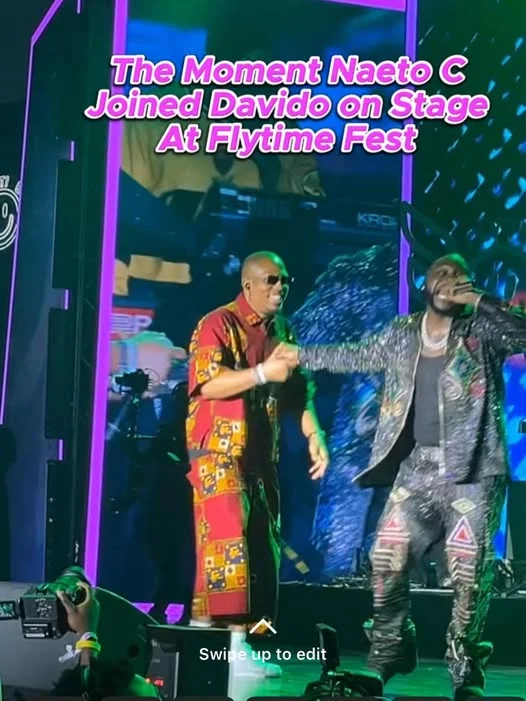
    Flytime Fest 2025 drew thousands of music lovers to Lagos on Thursday night as Nigerian music superstar, Davido, delivered a breathtaking performance at the Eko Convention Centre.

    The News Agency of Nigeria (NAN) reports that the concert stretched into the early hours of Friday, with fans filling the venue to witness electrifying live performances from some of Nigeria’s biggest music acts.

    The annual festival, which celebrates sound, culture and live entertainment, offered fans an immersive concert experience, with top artistes delivering high-energy performances that kept the audience fully engaged throughout the night.

    The highlight of the event came when Davido stormed the stage to thunderous applause, thrilling fans with a string of hit songs that had the crowd singing and dancing from midnight until dawn.

    The award-winning artiste showcased powerful vocals and dynamic stage presence, delivering electrifying renditions from his extensive music catalogue and further heightening the excitement at the venue.

    The performance was amplified by surprise appearances from guest artistes, including Dremo and Peruzzi, who joined Davido on stage to the delight of the cheering crowd. While Dremo thrilled fans with energetic rap verses, Peruzzi delivered smooth melodies that drew loud sing-alongs.

    Davido, Chike, Odumodu Black, others at Flytime Fest, Lagos

    Several attendees who spoke with NAN expressed excitement at witnessing Davido’s live performance. Adewale Ogunleye described the concert as exceptional, saying Davido’s energy remained unmatched from start to finish.

    Funke Akinwale, who attended the festival with friends, described the experience as unforgettable, while Musa Abdullahi praised the joyful atmosphere and positive vibes at the event.

    Another attendee, Chiamaka Nwoye, commended the organisers for a well-executed festival, noting that Flytime Fest continues to improve yearly and unite people through music.

  • Nigerian Army Disowns Fake DSSC 29 Recruitment Advertisement

    Nigerian Army Disowns Fake DSSC 29 Recruitment Advertisement

    The Nigerian Army has warned members of the public to disregard a recruitment advertisement circulating on social media claiming that the “Direct Short Service Course (DSSC) 29 Application Form 2026” is available.

    The warning was contained in a statement issued on Friday in Abuja by the Acting Director, Army Public Relations, Colonel Appolonia Anele.

    Colonel Anele described the advertisement as fake, false, and misleading, stressing that the Nigerian Army has not commenced any recruitment or commissioning exercise for the Direct Short Service Course (DSSC) or the Short Service Commission (SSC).

    She explained that all legitimate recruitment exercises are announced only through the Army’s official communication channels, including the Nigerian Army website, verified social media platforms, and national newspapers.

    The Army spokesperson further reminded the public that recruitment into the Nigerian Army is free of charge and does not require payment of any kind.

    She urged members of the public to remain vigilant and report any suspected fraudulent recruitment activities to the nearest security agency or relevant authorities.

  • NAF C-130 Aircraft Lands Portugal for Scheduled Maintenance

    NAF C-130 Aircraft Lands Portugal for Scheduled Maintenance

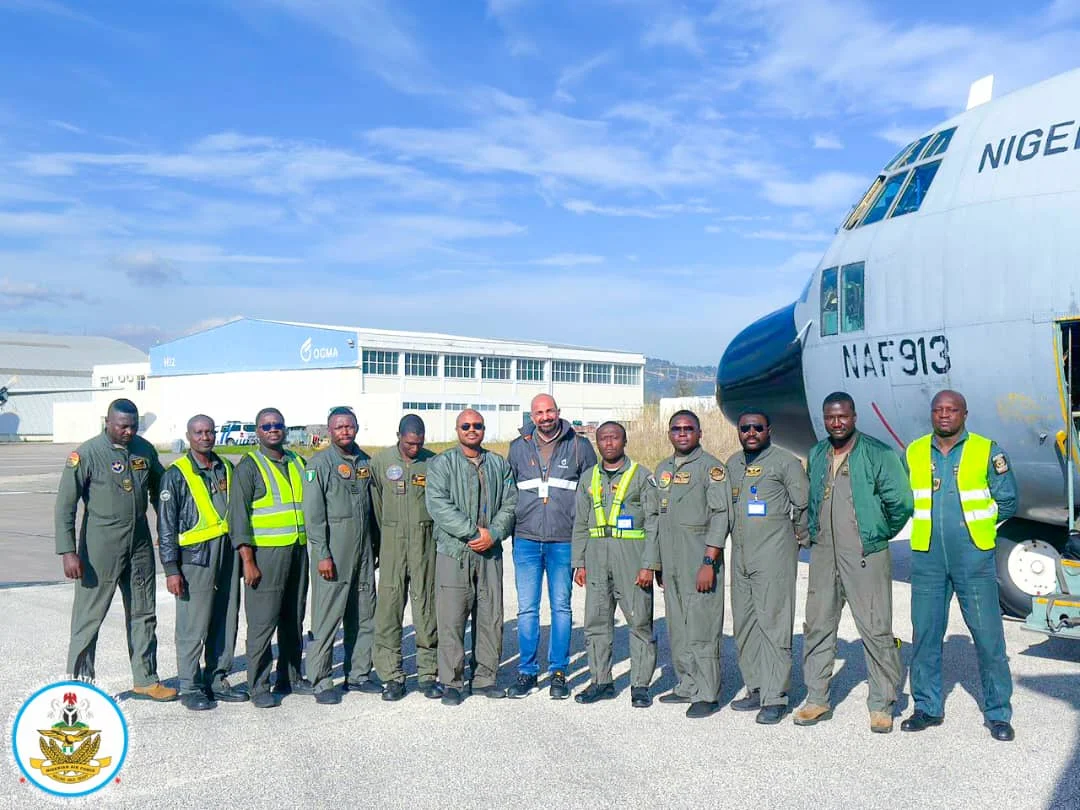
    The Nigerian Air Force (NAF) has successfully ferried one of its C-130 transport aircraft, NAF 913, to Lisbon, Portugal, for scheduled depot maintenance.

    This was disclosed in a statement issued on Friday in Abuja by the Director of Public Relations and Information, Nigerian Air Force, Air Commodore Ehimen Ejodame.

    According to Ejodame, the aircraft departed Nigeria and made planned technical stops in Banjul, The Gambia, and Casablanca, Morocco, before arriving safely at the OGMA maintenance facility in Lisbon on Thursday. He confirmed that both the crew and the aircraft arrived in good condition.

    He noted that the ferry flight was conducted in strict adherence to aviation safety standards, adding that all personnel involved remained safe and in high spirits throughout the operation.

    Air Commodore Ejodame commended the host authorities for their cooperation and support, while reaffirming the NAF’s commitment to the highest standards of safety, professionalism, and operational accountability.

    He explained that the maintenance deployment is part of the Air Force’s ongoing efforts to sustain operational readiness and ensure that its fleet remains fully mission-capable.

  • Nigeria Records 3.98% GDP Growth in Q3 2025, Misses Target

    Nigeria Records 3.98% GDP Growth in Q3 2025, Misses Target

    Abuja / Lagos — Nigeria’s economy recorded a 3.98 per cent growth in the third quarter of 2025, a modest expansion that has intensified calls for decisive reforms to unlock faster, broader-based and more sustainable growth.

    The National Bureau of Statistics (NBS) said the Gross Domestic Product (GDP) grew in real terms on a year-on-year basis, reflecting increased output of goods and services across key sectors of the economy.

    However, the performance remains below the Federal Government’s 4.6 per cent growth target for 2025, and its long-term ambition of achieving about seven per cent annual growth needed to drive sustainable development.

    The Central Bank of Nigeria (CBN) had projected a 4.1 per cent growth rate for 2025, citing easing inflation and improved foreign exchange inflows, while the International Monetary Fund (IMF) recently revised Nigeria’s growth forecast upward to 3.9 per cent.

    Economists Call for Targeted Interventions

    Against this backdrop, economists who spoke with to the media on Friday said targeted policy interventions could help bridge the gap between projections and actual performance.

    Prof. Sherifdeen Tella of the Department of Economics, Babcock University, urged the government to prioritise investment in the industrial sector to stimulate domestic production.

    “The government should empower domestic production firms in critical areas with funds that can be repaid in the future,” Tella said, likening the approach to the U.S. industrial bailout during the 2008 global financial crisis.

    He also stressed the importance of subsidising energy, particularly electricity and petroleum products, to support productivity, and called for sustained peace in the Niger Delta to boost oil production and export earnings.

    Business Environment and Security

    Similarly, Prof. Ndubisi Nwokoma of Caleb University said improving the business environment and ensuring macroeconomic stability were essential to accelerating growth.

    “Insecurity must be reduced to restore investor confidence in the economy,” he said, adding that Nigeria should prioritise the development of its rare earth minerals through partnerships with experienced private firms to boost exports and revenue.

    Agriculture as Growth Driver

    Former President of the Chartered Institute of Bankers of Nigeria (CIBN), Mr Okechukwu Unegbu, said increased investment in modern agriculture could significantly accelerate economic growth.

    He urged the government to allocate at least 10 per cent of the annual budget to agriculture, in line with recommendations by the Food and Agriculture Organisation (FAO), to mechanise the sector and strengthen its value chain.

    Unegbu also called for incentives to encourage private sector participation in agricultural processing and packaging, noting that value addition would enhance the sector’s contribution to the economy.

  • U.S. Strike on ISIS in Sokoto Sparks Questions Over Motive and Target Selection

    U.S. Strike on ISIS in Sokoto Sparks Questions Over Motive and Target Selection

    Abuja — As security analysts question the true motive behind recent U.S. military action in Nigeria, U.S. President Donald Trump has said American forces carried out strikes against Islamic State (ISIS) targets in the country’s northwest, citing attacks on Christians amid worsening insecurity.

    In a post on his Truth Social platform late Thursday, Trump said the operation targeted ISIS fighters he accused of “viciously killing, primarily, innocent Christians.”

    “The United States launched a powerful and deadly strike against ISIS Terrorist Scum in Northwest Nigeria,” Trump wrote. He added a Christmas message that included a warning that further attacks would result in additional U.S. military action.

    Motive Under Scrutiny

    The stated rationale for the strike has drawn skepticism from Nigerian security experts and residents, particularly in Sokoto State, where the targets were reportedly located.

    Retired Nigerian Air Force officer and security analyst, Group Captain Sadeeq Shehu (rtd), is among those questioning the true motive of the operation. He called for urgent clarification from relevant authorities, especially regarding the reported selection of Jabo, a community in Sokoto State.

    He urged authorities to provide:

    • A transparent explanation—within security limits—of the intelligence basis for the strike
    • Clear assurances on civilian harm mitigation
    • Verification and accountability mechanisms to assess potential collateral damage

    “People in Sokoto are not dismissing security threats,” Shehu said. “They are asking for logic, evidence, and accountability.”

    Across the state, a recurring question continues to surface:
    Why Jabo? Why Sokoto, of all places in a country grappling with terrorism in multiple regions? Was this a symbolic strike on what some consider the historical ‘seat of the Caliphate’?

    Pentagon Releases Video

    The Pentagon later released video footage appearing to show a missile being launched from a U.S. warship. Officials did not immediately disclose details on casualties or the extent of damage caused by the strike.

    According to the United States Africa Command (AFRICOM), the targets were located in Sokoto State. U.S. Defence Secretary Pete Hegseth said he was “grateful for Nigerian government support and cooperation” following the operation.

    Rising Violence in Nigeria

    The strike comes amid growing security challenges in Africa’s most populous country, particularly in the north and northeast, where Islamist militant groups remain active.

    Boko Haram, which originated in Nigeria, along with Islamic State–affiliated factions, has intensified attacks in recent weeks. Mass abductions from churches and schools have heightened fear and unrest among local populations.

    Earlier this month, Trump warned that Washington could intervene if attacks on Christians continued, urging the Nigerian government to prevent further bloodshed or risk reduced U.S. aid.

    Despite those warnings, violence has persisted. On Thursday, a suicide bombing in northeastern Nigeria killed at least five people and injured 35 others, according to a police spokesperson.

    Limited Details on Casualties

    U.S. officials have not released figures on the number of militants killed in the strike, and Nigerian authorities have yet to issue a comprehensive public response.

    As questions linger over intelligence, targeting, and civilian impact, the situation remains fluid, with Nigeria continuing to battle multiple insurgent groups across several regions.

  • U.S. Military Strike in Nigeria: A Blow to National Pride and a Projection of Weakness

    U.S. Military Strike in Nigeria: A Blow to National Pride and a Projection of Weakness

    By Wale Alonge

    No amount of official reassurance or diplomatic damage control can erase the profound injury done to Nigeria’s national pride by a United States military strike on Nigerian soil. At the core of statehood lies a single, non-negotiable responsibility: the protection of sovereignty and territorial integrity against incursion by foreign powers, regardless of the justification offered.

    For a country of over 220 million people, one that consistently projects itself as the giant of Africa, the very occurrence of a foreign military strike within its borders raises unsettling questions. These questions become even more troubling when the foreign power involved is led by an administration that has previously denigrated Nigeria in crude terms and promoted a deeply flawed narrative of a Muslim-orchestrated genocide against Christians. Such rhetoric is not merely offensive; it is dangerous, polarizing, and destabilizing.

    The suggestion that Nigeria willingly opened its airspace to a unilateral U.S. military operation, or that Washington fully coordinated its plans with Abuja, deserves serious scrutiny. Under President Donald Trump, the United States repeatedly demonstrated a preference for unilateral action, particularly in matters framed as counterterrorism. Trump publicly pledged to strike Islamist terrorists in Nigeria, presenting the issue through a religious lens that ignored the country’s complex security realities.

    Context matters. The strike followed closely after a terrorist bombing of a mosque in northern Nigeria and days after U.S. servicemen were killed by ISIS in Syria. To view the timing as coincidental is to ignore the pattern of retaliatory signaling that has characterized U.S. military actions in recent years. Whether or not Nigeria was informed after the fact, the broader message remains troubling: a foreign power exercised lethal force within Nigeria’s borders, reinforcing the perception that Nigeria lacks full control over its own security space.

    Once a nation allows its sovereignty and airspace to be pierced, whether by consent, coercion, or quiet acquiescence, it sets a precedent that is exceedingly difficult to reverse. Sovereignty, once compromised, rarely returns intact. The genie, as the saying goes, does not go back into the bottle.

    This issue transcends partisan loyalty or personal support for any sitting president. The defense of national sovereignty is sacrosanct and must stand above politics. African states have demonstrated this principle before. Burkina Faso’s firm response to the unauthorized penetration of its airspace by a Nigerian aircraft underscored a simple truth: respect among nations begins with the enforcement of boundaries.

    Calls to celebrate foreign military intervention as a victory against terrorism are therefore premature. The true consequences of the strike—potential civilian casualties, destruction of villages, and political fallout in northern Nigeria—remain to be seen. These outcomes carry serious implications for domestic stability and could impose substantial political costs on the presidency.

    In the final analysis, regardless of how the event is framed, the optics are damaging. The strike projects weakness, not strength; dependency, not leadership. It casts an unflattering light on Nigeria’s military capability, raises questions about the government’s control over national security, and undermines the country’s standing as a sovereign regional power.

    For Nigeria, the lesson is stark and unavoidable: no nation can claim greatness while its sovereignty is negotiable.

  • Nasarawa Assembly Passes N545.2bn 2026 Appropriation Bill

    Nasarawa Assembly Passes N545.2bn 2026 Appropriation Bill

    The Nasarawa State House of Assembly has passed the 2026 Appropriation Bill of N545.2 billion into law, following deliberations at plenary in Lafia on Tuesday.

    The approved budget represents an increase of N27.6 billion over the N517.5 billion proposal earlier presented to the House by Governor Abdullahi Sule.

    Announcing the passage, Speaker of the House, Danladi Jatau, described the development as a major legislative milestone, noting that the budget would enable the state government to implement people-oriented projects aimed at driving overall development across Nasarawa State.

    According to Jatau, the approved estimates allocate N316.26 billion for capital expenditure and N228.72 billion for recurrent expenditure. He explained that the increase in the budget size was necessitated by the prevailing inflationary pressure, which has significantly affected the cost of projects and service delivery.

    He disclosed that security-related votes received an additional N14 billion, while the Ministry of Local Government was allocated an extra N7 billion. The Ministry of Information, Culture and Tourism also got an additional N3.7 billion, alongside funding approval for the 55-kilometre Lafia–Kwandere–Garaku road project.

    The Speaker commended the House standing committees for what he described as their diligence and thoroughness during the budget defence and review process. He urged the executive arm to ensure full implementation of the budget once it receives the governor’s assent.

    “A Bill to authorise the issue of N545.18 billion from the Consolidated Revenue Fund of Nasarawa State for the 2026 financial year has scaled third reading and passed,” Jatau said.

    He subsequently directed the Clerk of the House to prepare a clean copy of the bill for transmission to the governor for assent.

    Earlier, the Majority Leader, Suleiman Azara, moved the motion for the passage of the bill, which was seconded by the Minority Leader, Luka Zhekaba. The bill was unanimously adopted by members of the House.

    Governor Sule had presented the initial N517.5 billion budget proposal to the Assembly on November 26, describing it as the “Budget of Strategic Consolidation.”

    During the presentation, he commended the legislature for its consistent support, particularly in ensuring the timely passage of appropriation bills.

  • State House Perm Sec Warns Staff Against Infighting, Honours Retiring Directors

    State House Perm Sec Warns Staff Against Infighting, Honours Retiring Directors

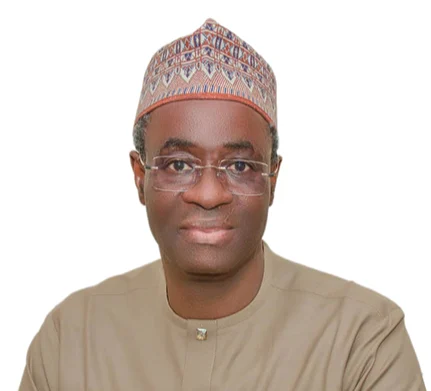
    The Permanent Secretary of the State House, Mr Temitope Fashedemi, has cautioned staff against bickering and acrimony, warning that such behaviour undermines productivity and professionalism in the public service.

    Fashedemi gave the warning at a ceremony held in Abuja to mark the retirement of two top management staff of the State House, Mr Sule Tegina, Director of Finance and Accounts, and Mr Ali Sufiyan, Director of Planning, Research and Statistics.

    According to a statement issued on Wednesday by the Director of Information and Public Relations, State House, Mr Abiodun Oladunjoye, the two officers retired after attaining the mandatory retirement age of 60, in line with the Public Service Rules.

    The Permanent Secretary stressed that adherence to ethical conduct, diligence and professionalism remained critical to career progression and institutional efficiency.

    “Hard work, good conduct and professionalism always bring rewards at the end of the day,” Fashedemi said.

    He commended the retirees for their dedication, competence and integrity, noting that their contributions had significantly strengthened operations at the State House.

    “They are seasoned administrators whose commitment enhanced efficiency and professionalism in the system,” he said.

    Fashedemi urged the retirees to remain active and continue contributing to society and the public service in advisory capacities.

    “I enjoyed working with you. Keep your brains active. Do not retire to the village. Stay around and continue to add value,” he added.

    The Permanent Secretary also reaffirmed his commitment to staff welfare, describing it as a priority of his administration.

    “Sometimes rewards come unannounced, but to whom much is given, much is expected,” he said.

    In his remarks, Tegina expressed gratitude to the State House management and staff for the opportunity to serve, noting that he had enjoyed a harmonious work environment throughout his career.

    “I have worked in different places, and I have been fortunate not to work in a toxic environment,” he said.

    Similarly, Sufiyan thanked the Permanent Secretary and staff of his department for their support during his years of service.

    The event featured the presentation of gifts, as colleagues, family members and well-wishers celebrated the retirees and offered prayers for good health and a fulfilling retirement.

  • Forgeries, taxations and the reign of Rehoboam

    Forgeries, taxations and the reign of Rehoboam

    By UGO ONUOHA

    “A profligate regime should not expect Nigerians to willingly submit to a new tax regime that looks like an exercise in extortion. The administration gets its priorities wrong. At a time that virtually all federal highways have collapsed and become deathtraps, this government prioritises the construction of a N15 trillion coastal highway from Lagos to Calabar.”

    A little over three months into the presidency of Alhaji Bola Ahmed Tinubu, on September 5, 2023, I wrote an opinion piece titled “100 days of Rehoboam” in this space and elsewhere. Rehoboam was a king of the divided kingdom of ancient Israel. He was the son of King Solomon and the grandson of King David, both of whom were also past rulers of a united Israel. Rehoboam caused Israel to be divided through policies that inflicted pains on his people. He was reckless. He was proud. He was unfeeling. He took counsel from his scatter head fellow young men. He told the Israelites that the privations they suffered under his father should be regarded as a child’s play. And that while his predecessors chastised them with a whip, he would chastise them with a scorpion. And he verily proceeded to do so. Rehoboam and Tinubu share similarities and dissimilarities. Rehoboam was a monarch. Tinubu is not a king in spite of his pretending to be one. Rehoboam was born into royalty. Tinubu was not. Indeed Tinubu’s birth and early years are still subjects of conjectures and controversies. Rehoboam was a young man when he ascended the throne of his fathers, and so could be excused on account of youthful exuberance. Tinubu was an old man when he was installed as president of Nigeria though his true age is only known to himself and himself alone. There’s no verifiable evidence of when he was born and where. Unlike Rehoboam, Tinubu takes no counsel from anyone. He said this much himself when, without consultations and without a Cabinet, he unilaterally removed the so-called petrol subsidy.

    On September 5, 2023, I wrote this about Tinubu and Rehoboam. “[Tinubu at 100 days in office] has been like that proverbial bird that perched on a tree branch – the tree branch has remained unsettled and the bird can’t stop dancing to unheard sounds. Since his inauguration [as president] on May 29 [2023], exacerbated hopelessness has been the lot of Nigerians and Tinubu himself can only pretend to have had peace of mind. If he has had the presence and prescience of mind, he would not have been enmeshed in serial fumbling from one policy somersault to another from the removal of the so-called petrol subsidy, [devaluation of the Naira], student loan and [the] proposed payment of N8,000 per month for six months to a specified number of poor Nigerian families, and planning to lead the Economic Community of West African States [ECOWAS] to war on Niger Republic [when the military in that country seized political power]”… In Igbo Tinubu is a classical case of ‘akwu rere ere n’ikwo puru epu’ which transliteration in English language will roughly read: rotten palm fruits being pounded inside a decayed mortar. The finished product is better left to the imagination…”

    When Rehoboam became the king, the older advisers in the palace pleaded with him “to heed the cry of the people and lighten the heavy load of labour and taxes that Solomon had laid on them, but the younger elements who had grown up with the new king counselled otherwise. He took the counsel of his mates. The consequences of the actions of the new and rash King Rehoboam are well documented in the chronicles of the kings of Israel in the Holy Bible book of 1Kings. In Tinubu’s rash and irrational decisions [on] the first day and [subsequent] weeks of his reign, he appears to have borrowed a leaf from the wicked and unthinking  King Rehoboam”. One of the undoings of Rehoboam was that he insensitively raised taxes on his people and so lost more than half of his kingdom. The northern part of Israel split away, taking its own path separate from the southern kingdom of Judah. But Nigeria is not a monarchy and bears no resemblance to the old kingdom of Israel. Does that mean that Nigeria splitting is unthinkable?

    With the new tax laws set to come into effect in a matter of days, Tinubu who rules like a monarch may yet be treading the path of King Rehoboam. Rehoboam raised taxes on his people at a time they were already complaining of privations and pains, Tinubu is poised to also raise taxes on Nigerians at a time the people are groaning under the weight of a multiplicity of harsh economic policies of the regime. And he appears not to be bothered. He is irritated by wise counsel that he steps on the brakes and allows Nigerians to breathe. Instead, he empowers the relevant agency of government to execute a secret contract with a so-called tax consultant in France which may lead to handing over Nigeria’s tax data to a foreign company. Tax data is a national security issue that should not be traded as a favour to a friend. Tinubu and the president of France, Emmanuel Macron, are known to be buddies. The frequent ‘working visits’ of our president since he assumed office a little over two years ago had been to Paris, France, unlike his predecessor, Muhammadu Buhari, who made London his tourism and medical destination, and the former archbishop of Canterbury his bosom friend. And a go-to man.

    A profligate regime should not expect Nigerians to willingly submit to a new tax regime that looks like an exercise in extortion. The administration gets its priorities wrong. At a time that virtually all federal highways have collapsed and become deathtraps, this government prioritises the construction of a N15 trillion coastal highway from Lagos to Calabar. To add insult to injury, the contract for the road was not subjected to an open and transparent bidding, no public tendering, no definite and finite route, and no environmental impact assessment report. To cap it up, the highway contract was awarded to a known long time friend and business associate of Tinubu. The president’s son, Seyi, is alleged to be a significant shareholder in some of the companies in the Chargouri Group which owns Hitech construction company which was awarded the opaque Lagos – Calabar highway contract. This is a classic and glaring case of abuse of office. The argument by the regime that much of the money for the execution of the road contract would be borrowed does not make the smell of the contract less pungent and offensive. Even the money to be borrowed will still have to be paid by Nigerians. By you. Or by me. Or by our children and grandchildren.

    As the government preps to extract more taxes from us, it is telling us that we should be the people to fund their ostentatious, obscene and provocative lifestyles including, committing billions of Naira to build or to refurbish mansions for the president and vice president, buy hundreds of foreign manufactured sport utility vehicles [SUVs] for ministers, a coterie of advisers, lawmakers, local government chairmen, and even for the wife of the president whose well appointed office of the first lady is not known to any law in the land. Members of the boards of MDAs [ministries, departments, and agencies] are usually not left out of the largesse. Ours is probably the only country in the world where government computers, vehicles, websites, and the like, are replaced every year. The debauchery includes procuring a fleet of armour – plaited presidential limousines every four years with the advent of a new president and a presidential jet in tow. Of course, the issue of looting the public treasury has been normalised. It’s so brazen that public servants routinely send their children to schools abroad where the fees are charged in millions of the United States dollars. If you want to be reminded of how decadent the system is, do not look further than the annual budget provisions for the feeding of our president and his family. It runs into multiple billions of Naira. We give the president a rent-free accommodation, we afford him and his family pro bono top rate round-the-clock security, gift him a fleet of high-end luxury vehicles, fuelled and maintained at our expense, top it up with a presidential jet, and then turn around to pay him millions of Naira every month as salary. Not even the United States of America, the biggest economy in the world, does that.

    In spite of the foregoing proclivity of this regime to extort citizens, it still cannot be satisfied and appeased. It is a leopard that cannot change its spot. The information last week was that the administration had allegedly fiddled and rigged the tax reform laws passed by the national assembly [NASS]. Last week Rep. Abdulsamad Dasuki  [PDP, Sokoto] raised the alarm, alleging discrepancies between the tax laws passed by NASS and the versions subsequently gazetted and made available to the public. He said the rigging of the laws should be concerning because some provisions were deleted and strange and terrifying provisions illegally inserted. Hon. Dasuki had said during plenary on the floor of the House that his legislative privilege had been breached by the fact that the content of the tax laws as gazetted by the executive arm of government did not reflect what lawmakers debated, voted on, and passed on the floor of the House. “I was here, I gave my vote and it was counted, and I am seeing something completely different”. He said that he obtained copies of the gazetted laws from the ministry of information and found them to be inconsistent with what was approved by both the House and the Senate. Dasuki said that there had been ”a serious breach”, and warned that allowing laws different from those duly passed by the national assembly to be presented to Nigerians would undermine the integrity of the legislature and violate the Constitution.

    “Mr. Speaker, I will be pleading that all the documents should be brought before the Committee of the Whole [House]. Thank you. The whole members should see what is in the gazetted copy and see what they passed on the floor so that we can make the relevant amendment. Mr. Speaker, this is a breach of the Constitution”. Consequent upon the alarm, the House raised a committee of seven persons to probe the allegations. However, Nigerians are not fooled. The current administration across board, from the executive to the legislature and the Judiciary, is populated by people who are adept at rigging and forgery. The NASS and the executive, working separately or in collusion, routinely rigged our national budgets. The 2025 fiscal document is the latest of fiddling with budgets. It was reported and never denied that about 6,000 illegal projects were inserted into the budget with accompanying billions of Naira allocations. We complained and grumbled and then moved on as usual. In effect, the NASS is the least morally competent to cry foul on the issue of rigging and forgery of documents. The same can be said of the judiciary where court judgements, especially of political hues, are routinely awarded to the highest bidder or to the most powerful and connected. So our system thrives on rigging or “mago mago” or “wuru wuru” to use the local lingo.

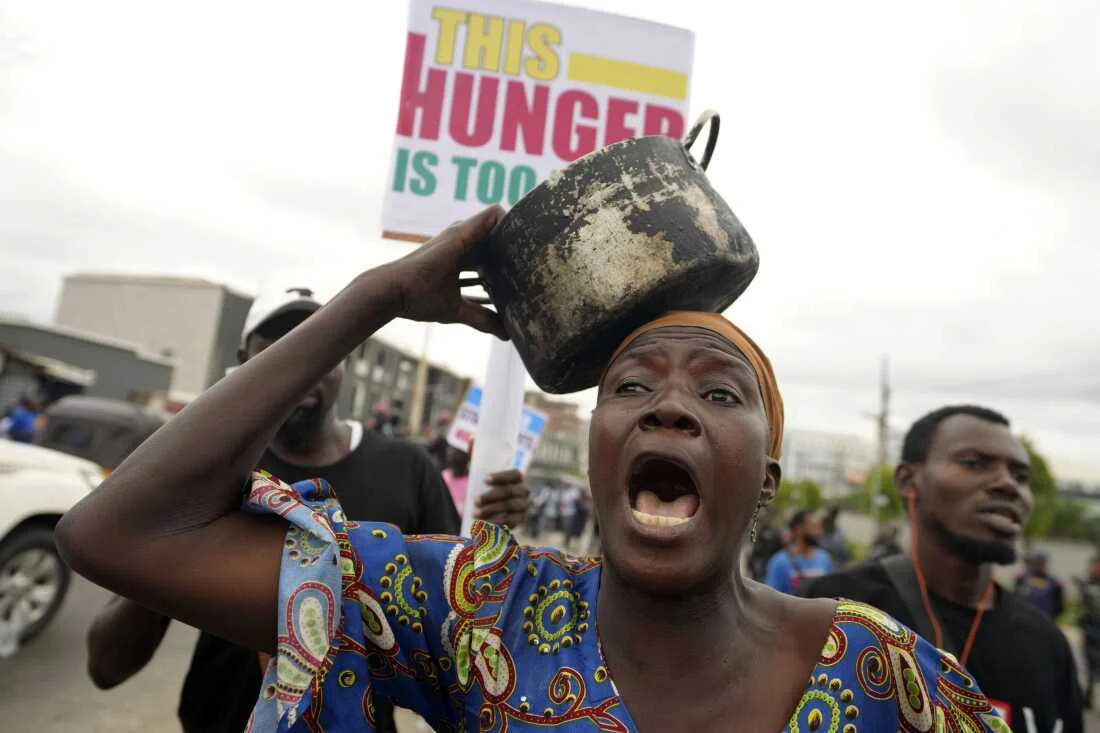
    But whether rigged or not the implementation of the new tax laws should be suspended, if it cannot be scrapped. It’s inhuman and inhumane to tax poverty. The majority of Nigerians are dirt poor. The other day, a top federal government official said that about 80 million citizens do not know where their next meal would come from. And a little over two years ago, the national bureau of statistics [NBS] determined after its study that over 130 million Nigerians were dimensionally poor. Certainly, the figure should be higher today given what Nigerians have been subjected to since May 29, 2023. And by the way, there has been no concrete evidence that any country has engendered or engineered economic recovery by taxing the poor. Instead putting more money in the pockets of citizens could help to reflate the economy as long as it is done in a manner that will not trigger inflation.

    UGO ONUOHA, a Veteran Journalist, was the Managing Director/Editor-in-Chief, Champion Newspapers Limited

  • Joshua Stops Jake Paul in Sixth Round of One-Sided Miami Bout

    Joshua Stops Jake Paul in Sixth Round of One-Sided Miami Bout

    Anthony Joshua stopped boxing novice Jake Paul in the sixth round of a heavily one-sided heavyweight contest in Miami.

    The former world champion controlled the fight from the outset as Paul spent long periods on the move, largely avoiding exchanges. Joshua gradually increased the pressure before imposing his power with successive knockdowns in the fifth round.

    Paul was floored again early in the sixth after a clean right hand from Joshua at the Kaseya Centre. The American failed to beat the count, though he later rose and left the ring unaided, drawing applause and visible relief from the crowd.

    Joshua said the bout lasted longer than he had expected but added that patience proved decisive once his right hand found its mark.

    The result had been widely anticipated and renewed debate about safety concerns surrounding contests with significant disparities in experience and size.

    The win was the 29th of Joshua’s professional career from 33 fights and sharpened focus on a potential all-British clash with Tyson Fury in 2026.

    Paul, 28, was unable to deliver the upset he had promised and struggled under Joshua’s sustained pressure, despite briefly surviving into the middle rounds. The YouTuber-turned-boxer, who previously faced Mike Tyson, found Joshua’s power overwhelming.

    The bout was streamed globally by Netflix and attracted a number of high-profile spectators, including golfer Rory McIlroy.

    Joshua’s decisive right hand drew comparisons with his knockout of Francis Ngannou in 2024. He is expected to take another tune-up fight next, while Paul said he plans to return to the ring and pursue a cruiserweight title.