Author: admin

  • CCI Launches TeleOncology Hub in Northeast Nigeria

    CCI Launches TeleOncology Hub in Northeast Nigeria

    Abuja — The Cancer Consciousness Initiative (CCI) has inaugurated a TeleOncology Hub aimed at improving access to specialist cancer care in Northeastern Nigeria, a region facing rising cancer cases and limited oncology services.

    The programme, which was officially launched at the Federal Medical Centre (FMC), Jalingo, leverages telemedicine technology to connect cancer patients in remote and underserved communities with oncology specialists across the country.

    Services provided include virtual specialist consultations, Multidisciplinary Team (MDT) meetings, electronic medical record (EMR) monitoring, and patient navigation support.

    Speaking in an interview with the News Agency of Nigeria (NAN) in Abuja, Dr Hannatu Ayuba, Chief Executive Officer of CCI and Programme Lead of the TeleOncology Hub, described the initiative as a health system strengthening intervention designed to address long-standing disparities in cancer diagnosis and treatment.

    According to Ayuba, cancer cases are increasing steadily in the Northeast, with breast cancer accounting for about 60 per cent of reported cases, most of which are diagnosed at advanced stages.

    “Many patients in underserved communities face barriers that delay diagnosis and treatment, which significantly affects survival outcomes,” she said. “Late presentation remains one of the biggest challenges in cancer care in the region.”

    Ayuba urged women to prioritise early detection, advising them to seek medical attention if they notice symptoms such as breast lumps, changes in breast shape, nipple discharge, or other unusual signs.

    “Early detection through self-examinations, mammograms, and regular medical check-ups can save lives,” she stressed.

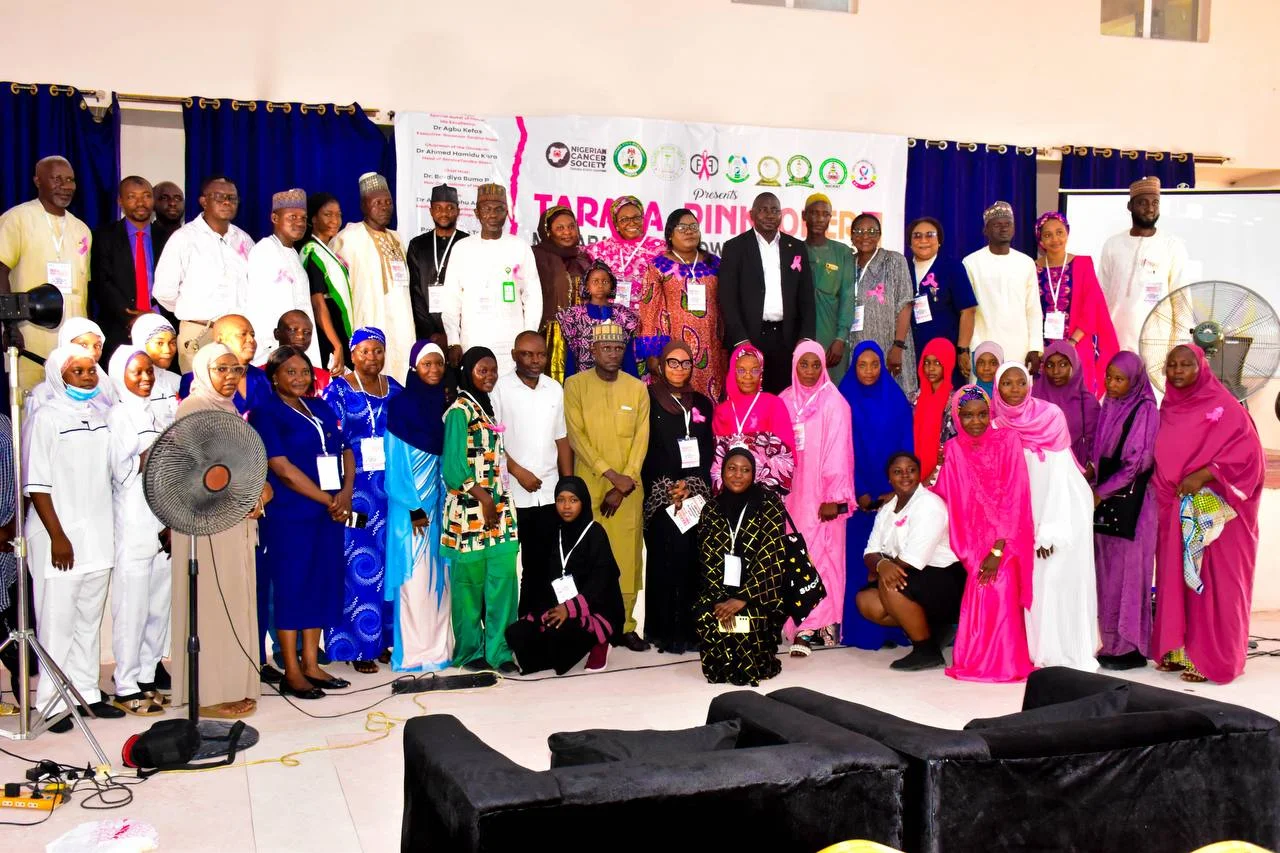
    To mark Breast Cancer Awareness Month, CCI, in collaboration with partner organisations, organised town hall meetings and a mega rally across communities to raise awareness about cancer symptoms and available care options.

    Since its inauguration in April, the TeleOncology Hub has expanded its reach through partnerships with Modibbo Adama University Teaching Hospital, FMC Nguru, and Yobe State University Teaching Hospital, Damaturu, significantly increasing access to virtual oncology consultations in the region.

    The initiative has also launched a community-based patient navigation programme in Borno State in partnership with the Grow Strong Foundation.

    The programme integrates telemedicine services, virtual MDT meetings, EMR monitoring through PocketPatientMD, and personalised patient guidance to ensure timely diagnosis and treatment.

    Ayuba revealed that more than 35 patients have already been enrolled, with over 85 per cent of navigation encounters resulting in prompt diagnoses, treatment initiation, or follow-up care.

    “Video-enabled MDT meetings help overcome geographical barriers and improve coordination among healthcare professionals,” she noted.

    As part of capacity building, CCI has trained healthcare professionals, nurses, and pharmacy staff in oncology care, digital health tools, and patient navigation to strengthen local healthcare delivery.

    The initiative has also partnered with patient assistance programmes to reduce diagnostic costs.

    These include BRANT by Oncopadi/Roche, which provides free immunohistochemistry testing for 5,000 women, as well as Merck and AstraZeneca, which offer free KRAS and EGFR testing for colorectal and lung cancer patients.

    Despite the progress, Ayuba acknowledged ongoing challenges such as late-stage diagnosis, financial constraints, cultural barriers, and low health insurance coverage.

    She disclosed that only 8.6 per cent of patients at one participating centre are enrolled in health insurance or national health schemes.

    To support vulnerable patients, CCI provides financial counselling, treatment assistance, transportation support, and logistics aid.

    “Our goal is to unlock access to quality cancer care for all patients, regardless of their location or financial status,” Ayuba said.

    Looking ahead, CCI plans to expand the TeleOncology Hub nationwide, introducing HIPAA-compliant telemedicine suites, broader training programmes, advanced diagnostic integration through the African Digital Health Network, and stronger advocacy for sustainable funding and supportive health policies.

    The TeleOncology Hub is expected to play a critical role in reducing cancer care disparities in Nigeria and improving survival outcomes for patients in hard-to-reach communities.

  • PDP Crisis: Warring Factions Assure Nigerians Party Remains on Course After INEC Meeting

    PDP Crisis: Warring Factions Assure Nigerians Party Remains on Course After INEC Meeting

    The two warring factions of the Peoples Democratic Party (PDP) have reassured Nigerians that the party remains united in purpose and committed to its role as Nigeria’s leading opposition party, despite its lingering leadership crisis.

    The assurances were given on Friday by the PDP National Chairman, Tanimu Turaki, and the embattled National Secretary, Sen. Samuel Anyanwu, following a crucial meeting with the Independent National Electoral Commission (INEC) in Abuja.

    PDP Leadership Crisis: INEC Steps In

    Speaking separately with journalists after the meeting, Turaki said the engagement was convened at the invitation of INEC to address the prolonged internal dispute rocking the party’s national leadership.

    “We want to assure Nigerians and indeed our party members that we are on course. We shall continue to remain on course by the special grace of God,” Turaki said.

    He disclosed that the National Working Committee (NWC) under his leadership honoured the invitation but expressed surprise that some individuals who had been expelled from the PDP were also invited by the electoral body.

    According to him, both factions presented their positions to INEC.

    “We have spoken from our own perspective. We have made presentations on the issues, and INEC has listened to us,” he stated.

    INEC Cannot Act as a Court — Turaki

    Turaki explained that INEC acknowledged that several issues surrounding the PDP leadership crisis were already before the Court of Appeal, while others were yet to be heard.

    He said the commission made it clear that it could not assume the role of a court of law but promised to carefully review the submissions made by both factions and communicate its decision in due course.

    While awaiting INEC’s response, Turaki insisted that the PDP under his leadership would continue to function fully.

    “The PDP will continue to hold the government accountable, uphold the rule of law, promote best democratic practices, and address the challenges facing Nigerians,” he said.

    INEC’s Recognition Question

    When asked which PDP leadership INEC recognised, Turaki said the commission’s primary objective was to find a sustainable path forward for the party.

    He commended INEC Chairman, Prof. Joash Amupitan, and his team for giving both factions a fair hearing.

    “I think what INEC has done, in the spirit of reconciliation, is proper. If only one side was invited, it would have been like talking to ourselves,” he said.

    Elections and Democracy at Stake

    Turaki warned that excluding a major opposition party like the PDP from elections would undermine Nigeria’s democratic credibility, especially in upcoming polls in the Federal Capital Territory (FCT), Ekiti, and Osun States.

    “Conducting an election that a major opposition party will not participate in will cast a dark shadow on the process,” he warned.

    He also urged INEC to adopt similar conflict-resolution approaches for other political parties experiencing internal crises.

    Anyanwu: Court Disqualified Turaki-Led Executive

    On his part, Sen. Samuel Anyanwu, who leads the faction backed by the Minister of the FCT, Nyesom Wike, said the PDP would emerge stronger from the crisis.

    “The PDP is still PDP. Nigerians know that PDP has mechanisms for managing internal crises. We will come out stronger,” Anyanwu said.

    He claimed that a court ruling had invalidated the convention that produced the Turaki-led executive.

    However, he praised INEC for demonstrating a genuine commitment to preserving the PDP as Nigeria’s main opposition party.

    Call for Reconciliation

    Anyanwu said the meeting allowed both factions to highlight the root causes of the crisis, which he attributed to “greed, ambition, and ego.”

    He reaffirmed the faction’s commitment to the rule of law, INEC guidelines, and the PDP Constitution, and urged aggrieved party members to return to the National Caretaker Committee for reconciliation.

    Earlier, INEC Chairman Prof. Joash Amupitan explained that the meeting became necessary due to conflicting communications received from both PDP factions, which threatened the party’s operational clarity ahead of elections.

  • NNPP Re-elects Ahmed Ajuji as Chairman, Signals Major Push for 2027 Elections

    NNPP Re-elects Ahmed Ajuji as Chairman, Signals Major Push for 2027 Elections

    The New Nigeria People’s Party (NNPP) has re-elected Dr. Ahmed Ajuji as its National Chairman, a move party leaders say signals a renewed push to expand the party’s influence ahead of the 2027 general elections.

    Ajuji was returned unopposed through a voice vote at the party’s National Convention held on Saturday in Abuja. Officials of the Independent National Electoral Commission (INEC) were present to monitor the exercise.

    The convention also saw the re-election of Dipo Olayoku as National Secretary, alongside other members of the party’s national leadership, all of whom emerged unopposed and were later affirmed by delegates.

    Speaking after his re-election, Ajuji thanked party members for the confidence reposed in the leadership and pledged that the NNPP would intensify efforts to strengthen its structures nationwide.

    He said the new leadership accepted the responsibility of steering the affairs of the party over the next four years, describing the moment as critical to the NNPP’s future.

    “Our task is clear. We must work harder, remain united and position this party to win the trust of Nigerians ahead of 2027,” Ajuji said.

    He urged national officers to treat their re-election as a call to service and to uphold the oath of office administered to them.

    “Our Flag Must Fly Higher” — Ajuji

    Earlier in his welcome address, Ajuji called on NNPP members across the country to remain hopeful and committed to the party’s vision of a united and prosperous Nigeria.

    He said the NNPP was determined to build a strong, progressive and inclusive nation, stressing that the party had been repositioned to play a leading role in Nigeria’s democratic process.

    “Our flag must fly higher across all parts of Nigeria. Nigerians want reassurance that a better country is possible, and NNPP is ready to provide that hope,” he said.

    According to him, the party’s restructuring and internal reforms have strengthened its readiness to compete nationally.

    “All eyes are on NNPP to show the way forward for sustainable democracy and development. Nigerians deserve a fresh start and a new deal,” Ajuji added.

    Kwankwaso, Abba Yusuf Back New Leadership

    The National Leader of the NNPP and former Governor of Kano State, Senator Rabiu Musa Kwankwaso, congratulated the re-elected national executives and urged them to remain disciplined and loyal to the party.

    Kwankwaso said the performance of the NNPP-led government in Kano State offered a clear picture of what Nigerians could expect if the party is elected into power in 2027.

    Kano State Governor, Abba Kabir Yusuf, described the convention as a defining moment for the party, saying it reflected the NNPP’s growing national relevance.

    He urged the new leaders to promote unity, fairness and inclusivity within the party.

    “Let this convention mark a new beginning where no one is left behind,” Yusuf said.

    NNPP Dismisses Rumours of Internal Crisis

    Chairman of the National Convention Planning Committee, Bala Mohammed, said the NNPP had recorded notable achievements in the past four years, strengthening its place in Nigeria’s political landscape.

    He explained that the convention was held to ratify key decisions of the National Executive Committee and formally elect national officers.

    “This gathering is also about reinforcing the unity and brotherhood that define us as a political family,” Mohammed said.

    The party’s National Adviser, Magaji Ibrahim, dismissed claims of division within the NNPP, insisting the party remained united under Kwankwaso’s leadership.

    “I can assure Nigerians that nothing will divide this party. We are solid and focused as we move toward 2027,” Ibrahim said.

    A major highlight of the convention was the ratification of the suspension of Article 37(1) of the NNPP Constitution (2024 as amended).

  • Naira Ends Week Weaker at ₦1,464.49 Amid FX Demand Pressures

    Naira Ends Week Weaker at ₦1,464.49 Amid FX Demand Pressures

    The naira ended the week on a weaker note against the US dollar at the official foreign exchange market on Friday, settling at ₦1,464.49 as sustained demand pressures continued to weigh on the local currency.

    Data released by the Central Bank of Nigeria showed that the naira depreciated by 0.4 per cent from Thursday’s closing rate of ₦1,457.84.

    The currency had started the week on a positive footing, recording an appreciation of ₦2.59 at the official window on Monday. However, the gains proved short-lived as demand for foreign exchange resurfaced, eroding early optimism.

    By Monday, the naira traded at ₦1,451.81 before weakening further to ₦1,455.08 on Tuesday. The depreciation trend persisted on Wednesday, with the currency exchanging at ₦1,455.49, and continued through the rest of the week, culminating in Friday’s weaker close.

    Despite the early gains, sustained pressure in the foreign exchange market limited the naira’s ability to hold its ground, highlighting ongoing challenges in balancing demand and supply at the official window.

  • Tinubu: Nigeria to End Multiple Budgets by April 2026

    Tinubu: Nigeria to End Multiple Budgets by April 2026

    President Bola Ahmed Tinubu has announced that Nigeria will end the practice of running multiple budgets by March 31, 2026, transitioning fully to a single annual budget supported by a single revenue cycle from April 2026.

    The president made this known on Friday while presenting the 2026 Appropriation Bill of ₦58.18 trillion to a joint session of the National Assembly in Abuja.

    The budget, titled “Budget of Consolidation, Renewed Resilience and Shared Prosperity,” aims to address longstanding fiscal challenges and deepen ongoing economic reforms.

    Tinubu said the multiple-budget system—characterised by inherited obligations, abandoned projects, and unpaid contractual liabilities—has undermined effective budget execution.

    He disclosed that all outstanding capital liabilities from previous years would be fully funded and closed by March 2026.

    “From April, Nigeria operates on a single budget, backed by a single revenue cycle. No overlaps, no excuses and no rollover cultures,” the president said.

    Describing the 2026 budget as a defining moment in Nigeria’s reform journey, Tinubu acknowledged that recent economic reforms had imposed hardships on families and businesses but insisted the sacrifices were yielding results.

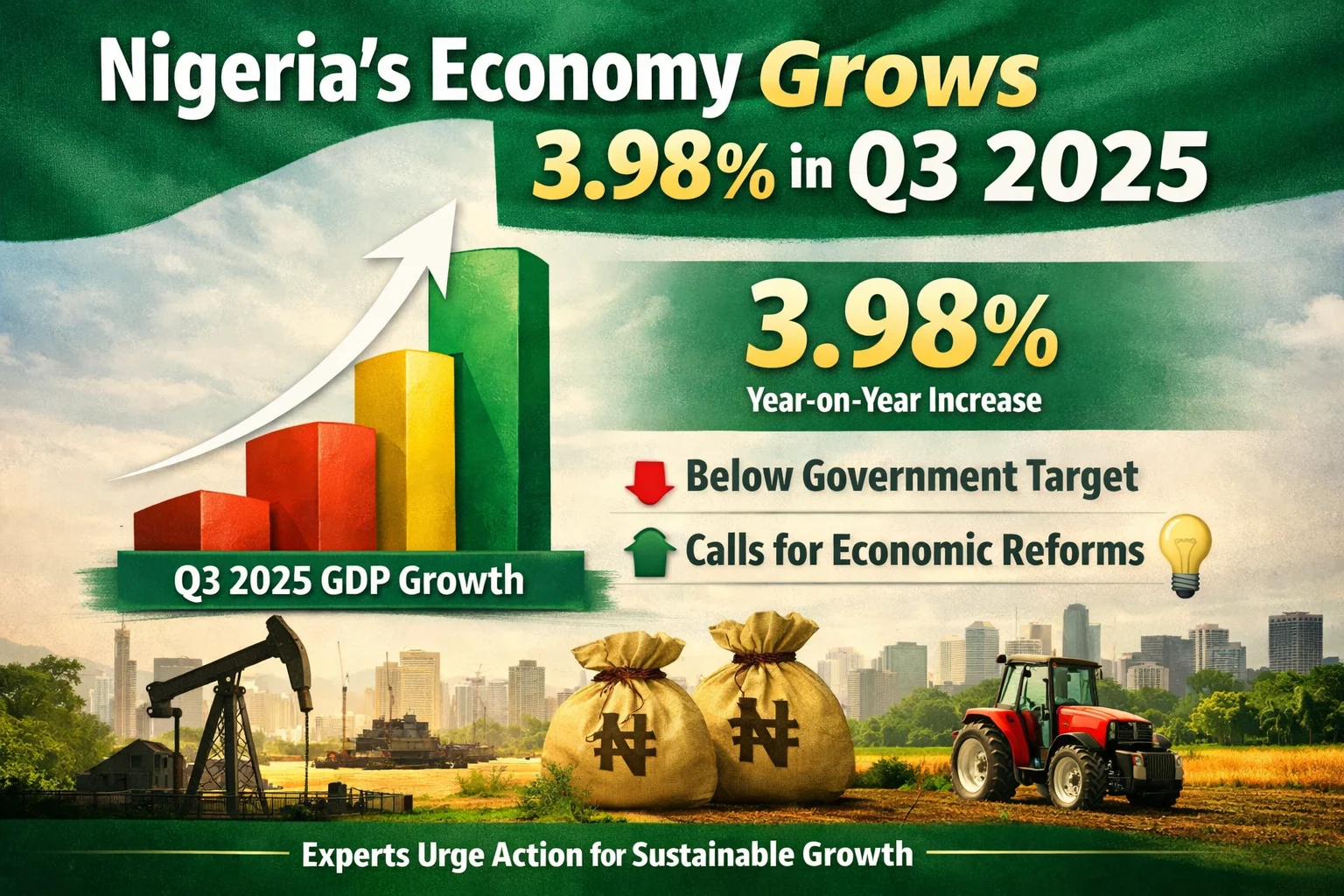
    According to him, Nigeria has emerged from a period of uncertainty and economic volatility, noting that the economy grew by 3.98 per cent in Q3 2025, compared to 3.86 per cent in Q3 2024.

    “The economy has turned the corner. Though the path of reform is seldom smooth, it remains the surest route to lasting stability and shared prosperity,” Tinubu said.

    He added that the budget is designed to consolidate macroeconomic stability, enhance competitiveness, create jobs, boost incomes, and improve living standards nationwide.

    In his remarks, Senate President Godswill Akpabio defended the collaboration between the Executive and the National Assembly, saying such cooperation was essential for national progress.

    “The 2026 Appropriation Bill is more than figures. It is a statement of intent, a reflection of priorities, and a roadmap for Nigeria’s next phase of renewal,” Akpabio said.

  • Tinubu Presents 2026 Budget, Projects ₦34.33tr Revenue, ₦58.18tr Spending

    Tinubu Presents 2026 Budget, Projects ₦34.33tr Revenue, ₦58.18tr Spending

    By Caroline Ameh

    President Bola Ahmed Tinubu on Friday presented the 2026 Appropriation Bill to a joint sitting of the National Assembly, pledging stricter discipline in budget execution, stronger accountability and enhanced monitoring of public spending in the new fiscal year.

    The budget, titled “Budget of Consolidation, Renewed Resilience and Shared Prosperity,” seeks to entrench recent economic reforms, stabilise macroeconomic conditions and convert recovery gains into sustained, inclusive growth.

    Addressing lawmakers, the President said he had directed key fiscal authorities—including the Minister of Finance and Coordinating Minister of the Economy, the Minister of Budget and Economic Planning, the Accountant-General of the Federation and the Director-General of the Budget Office—to enforce strict adherence to the approved budget framework and implementation timelines.

    “2026 will mark a turning point in budget execution. We will demand accountability, rigorous monitoring and reporting that translate policy into measurable outcomes for Nigerians,” Tinubu said.

    The President said the budget was formulated against a backdrop of emerging macroeconomic stability, following what he described as difficult but necessary policy adjustments implemented by his administration.

    He reported that Nigeria’s economy expanded by 3.98 per cent in the third quarter of 2025, up from 3.86 per cent in the corresponding period of 2024, while inflation declined for eight consecutive months to 14.45 per cent in November 2025, from 24.23 per cent in March.

    Tinubu further cited improved crude oil output, stronger non-oil revenue mobilisation driven by tax administration reforms, rising investor confidence and external reserves estimated at $47 billion, sufficient to cover more than 10 months of imports.

    “These results reflect deliberate policy choices. The task before us is to consolidate these gains so that stability evolves into prosperity and prosperity is broadly shared,” he said.

    Reviewing the performance of the 2025 budget, the President said the government realised ₦18.6 trillion in revenue and ₦24.66 trillion in expenditure by the third quarter, representing 61 per cent and 60 per cent of their respective annual targets.

    He attributed delays in capital releases partly to the extension of the 2024 capital budget into 2025, noting that the experience highlighted the need for firmer fiscal discipline in the 2026 budget cycle.

    For 2026, the President projected total revenue of ₦34.33 trillion and total expenditure of ₦58.18 trillion, including ₦15.52 trillion earmarked for debt servicing.

    Recurrent non-debt expenditure is estimated at ₦15.25 trillion, while capital expenditure is projected at ₦26.08 trillion. The resulting budget deficit of ₦23.85 trillion, he said, represents 4.28 per cent of Gross Domestic Product (GDP).

    Underlying the projections are assumptions of a crude oil price benchmark of $64.85 per barrel, daily production of 1.84 million barrels, and an exchange rate of ₦1,400 to the US dollar.

    The budget prioritises national security, infrastructure development and human capital investment, with proposed allocations of ₦5.41 trillion for defence and security, ₦3.56 trillion for infrastructure, ₦3.52 trillion for education and ₦2.48 trillion for health.

    Tinubu said security spending would be outcome-based, aligned with the implementation of a new national counter-terrorism doctrine and expanded intelligence-led operations.

    On education, he referenced the Nigerian Education Loan Fund, which has supported more than 418,000 students across 229 tertiary institutions, while noting that healthcare expenditure represents six per cent of total budgetary spending, net of liabilities.

    The President warned government-owned enterprises to meet their revenue remittance obligations, announcing plans to deploy digitised revenue collection systems to curb leakages and strengthen fiscal transparency.

    “A budget’s true value lies not in its announcement, but in its execution,” Tinubu said, pledging prudent expenditure management, enhanced revenue mobilisation and tighter oversight.

    He urged the National Assembly to support the proposals, expressing confidence that effective executive-legislative collaboration would ensure successful implementation.

    The President subsequently laid the 2026 Appropriation Bill before the National Assembly for legislative consideration.

  • Fresh Clashes Erupt Between Egba-Ologba Communities Over Fishing Pond

    Fresh Clashes Erupt Between Egba-Ologba Communities Over Fishing Pond

    Fresh violence has erupted between the Egba and Ologba communities in Agatu Local Government Area of Benue State over ownership of the Ochulo fishing pond, leading to the loss of several lives.

    The latest clash occurred despite the fact that the long-standing dispute is currently before a court of law. It also happened while representatives of both communities were in Makurdi, the Benue State capital, engaging in dialogue aimed at reaching a peaceful resolution.

    The conflict over control of the Ochulo fish pond dates back to 1972. Since then, it is estimated that more than 2,800 lives have been lost in recurrent violent confrontations linked to the dispute.

    A new and troubling dimension to the conflict is the involvement of neighbouring communities, whose residents now openly take sides and join their preferred factions during clashes, thereby escalating the violence.

    It was also gathered that the current Chairman of Agatu Local Government Council, Melvin James Ejeh has initiated about ten different peace overtures, all of which have so far failed to yield lasting peace.

    Reacting to the situation, a concerned social commentator has called on Benue State Governor, Rev. Fr. Hyacinth Alia, to urgently establish a permanent government institution or security presence along the disputed boundary to forestall further violence.

    Agatu Local Government Area, which is largely an aquatic environment located in the lowlands of the Benue River Basin, has previously been an epicentre of violent clashes between armed herdsmen and indigenous communities over grazing routes and farmlands.

    There are growing fears that the renewed internal conflict could expose the area to fresh attacks by marauding herdsmen and other criminal elements, further worsening the security situation in the region.

  • Winning the Reform Battle, Losing the Street?

    Winning the Reform Battle, Losing the Street?

    Inside the FIRS–France Tax Deal and Nigeria’s Trust Deficit

    By Wale Alonge

    President Bola Tinubu’s administration is pursuing the most ambitious macroeconomic reform agenda Nigeria has seen since the return to democracy. Fuel subsidy removal, exchange-rate liberalisation, tax reform, and renewed conversations around state police and fiscal federalism have pushed long-avoided issues into the centre of governance.

    But while the reforms may be economically sound, the administration is struggling with a more elusive challenge: public trust. Nowhere is this tension clearer than in the Memorandum of Understanding (MOU) between Nigeria’s Federal Inland Revenue Service (FIRS) and France’s Direction générale des Finances publiques (DGFiP)—a technical agreement that has ignited political anxiety and public suspicion far beyond its actual scope.

    At its core, the controversy reflects a familiar Nigerian paradox: reform momentum without narrative control.

    A Country Conditioned to Distrust Power

    Nigeria’s democratic history has left citizens deeply sceptical of the state. Decades of corruption, policy reversals, and unfulfilled promises have eroded confidence in public institutions. The optimism of independence collapsed with the First Republic, while the democratic experiment many fought to restore has delivered uneven dividends.

    The depth of this disillusionment is stark. In recent years, some Nigerians have openly expressed nostalgia for military rule—mistaking authoritarian decisiveness for competence. It is within this environment of collective trauma and suspicion that all reforms, however rational, are judged.

    Bold Reform, Weak Storytelling

    President Tinubu has shown rare political courage. Fuel subsidy removal—long regarded as a political third rail—was implemented within weeks of his inauguration. The naira was floated, local government autonomy was judicially affirmed, and tax reform legislation survived fierce resistance, particularly from northern political blocs.

    Yet these reforms have largely been rolled out without sufficient public preparation. Nigerians often encounter the pain of reform before understanding its purpose or trajectory. In the absence of a coherent communication strategy, opposition voices and conspiracy theories have filled the vacuum.

    Governance, however, is not just about policy execution; it is also about persuasion. On that front, the administration has struggled.

    Confidence as a Double-Edged Sword

    Tinubu’s political persona, defined by supreme confidence, has long been an asset. From the now-famous “Emilokan” declaration to his audacious inauguration speech, he has projected certainty in a system often paralysed by caution.

    At his inauguration, he warned Nigerians not to pity him, declaring that he knew exactly what he was signing up for. He even invited voters not to re-elect him if he failed to deliver constant power within his first term—a daring pledge in a country where power sector reform has humbled generations of leaders.

    But in government, that same confidence risks turning into strategic blind spots. Rolling out reform after reform without managing public psychology underestimates the emotional toll on a population already battered by inflation, currency shocks, and rising insecurity.

    With the removal of aggressive informal defenders from the media battlefield and the approach of the 2027 election cycle, information warfare, not policy design, may prove decisive.

    The FIRS–France MOU: A Case of Bad Timing

    Nigeria’s governance culture is historically Anglo-centric. English is the official language, British administrative models dominate public institutions, and the United Kingdom hosts the largest Nigerian diaspora.

    Against this backdrop, Nigeria’s growing engagement with France has unsettled sections of the elite—particularly at a time when France is grappling with domestic unrest, declining geopolitical influence in Africa, and the erosion of its former Francophone alliances.

    When news emerged of an MOU between FIRS and France’s DGFiP to support Nigeria’s new tax architecture, alarm bells rang. Tax reform is arguably the most sensitive economic overhaul of the Tinubu presidency, touching directly on citizen income, business survival, and state legitimacy.

    Even if the partnership is technically sound, the manner of its disclosure proved politically clumsy.

    Why France—and Why the Fear?

    Nigeria undeniably faces capacity gaps. Building a modern, digitally integrated national tax system requires secure IT infrastructure, advanced data analytics, and robust cross-border data governance—areas where Nigeria still lags.

    France’s DGFiP is administratively formidable, employing roughly 94,000 staff and operating an integrated tax–treasury–accounting system. From a purely technical standpoint, cooperation makes sense.

    However, France’s tax system is often criticised for its low international competitiveness, even if its collection capacity is strong. More importantly, partnering with a foreign sovereign tax authority, rather than a neutral multilateral institution or private technical vendor, raises unavoidable concerns in a low-trust environment.

    The Embedded Risks

    Analysts identify several risks inherent in the MOU:

    • Data sovereignty exposure: Taxpayer data processed or hosted abroad could fall under foreign legal jurisdictions.
    • Institutional dependency: Prolonged reliance on foreign systems may weaken Nigeria’s long-term autonomy.
    • Cybersecurity vulnerabilities: Cross-border data flows expand the attack surface for breaches.
    • Contextual mismatch: French administrative tools may not align with Nigeria’s legal structure or vast informal economy.
    • Public trust backlash: The perception of foreign involvement in Nigeria’s tax system threatens legitimacy and voluntary compliance—the most dangerous risk of all.

    How Government Can Salvage the Reform

    None of these risks are insurmountable. But managing them requires deliberate political strategy, not technical assurances alone.

    Policy experts argue the government should urgently:

    1. Ring-fence data sovereignty by publicly guaranteeing that all taxpayer data will be hosted and controlled exclusively within Nigeria.
    2. Define scope and exit clearly, limiting the MOU to time-bound technical assistance with explicit knowledge-transfer clauses.
    3. Institutionalise transparency by publishing the full MOU, safeguards, and oversight mechanisms.
    4. Build local capacity in parallel, investing heavily in Nigerian IT, data science, and cybersecurity talent.
    5. Reclaim the narrative through a coordinated communication strategy explaining why tax reform is necessary and how citizens are protected.
    6. Leverage the Nigerian diaspora, recruiting global Nigerian experts in tax architecture to domesticate and supervise the partnership.

    Reform Needs Trust to Succeed

    The FIRS–France MOU may ultimately prove defensible on technical grounds. But in Nigeria’s current climate, technical logic divorced from political psychology is a recipe for backlash.

    President Tinubu may be winning the macroeconomic reform battle. Without intentional trust-building and narrative control, however, he risks losing the street, and with it, the political war that determines whether reform survives beyond the spreadsheet.

  • Farouk Ahmed Denies Education Funding Allegations, Invites Full Investigation

    Farouk Ahmed Denies Education Funding Allegations, Invites Full Investigation

    The Chief Executive Officer of the Nigerian Midstream and Downstream Petroleum Regulatory Authority (NMDPRA), Engr. Farouk Ahmed, has rejected allegations linking the funding of his children’s foreign education to corruption, describing the claims as misleading, ill-timed, and motivated by vested commercial interests.

    In a detailed statement released on Tuesday, Ahmed said he welcomes scrutiny of his finances and has formally invited the Code of Conduct Bureau (CCB), the Economic and Financial Crimes Commission (EFCC), and the National Assembly to conduct comprehensive investigations into his assets, income, and regulatory decisions spanning over three decades of public service.

    Background of Allegations

    Recent claims circulating on social media alleged that Ahmed spent up to $5 million on his children’s secondary education in Switzerland, an amount critics argued was inconsistent with his official earnings as a public servant.

    Responding to the allegation, Ahmed said the figure was “factually incorrect” and failed to account for merit-based scholarships, family education trust funds, and personal savings accumulated over 30 years in the Nigerian petroleum sector.

    According to him, three of his four children received scholarships covering between 40 and 65 per cent of tuition costs, while additional funding came from education trusts established by his late father before his death in 2018.

    “My annual compensation as NMDPRA CEO, approximately ₦48 million including allowances, is publicly available in audited reports,” Ahmed stated.

    “When combined with decades of legitimate savings, cooperative investments available to civil servants, and family contributions, the expenses are fully explainable.”

    Asset Declarations and Transparency

    Ahmed said he has consistently filed asset declarations with the Code of Conduct Bureau since joining public service in 1991 and has authorized educational institutions attended by his children to release financial records to Nigerian investigators.

    He added that foreign educational institutions do not accept illegitimate funds, noting that “schools abroad operate under strict financial compliance regimes.”

    Allegations Linked to Regulatory Actions

    The NMDPRA chief suggested that the timing of the allegations coincides with recent regulatory actions by the Authority, including:

    • Enforcement of stricter fuel quality standards
    • Introduction of transparent licensing and pricing frameworks
    • Approval of fuel import licenses to prevent supply shortages

    Ahmed defended the import licensing decisions, citing Section 7 of the Petroleum Industry Act (PIA), which mandates the regulator to ensure energy security and prevent fuel scarcity.

    “Granting import licenses when domestic supply is insufficient is not economic sabotage; it is a statutory obligation,” he said, warning against reliance on a single-source supply model.

    Call for Investigation

    Ahmed formally called for:

    • A full review of his asset declarations by the CCB
    • Examination of his financial transactions by the EFCC
    • Oversight hearings by the National Assembly

    He pledged full cooperation and said he would testify under oath if required.

    “The Price of Regulatory Independence”

    Reflecting on his career, Ahmed said his rise from a junior engineer at the former Department of Petroleum Resources to CEO of NMDPRA was based on merit and technical competence, not political patronage.

    He acknowledged that reforms introduced under his leadership, aimed at reducing opacity, preferential treatment, and regulatory capture, have created resistance among entrenched interests.

    “If the price of regulatory independence is personal attacks and manufactured scandals, I accept that price,” he said.

    Ahmed concluded by reaffirming his commitment to implementing the Petroleum Industry Act transparently and without favoritism, expressing confidence that “principled regulation will ultimately be vindicated.”

  • Yuan Strengthens as Central Parity Rate Rises to 7.0602 Against Dollar

    Yuan Strengthens as Central Parity Rate Rises to 7.0602 Against Dollar

    China’s currency, the renminbi (yuan), strengthened on Tuesday after the central parity rate was set 54 pips higher at 7.0602 per U.S. dollar, data from the China Foreign Exchange Trade System (CFETS) showed.

    The daily fixing serves as a key reference point for the onshore yuan and is closely watched by markets for signals on currency policy and official guidance. Under China’s managed floating exchange rate system, the yuan is permitted to trade within a band of plus or minus 2 percent around the central parity rate in the spot foreign exchange market.

    The central parity rate is determined each business day before the opening of the interbank foreign exchange market. It is calculated based on a weighted average of prices quoted by market makers, taking into account market supply and demand, movements in major global currencies, and changes in offshore yuan trading.

    A stronger-than-expected fixing is often interpreted by investors as an effort to support the currency or to anchor market expectations, particularly amid volatility in global financial markets and shifting interest rate dynamics between China and the United States.

    In recent months, the yuan’s performance has drawn heightened attention as traders assess the outlook for China’s economy, capital flows, and monetary policy stance. Movements in the daily fixing can influence onshore trading sentiment and short-term currency positioning, even as broader trends remain driven by economic fundamentals.

    The yuan’s allowed trading band provides flexibility for market forces while enabling authorities to manage excessive swings, maintaining relative stability in the foreign exchange market.