Author: admin

  • Enugu Gov. Mbah Appoints 13 PermSecs, Insists, No Honeymoon Period

    Enugu Gov. Mbah Appoints 13 PermSecs, Insists, No Honeymoon Period

    Enugu State Governor, Peter Mbah, on Monday swore in 13 newly appointed permanent secretaries, charging them to immediately align with his administration’s delivery-oriented governance model.

    The swearing-in ceremony took place at the Government House, Enugu, where the governor emphasized accountability, performance, and service delivery across the state civil service.

    List of Newly Appointed Permanent Secretaries in Enugu State

    The newly sworn-in permanent secretaries are:

    • Mr. Chigbogu Nnaji
    • Mrs. Phoebe Edeh
    • Mr. Philip Arum
    • Mr. Jeremiah Egbonwonu
    • Mrs. Ifeoma Igwe
    • Mrs. Ngozi Egbo
    • Mrs. Nkiru Ede-Ogunnaike
    • Mrs. Pamela Ikpa
    • Mr. Canice Ngene
    • Mr. Anyaora Okereke
    • Mrs. Adaobi Nwodo
    • Mr. Ikechukwu Ezenwukwa
    • Mr. Paul Nwabuisi

    Appointments Based on Merit — Gov. Mbah

    Governor Mbah said the appointments were strictly merit-based, following a rigorous and transparent selection process. He noted that the exercise also filled existing vacancies in the Enugu State civil service to promote fairness, inclusion, and efficiency.

    According to the governor, there would be no honeymoon period for the new permanent secretaries, stressing that greater responsibility comes with higher office.

    “I believe you worked very hard to get to this level in your careers and went through a very rigorous process to be selected. It is well deserved,” Mbah said.
    “But the honeymoon is over. To whom much is given, much is expected.”

    Permanent Secretaries Are Engine Room of Government

    Mbah described permanent secretaries as the engine room of government and custodians of institutional memory, adding that his administration is implementing far-reaching reforms across all sectors of the state.

    He urged the appointees to support the government’s reform agenda and ensure effective policy implementation.

    New Permanent Secretaries Pledge Commitment

    Speaking on behalf of his colleagues, the Solicitor-General and Permanent Secretary, Ministry of Justice, Mr. Ikechukwu Ezenwukwa, thanked Governor Mbah for the confidence reposed in them.

    Ezenwukwa acknowledged the administration’s achievements in revenue generation and infrastructural development, pledging their full support.

    “We pledge to add value to these achievements and assure you that you will not be disappointed in appointing us,” he said.

  • Ban Ki-moon Warns UN Risks Irrelevance Without Security Council Reform

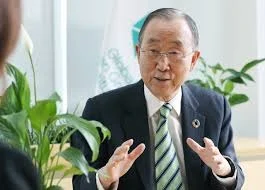
    Ban Ki-moon Warns UN Risks Irrelevance Without Security Council Reform

    Former United Nations Secretary-General Ban Ki-moon on Tuesday challenged the Security Council to overcome deep rivalry and distrust, warning that failure to reform its practices, particularly the use of the veto, risks pushing the Organisation toward irrelevance or collapse.

    Speaking during an open Security Council debate on “Leadership for Peace,” Ban called on Council members to look beyond narrow national interests and support UN leadership capable of steering the world away from catastrophe and toward renewed cooperation.

    “The path of each for themselves is no different from the path of mutual destruction,” Ban told the Council.

    Now an emeritus member of The Elders, Ban said global conditions have deteriorated significantly since he left office at the end of 2016, marked by growing confrontation among major powers, weakening multilateralism and persistent conflicts in which civilians bear the heaviest costs.

    “This deeply disappointing situation is characterised by confrontation rather than cooperation among major powers,” he said, citing the war in Ukraine, mass civilian casualties in Gaza and the erosion of international cooperation even as the global climate crisis accelerates.

    Ban said the broader crisis confronting the international system cannot be separated from the Security Council’s own shortcomings.

    “The Security Council’s ongoing failure to properly function constitutes the most egregious cause,” he said, pointing to the repeated use of the veto by permanent members to shield themselves, their allies and their proxies from accountability.

    Without meaningful reform, Ban warned, civilians would remain unprotected and impunity would persist. “Without it, the UN risks lurching towards either collapse or irrelevance,” he said.

    Turning to the selection of the next Secretary-General, Ban urged Member States to consider adopting a single, non-renewable seven-year term, arguing that it would strengthen the independence of the office.

    The current practice of two five-year terms, he said, leaves Secretaries-General “overly dependent on this Council’s Permanent Members for an extension,” even though the arrangement is a convention rather than a requirement of the UN Charter.

    “The General Assembly holds the power to set the terms of the appointment itself,” Ban said, calling on Member States to exercise that authority to empower future UN leaders more fully.

    Secretary-General António Guterres’s second term expires at the end of next year, and the formal selection process is already under way. In November, the Presidents of the General Assembly and the Security Council jointly launched the process in line with General Assembly resolution 79/327, which emphasizes transparency and inclusivity.

    Under established procedures, candidates are nominated by Member States or regional groups and must submit a vision statement, curriculum vitae and disclosures on campaign financing. The President of the General Assembly convenes publicly broadcast interactive dialogues with candidates while engaging closely with Member States throughout the process.

    As of mid-December, Rafael Mariano Grossi, Director-General of the International Atomic Energy Agency, is the only candidate formally nominated, put forward by Argentina.

    Addressing the Council during the debate, Anjali Dayal, Associate Professor of International Politics at Fordham University, said the next Secretary-General would assume office at a moment of unprecedented strain for the United Nations, including a deepening funding crisis that is already reducing the Organisation’s capacity to deliver essential services.

    “That will result not just in shrinking this Organisation, but also in less of the work that only the UN can do at scale,” Dayal said, warning of fewer vaccinations, reduced humanitarian assistance and diminished mine-clearance operations even as global needs continue to grow.

    Dayal said history demonstrates that, even during periods of acute geopolitical division, the Security Council has been capable of selecting leaders who advanced peace and cooperation.

    She recalled the prolonged deadlock that preceded the appointment of Javier Pérez de Cuéllar in 1981 and the criticisms faced by U Thant, noting that both Secretaries-General played key roles in helping to end the Iran-Iraq war, advance peace efforts in Cambodia and Nicaragua, and manage crises such as the Cuban Missile Crisis.

    Those examples, Dayal said, illustrate that the Secretary-General’s influence lies less in material power than in the ability to shape ideas, narratives and long-term cooperation within the international system.

  • Corruption: Going to equity with unclean hands

    Corruption: Going to equity with unclean hands


    Selective prosecutions, moral contradictions, and the crisis of legitimacy in Nigeria’s anti-corruption war

    ABUBAKAR Malami was the minister of justice and attorney-general of the federation. He served under former president, the late Maj-Gen. Muhammadu Buhari, between 2015 and 2023. Buhari’s tenure must rank among the worst years of the country. They were not only wasted, but he took Nigeria back by at least 30 years.

    For all of last week, at least up to Sunday, December 14, Malami was in jail in the custody of the Economic and Financial Crimes Commission (EFCC) in Abuja. Like Buhari, Malami cannot be credited with exceptional skills, intellect or administrative sagacity.

    He is not associated with any landmark reforms of the country’s judicial processes and system in the eight years of his stay. He is not known to be a brilliant lawyer though he is a senior advocate of Nigeria (SAN).

    He came. He saw. But he was not known to have done anything that could be said to be beneficial to the majority of litigants or the administration of justice.

    Malami has remained in relative obscurity in the over two years he had been out of office and power, except for once when he claimed that the convoy of his cars was attacked by bandits under the direction of his political enemies.

    He is of the ruling All Progressives Congress (APC), but it appears he is not of the branch headed by Nigeria’s president, Alhaji Bola Ahmed Tinubu.

    Indeed, he had been linked to the Congress for Progressive Change (CPC) faction of the late Buhari whose leading lights were said not to be favourably disposed to the reelection of Tinubu for a second term in 2027.

    In addition, Malami is reported to be angling to contest for governor of Kebbi state on the ticket of an opposition party, African Democratic Congress (ADC).

    Malami is yet to be arraigned in court. But if public media reports are to be believed, he may likely face grave charges which operatives of the anti-graft agency were reported to be framing.

    There are reports that the former minister could face charges on alleged terrorism financing; questions over the handling of the former Head of State, late Gen. Sani Abacha’s part-loot of $322 million retrieved from Switzerland and the island of Jersey; money laundering involving his alleged link to 46 bank accounts; abuse of office including findings on decisions over asset recovery, seized asset disposal, and contract approvals during his tenure.

    There are also other suspicious transactions in connection with N10 billion investment in his home state, Kebbi, as well as involvement in a $419 million judgment debt.

    Malami has denied the allegations. His lawyers have argued that his continued detention was unlawful and unconstitutional. They claimed that the former minister had been cooperating with the government investigators.

    That same last week, towards the end of it, another of Buhari’s ministers who was in charge of labour and employment, Dr. Chris Ngige, was arrested and taken into custody by the EFCC.

    It was reported that he was still in his night gown (pyjamas) when he was whisked away in the early hours of the morning on that fateful Thursday.

    Ngige was a former governor of Anambra state on the ticket of the People’s Democratic Party (PDP). His victory was annulled after about three years in office.

    He defected to the then opposition party and was made a minister when the APC stormed to power in 2015.

    The ex-minister also spent last weekend in prison to await his application to be granted bail on Monday (yesterday). By the time you are reading this, he may have been sprung from jail and preparing for his day in court.

    Ngige is charged with abuse of office; awarding seven contracts worth N366 million to Cezimo Nigeria Limited, a company alleged to be linked to his associate Ezebunwa Charles.

    He is also charged with contract fraud for awarding eight contracts worth N583 million to Zitacom Nigeria Limited, also linked to Ezebunwa.

    There are allegations of bribery; receiving N38.6 million from Cezimo Nigeria Limited, N55 million from Zitacom, and N26 million from Jeff & Xris Limited through his campaign organisation and scholarship scheme.

    He is accused of granting unfair advantage; awarding contracts to Olde English Consolidated Limited for N664 million, and Shale Atlantic Intercontinental Services Limited for N161 million, linked to another of his associates, Uzoma Igbonwa.

    There are other contracts; awarding N362 million worth of contracts to Jeff & Xris, owned by Chukwunwike Nwosu.

    Ngige pleaded not guilty to all the charges which the EFCC described as offences which violated sections 17(a) and 19 of the Corrupt Practices and Other Related Offences Act, 2000.

    So Ngige was cooling his heels at the weekend in Kuje prison.

    Ngige is also of the APC but he is not known to be full-throated in supporting the extant president of the country produced by his party.

    He is not also known to be publicly antagonistic of his kinsman, Peter Obi, who was the Labour Party candidate in the bitterly contested and controversial 2023 presidential election.

    Obi has been the nightmare of the APC for more than two years, probably because he defeated Tinubu in Lagos state in the last presidential election.

    Tinubu was a two-term governor of Lagos and he was until 2023 touted as unbeatable in the state he holds by its jugular.

    Olu Agunloye was a minister of power and steel under the PDP administration of President Olusegun Obasanjo. Though his trial did not originate with the current regime, he is facing prosecution by the EFCC over alleged $6 billion fraud related to the Mambilla Hydroelectric Power Project.

    He is facing an amended seven-count charge on corruption, abuse of office, forgery, and disobedience of a presidential directive. He has pleaded not guilty to the charges.

    Justice Jude Onwuegbuzie is in charge of the federal high court in Abuja where his trial is being heard.

    An investigator and other witnesses have testified that Agunloye allegedly forged the contract papers for the award in favour of Sunrise Power and Transmission Company Limited.

    The contract was said not to have budgetary provision, no approval, and no cash backing. The former minister was alleged to have collected kickbacks totaling about N5 million.

    Agunloye is free on a N50 million bail with two sureties in like sum.

    There are a few other high-profile cases involving some APC party men who appear not to be enamoured to the presidency of their current party leader.

    The same disposition to prosecution by the regime cannot be said to be the lot of other party faithful who had been alleged to have committed crimes.

    One such person is Betta Chimaobim Edu. She was the pioneer minister of humanitarian affairs in the first Cabinet of this administration.

    On January 8, 2024, Tinubu directed the suspension of Edu from office. Almost two years later, the former minister is still on suspension though her position has reluctantly been given to another.

    Edu was accused of financial misconduct involving huge sums of money meant for vulnerable groups.

    The main allegations included the transfer of N585 million to a private bank account which allegedly belonged to one Bridget Oniyelu.

    The money was supposedly for vulnerable groups in Akwa Ibom, Cross River, Lagos, and Ogun states.

    There was also an alleged fraud of N44 billion at the National Social Investment Programme Agency (NSIPA) which was under her ministry.

    In addition, there were questions raised about a controversial N438 million consultancy contract awarded by her ministry to New Planet Project Limited, a company allegedly linked to her colleague minister of interior, Olubunmi Tunji-Ojo.

    Edu denied any wrongdoing but remained sacked. Tunji-Ojo also denied any wrongdoing and remains in office.

    If the anti-graft posturing of this regime is to be taken seriously, it must indict and prosecute Edu, or formally clear and rehabilitate her. The same treatment should be meted to Tunji-Ojo.

    There was also the issue of the director of NSIPA, Dr. Halima Shehu, whose travails coincided with that of her supervising former minister, Edu.

    She was suspended as the national coordinator of NSIPA over alleged financial impropriety involving billions of naira.

    She was subsequently arrested by the EFCC and placed in the agency’s custody while it allegedly investigated the movement of N17 billion from NSIPA accounts to suspicious beneficiaries.

    As usual, Shehu was promptly released from custody. As far as information in the public domain is concerned, the N17 billion payments to alleged phantom beneficiaries are still being investigated by the EFCC two years on.

    In 2015, the EFCC investigated the current president of the Senate, Godswill Akpabio, over alleged fraud and looting of Akwa Ibom state funds when he was governor.

    A petition by a lawyer, Leo Ekpenyong, accused Akpabio of using aides to steal N18 billion from the state’s treasury.

    Akpabio was grilled by the anti-corruption agency before he was installed as the president of the Senate and chairman of the National Assembly.

    But he was neither indicted nor cleared.

    Even in his present post there have been allegations of improper conduct. We know that even in his present position he has no immunity against indictment and prosecution if found culpable.

    There are serving ministers who have allegations of fraud and money laundering against them prior to their appointments by this regime.

    The defence minister who just resigned his appointment and the defence minister of state who is still in office have been accused of having links with bandits and terrorists.

    The budget minister was accused of being a bagman for Abacha.

    No Nigerian in their right senses would oppose the fight against corruption. The excesses of office holders across the board and nationwide are so brazen and egregious.

    Their proclivity and capacity to loot the commonwealth are unfathomable. Their tendencies to steal border on the abnormal.

    For instance, why would an office holder in his 50s steal N1 billion, a sum he cannot exhaust in one lifetime no matter how profligate he might be.

    By the way, life expectancy in Nigeria is barely 55 years.

    But we read reports of not just looting billions of naira but billions of dollars.

    So Nigerians and their government should be angry and fight such corrupt lunatics with every fibre in their body that they can muster.

    However, that administration that should mobilise Nigerians to battle the looters of the commonwealth is not the Tinubu regime. It has no moral standing. Its credentials are sullied.

    For this regime, mmiri siri n’isi gbaruo (the stream was polluted from the fountainhead).

    As the Good Book asked, if the foundation is destroyed, how much can the righteous few do?

    This government is led by a man whose name is mired in mystery. And this is being generous.

    The parents that Tinubu claimed are said not to be his. The schools he allegedly attended including primary, secondary, and university are still subjects of controversy.

    He was the man who graduated from a secondary school in Lagos four years before that school was founded.

    In 2023, he fought spiritedly in law courts in the United States and Nigeria to ensure that the certificate (diploma) which he claimed was awarded to him by the Chicago State University was not made public.

    He had been accused of forging the diploma which he had been using as a qualifying document in his contests for political offices since 1999.

    A lawyer, Festus Keyamo, once battled Tinubu on the authenticity of his credentials for office as governor.

    The same Keyamo is now a minister in the administration of Tinubu whom he accused of malfeasance.

    In light of the antecedents of Tinubu, it has not come as a surprise that he runs an opaque regime.

    His government has been accused of spending over N17 trillion on contracts for crude oil pipeline security in just one year.

    There is no evidence yet that the money was appropriated by the National Assembly.

    He has neither debunked the grave allegation nor provided evidence to the contrary.

    The regime is adroit in deflection and propaganda, but its most potent tool when cornered is to ignore.

    That is the tool it has chosen on the bogus, if not rogue, N17 trillion pipeline protection contracts.

    Now the opaque regime has cranked the engine of wholesale auctioning of the country and its citizens.

    The Federal Inland Revenue Service (FIRS) has reportedly signed a memorandum of understanding with France’s DGFiP to “modernise tax administration”, ensure “data-driven enforcement”, and “information exchange”.

    When you strip the jargon, this simply means Nigeria has surrendered the engine room of its tax system to France at a time Nigeria boasts of some of the best brains in fintech.

    Nigeria’s taxpayers’ data is being exposed to a French firm ahead of the commencement of the tax reform laws next month.

    In every other country, tax data is a national security issue. Not in Tinubu’s Nigeria.

    Under Buhari, the country of first call was Britain. With Tinubu, France is home.

    It has even been alleged that Tinubu’s recent military intervention in Benin Republic to foil a coup was at the instigation of Emmanuel Macron.

    This government that is pretending to be fighting corruption is the same that awarded a N15 trillion contract for the construction of a coastal highway from Lagos to Calabar without appropriation, without public tendering, without competitive bidding, and without environmental impact assessment.

    And to the business partner of the president.

    His son is also alleged to be a shareholder in a company associated with the contractor.

    Meanwhile, the regime keeps prevaricating on how much the road would cost per kilometre.

    Even the N15 trillion project cost is bogus.

    If the government is unsure of the cost per kilometre, then it cannot claim to know how much the 700km road would cost at the end of the day.

    The route for the road is not certain.

    Reports suggest the president extended the highway coverage to Ebonyi and Edo states, which were not in the original plan.

    Ebonyi is the home state of the minister of works supervising the contract. Edo is governed by the president’s Man Friday.

    These are the bona fides of the man who is prosecuting former government officials.

    Again, as the Holy Bible says, it would be helpful if the president first removed the speck in his own eyes before…

    Ugo Onuoha, Veteran Journalist, was the Managing Director, Editor-in-Chief, Champion Newspapers Limited. He writes in from Lagos.

  • Abia Enacts Startup Law, Launches Electric Bus Project

    Abia Enacts Startup Law, Launches Electric Bus Project

    Even as states in Nigeria’s North grapple with existential security challenges, some southern states continue to push forward with strategic development initiatives.

    One such state is Abia, where Governor Alex Otti has assented to the Startup Bill passed by the House of Assembly, officially enacting it as the Abia State Startup Law, 2025.

    The Commissioner for Information, Mr. Okey Kanu, disclosed this on Monday while briefing journalists on the outcome of the State Executive Council meeting held in Umuahia.

    Kanu said the law was designed to domesticate and implement the Nigerian Startup Act, 2022 within Abia State.

    According to him, the legislation provides a framework to promote innovation, support technology-enabled startups, nurture digital talent, and position Abia as a hub for technology and innovation.

    “The law applies to companies with major operations in Abia and startups duly recognised and labelled under the national Act,” he said.

    The commissioner also announced plans to roll out a state-owned electric bus mass transit system under the Abia Transport Transformation Project.

    He said the first batch of 20 electric buses arrived in November, while another 20 are expected early next year. About 100 buses will be deployed in the first phase of the project.

    Kanu explained that the 40-seater buses, which are custom-built for Abia, can travel up to 400 kilometres on a single charge.

    He added that the buses are equipped with modern safety and comfort features, including surveillance cameras, charging ports, disability access, emergency exits and fire extinguishers.

    According to him, the initiative will position Abia at the forefront of clean and environmentally friendly mass transit in Nigeria.

    On long-term planning, Kanu disclosed that the Abia 25-Year Development Plan would be unveiled on Tuesday at the International Conference Centre, Umuahia. He said the event would attract development partners, advisory council members, local government chairmen, traditional rulers and other stakeholders.

    In the health sector, the commissioner said the Abia Global Medical Mission commenced on Monday and would run until December 20, 2025, offering free advanced medical services across designated centres in the state.

    He also announced that 850 youths would graduate from the second cohort of the Abia Techrise ICT Training Programme on Saturday, bringing the total number of beneficiaries trained under the programme in 2025 to 1,399.

    Kanu further said the Ministry of Works was carrying out direct labour interventions on major roads ahead of the yuletide.

    He urged residents to remain vigilant during the festive season and report suspicious activities to security agencies, noting that security agencies have been placed on full alert to protect lives and property across the state.

  • Cross River Assures Readiness for 2025 Carnival Calabar

    Cross River Assures Readiness for 2025 Carnival Calabar

    The Cross River State Tourism Bureau (CRSTB) has assured stakeholders and visitors of the state’s full preparedness for the hosting of the 2025 Carnival Calabar.

    The Managing Director of CRSTB, Mr. Ojoi Ekpenyong, gave the assurance in a statement on Monday as the state marked 20 years of sustaining Carnival Calabar as an international cultural brand.

    Ekpenyong said the state government had put in place expanded hotel capacity, improved airlift, enhanced security, and upgraded tourism infrastructure ahead of the annual event, widely regarded as Nigeria’s biggest street party.

    According to him, Carnival Calabar remains the flagship of the state’s tourism calendar, attracting thousands of local and international tourists every December, with spillover events extending to destinations such as the Obudu Mountain Resort.

    “The government and people of Cross River are celebrating 20 years of sustaining an international brand — Carnival Calabar and Festival,” he said.

    As part of preparations, Ekpenyong noted that the state had strengthened air connectivity through CallyAir with the acquisition of two new aircraft to ease access to Calabar during the festive period.

    He added that about 4,000 hotel rooms had been prepared, while grants were approved to assist hospitality facility owners in upgrading and cleaning their facilities.

    The state, he said, had also invested in beautification and urban renewal, including early festive lighting along major roads and the unveiling of one of the tallest Christmas light towers in Nigeria.

    “Our roads are wearing new looks with fresh asphalt. There is the introduction of VIP seating for visitors during the carnival, and the opening of a cinema this month at the Calabar Marina Resort,” Ekpenyong said.

    He assured tourists of their safety, stressing that security remains a top priority before, during, and after the carnival.

    Ekpenyong also noted that Cross River’s version of “Detty December” commenced on Nov. 1 at the Christmas Village and would run across multiple locations in Calabar until the end of the year.

    He disclosed that the grand finale of the 2025 Carnival Calabar would take place on Dec. 29.

  • Reps Summon Dangote Refinery, NMDPRA Over Downstream Sector Tensions

    Reps Summon Dangote Refinery, NMDPRA Over Downstream Sector Tensions

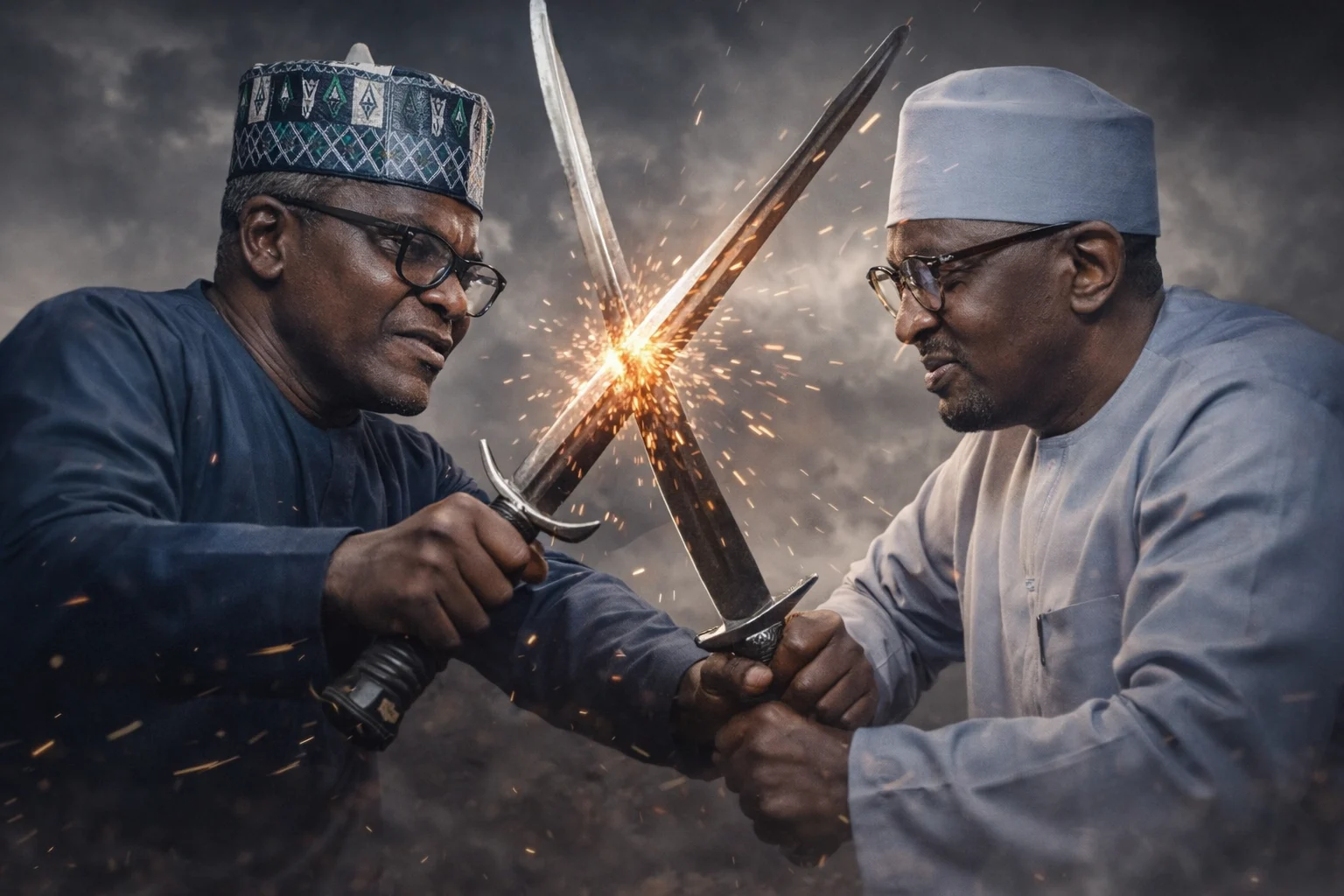
    Abuja — The House of Representatives Joint Committee on Petroleum Resources has invited the Dangote Petroleum Refinery and the Nigerian Midstream and Downstream Petroleum Regulatory Authority (NMDPRA) to an emergency meeting following a dispute that threatens stability in Nigeria’s downstream petroleum sector.

    Chairman of the committee, Ikenga Ugochinyere, disclosed this after an emergency meeting held in Abuja on Monday, warning that escalating tensions between key industry players could undermine recent gains achieved in fuel supply, pricing, and regulation.

    Ugochinyere said the committee’s intervention had become necessary as Nigeria continues efforts to stabilise the petroleum market in the post-fuel subsidy era.

    “We are guarding the hard-won stability in the downstream sector. Sustainable solutions require that we identify and address the critical issues, which is why we have invited the leadership of Dangote Refinery and the NMDPRA,” he said.

    The lawmaker explained that the renewed tension followed concerns and allegations raised by Africa’s richest man, Alhaji Aliko Dangote, against the petroleum regulator. He noted that several petitions submitted to the committee relate to the issuance of import licences and questions surrounding the capacity of domestic refineries to meet Nigeria’s daily petroleum consumption.

    According to Ugochinyere, the committee will comprehensively examine all outstanding matters when both the refinery and regulatory authorities appear before lawmakers.

    He stressed that resolving the disagreement is critical to maintaining investor confidence and ensuring uninterrupted fuel supply amid ongoing reforms in Nigeria’s oil and gas sector.

  • ActionAid Demands Probe Into Allegations Against NMDPRA Boss

    ActionAid Demands Probe Into Allegations Against NMDPRA Boss

    Abuja — ActionAid Nigeria has called on President Bola Ahmed Tinubu to intervene and ensure an independent public review following allegations involving the Chief Executive of the Nigerian Midstream and Downstream Petroleum Regulatory Authority (NMDPRA), Farouk Ahmed.

    The organisation said the move was necessary to reinforce accountability, transparency, and public confidence in governance institutions.

    In a statement released in Abuja, the Country Director of ActionAid Nigeria, Dr Andrew Mamedu, stressed the importance of institutional integrity and timely responses that strengthen democratic governance nationwide.

    Mamedu referenced media reports alleging foreign education expenses for four children of the NMDPRA boss, noting that the claims remain unproven. He urged calm, lawful scrutiny anchored in due process, fairness, and respect for all parties involved.

    He called on the Economic and Financial Crimes Commission (EFCC) and the Independent Corrupt Practices and Other Related Offences Commission (ICPC) to immediately commence a thorough, transparent investigation, with findings made public.

    ActionAid Nigeria commended Alhaji Aliko Dangote for raising concerns responsibly, describing whistleblowing as a positive civic duty that strengthens accountability and democratic participation.

    Mamedu emphasised the need to protect whistleblowers, describing them as vital partners in safeguarding public resources and promoting a culture where ethical conduct is rewarded and corruption discouraged.

    He said the allegations offered an opportunity for broader governance reforms, including modest leadership standards, verifiable income declarations, and responsible stewardship of public office to reduce inequality and expand opportunities for Nigerians.

    The organisation also highlighted ongoing petroleum supply challenges, calling for increased investment in functional local refineries to ensure fair pricing, energy security, reduced import dependence, and transparent market practices that benefit vulnerable citizens.

    ActionAid Nigeria noted that ending impunity would strengthen democracy, restore trust in public institutions, and reaffirm public service as a platform for national development rather than personal enrichment.

    The group further urged prompt clarification from the official concerned and advocated stronger asset declaration systems, verification processes, and public access to information to empower citizens and oversight institutions.

    ActionAid concluded by calling on Nigerians to actively monitor public resources, engage institutions constructively, and sustain collective demands for accountability, fairness, and effective service delivery across all levels of government.

  • Insecurity Major Threat to Tourism, Creative Sector in Africa – Expert

    Insecurity Major Threat to Tourism, Creative Sector in Africa – Expert

    A tourism and creativity expert, Mr Sunnie Chukumele, has identified insecurity, especially in Nigeria, as a major obstacle to the growth of tourism, hospitality and the creative sector in Africa.

    Chukumele made this known on Sunday night in Abuja at the African Descent Creative Industry Leadership Summit, Honours and Beauty Pageant.

    The programme was organised by the Global Initiative for Leadership Success (GILS), a non-governmental organisation, in collaboration with the Federal Ministry of Art, Culture, Tourism and Creative Economy.

    Presenting a paper titled “Africa, Insecurity, and the Future of Tourism and Hospitality,” Chukumele said Africa’s tourism and hospitality sector had shown remarkable resilience since the COVID-19 pandemic, with many destinations recording near-record or record tourist arrivals.

    He, however, noted that insecurity remained a structural threat influencing where and how tourism develops across the continent.

    According to him, insecurity concentrates tourism benefits in safer locations, discourages investment in fragile regions and imposes recurring costs on operators and host communities.

    Chukumele said a forward-looking strategy must integrate community-centred development, practical safety measures, targeted infrastructure investment and stronger regional cooperation.

    “International tourist arrivals to Africa and tourism receipts have been on a strong recovery path since 2022.

    “United Nations tourism data and regional reports indicate that the continent returned to, and in many sub-regions exceeded, pre-pandemic levels by 2024 and 2025.

    “Africa recorded approximately 74 million international arrivals in 2024 and sustained positive growth into 2025,” he said.

    He stressed that when safety is combined with inclusion and smart investment, tourism could serve as both a beneficiary of stability and an engine for building it.

    The expert urged African leaders, particularly in Nigeria, to pursue lasting solutions to insecurity threatening sustainable development.

    On his part, Dr Raphael Obi, Chief of Staff to the Minister of Art, Culture, Tourism and Creative Economy, Mrs Hannatu Musawa, said the creative industry had emerged as one of the leading drivers of the global economy.

    Obi noted that countries were increasingly relying on the sector to stimulate economic growth, adding that Nigeria was richly endowed with creative talents that must be effectively harnessed.

    “As far as this industry is concerned, Nigeria is a hub of creativity and a beacon of hope in culture, arts, culinary expression and photography.

    “Our music, imagery and cultural expressions project Nigeria globally. For us in the ministry, we will continue to give our best to ensure the growth and development of this sector,”

  • Nwifuru Approves ₦150,000 Christmas Bonus for Ebonyi Workers

    Nwifuru Approves ₦150,000 Christmas Bonus for Ebonyi Workers

    Governor Francis Nwifuru announces ₦150,000 Christmas bonus for Ebonyi civil servants, promises free and fair local government elections.

    Ebonyi State Governor, Francis Nwifuru, has approved a ₦150,000 Christmas bonus for all categories of civil servants in the state.

    The governor made the announcement on Sunday during a church service at the Government House Chapel, Abakaliki, describing the bonus as part of his administration’s commitment to improving workers’ welfare.

    Governor Nwifuru noted that the decision was taken despite limited revenue accruing to the state over the past year, adding that his government remains focused on prioritising the well-being of its workforce.

    Speaking on the forthcoming local government elections in Ebonyi State, the governor assured aspirants of a level playing field, stressing that he has no preferred or anointed candidate.

    “As far as I am concerned, the will of the people must prevail. The people must choose their representatives without interference from any quarters,” Nwifuru said.

    He also reiterated his directive that political appointees seeking elective positions in the council elections must resign their appointments in line with existing electoral laws.

    “It is not my duty to pick who becomes chairman of any local government area. Any appointee contesting for chairmanship in the next council election must resign as stipulated by law,” the governor stated.

  • ECOWAS Leaders Renew Call for United Front Against Terrorism

    ECOWAS Leaders Renew Call for United Front Against Terrorism

    Abuja, Nigeria — West African leaders on Sunday renewed calls for a coordinated, multilateral approach to tackling terrorism and insecurity in the sub-region, warning that instability in one country poses a threat to all.

    Speaking at the opening of the 68th Ordinary Session of the ECOWAS Authority of Heads of State and Government in Abuja, Chairman of the Authority and Sierra Leone President, Julius Maada Bio, urged member states to strengthen collective security efforts through integrated intelligence sharing, coordinated border operations and the operationalisation of an ECOWAS standby counter-terrorism force.

    Bio described the session as a defining moment for the region, noting that ECOWAS, now 50 years old, must confront escalating security challenges that threaten the future of more than 400 million people in West Africa.

    “West Africa faces some of the most complex and evolving threats in its history,” he said, citing terrorism, violent extremism, organised crime and communal conflicts, particularly in the Sahel. “Instability in one nation is instability for all. No border can insulate us from violence.”

    He commended regional ministers of finance and defence for developing modalities to ensure sustainable financing and raise a 1,650-personnel counter-terrorism brigade by the end of 2026, stressing that security measures must be matched with governance reforms, education, job creation and community resilience to effectively dismantle extremism.

    The ECOWAS chairman also expressed concern over political instability in Guinea-Bissau and the attempted coup in Benin Republic, reaffirming the bloc’s zero tolerance for unconstitutional changes of government.

    “ECOWAS does not, and will not, compromise on democratic governance,” Bio said, adding that the organisation remains committed to supporting credible and time-bound transitions back to constitutional rule where necessary.

    Nigeria’s President Bola Tinubu, represented by Vice-President Kashim Shettima, echoed the call for deeper regional cooperation, saying no single country can address terrorism, violent extremism, transnational crime and other cross-border threats alone.

    “Our security, prosperity and resilience are indivisible,” Tinubu said. “We must sit at the same table, speak with one voice and act with shared resolve.”

    President of the ECOWAS Commission, Dr Omar Touray, said recent global and regional developments — including rising insecurity in the Sahel and shifting geopolitical dynamics — pose significant challenges to achieving the bloc’s Vision 2050 objectives. He noted that ECOWAS is reinvigorating its economic integration agenda through the operationalisation of the ECOWAS Business Council to mobilise regional capital and strengthen member states’ comparative advantages.

    On economic integration, leaders reaffirmed commitments to the ECOWAS Trade Liberalisation Scheme and the planned single currency, while announcing measures to ease regional travel. From January 1, 2026, member states will abolish air transport taxes and reduce passenger and security charges by 25 per cent to lower the cost of air travel across West Africa.

    The meeting underscored ECOWAS’ resolve to strengthen security cooperation, defend democratic governance and deepen economic integration as the region navigates growing security and political challenges.