“We Are Victims of Both Terror and State Marginalisation”
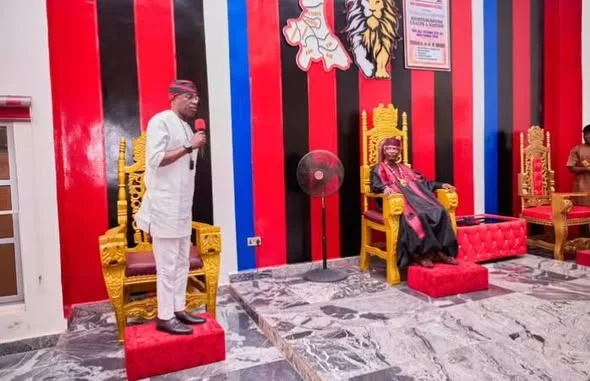
The Ochetoha K’Idoma, the apex socio-cultural organisation of Benue South Senatorial District (Zone C), has formally protested the exclusion of Idoma and Igede communities from the itinerary of the visiting United States Fact-Finding Mission led by Congressman Riley Moore.
In a petition submitted to the U.S. Embassy in Nigeria, the group described the omission as a deliberate act that reinforces what it called a “dangerous and misleading narrative” portraying Benue State’s security crisis as affecting only Tiv-speaking areas.
“This exclusion is not an oversight; it is a systemic erasure of the suffering of our people,” the organisation stated.
The Invisible War
According to the petition, Benue South has endured sustained violent attacks for more than a decade. A 12-year timeline (2013–2024) attached to the letter documents repeated massacres across Agatu, Apa, Otukpo, and Obi Local Government Areas.
The group cited the 2016 Agatu Massacre, where more than 500 people were reportedly killed, and the April 2023 Umogidi attack in Otukpo LGA, during which 52 victims were buried in mass graves.
“Our land flows with blood,” the statement said. “Yet because our people absorb displaced families into private homes rather than formal IDP camps, the world assumes we are safe. We are not.”
Demands to the U.S. Delegation
The Ochetoha K’Idoma called on the U.S. Fact-Finding Mission to:
Grant an immediate audience to leaders of Benue South
Correct the distorted narrative that confines insecurity in Benue to a single ethnic group
Channel humanitarian relief and reconstruction assistance to the Apa–Agatu corridor
In a statement signed by Dr. Echeofu Agada, Public Relations Officer of the organisation, the group warned that excluding Benue South undermines the credibility of any investigative mission.
“You cannot claim to establish facts while ignoring half the victims,” the statement read. “The silence of Benue South is not peace; it is the silence of the graveyard.”
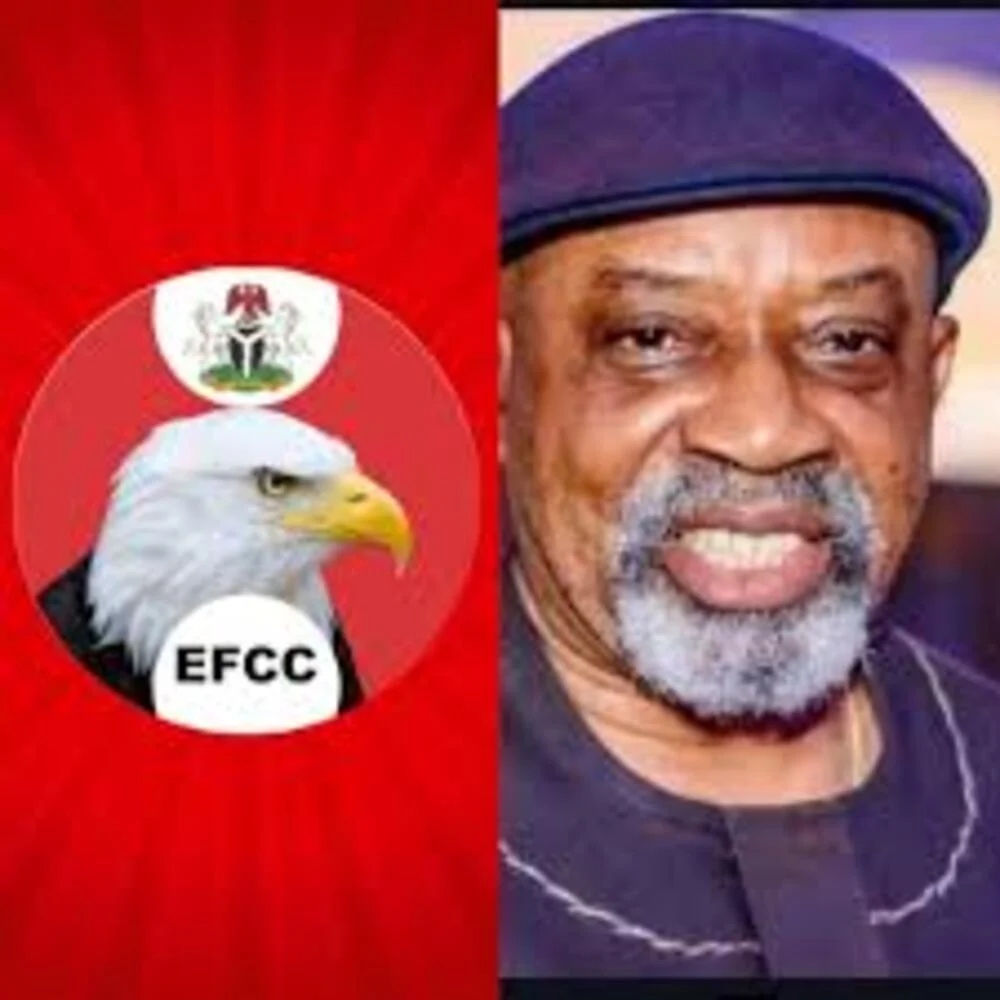
The Economic and Financial Crimes Commission (EFCC) will arraign former Minister of Labour and Employment, Chris Ngige, on Friday over alleged corruption, the News Agency of Nigeria (NAN) reports.
Ngige, also a former Governor of Anambra State, will appear at a Federal Capital Territory High Court in Gwarimpa, Abuja, as the sole defendant in an eight-count corruption charge (FCT/HC/CR/726/2025).
Filed on December 9 by a legal team led by Sylvanus Tahir, SAN, the charges allege that Ngige, while serving under ex-President Muhammadu Buhari, used his position to benefit companies linked to his associates.
He is accused of awarding NSITF contracts worth over N1.8 billion to companies including Cezimo Nigeria Limited, Zitacom Nigeria Limited, Jeff & Xris Limited, Olde English Consolidated Limited, and Shale Atlantic Intercontinental Services Limited.
Ngige is also alleged to have accepted gifts totaling N119,783,000 through organisations linked to him, including the Senator Chris Ngige Campaign Organisation and the Chris Ngige Scholarship Scheme, while performing official duties.
The offences contravene the Corrupt Practices and Other Related Offences Act, 2000, specifically Sections 17(a) and 19, and are punishable under Section 179(c) of the Act.
Mr. Gbenga Onitilo, Chief Executive Officer of TravelDen, has cautioned that unchecked price hikes could erode the appeal of Nigeria’s popular Detty December festivities.
Speaking with journalists in Lagos on Thursday, Onitilo said many visitors were already voicing frustrations over inflated costs, warning that the trend could dampen enthusiasm for the holiday season and hurt the tourism sector.
He described the current pricing landscape as “unsustainable,” noting that some hotels, event organisers, and service providers were charging between three and six times their usual rates.
“Accommodation, entertainment, and hospitality services have gone overboard. We are gradually creating an environment that discourages returning Nigerians and international visitors,” he said.
Onitilo explained that Detty December gained momentum in 2024 through social media, which showcased Nigeria’s rich nightlife, food culture, concerts, and tourism experiences. The season, he added, became a homecoming highlight for Nigerians in the diaspora eager to reconnect with local culture.
However, he lamented that some operators now set prices targeting foreign currency spenders, neglecting affordability—a key element of Nigeria’s festive tradition.
“If this continues, many Nigerians will choose other destinations with structured, reasonably priced holiday experiences,” Onitilo warned, citing Ghana and Rwanda as examples of countries with better-regulated festive economies.
He urged government intervention to stabilise pricing through regulation, stakeholder engagement, and possible subventions to protect the seasonal economy.
“This year, many stakeholders prepared well, but we have taken pricing out of order,” he said. “Bars, restaurants, and hotels are pushing limits unnecessarily.”
Onitilo emphasised that sustaining Detty December would require collaboration, fair pricing, and long-term planning to keep Nigeria competitive and attractive to both local and international holidaymakers.
The 44th Federation of Public Service Games (FEPSGA) officially opened on Thursday in Yola, Adamawa State, with calls for unity, collaboration, and renewed synergy across Nigeria’s public service.
Declaring the Games open, Deputy Governor Kaletapwa Farauta said the event underscores Adamawa’s capacity to host national tournaments and its commitment to using sports for economic growth and youth engagement.
“Sports remain one of the strongest tools for integration, peace, and collective progress,” Farauta said.
FEPSGA President, Aloku Amaebi, commended the Adamawa State Government for hosting one of the country’s largest multi-sport gatherings, describing it as a testament to the resilience of Nigeria’s public servants and the improved security situation in the North-East.
“This hosting is symbolic—it shows that the North-East is open, safe, and ready for national events,” Amaebi said.
Over the next three days, athletes from 84 ministries, departments, and agencies (MDAs) will compete in 16 sports including football, volleyball, basketball, tennis, and badminton.
The Ministry of Works won the march-past event, followed by the Federal Ministry of Agriculture and the Federal Inland Revenue Service.
Head of Service and Local Organising Committee Chairman, Abubakar Shehu, said more than 10,000 athletes are participating, adding that the Games would foster national unity and stronger public service bonds.
Nigeria’s 36 state governors will on Friday, December 12, converge in Abuja for the third edition of the Primary Health Care (PHC) Leadership Challenge Awards.
The award is an initiative aimed at promoting accountability and performance in the delivery of primary health care across the country.
The event, scheduled for 7:00 p.m., is organised by the Nigeria Governors’ Forum (NGF) in collaboration with the Federal Ministry of Health and Social Welfare, the National Primary Health Care Development Agency (NPHCDA), and UNICEF, with support from the Bill & Melinda Gates Foundation.
The awards were introduced to encourage governors to fulfill the commitments made under the Seattle Declaration of 2019, where all 36 governors pledged to improve access to quality primary health care services in their states.
Accountability Platform for Primary Health Care
The PHC Leadership Challenge uses a performance monitoring framework that tracks progress in governance, financing, service quality, data use, and sustainability of state-level health systems.
The framework, developed with input from national health stakeholders, is based on the principles of Meaningfulness, Availability, Movability, Measurability, and Simplicity (MAMMS).
Following the inaugural edition, indicators from the Nigeria Health Sector Renewal Investment Initiative were integrated into the assessment process.
The review system now rewards states not only for new investments but also for sustained funding, institutional leadership, and efficient management of PHC programmes.
NGF Chairman AbdulRahman AbdulRazaq described the platform as “a clear example of how political will can translate into measurable outcomes,” noting that it has become “a beacon of what strong, accountable leadership can achieve in Nigeria’s health system.”
Independent Review and Verification
The judging panel consists of public health professionals, academics, traditional and religious leaders, media representatives, and members of civil society organisations.
A statement released by Yunusa Tanko Abdullahi, NGF Director of Media and Strategic Communications explains that the assessments are conducted by independent verification agents recruited through the United Nations system to ensure objectivity and credibility.
Governors are evaluated on a range of indicators, including functionality of PHC governance structures, budget releases, staffing, infrastructure readiness, use of reliable data, and efforts to institutionalize leadership at the Local Government Area (LGA) level.
Awards and Incentives
A total of 13 awards will be presented this year — two for each geopolitical zone and one national prize for the overall best-performing state.
It was further explained tha the winners will share US$6.1 million, which must be reinvested in their state PHC systems.
Previous editions have seen strong participation from states across the federation.
In 2023, Borno State won the national prize, receiving $700,000, while Kwara, Jigawa, Ebonyi, Rivers, and Ondo were zonal winners.
In 2024, Anambra State, under Governor Charles Soludo, emerged overall best performer, taking home $700,000, with Rivers, Osun, Yobe, Kaduna, and Kwara leading their zones.
Gombe State received a Special Innovation Award for unique PHC initiatives.
Beyond Competition
Organisers say the challenge has evolved beyond a competition into a structured accountability mechanism that fosters peer learning among states.
Governors are expected to adopt and replicate effective strategies implemented by high-performing peers.
“This is not just an award ceremony,” AbdulRazaq said. “It is a recognition of measurable impact and a collective commitment to improving the health and wellbeing of Nigerians.”
The statement concludes that, “now in its third cycle, the PHC Leadership Challenge has become one of the country’s most consistent performance-based accountability initiatives, driving Nigeria toward the goal of universal access to functional, quality primary health care.”
It will be difficult, probably impossible, to make Nigeria work the way it is presently structured and governed. In theory, we are running a federal system. In practice, it is a unitary structure where operatives in Abuja determine who gets what, how, when, and where.
The Osun Example and a Flawed Federal System
Until recently, Osun State, governed by the opposition Peoples Democratic Party (PDP), became the latest victim of this distorted arrangement. The Supreme Court had ruled in July 2024 that local government funds must be paid directly to councils, not through state governments. It also declared that only democratically elected councils are entitled to federal allocations.
Yet, that judgment has largely been ignored. Some states have passed laws effectively nullifying it, and in many others, it remains business as usual.
Ironically, the same federal government that sought the ruling, under President Bola Tinubu, has itself been accused of flouting it. For months, Abuja withheld Osun’s local government allocations, claiming that PDP-controlled councils were illegitimate. The state was forced to rely on Governor Ademola Adeleke and his nephew, musician Davido, who reportedly contributed funds to pay council workers’ salaries.
When Osun challenged the federal government at the Supreme Court, the court struck out the case for lack of standing but condemned Abuja’s action as “illegal and egregious.” Both sides claimed victory, but Nigerians were left with the same lesson: partisan politics trumps governance.
Politicians vs. Statesmen
The Osun case typifies a larger truth, partisan politicians cannot build nations. They are fixated on winning the next election, not on laying enduring foundations. Any country dominated by politicians rather than statesmen will struggle on the lower rungs of global development. That, sadly, has been Nigeria’s reality since the military sacked the First Republic in 1966.
Nation-Building: A Process, Not an Event
Nigeria will not work until we are intentional about making a nation out of the country. Building a sustainable nation requires a shared vision that fosters unity, common values, and inclusive governance. It also demands:
Transparent and accountable institutions
Security and the rule of law
Diversified economic development beyond oil
Investment in education, healthcare, and innovation
Social cohesion and citizen participation
Without these, our quest for progress will remain an illusion.
The Foundation Is Broken
The biblical question in Psalm 11:3 asks: “If the foundations be destroyed, what can the righteous do?” Nigeria’s foundation, fractured by the 1966 coup and deepened by years of military rule, remains defective. The 1999 Constitution, hurriedly drafted by the Abdulsalami Abubakar junta, was designed to serve narrow interests—not the people. For nearly three decades, we’ve been trying to erect a nation on a bogus foundation.
To move forward, Nigeria must start afresh, with a people-driven constitution that reflects true federalism and equity.
A Case for Restructuring
Many credible voices, including The Patriots led by Chief Emeka Anyaoku, have long called for a new national arrangement. Their proposals include:
A new, people-driven Constitution drafted by a non-partisan Constituent Assembly and approved through a referendum
True federalism with six or eight federating zones, each with its own constitution
Fiscal federalism and devolution of powers
A smaller federal cabinet and unicameral legislature
Electoral and judicial reforms, including technological voting and specialized courts
These ideas, if sincerely implemented, can provide a roadmap to rebuild Nigeria.
Structural Inequities and Centralized Power
The existing federal structure, largely created by military fiat, is riddled with inequities. For instance, the old Kano State was split into Kano and Jigawa, now boasting over 70 local councils combined—while Lagos, with a similar population, has only 20. This imbalance affects representation and resource distribution.
Power is dangerously centralized in the presidency, making elections a do-or-die affair and fueling corruption. The figures involved in federal scandals have ballooned from billions to trillions of naira, yet Nigerians no longer express shock. The presidency has become a “golden calf”, an object of worship.
Unchecked power breeds inefficiency, arrogance, and impunity. The signs are visible everywhere.
The Way Forward
To make Nigeria work, we must:
Rebuild the foundation through a new constitution anchored on fairness and true federalism.
Shift from partisan politics to statesmanship, focusing on national unity rather than party victory.
Strengthen institutions and make them independent of political interference.
Diversify the economy and ensure infrastructure, power, and education receive sustained attention.
Restore security and trust between citizens and the state.
Until these steps are taken, Nigeria will continue to move in circles—rich in potential, poor in leadership, and crippled by structure.
In conclusion, Nigeria’s tragedy is not that it lacks talent or resources, but that it is burdened by a defective system and a political class unwilling to change it. The challenge before us is to summon the courage to rebuild from the ground up. Otherwise we will keep trying to place something on nothing and expecting it to stand.
Ugo Onuoha is a journalist, public affairs commentator, and former Managing Director/Editor-in-Chief, Champion Newspapers Limited. He writes from Lagos.
President Bola Ahmed Tinubu has approved the constitution of the governing boards of the National Agricultural Development Fund (NADF), the Bank of Agriculture (BOA), and the Universal Basic Education Commission (UBEC).
The announcement was contained in a statement by Bayo Onanuga, Special Adviser to the President on Information and Strategy.
At the UBEC, Senator Umaru Tanko Al-Makura, earlier appointed in July, will continue to serve as chairman of the board.
Other members include Uchendu Ikechi Mbaegbulem (South East), Gift Ngo (South South), Mrs. Ibiwunmi Akinnola (South West), Dr. Meiro Mandara (North East), Dr. Abdu Imam Saulawa (North West), and Professor Paul Ibukun-Olu Bolorunduro (North Central).Each member will serve a four-year term in the first instance.
For the Bank of Agriculture (BOA), President Tinubu confirmed the appointments of Muhammad Babangida as chairman and Ayo Sotinrin as managing director.
He also approved the appointments of three executive directors and five non-executive directors representing Nigeria’s six geo-political zones.
The non-executive directors include Aminu Malami Mohammed (North East), Charles Amuchienwa (South East), Oladejo Odunuga (South West), Rabiu Idris Funtua (North West), and Kochi Donald Iorgyer (North Central).
In the National Agricultural Development Fund (NADF), the President reaffirmed the appointment of Muhammad Abu Ibrahim as Executive Secretary and CEO, while constituting a new board to support the agency’s mission of expanding access to affordable agricultural finance.
Mallam Bello Maccido, pioneer chairman of FBNQuest Merchant Bank Limited and a veteran of over 30 years in financial services, will chair the NADF board, representing the North West.
Other members include: • Dr. Nelson Henry Essien (Akwa Ibom, South South) • Amina Ahmed Habib (Jigawa, North West) • Engr. Akinyinka Olufela Akinnola (Ondo, South West) • Hassan Tanimu Musa Usman (Borno, North East) • Lufer Samson Orkar (Benue, North Central) • Felix Achibiri (Imo, South East).
Achibiri is the Group Director of Genesis Energy Holdings and Chairman/CEO of DFC Holdings Limited.
The new boards are expected to strengthen institutional performance, deepen accountability, and enhance national development outcomes in education, agriculture, and rural financing.
ControlThe Minister of the Federal Capital Territory (FCT), Nyesom Wike, has approved the appointment of Mukhtar Galadima as Senior Special Assistant on Development Control and Planning.
The announcement was made on Wednesday in Abuja by Lere Olayinka, Senior Special Assistant to the Minister on Public Communications and Social Media.
Galadima, a seasoned town planner, brings more than three decades of professional experience in urban planning and administration within the FCT Administration.
Over the years, he has served in strategic capacities, including the Department of Development Control and the Satellite Towns Development Agency, before his appointment as Director of Development Control under the Abuja Metropolitan Management Council in 2016.
He retired from the civil service in November.
Olayinka noted that Galadima has served on key committees such as the Abuja Masterplan Restoration Task Team and the Committee on the Review of Revoked Land Titles and Change of Land Use.
The appointment, he added, takes immediate effect.
As Nigeria prepares to inaugurate a new Minister of Defence, General Christopher Musa, recently pulled from his position as Chief of Defence Staff, the appointment highlights a familiar pattern: leadership reshuffles and reconfigurations of the security architecture that have so far failed to address the nation’s deepening insecurity.
Despite record defence budgets and years of military operations, Nigeria’s war against insurgency, terrorism, and violent crime remains far from won. Behind the official rhetoric of “decisive action” and “renewed hope,” the figures tell a sobering story: the country is spending more on security than ever before, yet becoming less safe.
An Internally Displaced Persons’ (IDPs) camp in Benue State
Between May 2023 and April 2024, at least 614,937 Nigerians were reported killed in violence linked to insecurity, according to data from the National Bureau of Statistics and independent research groups. Amnesty International estimates that more than 10,000 people were killed in the northern states alone during that period. Villages have been razed, farmers displaced, and highways turned into hunting grounds for kidnappers.
For 2025, the Federal Government earmarked ₦6.57 trillion for defence and security, nearly equivalent to the combined budgets of education, health, and agriculture. Yet insecurity persists. From Boko Haram’s remnants in the northeast to bandits in the northwest and separatist militias in the southeast, violence has become a permanent feature of daily life.
Nigeria’s insecurity cannot be solved by military might alone. “Nigeria’s security crisis is systemic, not merely operational,” a recent Counter-Insurgency and Anti-Terrorism Plan notes. “You can suppress conflict with soldiers, but you cannot kill an idea, or desperation, with bullets.” The country’s challenges go beyond insurgents and bandits; they are rooted in economic inequality, governance failures, and social exclusion, problems that no army, no matter how well-funded, can solve.
The Price of Peace Without Justice
Decades of economic inequality, corruption, and exclusion lie at the heart of the crisis. Wealth and resources are concentrated in the hands of a few, leaving large portions of the population marginalized. Communities excluded from decision-making or denied access to the country’s resources often turn to violence as a form of protest.
Other forces exacerbate the problem: mass illiteracy, youth unemployment, religious manipulation, and climate-induced displacement. Across northern Nigeria, desertification has swallowed farmland, forcing herders southward and triggering deadly clashes with farmers. In the mineral-rich central states, illegal mining networks, sometimes backed by foreign interests, have transformed into armed militias.
The insecurity is not merely a question of security operations; it reflects a broader governance failure, where political neglect, corruption, and impunity have created fertile ground for violence to thrive. Without addressing these structural issues, any attempt to suppress insurgency with force alone will remain temporary.
Spending More, Achieving Less
Nigeria’s defence spending has ballooned over the past four years: ₦966 billion in 2021, ₦1.2 trillion in 2022, ₦1.38 trillion in 2023, and now ₦6.57 trillion in 2025. Yet insecurity has worsened. World Bank data shows that the country’s military expenditure has risen faster than that of many African peers, without a corresponding reduction in violence.
Bigger budgets have meant more equipment, more contracts, and more commissions, but not necessarily more safety. Observers note that the country continues to fight the same war with the same tactics, expecting different results. High-profile military campaigns have occasionally neutralized specific threats, but the absence of complementary development and governance reforms has allowed insecurity to regenerate.
A New Strategy for a Broken Nation
Recognizing that force alone cannot deliver security, the counter-insurgency plan advocates a multi-dimensional approach that blends immediate security measures with long-term social, economic, and governance reforms. It is founded on the principle that lasting peace requires both containment of violence and addressing the root causes of unrest.
A central feature of the plan is the proposed Geopolitical Security and Development Summit. This high-level forum would bring together the Presidency, service chiefs, and state governors to coordinate priorities, share intelligence, and integrate human capital development into security planning. By aligning national and sub-national efforts, the summit aims to create a cooperative framework in which security operations respond to local realities rather than operating in isolation.
Education, rural empowerment, and healthcare are reimagined as tools of national defence rather than afterthoughts. By addressing poverty, unemployment, and social exclusion, the plan seeks to reduce the vulnerabilities that violent actors exploit. Economic opportunities, skill development, and access to services strengthen communities, making them less susceptible to recruitment by insurgents, bandits, or criminal networks.
Complementing this is a Stakeholders’ Summit involving religious leaders, traditional rulers, youth organizations, and civic groups. The forum is intended to promote interfaith dialogue, encourage conflict resolution at the community level, and empower citizens to take part in building peace. By fostering trust between communities and the state, the summit aims to prevent minor disputes from escalating into large-scale violence.
The plan emphasizes a shift in mindset: security is not just the absence of attacks but the presence of justice, opportunity, and inclusion. “Peace cannot be sustained through force alone,” it stresses. “It must be built on trust, understanding, and shared values.” Military interventions may suppress violence temporarily, but without addressing structural weaknesses, the gains remain fragile.
Reforming the Fault Lines
Several structural reforms are prioritized in the plan. Modernizing animal husbandry is one key step, including regulated ranching and strict enforcement of anti-open-grazing laws, paired with economic support for pastoralists to prevent marginalization.
Illegal mining, now a major source of funding for armed networks, is another critical target. The plan calls for a nationwide crackdown, formalizing artisanal mining into regulated cooperatives while reclaiming illegal mining corridors with security support.
Central to all reforms is restoring the rule of law. Impunity has become a pervasive issue in Nigeria, where political influence often shields offenders. The failure to prosecute crime erodes public trust and perpetuates violence. “A nation that does not punish crime inevitably rewards impunity,” the plan notes, emphasizing accountability as a cornerstone of sustainable security.
From Force to Fairness
At its core, the strategy envisions a paradigm shift in how Nigeria approaches security. True national security is not measured solely by military victories or the neutralization of threats; it is reflected in the ability of citizens to live without fear, access opportunity, and trust their government.
Political instability compounds insecurity. A culture of “do-or-die” elections fuels tension, undermines institutions, and perpetuates violence. Ensuring credible, peaceful elections is essential for creating a foundation on which sustainable security can be built.
The fight against terror and insurgency, the plan argues, will not be won solely in forests or creeks but in classrooms, farms, and courtrooms, where education, justice, and economic opportunity can finally triumph over despair.
“The time has come for Nigeria to prove that it can not only defend its territory but also heal its society,” the plan concludes.
Dahiru Ali: Journalist, academic, writes on governance, national security, and development policy. He is passionate about evidence-based reform and inclusive approaches to peacebuilding in Nigeria.
The Federal High Court in Abuja has appointed a liquidator to oversee the winding up of Dantata & Sawoe Construction Company Limited following its failure to pay a $1.4 million debt owed to Zutari Consulting Nigeria Ltd.
Justice Mohammed Umar, in a ruling on Wednesday, granted Zutari Consulting’s application for the appointment of a liquidator after finding that Dantata & Sawoe had been given sufficient time to settle the debt but continued to present excuses.
The debt arose from a settlement agreement over a $1,257,592.83 claim related to subcontract design work executed by Zutari Consulting on the Dangote Fertilizer Plant project in Lekki, Lagos.
Zutari’s counsel, Mr. Chris Ekemezie, told the court that an arbitration conducted in London under the International Chamber of Commerce (ICC) ruled in his client’s favour on April 7, 2021.
The arbitral tribunal found Dantata & Sawoe liable for the unpaid sums, which also included ZAR 2,136,623.39 and £4,364.38.
Despite multiple adjournments and a 30-day grace period granted in September 2024 for settlement, Dantata & Sawoe allegedly failed to pay, offering instead to remit only 75 per cent of the total amount, a proposal Zutari rejected.
Justice Umar, noting the company’s “unwillingness to honour its financial obligations,” appointed Joseph Abiolu, FCA, as liquidator in line with Sections 571(d), 572, and 573(1)(b) of the Companies and Allied Matters Act (CAMA) 2020.
The case has been adjourned until February 18, 2026, for the liquidator’s report.