Author: admin

  • NOA Urges Nigerians to Report Cancer Symptoms Early

    NOA Urges Nigerians to Report Cancer Symptoms Early

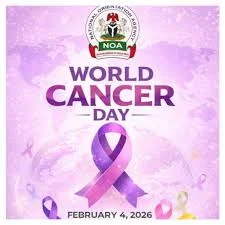
    The National Orientation Agency (NOA) has urged Nigerians to promptly report signs and symptoms of cancer to health facilities, stressing that early detection can significantly reduce cancer-related deaths.

    The Director of the agency in Jigawa State, Malam Ahmad Ibrahim, made the call in a statement issued in Dutse on Wednesday to mark World Cancer Day 2025, observed annually on February 4.

    Ibrahim said the agency joined the global community to raise awareness on cancer prevention, early detection and equitable access to care, noting that cancer remains a major public health challenge in Nigeria.

    He said many cancer cases in the country are detected at advanced stages due to low awareness, stigma and limited access to screening services.

    According to him, cancer is not a death sentence if detected early, adding that many forms of the disease are preventable through healthy lifestyle choices.

    Ibrahim listed breast cancer, cervical cancer, prostate cancer, liver cancer and colorectal cancer as the most common cancers affecting Nigerians.

    He identified warning signs that should not be ignored to include unusual lumps or swellings, persistent pain, unexplained weight loss, abnormal bleeding or discharge, changes in breast shape or skin, persistent cough or hoarseness, and non-healing sores.

    The NOA director advised Nigerians to avoid tobacco use and excessive alcohol consumption, while encouraging healthy diets rich in fruits and vegetables, regular physical activity, weight control, protection from harmful sun exposure, and vaccination against Hepatitis B and Human Papillomavirus (HPV).

    He further urged citizens to take advantage of routine cancer screening, including breast self-examination and mammography, cervical cancer screening through Pap smear or HPV tests, prostate screening for men above 40 years, and regular medical check-ups.

    Ibrahim dismissed misconceptions that cancer is caused by witchcraft or is contagious, stressing that traditional remedies alone cannot cure the disease and that early medical care improves survival outcomes.

    He called on communities, religious and traditional leaders, families and the media to support cancer awareness efforts, reduce stigma and promote healthy living.

    “Cancer care is a shared responsibility. Closing the care gap begins with awareness, compassion and timely action,” he said.

  • Yahaya Bello Facing Political Witch-Hunt, Not Money Laundering Trial — JB Daudu

    Yahaya Bello Facing Political Witch-Hunt, Not Money Laundering Trial — JB Daudu

    The defence team of former Kogi State Governor Yahaya Bello has bluntly told the Federal High Court, Abuja, that the case instituted against him by the Economic and Financial Crimes Commission (EFCC) is nothing more than a political witch-hunt disguised as a money laundering trial.

    Mr Joseph Daudu, SAN, made the assertion on Wednesday before Justice Emeka Nwite, in a sharp rebuttal to remarks by EFCC counsel, Mr Kemi Pinheiro, SAN, during proceedings.

    The stinging exchange unfolded while Olomotane Egoro, the EFCC’s seventh prosecution witness (PW-7) and a compliance officer with Access Bank Plc, was being rigorously cross-examined by the defence.

    Under oath, the witness made a series of admissions that appeared to undermine the prosecution’s case. Egoro confirmed unequivocally that Bello never served as a local government chairman in Kogi State and had no role in awarding any of the contracts under investigation.

    He further admitted that all the contracts referenced by the prosecution were awarded by various local government chairmen, as reflected in Exhibit 33 tendered before the court.

    More damaging to the prosecution, Egoro told the court that Bello’s name did not appear anywhere in the transaction records linked to the alleged money laundering. According to him, “Yahaya Bello” was neither a sender nor a recipient in any of the local government transactions cited by the EFCC.

    The witness also conceded that transactions contained in Exhibit 33(11), particularly those involving local governments and Keyless Nature Limited, were, on their face, consistent with normal banking operations. He admitted he did not know the purposes of several payments made by the 21 local government areas, nor could he establish whether there was any contractual relationship between the councils and the company.

    Egoro further testified that banks only raise red flags where fraud is suspected, stressing that customers are free to spend their money as they choose. He confirmed that Access Bank was not acting under any court order and had no fraud report relating to the transactions in question.

    On payments made to Fayzade Business Enterprise, the witness identified a May 6, 2022 inflow from Okene Local Government Area as payment for the supply of reading materials. He also listed other payments from Ogorimagongo, Okehi, Omala and Yagba local government areas for clearly stated purposes, including education materials, medical items, sporting equipment and medical consumables, with amounts running into several millions of naira. Other transactions, he said, covered agrochemicals, farm inputs and medical supplies.

    When pressed by the defence to confirm whether Bello was a local government chairman in any part of Kogi State, Egoro answered plainly: he was not.

    In an apparent attempt to rescue the prosecution’s narrative, Pinheiro interjected, suggesting that payments in money laundering cases are often disguised. Daudu immediately fired back, insisting that such casual remarks could not mask the reality before the court.

    He maintained that the evidence so far had exposed the trial as politically motivated, declaring that the proceedings would soon be seen for what they truly are — a political prosecution rather than a genuine money laundering case.

    Justice Nwite subsequently adjourned the matter until February 5 for the continuation of the cross-examination of the prosecution witness.

  • Skepticism as FG Budgets N6.69bn for Idle Ajaokuta Steel Company

    Skepticism as FG Budgets N6.69bn for Idle Ajaokuta Steel Company

    Stakeholders have expressed strong reservations and deep skepticism over the Federal Government’s decision to allocate N6.69 billion to the long-idle Ajaokuta Steel Company Limited (ASCL) in the 2026 Appropriation Bill.

    Speaking to the News Agency of Nigeria (NAN) on Monday in Abuja they warned that continued spending without production amounts to institutionalised waste..

    Established in 1979 and once envisioned as the backbone of Nigeria’s industrial revolution, ASCL has remained non-functional for decades, despite repeated promises, policy resets and billions of naira in public expenditure.

    NAN reports that the 2026 allocation represents a 4.9 per cent reduction from the N7.03 billion approved in 2025. Of the total amount, N6.04 billion is earmarked for personnel costs, N233.6 million for overheads, and just N410.8 million for capital projects — a breakdown critics say exposes the absence of a genuine revival strategy.

    While government officials argue that the funding aligns with President Bola Tinubu’s economic diversification agenda, several civil society leaders described the allocation as symbolic spending divorced from industrial reality.

    Mr Philip Jakpor, Executive Director of the Renevyln Development Initiative (RDI), said the steel plant had become a recurring budget line with no measurable outcomes.

    “For decades, administrations have poured billions into Ajaokuta with nothing to show for it. The mill has not produced steel for a single day, yet allocations continue. At this point, it looks less like industrial policy and more like a drain pipe for public funds,” Jakpor said.

    He alleged that ASCL had been repeatedly used by successive governments as a financial conduit under the guise of rehabilitation.

    Dr Abdullahi Jabi, Chairman of the North Central Zone of the Campaign for Democracy, Human Rights Advocacy, and Civil Society of Nigeria, said Nigeria’s industrial failure was being reinforced by what he described as budgetary inconsistency and weak implementation discipline.

    “Steel is not a ceremonial sector. You cannot industrialise through MoUs, press statements and budget speeches. Without strict execution, these allocations are meaningless,” Jabi said.

    He added that the continued neglect of technical expertise and specialised manpower had left Nigeria’s steel ambitions hollow.

    A former ASCL resident, Dr Emmanuel Shuiabu, described the current state of the plant as a national tragedy, recalling that Ajaokuta once symbolised Nigeria’s industrial promise.

    Shuiabu, who lived in the steel town between 1982 and 2002, said ASCL was formerly Nigeria’s largest employer, providing over 10,000 direct jobs, while its in-house power infrastructure supplied uninterrupted electricity to the host community for years.

    “Beyond political slogans, what is missing is decisive action. The original builders of the plant must be brought back, and experienced hands who ran the facility should be re-engaged. Anything short of that is cosmetic,” he said.

    Shuiabu, a finance expert, also noted that rising allocations often masked the reality that budgeted funds were frequently not released, further weakening implementation credibility.

    NAN recalls that the Minister of Steel Development, Shuaibu Audu, admitted in his New Year message that funds appropriated for the 2025 budget were largely not released, despite claims of sustained reform momentum.

    A Lokoja-based public analyst, who requested anonymity, said activities at the plant were limited to basic maintenance.

    “They are simply preventing total collapse — nothing more. It’s like keeping a patient on life support without any plan for recovery. The same pattern exists at the Jos Steel Rolling Mill,” he said.

    Mrs Victoria Ola, a former staff member who lived in the company’s quarters, said surrounding communities had deteriorated economically and socially as the plant remained idle.

    “Entire livelihoods vanished when the steel plant died. What remains are empty houses, broken infrastructure and lost opportunities,” she said, though she urged citizens to give the government time to deliver on its promises.

    A government official, who spoke on condition of anonymity, confirmed that over 90 per cent of the 2026 allocation was devoted to salaries and upkeep, while capital expenditure accounted for just 6.1 per cent, a figure widely regarded as inadequate for any meaningful industrial turnaround.

    NAN further recalls that Prof. Linus Asuquo, Director-General of the National Metallurgical Development Centre, Jos, disclosed at the 2025 National Steel Summit that ASCL costs Nigeria over N1 billion annually in pensions, salaries, taxes and administrative expenses — despite producing no steel.

    In defence of the government’s position, Audu said Nigeria had advanced talks with prospective Chinese investors to revive the plant and disclosed that a 500-million-dollar investment by NNPCL and partners was underway to establish five mini-LNG plants within the Ajaokuta complex.

    He also said the ministry had signed an MoU with the Federal Ministry of Defence to establish a Military Industrial Complex and commence local production of military hardware at ASCL in collaboration with the Defence Industries Corporation of Nigeria.

    However, critics insist that without timelines, transparency and production benchmarks, Ajaokuta risks remaining Nigeria’s most expensive industrial monument to failure.

  • Senate Moves to Increase FG Revenue Share, Cites Security Burden

    Senate Moves to Increase FG Revenue Share, Cites Security Burden

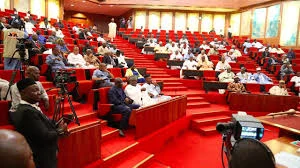
    The Senate has commenced legislative action to amend the 1999 Constitution in a bid to increase the Federal Government’s share of national revenue, arguing that the current allocation formula is no longer capable of sustaining the country’s mounting national obligations.

    At present, the Federal Government receives 52.68 per cent of the nation’s revenue, while the 36 states get 26.72 per cent and the 774 local government councils receive 20.60 per cent.

    The proposed amendment is contained in a bill sponsored by Sunday Karimi, which passed first reading during plenary on Tuesday.

    Addressing journalists after the session, Karimi said the existing revenue sharing arrangement has become grossly inadequate for the Federal Government, especially in the face of deepening infrastructure collapse and worsening security challenges nationwide.

    He maintained that the formula, which has remained largely unchanged for years, no longer reflects current realities and places disproportionate financial pressure on the Federal Government.

    “The revenue allocation formula is outdated and unsustainable. It fails to provide the Federal Government with sufficient resources to meet its constitutional responsibilities,” Karimi said.

    He pointed to the deplorable state of federal roads across the country, noting that the burden of construction, rehabilitation, and maintenance continues to rest squarely on the Federal Government despite dwindling funds.

    Karimi also highlighted the escalating cost of internal security, stressing that massive resources are being channelled into combating banditry, terrorism, and other violent crimes threatening national stability.

    According to him, persistent funding gaps have weakened the capacity of the military and other security agencies to effectively prosecute the war against terrorism.

    “The Federal Government is stretched thin. The responsibility of safeguarding lives and property, maintaining critical infrastructure, and preserving national unity cannot be met under the current revenue framework,” he said.

    The senator argued that increasing the Federal Government’s share of national revenue would provide the financial leverage needed to reinforce security operations, repair critical infrastructure, and stabilise governance at the centre.

    The move is expected to reignite intense debate within the Senate of Nigeria, as well as among state governments and local councils, many of which have consistently opposed any reduction in their revenue shares.

    If passed, the proposed constitutional amendment would represent a major shift in Nigeria’s fiscal structure and could significantly redefine the balance of financial power among the three tiers of government.

  • NiMet Rejects N5 Trillion Loss Claims, Says Reports Are Baseless and Misleading

    NiMet Rejects N5 Trillion Loss Claims, Says Reports Are Baseless and Misleading

    The Nigerian Meteorological Agency (NiMet) has strongly dismissed reports alleging that Nigerian farmers lost about N5 trillion as a result of inaccurate weather forecasts, describing the claims as false, misleading and unsupported by credible evidence.

    In a statement issued on Tuesday in Abuja, NiMet faulted publications by The Nation on February 2, 2026, and Daily Trust on February 3, 2026, which attributed the claim to the Foundation for Peace Professionals. The agency said the reports amounted to a deliberate attempt to misinform the public.

    The statement, signed by Rabiatu Lawal Ado, Acting Head of NiMet’s Public Relations Unit, said the alleged N5 trillion loss was not supported by any verifiable data, transparent methodology or independent assessment.

    “The alarmist claim that Nigerian farmers lost nearly N5 trillion in productive capital as a result of NiMet’s weather forecasts is entirely unfounded and economically irresponsible,” the agency stated.

    NiMet stressed that it has provided reliable weather and climate services in Nigeria for more than 140 years, supporting planning and decision-making across critical sectors of the economy, particularly agriculture.

    According to the agency, independent evaluations by development partners, the World Meteorological Organization, sector stakeholders and farmers nationwide indicate that NiMet’s forecast accuracy has improved significantly over time. The agency said its accuracy now exceeds the 60 per cent benchmark and has reached over 90 per cent in recent years.

    NiMet explained that its Seasonal Climate Predictions, early warning alerts and location-specific agro-advisories are designed to help farmers make informed decisions on planting dates, crop selection, irrigation planning and risk management.

    “These products are disseminated through state governments, agricultural extension services, traditional media platforms and digital channels to ensure wide reach and accessibility,” the agency noted.

    The meteorological agency also referenced the executive summary of the 2025 Wet Season Agricultural Performance Survey in Nigeria, conducted in collaboration with key institutions across the agricultural value chain. According to NiMet, the survey recorded increased crop yields and livestock production across the country.

    The findings showed improved output in major crops such as rice, maize, cowpea, yam, cassava and groundnut compared to 2024. The survey also indicated a reduction in food prices across all geopolitical zones, reflecting improved supply conditions and the impact of effective policy interventions.

    Reaffirming its commitment to national food security, climate resilience and sustainable agricultural development, NiMet said it would not be distracted by what it described as sensational narratives.

    The agency called on stakeholders, civil society organisations and the media to engage responsibly and ensure that public discourse is guided by facts, credible evidence and verified data.

  • Bandits Unleash Terror, Kill Scores in Brazen Daylight Attack on Katsina Community

    Bandits Unleash Terror, Kill Scores in Brazen Daylight Attack on Katsina Community

    Suspected bandits on Tuesday carried out a brutal and audacious daylight attack on Doma community under Tafoki Ward in Faskari Local Government Area of Katsina State, killing about 20 residents and leaving the area in ruins.

    The assailants reportedly stormed the community in the early afternoon and operated freely for hours, shooting sporadically and setting houses on fire, before withdrawing around 4:00 p.m. without resistance.

    Eyewitnesses said the attackers moved from house to house, unleashing terror on helpless residents, while several buildings were reduced to ashes in what locals described as one of the most savage assaults in recent months.

    The attack came despite a peace agreement earlier reached between the armed groups and the community, raising serious concerns over the effectiveness and credibility of such arrangements.

    Confirming the incident, the area chairman, Alhaji Surajo Aliyu-Daudawa, described the invasion as a reprisal attack and the most devastating assault on the community in the past five months.

    According to him, bodies of the victims were evacuated after the attack, while funeral prayers were scheduled to take place in Tafoki town on Wednesday morning.

    Aliyu-Daudawa lamented the scale of destruction and loss of lives, praying for divine intervention to prevent a repeat of the tragedy.

    Meanwhile, the Katsina State Police Command confirmed the attack but gave a lower casualty figure, stating that 13 people were killed by the assailants.

    In a statement issued on Tuesday, the Police Public Relations Officer, DSP Aliyu Abubakar, said a distress call was received at about 2:00 p.m. on February 3, 2026, reporting that armed bandits had launched an attack on Doma village in Faskari Local Government Area.

    He said operatives from the Faskari Division, working with the military and members of the Katsina State Community Watch Corps, were mobilised to the area, but the attackers fled before security forces arrived.

    “Unfortunately, the assailants had fatally shot 13 persons and escaped the scene before the arrival of the operatives,” the statement said.

    The latest attack once again underscores the persistent insecurity in rural Katsina communities, where armed groups continue to strike with impunity despite security operations and peace initiatives.

  • World Bank Commends Tinubu’s Reform Drive, Calls Nigeria Global Reference Point

    World Bank Commends Tinubu’s Reform Drive, Calls Nigeria Global Reference Point

    The World Bank has commended President Bola Tinubu for his administration’s reform drive, describing Nigeria as a frequent global reference point for reform implementation and results.

    The bank’s Managing Director of Operations, Anna Bjerde, made the remarks on Tuesday while leading a World Bank Group delegation to meet the president at the State House in Abuja.

    Bjerde said the outcomes of Nigeria’s reforms over the past two years were widely discussed among global leaders, policymakers and investors, noting that the scale and pace of progress had drawn international attention.

    “Nigeria is a frequent example in my discussions around the world because the results achieved in two years are really commendable,” she said.

    She praised President Tinubu’s consistency in communicating the necessity of the reforms, adding that his steady leadership had helped sustain confidence despite the challenges associated with implementation.

    “Even when reform implementation is difficult, there is no turning back. You are staying the course,” Bjerde said.

    According to her, feedback from Nigeria’s private sector indicates that reform outcomes are becoming more visible, with improving investor sentiment and growing confidence in the policy direction of the government.

    On the forthcoming Country Partnership Framework, Bjerde said the new programme would be anchored on Nigeria’s development ambition of building a $1 trillion economy and achieving seven per cent economic growth. She stressed that job creation would be central to the partnership, particularly in light of Africa’s growing population and the urgency of employment opportunities for young people.

    She identified infrastructure investment, agricultural modernisation and improved access to finance for small and medium-sized enterprises as priority areas for collaboration, noting that Nigeria’s infrastructure spending remains low relative to its gross domestic product.

    Bjerde said this gap would require innovative public-private partnerships to unlock private capital and accelerate development. She disclosed that the World Bank’s public sector portfolio in Nigeria currently stands at about $17 billion, while its private-sector arm, the International Finance Corporation, invests approximately $5 billion annually in the country.

    She added that a new reform-linked budget support operation was being prepared, alongside expanded risk guarantee instruments designed to attract more private investment.

    “Your reforms and our budget support go hand in hand,” Bjerde said.

    Earlier, President Tinubu reaffirmed that his administration’s reform agenda was irreversible, declaring that Nigeria had “its hands on the plough” and would not retreat from the path of reform.

    “Since we went into this turn of reform, we are never going to look back,” the president said.

    Tinubu acknowledged that the reforms had been painful at the initial stage but said they were necessary to secure long-term economic stability and sustainable growth. He identified agriculture as a key pillar of the reform agenda, citing the establishment of mechanisation centres and Nigeria’s openness to World Bank support in the areas of improved seeds and productivity.

    The president also reiterated his commitment to transparency and accountability, describing the removal of fuel subsidies and the unification of the foreign exchange rate as difficult but unavoidable decisions.

    “The first reaction was high inflation, but it has come down dramatically. Now that it is stable, we can help investors,” Tinubu said.

    He urged the World Bank to accelerate innovative financing solutions, reduce bureaucratic bottlenecks and deepen support for skills development, while assuring the institution of Nigeria’s readiness for deeper engagement and a sustained partnership.

  • Stigma Undermining Nigeria’s HIV Response — NACA

    Stigma Undermining Nigeria’s HIV Response — NACA

    The National Agency for the Control of AIDS (NACA) has warned that persistent stigma and discrimination continue to undermine Nigeria’s fight against HIV, despite millions of people requiring sustained treatment and long-term support.

    The Director-General of NACA, Dr Temitope Ilori, gave the warning on Tuesday in Lagos during a Zero Stigma Sensitisation Against Discrimination of People Living with HIV (PLWHIV) programme held in Ikeja Local Government Area.

    Ilori, who was represented by NACA’s South-West Zonal Coordinator, Raheem Mohammed, said stigma remains one of the most significant barriers to achieving epidemic control of HIV in Nigeria.

    According to her, Nigeria currently has about 1.9 million people living with HIV, while Lagos State alone accounts for an estimated 1.3 million, making the state a critical priority in the national HIV response.

    “Stigma remains a major obstacle in our national and state efforts to eliminate HIV/AIDS, which is essential to achieving epidemic control,” Ilori said.

    She described Lagos as Nigeria’s commercial and population hub, noting that its high population density and mobility make sustained awareness and anti-stigma campaigns imperative.

    Available data, she explained, showed that Lagos State has a prevalence rate of over 1.3 per cent, translating to a large number of people who require continuous prevention, treatment and support services.

    Ilori noted that Ikeja, as an administrative and economic centre, attracts a diverse and mobile population, increasing the importance of targeted sensitisation against HIV-related stigma and discrimination.

    She stressed that stigma discourages people from seeking testing, care and treatment due to fear of rejection, job loss and social exclusion, despite the fact that early testing and consistent treatment can suppress the virus and prevent transmission.

    Ilori added that the Zero Stigma Campaign would be extended to other local government areas this year, including Alimosho, with the aim of promoting accurate knowledge of HIV transmission and prevention, strengthening community support systems and improving access to HIV services.

    She called for a broad coalition involving communities, traditional and religious leaders, health workers, the media, families and caregivers to collectively combat stigma and discrimination against people living with HIV.

    The sensitisation programme was organised by NACA in collaboration with GEDERITE Nigeria Ltd., the Lagos State AIDS Control Agency (LSACA) and the **Improved Sexual Health and Right Advocacy Initiative (ISHRAI).

    Speaking at the event, LSACA Chief Executive Officer, Dr Folakemi Animashaun, disclosed that Lagos State was reviewing a 2007 law designed to protect people living with HIV in order to close existing gaps.

    She said the review aims to strengthen legal protections, align the law with global best practices and provide stronger safeguards against discrimination.

    “Stigma does not only occur within health facilities. It happens in workplaces, schools, markets, motor parks, places of worship and even within families,” Animashaun said.

    She urged government agencies, employers, service providers and community leaders to demonstrate zero tolerance for stigma by offering non-discriminatory services and using respectful language.

    “Discrimination against people living with HIV has no place in our society. HIV is not a death sentence,” she said.

    Also speaking, Ms Monica Obi, representing the Network of People Living with HIV in Nigeria, Lagos State chapter, called for an end to HIV-related stigma, noting that discrimination was driving pregnant women away from testing and treatment.

    Obi, who also represented the Association of Women Living with HIV in Lagos, said fear of being labelled often forced women to conceal their HIV status until after delivery, increasing the risk of mother-to-child transmission.

    She called for collective action to ensure future generations are born HIV-free.

  • Nigeria, Saudi Arabia Reaffirm Partnership on Hajj, Umrah Administration

    Nigeria, Saudi Arabia Reaffirm Partnership on Hajj, Umrah Administration

    Abuja — Nigeria and the Kingdom of Saudi Arabia have reaffirmed their commitment to strengthening cooperation in the administration of Hajj and Umrah, following a historic high-level engagement held in Abuja.

    The reaffirmation was disclosed in a statement by Ahmad Muazu, Technical Assistant (Media) in the Office of the Chairman and Chief Executive Officer of the National Hajj Commission of Nigeria (NAHCON), Prof. Abdullahi Usman.

    According to the statement, the commitment was expressed during talks between Nigerian authorities and a Saudi delegation led by the Kingdom’s Minister of Hajj and Umrah, Tawfiq Al-Rabiah.

    Welcoming the delegation, Prof. Usman described the visit as a landmark in Nigeria–Saudi relations and a strong signal of the Kingdom’s continued partnership with Nigeria in serving the “Guests of Allah.” He commended Saudi Arabia’s sustained investments in pilgrim welfare, infrastructure, safety, and service delivery.

    Usman said Saudi Vision 2030 had significantly improved the efficiency and quality of Hajj and Umrah operations globally. He also acknowledged challenges related to Umrah visa access for Nigerians, particularly overstaying by a segment of pilgrims.

    He said Nigeria was working with Saudi authorities to address the issue through stricter regulation of licensed operators, improved data accountability, and community-based sensitisation to ensure compliance and timely return.

    Usman reaffirmed NAHCON’s readiness to comply fully with all guidelines issued by the Saudi Ministry of Hajj and Umrah, stressing Nigeria’s resolve to protect the integrity of Hajj and Umrah operations while safeguarding pilgrims’ interests.

    Speaking at the meeting, Nigeria’s Minister of Foreign Affairs, Yusuf Tuggar, described the visit as historic, noting that it was the first time a Saudi Minister of Hajj and Umrah was visiting Nigeria.

    “This is the first time ever that a Minister of Hajj and Umrah of the Kingdom of Saudi Arabia is visiting Nigeria. It is history in the making,” Tuggar said.

    He conveyed the goodwill of President Bola Tinubu to the Custodian of the Two Holy Mosques, King Salman bin Abdulaziz Al-Saud, and to the Crown Prince and Prime Minister, Mohammad bin Salman bin Abdulaziz Al-Saud.

    Tuggar said cooperation in Hajj and Umrah administration remains a key pillar of Nigeria–Saudi relations, rooted in faith, mutual respect, and long-standing people-to-people ties. He also called for future discussions on quota expansion in view of Nigeria’s growing population.

    In his remarks, Al-Rabiah reaffirmed Saudi Arabia’s commitment to institutional cooperation with Nigeria, aimed at ensuring a safe and seamless experience for Nigerian pilgrims.

    He disclosed that about 89,000 Nigerians performed Umrah in 2025, with 92 per cent arriving on Umrah visas, supported by approximately 420 flights through King Abdulaziz International Airport in Jeddah.

    Al-Rabiah expressed optimism about preparations for the 1447 Hijri Hajj season, with emphasis on operational readiness, safety, service quality, and procedural efficiency.

    “Insha Allah, Hajj 2026 will be the best ever,” he said.

    Both sides agreed to sustain close coordination, strengthen regulatory compliance, and pursue practical solutions to enhance the experience of Nigerian pilgrims while preserving the integrity of Hajj and Umrah systems.

  • Senate Seeks Mandatory Anti-Venoms in Hospitals After Singer’s Death

    Senate Seeks Mandatory Anti-Venoms in Hospitals After Singer’s Death

    The Nigerian Senate has urged the Federal Government to mandate the availability of snake anti-venoms and other critical antidotes in hospitals across the country following the death of Abuja-based singer, Ifunanya Nwangene, popularly known as Nanyah.

    Nwangene reportedly died after she was bitten by a snake at her residence, a development lawmakers described as a reflection of serious gaps in emergency healthcare delivery.

    During plenary on Tuesday, the Senate called on the Federal Ministry of Health to formulate and enforce national guidelines stipulating minimum stock levels of anti-venoms, antidotes, and emergency medicines in both public and private hospitals.

    The upper chamber also resolved that private hospitals that fail to maintain these essential medicines should not be granted operating licences, stressing that emergency care must meet minimum safety standards nationwide.

    In addition, lawmakers urged the Federal Government to ensure adequate funding and sustained supply of anti-venoms in public health facilities to prevent avoidable deaths arising from snake bites, poisonings, scorpion stings, and drug overdoses.

    The resolutions followed a motion sponsored by Senator Idiat Oluranti Adebule (APC, Lagos West), who noted that Nigeria continues to record increasing cases of envenomation and poisoning requiring urgent medical attention.

    She warned that the absence of life-saving antidotes in hospitals often results in deaths that could otherwise be prevented with timely intervention.

    Contributing to the debate, senators observed that Nwangene’s death highlighted deficiencies in emergency preparedness, adding that prompt access to anti-venoms might have altered the outcome.

    The Senate further directed the National Agency for Food and Drug Administration and Control to work with the Ministry of Health to oversee the procurement, quality control, storage, and nationwide distribution of safe and affordable anti-venoms, with priority given to high-risk areas.

    State governments were also urged to conduct immediate audits of hospitals within their jurisdictions to ensure compliance with approved standards for antidote stocking and emergency response.

    The Senate observed a minute of silence in honour of Nwangene, who died at the age of 26.