
Category: Economy

  • Q1 2023: Nigeria’s Company Tax stands at N469.01bn- NBS

    Q1 2023: Nigeria’s Company Tax stands at N469.01bn- NBS

    The nation’s aggregate Company Income Tax (CIT) for Q1 2023, is reported to be N469.01 billion, the National Bureau of Statistics (NBS) has said.

    The figure is contained in the NBS Company Income Tax (CIT) Q1 2023 Report released in Abuja on Wednesday.

    According to the report, the figure shows a growth rate of -37.79% on a quarter-on-quarter basis from N753.88 billion recorded in Q4 2022.

    The report said local payments received were N300.78 billion, while foreign CIT payment contributed N168.23 billion in Q1 2023.

    It said on a quarter-on-quarter basis, the financial and insurance activities recorded the highest growth rate at 50.42 per cent, followed by construction at 42.32 percent.

    “On the other hand, water supply, sewerages, waste management and remediation activities had the lowest growth rate at 69.38 percent, followed by other service activities at -60.13 percent.”

    In terms of sectorial contributions, the report showed that the top three largest shares in Q1 2023 were financial and insurance activities with 22.94 per cent.

    “This was followed by manufacturing with 20.91 percent and information and communication with 11.89 per cent.”

    It said on the other hand, the activities of households as employers, undifferentiated goods- and services-producing activities of households for own use recorded the least share with 0.01 per cent.

    “This was followed by water supply, sewerage, waste management, and remediation activities with 0.04 per cent and activities of extraterritorial organisations and bodies with 0.12 per cent.”

    The report, however, said, on a year-on-year basis, CIT collections in Q1 2023 decreased by 14.96 per cent from Q1 2022. 

  • Nigeria records N710bn VAT in Q1 2023 – NBS

    The National Bureau of Statistics (NBS), said the aggregate Value Added Tax (VAT) stood at N709.59 billion in Q1 2023.

    This is according to the VAT Q1 2023 Report released in Abuja on Tuesday.

    The report shows a growth rate of 1.75 per cent on a quarter-on-quarter basis from N697.38 billion in Q4 2022.

    The report said local payments recorded were N436.10 billion, while foreign VAT payments contributed N151.13 billion, and import VAT contributed N122.37 billion in Q1 2023.

    It said on a quarter-on-quarter basis, the activities of households as employers, undifferentiated goods- and services producing activities of households for own use recorded the highest growth rate with 349.86 per cent.

    “This was followed by construction with 95.64 per cent.

    “On the other hand, activities of extraterritorial organisations and bodies had the lowest growth rate with –53.54 per cent, followed by real estate activities with –47.01 per cent.”

    In terms of sectoral contributions, the report showed the top three largest shares in Q1 2023 were manufacturing with 29.65 per cent, information and communication with 19.29 per cent, and mining and quarrying with 12.24 per cent.

    ” On the other hand, activities of extraterritorial organisations and bodies recorded the least share with 0.02 per cent.

    “This was followed by activities of households as employers, undifferentiated goods- and services-producing activities of households for own use with 0.03 per cent.

    “This was closely followed by water supply, sewerage, waste management, and remediation activities with 0.04 per cent. ”

    The report, however, said, on a year-on-year basis, VAT collections in Q1 2023 increased by 20.56 per cent from Q1 2022.

  • Tinubu’s 6% GDP growth in 4 years over-ambitious, not feasible – KPMG

     KPMG, a global consultancy Firm, providing audit, Tax and Advisory services has said that the plan by President Bola Tinubu to grow the nation’s economy by six percent is over-ambitious and as such cannot be achieved in four years.

    In its “Eight Flashnotes” posted on its website at the weekend, the company noted that President Bola Ahmed Tinubu’s plan to grow Nigeria’s Gross Domestic Product (GDP) from N74.6 trillion in 2022 to N92.5 trillion by 2026, representing an increase of N17 trillion in four years, is “not feasible.”

    The report notes that while the GDP growth of three percent is assumed in the first year going by World Bank’s projection for 2023, the economy will then have to grow by an average of seven percent for the subsequent three years and move growth from a forecasted three percent in 2023 to at least seven percent in 2024 and afterward, which seems overly ambitious, adding that the best possible GDP growth rate to be achieved within the next four years would be between four to 4.5 percent.

    “We are of the opinion that there is very limited space to attain a 6 pet cent average real growth rate in four years or an increase in real GDP by N17 trillion and an average GDP growth rate of between 4-4.5 per cent at the best is more feasible in the next four years. Even this will require the country to get its policies right and keep consistent faith with macroeconomic reforms,” the report read.

    It stressed that a challenging macroeconomic environment and various constraints such as inflation, subsidy removal, and infrastructure limitations are some of the challenges the government would face to maintain a fine and delicate balance across economic variables.

    Giving further reasons, the multinational company said, “For example, to grow government revenue to expand government consumption and investment, it might increase taxes and /or borrow from the private sector. However, increasing taxes can lower purchasing power and slow consumption expenditure growth.

    At the same time, private investment may be curtailed as business earnings are squeezed from slowing demand, higher costs from higher taxes, and higher interest rates as government borrowing crowds out private-sector lending and then pushes rates up.

    “GDP, using the expenditure approach, is the cumulation of household and government consumption expenditure, private and public investment, and net exports which means the president will have to introduce policies and take decisions that will lead to growth across these variables. However, taking decisions in one variable can lead to a decline in another.

    “The initiatives government and the private sector may also have to put in place to cushion the effects of the removal of petrol subsidy may also worsen the costs of businesses and leave less for expansion in the short-to-medium term which covers the duration of the president’s first term and the focus of his growth targets.

    “Household consumption expenditure which is the largest share of GDP and the easiest to grow is, however, constrained by high double-digit inflation which is expected to get worse with the subsidy removal, the implementation of the finance bill 2022 and the unification of the Forex rate whenever it is implemented within the next four years, in addition to the perennial supply and transportation bottlenecks, security concerns and power and other infrastructural constraints to doing business in Nigeria will affect costs of production and price of goods and services,” KPMG stated.

  • Godwin Emefiele’s sack expected, Uwaleke says

    Godwin Emefiele’s sack expected, Uwaleke says

    A Professor of Finance and Capital Market, Uche Uwaleke has said the suspension of the Governor of the Central Bank of Nigeria (CBN), Godwin Emefiele on Friday night by President Bola Ahmed Tinubu did not come as a surprise to many Nigerians.

    In a chat with NIGERIAN ANCHOR, Uwaleke said Emefiele’s suspension marks an end to a turbulent era of Nigeria’s economy. 

    Emefiele had come under a barrage of criticisms following the implementation of the naira redesign policy by the Apex Bank. 

    In a swift reaction after his suspension yesterday, Emefiele was arrested by the Department of State Security (DSS), who had tried in vain to arrest him in the past and slammed with terrorism financing charges.

    Uwaleke said: “The Suspension of Godwin Emefelie was long foretold. But, this announcement caught not a few by surprise.

    “The President cannot sack the CBN Governor, but he can suspend, which is what the President Tinubu has done.

    “Recall that Mr Sanusi Lamido Sanusi, was equally suspended from office by the Jonathan administration,” Uwaleke said.

    In spite of the situation,  the financial experts noted that during his tenure as CBN Governor, Emefiele was able to ensure the stability of Nigeria’s financial sector. 

    According to him, he will be remembered for implementing big ideas such as the Anchor Borrower Programme, the RT200, the e-Naira and a raft of interventions which helped to stimulate the economy during periods of economic recession.

    “To be fair, Emefelie, to a large extent, succeeded in ensuring financial sector stability going by the prudential ratios. 

    “His forex demand management policies, especially the 41 items not qualified for forex, promoted import substitution, conserved external reserves and ensured relative stability in exchange rates. It would be unfair to blame him for the current high inflation rate since most of the causative factors are beyond the control of the CBN.

    “On the flip side, he will also be remembered for the currency redesign exercise which didn’t go down well with Nigerians and the CBN Ways and Means which grew astronomically during his tenure.

    “His greatest mis-step was his attempt to join the list of Presidential candidates.

    “All said, I think he deserves some rest now,” Uwaleke said. 

  • Nigeria can develop without subsidy, CIVAC tells Nigerians

    A coalition of Civil Society groups, Citizens Voice Against Corruption (CIVAC) has called on Nigerians to embrace the fuel subsidy removal because the country can develop without it.

    CIVAC is a platform comprising numerous civil society organizations and professional bodies.

    President Bola Ahmed Tinubu had at his inauguration ceremony announced the removal of fuel subsidy.

    In a statement signed by CIVAC’s National Coordinator Abdulrazaq Alkali, and made available to journalists on Friday in Abuja, the body noted that Nigeria had failed over the years to reap the benefits of an oil-producing nation as revenues from oil is consumed by fuel subsidy.

    Alkali said: “For most oil producing countries, high oil prices means high government earning, more spending on education, health, infrastructure, poverty alleviation etc.

    “Unfortunately, that is not the case in Nigeria, as the high profit margin earned from high oil prices is largely swallowed by petroleum subsidies.”

    The Group, while condemning the hypocrisy of some Nigerians, noted that many citizens were in agreement that fuel subsidy should be removed.

    “For example both major candidates in the last presidential election made promises to remove fuel subsidies if elected president, but now they are all over the place blaming President Tinubu for doing what they promised to do for Nigerians,” he said.

    The coalition called on organised labour to reconsider its proposed strike action as it would further bring more hardship to Nigerians.

    “The leaders of NLC and TUC should rise up to their duties and stop playing to the gallery or the books of some elites who are benefitting immensely from the petroleum subsidy. NLC and TUC need to get their acts together by putting the future and survival of Nigeria first.

    “This will cause untold hardship on Nigerians and have a significant damaging effect on an already struggling economy, paralysing the country of more than 200 million Nigerians, the majority of the citizens who live on daily wage will be highly irrational.

    ‘Moreover, considering the delicate security situation in the country, it will be of great concern that grieving politicians, provocateurs and anarchists can hijacked the strike to stage protests and demonstrations, or hide under the cover of protestors and promote discord, anarchy and unleash mayhem to the detriment of public peace” CIVAC said.

    CIVAC therefore appealed to the NLC and TUC leaders to explore other avenues to prevent high petroleum prices in the country.

    “One important option is to engage with the government to find a more suitable solution. For example, by putting pressure on the government to revamp the three national refineries (in Kaduna, Warri and Port-Harcourt) which can play a significant role in easing the pressure on our forex reserve, thus strengthening our currency.

    “A strong Naira and local refining capacity will make the petroleum products cheap even without subsidies.

    “In addition, if these refineries are revamped, hundreds of thousands of direct and indirect jobs will be created, thus creating a multiplier effect in the fight against poverty and the growth of our economy,” CIVAC said in the statement.

  • Subsidy: Finance Commissioners want all accruals put into Federation Account

    The Forum of Commissioners for Finance of Nigeria has called on the Federal Government to ensure that all accruals from the removal of fuel subsidy go to the Federation Account.

    The outgoing Chairman of the Forum, Mr David Olofu made the call at a valedictory session for outgoing State Commissioners for Finance held in Abuja on Friday.

    Olofu is also the immediate past Commissioner for Finance and Economic Planning, Benue State.

    While commending President Bola Tinubu on the removal of subsidy, Olofu said, as finance experts, the Forum, like other Nigerians, had long yearned for it.

    “We will like to sincerely commend the President for having that political will to do that, first day in office.

    “That is what we had been yearning for. He came, his first day in office, he was able to achieve that which we have always asked for”, Olofu said.

    On how the President should manage the funds from subsidy, Olofu said that the Constitution provided for all federation revenues to go into the federation account.

    “Nobody has any authority whatsoever to deduct any amount from federation revenue.

    “So, I will align myself with the position of the Constitution and recommend that all the accruals go into the federation account and let it be disbursed from the federation account”, he stressed.

    He said, however, the Federal Government should come up with policies and programmes that could address the challenges Nigerians are currently facing as a result of increase in the pump price of fuel due to the removal of subsidy.

    “I believe that the President has the capacity and knowledge to be able to do that decisively.

    “He has already started it by proposing a wage increase for workers but that has to be done alongside with sub-nationals because the sub-nationals have the bulk of civil servants in this country.

    “I believe he is on track but, apart from the wage increase, we also have to look at issues of infrastructure because we believe strongly that if we can wrap up infrastructure in this country, it will also help to improve the living standard and bring down the cost of living.”

    Olofu appealed to Nigerians to be patient saying, the long-term benefit of what has been done by the President far outweighs the short-term pains people were going through.

    For the incoming Chairman of the Forum, Wale Akinterinwa, commended his predecessor, saying that Olofu did a very good work while leading the forum.

    “He has actually elevated the forum to a much higher level than he met it. Be that as it may I will try to ensure that I continue from where he stopped.

    “I will continue to sustain the good relationship he has created with all the revenue-generating agencies such as the Ministry of Finance and the Office of the Accountant General of the Federation”, he said.

    Akinterinwa who is the Commissioner of Finance Ondo State, reiterated that the removal of fuel subsidy was an overdue issue.

    His words: “I commend the President for having the courage to immediately remove the fuel subsidy as he was sworn.

    “Well, we are going to feel the pain we are feeling in the short run but in the long run, it is in the best interest of everybody.”

    Mohammed Shehu, Chairman, Revenue Mobilisation Allocation and Fiscal Commission (RMAFC), on his part, commended the forum on efforts at taking the issue of the federation account very seriously.

    “We hope that as the years go by, the agitation on federal might or federal imposition on a lot of things would become a thing of the past.

    “This is an opportunity for states revenue mobilisation and all other agencies to collaborate in the area of increasing internally generated revenue of states and diversification of the economy”, he said.

    He also said that the removal of fuel subsidy was good for the economy.

    Shehu urged states to ensure that the monies that were eventually going to the states should be put to use properly so that “we can run a very good federation and create opportunities for jobs for Nigerians.”

    Special Guest of honour at the event, the Governor of Jigawa, Umar Namadi tasked the forum to build on the legacy of the outgoing chairman saying that he brought a lot of innovation and professionalism to the organisation.

    He was a former Commissioner for Finance Jigawa and the immediate past Deputy Governor of the state before becoming the present governor.

    Shehu said that removal of fuel subsidy was a bold step taken by the President.

    The event was attended by the Accountant General of the Federation, Mrs Oluwatoyin Madein and representatives of Central Bank of Nigeria (CBN) and Federal Inland Revenue Service (FIRS)

  • NNPCL yet to reconcile N8.4trn subsidy claims with OAGF- RMAFC

    *Backs Tinubu on fuel subsidy removal

    The Revenue Mobilisation Allocation and Fiscal Commission (RMAFC) has said that the Nigeria National Petroleum Corporation Limited (NNPCL) is yet to remit over N8.4 trillion subsidy claims with the Office of the Account General of the Federation (OAGF).

    Whilst reiterating its support for the recent subsidy removal announced by President Bola Ahmed Tinubu during his inaugural address, it described it as long overdue and a major challenge to the economic growth and development of the country.

    In a statement signed by its Chairman, Mohammed Bello Shehu on Thursday, RMAFC stated that continued payment of humongous amounts to a privileged few in the name of subsidy was a major drain on the nation’s scarce resources as the Nigeria National Petroleum Company Limited (NNPCL) had since stopped contributing to the federation account.

    In January 2022, NNPCL stopped its contribution to the federation account as it was funding the subsidy regime on behalf of the federal government.

    Experts have over the years described the fuel subsidy regime as being characterized by opaqueness and other ambiguities.

    According to Bello, the Commission had been consistent in its opposition to the vexatious issue of subsidy removal since the time of late Hamman Tukur who chaired the Commission during the administration of former President Olusegun Obasanjo.

    As one of the fourteen (14) Federal Executive Bodies established by section 153 (1)(n) and empowered by paragraph 32 (a) and (c) of part 1 of the Third Schedule of the 1999 Constitution(as amended), RMAFC has the constitutional mandate to monitor the accruals to and disbursement of Revenue from the Federation Account and also advise Federal and State Governments on fiscal efficiency and methods by which their revenue can be increased.

    The RMAFC helmsman described the May 29th pronouncement of the removal of fuel subsidy by President Bola Ahmed Tinubu at his inaugural speech, due to the non-budgetary provision for subsidy, as a master stroke that broke the jinx, stating emphatically that it is the appropriate step.

    “The country can no longer sustain fuel subsidies whose demerits far outweigh its benefits to the citizenry. It is saddening to note that since 1st January, 2022 to date, the Nigeria National Petroleum Company Limited (NNPCL) has not been contributing to the Federation Account due to the claimed subsidy payments. The total amount withheld by the NNPCL as claimed subsidies for this period amounted to N8,480,204,553,608.13 as reported by the Office of the Accountant General of the Federation(OAGF) which is yet to be reconciled by the RMAFC, OAGF, and NNPCL”.

    He adds that in a situation whereby the records of subsidy transactions are not transparent and crude oil prices are being determined globally, it would be unwise to sustain the phantom payments of subsidy at the detriment of other critical sectors of the economy thus making its sustainability difficult for the government.

    Mr. Shehu further emphasized that the removal of fuel subsidies will eliminate the alleged uncertainty surrounding the subsidy regime just as it will free funds for the execution of critical national development and human capital enhancement projects such as the provision of an affordable transport system, Investment in the education sector, improvement in Health care and infrastructural development, and resuscitation of domestic Refineries to eliminate dependence on imported fuel, amongst other key sectors.

    The Commission’s Chairman also poured encomiums on the administration of former President Muhammadu Buhari for providing the necessary enabling environment for the successful take-off of the first private refinery easily the largest in the World built by Alh. Aliko Dangote, the World’s wealthiest Black Man believes that when it becomes operational, the country will witness a glorious dawn in hassle-free oil production and distribution in the absence of a subsidy regime.

    While commending President Bola Ahmed Tinubu, for his uncommon courage and political will in doing away with the issue of fuel subsidy, he urged the new administration to work out strategies that would cushion the attendant effect of the new policy adding that deterrent measures should be earnestly taken to bring to book all the economic saboteurs who have contributed to our National adversity in accordance with the extant laws of the Federation.

  • Subsidy: Probe NNPCL’s  spendings on refineries, Ohaneze youths tells FG

    The Ohanaeze Ndigbo Youth Council has called on the federal government to investigate how funds were spent by the Nigeria National Petroleum Company Limited (NNPCL) on refineries in the last 8 years. 

    According to the National President, Ohanaeze Ndigbo Youth Council, Maxi Okwu Nnabuike, it would help unravel the fraud in the subsidy scheme. 

    The administration of immediate past President Muhammadu Buhari had stopped funding of petrol subsidy in the 2023 budget. According to the budget posted on the website of the Budget Office of the Federation, funding of petrol subsidy by the federal government is expected to end by June 30. 

    However, President Bola Ahmed Tinubu during his inaugural speech had said the era of subsidy was gone. 

    Nnabuike noted that by doing it, the government will earn the trust of Nigerians. 

    He said the council have followed the major developments in the country over the removal of fuel subsidy by the immediate past administration of President Muhammadu Buhari. 

    “We recall that prior to the 2023 general election, all the major presidential candidates, Alhaji Atiku Abubakar of the Peoples Democratic Party, PDP, President Bola Tinubu of the All Progressives Congress, APC, and Peter Obi of the Labour Party, promised one thing in common- removal of fuel subsidy. They all said it was fraud and must be made away with. 

    “The immediate past administration of Muhammadu Buhari also prepared the ground for the eventual end of the subsidy regime by not budgeting for it beyond June, 2023. It is curious that the former president did not have the political will to end the subsidy regime but laid it as a landmine for the new administration. 

    “If not, how could it stay in power for eight solid years without reviving even one out of the four refineries in the country? What happened to all the billions of naira spent on so-called turnaround maintenance of the refineries? 

    “We demand that one of the first steps this administration must take is to probe into the spendings on the refineries in the past eight years. It should also take a step further in unravelling the fraud called subsidy. This is one of the ways the government will earn public trust and confidence as it goes on with the task of reshaping the country’s economy. 

    “Having said this, we also want to observe that we view the opposition to the removal of subsidy by the Nigeria Labour Congress, NLC, with huge suspicion. We are not unaware of the harsh economic realities occasioned by the subsidy removal, but the truth is that judging by antecedents, we don’t trust the labour unions in the country. 

    “On several occasions, they have failed the masses when it mattered most. Under the immediate past administration of Buhari, they always started a fight but chickened out at the last minute, leaving the masses to their fate.

    “Nothing has changed- they are at it again this time, trying to use the subsidy removal to cash out as usual. But our stand is that they should stop deceiving the gullible public; all of us cannot be fooled at the same time. 

    “Besides, the independent marketers and the NNPCL are even the worst enemies of the citizens. We find it rather strange that a few hours after President Tinubu announced that the subsidy was gone, they promptly adjusted their pump price to over N500.000. Isn’t this the same subsidy that was budgeted for till the end of June,” he said.

  • Global economy in precarious position-World Bank

    *Growth decelerates to 2.1% in 2023 amid high interest rates

    Global growth has slowed sharply and the risk of financial stress in emerging market and developing economies (EMDEs) is intensifying amid elevated global interest rates, the World Bank has said.  

    In its latest Global Economic Prospects Report, the Washington-based lender projected global growth to decelerate from 3.1 percent in 2022 to 2.1 percent in 2023.

    In EMDEs other than China, growth is set to slow to 2.9 percent this year from 4.1 percent last year. These forecasts reflect broad-based downgrades: growth projections for 70 percent of EMDEs and nearly all advanced economies have been downgraded.

    World Bank Group President Ajay Banga noted that “The surest way to reduce poverty and spread prosperity is through employment—and slower growth makes job creation a lot harder. It’s important to keep in mind that growth forecasts are not destiny. We have an opportunity to turn the tide but it will take us all working together.”

    Most EMDEs have seen only limited harm from the recent banking stress in advanced economies so far, but they are now sailing in dangerous waters. With increasingly restrictive global credit conditions, one out of every four EMDEs has effectively lost access to international bond markets. The squeeze is especially acute for EMDEs with underlying vulnerabilities such as low creditworthiness. Growth projections for these economies for 2023 are less than half those from a year ago, making them highly vulnerable to additional shocks.

    “The world economy is in a precarious position,” said Indermit Gill,the World Bank Group’s Chief Economist and Senior Vice President. “Outside of East and South Asia, it is a long way from the dynamism needed to eliminate poverty, counter climate change, and replenish human capital. In 2023, trade will grow at less than a third of its pace in the years before the pandemic. In emerging markets and developing economies, debt pressures are growing due to higher interest rates. Fiscal weaknesses have already tipped many low-income countries into debt distress. Meanwhile, the financing needs to achieve the sustainable development goals are far greater than even the most optimistic projections of private investment.”

    The latest forecasts indicate that the overlapping shocks of the pandemic, the Russian invasion of Ukraine, and the sharp slowdown amid tight global financial conditions have dealt an enduring setback to development in EMDEs, one that will persist for the foreseeable future. By the end of 2024, economic activity in these economies is expected be about 5 per cent below levels projected on the eve of the pandemic. In low-income countries—especially the poorest—the damage is stark: in more than one-third of these countries, per capita incomes in 2024 will still be below 2019 levels. This feeble pace of income growth will entrench extreme poverty in many low-income countries.

    “Many developing economies are struggling to cope with weak growth, persistently high inflation, and record debt levels. Yet new hazards—such as the possibility of more widespread spillovers from renewed financial stress in advanced economies—could make matters even worse for them,” said Ayhan Kose, Deputy Chief Economist of the World Bank Group. Policy makers in these economies should act promptly to prevent financial contagion and reduce near-term domestic vulnerabilities.”

    In advanced economies, growth is set to decelerate from 2.6 per cent in 2022 to 0.7 per cent this year and remain weak in 2024, the report says. After growing 1.1 per cent in 2023, the U.S. economy is set to decelerate to 0.8 per cent in 2024, mainly because of the lingering impact of the sharp rise in interest rates over the past year and a half. In the euro area, growth is forecast to slow to 0.4 per cent in 2023 from 3.5 per cent in 2022, due to the lagged effect of monetary policy tightening and energy-price increases.

  • Nigeria recorded N927.2bn trade surplus in Q1 2023 – NBS

    Nigeria recorded N927.2bn trade surplus in Q1 2023 – NBS

    *Exports stood at N6.49 trillion, imports N5.56 trillion

    Nigeria’s middle class

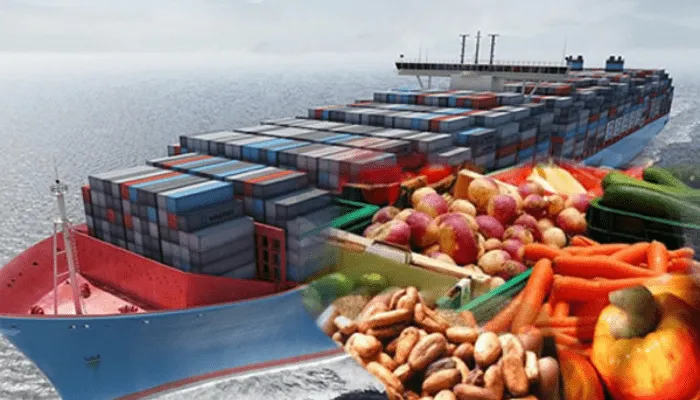
    Nigeria’s economy recorded N927.16 billion trade surplus between January and March 2023, according to the National Bureau of Statistics (NBS), Foreign Trade in Goods Statistics Report for Q1 2023 released in Abuja on Tuesday.

    In the report, the NBS said Nigeria’s total exports stood at N6.49 trillion, and imports at N5.56 trillion.

    The NBS report shows that in the quarter under review, the nation’s total trade stood at N12.05 trillion.

    This, the bureau said,  is higher than the value (N7.86 trillion) recorded in the corresponding period (Q1) of 2021.

    It also said that total imports increased by 3.67 per cent in Q1 2023 compared to the value recorded in Q4 2022 at N5,362.83 billion.

    “Total imports however fell by 25.83 per cent when compared to the value recorded in Q1 2022 at N7,495.67 billion,” it said.

    The NBS said re-exports value in the quarter under review stood at N32.17 billion representing 0.50 per cent of total exports.

    The report said the top five re-export destinations were Cameroun, Ghana, Equatorial Guinea, the United Kingdom, and Liberia.

    It said the most re-exported commodity was vessels and other floating structures for breaking up with N21.07 billion.

    “This was followed by light vessels, fire floats, floating cranes, and other vessels valued at N4.71 billion.

    “Followed by this were other instruments and appliances for surveying amounting to N0.93 billion and parts of work-truck of the type used in factories, warehouses, dock areas or airports valued at N0.85 billion.”

    The report said the top five export destinations in Q1 2023 were the Netherlands accounting for 12.91 per cent, followed by the U.S. at 8.93 per cent.

    “This is followed by Spain at 7.53 per cent, France at 7.51 per cent, and India at 7.04 per cent of total exports.

    “Altogether, exports to the top five countries amounted to 43.92 per cent of the total value of exports, ” NBS stated.

    It said the commodity with the largest export values in Q1 2023 was Petroleum oils and oils obtained from bituminous minerals, crude at N5,148.58 billion representing 79.37 per cent.

    This, the bureau said,  is followed by ‘Natural gas, liquefied’ at N622.36 billion accounting for 9.59 per cent, and ‘Urea, whether or not in aqueous solution’ at N146.79 billion or 2.26 per cent of total exports.

    In terms of Imports, the report said in Q1 2023, China, The Netherlands, Belgium, India, and the USA were the top five countries of origin of imports to Nigeria.

    It said the value of imports from the top five countries amounted to N3,101.42 billion representing a share of 55.78 per cent of the total value of imports.

    The commodities with the largest values of imported products, it said, were Motor Spirit Ordinary at N1,492.28 billion, Gas Oil at N472.40 billion and Durum Wheat (not in seeds) at N249.22 billion.