
Category: Economy

  • Hunger, insecurity:  Tinubu declares emergency on food security

    Hunger, insecurity: Tinubu declares emergency on food security

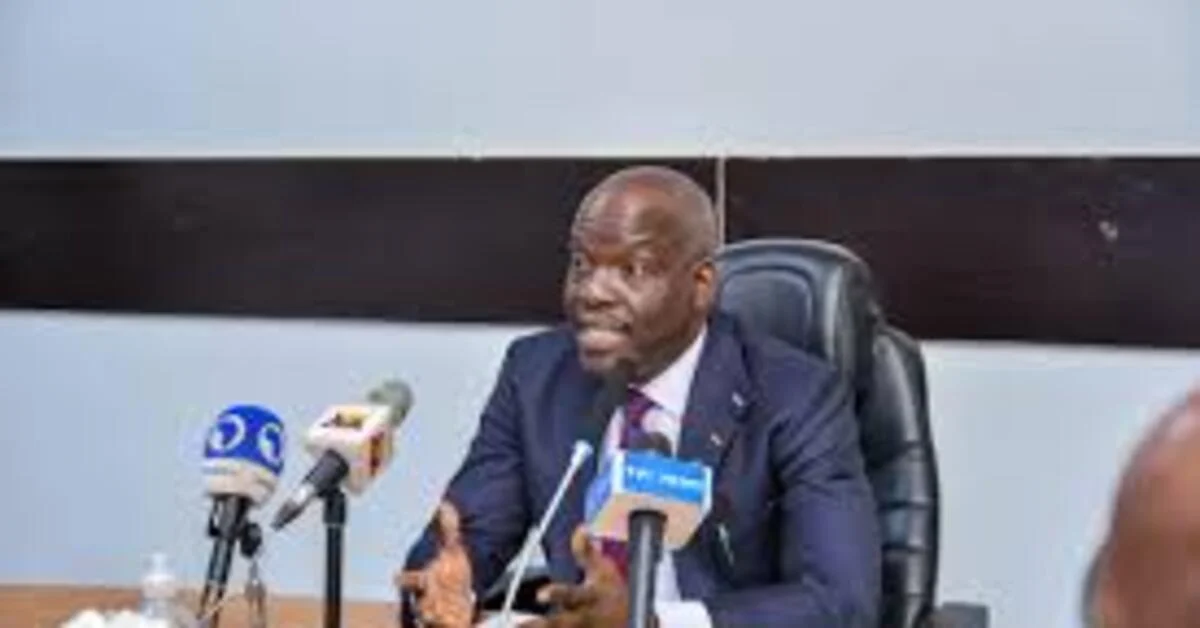
    President Bola Tinubu on Monday declared a national emergency on food security, urging expanded irrigation infrastructure and participatory water resource management nationwide.

    Tinubu made the declaration while opening the 6th African Regional Conference on Irrigation and Drainage in Abuja.

    He was represented by the Secretary to the Government of the Federation, Sen. George Akume.

    He urged African nations to adopt innovative strategies in addressing the continent’s irrigation and water management challenges.

    He described the conference theme, “Tackling Irrigation Development and Water Management Crisis in Africa”, as a clarion call to action for sustainable agriculture and economic resilience.

    “Africa continues to face major challenges in unlocking its irrigation potential due to inadequate infrastructure, financial constraints, climate change, and governance issues.

    “This conference offers a vital platform for us to collectively chart a path forward”.

    Tinubu stated that the country had more than 3.1 million hectares of irrigable land located around key river basins such as the Niger and Benue.

    In his remarks, the Minister of Water Resources and Sanitation, Prof. Joseph Utsev, said the government had completed several landmark initiatives under the Transforming Irrigation Management in Nigeria (TRIMING) project.

    He announced that its successor, the Sustainable Power and Irrigation for Nigeria (SPIN) project, would address outstanding gaps while optimising the economic value of water resources to support food security.

    “With the TRIMING project winding down, Nigeria is poised to begin implementation of the SPIN project in partnership with the World Bank.

    “This initiative will consolidate on the successes of TRIMING and expand our irrigation potential,” Utsev said.

    According to the minister, the TRIMING project, which spanned more than seven years, delivered notable achievements, including the completion of the Dadin-Kowa and Bakolori irrigation schemes and 90 per cent completion of the Middle Rima Valley irrigation project.

    It also supported ongoing interventions in Ondo, Kwara, Benue, Kebbi, Edo, Adamawa, and Oyo States.

    He also noted that the project established Water Users Associations (WUAs), farmer management centres, and supported market linkages for key value chains such as rice and tomato.

    The minister further revealed that River Basin Development Authorities (RBDAs) had developed more than 153,000 hectares of irrigable land and were being partially commercialised to attract private sector investment.

    He also referenced the 2025 Flood Outlook and Risk Management Strategy, aimed at minimising flood-related impacts on agriculture.

    “This conference is a platform for knowledge exchange, innovation, and collective commitment to resolving Africa’s pressing irrigation and water management issues,” he added.

    The Head of the Civil Service of the Federation, Dr Didi Wilson-Jack, called for renewed commitment across all tiers of government to ensure national food security.

    Former Permanent Secretary of the Ministry of Water Resources, Mr Godknows Igali, underscored the urgency of strategic planning, particularly in the face of Nigeria’s growing population.

    He stressed the importance of professional staffing and proper management of river basins, adding that sub-national governments must play an active role in water governance and food systems.

    Gov. Babagana Zulum of Borno, raised concerns over the shrinking farming seasons caused by climate change, warning that unpredictable rainfall patterns were creating uncertainty among farmers.

    “Our fertile lands are turning to dust. Irrigation is now a necessity, not a luxury.

    “Innovation must not be seen as a privilege of the few, we must empower women and youth who are at the frontline of agriculture,” Zulum said

    He appealed to development partners to show greater responsiveness to the challenges of water access and rural farming in Africa.

    President of the International Commission on Irrigation and Drainage (ICID), Dr Marco Arcieri, described the conference as both timely and essential.

    “This could be a turning point. We’ve celebrated big ideas and set tangible goals to confront the pressing challenges.

    “We remain committed to supporting Africa as it faces population growth and climate stress,” Arcieri stated.

    Mr Ibrahim Musa, who leads the African Regional Working Group, expressed optimism that the conference would lead to innovative approaches and actionable outcomes in addressing Africa’s unique irrigation development needs.

    The conference continues in Abuja until April 17, with technical sessions, policy dialogues, and field visits to irrigation sites across Nigeria.

  • Yuan strengthens 7.1688 against dollar

    Yuan strengthens 7.1688 against dollar

    The central parity rate of the Chinese currency, Renminbi, strengthened 50 pips to 7.1688 against the dollar on Monday.

    This is according to the China Foreign Exchange Trade System.

    Before the interbank market opens each business day, market makers give prices that are weighted average to determine the central parity rate of the Yuan against the dollar.

    In the international foreign exchange system, parity refers to the exchange rate between the currencies of two countries which makes the purchasing power of both currencies substantially equal.

    The Yuan is allowed to rise or fall by two per cent from the central parity rate during each trading day in China’s spot foreign exchange market.

  • FG conducts evaluation of SDG implementation in the South-East

    FG conducts evaluation of SDG implementation in the South-East

    The government also resolved that the voices of the people, especially at the grassroots should be heard, respected and integrated into the overall national report

    The Federal Government has reviewed the implementation of Sustainable Development Goals (SDGs) in the South-East.

    The review was carried through the 2025 Voluntary National Review (VNR), aimed at achieving targets in 2030.


    The Lead Consultant for the Development of Nigeria’s VNR, Dr. Babatunde Ipaye said this at the event themed “Regional Stakeholders Consultation” in Enugu on Wednesday.


    The VNR is a process through which countries assess and present national progress made in implementing the 2030 Agenda.


    The event offered stakeholders drawn from Abia, Anambra, Ebonyi and Enugu the opportunity to discuss the progress made, pitfalls, and prospects of SDGs in the zone.


    Ipaye, emphasised the importance of key stakeholders’ collaboration to exchange ideas, highlight shared outcomes, and determine the most effective strategies for implementing SDGs.


    He said the South-East Consultation Forum was aimed at discussing ways to tackle critical challenges facing the region, especially.

    Senior Special Assistant to the President on SDGs, Adejoke Orelope-Adefulire said the 2030 Agenda provides a holistic development framework for addressing economic, social and environmental challenges.


    In a keynote address, she explained that out of the 366 VNRs conducted and presented by 191 countries, Nigeria presented two VNRs in 2017 and 2020, hoping to present the third VNR this year.


    “Conceptually, the VNRs are more useful when conducted through an inclusive, broad-based and participatory process.


    “This is exactly why we are here to consult widely with key stakeholders across the key segments of the Nigerian society.


    “This is our idea of the ‘whole of government and society’ approach to the implementation of the SDGs in Nigeria.”


    “our leaders have collectively reaffirmed their commitment to take bold, ambitious, accelerated, just and transformative actions to fast-track the achievement of the SDGs,” she added.


    Also speaking, Mr. Yahaya Umar, Head VNR Secretariat, said that citizen engagement was vital to the successful implementation of the SDGs.


    In her remarks, Onyinye Okpalama, SDGs Focal Person in Enugu State, commended the state’s efforts, rating it high on SGDs implementation plan.


    She attributed this success to the socioeconomic policies of the state government, which have advanced sustainable development.


    Earlier, Prof. Chidiebere Onyia, the Secretary to the Enugu State Government, said the event was a platform to celebrate successes and reflect on the gaps.


    According to him, the event is also an opportunity to ensure inclusivity, particularly for rural communities and youth, while leveraging technology for progress.


    Onyia urged participants to focus on innovative solutions, strengthen partnerships, and amplify marginalised voices to transform the SDGs into reality nationwide.


    “The SDGs are not just global aspirations, they are a call to action for every region, community, and individual.

    “The South-East, with its rich human capital, entrepreneurial spirit, and resilience, has a vital role to play in accelerating progress on SDGs in Nigeria.”


    “Are rural communities benefiting from these interventions to the degree that we leave no one behind,” he asked.


    “Let us not only be bold in identifying challenges but also innovative in proposing solutions.

    ‘Let us strengthen collaborations and partnerships that will drive project implementation and meaningful change.


    “Most importantly, let us ensure that the voices of the people, especially those at the grassroots are heard, respected, and integrated into the overall national report,” he said. 

  • Nigeria’s Economy Grows by 3.84% in Q4 2024

    Nigeria’s Economy Grows by 3.84% in Q4 2024

    Nigeria’s economy expanded by 3.84% in the fourth quarter of 2024 compared to the same period in 2023.

     This is according to a new report from the National Bureau of Statistics (NBS), which was released on Tuesday.

    The latest growth rate is higher than the 3.46% recorded in the fourth quarter of 2023 and the third quarter of 2024. 

    The overall growth for the entire year of 2024 stood at 3.40%, an improvement from 2.74% in 2023.

    According to the report, the services sector played a major role in driving the economy in the last quarter of 2024.

     It expanded by 5.37% and contributed 57.38% to the country’s total GDP.

     Meanwhile, agriculture recorded a 1.76% growth, which was lower than the 2.10% seen in the same period of 2023. 

    The industrial sector grew by 2.00%, dropping from the 3.86% recorded a year earlier.

    The total GDP for the fourth quarter of 2024 was higher than that of the previous year, which stood at N65.9 trillion.

     The report classified the economy into oil and non-oil sectors, showing that Nigeria’s daily oil production in Q4 2024 averaged 1.54 million barrels per day.

     This was slightly lower than the 1.56 million barrels recorded in the same quarter of 2023 but an increase from 1.47 million barrels per day in Q3 2024.

    The oil sector recorded a real growth of 1.48% in Q4 2024, a sharp drop from the 12.11% growth seen in the fourth quarter of 2023. In contrast, the non-oil sector grew by 3.96% in the same period.

     Key contributors to non-oil sector growth included financial institutions, telecommunications, crop production, road transport, trade, and manufacturing.

  • Five candidates to contest for AfDB Presidency

    Five candidates to contest for AfDB Presidency


    The African Development Bank (AfDB) has confirmed five candidates who will compete for the position of its president.

     The announcement followed a two-day meeting of the board of governors’ steering committee at the bank’s headquarters in Abidjan, Côte d’Ivoire.

    The candidates are Hott Amadou from Senegal, Maimbo Munzele from Zambia, Tah Ould from Mauritania, Tolli Mahamat from Chad, and Tshabalala Swazi from South Africa. 

    The election is set to take place on May 29, and the winner will take over from Akinwumi Adesina, who has led the bank since 2015.

    Adesina, whose tenure is coming to an end, recently spoke about his future, stating that he remains committed to serving people in various capacities. 

    He described his passion for making a difference in communities and improving lives.

    The AfDB election is expected to draw significant attention as the candidates present their plans for the bank’s future.

    The presidency of Africa’s apex development banking institution is usually a context of vested interests within Africa and non-regional investors that is led by the United States of America.

    With a hawkish Donald Trump as president of the United States, many analysts fear that who emerges as the new president of the continental body would likely be a stooge of the USA.

  • FG bans 60,000-litre petrol motor tankers from March 1

    FG bans 60,000-litre petrol motor tankers from March 1

    The Nigerian government has announced that petroleum tankers with up to 60,000 litres capacity will no longer be allowed on the roads starting March 1. 

    This decision aims to reduce road accidents involving heavy-duty fuel trucks.

    Ahmed Farouk, head of the Nigerian Midstream and Downstream Petroleum Regulatory Authority (NMDPRA), made this known in Abuja after a meeting with key stakeholders, including security agencies and transport unions. 

    He added that by the last quarter of 2025, tankers with a 45,000-litre capacity would also be restricted from loading fuel.

    The ban follows concerns over frequent accidents linked to overloaded fuel tankers. 

    Officials stressed that all stakeholders had agreed to enforce safer transportation of petroleum products nationwide.

    Farouk also dismissed concerns about fuel quality in Nigeria, assuring that all petroleum products meet strict regulatory standards before distribution.

     He said reports questioning fuel quality were misleading and lacked scientific backing.

    He further explained that local refineries contribute less than half of Nigeria’s daily petrol supply, with the rest being imported. 

    Since fuel subsidies were removed, daily petrol consumption has dropped from 66 million litres to around 50 million litres.

    T The regulator assured Nigerians that measures are in place to maintain a steady fuel supply across the country.

  • Investors lose N72.51bn on NGX

    Investors lose N72.51bn on NGX

    Trading on the Nigerian Exchange Ltd. (NGX) closed negatively, with investors losing N72.51 billion on Monday.

    The market capitalisation, which opened at N67.418 trillion, fell by 0.10 per cent to close at N67.345 trillion.

    Similarly, the NGX All-Share Index (ASI) dropped by 0.10 per cent, settling at 107,937.74 points.

    The total value of shares traded was N12.806 billion across 17,095 deals on Monday.

    By the close of trading, 20 companies recorded gains, while 42 equities declined in value.

    Nigerian Breweries led the gainers, rising by 10 per cent, gaining N3.30 to close at N36.30. Cadbury followed, increasing by 9.97 per cent to N32.00.

    Ikeja Hotel topped the losers, shedding 10 per cent, dropping N1.40 to close at N12.60. Learn Africa also fell by 10 per cent, losing 43k to settle at N3.87. 

  • NNPCL Petrol Passed Industry Quality Tests – PETROAN

    NNPCL Petrol Passed Industry Quality Tests – PETROAN

    As NNPCL, refiners and petroleum marketers progress in their game of conspiracy theories and feeble schemes to de-market each other’s brands and products

    The Petroleum Products Retail Outlets Owners Association of Nigeria (PETROAN) says the petrol supplied by the Nigerian National Petroleum Company Limited (NNPCL) meets top industry standards.

    This follows online claims that NNPCL’s fuel was of poor quality. 

    PETROAN conducted a thorough test on NNPCL’s petrol, which showed that it meets all key industry requirements.

     Tests included flash point, density, viscosity, sulfur content, water content, and ash content, all of which passed the necessary benchmarks.

    PETROAN’s spokesperson, Joseph Obele, stated that NNPCL’s fuel has a safe flash point, meets density standards for engine performance, and has acceptable viscosity levels to protect engines. 

    The sulfur content and water levels were also within limits to prevent engine damage and pollution.

    Obele urged the public to disregard false information from unverified sources and to rely on accurate reports.

     PETROAN president, Billy Gillis-Harry, also warned content creators against spreading misleading information that could harm the economy.

    The NNPC refuted the claims in the viral video, calling the allegations baseless and based on inaccurate research.

  • Cargo diversion: NUPRC threatens denial of export permits

    Cargo diversion: NUPRC threatens denial of export permits

    The Nigerian Upstream Petroleum Regulatory Commission (NUPRC) has threatened to deny export permits for crude oil cargoes intended for domestic refining, if oil companies do not fulfill their domestic crude obligations.

    The Commission Chief Executive (CCE), Mr Gbenga Komolafe, insisted that any changes to cargoes designated for domestic refining must receive express approval from the commission.

    Komolafe, in a letter dated Feb. 2, 2025, addressed to exploration and production companies and their equity partners reiterated that diverting crude oil meant for local refineries violates the law.

    At a recent meeting, attended by more than 50 critical industry players, both the refiners and producers blamed each other for the inconsistencies in the Domestic Crude Supply Obligation (DCSO) policy implementation.

    They, however, agreed that the regulator has put in place appropriate measures for effective implementation.

    The refiners had claimed that producers were not meeting supply terms and preferred to sell their crude outside, forcing them to look elsewhere for feedstock.

    The producers countered that refiners hardly met commercial and operational terms, forcing them to explore other markets elsewhere to avoid unnecessary operational bottlenecks.

    Komolafe, therefore, cautioned against any further breaches from either party, and advised refiners to adhere to international best practices in procurement and operational matters.

    He reminded producers not to vary the conditions stated in the DCSO policy without obtaining express permission from the commission before selling crude outside the agreed framework, to avoid abuse.

    The executive secretary referenced Section 109 of the Petroleum Industry Act (PIA) 2021, which aims to ensure a stable supply of crude oil to domestic refineries and strengthen the nation’s energy security.

    According to Komolafe, the commission will henceforth strictly enforce the policy regarding implementation and defaults by oil companies.

    He stated that significant regulatory actions have already been taken by the Commission, in line with the enabling laws, to enforce compliance with the Domestic Crude Supply Obligation (DCSO).

    “These actions include the development and signing of the Production Curtailment and DCSO Regulation 2023, as well as the creation of the DCSO framework and procedure guide for implementation.

    “Also, during monthly meetings with upstream operators, NUPRC monitors compliance with production metrics that provide insight into available crude volumes two months in advance, facilitating discussions regarding supply commitments to refineries,” he said.

    The NUPRC boss warned that it would not condone violation of the laws governing domestic crude supplies to local refineries, as such actions have implications for the country’s energy security.

     “Kindly note that the diversion of crude cargo designated for domestic refineries is a contravention of the law and the Commission will henceforth disallow export permits for designated crude cargos for domestic refining,” he warned.

  • Nigeria to build more dams for water supply and agriculture

    Nigeria to build more dams for water supply and agriculture

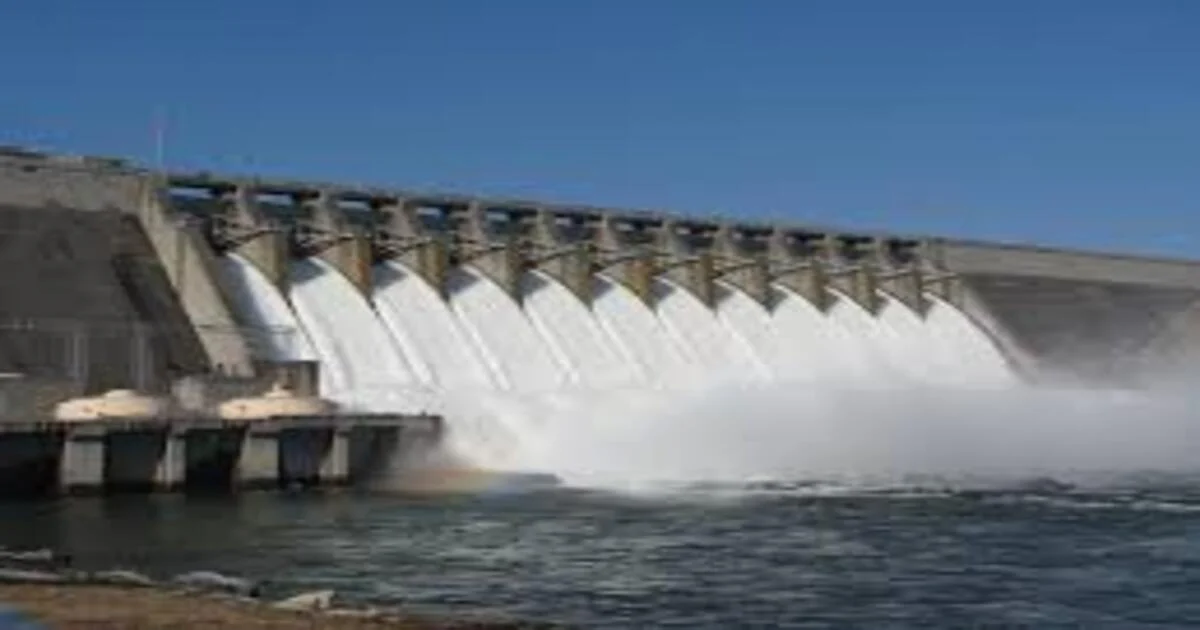
    The federal government is set to construct more dams across the country to improve water storage, prevent flooding, and support food production through irrigation.

    The Minister of Water Resources and Sanitation, Professor Joseph Utsev, shared this update during a meeting in Uyo, Akwa Ibom State.

    At the 31st Regular Meeting of the National Council on Water Resources and Sanitation, themed Water and Food Security: Challenges and Opportunities in the Face of Daunting Climate Change, Utsev explained that irrigation is key to food production, job creation, and poverty reduction.

    New irrigation projects have been approved in several states, including Ondo, Kwara, Benue, Kebbi, Edo, Adamawa, and Oyo. The government is also conducting safety assessments on existing dams, following a major flood in Maiduguri last year. Efforts are ongoing to complete Mangu Dam in Plateau State and Ogbesse Dam in Ekiti State by 2025.

    The Ministry has completed 44 water supply projects and is working on 64 more, funded by the African Development Bank. Additionally, 113 water supply contracts are in progress, with plans to finalize the Asaba and Umuahia National Water Quality Reference Laboratories.

    Governor Umo Eno of Akwa Ibom urged the federal government to reactivate the abandoned Nkari and Ibiono Ibom dams to support agriculture and economic growth in the state. He pledged N200 million to support irrigation projects and expressed readiness to collaborate with the federal government and development partners.

    The event included an inspection of exhibition stands and a keynote address on securing Nigeria’s future through better water management.