
Category: Economy

  • Surge in price of cooking gas: FG bans export of LPG

    Surge in price of cooking gas: FG bans export of LPG

    The Federal Government has banned the export of Liquefied Petroleum Gas (LPG), also known as cooking gas, produced in Nigeria, as the price of the commodity continues to soar.

    The Minister of State for Petroleum Resources (Gas), Rt. Hon. Ekperikpe Ekpo, expressed concern over the rising cost of LPG in a statement issued by his media aide.

    Despite efforts to stabilize prices, including the formation of a high-level committee in November 2023 led by the Authority Chief Executive of the Nigerian Midstream Downstream Petroleum Regulatory Authority (NMDPRA), Mr. Farouk Ahmed, prices have spiked from an average of N1,100-N1,250 per kg to N1,525 per kg.

    The statement highlighted that Ekpo convened a meeting with key stakeholders in the LPG value chain to address the escalating prices and the hardship they impose on Nigerians.

    As part of the government’s efforts to curb the situation, the Minister announced the following directives:

    Short-Term Solution: Effective from November 1, 2024, the Nigerian National Petroleum Company Limited (NNPCL) and LPG producers are to halt the export of LPG produced in the country. If they continue exporting, they must import an equivalent volume at cost-reflective prices.

    Pricing Framework: The NMDPRA will engage stakeholders within 90 days to create a domestic LPG pricing framework. The new framework will be indexed to the cost of in-country production, replacing the current system of using external market prices from regions like the Americas and Far East Asia.

    Long-Term Solution: Over the next 12 months, the government plans to develop infrastructure for blending, storing, and distributing LPG, with the aim of halting exports until domestic supply is sufficient and prices stabilize.

    The Minister emphasized that these measures are aimed at improving availability, ensuring affordability, and protecting Nigerians from the economic strain caused by rising LPG prices.

    ReplyForwardAdd reaction
  • FIRS announces fresh recruitment

    FIRS announces fresh recruitment

    The Federal Inland Revenue Service, FIRS, has announced that it is currently recruiting young graduates to join its team as Tax Officers (Officer Il and Officer I).

    FIRS made this known in a post on its official X page.

    It said specific information regarding application procedures, application deadlines and submission details, will be published shortly on our official website.

    “We are looking for candidates with integrity and a strong desire to excel professionally, as well as those who possess strong analytical, problem-solving, and communication skills.

    “The Federal Inland Revenue Service (FIRS) is an equal opportunity employer.

    “We encourage all eligible candidates, regardless of gender, ethnicity, or background, to consider applying.

    “Stay tuned for more details, and thank you for your interest in joining the FIRS team.”

  • Nigeria supplies 24 hour electricity to Togo, Benin, Niger – TCN

    Nigeria supplies 24 hour electricity to Togo, Benin, Niger – TCN

    The Transmission Company of Nigeria, TCN, says the country supplies 24-hour electricity to neighbouring countries such as Niger, Togo and Benin Republic.

    He said the electricity supply are consistent and stable in those country despite the fact that Nigeria could not boast of constant supply of power.

    TCN Chief executive officer, Sule Abdulaziz, who appeared on Channels Television’s Sunday Politics programme, said that Nigerians know there’s improvement in power supply now.

    “We suply power to Togo, Benin and Niger. We supply them power consistently. They get power from Nigeria on 24-hour basis and they’re paying.

    “Nigerians are getting 24-hour electricity supply. Not everybody. Those people in Band A. You’ll see that they get 20-22 hours.

    “Some Nigerians are getting 24 hours. Every distribution company has Band A and that is their priority.”

    The electricity sector in Nigeria generates, transmits and distributes megawatts(MW) of electric power that is significantly less than what is needed to meet basic household and industrial needs of the country.

  • National Grid Collapses Again, Triggering Nationwide Blackout

    National Grid Collapses Again, Triggering Nationwide Blackout

    Nigeria’s national electricity grid collapsed on Saturday, marking the third failure in just one week.

     The grid recorded zero megawatts as of 9:10 a.m., leaving the country in darkness once more. 

    This latest collapse brings the total number of grid failures to eight in 2024, with earlier outages occurring in February, March, April, July, and August.

    The recurring power disruptions have been linked to outdated infrastructure. Nigeria’s power minister, Adebayo Adelabu, has stressed the need for improvements in power systems, including a push for decentralisation, allowing multiple regional grids to operate independently. 

    This would reduce the widespread impact of failures. 

    Despite earlier reports of a decline in system disturbances, the national grid’s failures remain a pressing issue.

  • Benin CNG Cylinder Explosion: Illegal Vehicle Modification to blame

    Benin CNG Cylinder Explosion: Illegal Vehicle Modification to blame

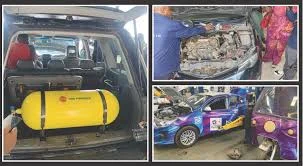
    The Presidential CNG Initiative (PCNGI) has reacted to a CNG vehicle cylinder explosion that occurred in Benin City, attributing the incident to unauthorized vehicle modifications.

    The explosion took place at NIPCO CNG Station on Ikpoba Hill on Wednesday, October 16, 2024, injuring several individuals but causing no fatalities.

    PCNGI confirmed that the vehicle’s cylinder had been welded and altered, deviating from approved safety standards for CNG use.

    An investigation into the incident is underway. It will be carried out by the police, regulatory bodies, and NIPCO management.

    The organization stressed the importance of safe handling of hydrocarbons and urged compliance with new regulations to prevent future incidents.

    PCNGI highlighted the upcoming launch of the Nigeria Gas Vehicle Monitoring System, aimed at improving safety and regulation within the CNG industry.

  • CNG-Powered Vehicle Explodes In Edo, Scores Injured

    CNG-Powered Vehicle Explodes In Edo, Scores Injured

    Tragedy struck Thursday morning in Benin City, the Edo State Capital following the explosion of a Compressed Natural Gas (CNG) powered vehicle at NIPCO filling station, Aduwawa, along the Benin-Auchi Expressway.

    In a viral video making round on social media, the vehicle was vividly scattered while people around the vicinity ran for dear lives as the loud sound from the explosion created panic among residents in the vicinity.

    Three persons were said to have sustained various degrees of injuries and have been rushed to a private hospital for medical attention.

    The explosion is coming on the heels of safety concerns raised about the conversion of petrol-powered vehicles to CNG as advocated for by the Federal Government as a measure to lower the cost of transportation following the removal of fuel subsidy.

  • Peter Obi Reacts to Power Grid Failures

    Peter Obi Reacts to Power Grid Failures

    2023 Labour Party presidential candidate Peter Obi has voiced his concerns over the ongoing power grid failures in Nigeria, describing the situation as a national embarrassment.

     In a Twitter post, he criticized the repeated collapses of the national grid, which have left many Nigerians without electricity. 

    He pointed out that these outages expose the weaknesses in the country’s power infrastructure and highlight failures in leadership and policy implementation.

    Obi questioned how long Nigerians must endure a system that fails to provide reliable electricity, a crucial element for a productive society. 

    He emphasized the importance of power supply for the economic transformation of the country, particularly for small and medium-sized enterprises (SMEs) that are vital for job creation and economic growth.

    He also compared Nigeria’s electricity generation capabilities with those of other African nations.

     Despite being the fourth largest economy on the continent, Nigeria generates less than 10,000 megawatts of electricity, a stark contrast to South Africa and Egypt, which each generate over 40,000 megawatts.

     Obi argued that this significant disparity in power generation illustrates deep-rooted governance issues that hinder the country’s growth and potential.

    Calling for immediate and comprehensive reforms, Obi stated that Nigerians deserve a government focused on measurable progress in development and the well-being of its citizens.

    ReplyForwardAdd reaction
  • TUC Pushes for Petrol Price Cut, Urges FG to Act

    TUC Pushes for Petrol Price Cut, Urges FG to Act

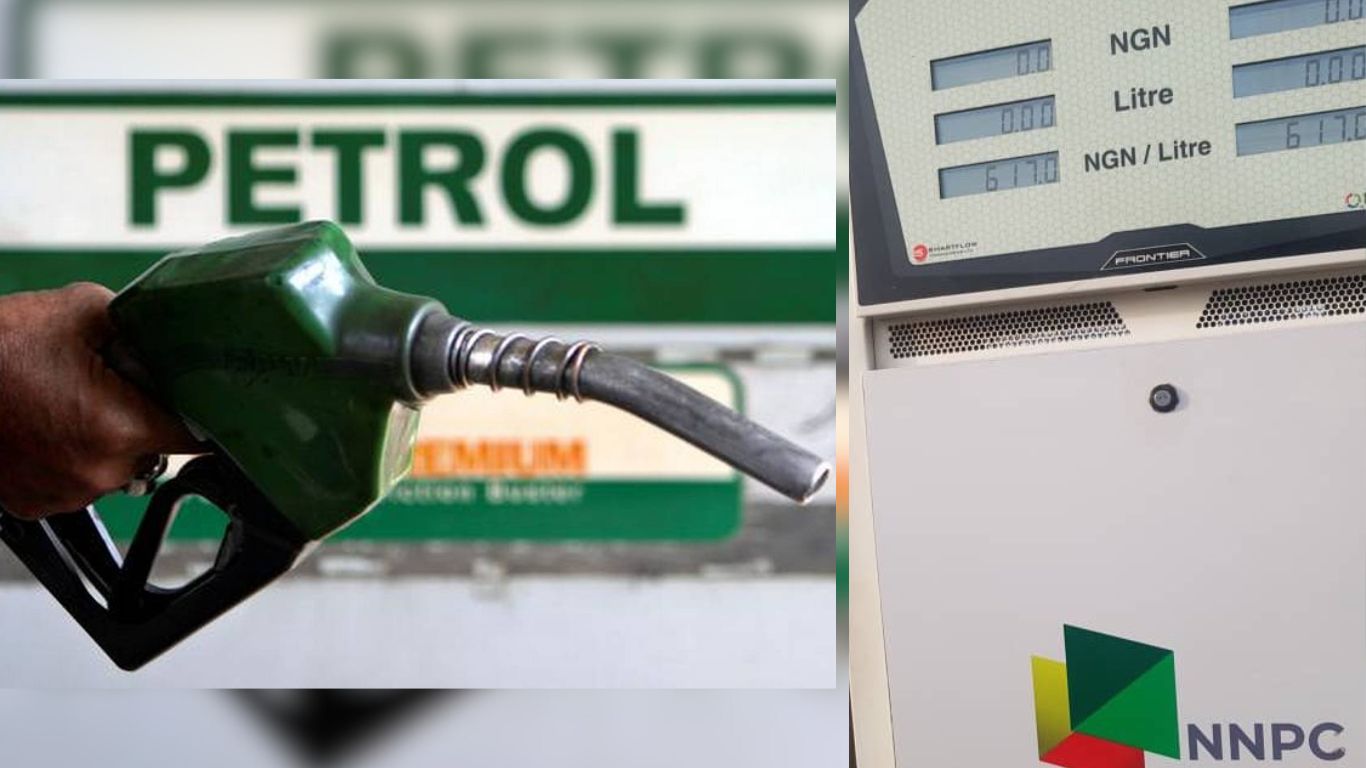
    The Trade Union Congress (TUC) has called on the Federal Government to reduce petrol prices to the rates seen in June 2023.

     This demand comes amidst rising fuel costs that have affected Nigerians since May when the rate surged from ₦184 to the current price of ₦998 per litre in Lagos.

    The Congress goes on to make a raft of suggestions which it reckons, when adopted by the Federal Government, would ameliorate the current hardship greeting the sudden increase in fuel pump price.

    avert the impending mallei The TUC proposed that foreign exchange be allocated to Dangote Refinery at a lower rate to make fuel more affordable.

    It also suggested sourcing refined petrol from other regions if current production cannot meet local demand.

    In addition, the TUC advocated for all marketers to be given licenses to lift petrol from the Dangote Refinery, ensuring availability and access to fuel across the country.

    “We want the price of the product to go below what it was before; not just reverse to what it was before but to go below,” said TUC President, Festus Osifo, at a press briefing in Abuja on Thursday.

    “We want the Federal Government to, through Nigerian Midstream and Downstream Petroleum Regulatory Authority (NMDPRA), give all marketers licenses to lift petrol from the Dangote Refinery.

    “The solution we are proposing if implemented will take us to the price we had as of June last year.

    “There is no government in the world that doesn’t intervene in its critical sector” and that the Federal Government “shouldn’t leave it (the oil sector) to the vagaries and gyration of our naira.

    “If it is not available, it is a problem. If, for example, the production from Dangote Refinery is less than 15 million litres per day, it is not sufficient.

    “So, while efforts are being made to ramp up production from Dangote Refinery, what we are demanding is that we should look for every other means as we are ramping up production, we should source for that difference and bring it in for a while until Dangote can get to that level where the production is sufficient to get to all nooks and crannies of Nigeria.

    For us, that is key because it will address the issue of availability,” the TUC boss stated.

  • FG Unveils Direct Cash Support Scheme for Nigerians 

    FG Unveils Direct Cash Support Scheme for Nigerians 

    In a move aimed at alleviating poverty and enhancing economic stability, Nigeria’s government has introduced a cash transfer programme to assist 20 million low-income individuals. 

    Finance Minister Wale Edun revealed this development at the Nigeria Economic Summit, emphasizing the government’s efforts to allocate its improved revenue toward social welfare programs.

    The initiative targets the most vulnerable, covering around 60% of the nation’s poorest citizens. 

    Currently, the programme supports four million households, which equates to approximately 20 million people. 

    The plan includes an expansion phase that seeks to reach 15 million households nationwide.

    The government’s revenue for the first half of 2024 saw a remarkable rise to ₦9.1 trillion, a considerable increase from the ₦4.06 trillion collected during the same period in 2023. 

    This surge has enabled the administration to invest heavily in social programs that address the cost of living and other economic challenges faced by Nigerians.

    Edun also discussed the broader fiscal reform plan, which involves utilizing technology to enhance tax collection and ensure compliance from various government entities. 

    This approach has facilitated an increase in domestic resource mobilization, allowing the government to allocate more funds toward social initiatives.

    The programme’s expansion is in line with the government’s focus on developing sectors like agriculture, manufacturing, oil, and housing. The aim is to curb inflation, improve food production, and make essential goods more affordable. 

    The initiative reflects the government’s commitment to enhancing the quality of life for Nigerians through targeted economic interventions and sectoral development.

  • South Korean Consortium to Establish Four Refineries in Nigeria

    South Korean Consortium to Establish Four Refineries in Nigeria

    Heineken Lokpobiri, Nigeria’s Junior oil Minister has hinted of a South Korean consortium establishing four refineries in Nigeria.

    Lokpobiri announced in Lagos, October 8, at the inaugural summit of Refineries Owners Association of Nigeria in Lagos, that each of the refineries will have 100,000 barrels/day capacity.

    The government is actively encouraging investments in the petroleum sector by creating a favorable environment for private partnerships. 

    Recently, an invitation was extended to the consortium, which aims to construct the refineries in different locations across the country. 

    Lokpobiri emphasized the government’s commitment to energy security and the need for more modular and mega refineries to boost the industry. 

    The approach involves a public-private partnership model to facilitate investment in the oil and gas sector’s midstream and downstream segments.

    To support local refineries, the Nigerian Upstream Petroleum Regulatory Commission has established guidelines to ensure a transparent supply of crude oil. 

    The government is also focusing on providing special concessions to local refinery owners, thereby enhancing their access to feedstock.

    Furthermore, Lokpobiri discussed the government’s plans to deregulate the downstream sector fully and ease tax burdens on imported refinery equipment.

     This initiative aims to position Nigeria as Africa’s leading petroleum refining hub and achieve self-sufficiency in petroleum production.

    In response to the challenges of crude oil theft and illegal refining, an international emergency committee has been formed to develop sustainable solutions for domestic refining operations. 

    The ministry is also exploring partnerships with international bodies to enhance knowledge transfer and technological advancements in the refining sector.