
Category: Economy

  • AMFSON Holds OGM, Inaugurates National, P/Harcourt Excos

    AMFSON Holds OGM, Inaugurates National, P/Harcourt Excos

    The Association of Mega Filling Station Owners of Nigeria (AMFSON) has inaugurated its national executive committee with Chief Davison Nwankwo as the national president.

    The inauguration ceremony was the highpoint of the 2024 Ordinary General Meeting (OGM), which held at Tokyu Grande Hotel, Port Harcourt marked to full return of the umbrella body of owners of filling stations branded in NNPC colours across the country.

    The rejuvenation of AMFSON is coming as the nation continues to battle epileptic supply and the high cost of petroleum products across the country.

    Before the inauguration ceremony, members of the association who converged in Port Harcourt from across the country lamented the harsh operating environment under which their members were operating.

    According to them, some of the challenges include rising energy costs to run their outlets, huge transportation costs in ferrying products to their stations, as well as shrinking margins in the sale of products.

    Addressing AMFSON delegates shortly after the inauguration, the National President, Chief Davison Nwankwo, expressed gratitude for the confidence reposed in him by the members in asking him to pilot the affairs of the association.

    Nwankwo, who is also the Managing Director of Deez Oil & Gas Limited, assured members that the business interest of AMFSON members would be fully protected under his leadership.

    He further assured that AMFSON would constructively engage the leadership of the NNPC Limited in order to ensure that the businesses made by its members yield positive returns on investment.

    Earlier, the Secretary of the Board of Trustees of AMFSON, Ambassador Kenneth Nwachukwu, recalled that AMFSON came into existence in 2010 with the aim of protecting the interest of its members.

    Nwachukwu, therefore, urged AMFSON members to remain united and committed to the cause of the association in order for them to derive maximum benefits from the association.

    The inaugurated national executive committee of AMFSON include, Chief Davison Nwankwo (President), Barr Jacob Obande (Vice President), Ambassador Kenneth Nwachukwu (National Secretary), Obi Okechukwu (Publicity Secretary) and Comrade Prince Omugbe (Treasurer). Others are Hon Ejike Amedu(Public Relations Officer), Toyin Ogunwole (Zonal Vice Chairman, South-West), Emmanuel Okon(Zonal Vice Chairman, South-South) and Salem Ahmed (Zonal Vice Chairman, North-West).

  • Tinubu sacks BPE director-general, appoints replacement 

    Tinubu sacks BPE director-general, appoints replacement 

    President Bola Tinubu has relieved Mamman Ahmadu of his duties as director general of the Bureau of Public Enterprises (BPE).

    In a statement by presidential spokesman Ajuri Ngelale on Saturday, the president also approved the appointment of Ayodeji Ariyo Gbeleyi as the new DG of the BPE.

    “Mr. Gbeleyi is a renowned financial expert and award-winning chartered accountant,” the statement read.

    “He is a fellow of both the Institute of Chartered Accountants of Nigeria (ICAN) and the Chartered Institute of Taxation of Nigeria (CITN).

    “He is also an alumnus of executive programmes of the prestigious London Business School, Harvard Kennedy School of Government, and Lagos Business School.

    “He has over 30 years of post-qualification experience in diverse sectors, including manufacturing, fast-moving consumer goods (FMCG), investment & commercial banking, project finance, telecommunications, infrastructure, and public administration.

    “He was the board Chairman of the Federal Mortgage Bank of Nigeria (FMBN) and Commissioner of Finance in Lagos State from 2013 to 2015.

    “The President expects the new Director-General to bring his vast experience and competence to bear in this role to strengthen the agency as the national resource centre for capacity building and sustenance of reforms through the promotion of a competitive private sector-driven economy, ensuring social accountability and efficient deployment of public resources, as well as advancing effective corporate governance and fiduciary discipline in the public and private sectors.”

  • Dangote Refinery postpones supply of petrol to July

    The Dangote refinery has said its plan to release premium motor spirit into the market this month will no longer be possible.

    The President of Dangote Group, Aliko Dangote, told newsmen on Monday that the petrol from the 650,000 barrels per day capacity refinery will be out in July.

    Dangote said this was due to some minor challenges, stating that the product would be out by July 10 to 15.

    “We had a bit of delay, but PMS will start coming out by 10 to 15 of July. But then we want to keep it in the tank to make sure that it settles. So by the third week of July, we’ll be able to come out to take it into the market,” Dangote had said.

    Speaking at the recent Africa CEO Forum Annual Summit in Kigali, Rwanda, Dangote expressed optimism about transforming Africa’s energy landscape.

    “Right now, Nigeria has no cause to import anything apart from gasoline and by sometime in June, within the next four or five weeks, Nigeria shouldn’t import anything like gasoline; not one drop of a litre,” he declared.

    “We have enough gasoline to give to at least the entire West Africa, diesel to give to West Africa and Central Africa. We have enough aviation fuel to give to the entire continent and also export some to Brazil and Mexico.

    “We have started producing jet fuel, we are producing diesel, and by next month, we’ll be producing gasoline. What that will do, it will be able to take most African crude,” Dangote told the panel.

    The words of Dangote appeared to have come as a soothing balm to marketers and Nigerians who are hopeful that the Dangote would crash the price of petrol from around N700 to N500 or below.

  • Blackout As Electricity Workers Shut Down National Grid

    Blackout As Electricity Workers Shut Down National Grid

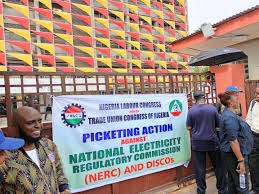
    In compliance with the joint directive of the Nigeria Labour Congress (NLC) and Trade Union Congress (TUC) to down tools on Monday over the new minimum wage, electricity workers have shut down the National Grid, resulting in nationwide blackout.

    This was disclosed by the Transmission Company of Nigeria (TCN) in a statement signed by its spokesperson, Ndidi Mbah, on Monday morning.

    TCN said workers were driven away from their duty posts while others were beaten and wounded at some power facilities. It added that all its efforts at grid recovery were being frustrated by the unionists.

    “The Transmission Company of Nigeria hereby informs the general public that the Labour Union has shut down the national grid, resulting in black out nationwide. The national grid shut down occured at about 2.19am this morning, 3rd June 2024.

    “At about 1:15am this morning, the Benin Transmission Operator under the Independent System Operations unit of TCN reported that all operators were driven away from the control room and that staff that resisted were beaten while some were wounded in the course of forcing them out of the control room and without any form of control or supervision, the Benin Area Control Center was brought to zero.

    “Other transmission substations that were shut down, by the Labour Union include the Ganmo, Benin, Ayede, Olorunsogo, Akangba and Osogbo Transmission Substations. Some transmission lines were equally opened due to the ongoing activities of the labour union.

    “On the power generating side, power generating units from different generating stations were forced to shut down some units of their generating plants, the Jebba Generating Station was forced to shut down one of its generating units while three others in the same substation subsequently shut down on very high frequency. The sudden forced load cuts led to high frequency and system instability, which eventually shut down the national grid at 2:19am.

    “At about 3.23am, however, TCN commenced grid recovery, using the Shiroro Substation to attempt to feed the transmission lines supplying bulk electricity to the Katampe Transmission Substation. The situation is such that the labour Union is still obstructing grid recovery nationwide.

    “We will continue to make effort to recover and stabilize the grid to enable the restoration of normal bulk transmission of electricity to distribution load centres nationwide,” TCN stated.

  • IBEDC Sacks Achife as Managing Director

    IBEDC Sacks Achife as Managing Director

    The Board of Directors of the Ibadan Electricity Distribution Company has relieved Mr Kingsley Achife of his appointment as the company’s Managing Director.

    The board refused to renew Achife’s contract, naming Francis Agoha as the Acting Managing Director of the IBEDC effective from May 31.

    Achife’s sack was contained in an internal memo dated May 31, a copy of which was sighted by our correspondent.

    “Dear colleagues, the Board of Directors of the Ibadan Electricity Distribution Company wishes to inform the staff that it has decided not to renew the contract of the current Managing Director, Engineer Kingsley Achife.

    “The Board expresses its deepest gratitude to Engineer Kingsley Achife for his contributions to the company and for laying the foundation for the ongoing turnaround.

    “In light of this decision, the Board is pleased to announce the appointment of the most senior executive, Engineer Francis Agoha as the Acting Managing Director of IBEDC. Engineer Francis Agoha will assume leadership responsibilities with immediate effect and will work closely with the Board to ensure a smooth transition,” the memo read in part.

  • Tinuade Sanda Wins 2023 Vanguard Energy Icon of the Year Award

    Tinuade Sanda Wins 2023 Vanguard Energy Icon of the Year Award

    Dr. Tinuade Sanda, a notable leader in Nigeria’s energy sector and former Managing Director of Eko Electricity Distribution Company, has received the esteemed Vanguard Energy Icon of the Year Award.

    The award ceremony took place at Eko Hotel and Suites, Victoria Island, Lagos.

    The Vanguard Personality of the Year Award, now in its 12th year, honors individuals who have achieved significant professional success and made substantial contributions to society.

    In her acceptance speech, Dr. Sanda expressed her gratitude for the recognition, dedicating the award to her team, the workforce, and the Board of Directors of Eko Electricity Distribution Company.
    She highlighted the importance of collaboration in addressing the challenges of the energy sector and reaffirmed her dedication to advancing Nigeria’s power industry.

    Vanguard Newspaper’s Editor, Mr. Eze Anaba, noted that the event is dedicated to celebrating exceptional achievers and the values they embody, such as integrity, innovation, and perseverance.

    Dr. Sanda’s award underscores her impactful leadership and commitment to improving Nigeria’s energy sector, setting high standards during her tenure and beyond.

  • Obasanjo proffers solutions to Nigeria’s economic woes

    Obasanjo proffers solutions to Nigeria’s economic woes

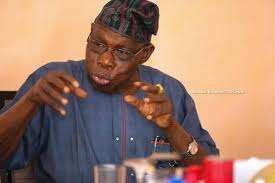
    Former Nigeria President, Olusegun Obasanjo has told President Bola Ahmed Tinubu to ramp up activities around production and productivity to tackle Nigeria’s economic woes.

    Obasanjo disclosed this in a statement by his Media Aide, Kehinde Akinyemi, on Sunday, quoting the ex-president as having spoken at a Colloquium: “Nigeria’s Development: Navigating the Way Out of the Current Economic Crisis and Insecurity” delivered at the Paul Aje Colloquium (PAC) in Abuja.

    Obasanjo blamed fuel subsidy removal, the Harmonization of foreign exchange markets and dealing with a military coup in Niger for Nigeria’s economic hardship.

    However, as a solution, the former President said the government should focus on production, noting that there is no shortcut to economic progress.

    “The way forward is production and productivity, which belief and trust in government leadership will engender. No shortcut to economic progress but hard work and sweat.

    “The economy does not obey orders, not even military orders. I know that. If we get it right, we will begin to see the light beyond the tunnel in two years. It requires a change of characteristics, attributes and attitude by the leadership at all levels to gain the confidence and trust of investors who have alternatives,” he said.

    Recall that in June last year, Tinubu’s administration announced fuel subsidy removal and the Harmonization of Foreign exchange markets.

    In April, fuel pump price surged by 176.02 per cent on a year-on-year basis to N701.24 per litre compared to N255.06 last year.

    Similarly, the country’s Naira dropped to N1482.81 per dollar last Friday from N465.50 per dollar on June 14, 2023.

    This development has led to a surge in prices of goods and services, as headline and food inflation increased to 33.69 per cent and 40.53 per cent, respectively.

  • ZACCH ADEDEJI’s PRINCIPLES OF TAXATION: A PATHWAY TO NIGERIA’S ECONOMIC GROWTH

    Abdulahi Ismaila Ahmad, PhD

    Since the assumption of Zacch Adedeji, Ph.D to office as the Executive Chairman of the Federal Inland Revenue Service (FIRS), I have followed keenly his enunciation of his principles of taxation, which, to my mind, can translate to a pathway to Nigeria’s economic growth.

    To be sure, Adedeji’s principles of taxation embody some of the normative principles of taxation, which are certainty, flexibility, equity, simplicity, and utmost good faith.

    At every given forum, Adedeji does not fail to reify his wholesome principles of taxation. He is wont to say that, “we will tax the fruit, not the seed; we will tax prosperity, not poverty.”These are statements of certainty and equity, which are altogether refreshing and reassuring.
    The reassurance in his statements is underlined by his insistence that his tax principles are focused on encouraging taxpayers to grow their investments or income so that they can yield enough taxable dividends or profits. In his most philosophical best, he compares taxpayers to gardeners and the taxman as one who waters the garden. He says it is the duty of the government to create a conducive environment for taxpayers and their businesses to thrive in the hope that once they have a fulsome yield, they will gladly pay their taxes. That is why he says the taxman is not aiming to tax poverty but prosperity.

    Adedeji’s principles of taxation anticipate economic boom and discourage tax hikes in times of economic depression. The flexibility principle provides that the amount of tax charged should not be the same all year round; and, that tax rates should be lowered for other social benefits during economic boom, while during economic depression tax rates may be raised to raise maximum funds for developmental projects. Adedeji’s taxation principle does not support tax hikes that will become a burden on the taxpayers or the citizenry.
    Thus, it is obvious that Adedeji’s taxation principle takes cognizance of the fact that taxation is the lifebuoy of the economy. It is the fecund source of economic development. It follows then that when taxes are collected and properly utilized in grooming businesses, empowering citizens through access to low interest loans and grants, diversification of business activities like the creation of value chains, and provision of critical social amenities, there will be enough income in the pool to tax.

    In other words, there will be enough fruit from which to pick.
    Recently, the federal government took the right step in the right direction by establishing the Consumer Credit Scheme, which guarantees access to loans facility for the citizenry to grow their business activities. The logic here is that once there is a boom in economic activities in the informal sector of the economy, there will be a corresponding widening of the tax net without complaint from the tax paying community.
    It is this veritable connection between taxation and economic growth that Adedeji’s principles of taxation seek to highlight, making them the pathway to Nigeria’s economic growth. In concrete terms, Adedeji’s unwavering commitment to expounding his taxation principles has already raked in more than Three Trillion naira in tax revenue in the first quarter of 2024 for the three tiers of government in aid of the execution of the Renewed Hope Agenda of President Bola Ahmed Tinubu. In addition to raising this much revenue, Adedeji has also reorganised the structure of the service to reflect his taxation principle of customer-centricity. He believes that taxpayers should form the focal point of the operations of the Service, and that regard, they be treated with due diligence.
    Presently, the Service is structured based on the category of taxpayers: Large Taxpayers Group, Medium Taxpayers Group, and Small Taxpayers Group; as well as five other services groups, viz, Corporate Services Group, People Services Group, Support Services Group, Compliance and Enforcement Support Group, and the Special Duties. This taxpayers-based operational categorisation is purposely to simplify tax payment processes, which is made more so by the introduction of the various automation platforms.
    And so, it is always both refreshing and reassuring to listen to Adedeji marshals his thoughts around the issue of making taxation the pivot of national development. He often couches his statements in literal parallelism, metaphor, and humour. This rare sagely gift sets him apart as a conscientious taxman. Beneath his jocular mien lies a determination to set Nigeria’s fiscal trajectory and tax system on the pathway of sustainable economic growth.

    ABDULLAHI ISMAILA AHMAD, PHD
    Director of Communications and Liaison Department,
    Federal Inland Revenue Service (FIRS)
    Abuja.

  • BREAKING: CBN raises interest rate

    BREAKING: CBN raises interest rate

    The Monetary Policy Committee of the Central Bank of Nigeria has increased the benchmark interest rate to 26.25 per cent.

    This was disclosed by the Governor of the CBN who doubles as the Chairman of the MPC at the end of the 295th MPC meeting held in Abuja.

    At the March MPC meeting, the benchmark rate had been increased by 200 basis points from 22.75 per cent to 24.75 per cent.

    The MPC has maintained a hawkish stance since it resumed meetings this year in a bid to tackle Nigeria’s persistent inflation.

    As of April, Nigeria’s inflation rate had risen to 33.69 per cent.

    A number of analysts have projected a rate hike while some suggested that the apex bank may consider a hold stance as the growth rate of inflation moderated month-on-month.