
Category: Economy
-

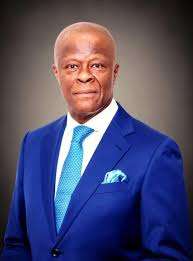
Ex-MTN Group CEO, Sifiso Dabengwa Is Dead
A former CEO of MTN Group, Sifiso Dabengwa, has reportedly died.Reports obtained by Naija News revealed that Dabengwa passed away on Monday morning after a battle with cancer.Dabengwa held the position of CEO at MTN from March 2011 until 2015, when he resigned amid the company’s efforts to address a substantial fine of ₦1.04 trillion imposed by Nigeria for failing to disconnect over five million customers with unregistered SIM cards.
Originally from Zimbabwe, Dabengwa also had a brief tenure as the CEO of MTN Nigeria until 2006.South African media sources have reported confirmation of his death from family spokesperson Themba Sibanyoni.In a statement made available to newsmen on Monday, Sibanyoni said: “Dabengwa was a titan in the telecommunications industry and an astute businessman. His tenure as CEO of MTN Group from 2011 to 2015 was marked by visionary leadership, integrity, and dedication that drove significant advancements in the industry”.Sibanyoni said Dabengwa left a legacy that extends far beyond the boardroom.“He was an advocate for education and a fervent believer in the power of technology to transform lives,” he praised the deceased.A senior executive at MTN, who verified the news of the passing at the company’s headquarters in Johannesburg, South Africa, expressed that MTN received the announcement with profound shock and sorrow.She remarked that the entire MTN community is in a state of mourning, given that Dabengwa remained a part of the MTN family after leading the telecommunications giant for several impactful years. -

Nigerians want moribund refineries sold
Notorious for flip flops in policy enunciation, implementation and monitoring, the Nigerian National Petroleum Company Limited (NNPCL) has come up with a new plan to hand over its two moribund refineries in Warri and Kaduna to private maintenance operators.
The NNPCL made the announcement via a post on its official X handle on Friday.
This decision is not sitting well with some Nigerians and industry watchers who wonder why this is happening after the national oil company had pumped huge sums in billions of dollar during numerous rounds of Turn Around Maintenance (TAM).
An analyst on Arise TV, Godwin Ibe advised for an outright sale of the refineries, insisting if the government still wanted to participate in its management it should retain some minimum amount of shares.
Whereas the Kaduna refinery with a 50,000 B/D capacity was put into service in 1980 to deliver petroleum products to Northern Nigeria. By constructing a second 50,000 B/D crude train in 1983 specifically for the production of lubricating oils (lubes), the capacity was increased to 100,000 B/D. The initial crude train’s capacity was increased to 60,000 B/D in 1986. The refinery’s current nameplate capacity is 110,000 B/D thanks to the additions.
In 1978, the Delta State refinery at Warri came into production. The refinery is a sophisticated conversion unit with a nameplate distillation capacity of 12,55,000 bpd or 6,250,000 MTA. One of the petrochemical plants in the refinery complex was put into operation in 1988 and has the capacity to produce 18,000 MTA of carbon black and 13,000 MTA of polypropylene. The refinery is intended to supply markets in most of Southern Nigeria.
-

Digital Bridge Institute, NigComsat get new CEO, Executive Directors
President Bola Tinubu has approved the appointment of Mr. Daser David as the new President/Chief Executive Officer of the Digital Bridge Institute (DBI).
Mr. David is an academic and industry expert with a deep understanding of digital technologies and educational leadership.
The President has also approved the appointment of Mr. Reuben Oshomah as Executive Director, Marketing, Nigerian Communications Satellite Limited (NIGCOMSAT), and Mr. Adama Kure, Executive Director, Finance and Administration, (NIGCOMSAT).
Mr. Oshomah has extensive experience in communications satellite marketing and strategic business development, while Mr. Kure is a seasoned finance professional with a strong record in financial management and corporate governance.
The President expects the newly appointed officers to bring their wealth of experience and expertise to bear in driving the strategic vision for these institutions.
-

Niger Delta Power Holding Company gets new management
President Bola Tinubu has appointed seven persons to serve as the new management team for the Niger Delta Power Holding Company.The Presidency announced the appointments on Monday in a statement signed by Tinubu’s Special Adviser on Media and Publicity, Ajuri Ngelale, titled ‘President Tinubu appoints new management team for the Niger Delta Power Holding Company.’The new members of the management of the company are Jennifer Adighije as Managing Director/Chief Executive Officer, Abdullahi Kassim as Executive Director (Generation), Bello Bello as Executive Director (Networks) and Emmanuel Umeoji as Executive Director (Corporate Services).Others are Omololu Agoro as Executive Director (Finance and Accounts), Omoregie Ogbeide-Ihama as Executive Director (Strategy and commercial), and Steven Andzenge as Executive Director (Legal Services).The new NDPHC Chief Executive Officer, Ms. Jennifer Adighije, holds a master’s degree in Wireless Networks and Telecommunications from Queen Mary University of London, UK, and a bachelor’s degree in Electrical/Electronics Engineering from the University of Lagos, Nigeria.Ngelale said Tinubu “expects the new members of the management of the company to deploy their expertise and experience to drive NDPHC’s mandate of effectively managing the National Integrated Power Projects.” -
Dangote, others: Crude sales begin Oct 1
The Federal Government has disclosed that sales of crude oil to Dangote Refinery and other local refineries will commence October 1, 2024.
The Minister of Finance and Coordinating Minister of the Economy, Wale Edun, made the announcement during a meeting with the Implementation Committee on Monday in Abuja.
According to a post on the official X (formerly Twitter) page of the finance ministry, the meeting was to review progress on key initiatives.
At the meeting, key roles were outlined for stakeholders, including the Nigerian Midstream and Downstream Petroleum Regulatory Authority, Central Bank of Nigeria, Nigerian Upstream Petroleum Regulatory Commission and the African Export-Import Bank to ensure smooth implementation.
The post read, “The Minister of Finance and Coordinating Minister of the Economy, Mr. Wale Edun, today led the Implementation Committee meeting on the transition to crude oil sales in naira.
“The meeting reviewed progress on key initiatives, including the upcoming commencement of naira payments for crude oil sales to the Dangote Refinery starting October 1, 2024.”
Also, the Executive Chairman of the Federal Inland Revenue Service, Dr Zacch Adedeji, and the Chairman of the Technical Sub-Committee reported that “The first PMS delivery from Dangote is expected next month under existing agreements.”
It also stated that updates were provided on the Port Harcourt and Dangote Refineries were also provided, with significant production increases expected from November 2024.
The minister emphasised the need for transparency and directed the Technical Sub-Committee to finalize details and prepare a report for the President, confirming that his directives are on track for implementation from September.
-

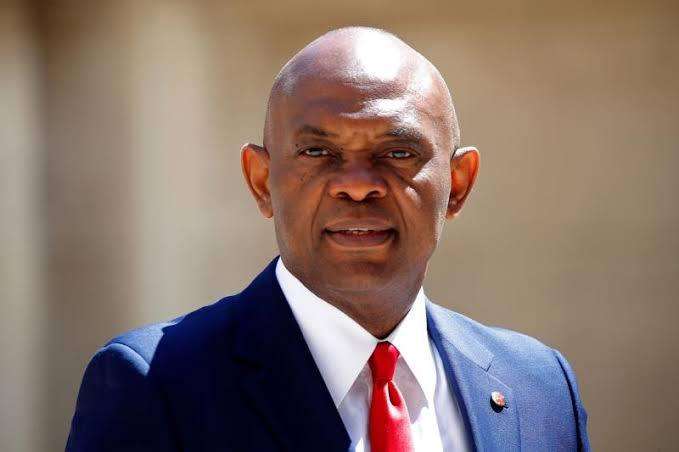
Govt should tell Nigeria those stealing her crude with vessels – Elumelu
“Meanwhile, oil-producing countries are smiling as their foreign reserve is rising. What is Nigeria’s problem? We need to hold our leaders more accountable!”Concerned by the very absurd occurrence of a huge chunk of Nigeria’s crude oil being stolen, prominent businessman and banker, Tony Elumelu says the government and security agents should be able to tell Nigerians who is stealing the country’s main source of revenue, especially using massive vessels that move through the territorial waters.Elumelu stated this in an interview published by the Financial Times on Friday, where he also spoke on denied business opportunities during the Buhari Presidency.Elumelu who dreads oil theft said the menace contributed to the divestment of international oil companies in Nigeria.He said he discovered first-hand why international oil companies were partly divesting from onshore assets after criminal gangs began stealing crude from his pipelines.In 2022, when things got to a point where his company had to shut down production, Elumelu took to social media, tweeting:“How can we be losing over 95 per cent of oil production to thieves? Look at the Bonny Terminal which should be receiving over 200,000 barrels of crude oil daily, instead, it receives less than 3,000 barrels, leading the operator Shell to declare force majeure. The reason Nigeria is unable to meet its OPEC production quota is not because of low investment but because of theft, pure and simple!“Meanwhile, oil-producing countries are smiling as their foreign reserve is rising. What is Nigeria’s problem? We need to hold our leaders more accountable!”Elumelu said oil thieves still take away 18 per cent of crude from his field, lamenting, out of “42,000 barrels of crude pumped daily,” theft still takes away about 18 per cent of production.Asked who is behind the theft, he replied, “This is oil theft, we’re not talking about stealing a bottle of Coke you can put in your pocket. The government should know, they should tell us. Look at America — Donald Trump was shot at and quickly they knew the background of who shot him. Our security agencies should tell us who is stealing our oil. You bring vessels to our territorial waters and we don’t know?”Mr. Elumelu also recounted an unpleasant experience he had during the Presidency of Muhammadu Buhari when his company, Heirs Holdings was allegedly denied the opportunity of acquiring an oilfield.He disclosed that Heirs Holdings had been looking to purchase the oilfield since 2017, having raised $2.5bn to purchase a different one. In a twist, he claimed that former President Buhari and his late Chief of Staff, Abba Kyari, blocked the deal.He said he was told Nigeria could not allow something of such strategic importance to fall into the hands of a private operator.“This defied logic,” he added since he would have been purchasing it from a foreign company.As one of the few Nigerians who made their fortunes outside of oil, Elumelu revealed that his decision to buy a 45 per cent stake in an oilfield three years ago when international oil companies such as Shell, Total and Eni were selling off their shallow water assets in Nigeria was to give the country energy security in the face of low power supply.“We wanted to become a Fortune 500 company and we estimated what we needed. It’s not naira, it’s huge dollars. Energy security is crucial for a country that doesn’t produce enough electricity for its roughly 200 million citizens,” he added.Speaking on the japa syndrome, Elumelu declared, “I support it, totally. “I don’t have a problem with people saying ‘I’m going to Canada, UK or US.’“Joblessness is the betrayal of a generation. You’ve gone to school and come back with your dreams and aspirations and you don’t have the opportunity . For people who decide to find solutions elsewhere, no one should stop them. But for those who decide to stay, they should try to create an impact and build a legacy.” -

FG Begins Direct Cash Transfer To Nigerians
No fewer than 4.3 million Nigerians have received direct cash transfers from the Federal Government, Minister of Finance and Coordinating Minister of the Economy, Mr Wale Edun, said yesterday.
He said one million citizens were reached in the last few weeks, while the target is to transfer cash to one million vulnerable Nigerians each month.
The minister spoke on a business programme of a national television during which he outlined the Federal Government’s comprehensive plan to address the current economic challenges.
He said the government was expanding its cash transfer programme to support the poorest and most vulnerable.
The programme, he said, had reached 4.3 million people, with plans to increase this number rapidly.
“Right now, it’s about 4.3 million. But the last million was in the last few weeks. And when I say we’re ramping at a rate of 1 million per month, that is an ongoing process,” Edun said.
He projected that the programme could potentially scale to assist a million people per week or every two weeks, depending on technological capabilities.
Of great importance to the government, Edun said, is the welfare of the people, particularly the vulnerable.
One of the key areas of focus is ensuring food availability and affordability.
Edun said: “There is a concerted effort to ensure that we have homegrown food available.
“In the short term, there is, apart from what is being distributed from reserves, a window that has been opened for importation because the commitment of Mr. President is to drive down those prices now and make food available now.”
He emphasised that this measure will not undermine local farmers, as importation will only be permitted after exhausting local supplies.
“One of the conditions for this importation will be that everything available locally in the markets or with the millers and so forth has been taken up. We will have auditors that will check that,” he said.
Edun noted that these interventions aim to reduce inflation, stabilise the exchange rate, and lower interest rates, thereby creating a conducive environment for investment and job creation.
“With the kind of food production programme we have, inflation will come down as prices come down. When inflation comes down, exchange rate will stabilize.
“Interest rates will come down and the economy will have a chance.
“People will have a chance at reasonable rates to invest in various sectors of the economy, increase productivity, grow the economy and create jobs which is the key to reducing poverty,” he elaborated.
On the source of funding for these initiatives, Edun explained: “This particular money, $800 million, is under a World Bank programme.
“But it’s under an International Development Association programme, and that money is for 40 years at one per cent.
“So, if you say it is borrowing, well it is, but it is the softest and the cheapest and the most affordable form you can get. The rest will come from the federal government budget.”
The finance minister also explained the rationale for the windfall levy, stressing that its role is in redistributing unearned income.
“Where you have unearned income, where you have a section of the society or an industry or a set of companies that earn money through no dint of hard work of their own, the society deserves a chance to share some of that and it’s just redistribution of that.
“So, I think that takes care of the issue of the windfall levy. It’s done everywhere else in the world where you have, especially the energy sector as well as banking,” he noted.
-
NNPC announces recruitment
By Doris Isreal Ijeoma
The Nigerian National Petroleum Company Limited is set to hire more workers.
The NNPC spokesperson, Olufemi Soneye, confirmed this in a statement on Friday.
Soneye said the recruitment would be for various positions across various departments within the energy company.
He directed interested applicants to visit the NNPC careers page for application instructions.
“NNPC Ltd is pleased to announce that we are currently hiring for multiple positions across various departments. We are seeking talented and dedicated individuals to join our team. Visit our careers page for application instructions,” Soneye stated.
In an update, Soneye disclosed that due to unprecedented traffic to the NNPC Ltd career page from applicants applying for vacancies, the site is currently experiencing slow load times.
“Our techs are working diligently to rectify the problem.
“Please be assured that the application process deadline remains Aug 20, 2024,” he disclosed.
This may be the major recruitment exercise since the NNPC fully transformed into a limited company in 2022.
-

Food prices surge by over 180% in Nigeria
By Doris Isreal Ijeoma
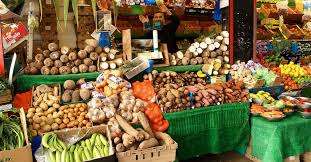
Economic hardship has worsened for Nigerians as prices of garri, beans, yam, and tomatoes increased by at least 180 percent in June 2024, compared to the same period last year amid looming planned nationwide protests.
The National Bureau of Statistics disclosed this in its June Selected Food report released on Wednesday.
The report considered prices of staple foods, including garlic, beans, tomatoes, yam and potatoes.
The data showed that food prices increased on a year-on-year basis and month-on-month basis.
According to specific food item analysis, one kilogram of garri (white) went up by 181.66 percent on a year-on-year basis from N403.15 in June 2023 to N1,135.51 in June 2024, while there was an increase of 1.86 percent on a month-on-month basis.
Also, the price of 1kg of beans brown (sold loose) stood at N2,292.76, indicating a rise of 252.13 percent YoY from N651.12 recorded in June 2023.
Similarly, 1kg of yam tuber increased by 295.79 percent on a year-on-year basis from N510.77 in June 2023 to N 2,021.55 in May 2024.
On a month-on-month basis, it increased by 52.87 percent from N 1,322.36 in May 2024 to N 2,021.55 in June 2024.
Also, the price of tomatoes (1kg) increased Year-on-Year (YoY) by 320.67 percent to N2,302.26 in June 2024 from N547.28 in June of last year (2023).
The report added that there was also a notable price increase of Irish potato by 288.5 percent on a year-on-year basis from N623.75 in June 2023 to N2,423.27 in June 2024.
On a state-by-state level analysis, Lagos state recorded the highest price of 1kg tuber of yam at N3,376.54, while Adamawa recorded the lowest price at N1,100.00.
Gombe recorded the highest average price of 1kg Garri (white) sold loose at N1,619.27, while the lowest was reported in Taraba at N900.
This comes as June’s core and food inflation stood at 34.19 percent and 40.87 percent respectively.
The implication is that the purchasing power of more Nigerians will continue to decline, worsening the misery index.
The development comes as Nigerians gear up for a planned national protest scheduled for 1st August, 2024.
Meanwhile, President Bola Ahmed Tinubu had called on the citizens to shelve the planned protests.
According to him, the government needed time for its policies, including a new minimum wage of N70,000 to impact Nigerians positively.
The government’s plea comes as Nigerian governors and ministers target dialogue to halt the planned protest.
-
BREAKING:I Don’t Own Blending Plant in Malta – NNPC Boss Kyari Replies Dangote
By Doris Isreal Ijeoma
The group chief executive of the Nigeria National Petroleum Company (NNPC), Mele Kyari, has denied claims that he owns an oil blending plant in Malta.
Kyari made this statement on Tuesday in response to allegations made by Aliko Dangote, Africa’s richest person.
Dangote had claimed that some NNPC officials own and operate an oil facility in Malta, a small island country in the Mediterranean Sea.
He said, “I am inundated by enquiries from family members, friends and associates on the public declaration by the President of Dangote Group that some NNPC workers have established a blending plant in Malta thereby impeding procurements from local production of Petroleum products.
“To clarify the allegations regarding blending plant, I do not own or operate any business directly or by proxy anywhere in the world with the exception of a local mini Agric venture. Neither am I aware of any employee of the NNPC, that owns or operates a blending plant in Malta or anywhere else in the world.
“A blending plant in Malta or any part of the world has no influence over NNPC’s business operations and strategic actions.
“For further assurance, our compliance sanction grid shall apply to any NNPC employee who is established to be involved in doing so if availed and I strongly recommend that such individuals be declared public and be made known to relevant government security agencies for necessary actions in view of the grave implications for national energy security.”