
Category: Economy

  • NERC Sanctions AEDC for Misapplying New Electricity Tariff 

    NERC Sanctions AEDC for Misapplying New Electricity Tariff 

    The Nigerian Electricity Regulatory Commission (NERC) has taken action against the Abuja Electricity Distribution Company (AEDC) for incorrectly implementing the new electricity tariffs in the nation’s capital.

    In response to numerous complaints from Abuja residents, NERC has fined AEDC a sum of N200 million and instructed the company to refund affected customers who were wrongly billed.

    According to NERC, the tariff adjustment was intended for customers classified under Band A, who typically receive approximately 20 hours of electricity per day. However, residents in other bands were also subjected to the increased charges when attempting to purchase electricity units.

    Although AEDC has issued an apology and attributed the situation to an error, NERC’s sanctions underscore the importance of accurate billing practices and consumer protection in the electricity sector.

  • Despite Unreliable Power Supply, FG Approves Electricity Tariff Hike

    Despite Unreliable Power Supply, FG Approves Electricity Tariff Hike

    In a controversial move, the Nigerian Electricity Regulatory Commission (NERC) has given the green light to increase electricity rates for customers classified under Band A, despite widespread complaints about epileptic power supply.

    Band A customers, who currently benefit from 20 hours of electricity supply daily, will now face a substantial hike in their tariffs. Mr. Musliu Oseni, the vice chairman of NERC, announced that these customers will be charged N225 per kilowatt-hour, a significant jump from the previous rate of N66.

    Addressing reporters during a press briefing in Abuja, Oseni revealed that Band A customers constitute 15 percent of the 12 million electricity users nationwide. He further explained that some customers previously classified under Band A have been downgraded to Band B due to their failure to receive the required hours of electricity from distribution companies.

    Oseni stated, “We currently have 800 feeders categorized as Band A, but this number will now be reduced to under 500. This means that 17 percent now qualify as Band A feeders, serving only 15 percent of total electricity customers connected to the feeders.”

    The commission also issued an order, titled April Supplementary Order, allowing for a tariff increase to 235 kilowatt-hours per hour.

    Despite the uproar over the tariff hike, Oseni assured that customers in other bands would not be affected by the review. The decision comes amid ongoing concerns about the reliability and consistency of electricity supply across Nigeria.

  • Nigeria to commence local manufacturing of vehicles

    Nigeria to commence local manufacturing of vehicles

    The government of Nigeria has revealed plans for the local production of vehicles. 

    According to the governor, the country plans to commence local manufacturing of vehicles in the next ten years.

    This was disclosed by the Minister of Industry, Trade and Investment Doris Uzoka-Anite, on Friday at the launch of the Nigeria Automotive Industry Development Plan.

    According to the minister, the country can produce vehicles, including motorcycles, tricycles, sedans and heavy trucks.

    She noted that the goal was to cut down on the cost of purchasing vehicles in the country.

    “Nigeria can produce its vehicles. We have the raw materials, we have the skills, we have a market, and now we have a plan that can help us produce our vehicles.

    “These vehicles include motorcycles, tricycles, sedans, and heavy-duty trucks.

    “With this plan, we should see Nigeria fully producing its own vehicles within ten years. Our goal is to reduce the cost of purchasing a vehicle for the average Nigerian,” he said.

    In his remarks, the Director General of the National Automotive Design and Development Council, Joseph Osanipin, stated that the policy proposed to help actualise the plan was a five-year tax holiday for assemblers of vehicles in Nigeria.

    He said, “Through such fiscal initiatives, there is a deliberate focus on backward integration and component production.”

    The development comes as vehicle imports climbed by 226.46 per cent to N1,063 trillion in 2023 from N325. 05 billion in 2022, according to data from the National Bureau of Statistics.

  • NNPCL Refutes Fuel Price Reduction

    NNPCL Refutes Fuel Price Reduction

    In response to the reports making the round that the price of Premium Motor Spirit popularly known as petrol has reduced, the Nigeria National Petroleum Corporation, NNPC has refuted the report, saying it is fake and should be disregarded.

    NNPC’s Chief Corporate Communications Officer, Olufemi Soneye, made the clarification in a statement on Wednesday, urging Nigerians to disregard the report.

    According to the statement issued to newsmen, “The NNPC Limited wishes to clarify rumours suggesting a price adjustment for Premium Motor Spirit (PMS) and Automotive Gas Oil (Diesel) at its retail stations nationwide. The company asserts that these reports are false and urges Nigerians to disregard them entirely.

    “NNPC Ltd. reaffirms its commitment to sustaining the current sufficiency in petroleum products supply across all its retail stations in the country.”

  • Tinubu Appoints Tony Elumelu, Dangote

    Tinubu Appoints Tony Elumelu, Dangote

    Tony Elumelu, Aliko Dangote are among those that have been appointed by Bola Tinubu into the Presidential Economic Coordination Council (PECC) and the creation of the Economic Management Team Emergency Taskforce (EET).

    According to a statement from the presidency, the development is a strategic move to bolster the nation’s economic governance frameworks and ensure robust and coordinated economic planning and implementation.

    Tinubu would serve as chairman of the Presidential Economic Coordination Council (PECC), while Vice President Kashim Shettima would serve as Vice Chairman.

    The council comprises distinguished leaders and key government officials, including:

    (1) President of the Federal Republic of Nigeria – Chairman of the PECC

    (2) Vice-President of the Federal Republic of Nigeria – Vice-Chairman of the PECC / NEC Chairman

    (3) President of the Nigerian Senate

    (4) Chairman, Nigeria Governors’ Forum

    (5) Coordinating Minister for the Economy and Minister of Finance

    (6) Governor of the Central Bank of Nigeria

    (7) Minister of Agriculture and Food Security

    (8) Minister of Aviation and Aerospace Development

    (9) Minister of Budget and Economic Planning

    (10) Minister of Communications, Innovation and Digital Economy

    (11) Minister of Industry, Trade and Investment

    (12) Minister of Labour and Employment

    (13) Minister of Marine and Blue Economy

    (14) Minister of Power

    (15) Minister of State, Petroleum Resources

    (16) Minister of State, Gas

    (17) Minister of Transportation

    (18) Minister of Works

    The PECC will also comprise key members of the organized private sector, with the following members joining for a period not exceeding one (1) year, subject to the President’s directive:

    (1) Alhaji Aliko Dangote

    (2) Mr. Tony Elumelu

    (3) Alhaji Abdulsamad Rabiu

    (4) Ms. Amina Maina

    (5) Mr. Segun Ajayi-Kadir

    (6) Mrs. Funke Okpeke

    (7) Dr. Doyin Salami

    (8) Mr. Patrick Okigbo

    (9) Mr. Kola Adesina

    (10) Mr. Segun Agbaje

    (11) Mr. Chidi Ajaere

    (12) Mr. Abdulkadir Aliu

    (13) Mr. Rasheed Sarumi

  • BREAKING: CBN Hikes Interest Rate

    BREAKING: CBN Hikes Interest Rate

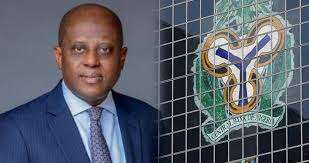
    In an effort to tackle rising inflation in the country, the Central Bank of Nigeria has raised the monetary policy rate, known as the interest rate, by 200 basis points per cent to 24.75 per cent from 22.75 per cent. 

    The new develop was disclosed on Tuesday by the apex bank Governor, Olayemi Cardoso, at the 294th Meeting of the Monetary Policy Committee press briefing in Abuja, the Federal Capital Territory, saying the bank retained the Cash Reserve Ratio to 45 per cent.

    Cardoso stressed that the move was to ensure that the country’s rising inflation rate, which stood at 31.70 per cent in February, was moderated.

    Recall that the MPC raised the country’s interest rate in February to 22.75 per cent.

    The 294th MPC is the second since the appointment of Cardoso in September, with the next MPC meeting expected to be held on the 20th and 21st of May, 2024.

  • Blackout Hits Parts Of Nigeria As Power Stations Collapse

    Blackout Hits Parts Of Nigeria As Power Stations Collapse

    Some residents in the Federal Capital Territory, Abuja and Kogi State, are currently experiencing power outages due to the collapse of a power station.

    The two areas earlier mentioned are under the coverage of the Abuja Electricity Distribution Company (AEDC).

    On Tuesday, the AEDC informed its customers in Zamani Estate, Abacha Road Mararaba, Ruga Juli and other parts of Abuja that a technical fault on 33kv feeder k6 from AT9 Karu Transmission Station was responsible for the power outage.

    “The management of Abuja Electricity Distribution Plc wishes to notify its esteemed customers that there is currently a technical fault on 33kv feeder k6 from AT9 Karu Transmission Station, managed by the Transmission Company of Nigeria.

    “The areas affected in Abuja are: Zamani Estate, Abacha Road Mararaba, Ruga Juli, Old Karu Road, Glory Estate, and environs,” the Disco said in a statement.

    The AEDC disclosed that the TCN maintenance crew was working to ensure the supply of electricity to these areas was restored soon, regretting any inconvenience caused.

    Earlier, the TCN had announced its maintenance crew would carry out planned maintenance on its TR3 45MVA and TR2 60MVA power transformers in its 132/33kV Okene Transmission Substation.

    The maintenance was scheduled to run from Tuesday to Wednesday, from 10 am to 03pm on each day.

  • Customs Intercepts Arms and Military Uniforms at Lagos Port

    Customs Intercepts Arms and Military Uniforms at Lagos Port

    The Tin-Can Island Command of the Nigeria Customs Service has intercepted a cache of arms and ammunition allegedly being smuggled into the country by a criminal gang.

    Among the items intercepted are military camouflage and illicit drugs such as Colorado. The recovered arms include automatic single-barrel rifles and pump-action guns.

    Though details of the interception are still sketchy, sources report that the arms were discovered during an inspection of imported consignments.

    It remains unclear if any arrests have been made at this time.

    This interception follows previous seizures, including 31 arms of various types at Tin-Can and Multi-Purpose Terminals (PTML) ports in Lagos eight months ago. During that seizure, the Comptroller-General of Customs, Mr. Adewale Adeniyi, disclosed that two suspects were arrested. But not much has been made public regarding the prosecution of those arrested.

  • How Emefiele stole billions from Nigeria’s foreign reserve without approval – Presidency 

    How Emefiele stole billions from Nigeria’s foreign reserve without approval – Presidency 

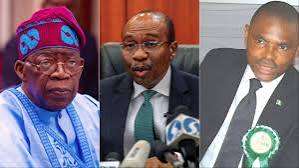
    The Presidency has accused the immediate past Central Bank of Nigeria, (CBN) governor, Godwin Emefiele, of stealing billions from the country’s foreign reserve without seeking the approval of former President, Muhammadu Buhari.

    Presidential spokesperson, Ajuri Ngelale, disclosed this in an interview with TVC, saying Emefiele was unchecked because he was in charge of most of CBN’s operations.

    According to him, Emefiele succeeded in depleting Nigeria’s foreign reserve because he was the then CBN governor and the chairman of the apex bank’s board of trustees.

    Ngelale said: “What was done concerning the expenditure of billions of dollars from the foreign reserves was done largely without the approval or knowledge of President Muhammad Buhari and President Bola Tinubu.

    “Yes, that might seem hard for some people to believe, but I want to explain how that could have happened.

    “We have one of the few Central Banks in the world where the day-to-day CEO was the governor of the Central Bank and was also the chairman of the board of directors. He was essentially overseeing himself.”

  • Presidency Reacts To Reports Of Tinubu Advising Buhari To Print More Money

    Presidency Reacts To Reports Of Tinubu Advising Buhari To Print More Money

    The Presidency has refuted claims suggesting that President Bola Tinubu advised the Muhammadu Buhari administration to print N22.7 trillion. 

    This denial comes in response to statements made by the Minister of Finance and Coordinating Minister of Economy, Wale Edun, during a session with the Senate Committee on Finance.

    Edun attributed Nigeria’s current inflationary pressures to massive currency printing during Buhari’s tenure, emphasizing the need for transparency and accountability in economic management. 

    He disclosed plans for a comprehensive audit of the reported N22.7 trillion printed without productivity.

    In reaction, Paul Ibe, spokesman for former Vice President Atiku Abubakar, criticized Edun’s remarks, alleging Tinubu’s encouragement of such actions in 2020. 

    However, presidential spokesman Bayo Onanuga rebutted these claims, asserting that Tinubu never advised the government to print money.

    Onanuga clarified that Tinubu’s statement in 2020 did not advocate for Naira printing, as erroneously reported, and provided a clarification in Thisday a day after the false report emerged.