
Category: Economy

  • Afdb Injects$540 Million into Nigeria’s Special Agro-Industrial Zones

    Afdb Injects$540 Million into Nigeria’s Special Agro-Industrial Zones

    Oyo, Cross River, and Imo, along with four other states and the Federal Capital Territory, are set to receive the initial disbursement of $540 million from the African Development Bank (AfDB).

    The funds aim to propel the development of Special Agro-Industrial Processing Zones (SAPZs) across the nation.

    Prof. Banji Oyelaran-Oyeyinka, Senior Special Adviser on Industrialization to AfDB President Akinwumi Adesina, revealed the development during a report presentation at the Presidential Villa in Abuja. 

    The SAPZs initiative seeks to transform Nigeria’s rural areas into hubs of economic prosperity.

    This news follows a promise made by Adesina to President Bola Tinubu, announcing a $520 million investment in the zones during a summit in Paris in June 2023. 

    The first phase is already underway, with Kaduna, Oyo, and Cross River States in the process of receiving disbursements.

    Oyelaran-Oyeyinka emphasized the importance of private-sector involvement, stating, “It is a government-enabled project but private-sector driven.” The first phase involves seven states: Cross River, Imo, Kaduna, Kano, Kwara, Ogun, Oyo, and the Federal Capital Territory.

    Vice President Kashim Shettima urged swift action, emphasizing the need for both the government and development partners to turn plans into reality. The three mentioned states will be the initial beneficiaries of phase one, with others to follow as documentation concludes.

    In a related report on the revitalization of the Ajaokuta Steel Company Limited, the United Nations Industrial Development Organisation proposed a comprehensive recovery plan. 

    This plan includes rehabilitating, modernizing, and expanding the integrated steel plant, transforming it into strategic business units.

    VP Shettima stressed the urgency for concrete actions, declaring, “We have passed the age of talking; we must walk the talk.” 

    He emphasized the necessity of realizing the vision of President Tinubu and cited examples of successful industrial transformations, urging determination and collective effort to bring positive change to Nigeria.

  • Google Signs Power Purchase Agreement for Offshore Wind Projects

    Google Signs Power Purchase Agreement for Offshore Wind Projects

    In a significant move towards greening its power supply, technology giant Google has inked its largest-ever power purchase agreement (PPA) with offshore wind projects situated off the coast of the Netherlands. 

    This strategic initiative aligns with Google’s commitment to meeting climate targets while promoting sustainable energy solutions.

    As reported by Reuters, renewable power project developers are increasingly opting for long-term PPAs to ensure revenue security, while corporate buyers like Google are eager to secure a stable supply chain to fulfill their clean energy goals.

    Google’s landmark offshore wind PPA entails the procurement of 478 megawatts (MW) of power from two cutting-edge wind farms developed by Crosswind & Ecowende Consortia. 

    These joint ventures, helmed by energy giants Shell and Dutch utility Eneco, exemplify collaborative efforts in advancing renewable energy initiatives.

    Additionally, Google has revealed smaller-scale renewable PPAs in Italy, Poland, and Belgium, underscoring its global commitment to sustainable energy practices. 

    However, specific financial details of these agreements remain undisclosed.

    Matt Brittin, President of Google in EMEA, emphasized the company’s overarching ambition to operate on carbon-free energy round the clock by 2030. 

    This vision necessitates clean energy solutions across all grids where Google operates, signifying a steadfast dedication to environmental sustainability.

    While many companies pursue renewable energy goals on an annual basis, typically matching PPAs or renewable energy certificate purchases with their yearly electricity consumption, Google stands out with its forward-thinking approach. 

    The tech giant aims to synchronize each hour of electricity consumed with an equivalent hour of clean power production, a methodology hailed by proponents for its accurate reflection of companies’ actual energy usage patterns.

  • Why There’s Shortage Of Electricity In Nigeria – FG

    Why There’s Shortage Of Electricity In Nigeria – FG

    Minister of Power, Bayo Adelabu has  attributed the ongoing poor power supply in Nigeria to a low supply of gas to generating companies (GenCos).

    Adelabu emphasized the government’s commitment to resolving the issue promptly.

    Adelabu stated that following discussions with GenCos and Distribution companies (DISCOs), investigations revealed the primary cause of the setbacks in the new year to be the insufficient supply of gas to GenCos. 

    The minister personally visited facilities in Olorunshogo, Ogun State, and Omotosho, Ondo State, to assess the challenges firsthand.

    Addressing the indebtedness to GenCos by the Nigeria Bulk Electricity Trading Company (NBET), Adelabu acknowledged the sector’s liquidity challenge and assured that efforts are underway to validate the debt and determine a fair resolution.

    To ensure a steady gas supply, the minister urged GenCos to establish contractual arrangements with gas suppliers, recognizing that concessions may be necessary. 

    He expressed the government’s commitment to working collaboratively to stabilize the power sector and emphasized the formation of a committee involving all stakeholders.

    The committee’s mandate is to develop recommendations for resolving gas supply and liquidity challenges, aiming for a more reliable and consistent power supply. 

    Adelabu also revealed plans to initiate discussions with the Minister of State for Petroleum Resources to underscore the importance of prioritizing Gas to Power.

  • Forex Crisis Forces Bureau de Change Closure in Abuja

    Forex Crisis Forces Bureau de Change Closure in Abuja

    In response to the escalating foreign exchange crisis in Nigeria, Bureau de Change operators have taken a drastic step by announcing the indefinite closure of their offices in Abuja starting from February 1, 2024. 

    Abdullahi Dauran, the Chairman of BDC operators in Abuja, cited the scarcity of dollars as the primary reason behind this decision.

    Dauran emphasized that the increasing demand for dollars, fueled by online business transactions and cryptocurrency activities, has intensified the scarcity, leaving Bureau de Change operators with no choice but to shut down.

    Aminu Gwadabe, the president of the Association of Bureaux de Change Operators of Nigeria (ABCON), acknowledged the development but provided no clear response, stating, “I saw it online, too.”

    Recent data from FMDQ on Thursday revealed a marginal appreciation of the Naira to N1,455.59 per US dollar from N1,482.57 on Wednesday. 

    However, the Naira’s depreciation worsened earlier in the week, reaching N1,482.57 per US dollar at the official market, surpassing the N1,470 quoted at the parallel market.

    Despite efforts by the Central Bank of Nigeria, including injecting over $500 million to clear the forex backlog and other interventions, the Naira continues to struggle against the dollar. 

    In an attempt to address the ongoing decline, the CBN released fresh guidelines on Wednesday, targeting commercial banks and urging them to refrain from foreign currency speculation and hoarding.

  • CBN Implements Stricter Measures to Curb Forex Speculation

    CBN Implements Stricter Measures to Curb Forex Speculation

    In a bid to address concerns over rising foreign currency exposures among banks, the Central Bank of Nigeria (CBN) has issued a new circular outlining prudential requirements. 

    The directive aims to mitigate risks associated with excessive foreign currency speculation.

    The circular, titled “Harmonisation of Reporting Requirements on Foreign Currency Exposures of Banks,” stipulates that the Net Open Position (NOP) limit for overall foreign currency assets and liabilities should not exceed 20 percent short or 0 percent long of shareholders’ funds unimpaired by losses. 

    Banks with current NOP exceeding these limits must adjust to the prudential limit by February 1, 2024.

    Banks are now mandated to calculate their daily and monthly NOP and Foreign currency trading position using provided templates. 

    Non-compliance with the NOP limit may result in immediate sanctions and/or suspension from the foreign exchange market, warns the apex bank.

    Additionally, the CBN requires banks to maintain a sufficient stock of high-quality liquid foreign assets to cover maturing foreign currency obligations.
     
    Foreign exchange contingency funding arrangements with other financial institutions are also mandatory.

    To mitigate currency risks, banks are urged to borrow and lend in the same currency, adopt natural hedging, and align interest rates for borrowing and lending. 

    The circular also emphasized the need for approval from the CBN for any early redemption clause in eurobonds.

  • State of the economy and free fall of the Naira : Senate Summons CBN Gov

    State of the economy and free fall of the Naira : Senate Summons CBN Gov

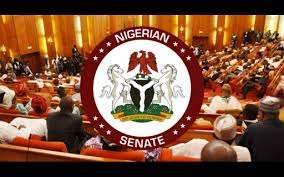
    The Senate on Wednesday summoned the Governor of the Central Bank of Nigeria ( CBN) , Olayemi Cardoso , to appear before it on Tuesday next week to profer solutions to the parlous state of the economy and the free fall of the Naira at the forex market.

    The Senate Summon was made by its Committee on Banking , Insurance, and other Financial Institutions, Chaired by Senator Adetokunbo Abiru (APC Lagos East).

    The committee hurriedly met on Wednesday when Naira plummeted to N1,520 to a US dollar and resolved to summon the CBN governor on a way out of the foreign exchange quagmire.

    Speaking with journalists after the hurried meeting held behind closed door, Senator Abiru said the state of the economy, especially the spiraling inflationary trend was of great concern to the lawmakers.

    He said “We have held a meeting this afternoon essentially to focus on the direction of the Nigerian economy .

    “We are all living witnesses of what is going on. Underlining the major issue of the economy is the way the inflation index has been, and of course, it is a major concern to us .

    “We have deliberated among ourselves. Critical issues were addressed, and we believe that the next line of action is to summon the governor of the Central Bank on Tuesday at 3 O’clock to brief us properly on the state of the economy.

    “That we have resolved and will communicate to the governor of the Central Bank after which we will have further communication with members of the press’

  • CBN to Assume Control of Crude Sales, as President Tinubu Unveils Sweeping Reforms in Oil Sector

    CBN to Assume Control of Crude Sales, as President Tinubu Unveils Sweeping Reforms in Oil Sector

    President Bola Tinubu has directed the Central Bank of Nigeria (CBN) to assume responsibility for crude oil sales, a move aimed at addressing longstanding concerns about opaque practices and declining oil revenue under the management of Nigerian National Petroleum Company Limited (NNPCL).

    The action is to enhance transparency and efficiency in Nigeria’s oil industry, marking a significant departure from the previous exclusive control by the Nigerian National Petroleum Company Limited (NNPCL).

    Under the previous structure, the NNPC held sole authority over crude oil sales, submitting accounts solely to the federal government. Critics argued that this arrangement lacked transparency, allowing the NNPC to potentially underreport earnings.

    This directive mandates the NNPC to submit all receipts for crude oil sales to the CBN for thorough vetting and documentation. The objective is to eliminate any potential gaps in reporting and to ensure accurate records of oil revenue.

    It can be recalled that last week, the CBN Governor, Mr. Olayemi Cardoso called for collaborative effort with the Ministry of Finance and the NNPCL, highlighting its impact on foreign exchange flows and the accretion of reserves.

    Speaking at the launch of the Nigerian Economic Summit Group (NESG) “2024 Macroeconomic Outlook Report,” Cardoso outlined strategic reforms designed to foster transparency and stability in the foreign exchange market.

    “The expected stability in the foreign exchange market for 2024 can be attributed to the reduction in petroleum product imports and the recent implementation of a market-determine exchange rate policy by the CBN.”

    “This reform is designed to streamline and unify multiple exchange rates, fostering transparency and reducing opportunities for arbitrage.”

    He further highlighted the comprehensive strategy to improve liquidity in the foreign exchange markets, addressing fundamental issues that have hindered effective operations over the years. The ongoing independent forensic review aims to clear the backlog of valid FX transactions, demonstrating the commitment to upholding the integrity of financial markets.

  • CBN Boosts Forex Market with $500 Million Injection

    CBN Boosts Forex Market with $500 Million Injection

    The Central Bank of Nigeria (CBN) has infused an additional $500 million into the foreign exchange market to tackle the persistent backlog of confirmed forex transactions.

    This revelation was made by Mrs. Hakama Sidi Ali, Acting Director of the Corporate Communications Department at the CBN, during a press briefing held in Abuja on Monday, January 29.

    Mrs. Sidi Ali underscored the commitment of the central bank, stating, “The Management of the CBN is resolute in clearing all legitimate foreign exchange backlogs within a short time frame.”

    She assured the public that the CBN is executing a comprehensive strategy designed to enhance liquidity in the Nigerian foreign exchange markets across short, medium, and long-term horizons.

    The strategy, as explained by Sidi Ali, is laser-focused on addressing longstanding issues that have hindered the efficient operation of the Nigerian forex markets.

    Key components include streamlining and unifying multiple exchange rates, promoting transparency, and reducing arbitrage opportunities.

    The governor emphasized on resolving fundamental issues, Sidi Ali stated, “The CBN’s focus is squarely on addressing the underlying challenges that have impeded the effective operation of the Nigerian FX markets over the years.”

    She expressed confidence that achieving a stable exchange rate would not only boost investor confidence but also attract foreign investment.

    “We believe that a stable exchange rate will bolster investor confidence and attract foreign investment,” she remarked.

    Sidi Ali urged all participants in the forex market to abide by the rules, emphasizing that transparency would facilitate a fair determination of exchange rates, ensuring stability for businesses and individuals alike.

    This $500 million injection by the CBN is the latest in a series of measures implemented in recent months, underscoring the central bank’s ongoing commitment to addressing the forex backlog and maintaining stability in the forex market.

  • Why there is a drop in power supply across the country – TCN

    Why there is a drop in power supply across the country – TCN

    The Transmission Company of Nigeria, TCN, has revealed the reason for the drop in power supply nationwide.

    According to Ndidi Mbah, TCN’s general manager of public affairs, gas constraints on thermal generating companies resulted in low power generation across the country.

    She said the situation had impacted the quantum of bulk power available on the transmission grid for onward transmission to the distribution load centres nationwide.

    The statement reads: “The Transmission Company of Nigeria TCN hereby announces that there has been a gradual decrease in available generation into the grid due to gas constraints to the thermal generating companies, which has impacted the quantum of bulk power available on the transmission grid for onward transmission to the distribution load centres nationwide.

    “TCN is doing everything possible in collaboration with stakeholders in the power sector to ensure that it keeps the grid intact despite the current low power generated into the system.

    “Consequent to the current load on the grid, load distributed to the distribution load centres have also been reduced, as TCN can only transmit what is generated.

    “TCN is committed to ensuring a gradual increase in electricity supply to load centres as gas improves to the power available thermal plants.

    “Please bear with us as we continue to work with the stakeholders in the value chain to ensure that supply through distribution companies to electricity consumers nationwide improves”, the company stated.

  • Abba Yusuf  Sacks Eight Directors At Internal Revenue Service

    Abba Yusuf  Sacks Eight Directors At Internal Revenue Service

    In a significant move to enhance its revenue-generating capabilities, the Kano State Government has terminated the services of eight directors from its Internal Revenue Service (KIRS).

    Governor Abba Kabir Yusuf, recently affirmed by the Supreme Court, sanctioned the dismissals in alignment with the government’s ongoing efforts to achieve its objectives.

    This is  according to a KIRS circular signed by Chairman Sani Abdulkadir Dambo.

    The sacked directors include the Director of Assessment, Muhammad Kabir Umar; Director of Human Resources, Kabiru Magaji; Director of Government Business, Ibrahim Sammani; Aminu Umar Kawu, Director of Road and Other Taxes, and Muhd Auwal Abdullahi, Director of Tax Audit, Investigation and Debt Management.

    Others affected are Abubakar Garba Yusuf, Director of ICT, Hamisu Ado Magaji, Director of PAYE, and Bashir Yusuf Madobi, Director of Legal and Enforcement.