

Category: Economy

  • Finance Minister Blames Buhari Administration’s Reckless Money Printing for Inflation Surge

    Finance Minister Blames Buhari Administration’s Reckless Money Printing for Inflation Surge

    In a startling revelation, the Minister of Finance, Mr. Wale Edun has pointed fingers at the Buhari administration for Nigeria’s current inflation crisis, attributing it to the irresponsible printing of money.

    During a session with the Senate Committee on Finance, Edun disclosed that between 2015 and 2023, the Central Bank of Nigeria printed a staggering N22.7 trillion for the Federal Government through Ways and Means overdrafts.

    Edun emphasized that this massive money printing spree was not accompanied by corresponding increases in productivity, leading to the inflationary pressures the country is grappling with today.

    He cited a lack of restraint in spending the N30 trillion amassed through Ways and Means under the previous administration as a significant factor contributing to Nigeria’s food and security challenges.

    Acknowledging the Senate’s resolve to investigate the utilization of these funds, Edun assured the committee of the government’s commitment to addressing the underlying causes of inflation and fiscal imbalance. He outlined measures aimed at bolstering revenue generation without resorting to unsustainable practices, such as excessive money printing or undue borrowing.

    Edun commended the Senate for its support in tackling fiscal challenges and pledged to address loopholes in import duty waivers to enhance the country’s fiscal resilience. Despite the current economic hurdles, he expressed optimism about the government’s ability to implement effective policies that would stabilize inflation rates and foster sustainable economic growth.

  • Why FG may Revoke DisCos Licences – Power Minister

    Why FG may Revoke DisCos Licences – Power Minister

    The federal government has threatened tough sanctions, including licence revocation, against Distribution companies over epileptic power supply and ‘wilful non-performance’. 

    It also said Electricity Distribution Companies (DisCos) are to be held accountable henceforth for poor power supply in the country. 

    Power Minister, Adebayo Adelabu issued the threat in a statement, describing as “disheartening” the decline in power supply despite the concerted efforts to improve the situation.

    He noted that his Ministry has been exerting pressure on the GenCos to enhance their performance, resulting in a recent increase in generation to over 4000MW.

    “Moving forward, I’m committed to holding all distribution companies accountable for their performance.

    “Wilful non-performance will not be tolerated, and severe consequences, including licence revocation, may be imposed,” the minister said in a statement.

    Expressing concern over erratic electricity supply, Adelabu has summoned the Abuja Electricity Distribution Company (AEDC), the Ibadan Electricity Distribution Company (IBEDC) and the Transmission Company of Nigeria (TCN) for an emergency meeting on Tuesday.

    The supply of electricity has dipped across the country in the last three months, due to many reasons, including lack of adequate gas supply, grid breakdown, low supply from Generating Companies (GenCos), the inability of DisCos to wheel supply from GenCos and sabotage. 

    The minister also expressed concern over the poor performance of the Nigerian Electricity Supply Industry (NESI).

    Adelabu, who tweeted on his X handle, reiterated the reasons for summoning the AEDC and IBEDC chief executives and the TCN Managing Director.

    He gave the reason as an attempt to find a plausible solution to the power supply in their zones.

    “Despite this progress”, the minister said, “certain distribution companies are failing to adequately distribute the power supplied by TCN, while vandalism of power infrastructure exacerbates the problem in regions such as Abuja, Benin, Port Harcourt, and Ibadan.

    “The purpose of this meeting is to discuss the worsening power supply in their respective regions and to collectively find lasting solutions.”

    The minister threatened to henceforth hold the DisCos accountable for their performance.

    He said: “Willful non-performance will not be tolerated, and severe consequences, including license revocation, may be imposed.

    “Additionally, I have instructed TCN to prioritise repair works on damaged transmission towers and power lines to improve supply in affected regions.”

    Adelabu recalled that during recent supervisory visits to power-generating plants, he witnessed firsthand the challenges faced by the sector.

    He spoke of plans to settle outstanding debts to power generation and gas supply companies, which will alleviate the financial strain and contribute to improved generation levels nationwide.

    Pleading with consumers for understanding, Adelabu said he and his team had been making frantic efforts to tackle the challenges.

    “I urge electricity consumers to remain patient as we work tirelessly to address these issues and provide better service to all Nigerians,” he said.

    It was gathered that the payment of $120 million out of the $1.3 trillion owed to the gas suppliers has unsettled the GenCos.

    The GenCos are said to be meeting to press for the payment of their outstanding debts.

    A source from the GenCos, who was privy to the meeting, said: “Since the Federal Government has made $120 million payment to the gas suppliers as part of their debt, we are also meeting to ask the same government to settle us, the GenCos.”

    Adelabu’s Special Adviser on Strategic Communications and Media Relations, Bolaji Tunji, confirmed the scheduled meeting with the TCN and DisCos.

  • CBN Unveils Stricter Guidelines for Bureau De Change Operations

    CBN Unveils Stricter Guidelines for Bureau De Change Operations

    In response to the ongoing economic challenges, the Central Bank of Nigeria (CBN) has unveiled comprehensive reforms affecting Bureau de Change (BDC) operations across the country.

    The new guidelines, outlined in a statement by the Financial Policy and Regulation Department, aim to address the economic crisis and enhance regulatory measures.

    1. Capital Requirements Restructured

    Under the revised guidelines, BDCs are now divided into two tiers, each with distinct capital requirements. Tier 1 BDCs must maintain a minimum capital of N2 billion, while Tier 2 BDCs face a capital threshold of N500 million. This represents a significant increase from the previous uniform capital requirement of N35 million.

    2. Ownership Restrictions for Financial Institutions

    The CBN circular explicitly prohibits banks, NGOs, government agencies, and other financial institutions from holding ownership stakes in BDCs, either directly or indirectly. This includes commercial banks, merchant banks, non-interest banks, payment service banks, as well as holding companies and payment service providers.

    3. Limited Activities for BDCs

    While BDCs are authorized for specific activities like buying and selling foreign currencies, issuing prepaid cards, and serving as cash points for money transfer operators, they are now restricted from accepting deposits, extending loans, trading in gold, or engaging in capital market activities.

    4. Forex Sourcing and Sale Guidelines

    BDCs are permitted to source forex from authorized channels, including dealers, travelers, hotels, and embassies. The sale of foreign currencies is regulated, with specified limits per customer annually for purposes such as travel, medical bills, and school fees. Additionally, BDCs are barred from engaging in offshore business and financing political activities.

    5. Emphasis on Electronic Transactions

    The CBN emphasizes a shift towards electronic transactions, mandating that at least 75 percent of sales be conducted through electronic transfers. For beneficiaries of Basic Travel Allowance (BTA) or Personal Travel Allowance (PTA), 25 percent of the foreign currency can be received in cash, with the remaining 75 percent electronically transferred to the customer’s Nigerian domiciliary account or prepaid card.

    6. Disclosure Requirements for High-Value Transactions

    Customers selling $10,000 or more to BDCs must disclose the source of the foreign exchange, complying with Anti-Money Laundering and Counter Financing of Terrorism regulations. Payments for cash purchases of forex below $500 may be made in cash, while transactions exceeding this limit are subject to electronic transfers.

  • FG Bans Cooking Gas Export to Tackle Soaring Prices

    FG Bans Cooking Gas Export to Tackle Soaring Prices

    In a move to stabilize domestic gas prices, the Nigerian government has imposed a ban on the exportation of cooking gas. 

    Minister of State, Petroleum Resources, Ekperikpe Ekpo, revealed this initiative at a workshop in Abuja, emphasizing that halting the export will increase the volume available in the domestic market, leading to a natural reduction in prices.

    His words: “We are interacting with critical stakeholders to ensure that there is no exportation of LPG.

    “All LPG produced within the country will have to be domesticated. And when this is done, the volume will increase and of course, the price will automatically crash.

    “I am in contact with the regulation, NMDPRA, we hold meetings almost on daily basis, and the producers such as Mobil, Chevron, and Shell. So there is that hope that things will turn around. We don’t need to make noise about it.”

  • Debt: AEDC Issues Ultimatum to Government Agencies Or Risk Disconnection

    Debt: AEDC Issues Ultimatum to Government Agencies Or Risk Disconnection

    The Abuja Electricity Distribution Company (AEDC) has sternly warned 86 government agencies and departments, including the Presidential Villa, CBN Governor, EFCC, FIRS, FAAN, and various ministries, to settle outstanding electricity bills totaling N47.1 billion within the next ten days. 

    Failure to comply will result in disconnection effective Wednesday, 28th February, 2024, as stated in the notice issued on Monday by AEDC.

    “The Abuja Electricity Distribution PLC is constrained to do this publication with the details of Government, Ministries, Departments and Agencies with long outstanding unpaid bills for services rendered to them through the provision of electricity supply in that our previous attempts to make them honour their obligations have not achieved the desired results.

    “The relevant MDAs are hereby given notice that the AEDC shall after the expiration of 10 days from the date of this publication, that is, after Wednesday, 28th February, 2024, embark on the disconnection of my our services to them until they discharge their obligations to us by paying their debts,” the notice read.

  • FG Meets Dangote, BUA Over Rising Cement Prices

    FG Meets Dangote, BUA Over Rising Cement Prices

    The Federal Government is set to convene a meeting with key cement manufacturers, including Dangote, BUA, and Lafarge, to address the surging cost of cement. 

    Minister of Works, David Umahi, expressed concern over the significant price increase, which has jumped from N4,000 to a range of N8,000 to N10,000 per bag in recent weeks. 

    Umahi emphasized the need to investigate the substantial gap between ex-factory and market prices and explore solutions to address the challenges faced by cement manufacturers.

    Orji Uchenna Orji, media aide to the minister, said: “Worried by the escalating cost of cement despite huge patronage by road and housing contractors to cement manufacturers, the Honourable Minister of Works, His Excellency Sen Engr Nweze David Umahi CON, has summoned an urgent meeting of all cement manufacturers in Nigeria”.

    Orji quoted his principal as saying that the disparity between ex-factory price and market price is huge.

    “It is common knowledge that the manufacturers have their challenges, which we shall look into, but from our findings, the disparity between ex-factory price and the market price is wide,” Umahi was quoted as saying.

    “We therefore need to look into the situation and other issues with a view to finding a common front.”

  • Grant Thornton Nigeria Welcomes Tayo Adedokun to Fuel Optimism in Economic Growth

    Grant Thornton Nigeria Welcomes Tayo Adedokun to Fuel Optimism in Economic Growth

    Grant Thornton Nigeria, a key player in assurance, tax, and advisory services, is gearing up for robust economic growth, driven by optimism in the mid-market. 

    The firm is delighted to announce Mr. Tayo Adedokun as the new partner in the Advisory service line, reinforcing its commitment to providing high-quality transactional advisory services.

    The evolving economic landscape calls for responsible economic policies to attract domestic and foreign investments. Dr. Ngozi Ogwo, Managing Partner and CEO, emphasizes the firm’s dedication to nurturing a resilient business environment in Nigeria and across Africa.

    Dr. Ogwo highlighted the pivotal role Transactional Advisory Services play in upholding business transaction integrity. These services, encompassing financial evaluations, risk assessments, and compliance reviews, instill trust and confidence in the market.

    Having joined the firm in 2009, Tayo Adedokun’s transition to the Advisory service line in 2016 marked a turning point. His exceptional performance in valuation, due diligence, and corporate governance review engagements has significantly contributed to the firm’s success.

    Mr. Orji Okpechi, Head of Advisory Services, underscored the importance of TAS in economic development, citing its involvement in mergers, acquisitions, capital raising, restructuring, and strategic financial planning. These services, he noted, facilitate and support complex business transactions crucial for economic growth.

    Against the backdrop of regional and global economic policies, the role of TAS has become increasingly vital. 

    TAS stimulated investment and entrepreneurial initiatives, fostering confidence in investors and businesses. This, in turn, has led to increased investment inflow, business expansion, job creation, and overall economic prosperity.

    Grant Thornton Nigeria, part of the Grant Thornton International Ltd global network, operates with over 200 staff and 10 partners across three locations and four office.

    The firm’s commitment to seamlessly integrate into diverse business environments underscored its role in fostering economic resilience and growth.

  • NUPRC To Move Key Departments To Lagos

    NUPRC To Move Key Departments To Lagos

    The Nigerian Upstream Petroleum Regulatory Commission is contemplating relocating some of its units to Lagos.

    This was disclosed in a memo dated February 14, 2024. 

    The move aims to bolster service delivery, trim operational costs, and optimize assets in Lagos.

    Dr. Kelechi Onyekachi Ofoegbu, on behalf of the Commission, signed the memo urging departments to identify units capable of independent operation with minimal supervision. 

    The statement read;

    “In line with our objectives of improving organizational efficiency, driving industry growth, and managing office accommodation in Abuja, we are exploring the possibility of relocating certain units to Lagos.

    “This initiative is driven by the need to enhance our service delivery, reduce operational costs, and make adequate utilization of our assets in Lagos.

    “Consequently, we are requesting that each department identify and provide a list of units that can operate independently with minimal supervision.

    “Submissions on the above are expected on or before the close of business on Friday 23rd February 2024.

    “This is submitted for your further necessary action, please.”

    This move follows the recent relocation of the Federal Airport Authority of Nigeria (FAAN) headquarters and CBN departments to Lagos.

  • FG Moves To End Electricity Subsidy

    FG Moves To End Electricity Subsidy

    Nigeria’s Power Minister, Adebayo Adelabu, has announced an end to electricity subsidies, citing a national debt of 1.3 trillion naira to GenCos and 1.3 billion dollars owed to gas companies.

    Adelabu in a press conference on Wednesday revealed that despite a budget allocation of 450 billion naira for subsidies this year, the ministry requires over 2 trillion naira to sustain the subsidy program.

    As part of the proposed changes, state governments will now be permitted to independently generate power to supply their states.

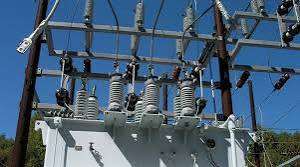
    Addressing the recurring issue of grid collapses, Adelabu attributed these incidents to various factors including gas shortages, aging infrastructure within the grid, limited capacity to evacuate generated power, and the destruction of power stations in the North-East region.

    He further disclosed that the Transmission Company of Nigeria has shelved over 100 projects due to contract variations caused by fluctuations in forex rates.

    Consequently, the company will refrain from awarding new contracts until existing projects are completed.

    In a bid to address power challenges in remote areas, Adelabu announced a budget allocation of over 50 billion naira in 2024 for the construction of mini grids.

    Adelabu issued a stern warning to electricity distribution companies (DisCos), cautioning that those found negligent in their duties risk having their licenses revoked.

    In a move to bolster security for power infrastructure, the minister revealed reaching out to the National Security Adviser, Nuhu Ribadu, for assistance in providing adequate security measures.

  • NNPC Opens Up On Fuel Price Increase

    NNPC Opens Up On Fuel Price Increase

    The Nigerian National Petroleum Company (NNPC) Ltd. has stated that there is no immediate plan to raise the cost of Premium Motor Spirit (PMS), commonly referred to as petrol.

    The company made this known in a statement by its Chief Corporate Communications Officer, Olufemi O. Soneye on Thursday, February 8.

    The NNPC urged the public to dismiss unfounded speculations circulating about a possible upward review of PMS prices.

    The company reassured Nigerians that no such measures are in the pipeline.

    Motorists have been strongly advised against succumbing to panic buying, as NNPC affirms that there is an abundant supply of PMS across the nation. 

    NNPC assured citizens of its commitment to maintaining stable fuel prices for the foreseeable future.