
Category: Economy

  • Liquidity, Supply Constraints Responsible For Naira’s Devaluation –Report

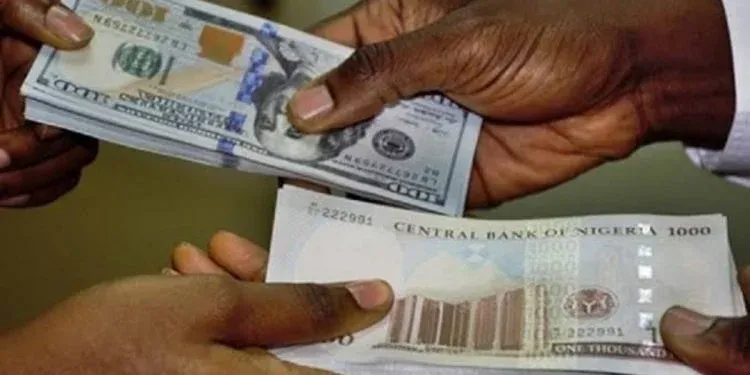
    A new report by Comercio Partners, has revealed that the depreciation of the naira is due to the complex interplay of various factors including liquidity and supply constraints.

    It said that within Nigeria’s financial system, liquidity constraints posed a formidable challenge as liquidity levels fluctuated, so did the naira stability add to the uncertainties in the forex markets.

    The August 2023 Nigeria Macroeconomic and Market an investment banking firm focused on trading global and local fixed income securities and equities,

    The report also noted that the dollar’s entrenched position in global transactions and foreign exchange reserves makes it challenging to replace with another currency, despite its flaws, as a result, the Naira and other frontier market currencies continue to face pressure amid the dollar’s dominance.

    According to the report, the depreciation of the Naira during the month of August was exacerbated by the incapacity of Nigerian banks to meet the surging demand for dollars, leading buyers to resort to the parallel market.

    The report noted that in the official market, August started with a bang as the Naira reached a high of N789.08/$1 on August 1st, and then later appreciated to N738.18/$1 by August 30th.

    “This marked a depreciation of roughly 0.76 per cent from the July closing rate of N756.94/$1, eventually settling at N762.71/$1 by month-end. The Naira’s erratic behaviour left both investors and market observers scratching their head

    They added that the naira faced a sharp decline, weakening to N930 to 1 dollar in the unofficial foreign exchange market, known as the parallel market, as the US dollar steadied near six-month highs.

    The report also noted the report from JP Morgan which revealed a startling revelation about Nigeria’s net foreign exchange (FX) reserves.

    “The report unveiled a complex web of financial instruments, including foreign exchange forwards, securities lending, currency swaps, and outstanding contracts, which had eroded Nigeria’s net external reserves to an alarming low of $3.7 billion by the end of 2022.

    “This revelation sent shockwaves through the market, resulting in a short-term repricing of Nigerian international bonds and exacerbating the Naira.

    They added with the revamped framework, BDC operators are now restricted to a permissible range of -2.5 per cent to +2.5 per cent of the Nigerian Foreign Exchange market window’s weighted average rate from the preceding day

    “This move aims to address the significant backlog of unmet foreign exchange demand, estimated at a staggering $10 billion. These FX backlogs have inflicted heavy losses on many firms and disrupted the economic ecosystem.”

    According to experts at Commercio Partners, CBN’s efforts to address liquidity challenges and enhance transparency via the revised BDC operational framework may bring stability, adding that vigilance and adaptable strategies are advised for navigating potential foreign exchange landscape shifts.

  • Multiple Taxation Threatens Nigeria’s Economic Progress, Warns NCC

    The Executive Commissioner for Stakeholder Management at the Nigerian Communications Commission (NCC), Adeleke Adewolu has emphasized the detrimental impact of multiple taxes on Nigeria’s economic growth.

    Adewolu expressed concern about the presence of numerous taxes, often referred to as “nuisance taxes” by the World Bank, which are hindering the country’s development.

    Speaking during a regional stakeholders’ workshop in Ibadan, Oyo State, he raised the question of how taxation, intended to foster economic growth, has become an obstacle to development. Adewolu stressed that taxation is a crucial instrument for sustainable and equitable growth.

    He pointed out that the National Tax Policy of 2017 underscores the importance of eradicating multiple taxations across all levels of government and ensuring that taxes similar to those collected by one level of government are not introduced by another.

    Adewolu assured stakeholders that the NCC is dedicated to addressing the issue of multiple taxations, which impedes national progress. He highlighted collaborative efforts between federal, state, and local governments to harmonize tax policies and eliminate redundant taxes. The commitment of President Bola Tinubu in signing Executive Orders and establishing the Committee on Fiscal Policy and Tax Reforms was mentioned as a positive step toward creating a more favorable investment environment for both domestic and foreign investors.

  • Crude Export Earnings Hit N5.6trn In Q2 Amid Naira Float

    There was a major improvement in export earnings in the second quarter of 2023, as a result of the floating of the naira which ensured earnings from crude oil exports swells. Crude oil receipts rose 8.5 per cent to N5.6 trillion. This represents 79.6 per cent of total exports.

    “The improvement in export earnings was mainly spurred by crude oil receipts which rose 8.5 per cent quarter-on-quarter (q/q) to N5.6 trillion (about 79.6 per cent of total exports) though production level was unimpressive as per national Bureau for Statistics (NBS) data (down 19.2 per cent q/q to 1.22mbpd).

    “Noteworthy, we suspect that the improvement in oil receipt was also impacted by exchange rate revaluation gain given that the Central Bank of Nigeria (CBN) switched from a hard-pegged exchange rate regime to a managed float in June 2023, causing the official conversion rate of oil proceeds to rise from N461/$ to over N650/$. Hence, nullifying the effect of lower crude oil price in the second quarter ($78.13/bbl.) relative to the first quarter ($81.11/bbl.).”, said analysts at Afrinvest.

    Data from NBS showed that the value of Nigeria’s total trade (imports and exports combined) improved over the preceding quarter (up 5.8 per cent) but trailed the level attained in the corresponding period of 2022 by 7.6% to settle at N12.7 trillion.

    For the third consecutive quarter, Nigeria recorded a positive trade balance amounting to N1.3 trillion in the second quarter, aided by the faster growth in export earnings (up 8.1 per cent q/q to N7.0 trillion) as against import expenses (up 3.0 per cent q/q to N5.7 trillion).

    Similarly, non-crude oil and non-oil exports also grew 6.8 per cent and 5.6 per cent q/q to N1.4 trillion and N688.7 billion respectively.

    “We attribute these gains to the recovery in the broader economy from the negative knock-on effect of pre-election jitters and poor implementation of the naira redesign policy in the first quarter (GDP expanded 2.5 per cent vs. 2.3 per cent in the first quarter)”, said Afrinvest.

    It is important to highlight that Agricultural goods remain Nigeria’s largest source of non-oil export earnings (4.0 per cent of export share), while Manufacturing, Raw material goods, and Solid mineral goods trailed with 3.0 per cent, 2.1 per cent, and 0.5 per cent, respectively.

    Cashew nuts (shelled and unshelled), sesame seeds, and cocoa beans combined accounted for 65.7 per cent of the total N278.4 billion Agric exports in the period – an indication that cash crop exports could be a major source of non-oil foreign exchange (forex) earnings for Nigeria if adequate investment is made on procuring modern farming equipment and insecurity is wholistically checked.

    In terms of trade performance with other regions, the previous quarter’s trend was sustained as Nigeria booked a surplus with three of its five trading regions – America (N178.5 billion), Europe (N1.2 trillion), and Africa (N510.5 billion) – while a deficit was recorded in trade with Asia (N584.5 billion) and Oceania (N98 billion). In terms of destination, the Netherlands (11.2 per cent), the US (10.2 per cent), and Indonesia (7.8 per cent) were the top export hubs by share while China (22.2 per cent), the US (16.1 per cent) and Belgium (8.0 per cent) topped imports origin.

  • We’ll introduce reforms to enhance Blue Economy success, says Oyetola

    *Visits Nigeria Shippers Council Headquarters in Lagos

    We’ll introduce reforms to enhance Blue Economy success, says Oyetola

    The Federal Government is committed to creating a conducive working environment for the Nigerian Shippers’ Council (NSC) to streamline the handling of overtime cargoes at all ports in Nigeria, ensuring effective and efficient service delivery.

    Adegboyega Oyetola, the Minister of Marine and Blue Economy, made this commitment during his recent visit to the NSC Headquarters in Lagos.

    Oyetola expressed his assurance that the government would address challenges faced by the NSC and implement necessary reforms to advance the Blue Economy agenda of the current administration.

    While he applauded the NSC’s contributions and achievements, he also voiced concerns over the deteriorating condition of port infrastructure, cargo overstay, and the activities of foreign fishing firms.

    The Minister emphasized that cumbersome bureaucratic processes contribute significantly to prolonged cargo clearance times, leading to frustration among shippers and the abandonment of containers at ports.

    Oyetola pledged to engage with the leadership of the Nigeria Customs Service (NCS) to resolve the issue of abandoned cargoes and address related bottlenecks.

    During his visit, Hon. Emmanuel Jime, the Executive Secretary of the NSC, highlighted key issues that require immediate attention, including amending the NSC Act to establish effective port economic regulation.

    Jime emphasized the NSC’s role as a policy-making laboratory in the marine sector and its objective to position Nigeria as the Maritime Hub in the sub-Western Region.

    Jime also cited ongoing concerns for the NSC, such as implementing a one-percent (1%) freight stabilization fee on imports and exports, enforcing the International Cargo Tracking Note (ICTN), and establishing a National Fleet. He expressed confidence in Minister Oyetola’s commitment to making a positive impact on the maritime sector.

    In addition to the NSC visit, Minister Oyetola also met with the Council for the Regulation of Freight Forwarding in Nigeria (CRFFN). Chinyere Uromta, the Acting Registrar, appealed to the Minister to reconsider the exclusion of CRFFN from the federal budgetary allocation.

    She highlighted the crucial role the Council plays in the freight forwarding sector, contributing to the integrity of the supply chain and the Nigerian shipping industry.

    Uromta emphasized that CRFFN operates as a federal regulatory agency and serves as an international regulator of freight forwarding practices on a global scale. She called for an urgent amendment to the CRFFN Act to align with its professional status.

    Oyetola commended CRFFN’s efforts and expressed a willingness to consider their request.

  • FG proposes creation of national shipping carrier to revitalise maritime sector

    FG proposes creation of national shipping carrier to revitalise maritime sector

    The Federal Government is committed to revitalizing the maritime sector in alignment with President Bola Tinubu’s Renewed Hope Agenda, aiming to enhance the welfare of Nigerians.

    During a recent facility tour of the Nigerian Maritime Administration and Safety Agency’s (NIMASA) Headquarters and various centres in Lagos, the Minister of Marine and Blue Economy, Adegboyega Oyetola, outlined his vision for the sector.

    Oyetola emphasized the need for transformative measures in the maritime industry to position Nigeria as a major player. One of his key recommendations is the establishment of a national carrier through a Public Private Partnership (PPP) arrangement to facilitate freight transport within the country.

    Notably, Nigeria stands as the only member of the Organization of the Petroleum Exporting Countries (OPEC) without a national shipping line flying its flag.

    The Minister highlighted that creating a national carrier would help eliminate the burden of the 30% freight charge associated with chartering vessels. However, he clarified that his call for a national line should not be confused with advocating for the revival of the defunct Nigerian National Shipping Line (NNSL).

    Furthermore, Oyetola expressed interest in NIMASA’s Modular Floating Dock, recognizing its potential to generate employment opportunities and curb capital flight. He urged the agency to engage stakeholders to support this initiative.

    Addressing the potential of the Blue Economy, the Minister underscored that Nigeria, with one of the world’s largest wetlands, is well-suited for coastal tourism development. He also committed to exploring opportunities in fishing and other sectors to stimulate economic growth.

    Bashir Jamoh, the Director General of NIMASA, expressed gratitude to President Bola Tinubu for establishing a dedicated Ministry for the Maritime sector. This move has long been advocated by stakeholders and Nigerians.

    With the creation of the Marine and Blue Economy Ministry, Nigeria joins seven other countries worldwide with standalone Blue Economy Ministries. Jamoh assured that this development positions NIMASA to elevate Nigeria’s global maritime presence.

  • Nigeria’s H1 2023 foreign trade data raises questions about economic balance

    Nigeria's H1 2023 foreign trade data raises questions about economic balance

    In the first half of 2023, Nigeria engaged in trade amounting to N24.79 trillion in goods and services with global partners, resulting in a N2.2 trillion trade surplus, as reported by the National Bureau of Statistics (NBS).

    While these figures indicate a -12.68% decline compared to the N28.39 trillion traded in the same period of 2022, they also signify a significant +258% year-on-year (Y-o-Y) increase in trade surplus, highlighting a potential enhancement in Nigeria’s international net trade.

    Total imports for H1 2023 amounted to N11 trillion, with total exports reaching N13.50 trillion, contributing N2.2 trillion to the country’s foreign exchange earnings.

    The data reveals that crude oil remains Nigeria’s dominant export product for H1 2023, constituting approximately 79.50% of exports, while other oil products make up 10.57%, manufacturing 2.54%, and agriculture 4.15%.

    This suggests that despite reduced crude oil production, oil still heavily influences the nation’s exports, indicating a lack of comparative advantage in non-oil products.

    In contrast, Nigeria’s imports for H1 2023 predominantly comprised manufactured products at 47.99%, oil products at 33.17%, agriculture at 8.21%, and raw materials at 9.95%.

    Analysts believe that due to substantial domestic productivity gaps, reliance on imported fuel is likely to continue undermining the country’s foreign exchange position.

    A breakdown of trading partners reveals that Nigeria’s largest trading partners are Europe (46% of total exports) and Asia (25%), while intra-African trade accounts for a modest 19%.

    Likewise, Nigeria’s primary sources of imports are Asia (42%) and Europe (38%), with other African nations contributing 15% to imports.

    The relatively limited trade relations with other African countries in favor of India (Asia), the Netherlands (Europe), and the United States (America) may restrict Nigeria’s ability to maximize the benefits of the African Continental Free Trade Agreement (AfCFTA).

    *Culled from Proshare

  • CSOs call for debt rescheduling with China, others

    Over 50 civil society Organisations have called on President Bola Ahmed Tinubu to reschedule Nigeria’s debt with China.

    In a communiqué signed by Action Aid Nigeria, BudgIT Foundation, Centre for Social Justice (CSJ), Civil Society Legislative Advocacy Centre (CISLAC), Heinrich Boell Stiftung Nigeria, OXFAM Nigeria, Natural Resource Governance Institute (NRGI), and 48 others, the CSOs noted that the present situation where the country was spending 80 per cent of its resources to service debt was unsustainable.

    Analysts have said that the country spends over 90 per cent of its revenue on debt servicing.

    The federal government has put Nigeria’s debt profile at N77 trillion including the Ways and Means from the Central Bank of Nigeria (CBN).

    The group noted that the huge debt burden has put the country in a position where it would be difficult to fulfill its commitments to achieve the Sustainable Development Goals (SDG) and contribute to the attainment of the climate goals of the Paris Agreement.

    According to them, instead of making accelerated progress, the country, like many others on the continent, is regressing.

    They therefore urged the National Assembly to review the existing debt management strategy with a view to strengthen it.

    “Adhering to relevant legal and institutional fiscal frameworks is important in the context of high and rising debt levels. Although the country has a comprehensive legal framework that specifies processes and obligations of government entities to manage debt, these are not always complied with. For example, annual borrowing plans are not made available to the public and borrowing occurs without being attached to any particular projects, contributing to a lack of transparency and accountability. 

    “National Assembly should review the existing legal and institutional frameworks relevant to debt management with the view of closing existing loopholes and strengthening transparency and enforcement. For example, the Fiscal Responsibility Commission and Debt Management Office should be empowered to sanction breaches of existing laws and regulations.

    “Lawmakers should carry out loan approvals with proper scrutiny and approvals be subject to public hearings and input. Public disclosure of, for example, the terms and conditions of loans, and borrowing plans are critical steps to increase transparency and accountability in Nigeria.  

    “The Nigerian government and its decision-makers should reduce its reliance on borrowings from the international capital market and commercial loans. There is a need to more strictly adhere to the provision of the law on maintaining concessional loans,” the group said.

    While noting that Nigeria’s high debt levels is a function of poor revenue mobilisation through taxes and other means, they urged the federal government to introduce measures that would address the country’s revenue challenge.

    “An enhanced Debt Sustainability Analysis that integrate climate and other sustainability risks, and climate resilience benefits, as well as estimates of a country’s financing needs for climate change adaptation, mitigation, and achieving the broader goals set out in the 2030 Agenda for the SDGs;

    “Access to debt restructuring for all debt-distressed, climate-vulnerable low and middle-income countries, and a speeding up of debt relief talks;

    “A debt restructuring framework that incorporates adequate incentives to ensure private creditors participate and bear a fair share of the burden;

    “A departure from regressive conditions attached to debt restructuring frameworks (i.e. cutbacks on social spending), giving room to countries to develop their own plans to advance development and climate resilience (guided by SDG commitments and NDCs);

    “The inclusion of disaster clauses in lending deals with public and private creditors to allow countries to divert debt payments to disaster relief;

    “The possible establishment of a new Global Debt Authority, designed to operate in an inclusive manner, independent of creditors or debtors, and the development of an international legal framework for sovereign insolvency,” the communiqué read.

  • Nigeria’s Q1 fiscal deficit moves to N1.430trn – CBN  

    The recent economic report released by the Central Bank of Nigeria (CBN) over the weekend, revealed that the Federal Government of Nigeria (FGN) incurred a fiscal deficit of N1.430 trillion in the first quarter of 2023.

    This deficit represents a 9.6 percent increase from the last quarter of 2022 but is 22.1 percent lower than the government’s target.

    In its official report, the CBN noted, “The fiscal operations of the FGN in 2023, first quarter, resulted in a deficit. At N1.43 trillion, the provisional fiscal deficit of the FGN was 9.6 per cent higher than the level in the preceding quarter but 22.1 percent below the target.”

    The report further highlights that the fiscal performance for first quarter 2023 was negatively impacted by a significant reduction in oil revenue. Consequently, the retained revenue of the FGN experienced a decline of 10.7 percent when compared to the last quarter of 2022 and fell short of the quarterly target by 46.1 percent.

    Aggregate expenditure by the FGN also registered a decline, with a 1.3 percent decrease relative to the preceding quarter and a 36.0 percent reduction compared to the quarterly target.

    “Thus, the FGN overall deficit widened relative to 2022, fourth quarter, but narrowed by 22.1 per cent when compared with the proportionate budget. Consolidated public debt, as at end-December 2022, stood at N46.25 trillion or 22.8 percent of Gross Deposit Products (GDP.”

    Gross federation revenue for the period totaled to N3.48 trillion, falling short of the levels in the last quarter of 2022 by 0.4 percent and the budget benchmark by 26.6 percent.

    Notably, non-oil revenue continued to dominate government revenue, contributing 61.4 percent, while oil receipts accounted for the remaining 38.6 percent.

    Oil revenue, at N1.34 trillion, declined by 3.0 percent compared to the last quarter of 2022 and by 43.5 percent relative to the quarterly target. This decline was primarily attributed to revenue shortfalls from petroleum profit tax and royalties due to lower domestic crude production. Conversely, non-oil receipts, totaling N2.14 trillion, showed a 1.2 percent improvement compared to the preceding quarter but fell short of the quarterly target by 9.6 percent, amounting to N2.37 trillion.

    The CBN report underscores the challenges faced by the Federal Government in managing its finances during the first quarter of 2023, primarily driven by reduced oil revenue and expenditure constraints. These fiscal dynamics will continue to be closely monitored by government officials and economists as Nigeria navigates its economic path in the coming months

  • Tinubu’s reforms will rejuvenate Nigeria’s economy – SEC

    President Bola Ahmed Tinubu, has been commended for the reforms so far embarked on which are meant to rejuvenate the nation’s economy and improve the standard of living of Nigerians, the Director General, Securities and Exchange Commission (SEC), Mr. Lamido Yuguda has said.

    Speaking during an interview recently, Yuguda said there was a 5.23% surge in market capitalization at the NGX on the President’s first day and it was driven by optimistic anticipation of market reforms.

    “It is a fact that there are prevailing challenges arising from demanding macroeconomic conditions, constrained consumer spending, and rising operational costs.

    “Despite these challenges, there remains a shared sense of optimism that ongoing rigorous reforms will rejuvenate the nation’s economy. I therefore pledge the resolute support of the Capital Market to the Federal Government in navigating these challenges for the country’s brighter future,” Yuguda said.

    He stated further that Nigeria had outperformed global indices on gains in the All-Share Index (ASI) and market capitalization in the first half of 2023, an indication that the economy is being reflated.

    He cited the exceptional performance is attributed to several factors, such as; the appealing dividend yields offered by certain stocks, the recovery of corporate earnings, and a notable improvement in sentiments among domestic retail investors. 


    “All the indicators reflecting investors’ involvement – including volume, value, and the number of transactions – had demonstrated consistent month-on-month increases throughout the first half of 2023,” he added.

    The Director General also stated that the Investments and Securities Bill (ISB) 2023 which aims to align regulations with the modern dynamics of the market is presently being considered by the 10th National Assembly and expressed the hope that if passed into law, it will enable optimal contribution of the capital market to national development.

    He acknowledged that the road ahead is undeniably challenging, stating that the capital market must step forward in whatever way to lend its helping hand to the current economic reforms, adding that the market must make sacrifices to help drive the economic transformation that will change Nigeria’s fortunes for the better.

  • Crude oil flies to $86bpd over Gabon coup concerns

    The coup in Gabon has fueled a modest increase in the prices of crude oil due to threats to the country’s 200,000 barrels per day (bpd) of crude oil exports. 

    Gabon is the second-smallest OPEC producer.

    Earlier on August 30, a cohort of senior military officers declared that they had assumed control following the announcement by the state election body that President Ali Bongo had secured a third term.

    Bongo’s father Omar had ruled as president for 42 years.

    According to a report by Wall Street Journal, since Gabon’s coup announcement, global crude oil prices have seen a modest increase due to seeming threats to exports from the country.

    “The coup and the threat of disruptions to Gabon’s oil exports are supporting oil prices, but only modestly as the nation is a minor OPEC oil producer, DNB Markets analyst Helge Andre Martinsen says. Brent crude oil is up 0.3 per cent at $85.19 a barrel.

    “The nation’s output stands at a modest 190,000 barrels a day, but it has been the only African OPEC member to hit its production quotas. So far, there has been no sign of disruption to Gabon’s oil output. Still, the coup serves as a reminder of the geopolitical risk in the oil market, Martinsen says.”

    It is important to note that as of 12:50 PM (GMT+1) on Wednesday, August 30, Brent crude price was at $86 per barrel.

    The Gabon coup is raising supply concerns alongside Hurricane Idalia in the United States, which has raised oil supply concerns as well.

    Meanwhile, on Wednesday, Amena Bakr, OPEC’s chief correspondent posted on Twitter that so far, it appears that oil production from fields in Gabon is not affected by the military coup.

    Similarly, Assala Energy, which is wholly owned by Carlyle Group (CG.O), said its oil production in Gabon has been unaffected by the military coup in the country.

    “We can confirm that all our personnel are safe, our operations continue as usual and our production is not affected,” a company spokesperson said.

    The private equity fund’s non-U.S. energy arm first invested in Assala in 2017 when it acquired Shell’s (SHELL) ageing operations in Gabon for $628 million.

    However, earlier this month, Carlyle agreed to sell Assala to French producer Maurel & Prom which owns and operates oil and gas assets in Africa, Europe and Latin America, including three licences in Gabon, for $730 million.