
Category: Economy

  • Nigeria, Kenya, Angola to attract increased FDIs amid FX challenges -Report

    In the face of significant currency depreciations, Citigroup Inc. predicts that countries like Nigeria, Angola, and Kenya are poised to attract higher foreign investment inflows.

    This assertion emerges shortly after JP Morgan’s revelation that Nigeria’s net forex reserves stand at an estimated $3.7 billion, a stark contrast to the reported figure of $14 billion. This situation further exacerbates the pressure on Nigeria’s foreign exchange market.

    On June 14, 2023, the Central Bank of Nigeria (CBN) initiated the unification of all segments of the country’s forex market, consolidating various windows into a single one. This step formed part of a comprehensive effort to bolster liquidity and stability within Nigeria’s forex market.

    George Asante, Citi’s Head of Markets for Sub-Saharan Africa, shared these insights during an interview in Nairobi, highlighting that nations undergoing significant forex adjustments hold attractive investment prospects. Asante stated, “Countries where we’ve seen significant foreign exchange (forex) adjustments are clear winners from an investment perspective. All these, from a local market perspective, offer opportunities.”

    Following the forex rate unification and the removal of the controversial petrol subsidy, the Nigerian naira’s performance has declined dramatically against the US dollar, reaching a historic low.

    Asante recognized the removal of the petrol subsidy as a crucial reform for Nigeria. The merging of multiple exchange rates is anticipated to enhance liquidity. He underscored that the government’s subsequent task is to ensure the smooth functioning of the official forex market following these changes.

    He expressed confidence, stating, “I believe that this will be a significant catalyst for flows back into the Nigerian market.”

    Regarding the outlook for Eurobond issuance by African nations, Asante mentioned that market favorites such as Ivory Coast and Senegal are likely to garner substantial investor interest when the market reopens. He highlighted both countries’ stable economic growth rates, diversified economic foundations, substantial IMF programs with associated concessional financing, consistent economic reforms, fiscal prudence, and low debt service costs as key factors.

    Asante concluded, “These two countries have fairly consistently high growth rates, diversified economic bases, large IMF programs with associated concessional financing and a track record for economic reforms and fiscal prudence as well as low cost of debt service.”

  • Crude production plunges to 1.22mbpd in Q2 2023 -Report

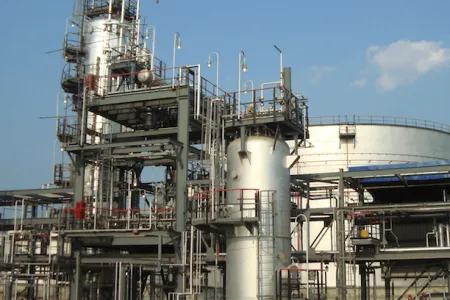
    Hope for increased crude oil production deemed with second quarter figures plunging to 1.22 million barrel per day (mbpd), Nigeria’s statistics bureau, has said.


    The decrease is coming in spite of the restoration of fragile peace in the Nigeria Delta region; the second quarter of 2023 recorded an average daily oil production of 1.22 million barrels per day (mbpd).


    This according to the Nigerian Bureau of Statistics (NBS) was much lower than the daily average production of 1.43mbpd recorded in the same quarter of 2022 by 0.22mbpd and lower than the first quarter of 2023 production volume of 1.51 mbpd by 0.29mbpd.


    The real growth of the oil sector was 13.43 per cent (year-on-year) in the second quarter of 2023, indicating a decrease of 1.66 per cent points relative to the rate recorded in the corresponding quarter of 2022 (-11.77 per cent).


    Growth also decreased by 9.22 per cent points when compared to the first quarter of 2023 which was –4.21 per cent.


    On a quarter-on-quarter basis, the oil sector recorded a growth rate of -14.12 per cent in the second quarter of 2023 and contributed 5.34 per cent to the total real Gross Domestic Product (GDP) in the second quarter of 2023, down from the figure recorded in the corresponding period of 2022 and down from the preceding quarter, where it contributed 6.33 per cent and 6.21 per cent respectively.


    The statistics bureau further said the non-oil sector grew by 3.58 per cent in real terms during the reference quarter (Q2 2023). This rate was lower by 1.19 per cent points compared to the rate recorded in the same quarter of 2022 and 0.81 per cent.

  • Increasing global protectionism could heighten economic shocks –IMF

    The International Monetary fund has warned increasing protectionism could further heighten global economic shocks.

    A new report in its IMFBlog titled: “The High Cost of Economic Fragmentation”, the Fund said greater international trade restrictions could reduce global economic output by 7 per cent.   

    According to the Bretton Woods Institute, greater protectionism could lead to fragmentation, and even split nations into rival blocs just as fresh shocks expose the global economy’s fragility.

    “While estimates of the cost of fragmentation vary, greater international trade restrictions could reduce global economic output by as much as 7 percent over the long term, or about $7.4 trillion in today’s dollars. That’s equivalent to the combined size of the French and German economies, and three times sub-Saharan Africa’s annual output,” the Fund said.

    Calling for more deliberate global cooperation, the global lender noted that international institutions can play a vital role, bringing countries together to help solve global challenges.

    The Fund noted that signs of cooperation are faltering as new trade barriers are introduced annually hitting almost 3,000 in 2022. IMF research has shown that geopolitical alignments increasingly influence both foreign direct investment and portfolio flows.

    “Other forms of fragmentation—like technological decoupling, disrupted capital flows, and migration restrictions—will also raise costs. In addition, global flows of goods and capital have leveled off since the global financial crisis.

    “The IMF continues to underscore that the international community, supported by global institutions such as ours, should pursue targeted progress where common ground exists and maintain collaboration in areas where inaction would be devastating.

    “Policymakers need to focus on the issues that matter most not only to the wealth of nations but also to the economic well-being of ordinary people. They must nurture the bonds of trust among countries wherever possible so they can quickly step up cooperation when the next major shock comes,” Kristalina Georgieva, IMF President said.

  • Nigeria’s Q2 2.51% GDP growth rate, not inclusive –Uwaleke

    Professor of Finance and Capital Market at the Nasarawa State University Keffi, Uche Uwaleke, has said that the Gross Domestic Product (GDP) released Friday by the National Bureau of Statistics is not good for a developing economy like Nigeria.

    According to Uwaleke, the growth failed to address the twin issues of poverty and unemployment.

    The first Nigerian Professor of the Capital Market said: “In my view, this identified growth pattern, weighted in favour of the services sector, is not healthy for a developing economy such as ours.

    “Little wonder, economic growth does not appear inclusive, reflecting in rising unemployment and poverty levels (new NBS methodology attempts to mask this).”

    The NBS in its Q2 2023 GDP report stated that Nigeria’s Gross Domestic Product growth rate slowed to 2.51 per cent year-on-year in the second quarter of this year (Q2 2023) compared to 3.54 per cent recorded in Q2 2022,

    The former Imo State finance commissioner noted that while the oil sector tanked considerably on account of reduction in crude oil production, growth was driven by the non-oil sector.

    “The Non-oil sector performance was powered by the Services sector (4.42%) especially by Telecoms, Trade, Financial services, 

    “Industry sector appeared hugely impacted by rising inflation during the quarter. Growth rate was negative at -1.94% compared to 0.31% in Q1, 2023

    “The sudden removal of fuel subsidy in May could be blamed for the plunge in the Transportation sector by over 60 points from Q1 2023.

    “The Agriculture sector (comprising 4 activities, though dominated by crop production) printed a slightly improved performance over Q1. But, (shy of 2%) is still far from its pre COVID’19 levels, he said.

    To address the imbalance, Uwaleke insisted that it is “time we reset this faulty economic structure, leveraging technology, in favour of the productive sectors: Industry and Agriculture.”

  • Naira loses, exchanges at N773.42 at investors, exporters window

    Naira loses, exchanges at N773.42 at investors, exporters window

    The naira depreciated against the dollar on Wednesday as it exchanged at N773.42 at the Investors and Exporters window.

    It lost by 0.35 per cent compared with N770.72 for which it exchanged for the dollar on Tuesday.

    The open indicative rate closed at N781.49 to the dollar on Wednesday.

    A spot exchange rate of N799.90 to the dollar was the highest rate recorded within the day’s trading before it settled at N773.42.

    The naira sold for as low as N738 to the dollar within the day’s trading.

    A total of 169.07 million dollar was traded at the investors and exporters window on Wednesday.

  • Oyetola assumes office as Minister, Marine and Blue Economy

    *Pledges Responsible Management and Utilisation of Marine Resources

    The newly appointed Minister of Marine and Blue Economy, Adegboyega Oyetola, has assumed office with a pledge to build a responsible management that will ensure efficient utilisation of the nation’s marine resources.

    Oyetola who made this known on assumption of duty at the Ministry in Abuja expressed happiness at the honour accorded by Mr President to champion and chart a course for the the growth of marine resources, urging the management team to support him to deliver on Ministerial mandate.

    Oyetola observed that regarding the size of Nigeria’s blue economy, it cannot but be a significant player in the sector which is estimated to be about a $3 trillion globally.

    Furthermore, he said the blue economy has the capacity to contribute immensely to revenue generation and provide jobs for the unemployed, hence the need to properly harness it.

    Speaking on fostering and facilitating trade by making our inland waterways navigable, Oyetola said: “We must come up with practicable ways of ensuring that our Inland rivers and waterways are properly utilised, both in terms of cargo shipment and passenger transportation and this can be done by embarking on a wholistic dredging campaign for most of our strategically important waterways so as to make them navigable for the passage of goods and people”.

    In her welcome speech, the Permanent Secretary, Federal Ministry of Marine and Blue Economy/Transportation, Dr. Magdalene Ajani, promised a smooth working relationship with the Minister, stating that together they can move the Marine and Blue Economy forward and make it more impactful to the economy of Nigeria.

    Speaking on efforts made thus far, the Permanent Secretary stated: “We have done a bit in terms of Blue Economy in the country before now. There is a Committee that is being Chaired by the former Vice President working on the Blue Economy and there is an expanded Committee that brings in everyone that is within the waters, so now that we have a stand alone Ministry, we hope and desire that it will impact alot to the economy of the country and move our nation forward”

  • Allow us fix moribund refineries, female engineers beg Tinubu

    The Association of Professional Women Engineers of Nigeria (APWEN), at the weekend appealed to President Bola Tinubu to give female engineers an opportunity to fix the nation’s moribund refineries.

    Newly-elected APWEN Lagos Chapter Chairman, Mrs Atinuke Owolabi, made the call during the association’s public lecture and Annual General Meeting in Ikeja.

    Owolabi assured that female engineers spread across the various arms of the profession could fix the refineries within a year.

    “All women engineers are ready to come together and see how we can proffer solutions, making sure that we revamp these refineries.

    “So, we call on our president to challenge female engineers to revamp and rehabilitate these refineries, and I want to assure you that, within a year, just challenge us, we will make sure that the refineries would be put to operation by the grace of God,” she said.

    She said any nation aspiring for development must empower its indigenous engineers and manpower.

    “It is imperative that our homegrown engineers are empowered and granted the right opportunity to showcase our competence,” she said.

    She said women had inbuilt natural qualities of being good managers and being excellent, adding that their talents should also be explored in building roads and other critical infrastructure.

    Owolabi said Nigeria should reduce reliance on foreign experts and give opportunity to local engineers who are equally or more competent than their imported counterparts.

    “I want to also implore our leaders, especially our president and governors, to empower indigenous engineers because we are very good.

    “A country without engineers cannot develop,” she said.

    Owolabi, a Fellow of the Nigerian Institution of Electrical and Electronic Engineers, promised that her administration would focus on mentorship and skill development for young engineers.

    She also pledged collaboration with other NGOs while reeling out planned development programmes for three Lagos communities.

    “Together, we shall shatter barriers and triumph over challenges in reaffirmation of the fact that gender should never constrain one’s potential in any domain,” she said.

    The guest speaker, Mrs Olayinka Abdul, speaking on the theme, “The Role of Female Engineers in Building Sustainable Infrastructure”, said rising fuel prices required urgent measures for green alternatives.

    Abdul, a former APWEN President, said green buildings reduce wastes, conserve energy and ensure huge energy savings and enormous long-term benefits.

    She said Lagos was investing heavily in renewable energy while listing completed and ongoing interventions in various sectors, including health, education, housing and transportation.

    Abdul said the various options available were wasting because some Nigerians have a class mentality not allowing them embrace local researches.

    She cited examples of viable technologies, developed by “our forefathers”, being ignored because people want to move with trending foreign technologies.

    Abdul advised APWEN to adopt communities and train them on how to generate power from their wastes.

    She also enumerated measures female engineers could adopt against work place discrimination and how to receive mentorship from male counterparts without bruising their ego.

    Panelists at the event proffered solutions to the multifaceted problem of inadequate water supply in Lagos State.

    They enumerated ways mentorship and advocacy could grow capacity of female engineers.

  • Tinubu happy with $3bn NNPCL/Afreximbank’s naira rescue deal

    President Bola Tinubu has expressed happiness with the $3 billion in crude-for-cash funding secured from the African Export-Import Bank (Afreximbank) by the Nigerian National Petroleum Corporation (NNPC) Limited, saying it will give a breather to the foreign exchange market. 

    The NNPC Limited and Afreximbank recently signed a commitment letter and Term sheet for the facility which is expected to support the federal government in its ongoing fiscal and monetary policy reforms to stabilise the forex market.

    Sources at the villa said the President was happy that the deal has been able to crash the dollar and allow the Naira to gain some value. 

    The nation has battled foreign exchange liquidity leading to the steep fall of the Naira since the unification of the foreign exchange windows by the Central Bank of Nigeria in June. The crash in the value affected the economy, triggering price hikes in the country and impacting access to imported raw materials by real industry operators. The effect is exemplified in the July inflation which peaked at 24.08 per cent.

    The source said the President and his team of economic advisers are hopeful that the deal will help the government breathe fresh air into the sluggard economy, make inflation recede and crash the dollar which has risen to an unprecedented N950 to the $ in the parallel market. 

    The $3 billion loan according to the oil giant is expected to support immediate disbursement that will enable the NNPC Ltd to support the Federal Government in its ongoing fiscal and monetary policy reforms aimed at stabilising the exchange rate market.

    The Presidency source added that the “quick and proactive steps taken by the NNPC Limited show that this government has the capacity to turn around Nigeria’s economy positively in a short time. What the government needs right now is for forthright thinking appointees of the president to come up with novel ideas like this to better the economy”.

    “Nigerians, he said, are impatient with government and as such Tinubu’s government doesn’t need laybacks or people with nothing to offer in the saddles of key leadership positions in government. People are impatient for the government to perform, and as such there are no rooms for trial-and-error ministers and heads of agencies” the source further stated.

    The deal comes about 17 months after the NNPCL secured a $5bn funding commitment from the African Export-Import Bank (Afreximbank) to finance major investments in Nigeria’s upstream sector.

    The loan secured by the NNPCL is the fourth transaction involving the oil company and AFREXIM Bank over the last three years. It goes further to consolidate the mutual relationship between the two entities. 

    Both Nigeria and NNPCL are shareholders in Afreximbank, with the sole purpose of enhancing investments and growing prosperity in Africa.

    The agreement for the loan which was sealed on Wednesday in Cairo, saw the Group Chief Executive Officer of NNPC Ltd, Mele Kyari signing for the National Oil Company while George Elimbi, Executive Vice President Afreximbank signed for the bank.

  • World Bank puts Nigeria’s GDP at $477.4bn in 2022

    A new report by the World Bank Group showed that Nigeria’s recorded an estimated Gross Domestic Product of $477.4 billion in 2022.

    The report showed that the country ranks 18th position on the continental ranking of countries by GDP per capita for 2022.

    The 2022 ranking showed that Nigeria notched one point up from the 19th position it ranked in the previous year when the GDP stood at $440.8 billion.

    According to the World Bank’s latest data, Nigeria recorded a 5.7 per cent increase in its GDP per capita, which rose to $2,184 in 2022, from the $2,066 reported in the preceding year.

    In terms of nominal GDP, the country’s economic performance demonstrated remarkable resilience, registering an 8.3% nominal year-over-year expansion in 2022, in spite of the whirlwinds across the global and regional economy.

    Broadly analyzed, the World Bank’s report showed that the African economy slowed to 3.8% in 2022, dipping the continent’s nominal GDP to an estimated $2.75 trillion.

    In addition, the report Indicated that the Sub-Saharan region recorded a slow growth rate of 3.6%, in contrast to 4.1% recorded in 2021, with a projected growth rate of 3.1% in 2023, due to what the bank attributed to sluggish global economic growth, high inflationary pressure, and tough financial conditions exacerbated by the high debt profiles of the countries in the continent.

    A further analysis of the report in terms of GDP per capita, which is a more accurate measure of productivity in an economy, the continent’s economy recorded an average of $2,705 in 2022, indicating a 6.6% increase compared to $2,538 recorded in the previous year.

    The report further covered the top 10 countries in Africa based on GDP per capita in 2022 with Seychelles topping the ranking table with an impressive GDP per capita standing at $15,875, followed by Mauritius, which recorded a 12.7% upswing in its GDP per capita, which climbed to $10,216; and Gabon which came third with 2.1% increase in its GDP per capita to $8,820 in 2022.

    Others are in order of ranking, Botswana which came fourth, boasting an average GDP per capita of $7,738; Equatorial Guinea with a GDP per capita of $7,053 in 2022, representing a 6% decline compared to $7,507 in 2021; the 6th position in ranking was South Africa at $6,776 GDP per capita; Libya at number 7th with $6,716 GDP per capita; Namibia ranked 8th with $4,911 GDP per capita; Egypt followed with $4,295; and Algeria came 10th with $4,274 GDP per capita in 2022.