
Category: Governance

  • INEC Partners Foreign Bodies to Launch Guidelines for Digital and Social Media Use in African Elections

    INEC Partners Foreign Bodies to Launch Guidelines for Digital and Social Media Use in African Elections

    In a concerted effort to enhance electoral processes across Africa, the Independent National Electoral Commission (INEC) of Nigeria has partnered with the Association of African Election Authorities (AAEA) and the Independent Electoral Commission (IEC) of South Africa to introduce comprehensive guidelines for the effective utilization of digital and social media during elections.

    The unveiling of the Principles and Guidelines for the Use of Digital and Social Media in Elections in Africa occurred over a three-day period, from Tuesday, 27th February to Thursday, 29th February, 2024, in Johannesburg, South Africa.

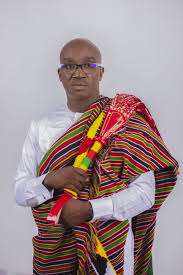
    Dr. Sa’ad Umar Idris, the Director-General of INEC’s Electoral Institute, represented the Nigerian electoral body at the event, which brought together stakeholders to deliberate on strategies for leveraging social media while mitigating potential risks associated with evolving digital technologies.

    The genesis of these guidelines can be traced back to the inaugural Continental Conference for Election Management Bodies held in Cape Town, South Africa, in March 2020. Themed “Safeguarding Electoral Integrity in the Digital Age: Strategies for Combatting Digital Disinformation,” the conference, jointly organized by the Electoral Commission of South Africa, the African Union Commission (AUC), and the United Nations Development Programme (UNDP), laid the groundwork for extensive consultations with EMBs and electoral stakeholders across Africa to formulate a robust framework.

    The newly introduced principles emphasize the pivotal role of social media in bolstering the credibility of Election Management Bodies (EMBs) and fostering public trust during electoral processes.

    Additionally, they underscore the importance of responsible journalism and accountability among social media platform owners and users to counteract the risks of misinformation and manipulation.

    The collaborative endeavor between INEC, AAEA, and IEC signifies a proactive approach towards addressing the evolving challenges of electoral integrity in the digital era. By advocating for responsible digital engagement, African EMBs aim to uphold democratic principles and promote transparent electoral practices across the continent.

  • Hunger Protests: NLC, FG Trade Tackles

    Hunger Protests: NLC, FG Trade Tackles

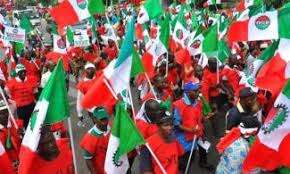
    The Nigeria Labour Congress (NLC) has reacted to the presidency’s claim over the ongoing protests.

    The organized labour said the nationwide protest is not about minimum wage but hunger and economic hardship.

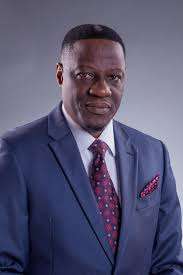
    Contrary to the Presidency’s claim that the protest revolves around the minimum wage review, NLC’s National President, Joe Ajaero, emphasized that the union is addressing broader issues.

    Speaking on TVC, presidential spokesperson, Ajuri Ngelale described the demonstrations by the NLC as needless.

    Ajaero accused the Federal Government of neglecting the union’s demands since the removal of fuel subsidy, resulting in an increased cost of living. 

    Expressing concerns about the minimum wage, he stated, “What will be the minimum wage that will remove hunger?”

    Highlighting the impact of deregulation, Ajaero pointed out that the rising expenses, especially in transportation, have worsened the already dire situation.

    The NLC proposed various solutions, including the introduction of CNG buses, but lamented the lack of implementation.

    Notable figures such as Oyo State governor, Seyi Makinde, NLC president Joe Ajaero, Omoyele Sowore, Deji Adeyanju, and Lawyer Femi Falana actively participated in the protest in Abuja. 

    The demonstrations have unfolded across all states in Nigeria, signaling a widespread concern for the economic well-being of the citizens.

  • Police Denies Sealing NLC Lagos Office

    Police Denies Sealing NLC Lagos Office

    Lagos State Police command has denied a report of sealing the secretariat of the Nigeria Labour Congress, NLC, in Yaba, Lagos, on Monday.

    State’s Police spokesman, SP Benjamin Hundeyin, described the report as rumour, saying the Commissioner of Police Adegoke Fayoade only went to the NLC secretariat to address protesters.

    The police spokesman stated this in reaction to the rumour, and giving reasons for heightened security upgrades in hotspots around Lagos on Monday.

    Hundeyin told newsmen that the police proactively arrived at the NLC secretariat and other hotspots to ensure adequate security for planners of the strike and to prevent their procession from being hijacked by hoodlums.

    “The Commissioner of Police, Mr Fayoade addressed the protesters before the procession took off in his presence.

    “The procession was peaceful and without any untoward incident,” Hundeyin said, adding that CP Fayoade monitored the security operation and the protest, ” he said.

    He stated that the protesters neither caused traffic obstruction nor got involved in violent activities.

    Heavily armed police operatives were seen at Gani Fawehinmi Park, Ojota, and other parts of Lagos on Monday, in readiness for a planned protest by organised labour.

    The NLC and the Trade Union Congress, TUC had scheduled a nationwide strike for February 27 and 28 to protest what they called hardship currently faced by Nigerians.

  • Cost of Governance: FG Lists Agencies to be scrapped

    Cost of Governance: FG Lists Agencies to be scrapped

    The federal government announces the list of Ministries, Departments, and Agencies (MDAs), either to be eliminated, merged or prunned as part of the implementation of the Oronsaye report that has been pending for more than a decade. 

    This decision, announced after Monday’s Federal Executive Council meeting, stems from a report initiated by former President Goodluck Jonathan in 2011. 

    Led by Steve Oronsaye, the committee identified overlapping agencies causing competition and wasteful expenditure, recommending the reduction of 263 statutory agencies to 161, abolishing 38, and merging 52.

    Additionally, 14 agencies are proposed to revert to departments within ministries, aiming for a more streamlined government structure.

    Below are government agencies set to be merged or scrapped.

    – 38 Federal Agencies to be abolished – Public Complaints Commission, National Poverty Eradication Programme, Utilities Charges Commission, National Agency for the Control of HIV/AIDS, National Intelligence Committee, etc.

    – 14 agencies to be fused into ministries where they were created e.g Debt Management Office to the Federal Ministry of Finance

    – Public Health Department back to the Federal Ministry of Health

    – National Information Technology Development Agency to be fused into the Ministry of Communication Technology

    – Reduction of statutory agencies from 263 to 161

    – 52 institutions to be merged: NTA, FRCN & VON into the Federal Broadcasting Corporation of Nigeria (FBCN)

    – NCC & NBC into Communication Regulatory Authority of Nigeria (CRAN);

    – CCB, EFCC & ICPC to be merged into the Anti-Corruption Commission.

    – Another key recommendation of the committee was to discontinue government funding of professional bodies and councils. Consequently, there is a need to amend the Professional Bodies (Special Provisions) Act, of 1972 which mandates the government to provide financial support of various kinds to such bodies. – They include the Teachers Registration Council of Nigeria (TRCN); Computer Professionals Council of Nigeria (CPRCN); Advertising Practitioners Council of Nigeria (APCON); Nigeria Press Council; Architects Registration Council; Council for Registered Engineers of Nigeria (COREN); Estate Surveyors’ Registration Board (ESRB); Town Planners Council (TPC); Nigerian Builders Council (NBC; Quantity Surveyors’ Registration Board of Nigeria (QSRB); Nigerian Builders Council (NBC); and Council of Nigerian Mining Engineers and Geoscientists (COMEG).

    Institute for Peace and Conflict Resolution to be scrapped and its functions to be transferred to the Department of Strategic Studies in the Nigerian Institute for International Affairs (NIIA).

    The committee recommended that the Petroleum Products Pricing Regulatory Authority (PPPRA) and Petroleum Equalisation Fund be merged with Petroleum Equalisation Fund (PEF).

    Based on the White Paper, the Fiscal Responsibility Commission (FRC) would be abolished and its enabling law repealed as its functions are being performed by the Revenue Mobilisation Allocation and Fiscal Commission. A similar fate awaits the Salaries and Wages Income Commission.

    – The trio of the Nigerian Airspace Management Agency (NAMA), Nigerian Civil Aviation Authority (NCAA) and the Nigerian Metrological Agency (NIMET) were recommended to be merged into a new body to be known as the Federal Civil Aviation Authority (FCAA) and their respective enabling laws amended accordingly to reflect the merger.

    – Nigerian Investment Promotion Council (NIPC), the Committee recommended that it be merged with the Nigerian Export Promotion Council (NEPC) to synergize for management and utilization of resources.

    – The Committee recommended that the enabling law of the National Commission for Nomadic Education be repealed and the Commission’s activities taken over by the Universal Basic Education Commission.

    – National Oil Spill Detection and Response Agency (NOSDRA) and National Environmental Standards and Regulations Enforcement Agency (NESREA).

  • IPOB: Kanu knows fate on fresh bail application, March 19

    IPOB: Kanu knows fate on fresh bail application, March 19

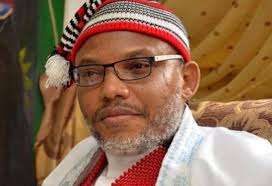
    Nnamdi Kanu, the self acclaimed leader of the proscribed Indigenous People of Biafra (IPOB), will on March 19, know fate on his fresh bail application in the terrorism charges against him by the federal government.

    The trial judge, Justice Binta Nyako, fixed the date after taking arguments from his counsel, Alloy Ejimakor, praying for his bail, while counsel to the FG, Adegboyega Awomolo SAN objected to granting of bail.

    In his argument, Kanu prayed for bail to enable him to have unfettered access to his lawyers for his defense.

    He also claimed to be suffering from acute hypertension and acute heart disease, among other diseases.

    Responding, FG objected to the application on the ground that Kanu was once granted bail but jumped and fled the country.

    Awomolo posited that all the bail conditions set by the court were breached and violated and pleaded with the court to dismiss the request.

    On another motion before the court, Kanu prayed the court not to allow continuation of his trial until certain conditions were met by the federal government.

    Among others, he requested that Department of State Security (DSS)operatives be barred from interfering with his lawyers during visitation.

    He also asked that the court should compel the federal government to wear the clothes of his choice.

    Reacting, the federal government objected to the request on the ground that he has no right under any law to dictate how his trial should be conducted.

    Consequently, Awomolo asked the court to dismiss the motion on the ground that it was a gross abuse of the court process that must not be allowed.

    In the meantime, the matter will continue March 19 for ruling on the bail application.

  • Nigeria Police Seal NLC Office in Lagos Ahead of Planned Protest

    Nigeria Police Seal NLC Office in Lagos Ahead of Planned Protest

    In a move to thwart the Nigeria Labour Congress (NLC) planned nationwide protest against hunger and hardship, the Nigeria Police Force has sealed the NLC office in Lagos State. 

    The protest, scheduled for February 27 and 28, is aimed at address economic challenges faced by Nigerians.

    Hassan Taiwo, national coordinator of the Education Rights Campaign (ERC), shared an image on Monday morning revealing armed police personnel stationed in front of the NLC headquarters in the Yaba area of Lagos State. 

    Some individuals within the building remain uncertain about the unfolding developments.

    The NLC had issued a 14-day ultimatum to the Nigerian government regarding widespread hardship, leading to the organization of the protest. 

    Despite warnings from the Department of State Services (DSS) and the Attorney General of the Federation, Lateef Fagbemi (SAN), urging cancellation, the NLC remained steadfast in its decision.

    Accusing the government of planning to attack peaceful rallies and alleging involvement of certain groups in causing violence against protestors, the NLC President emphasized the right to peaceful protest. 

    The statement also expressed concerns about potential deployment of state-sponsored terror, highlighting the NLC’s determination to proceed with the protest despite government warnings and concerns from various quarters.

  • Nigerian Army Dismisses Coup Speculations, Threatens Legal Action

    Nigerian Army Dismisses Coup Speculations, Threatens Legal Action

    The Nigeria Army has dismissed speculations about the military taking over the government of president Bola Ahmed Tinubu

    There were reports on Sunday, claiming that the presidential guards have been placed on “high alert” over suspicions of a coup plot in Nigeria.

    The report said key brigades were under watch as the Commander of the Presidential Guards Brigade, Col. Adebisi Onasanya held meetings with Tinubu and his Chief of Staff, Femi Gbajabiamila.

    Reacting to the report, the Nigerian Army quoted one of such reports on their official X page and wrote “FAKE NEWS”.

    The Defence Headquarters also threatened to seek legal redress on the recent claim that the Guards Brigade has been put on high alert following unusual movements, leading to suspicion of a coup plot in Nigeria.

    In a statement issued on Sunday by the Acting Director Defence Information, Brigadier General Tukur Gusau, the Defence Headquarters stated that the allegation was totally false.

    Gusua, maintained that the Guards Brigade has been statutorily assigned the responsibility of protecting the seat of power (The Presidency) and by extension the Federal Capital Territory and its environs.

    According to him, the Guards Brigade has always been on high alert in order to effectively execute its assigned tasks.

    While calling on relevant security agencies to immediately take appropriate action against the source of the report (not Daily Post), it added that the Defence Headquarters will seek legal redress on the issue as it’s capable of creating unnecessary tension in the country.

    The statement read: “The attention of the Defence Headquarters has been drawn to a malicious and unfounded article published online by @SaharaReporters on 25 February 2024 claiming that the Guards Brigade has been put on high alert following unusual movements, leading to suspicion of a coup plot in Nigeria. The publication also asserted amongst other things that the suspicion prompted an emergency meeting involving President Bola Tinubu, the Chief of Staff to the President and Commander of the Guards Brigade.

    The Defence Headquarters wishes to categorically state that the allegation is totally false. For the avoidance of doubt, the Guards Brigade has been statutorily assigned the responsibility of protecting the seat of power (The Presidency) and by extension the Federal Capital Territory and its environs. Hence, it is to be noted that the Guards Brigade has always been on high alert in order to effectively execute its assigned tasks.

    “It will be recalled that the Chief of Defence Staff, General Christopher Musa OFR had in various fora reiterated the unalloyed commitment of members of the Armed Forces of Nigeria to the protection and sustenance of democracy in Nigeria. Therefore, the Defence Headquarters strongly condemn this unsubstantiated assertion which is just a figment of imagination of the publisher and enjoins members of the public to disregard it.

    “Furthermore, the Defence Headquarters calls on relevant security agencies to immediately take appropriate action against the Sahara Reporters for this unpatriotic action. Meanwhile, the Defence Headquarters will seek legal redress on the issue which has the ulterior motive of creating unnecessary tension in the country.”

    Last week, the Chief of Defence Staff, General Christopher Musa, warned against calls for a coup and asked people to desist from such, noting that the rumour has the ulterior motive of creating unnecessary tension in the country.

    Meanwhile, tension has continued to rise in Nigeria amid the current economic hardship, rising inflation and high cost of living following the removal of fuel subsidy and floating of the naira by President Tinubu.

  • Deputy Speaker Reveals When New Nigerian Constitution Will Be Ready

    Deputy Speaker Reveals When New Nigerian Constitution Will Be Ready

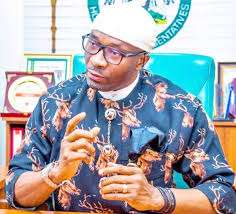
    Benjamin Kalu, Deputy Speaker of the House of Representatives and Chairman of the House Committee on Constitution Review, announced on Monday that Nigeria’s new constitution is expected to be ready for presidential assent within the next 24 months.

    During the formal inauguration of the House Committee on the review of the 1999 constitution, Kalu emphasized the importance of allowing the President ample time to study proposed alterations before signing them into law, particularly amidst the busy schedule of an election year.

    Kalu highlighted the crucial need for constitutional reform in light of the 21st-century realities, stating,

    “Our constitution, the foundation of our democracy, stands as a testament to our collective aspirations for a just, equitable, and prosperous society.”

    He revealed that the House has received various bill proposals, including those for the establishment of state police, state access to mines, increased participation of women in politics, clear tax specifications for each tier of government, and the provision for the office of the Mayor of the Federal Capital Territory Abuja.

    Moreover, Kalu mentioned the reintroduction of several bill proposals that didn’t receive presidential assent in the previous constitution alterations. 

    These include powers of the National Assembly and State Assemblies to summon the President and State governors, as well as requirements for the government to focus on ensuring the rights to food and food security.

    Highlighting the dynamic nature of the constitution review process, Kalu expressed the House’s openness to more proposals aimed at enhancing the Constitution and strengthening the nation’s democracy.

    He also noted the anticipation of executive-sponsored bill proposals reflecting issues on the renewed hope agenda of the President. 

    Kalu acknowledged past constitutional amendments, such as financial independence of State Houses of Assembly and State Judiciary, redesignating “Prisons” as “Correctional Services,” and transferring certain matters to the concurrent legislative list.

  • Terrorism charge: Kanu, FG, engage new lawyers

    Terrorism charge: Kanu, FG, engage new lawyers

    The leader of the proscribed Indigenous People of Biafra, IPOB, Nnamdi Kanu, has engaged new lawyers in his defense of the terrorism offences brought against him by the Federal Government.

    It was gathered that a new team of lawyers to be led by PAM Ejiofor and Alloy Ejimakor will take over Kanu’s defense in the 7-count charges.

    In the same vein, the federal government engaged the services of Chief Adegboyega Awomolo to lead its legal team in the prosecution.

    Awomolo is taking over from David Kaswe SAN, from the Federal Ministry of Justice in Abuja, who has been handling the case for the federal government.

    No reason was given for the change in the legal team being led before now by Chief Mike Ozekhome SAN and Ifeanyi Ejiofor.

    Meanwhile, the court has already been jam parked by lawyers, traditional rulers, clergymen, family members, and sympathizers of the Biafra agitator present.

    Kanu has already been brought to the courtroom by the operatives of the Department of State Service DS$

    Details later.

  • CJN Swears-in 11 New Supreme Court Justices, Monday

    CJN Swears-in 11 New Supreme Court Justices, Monday

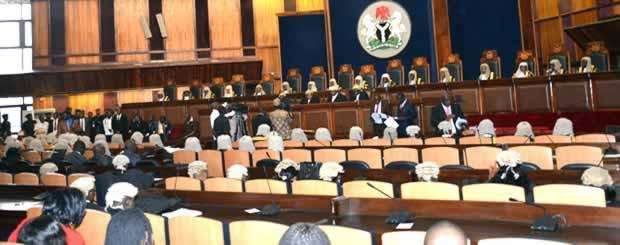
    The Chief Justice of Nigeria (CJN) Justice Olukayode Ariwoola will be administering the oath of allegiance to the 11 newly appointed Justices of the Supreme Court, Monday, February 26.

    With the confirmation of the 11 justices, the Supreme Court now has the complete statutory requirement of 21 justices on its bench.

    This was contained in a statement signed by the Director of Press, Dr Featus Akande, Friday.

    He said, “The newly appointed 11 Justices of the Supreme Court will be sworn-in by the Chief Justice of Nigeria, Justice Olukayode Ariwoola on Monday at 10.00am at the Main Courtroom of the Supreme Court.”

    On December 21, the Senate confirmed the appointment of 11 Supreme Court justices submitted by President Bola Ahmed Tinubu to fill the vacancies on the apex court bench.

    The confirmation followed the consideration and adoption of a report by the Senate Committee on Judiciary, Human Rights, and Legal Matters during Thursday’s plenary.

    Tinubu had asked the Senate to confirm the nominees, who were recommended by the National Judicial Council to fill the vacant positions following the death and resignations of some justices.

    The nominees confirmed are Justice Haruna Tsammani (Northeast), who chaired the Presidential Election Petition Court, Justice Moore Adumein (South-South), Justice Jummai Sankey (North-central), Justice Chidiebere Uwa (South-east); and Justice Chioma Nwosu-Iheme (South-east).

    Others are Justice Obande Ogbuinya (South-East), Justice Stephen Adah (North-Central), Justice Habeeb Abiru (South-West), Justice Jamilu Tukur (Northwest), Justice Abubakar Umar (Northwest) and Justice Mohammed Idris (North-Central).

    The chairman of the committee, Senator Tahir Monguno (APC, Borno), while presenting his panel report, said the nominees possessed the requisite qualifications and experience to occupy the position and that there was no petition against them.

    He, therefore, recommended their confirmation.