
Category: Governance

  • Why Nigeria Must Establish an Air Wing for the NSCDC Now

    Why Nigeria Must Establish an Air Wing for the NSCDC Now

    By Chris Echikwu

    Nigeria stands at a critical juncture in managing its internal security. Rising insecurity – from mass kidnappings and school attacks to assaults on religious institutions and the displacement of rural communities – has exposed a glaring weakness in the nation’s security architecture. While government efforts, including troop deployments and recruitment drives, are important, the reality is clear: Nigeria needs not just more boots on the ground, but new eyes in the sky.

    The call for an Air Wing within the Nigeria Security and Civil Defence Corps (NSCDC) has never been more urgent.

    Insecurity Has Outpaced Our Security System

    Criminal networks exploit Nigeria’s forests, borderlands, and waterways as operational hideouts. Camps and routes exist deep in ungoverned spaces, beyond the reach of standard patrols. Ground forces are often reactive, arriving after crimes have already occurred.

    School kidnappings have become a hallmark of this crisis. Children are abducted, transported through bush corridors, and hidden in forest camps for weeks or months. The state frequently responds too late, relying only on limited human intelligence and local reports.

    This is not just a tactical failure, it is a structural one. Nigeria’s internal security agencies remain almost entirely land-based in an era where surveillance, rapid response, and deterrence demand aerial capabilities.

    Why the NSCDC is the Right Agency

    The NSCDC is far from peripheral. It already plays a central role in Nigeria’s internal security:

    • Protecting critical national infrastructure
    • Ensuring school safety
    • Monitoring pipelines and industrial assets
    • Securing border communities
    • Supporting civic protection operations

    Yet, it cannot effectively monitor or respond to threats across vast forests, swamps, and deserts. An Air Wing would transform the NSCDC from a reactive, defensive body into an intelligence-driven force.

    Strategic Benefits of an NSCDC Air Wing

    An Air Wing would provide:

    • Persistent aerial surveillance of ungoverned spaces
    • Real-time intelligence for operations
    • Early warning systems for schools and villages
    • Aerial mapping of criminal routes and hideouts
    • Rapid assessment during attacks or emergencies
    • Faster coordination with police, army, and Air Force
    • Enhanced monitoring of pipelines and critical infrastructure

    This is not about militarizing the NSCDC; it is about modernizing it. Across Africa and Asia, countries Nigeria often compares itself to already deploy drones and light aircraft as standard tools for internal security. Fighting 21st-century crime with 20th-century methods is no longer viable.

    Financing: Affordable and Sustainable

    Arguments that Nigeria “cannot afford it” ignore the true cost of inaction. Insecurity already drains the economy through:

    • Disrupted agriculture
    • Flight of investment
    • Insurance losses
    • School closures
    • Community displacement
    • Damage to national assets

    A modest fleet of drones and light aircraft would cost far less than the economic loss caused by a single kidnapping wave. Financing could come from:

    • Federal appropriations
    • Security intervention funds
    • Infrastructure protection levies
    • Public-private partnerships
    • International security grants

    The return on investment would be immediate.

    The Risk of Doing Nothing

    Without modernization, the human and economic toll will worsen:

    • Education in unstable regions will collapse further
    • Rural economies will remain devastated
    • Citizens may turn to private militias and vigilante groups
    • Criminals will outpace the state
    • Public confidence in lawful authority will continue to erode

    A state that cannot see its territory cannot govern it.

    Conclusion: The Skies Matter

    Nigeria faces a choice: remain trapped in reactive security measures or invest in intelligence, speed, and foresight.

    An NSCDC Air Wing will not end insecurity overnight, but it will end Nigeria’s blindness to the spaces where crime is planned and executed. National security is no longer determined solely by personnel numbers, but by the ability to see, interpret, and respond faster than the threat.

    Nigeria must choose vision over delay.

  • Bianca Ojukwu Urges Peaceful Action Over Nnamdi Kanu’s Imprisonment

    Bianca Ojukwu Urges Peaceful Action Over Nnamdi Kanu’s Imprisonment

    Owerri, November 26, 2025 – The Minister of State for Foreign Affairs, Mrs. Bianca Odumegwu-Ojukwu, has called on the people of the South-East to respond to the imprisonment of Mazi Nnamdi Kanu with dialogue and peaceful engagement, rather than anger or violence.

    Speaking at the 14th Dim Chukwuemeka Odumegwu Ojukwu Memorial Day at the Ojukwu Memorial Library in Owerri, Mrs. Ojukwu emphasized that hope for Kanu’s release remains through patient and organized efforts.

    “The solution is not knives, guns, or fighting among ourselves,” she said.

    This Christmas, we should meet with our National Assembly members, governors, and even President Bola Tinubu to discuss a peaceful way to secure his freedom.”

    She also urged the South-East to learn from other regions in solving challenges peacefully and called on parents to teach children the Igbo language to preserve culture and values.

    Highlighting the impact of insecurity on the region, she said kidnappings and violence have driven away investors, both local and foreign.

    She cited her late husband’s unconditional pardon after the civil war as an example of what dialogue and patience can achieve.

    Chief Ugwunna Ajaelu, chairman of the occasion, echoed her call for calm and diplomatic efforts to ensure Kanu’s release.

  • Senate Raises Alarm Over Insecurity, Probes Kebbi Troop Pullout

    Senate Raises Alarm Over Insecurity, Probes Kebbi Troop Pullout

    By Caroline Ameh | Abuja

    The Nigerian Senate on Tuesday expressed deep concern over the worsening insecurity in parts of Kwara, Kebbi, and Niger States, resolving to probe the alleged withdrawal of military personnel from a Kebbi school hours before a major abduction.

    The resolution followed the adoption of a motion of urgent national importance sponsored by Deputy Majority Leader, Senator Lola Ashiru, who described the escalating attacks on schools, worship centres, and rural communities as a national emergency requiring immediate federal action.

    Senators Decry Widening Attacks

    Lawmakers lamented the November 18 attack on Christ Apostolic Church (CAC), Eruku, in Ekiti Local Government Area of Kwara State, where gunmen killed two worshippers and abducted 38 others, all later rescued in coordinated security operations.

    They noted that the attack led to the temporary closure of schools in five local government areas across Kwara, as well as parts of Niger and Kebbi States, affecting 47 Federal Unity Colleges nationwide.

    The Senate also condemned the growing pattern of school kidnappings, including recent abductions in Niger and Kebbi States, warning that educational and religious institutions had become increasingly vulnerable to banditry and terrorism.

    Controversy Over Troop Withdrawal

    Lawmakers were particularly alarmed by credible reports that military personnel were withdrawn from Government Girls’ Secondary School, Maga, Kebbi State, just hours before the abduction of 24 female students.
    They demanded a transparent investigation into the decision and those responsible.

    Contributing to the debate, Senator Enyinnaya Abaribe (Abia South) urged his colleagues to confront insecurity “head-on and without reference to the past.”


    He insisted that the Senate must uncover who authorised the withdrawal of troops from the school before the attack.

    Abaribe’s position was strongly supported by Senate President Godswill Akpabio, Senator Seriake Dickson, and other lawmakers, who called for urgent and coordinated security action.

    Intelligence Points to Internal Sabotage

    The motion also cited intelligence reports indicating that internal collaborators continue to aid criminal networks with logistics, information, and escape routes.


    Senators warned that terrorists were exploiting forest corridors such as the Kwara–Kogi axis, Kebbi–Zamfara stretch, and Niger’s Shiroro–Rafi–Munya belt to carry out attacks and evade arrest.

    They further raised concern over the deplorable state of the Idofian–Omu-Aran–Eruku–Egbe–Kabba highway, which they said provides bandits with ambush points, easy escape routes, and concealment within thick forests.

    Tinubu Commended for Swift Response

    Earlier, Senate Majority Leader Opeyemi Bamidele cautioned against rising public speculation over the release of kidnap victims, urging a review of the performance of Senate security committees.
    He reaffirmed that the Tinubu administration does not and will not support ransom payments to abductors.

    The Senate commended President Bola Ahmed Tinubu for what it described as his “swift and personal intervention,” including cancelling planned foreign trips to coordinate national security efforts.


    It also lauded security agencies for the rescue of 38 abductees in Kwara and 51 students in Niger State.

    Key Resolutions

    The Senate resolved to:

    • Urge communities in Kwara, Kebbi, Niger, and across the country to remain vigilant and expose collaborators aiding criminal groups.
    • Commend President Tinubu and security agencies for swift interventions while calling for sustained rescue operations until all abductees are freed.
    • Mandate the immediate reconstruction of the Idofian–Omu-Aran–Eruku–Egbe–Kabba highway to curb ambushes and improve mobility for security forces.
    • Direct the Army, Police, DSS, and Defence Intelligence Bureau to intensify intelligence-driven operations, forest combing, and cross-state collaboration.
    • Establish a Joint Task Force (JTF) along the Kwara–Kogi corridor with forward operating bases in Eruku, Babanla, Oke-Ero, and Isanlu.
    • Instruct the Ministry of Humanitarian Affairs and NEMA to provide relief materials to affected families where schools remain closed.
    • Launch a 14-day Senate investigation into the surge in insecurity, including the alleged role of internal collaborators.
    • Strengthen local vigilante networks and review Nigeria’s firearms laws in line with global best practices.
    • Conduct a separate probe into the troop withdrawal from the Kebbi school before the abduction.
    • Pursue diplomatic engagement with the U.S. and allied nations to improve intelligence sharing and counter-terrorism support.
    • Observe a two-minute silence in honour of all victims of recent attacks.

  • Brains, Not Bullets: How Nigeria Can Defeat Terrorism, Banditry and Extremism

    Brains, Not Bullets: How Nigeria Can Defeat Terrorism, Banditry and Extremism

    When there is crisis and chaos in the jungle and the lion, the king of the forest, is under distress, even the snail, in its slow motion, proclaims itself the king of horned animals.

    So it is with Nigeria’s current crisis of insecurity. Every Dick, Tom, and Harry has suddenly become a security expert, diagnosing terrorism as though it were a mere ailment cured by sound bites.

    Those who have long sharpened their knives, waiting to take potshots at the president, are now out with their blades—poking half-baked truths, innuendos, and insinuations. Suddenly, President Tinubu has supposedly made a clandestine pact with terrorists to destabilize his own government! Haba. Some claim he is so obsessed with 2027 that he has chosen to appease the very insurgents who want to derail his ambition.

    Nothing could be further from the truth.

    Terrorism thrives on chaos. Its tactics, stealthy, asymmetric, opportunistic, are designed to shock and paralyze society. From bombings in schools and churches to mass kidnappings, terrorists choose soft targets because no government on earth can protect every space, every time. Even the mightiest military in the world, the United States, could not defeat Al-Qaeda or the Taliban after two decades of bleeding money, blood, and tears.

    The Old Wounds We Ignored

    Nigeria’s battle with religious extremism and violent sectarianism did not begin today. The Maitatsine sect, led by Muhammad Marwa until his death in 1980, waged an ideological war that left thousands dead—including soldiers and policemen.

    Yet, despite decades of conflict, we still treat terrorism and banditry as a purely military problem. We cannot bomb an idea out of existence.

    Until we confront the underlying causes, the social, economic, and moral rot that breeds extremism, we will remain trapped in a vicious cycle. Millions of young Nigerians, especially in the North, grow up unparented, uneducated, and unemployed, condemned to a Hobbesian existence of hopelessness. When life offers nothing to live for, dying for a “heavenly cause” becomes a seductive option.

    A government that abandons its most vulnerable citizens is waging a losing war against preachers of false paradise.

    The Carrot and the Stick

    Military power alone cannot deliver peace. Nigeria needs a multi-pronged strategy, combining the stick of firm justice with the carrot of opportunity, education, and reform.

    We must stop the endless production line of unparented street urchins and almajirai. Education and reorientation must replace indoctrination and idleness. We have ignored the warning signs for too long: a youth population bulge of millions of out-of-school children was a ticking time bomb. That bomb has now exploded.

    It now falls on President Tinubu to design both short- and long-term strategies to confront this monster. But he cannot do it alone.

    State governors, especially in the North, must take responsibility. Too many have abandoned their states, treating Abuja as home while insecurity festers under their watch. They must be forced back to confront the chaos they helped create. Citizens must also hold them accountable, not just the man in Aso Rock.

    The Role of Citizens

    Security is everyone’s business. These terrorists do not always live in forests, they often live among us. Some of our own community members serve as informants, kingpins, or collaborators in kidnapping rings.

    We must strengthen community–police cooperation and reward informants who provide actionable intelligence. The president’s new policy of prioritizing public safety over VIP protection is a welcome step.

    At the same time, sponsors of terrorism must face the harshest punishment. The law must be unambiguous: those who bankroll or enable terror must pay the ultimate price. Politicians who weaponize violence for electoral gain must be exposed and punished.

    The War of Information

    Equally dangerous is the spread of fake news. Each time we circulate unverified stories of attacks or kidnappings, we aid the terrorists’ cause. Panic is their oxygen. Spreading false alarms wastes precious security resources and deepens public fear.

    We must be disciplined. If you see something, say something, to the right authorities. President Tinubu is not omnipresent; he cannot see every threat. But collectively, we can build a web of vigilance strong enough to protect our communities.

    A Final Word

    And to those calling for foreign intervention, especially those invoking the name of Donald Trump, be warned: no country “saved” by U.S. invasion has emerged better. Vietnam, Iraq, Libya, Afghanistan, all lie in ruins. Nigeria’s salvation will not come from outside. We must save ourselves.

    The war against terrorism is not just a fight of guns and bullets, it is a fight for the soul of the nation.

    Adewale Alonge, PhD, Founder & President, Africa Diaspora Partnership for Empowerment and Development. www.adped.org, writes in from Dadeland, Miami, Florida, USA.

  • CAN Condemns Attack on Catholic Schools in Niger

    CAN Condemns Attack on Catholic Schools in Niger

    The Christian Association of Nigeria (CAN), Niger State chapter, has condemned the gunmen attack on St. Mary’s Catholic Primary and Secondary Schools in Papiri, Agwara Local Government Area.

    In a statement issued in Minna on Friday, the Chairman of CAN in Niger and Catholic Bishop of Kontagora Diocese, Rev. Bulus Yohanna, described the incident as “distressing and unacceptable.”

    According to Yohanna, the gunmen invaded the schools between 1 a.m. and 3 a.m., shooting the security guard before abducting pupils, students, teachers, and a security personnel.

    “We are deeply disturbed by this attack and the abduction of innocent children and their teachers,” Yohanna said. “This level of violence against educational institutions is completely unacceptable.”

    He expressed concern for the safety of the abducted victims and the trauma endured by their families. Yohanna assured that CAN was working with security agencies, community leaders, and government authorities to support ongoing rescue operations.

    “We appeal to residents to remain calm and cooperate with security operatives,” he added. “Christians and all Nigerians should continue to pray for the safe and quick return of those abducted.”

    The CAN chairman reaffirmed the association’s commitment to advocating for the protection of children and enhanced security in schools across the state.

    “May the Lord grant quick release to those abducted and continue to protect His people from all dangers,” Yohanna prayed.


  • Governors’ Forum Launches Women Affairs Network to Boost Gender Equity

    Governors’ Forum Launches Women Affairs Network to Boost Gender Equity

    :


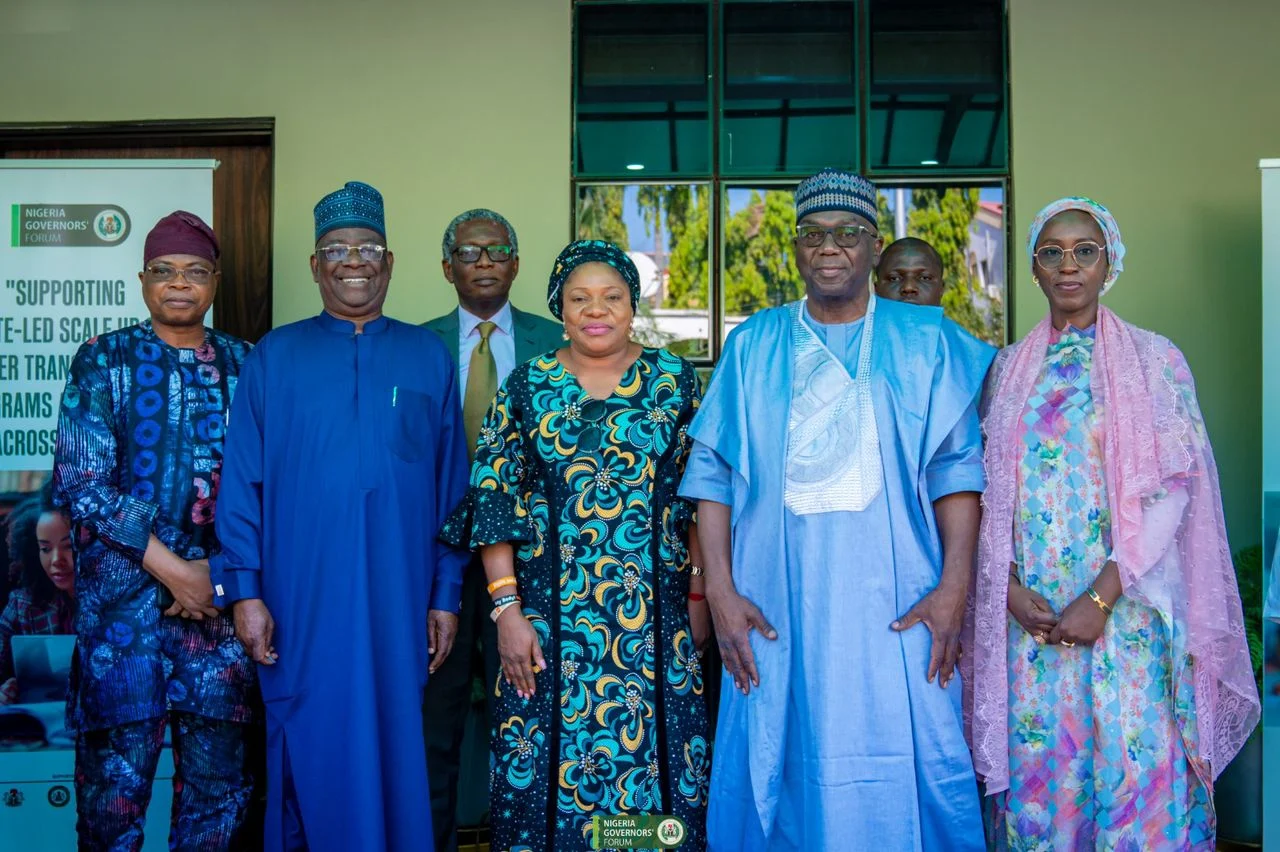
    Abuja — The Nigeria Governors’ Forum (NGF) has inaugurated the first Community of Practice (COP) for Commissioners of Women Affairs, marking a significant step toward advancing gender equality.

    In a statement by Yunusa Tanko Abdullahi
    Director, Media & Strategic Communications, the the programme is also targeted at women’s empowerment, and inclusive governance across the country.

    NGF Chairman and Governor of Kwara State, AbdulRahman AbdulRazaq, described the initiative as “a turning point in Nigeria’s commitment to women and girls.”

    “Our collective efforts have brought together dedication, resources, and strategic initiatives to make gender inclusion an essential part of governance and development at all levels,” AbdulRazaq said.

    He announced the creation of a Gender Affairs Department at the NGF Secretariat and unveiled the Gender Equality and Women’s Economic Empowerment Strategic Plan (2025–2029), aligned with the National Gender Policy and the Sustainable Development Goals (SDGs).

    AbdulRazaq also said the Nigeria for Women Programme, initially piloted in six states, has expanded to 31 states, with Kaduna, Kwara, and Lagos leading in the adoption of the Women’s Economic Empowerment Policy.

    “This Community of Practice will empower commissioners, gender advocates, and technical experts to collaborate, share best practices, and drive action on economic inclusion, political participation, and protection from gender-based violence,” he added.


    Forum Reaffirms Commitment to Women’s Inclusion

    Declaring the platform open, NGF Director General, Dr. Abdulateef Shittu, said gender equity remains a core driver of development and inclusive governance.

    “Collaboration, not isolation, is the gateway to real progress. States are doing incredible work, but exchanging lessons, aligning strategies, and building a unified voice will accelerate the impact across the country,” Shittu said.

    He noted that the COP would promote shared learning, accountability, and long-term coordination among states. Shittu also commended the Bill & Melinda Gates Foundation and other partners for supporting the Forum’s vision.


    Commissioners Pledge Joint Action

    Dean of Commissioners of Women Affairs and Commissioner for Cross River State, Hon. Edema Irom, described the inauguration as “historic and timely.”

    She said the commissioners would focus on five key priorities: full domestication of the National Women’s Economic Empowerment Policy, stronger coordination with national and development partners, increased representation of women in leadership, expansion of the Nigeria for Women Project, and peer learning through the COP.

    “Progress for women and girls is inseparable from the nation’s growth. The commitments made today represent a strong start toward a more inclusive future where women’s participation and potential are fully recognized,” she said.


    NGF Outlines Gender Affairs Vision

    NGF Director of Gender Affairs, Barrister Hauwa Haliru, said the COP would enhance collaboration and policy coherence across all states.

    She said the platform would facilitate the exchange of best practices, promote stakeholder engagement, organize training sessions, and develop joint monitoring frameworks for gender policies.

    “The COP connects commissioners, leverages shared expertise, and amplifies collective influence for measurable gender outcomes,” Haliru said.

    She added that quarterly review meetings, state mentoring, and rapid response task teams will help commissioners address policy and operational challenges promptly.


    • FIDA Urges Reserved Seats for Women in Legislature — The International Federation of Women Lawyers says underrepresentation of women weakens Nigeria’s governance structure.
    • Shettima Reaffirms APC’s Inclusivity Drive — Vice President Kashim Shettima says inclusivity and competence remain key pillars of President Tinubu’s leadership.
    • Africa Trade Forum Calls for Gender-Sensitive Economic Reforms — Experts at the C-PACT Conference urge policymakers to design trade policies that empower women and bridge gender gaps in African markets.


  • EFCC and National Defence College Join Forces to Update Curriculum on Financial Crimes

    EFCC and National Defence College Join Forces to Update Curriculum on Financial Crimes

    New partnership aims to equip future leaders with skills to tackle corruption, public fund mismanagement, and emerging financial threats.


    he Economic and Financial Crimes Commission (EFCC) and the National Defence College (NDC) have agreed to collaborate on revamping the College’s curriculum to reflect Nigeria’s evolving security and governance landscape.

    During a courtesy visit to EFCC Chairman Ola Olukoyede in Abuja, NDC Commandant Rear Admiral Ahmed emphasized the need for a curriculum update to better prepare participants in public fund management and strategic governance.

    • EFCC Launches Advanced Anti-Fraud Training for Public Officers
    • National Defence College Partners with Nigerian Navy on Maritime Security
    • Cryptocurrency Fraud on the Rise: EFCC Warns Investors

    Ahmed lauded EFCC’s expertise in fighting economic crimes and requested the agency’s input in designing the new course content. “We want participants to learn how to manage public funds effectively so that they are ready for leadership roles,” he said.

    Olukoyede welcomed the proposal, highlighting EFCC’s readiness to support the initiative and noting emerging threats such as cryptocurrency fraud, which caused global losses exceeding $2 trillion last year. “There are areas where our work overlaps, and collaboration will help strengthen Nigeria’s fight against financial crimes,” he said.


  • Behold Nigeria’s New Service Chiefs, Senate Commends Choices

    Behold Nigeria’s New Service Chiefs, Senate Commends Choices

    The Nigerian Senate on Wednesday confirmed the appointments of new service chiefs nominated by President Bola Ahmed Tinubu.

    The senate arrived at the decision to confirm the president’s nominations following a thorough screening session conducted by the Committee of the Whole.

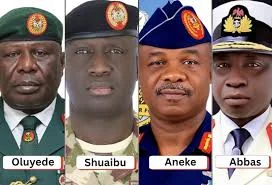
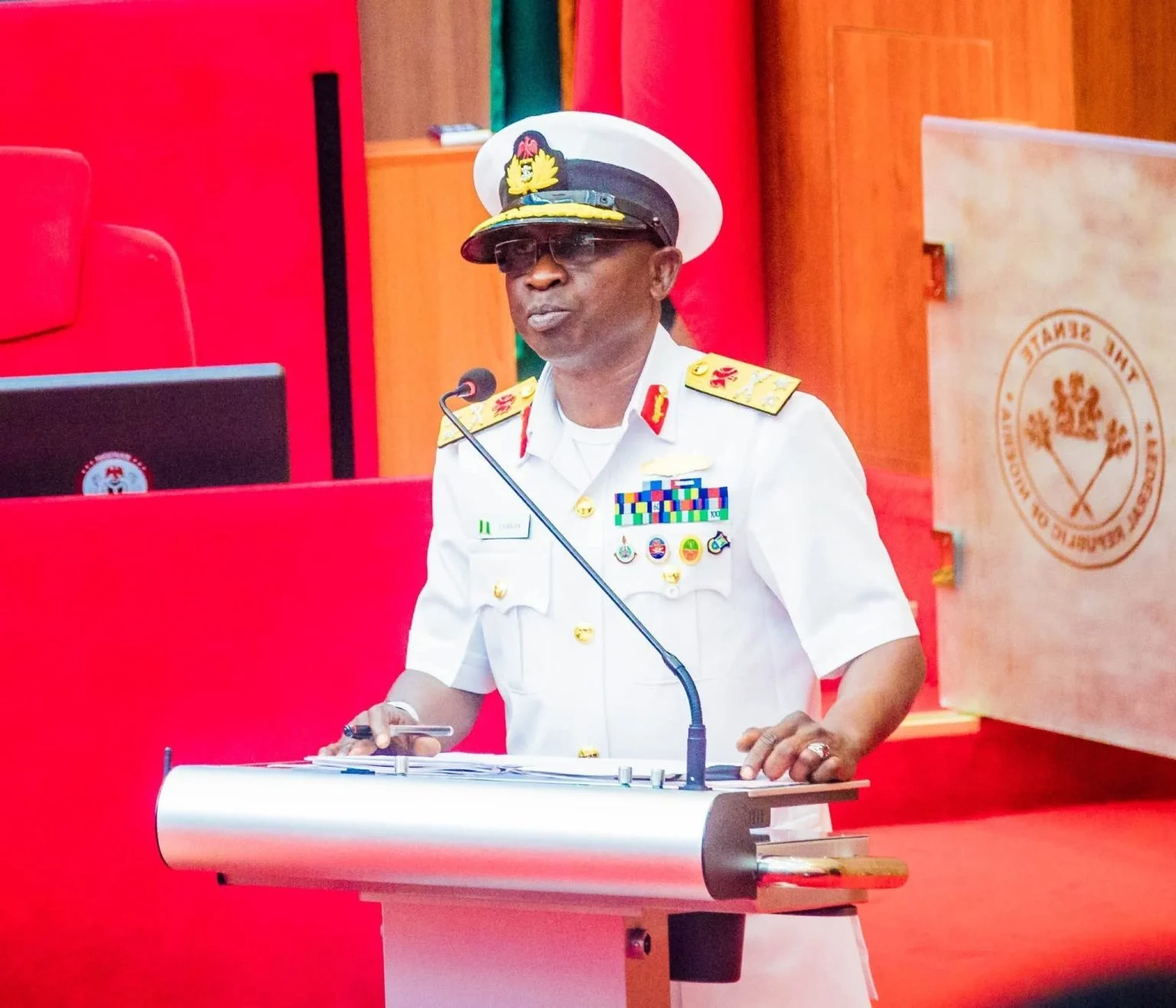
    Those confirmed comprise of Lieutenant General Olufemi Oluyede as Chief of Defence Staff, Major General W. Shuaibu as Chief of Army Staff, Rear Admiral I. Abbas as Chief of Naval Staff, and Air Vice Marshal S.K. Aneke as Chief of Air Staff.

    During the plenary, Senate President Godswill Akpabio announced the confirmations after each nominee received unanimous approval from lawmakers through a voice vote.

    In his remarks, Akpabio congratulated the newly confirmed service chiefs and commended President Tinubu for what he described as a “careful and strategic selection” of officers with proven experience from various theatres of operation across the country.

    “We believe this will renew the hope of Nigerians regarding efforts to restore security across the nation. Security is everybody’s business, and we have found these nominees fit and capable to deliver,” Akpabio stated.

    He also acknowledged the Senate’s commitment to national security, noting that the chamber suspended all other agenda items to prioritize the screening and confirmation process.

    The new service chiefs replace their predecessors who were relieved of their duties by President Tinubu earlier in October following reported concerns about internal discontent within the armed forces.

    The Senate President prayed for divine guidance for the newly appointed military leaders as they assume responsibility for safeguarding lives and property across the country.

  • Senate Screens New Service Chiefs as Air Chief Aneke Affirms Super Tucanos are Fully Operational

    Senate Screens New Service Chiefs as Air Chief Aneke Affirms Super Tucanos are Fully Operational

    The newly appointed Chief of Air Staff, Air Vice Marshal Kennedy Aneke, has assured Nigerians that the country’s Super Tucano fighter jets are in excellent condition and actively engaged in the ongoing fight against terrorism in the North-East and North-West regions.

    Aneke gave the assurance on Wednesday during his screening before the Senate in Abuja.

    Responding to questions from lawmakers concerning reports that the fighter jets were no longer operational, the Air Chief dismissed the claims as false.

    He explained that Nigerian Air Force pilots continue to deploy the aircraft with precision and intensity in counterterrorism operations. “Our Super Tucanos are fully functional and have been instrumental in recent missions.

    Service Chiefs

    Our pilots are engaging criminal elements with sustained intensity,” he told the lawmakers, addressing Senate President Godswill Akpabio directly.

    The screening also featured other newly appointed service chiefs, including the Chief of Defence Staff, General Olufemi Oluyede; Chief of Army Staff, Major General Waidi Shaibu; and Chief of Naval Staff, Rear Admiral Idi Abbas.

    The session, which held in plenary and later went into a closed-door meeting, was part of the Senate’s confirmation process following President Bola Ahmed Tinubu’s nomination of the new military chiefs on Tuesday.

    The new service chiefs were appointed after President Bola Ahmed Tinubu relieved their predecessors of their duties, following intelligence reports and heightened concerns over a possible coup plot within the military.

    The reshuffle was seen as a decisive move to reinforce loyalty, stability, and professionalism within Nigeria’s armed forces.

  • Change of Baton at NPC as Aminu Yusuf replaces Kwarra

    Change of Baton at NPC as Aminu Yusuf replaces Kwarra

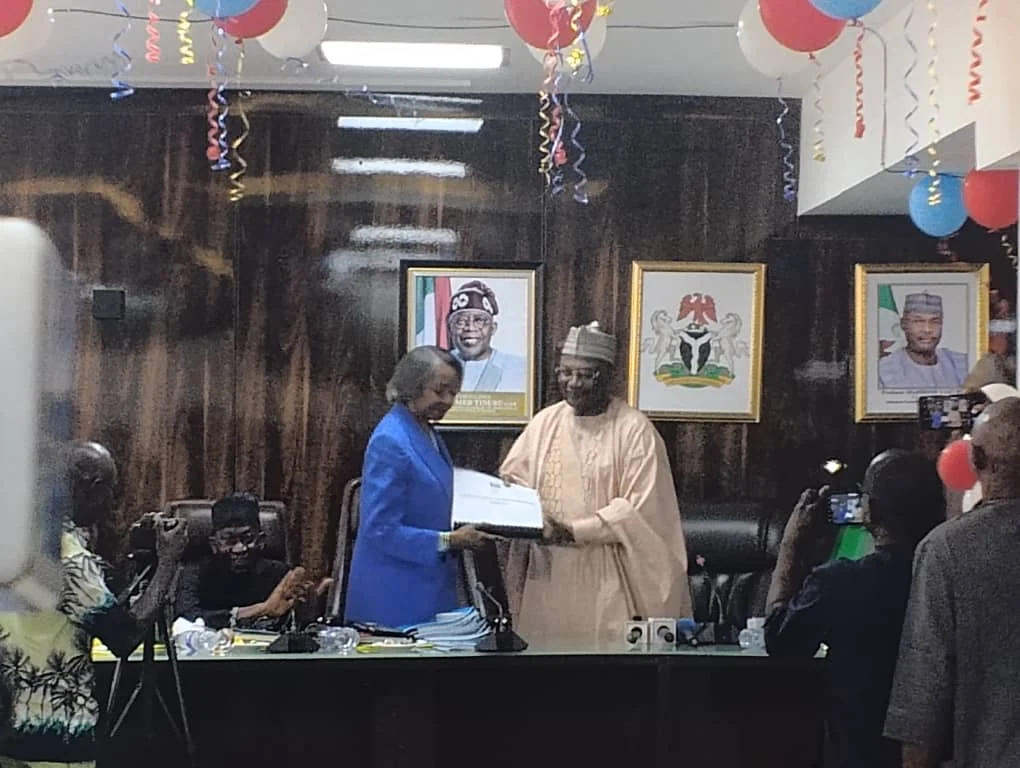
    The National Population Commission (NPC) has announced a leadership change as Muhammad Usman Dattijo takes over from Nasir Isa Kwarra as the acting Executive Chairman pending when Aminu Yusuf shall assume duties as the substantive head.

    In a statement issued by Mrs. Samiat Olabimpe Lawal, Director of Public Affairs, following the conclusion of his tenure on October 28, 2025, the Federal Commissioner representing Niger State, Hon. Muhammad Usman Dattijo, has assumed office as Acting Chairman of the National Population Commission.

    Mr. Dattijo will oversee the affairs of the Commission pending the formal swearing-in of Hon. Aminu Yusuf (Talban Wushishi), who has been appointed by President Bola Ahmed Tinubu, GCFR, as the substantive Chairman of the Commission.

    In the statement, Mrs. Lawal reaffirmed the commission’s commitment to ensuring a smooth leadership transition and sustaining ongoing digital reforms aimed at strengthening Nigeria’s demographic management system.

    The outgoing Chairman was appointed in October 2020 by former President Muhammadu Buhari, and his term was attributed with institutional renewal and technological transformation.

    It was also stated that his tenure was identified by professionalism, strategic focus, and a clear vision that repositioned the Commission as a data-driven institution committed to evidence-based national planning.

    Precisely, the NPC was reported to have made some strides in the areas of census preparedness, digital mapping, and geo-spatial innovation.

    According to the statement, these strides laid the groundwork for Nigeria’s first-ever Digital Population and Housing Census.

    Also attributed to Hon Kwarra’s time in office were the implementation of the Electronic Civil Registration and Vital Statistics (e-CRVS) system and the National Geo-Referenced Infrastructure Geo-Spatial Data Repository, which collectively modernized Nigeria’s demographic data architecture and enhanced data-driven decision-making at all levels of governance.

    Hon. Kwarra also strengthened inter-agency coordination and cultivated partnerships with key international development organizations, including the United Nations Population Fund (UNFPA), World Bank, United Nations Children’s Fund (UNICEF), and the United Nations Economic Commission for Africa (UNECA).

    The NPC, during his term equally prioritized staff welfare, capacity development, and institutional accountability, promoting a culture of innovation, professionalism, and service excellence within the Commission.

    The appointment of Hon. Aminu Yusuf as Chairman of the Commission, it was stated has been confirmed by the Senate, and his assumption of duty will commence officially upon his inauguration by the President.